Jonah 4:5
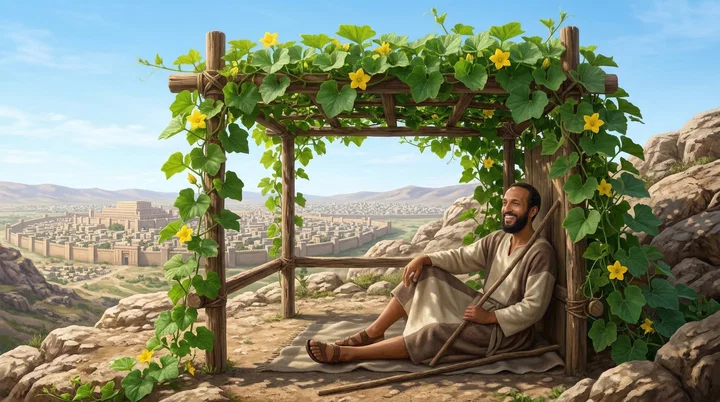
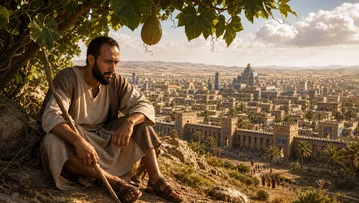
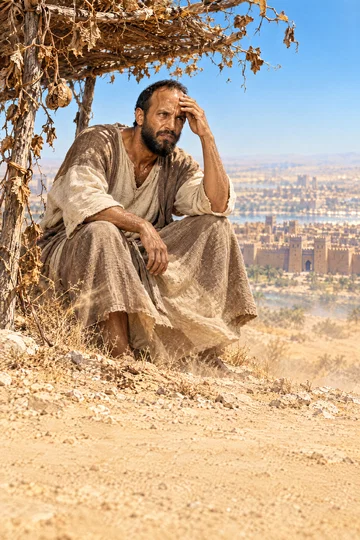
So Jonah went out of the city, and sat on the east side of the city, and there made him a booth, and sat under it in the shadow, till he might see what would become of the city.
Translations
American King James Version, King James Version, KJV Cambridge Paragraph Bible
So Jonah went out of the city, and sat on the east side of the city, and there made him a booth, and sat under it in the shadow, till he might see what would become of the city.
So Jonah went out of the city, and sat on the east side of the city, and there made him a booth, and sat under it in the shade, till he might see what would become of the city.
Then Jonah went out of the city, and sat on the east side of the city, and there made him a booth, and sat under it in the shadow, till he might see what would become of the city.
Then Jonah went out of the city, and sat on the east side of the city, and there made him a booth, and sat under it in the shade, till he might see what would become of the city.
And Jonah goeth forth from the city, and sitteth on the east of the city, and maketh to himself there a booth, and sitteth under it in the shade, till that he seeth what is in the city.
And Jonah went out of the city, and sat on the east side of the city, and there made him a booth, and sat under it in the shade, till he might see what would become of the city.
But Jonah, went forth, out of the city, and abode on the east side of the city; and made for himself there, a hut, and sat under it, in the shade, until he should see what would become of the city.
Berean Standard Bible, Majority Standard Bible
Then Jonah left the city and sat down east of it, where he made himself a shelter and sat in its shade to see what would happen to the city.
Then Jonah went out of the city and sat on the east side of the city, and there made himself a booth and sat under it in the shade, until he might see what would become of the city.
Then Jonah went out of the town, and took his seat on the east side of the town and made himself a roof of branches and took his seat under its shade till he saw what would become of the town.
So Ionah went out of the citie and sate on the East side of the citie, and there made him a boothe, and sate vnder it in the shadowe till he might see what should be done in the citie.
Douay-Rheims (Challoner revision)
Then Jonas went out of the city, and sat toward the east side of the city: and he made himself a booth there, and he sat under it in the shadow, till he might see what would befall the city.
Pictures
Cross-references
- Jonah 3:10
And God saw their works, that they turned from their evil way; and God repented of the evil, that he had said that he would do unto them; and he did it not.
Nineveh turns from evil, and God spares it, prompting Jonah’s disappointment.
- Jonah 4:10-11
Then said the LORD, Thou hast had pity on the gourd, for the which thou hast not laboured, neither madest it grow; which came up in a night, and perished in a night:
God explains his concern for Nineveh after Jonah waits to see its fate.
- Jonah 3:4
And Jonah began to enter into the city a day’s journey, and he cried, and said, Yet forty days, and Nineveh shall be overthrown.
Jonah waits after warning Nineveh of destruction.
- 2 Kings 14:25
He restored the coast of Israel from the entering of Hamath unto the sea of the plain, according to the word of the LORD God of Israel, which he spake by the hand of his servant Jonah, the son of Amittai, the prophet, which was of Gath-hepher.
Identifies Jonah as a prophet of God.
Commentary
Each commentary is drawn from primary sources: the writings of Ellen G. White and Adventist pioneers and periodicals. Each commentary is separate. Its own words are not a quotation; follow the references to read the source passages.
Ellen G. White
8 sources
Jonah left Nineveh behind and settled on its east side, where he put together a booth, a makeshift shelter, and sat beneath it in its shade to keep watch until he might see what would become of the city.PK 271.2–272.4Ms 61a, 1906, par. 1–8Ms 164, 1897, par. 7–11SW 110.2–111.2RH Oct 18, 1906 His withdrawal and sheltered lookout came after the city's repentance and after God had decided to spare it, yet he still expected and desired to witness what would happen to its fate.PK 271.2–272.4Ms 61a, 1906, par. 1–8Ms 164, 1897, par. 7–11RH Oct 18, 1906LS 204.1–3 He had not accepted the sparing as final, but lingered to observe whether destruction might still fall.PK 271.2–272.4Ms 61a, 1906, par. 1–8RH Oct 18, 1906LSEGW 78.2
That waiting was charged with anger and dissatisfaction, with discouragement and grief, with disappointment that God had spared the city.PK 271.2–272.4SW 110.2–111.2RH Oct 18, 1906LS 204.1–3LSEGW 78.2 He remained fixed on the question of whether Nineveh would be destroyed rather than rejoicing in the deliverance of its people.PK 271.2–272.4RH Oct 18, 1906 He had lost sight of their welfare and did not share God's concern for them.Ms 164, 1897, par. 7–11SW 110.2–111.2RH Oct 18, 1906 That loss came through concern for his own reputation and humiliation, and through selfish sorrow and discouragement that he should have set aside.SW 110.2–111.2LSEGW 78.1LSEGW 78.2
By fastening on his own humiliation he overlooked God's mercy in granting the people more time to prepare and to hear a warning.LSEGW 78.1 His grief and disappointment after Nineveh was spared stands as a parallel to the disappointment of those who expected the end in 1844.LS 204.1–3 As with them, the unfulfilled expectation did not prove the message ungodly, since it fulfilled God's purpose.LS 204.1–3
Sources
Pioneers and periodicals
12 sources
Jonah left Nineveh after delivering his warning, settled on the east side of the city, built a booth for shade, and sat under it to watch and wait to see what would become of the city.RH Oct 18, 1906LS 204.1–3ST Nov 5, 1885ST Mar 25, 1913ST May 24, 1910 The booth and the vigil showed that he still expected Nineveh to be destroyed and wanted to see its fate unfold according to his own ideas.RH Oct 18, 1906ST Mar 25, 1913ST Nov 25, 1903 His waiting expressed anger, dissatisfaction, grief and disappointment that God had spared the repentant city, because he had lost sight of the welfare of its people.RH Oct 18, 1906LS 204.1–3ST Mar 25, 1913 As the city remained safe his anger grew, for he feared being disgraced as a false prophet.ST Mar 25, 1913 His grief and disappointment over the unfulfilled expectation parallel the disappointment of those who expected the end in 1844, whose failed expectation did not make their message ungodly since it fulfilled God's purpose.LS 204.1–3
The scene makes him a disappointed pessimist whose warning of destruction did not come to pass.ST Jul 16, 1902 The verse lays bare his human weakness, for though he was a good man he was fretful under affliction, with a heart troubled rather than composed.ST May 24, 1910RH Nov 6, 1856 What followed exposed his concern for his own shade and comfort, for though he had endured great trials he complained over the loss of this small comfort when the gourd withered and left him faint under the hot sun and wind, and the heat tested his patience.ST Sep 9, 1913ST Nov 5, 1885ST Nov 25, 1903 God gave him the gourd for shade and then let it wither, using Jonah's pity for the gourd to teach that He should spare Nineveh, a great city with many people who could not distinguish right from left, as well as much cattle.ST Nov 5, 1885
The verse belongs to Jonah's further experience after he warned Nineveh and after the city repented, for he had objected to going there and was troubled that the Lord forgave its people, and the outcome of that trial would be known only in the coming judgment.RH Feb 13, 1900ST Sep 17, 1896 The account shows God's great mercy in saving Nineveh and what thorough repentance ought to be, teaching that God cares for people among other nations as well as for Israel, and that Israel was meant to share God's gifts with them.ST Sep 9, 1913RH Feb 13, 1900ST May 24, 1910 His waiting stands in contrast to patient trust in God's plan.ST Nov 25, 1903 The account is among the Old Testament narratives that Christ and the apostles treated as truthful and important.ST Mar 9, 1888
Sources