Joshua 22:13
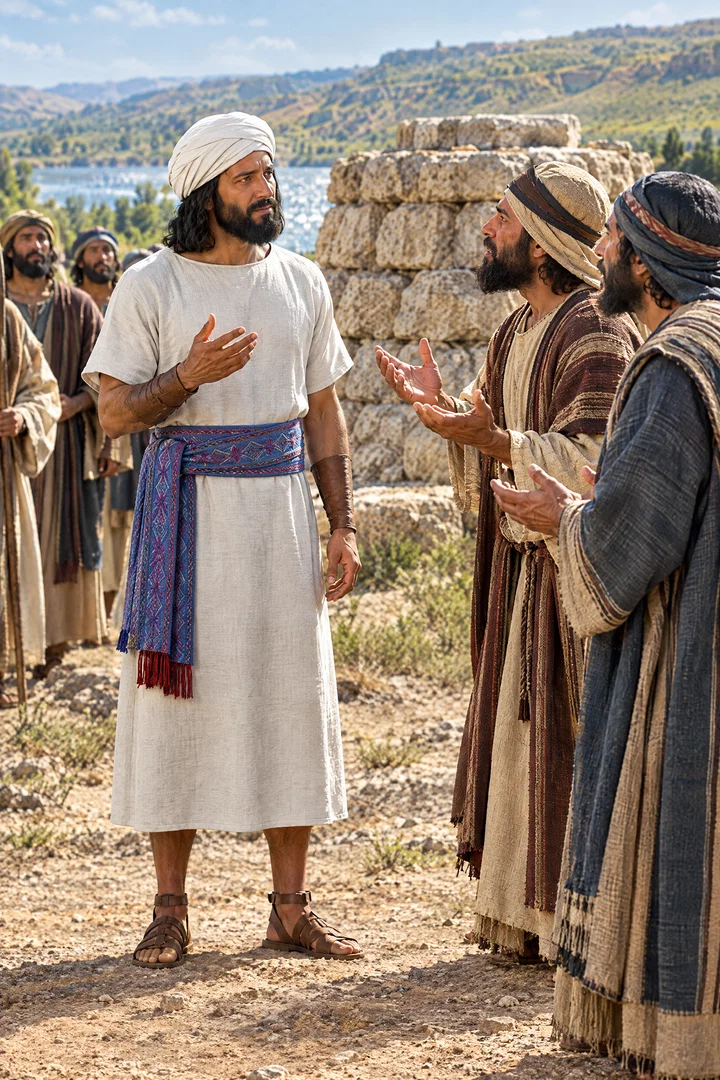
And the children of Israel sent unto the children of Reuben, and to the children of Gad, and to the half tribe of Manasseh, into the land of Gilead, Phinehas the son of Eleazar the priest,
Translations
American King James Version, Darby Translation
And the children of Israel sent to the children of Reuben, and to the children of Gad, and to the half tribe of Manasseh, into the land of Gilead, Phinehas the son of Eleazar the priest,
King James Version, KJV Cambridge Paragraph Bible
And the children of Israel sent unto the children of Reuben, and to the children of Gad, and to the half tribe of Manasseh, into the land of Gilead, Phinehas the son of Eleazar the priest,
And the children of Israel sent to the children of Reuben, and to the children of Gad, and to the half-tribe of Manasseh into the land of Gilead, Phinehas the son of Eleazar the priest,
And the children of Israel sent unto the children of Reuben, and to the children of Gad, and to the half tribe of Manasseh, into the land of Gilead, Phinehas the son of Eleazar the priest;
And the children of Israel sent unto the children of Reuben, and to the children of Gad, and to the half-tribe of Manasseh, into the land of Gilead, Phinehas the son of Eleazar the priest,
and the sons of Israel send unto the sons of Reuben, and unto the sons of Gad, and unto the half of the tribe of Manasseh — unto the land of Gilead — Phinehas son of Eleazar the priest,
And the sons of Israel sent unto the sons of Reuben and unto the sons of Gad and unto the half tribe of Manasseh, within the land of Gilead,—Phinehas, son of Eleazar the priest;
Berean Standard Bible, Majority Standard Bible
The Israelites sent Phinehas son of Eleazar the priest to the land of Gilead, to the Reubenites, the Gadites, and the half-tribe of Manasseh.
The children of Israel sent to the children of Reuben, and to the children of Gad, and to the half-tribe of Manasseh, into the land of Gilead, Phinehas the son of Eleazar the priest.
And the children of Israel sent Phinehas, the son of Eleazar the priest, to the children of Reuben and the children of Gad and the half-tribe of Manasseh, to the land of Gilead,
Then the children of Israel sent vnto the children of Reuben, and to the children of Gad, and to ye halfe tribe of Manasseh into the land of Gilead, Phinehas the sonne of Eleazar the Priest,
Douay-Rheims (Challoner revision)
And in the mean time they sent to them into the land of Galaad, Phinees the son of Eleazar the priest,
Pictures
Cross-references
- Joshua 22:24-28
And if we have not rather done it for fear of this thing, saying, In time to come your children might speak unto our children, saying, What have ye to do with the LORD God of Israel?
The tribes explain the altar was a witness to preserve worship across the Jordan.
- Joshua 4:12-13
And the children of Reuben, and the children of Gad, and half the tribe of Manasseh, passed over armed before the children of Israel, as Moses spake unto them:
shows forty thousand crossing to battle
Commentary
Each commentary is drawn from primary sources: the writings of Ellen G. White and Adventist pioneers and periodicals. Each commentary is separate. Its own words are not a quotation; follow the references to read the source passages.
Ellen G. White
4 sources
The eastern tribes of Reuben and Gad with half of Manasseh had received their inheritance before crossing the Jordan, in the wide upland plains and rich forests of Gilead and Bashan.PP 517.4–518.1 They had chosen that country because as a pastoral people they desired extensive grazing land for their flocks and herds, such as was not found in Canaan itself.PP 517.4–518.1 They had taken it on pledge to furnish their proportion of armed men to accompany their brethren across the Jordan and share their battles until they also had entered upon their inheritance.PP 517.4–518.1 That obligation was faithfully discharged when forty thousand prepared for war passed over to the plains of Jericho, fought bravely for years by the side of their brethren, uniting in the conflicts and sharing the spoils.PP 517.4–518.1 They then returned with much riches, with very much cattle and with silver and with gold and with brass and with iron and with very much raiment, to share with those who had remained with the families and flocks.PP 517.4–518.1 They were now to dwell at a distance from the sanctuary, and their isolated and wandering life exposed them to strong temptation to fall into the customs of the heathen tribes dwelling upon their borders, causing anxious foreboding over their departure.PP 517.4–518.1
The sending of Phinehas the son of Eleazar the priest into Gilead was prompted when the western tribes heard of a large altar built near the Jordan.ST May 12, 1881 They supposed it was designed to take the place of the tabernacle at Shiloh, would lead away from the true faith, and would bring the wrath of God upon the whole nation.ST May 12, 1881 Its builders meant it only as a witness that although separated by the river they were of the same faith and entitled to equal privileges in the tabernacle and its services.ST May 12, 1881 The congregation was excited and indignant and determined to make war, but on the counsel of men of caution Israel turned from immediate war to inquiry.ST May 12, 1881 A delegation was therefore sent into Gilead to the children of Reuben and Gad and half Manasseh to require an explanation of their motive.ST May 12, 1881
The delegation consisted of Phinehas acting as high priest with ten princes, one from each tribe, sent with other representatives to address what was feared as a turning from true worship.ST May 12, 1881ST May 12, 1881ST May 12, 1881 The delegates went already convinced of guilt and met their brethren with sharp rebuke and accusation of rebellion against the Lord.ST May 12, 1881 Their zeal to guard against sin was prompted by the lesson of Achan, but they went too far by acting on suspicion before learning the facts.ST May 12, 1881 They should first have made a courteous inquiry rather than so acting on suspicion.ST May 12, 1881 Zeal to defend true religion can in this way lead to misjudgment and grave consequences when facts are misunderstood.ST May 12, 1881ST May 12, 1881
The calm explanation and forbearance of the accused tribes offer an example of meekness rather than anger or retaliation.ST May 12, 1881
Sources
Pioneers and periodicals
6 sources
The verse stands in the closing portion of the book dealing with the conquering of the Canaanites and the division of the land.ST Mar 17, 1909 It belongs to the account of the two and one-half tribes returning to their inheritance east of the Jordan after Israel had received its land. Those tribes had built a large altar near the Jordan patterned after the Lord's altar, meant only as a witness that although separated by the river they were of the same faith and entitled to equal privileges in the tabernacle and its services, not as an object of worship or a rival to take the place of the tabernacle at Shiloh.ST May 12, 1881ST May 18, 1904 The remaining tribes to the west mistook the altar for rival worship, complete apostasy and rebellion against the Lord and a turning from Israel's worship, supposing it would lead away from the true faith and bring the wrath of God upon the whole nation.ST May 12, 1881ST May 12, 1881ST May 18, 1904ST May 25, 1904 The congregation was excited and indignant and determined to make immediate war, but on the counsel of men of caution turned from war to inquiry.ST May 12, 1881
A delegation was sent into the land of Gilead to the children of Reuben and Gad and half Manasseh to require an explanation of their motive, consisting of Phinehas the son of Eleazar the priest acting as high priest with other representatives, ten princes, one from each tribe.ST May 12, 1881ST May 12, 1881ST May 12, 1881 The delegation acted on unjust suspicion before learning the facts, going already convinced of guilt and meeting their brethren with sharp rebuke and accusation of rebellion against the Lord.ST May 12, 1881ST May 12, 1881ST May 25, 1904 When the purpose of the altar as a witness was learned, the initial judgment of wrongdoing was set aside and the explanation was accepted and understood differently.ST May 18, 1904 The verse teaches how easily the actions of brethren are misconstrued and warns against circulating unjust suspicions.ST May 25, 1904 The incident warns that zeal to defend true religion and guard against sin can lead to misjudgment and grave consequences when facts are misunderstood; though prompted by the lesson of Achan, Israel went too far by acting on suspicion and should first have made a courteous inquiry.ST May 12, 1881ST May 12, 1881 The accused tribes' calm explanation and forbearance offer an example of meekness rather than anger or retaliation.ST May 12, 1881
Sources