Judges 17:11
And the Levite was content to dwell with the man; and the young man was unto him as one of his sons.
Translations
American King James Version, Webster Bible, Darby Translation
And the Levite was content to dwell with the man; and the young man was to him as one of his sons.
King James Version, KJV Cambridge Paragraph Bible, Revised Version, American Standard Version
And the Levite was content to dwell with the man; and the young man was unto him as one of his sons.
And the Levite is willing to dwell with the man, and the young man is to him as one of his sons.
And the Levite was content to dwell with the man,—and the young man became to him, as one of his sons.
Berean Standard Bible, Majority Standard Bible
and agreed to stay with him, and the young man became like a son to Micah.
The Levite was content to dwell with the man; and the young man was to him as one of his sons.
And the Levite said he would make his living-place with the man, and he became to him as one of his sons.
And the Leuite was content to dwel with the man, and the yong man was vnto him as one of his owne sonnes.
Douay-Rheims (Challoner revision)
He was content, and abode with the man, and was unto him as one of his sons.
Pictures
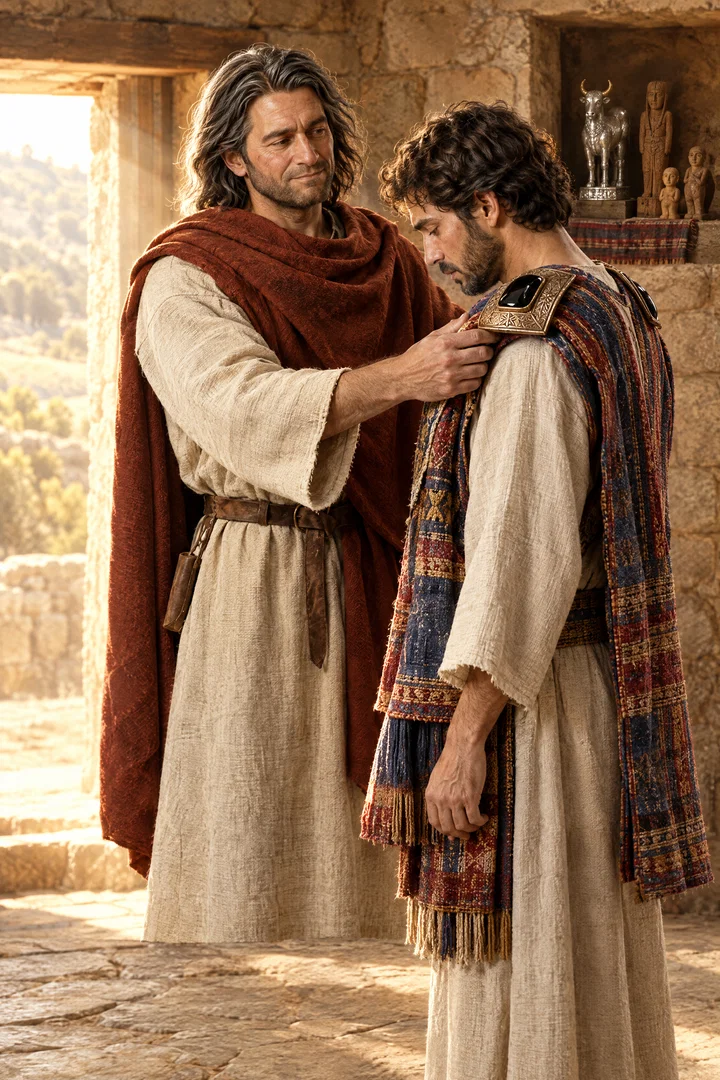
Cross-references
- Judges 18:30
And the children of Dan set up the graven image: and Jonathan, the son of Gershom, the son of Manasseh, he and his sons were priests to the tribe of Dan until the day of the captivity of the land.
The Levite serves as priest for the Danites’ image worship.
- Judges 17:1-5
And there was a man of mount Ephraim, whose name was Micah.
Micah’s household images and shrine set the context for the Levite’s service.
Commentary
Each commentary is drawn from primary sources: the writings of Ellen G. White and Adventist pioneers and periodicals. Each commentary is separate. Its own words are not a quotation; follow the references to read the source passages.
Pioneers and periodicals
8 sources
The young Levite willingly agreed to live in Micah's house as his hired priest for food, clothing and yearly pay, and Micah cared for him as one of his own sons, though Micah had no right to set him apart for that work.RH Dec 22, 1910RH Nov 10, 1863 He served a private shrine with carved images as a rival place of worship, on the idea that adding priestly forms could make idolatry acceptable to God.ST Jul 2, 1885RH Nov 10, 1863RH Jul 3, 1856 The arrangement shows Israel's pitiful backsliding into idolatry in the days of the judges, which brought disgrace, oppression and servitude, while turning back to God brought forgiveness and deliverance.ST Micah's securing of a priest of his own was an evasive effort of the sinful heart to cover guilt while continuing in sin.RH Jul 3, 1856 This chapter records Dan's first apostasy and early departure from God, the reason given for the tribe being nearly lost and left out of the sealing of the 144,000 in Revelation 7, where Ephraim is likewise omitted and Joseph is named instead.ST Jun 26, 1907ST Apr 5, 1905
Historical Setting and Meaning
The main story of the book ends with chapter 16, and chapters 17-21 stand out of chronological order at the end, recording events from the early part of the history of the judges.ST Apr 4, 1911 Those closing chapters come earlier in time than chapters 11 to 16.ST Apr 4, 1911 The chronology around them is not easy to determine, because the judges did not always rule consecutively but were often contemporaneous, with a judge ruling over only one locality or tribe in Israel.
The book is named for the leaders God raised up in times of national crisis and captivity who are called saviours, the last of whom was Samuel, and it was written about the time there was a king in Israel and is connected with Samuel or Nathan. Within its latter part, which records Israel's constant lapsing into idolatry and God's effort to restore them, this verse belongs to one of two stories of awful idolatry. It belongs to the account of the sanctuary built at Dan, one of the two closing episodes alongside the crime at Gibeah, recording Israel's backsliding set against God's great mercy and goodness.
The verse means the young Levite willingly accepted Micah's offer and was content to dwell in his household, where Micah treated him as one of his sons.RH Dec 22, 1910RH Nov 10, 1863 He agreed to serve as Micah's priest for board, clothing, and an annual payment, though Micah had no authority to set him apart for that role.RH Dec 22, 1910 In that setting he served Micah's private shrine with its molten images, a rival and idolatrous place of worship in the days of the judges.ST Jul 2, 1885RH Nov 10, 1863 He was obtained as priest for those molten images on the supposition that adding religious ordinances could make idolatry acceptable to God.ST Jul 2, 1885RH Jul 3, 1856
The Danites later took the Levite and the idols to Laish, where they established idolatrous worship in the city they renamed Dan.ST Jul 2, 1885 The arrangement by which the Levite willingly accepted a place in Micah's household parallels a later one in which John Ambitus chose and consecrated a priest to serve him, an appointment the people approved.
Backsliding and Its Consequences
The closing chapters in which the verse stands record pitiful backsliding and constant lapsing into idolatry, bringing consequent disgrace and punishment for which there is never excuse.ST That backsliding unfolded amid awful moral surroundings and the demoralizing influences of the tribes Israel permitted to remain in the land of promise.ST Backsliding from God brought suffering, oppression, captivity and servitude, while returning to God brought forgiveness and deliverance.ST The record displays the perversity and unbelief of the people against the long-suffering, goodness, mercy and effort of God and the great Father to restore them from their transgressions.ST
The verse belongs to one of the two closing episodes and stories of awful idolatry in Judges, the sanctuary built at Dan, alongside the crime at Gibeah. The book is named for the leaders God raised up in times of national crisis and captivity who are called saviours, the last of whom was Samuel, and it was written about the time there was a king in Israel and is connected with Samuel or Nathan. The chronology around the verse is not easy to determine, because the judges did not always rule consecutively but were often contemporaneous, with a judge ruling over only one locality or tribe in Israel.
Micah's obtaining of the Levite as priest for his molten images exemplifies the evasive spirit of the sinful human heart in trying to cover guilt.RH Jul 3, 1856 He supposed that adding religious ordinances could make idolatry acceptable to God.RH Jul 3, 1856 The chapter containing the verse records Dan's first apostasy and early departure from God into idolatry.ST Jun 26, 1907ST Apr 5, 1905 This is offered as a possible reason the tribe was nearly lost and was omitted from the sealing list of the 144,000 in Revelation 7, where Ephraim is likewise omitted while Joseph is named.ST Jun 26, 1907ST Apr 5, 1905 The backslidden condition shown in these chapters is still seen today.
Sources