Judges 17:12
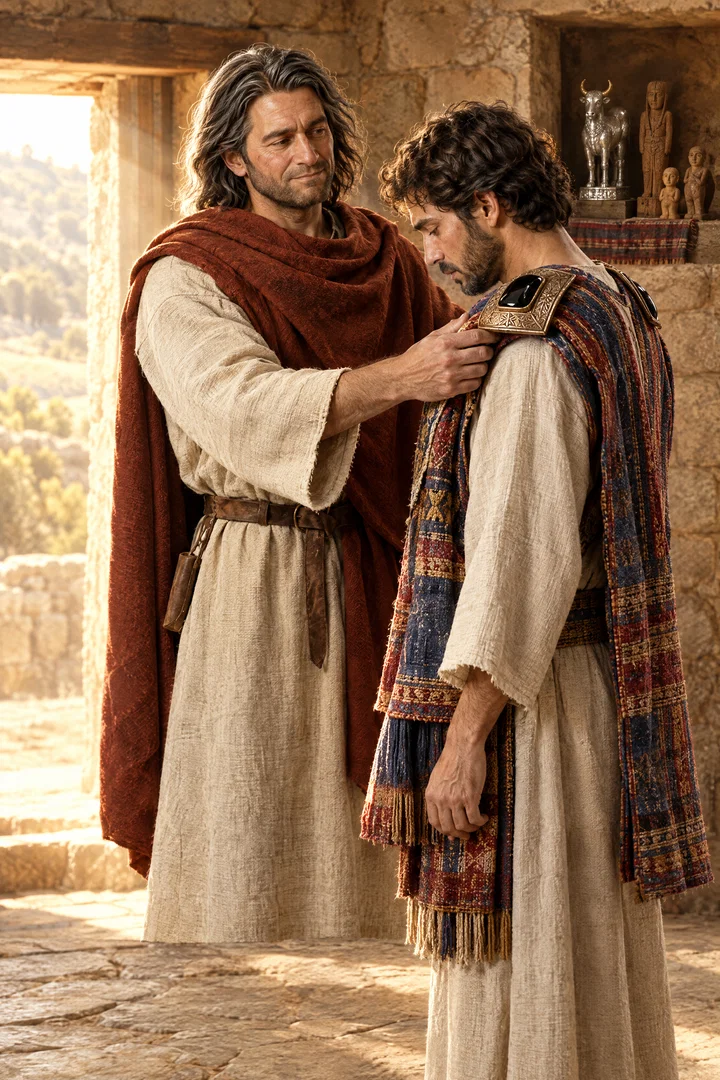
And Micah consecrated the Levite; and the young man became his priest, and was in the house of Micah.
Translations
American King James Version, King James Version, KJV Cambridge Paragraph Bible, Webster Bible, Darby Translation
And Micah consecrated the Levite; and the young man became his priest, and was in the house of Micah.
Revised Version, American Standard Version
And Micah consecrated the Levite, and the young man became his priest, and was in the house of Micah.
And Micah consecrateth the hand of the Levite, and the young man is to him for a priest, and he is in the house of Micah,
And Micah installed the Levite, and the young man became his priest,—and remained in the house of Micah.
Berean Standard Bible, Majority Standard Bible
Micah ordained the Levite, and the young man became his priest and lived in his house.
Micah consecrated the Levite, and the young man became his priest, and was in the house of Micah.
And Micah gave the position to the Levite, and the young man became his priest, and was in the house of Micah.
And Michah consecrated the Leuite, and the yong man was his Priest, and was in the house of Michah.
Douay-Rheims (Challoner revision)
And Michas filled his hand, and had the young man with him, for his priest, saying:
Pictures
Cross-references
- Judges 18:30
And the children of Dan set up the graven image: and Jonathan, the son of Gershom, the son of Manasseh, he and his sons were priests to the tribe of Dan until the day of the captivity of the land.
The Levite Micah consecrated becomes priest to the Danites, who establish idolatrous worship.
- Judges 17:1-5
And there was a man of mount Ephraim, whose name was Micah.
Micah’s images and household shrine form the setting for his appointment of the Levite.
- 1 Kings 12:28-30
Whereupon the king took counsel, and made two calves of gold, and said unto them, It is too much for you to go up to Jerusalem: behold thy gods, O Israel, which brought thee up out of the land of Egypt.
Jeroboam establishes a golden calf at Dan, where idolatrous worship was already established.
Commentary
Each commentary is drawn from primary sources: the writings of Ellen G. White and Adventist pioneers and periodicals. Each commentary is separate. Its own words are not a quotation; follow the references to read the source passages.
Pioneers and periodicals
10 sources
Micah set apart the young Levite to be priest in his own house, though he had no right to appoint him, hiring him for food and clothing and ten shekels a year.RH Dec 22, 1910 He put the hired man in religious charge before his carved and molten images, turning his house into a rival place of worship.ST Jun 26, 1907ST Apr 5, 1905ST Jul 2, 1885 The act belongs to a pitiful history of backsliding that brought disgrace, oppression and captivity until the people returned to God for forgiveness and deliverance, showing both the perversity of the people amid corrupting influences and God's long-suffering goodness in seeking to restore them.ST In doing so he acted as if adding religious ordinances could make idolatry acceptable to God, and took the mere presence of a Levite in his house as proof that he was religious, though it did not make him true or save him.RH Jul 3, 1856RH Apr 17, 1900
Place in Judges
The verse stands in the book that takes its name from the leaders God raised up from time to time in great national crisis when the nation had gone into captivity. Those leaders are called saviours, with Samuel as the last of the line, and the book was written about the time there was a king in Israel.
The verse stands in Judges 17-21, which is grouped for study with Joshua 23-24 and Judges 1-10.ST Mar 28, 1911 In that grouping Joshua near death rehearses God's dealings with Israel, charges Israel to choose whom they will serve, and declares that he and his house will serve the Lord.ST Mar 28, 1911 Chapters 17-21 record events that occurred in the early part of the history of the judges though placed at the end of the book, whose real story ends with chapter 16. Chronologically they belong before chapters 11-16.ST Apr 4, 1911
The chapter is background to the first apostasy associated with Dan and to the omission of Ephraim, with Joseph named instead, in the tribal lists.ST Jun 26, 1907 The episode illustrates the early departure of the tribe of Dan from God into idolatry.ST Apr 5, 1905 It is recorded alongside the building of the sanctuary at Dan as part of the book's account of Israel's spiritual backsliding.
Micah's Irregular Priesthood
Micah set apart the young Levite on his own irregular authority to be his household priest, though he had no authority from the tribe of Levi to make such an appointment, and the Levite accepted Micah's terms of food and clothing and ten shekels a year.RH Dec 22, 1910 He installed this hired Levite to minister with religious authority before his idols and molten images in his house, giving a hired man a priestly standing in his household idolatry.ST Jul 2, 1885RH Jul 3, 1856 In this way his house became a rival place of worship in the days of the Judges and Samuel, with a Levite installed as its priest.RH Nov 10, 1863 The act is described as a ruler consecrating a man to minister before him as priest in the ruler's household.
The verse belongs to one composite record of backsliding from God followed by consequent suffering, oppression, captivity and servitude, then returning to God, forgiveness and deliverance.ST It shows the perversity and unbelief of the people amid awful moral surroundings and the demoralizing influences of the tribes permitted to remain in the land of promise, and the long-suffering and goodness of God in seeking to restore them.ST It is recorded alongside the building of the sanctuary at Dan as part of the book's account of Israel's spiritual backsliding. It belongs to one of two stories of awful idolatry in the latter part of Judges, showing the sad record of God's people's transgressions and constant lapsing into idolatry and God's effort to restore them, a record not delightful to dwell upon.
It belongs to a pitiful record of backsliding that brought disgrace and punishment. The closing chapters show a time when conventional hospitality was put above female virtue and loyalty to a tribe was put above rendering justice, a wrong still seen today, for which there is never excuse for sin. The backsliding shown must not be taken to mean that one can backslide with impunity.
Micah acted as though adding religious ordinances could make idolatry acceptable to God, using religious forms to evade guilt rather than obeying God.RH Jul 3, 1856 He treated the presence of a Levite priest in his house as evidence that he was religious, though this did not make him a true Christian or save him.RH Apr 17, 1900 The verse is applied to a ruler choosing and consecrating a learned, influential man to minister before him as priest in his household.
Sources