Judges 18:24
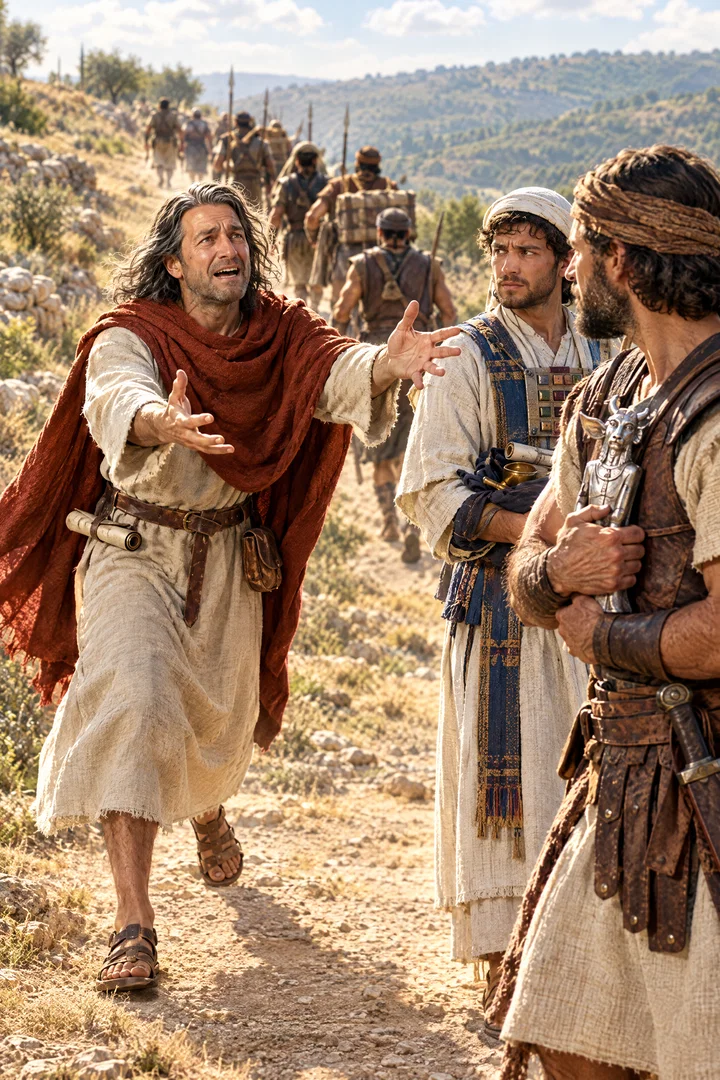
And he said, Ye have taken away my gods which I made, and the priest, and ye are gone away: and what have I more? and what is this that ye say unto me, What aileth thee?
Translations
And he said, You have taken away my gods which I made, and the priest, and you are gone away: and what have I more? and what is this that you say to me, What ails you?
King James Version, KJV Cambridge Paragraph Bible
And he said, Ye have taken away my gods which I made, and the priest, and ye are gone away: and what have I more? and what is this that ye say unto me, What aileth thee?
And he said, Ye have taken away my gods which I made, and the priest, and ye have gone away: and what have I more? and what is this that ye say to me, What aileth thee?
And he said, Ye have taken away my gods which I made, and the priest, and are gone away, and what have I more? and how then say ye unto me, What aileth thee?
And he said, ye have taken away my gods which I made, and the priest, and are gone away, and what have I more? and how then say ye unto me, What aileth thee?
And he saith, 'My gods which I made ye have taken, and the priest, and ye go; and what to me more? and what [is] this ye say unto me, What — to thee!'
And he said, Ye have taken away my gods which I made, and the priest, and ye are gone away; and what have I more? and what is this that ye say to me, What aileth thee?
And he said—My gods which I had made, ye have taken away, and the priest, and have departed, and what have I more? How then is it that ye can say unto me, What aileth thee?
Berean Standard Bible, Majority Standard Bible
He replied, “ You took the gods I had made, and my priest, and went away. What else do I have? How can you say to me, ‘ What is the matter with you?’”
He said, “ You have taken away my gods which I made, and the priest, and have gone away! What more do I have? How can you ask me, ‘ What ails you?’”
And he said, You have taken my gods which I made, and my priest, and have gone away; what is there for me now? Why then do you say to me, What is your trouble?
And hee saide, Yee haue taken away my gods, which I made, and the Priest, and go your wayes: and what haue I more? howe then say ye vnto me, what ayleth thee?
Douay-Rheims (Challoner revision)
And he answered: You have taken away my gods which I have made me and the priest, and all that I have, and do you say: What aileth thee?
Pictures
Cross-references
- Judges 17:1-5
And there was a man of mount Ephraim, whose name was Micah.
Micah makes the images the Danites take.
- Judges 18:17-20
And the five men that went to spy out the land went up, and came in thither, and took the graven image, and the ephod, and the teraphim, and the molten image: and the priest stood in the entering of the gate with the six hundred men that were appointed with weapons of war.
The Danites take Micah’s idols and priest.
- Judges 17:10-12
And Micah said unto him, Dwell with me, and be unto me a father and a priest, and I will give thee ten shekels of silver by the year, and a suit of apparel, and thy victuals. So the Levite went in.
Micah appoints the Levite as his priest before the Danites take him.
- Judges 18:30
And the children of Dan set up the graven image: and Jonathan, the son of Gershom, the son of Manasseh, he and his sons were priests to the tribe of Dan until the day of the captivity of the land.
Identifies the Levite whom the Danites make their priest.
Commentary
Each commentary is drawn from primary sources: the writings of Ellen G. White and Adventist pioneers and periodicals. Each commentary is separate. Its own words are not a quotation; follow the references to read the source passages.
Pioneers and periodicals
7 sources
Chapters 17 through 21 of Judges record events from the early part of the judges period, earlier in time than chapters 11 through 16, while the main story of the book ends with chapter 16.ST Apr 4, 1911 The verse stands in those closing chapters that record backsliding and its resulting disgrace and punishment, belonging to an account of wrongdoing for which there is no excuse. It belongs to the account of Israel's lawless condition, when people did what was right in their own eyes, and the events in chapters 18 and 19 reveal gross immorality.ST Jun 1, 1904
The verse records Micah protesting that the Danites had taken away the gods he had made and the priest, a Levite, whom he had hired, leaving him with nothing.ST Jul 2, 1885RH Dec 22, 1910 His question what have I more expresses his sense of loss of his household idols and priest and of everything he valued and his happiness, feeling that all he had was gone when his god was taken.ST Jul 2, 1885RH Dec 22, 1910RH Dec 30, 1858 The Danites persuaded the Levite to leave Micah for the promise of becoming priest to an entire tribe rather than to one man.RH Dec 22, 1910 They carried Micah's idols and priest to Laish, where they established idolatrous worship in the city they renamed Dan, and this worship continued there until the ten tribes went into captivity.ST Jul 2, 1885
This action was Dan's first apostasy, which is suggested as a reason the tribe of Dan was omitted from the list of tribes sealed in Revelation 7.ST Jun 26, 1907 The chapter shows that human conscience and reason without divine revelation are corrupted by selfishness, so that wrong appears right and right appears wrong, and right must instead be measured by God's law.ST Jun 1, 1904 The verse shows idolaters treating their handmade gods and priests as what they most depend on, with hearts attached to idols rather than to God, and it illustrates the folly of choosing a god one cannot keep.RH Apr 19, 1870RH Dec 30, 1858
The verse shows Israel's backsliding and does not mean one can backslide with impunity. It is applied to people who fear that losing their Sabbath would bring ruin, comparing that attachment to the idolaters' concern for their gods and priests.RH Apr 19, 1870
Sources