Judges 4:17
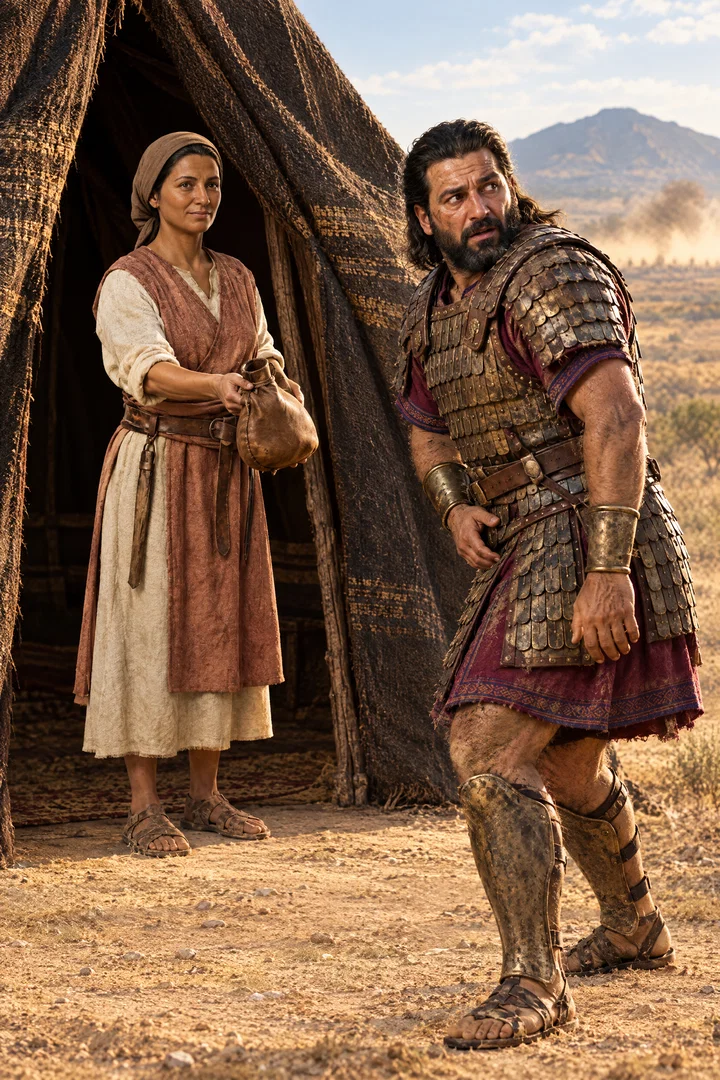
Howbeit Sisera fled away on his feet to the tent of Jael the wife of Heber the Kenite: for there was peace between Jabin the king of Hazor and the house of Heber the Kenite.
Translations
However, Sisera fled away on his feet to the tent of Jael the wife of Heber the Kenite: for there was peace between Jabin the king of Hazor and the house of Heber the Kenite.
King James Version, KJV Cambridge Paragraph Bible, Revised Version
Howbeit Sisera fled away on his feet to the tent of Jael the wife of Heber the Kenite: for there was peace between Jabin the king of Hazor and the house of Heber the Kenite.
Howbeit, Sisera fled away on his feet to the tent of Jael the wife of Heber the Kenite: for there was peace between Jabin the king of Hazor and the house of Heber the Kenite.
Howbeit Sisera fled away on his feet to the tent of Jael the wife of Heber the Kenite; for there was peace between Jabin the king of Hazor and the house of Heber the Kenite.
And Sisera hath fled on his feet unto the tent of Jael wife of Heber the Kenite, for peace [is] between Jabin king of Hazor and the house of Heber the Kenite;
And Sisera fled on foot to the tent of Jael the wife of Heber the Kenite; for there was peace between Jabin the king of Hazor and the house of Heber the Kenite.
Now, Sisera, had fled on foot, unto the tent of Jael, wife of Heber the Kenite, for there was peace between Jabin, king of Hazer, and the house of Heber the Kenite.
Berean Standard Bible, Majority Standard Bible
Meanwhile, Sisera had fled on foot to the tent of Jael, the wife of Heber the Kenite, because there was peace between Jabin king of Hazor and the house of Heber the Kenite.
However Sisera fled away on his feet to the tent of Jael the wife of Heber the Kenite; for there was peace between Jabin the king of Hazor and the house of Heber the Kenite.
But Sisera went in flight on foot to the tent of Jael, the wife of Heber the Kenite; for there was peace between Jabin, king of Hazor, and the family of Heber the Kenite.
Howbeit Sisera fled away on his feete to the tent of Iael the wife of Heber the Kenite: (for peace was betweene Iabin the king of Hazor, and betweene the house of Heber the Kenite)
Douay-Rheims (Challoner revision)
But Sisara fleeing came to the tent of Jahel the wife of Haber the Cinite, for there was peace between Jabin the king of Asor, and the house of Haber the Cinite.
Pictures
Cross-references
- Judges 5:24-27
Blessed above women shall Jael the wife of Heber the Kenite be, blessed shall she be above women in the tent.
Deborah’s song honors Jael for killing Sisera and recounts Jabin’s defeat.
- Judges 5:20-21
They fought from heaven; the stars in their courses fought against Sisera.
The song recounts the stars fighting Sisera and the Kishon sweeping away his forces.
- Judges 4:9
And she said, I will surely go with thee: notwithstanding the journey that thou takest shall not be for thine honour; for the LORD shall sell Sisera into the hand of a woman. And Deborah arose, and went with Barak to Kedesh.
Deborah foretells that a woman will gain the honor.
- Judges 4:6
And she sent and called Barak the son of Abinoam out of Kedesh-naphtali, and said unto him, Hath not the LORD God of Israel commanded, saying, Go and draw toward mount Tabor, and take with thee ten thousand men of the children of Naphtali and of the children of Zebulun?
Deborah tells Barak to lead Israel’s forces against Sisera.
Commentary
Each commentary is drawn from primary sources: the writings of Ellen G. White and Adventist pioneers and periodicals. Each commentary is separate. Its own words are not a quotation; follow the references to read the source passages.
Ellen G. White
Sisera abandoned his chariot when he saw his army defeated and fled on foot like a common soldier to the tent of Heber the Kenite. Heber was a descendant of Jethro. Sisera sought refuge there because he trusted in the peace that existed between Jabin king of Hazor and the house of Heber. Heber himself was absent, so his wife Jael invited Sisera in to shelter, courteously offering him a refreshing draught to drink and opportunity for repose until the weary general fell asleep. While ignorant of his character Jael at first resolved to conceal him, but upon learning that he was Sisera, the enemy of God and of His people, she changed her purpose.
Pioneers and periodicals
14 sources
After Barak's victory delivered Israel from twenty years of grievous oppression by Jabin king of Canaan, when the Kishon swept away the chariots on the plain of Esdraelon and the stars fought against Sisera, the defeated captain left his chariot and fled away on foot like a common soldier.RH Feb 2, 1905STRH Jun 29, 1911ST Aug 20, 1912 He made for the tent of Jael the wife of Heber the Kenite, a descendant of Jethro Moses' father-in-law, because peace between Jabin king of Hazor and the house of Heber placed her household outside the conflict and promised protection, and Heber himself was absent.ST May 27, 1913RH Apr 1, 1902ST Jael courteously invited him in, gave him milk and covering for repose until the weary general slept, then, learning he was Sisera the enemy of God and His people, killed him so that Barak found him dead and she gained the honor of defeating Israel's enemy as Deborah had foretold.RH Apr 1, 1902RH Jun 29, 1911 The battle in the days of Deborah and Barak is an object lesson for Armageddon to be studied in connection with the sixth and seventh plagues, warning that those who take up arms against God's forces face a fatal end by Jael's hand.RH Mar 19, 1901RH Jun 2, 1904 Deborah's helping of Barak and courageous Jael's deed with the enemy captain delivered into her hands show that women may serve publicly for God without usurping authority over men, and her fearlessness is needed today not on the field of worldly strife but in the home where mothers must strike the death-blow to sin in the greatest battle against principalities and spiritual wickedness.ST May 13, 1903RH Dec 14, 1911RH Dec 14, 1911
Flight to Jael's Tent
The verse stands in the time between the death of Joshua and the raising up of Samuel, the composite record of Judges 3 to 17 of repeated backsliding from God followed by suffering, oppression, captivity and servitude, then returning to God followed by forgiveness and deliverance.STST Apr 1, 1913 It belongs to Barak's victory over the Canaanites in delivering Israel from Jabin king of Canaan after twenty years of grievous oppression, with Jael's part in that deliverance.RH Feb 2, 1905ST That victory was one of the two great victories associated with the Megiddo battlefield, the victory of Barak and Deborah by which Israel first gained possession of the plain of Esdraelon.RH Feb 2, 1905ST May 9, 1916 In that defeat the Kishon River swept away the Canaanite chariots and forces, and the stars fought against Sisera.ST Aug 20, 1912
When Sisera saw his army defeated and facing capture he left his chariot and his command and fled away on foot like a common soldier.RH Jun 29, 1911 He fled to the tent of Jael because there was peace between Jabin king of Hazor and the house of Heber the Kenite.ST May 27, 1913RH Apr 1, 1902 That peace placed Jael's household outside the conflict between Jabin and Israel, so that Heber seemed a friend and a possible source of protection in whom Sisera could trust.ST May 27, 1913RH Apr 1, 1902
Heber was a Kenite, a descendant of Jethro, also called Hobab, Moses' father-in-law, and Jael was his wife.ST Heber himself was absent when Sisera arrived. In his absence Jael invited Sisera to shelter, courteously offering a refreshing draught of milk and opportunity for repose with a covering until the weary general fell asleep.RH Jun 29, 1911 At first she resolved to conceal him while ignorant of his character, but on learning he was Sisera the enemy of God and His people she changed her purpose and killed him as he slept. So Barak found him dead, and Jael gained the honor of defeating Israel's enemy as Deborah had foretold.RH Jun 29, 1911ST Aug 20, 1912
Prophecy, Warning, and Example
The battle in the days of Deborah and Barak is an object lesson for Armageddon and is important to study in connection with the sixth and seventh plagues.RH Mar 19, 1901 Sisera fled to Jael's tent after taking up arms against God's forces, warning that those who fight against God face a fatal end, as Sisera did by Jael's hand.RH Jun 2, 1904
The verse belongs to the composite record of Judges 3 to 17 of backsliding from God followed by suffering, oppression, captivity and servitude, then returning to God followed by forgiveness and deliverance.ST It shows the perversity and unbelief of Israel against the long-suffering and goodness of God.ST It took place amid awful moral surroundings and the demoralizing influences of the tribes Israel permitted to remain in the land of promise.ST
Deborah the prophetess helping Barak shows that women may serve publicly for God without usurping authority over men.ST May 13, 1903 Courageous Jael with the enemy captain delivered into her hands did a good work, showing that God honors woman in all ages.RH Dec 14, 1911 She is placed as a beacon-light in every avenue of life.RH Dec 14, 1911
Jael's fearlessness and courage when the enemy captain was delivered into her hands and she struck the death-blow are not needed today on the field of worldly strife but in the home.RH Dec 14, 1911 It is in the home that the greatest battle of the universe against principalities and powers and spiritual wickedness is waged.RH Dec 14, 1911 Mothers need Jael's fearlessness and courage to strike the death-blow to sin in the home.RH Dec 14, 1911
Sources