Leviticus 21:17
Speak unto Aaron, saying, Whosoever he be of thy seed in their generations that hath any blemish, let him not approach to offer the bread of his God.
Translations
Speak to Aaron, saying, Whoever he be of your seed in their generations that has any blemish, let him not approach to offer the bread of his God.
King James Version, KJV Cambridge Paragraph Bible
Speak unto Aaron, saying, Whosoever he be of thy seed in their generations that hath any blemish, let him not approach to offer the bread of his God.
Speak to Aaron, saying, whoever he may be of thy seed in their generations that hath any blemish, let him not approach to offer the bread of his God:
Revised Version, American Standard Version
Speak unto Aaron, saying, Whosoever he be of thy seed throughout their generations that hath a blemish, let him not approach to offer the bread of his God.
'Speak unto Aaron, saying, No man of thy seed to their generations in whom there is blemish doth draw near to bring near the bread of his God,
Speak unto Aaron, saying, Any of thy seed throughout their generations that hath any defect, shall not approach to present the bread of his God;
Speak unto Aaron, saying,—No man of thy seed, unto their generations in whom shall be any blemish, shall come near, to present the food of his God.
Berean Standard Bible, Majority Standard Bible
“ Say to Aaron, ‘ For the generations to come, none of your descendants who has a physical defect may approach to offer the food of his God.
“ Say to Aaron, ‘ None of your offspring throughout their generations who has a defect may approach to offer the bread of his God.
Say to Aaron, If a man of your family, in any generation, is damaged in body, let him not come near to make the offering of the bread of his God.
Speake vnto Aaron, and say, Whosoeuer of thy seede in their generations hath any blemishes, shall not prease to offer the bread of his God:
Douay-Rheims (Challoner revision)
Say to Aaron: Whosoever of thy seed throughout their families, hath a blemish, he shall not offer bread to his God.
Pictures
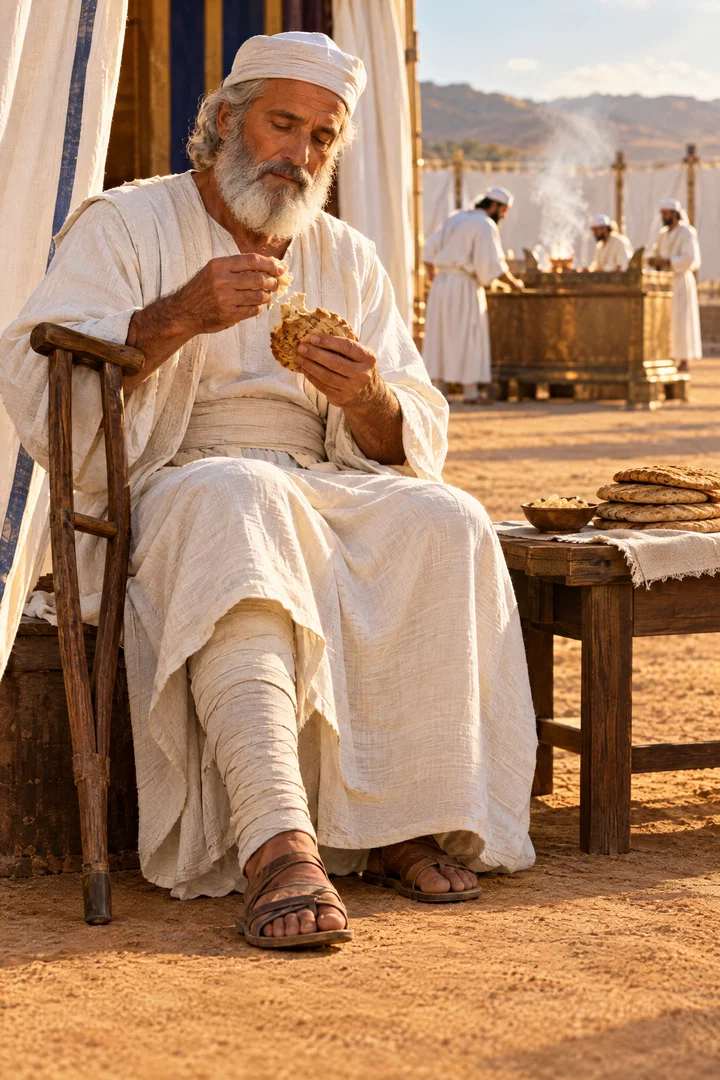
Cross-references
- Leviticus 21:6
They shall be holy unto their God, and not profane the name of their God: for the offerings of the LORD made by fire, and the bread of their God, they do offer: therefore they shall be holy.
Both use the phrase “the bread of their God.”
- Leviticus 21:8
Thou shalt sanctify him therefore; for he offereth the bread of thy God: he shall be holy unto thee: for I the LORD, which sanctify you, am holy.
Both use the phrase “bread of thy God.”
- Ezekiel 44:7
In that ye have brought into my sanctuary strangers, uncircumcised in heart, and uncircumcised in flesh, to be in my sanctuary, to pollute it, even my house, when ye offer my bread, the fat and the blood, and they have broken my covenant because of all your abominations.
Both describe sacrificial offerings as the bread of God.
Commentary
Each commentary is drawn from primary sources: the writings of Ellen G. White and Adventist pioneers and periodicals. Each commentary is separate. Its own words are not a quotation; follow the references to read the source passages.
Ellen G. White
3 sources
No descendant of Aaron in their generations who had any blemish was to approach to offer the bread of his God, for those who ministered in the sanctuary had to be holy, pure, and without blemish to minister before Him.EW 82.2SCEV 21.1Ms 2, 1853, par. 2–3 This restriction was given because their work brought them into close connection with God.SCEV 21.1Ms 2, 1853, par. 2–3 If one ministered in violation of this requirement, God would destroy him.Ms 2, 1853, par. 2–3 The requirement reflects God's enduring and continuing holiness and purity and His exacting standard for those who minister.EW 82.2SCEV 21.1
The same holiness and purity are required of those who serve as ministers of Jesus.EW 82.2Ms 2, 1853, par. 2–3 Such ministers should be pure in their words and actions.EW 82.2 They should be marked by deep piety and deep spiritual experience.EW 82.2Ms 2, 1853, par. 2–3 Those who meet this standard will be a blessing wherever they are.Ms 2, 1853, par. 2–3
Sources
Pioneers and periodicals
4 sources
Any descendant of Aaron in his generations who had any blemish was not to approach to offer the bread of his God, and this barred him from serving as priest and shut him out from the highest duties of divine service.ST Aug 21, 1884RH Apr 1, 1909RH Sep 30, 1873 A flat nose is named among the bodily blemishes that so barred priestly service.RH Sep 30, 1873
The bread of God is the fat of the offerings wholly consumed by fire on the altar, called the food of the offering made by fire to God because the altar on which it was burned belonged to the Lord.ST May 22, 1901 In Christian sacrifice the sins stripped from the repentant sinner and given up to the Lord to be consumed are that fat, because Jesus by His sacrifice bought those sins, while in mercy all the rest is retained to be transferred bodily to the sanctuary above at the proper time.ST May 22, 1901
The requirement of physical wholeness for approaching the altar in temple service calls Christians to spiritual and moral perfection, with bodily defects picturing weakness of character, loss of spiritual insight, difficulty advancing upward, and general loss of spiritual vitality.ST Aug 21, 1884 The rule on eligibility for priestly service stands as an analogy for the need for capable ministers.RH Sep 30, 1873
Sources