Leviticus 27:33
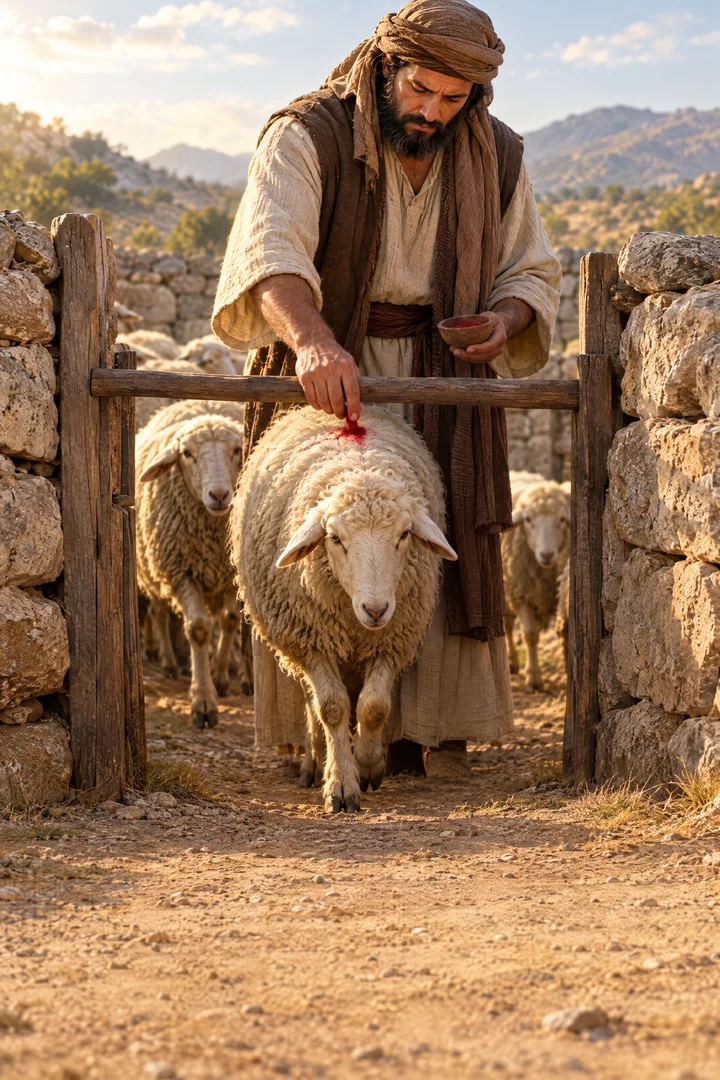
He shall not search whether it be good or bad, neither shall he change it: and if he change it at all, then both it and the change thereof shall be holy; it shall not be redeemed.
Translations
American King James Version, King James Version, KJV Cambridge Paragraph Bible
He shall not search whether it be good or bad, neither shall he change it: and if he change it at all, then both it and the change thereof shall be holy; it shall not be redeemed.
He shall not search whether it is good or bad, neither shall he change it: and if he shall change it at all, then both it and the change of it shall be holy; it shall not be redeemed.
Revised Version, American Standard Version
He shall not search whether it be good or bad, neither shall he change it: and if he change it at all, then both it and that for which it is changed shall be holy; it shall not be redeemed.
he enquireth not between good and bad, nor doth he change it; and if he really change it — then it hath been — it and its exchange is holy; it is not redeemed.'
He shall not search whether it be good or bad, neither shall he change it; and if he change it at all, then both it and the exchange thereof shall be holy; it shall not be redeemed.
He shall not examine whether it be good or bad neither shall he change it,—or, if he do in anywise change, it, then shall both, it and what is given in exchange for it, be holy, it shall not be redeemed.
Berean Standard Bible, Majority Standard Bible
He must not inspect whether it is good or bad, and he shall not make any substitution. But if he does make a substitution, both the animal and its substitute shall become holy; they cannot be redeemed.’”
He shall not examine whether it is good or bad, neither shall he exchange it. If he exchanges it at all, then both it and that for which it is exchanged shall be holy. It shall not be redeemed.’”
He may not make search to see if it is good or bad, or make any changes in it; and if he makes exchange of it for another, the two will be holy; he will not get them back again.
He shall not looke if it be good or bad, neither shall he change it: els if he change it, both it, and that it was changed withall, shalbe holy, and it shall not be redeemed.
Douay-Rheims (Challoner revision)
It shall not be chosen neither good nor bad, neither shall it be changed for another. If any man change it: both that which was changed, and that for which it was changed, shall be sanctified to the Lord, and shall not be redeemed.
Pictures
Cross-references
- Joshua 6:17-19
And the city shall be accursed, even it, and all that are therein, to the LORD: only Rahab the harlot shall live, she and all that are with her in the house, because she hid the messengers that we sent.
Jericho is devoted to destruction, and its precious things are consecrated to the LORD.
- Proverbs 20:25
It is a snare to the man who devoureth that which is holy, and after vows to make enquiry.
Both warn against taking back what has been vowed or consecrated.
- Leviticus 27:27
And if it be of an unclean beast, then he shall redeem it according to thine estimation, and shall add a fifth part of it thereto: or if it be not redeemed, then it shall be sold according to thy estimation.
Contrasts redemption rules with the prohibition on redeeming an exchanged tithe.
- Leviticus 27:2-8
Speak unto the children of Israel, and say unto them, When a man shall make a singular vow, the persons shall be for the LORD by thy estimation.
The law sets valuations for redeeming a person devoted by a vow.
- Joshua 7:1
But the children of Israel committed a trespass in the accursed thing: for Achan, the son of Carmi, the son of Zabdi, the son of Zerah, of the tribe of Judah, took of the accursed thing: and the anger of the LORD was kindled against the children of Israel.
Achan’s theft of what was devoted to God illustrates taking God’s portion.
Commentary
Each commentary is drawn from primary sources: the writings of Ellen G. White and Adventist pioneers and periodicals. Each commentary is separate. Its own words are not a quotation; follow the references to read the source passages.
Ellen G. White
3 sources
The tenth animal of the herd and flock that passes under the shepherd's rod is set apart as holy and belongs to the Lord.Ms 166, 1898, par. 49–51 No searching is to be made whether it be good or bad, and no change or substitution is to be made.Ms 166, 1898, par. 49–51 If an exchange is made at all, both the original animal and the change thereof become holy and shall not be redeemed.Ms 166, 1898, par. 49–51 All that people possess remains God's own property and is only lent to them in trust, including physical and mental powers and capital of means, and is not to be used as if it were their own.Ms 166, 1898, par. 49–51MYP 305.2RH Aug 25, 1874
The required return is His claimed portion as rental money for His vineyard entrusted to His husbandmen as caretakers, to be faithfully returned to Him.Ms 166, 1898, par. 49–51 That vineyard is to be cultivated so as to bring Him a large income in tithes and offerings.Ms 166, 1898, par. 49–51 The tenth is sacred and belongs to God, not an optional gift, and withholding it is robbery; it is the least He claims, with gifts and offerings expected in addition to it.RH Aug 25, 1874 The tithing system is a definite plan reaching back before Moses, yet giving under it remains voluntary and is not compelled.RH Aug 25, 1874
The set-apart portion is for sustaining the ministry and is to be used for no other purpose, while gifts and offerings relieve the necessities of the church and provision is made for the poor and suffering.Ms 166, 1898, par. 49–51 This consecration of the tithe from flocks and herds keeps continually before the people that all belongs to Him.MYP 305.2 It trains them to resist selfishness and to become channels of blessing.MYP 305.2 Failure to return the tenth stands recorded as unfaithful handling of property entrusted to them, and repentance requires more than merely beginning to tithe correctly from that time onward.RH Aug 25, 1874
Sources
Pioneers and periodicals
30 sources
The tenth animal of the herd or flock that passes under the counting rod is holy to the Lord and must be taken just as it comes, without examining whether it is good or bad and without exchanging it for another, and if any exchange is made both animals are holy and cannot be bought back.RH Apr 27, 1905RH Mar 31, 1903 The tenth is already the Lord's own holy property, not the giver's to make His by giving it.ST Jan 28, 1889ST Oct 15, 1902 Tithing did not begin with Levi but was already practiced by Abraham and Jacob, and it passed through the Levitical service to continue as obligation under Christ's Melchizedek priesthood until the close of probation.ST Jan 28, 1889ST Apr 20, 1904RH Mar 9, 1905ST Feb 15, 1910RH Mar 9, 1905 Returning the tithe acknowledges God's ownership of all, while the remaining nine-tenths is left to man as steward to use to His glory.ST May 20, 1897ST Jul 3, 1893 All the tithe is the Lord's for Him to direct, wholly appointed for the support of His workers and the proclamation of the gospel, so to judge, alter, redirect or withhold it for debts, self or any other purpose is to rob God of what is specially set apart for His service.ST Jan 28, 1889RH May 8, 1879RH Mar 31, 1903ST Jul 3, 1893ST Dec 10, 1912
Meaning of the Requirement
Every tenth animal of the herd or flock counted as it passes under the rod is holy to the Lord and must be taken just as it comes in the count.RH Apr 27, 1905RH Mar 31, 1903ST Aug 2, 1905ST Sep 12, 1895 The owner must not search or judge whether it is good or bad and must not inspect it in order to choose, nor change or exchange it for another for any cause.RH Apr 27, 1905RH Mar 31, 1903ST Aug 2, 1905ST Sep 12, 1895 If he changes it at all, both the original animal and the substitute, the change thereof, become holy and shall not be redeemed or bought back.RH Apr 27, 1905RH Mar 31, 1903ST Aug 2, 1905
The tenth is already the Lord's own holy property, not something that only becomes His later.ST Jan 28, 1889ST Oct 15, 1902 It is not a gift that makes it God's and it is not the giver's property, for God permits use of the other nine parts while the one tenth remains His, set apart as holy to the Lord, including the tenth of income.ST Jan 28, 1889ST Oct 15, 1902RH Jul 23, 1872 The law is a reminder of an established practice rather than a new rule originating with the Levites, to whom the tithe was later assigned, yet even a tenth of that tithe was still offered to the Lord, affirming that the tenth remained His.ST Jan 28, 1889ST Feb 15, 1910 The verse stands among the commandments given through Moses at Mount Sinai declaring the tithe of seed, fruit, herd and flock to be the Lord's holy property, and it belongs to the closing instruction on the tithing system, God's plan for supporting His work, in a chapter of laws concerning redemption whose final section explains how the law of tithing was carried out in Israel.RH Apr 27, 1905ST Apr 20, 1904ST Feb 15, 1910
Redeeming any other part of the tithe, such as the produce of the land, requires determining its value and adding a fifth part to it.ST Aug 2, 1905ST Sep 12, 1895RH Jan 9, 1913 The first tithe, the tenth part of increase given for the support of the Levites or ministry, is not to be used for any other purpose, and if it is used for another purpose it must be returned with one fifth, or twenty percent, added to it.ST Aug 2, 1905RH Oct 29, 1908RH Jan 9, 1913 This requirement impresses the sacredness of the tithe upon the people, showing that God is particular in the matter and that the tenth animal passing under the rod belongs to the Lord whether good or bad and may not be replaced by an inferior animal.ST Aug 2, 1905RH Jan 9, 1913
The language of setting apart denotes anathema in the sense of something devoted, separated and banned.RH Apr 30, 1867RH Jun 11, 1872 It means absolute, irrevocable and entire separation, whether of a person from the communion of the faithful or from the number of the living or from the privileges of society, or the devoting of any man, animal, city or thing to be extirpated, destroyed, consumed, and as it were annihilated.RH Apr 30, 1867RH Jun 11, 1872
Continuity and Obligation
The law is a reminder of an established practice rather than a new rule originating with the Levites, for the tithe is presented as already belonging to the Lord and holy to Him, not as something that would only become His later, and though later assigned to the Levites a tenth of that tithe was still offered to the Lord.ST Jan 28, 1889ST Feb 15, 1910RH Jan 2, 1913 Tithing was already known and practiced before the Jews existed by Abraham and Jacob, and it was not a requirement peculiar to Israel but part of God's plan from the beginning, remaining the same under Israel's different circumstances as in their times.ST Apr 20, 1904ST Feb 15, 1910RH Jan 2, 1913 The practice of giving to God for religious purposes reaches back before that definite system given through Moses to provide means for His work, even to the time of Adam, as a way to show appreciation for received mercies and blessings.ST Mar 18, 1886 The closing instruction on the tithing system is God's plan for supporting His work, set within laws concerning redemption whose final section explains how the law of tithing was carried out in Israel as a tithe of the increase of flocks and fields as part of the sanctuary service.ST Apr 20, 1904ST Feb 15, 1910RH Jan 2, 1913
The tithing system was in force during the Levitical order of priesthood, standing between its earlier practice under the Melchizedek priesthood from the fall until Levi and its continued obligation under Christ's Melchizedek priesthood after the cross.RH Mar 9, 1905RH Mar 9, 1905 It was not created by or confined to the Levitical system but passed through it, proving it rests on moral principles as enduring as creation and remains binding as long as Christ ministers as priest forever after the order of Melchizedek.RH Mar 9, 1905 In this sense the tithing system is contemporaneous with the gospel, coexistent with it and inseparable from it, and it is not Jewish and not obsolete, for it was enjoined by Christ.ST Apr 20, 1904RH Mar 9, 1905
The tenth animal of herd or flock counted under the rod is holy to the Lord and must be given just as counted, without judging quality and without exchanging it, and any attempted exchange makes both the original and the substitute holy and unable to be bought back.RH Apr 27, 1905RH Apr 27, 1905 This stands among the commandments given through Moses at Mount Sinai declaring the tithe of seed, fruit, herd and flock to be the Lord's holy property, forming a test of obedience laid on Israel that was never removed and continues until the close of probation and therefore still binds believers today as Israel.RH Apr 27, 1905RH Apr 27, 1905 The law requiring the children of Israel to give a tenth of all their increase applies to God's people now, for He does not require less when time is short and a great work must be supported with their means.RH Jan 6, 1863 The obligation predates the Mosaic law and continues under Christianity, which does not permit giving less than the law required, with one-tenth of a person's increase due to God as sacred and belonging to Him and not an optional gift, while withholding it is robbery.RH Aug 25, 1874 This required tithe is separate from charitable gifts and other freely chosen offerings, the tenth being the least God claims in addition to other offerings, while giving remains voluntary rather than compelled, and failing to return it is recorded as unfaithful handling of entrusted property, for which repentance requires more than beginning to tithe correctly from then on.RH Aug 25, 1874
God is particular in the matter of the tithe and establishes it as a test of obedience and loyalty, reserving the tenth as a test of loyal obedience and recognition of His ownership that must be used for its appointed purpose of supporting the proclamation of the gospel and is not for people to judge, alter, or redirect.ST Aug 2, 1905RH Apr 8, 1902 A man must not search whether the tenth that passes under the rod is good or bad and must not change it, and if he changes it at all both the original animal and the one exchanged for it shall be holy and shall not be redeemed.ST Aug 2, 1905RH Apr 27, 1905 The tithe as a test of obedience that has not been removed applies to God's people today and shows readiness for immortal life.RH Apr 27, 1905RH Apr 27, 1905
Stewardship and Application
The verse expresses the principle that God owns all, and returning the tithe acknowledges that ownership while the remaining nine-tenths is left to man as steward to use to God's glory.ST May 20, 1897ST Jul 3, 1893 The tenth is the Lord's own, not a gift that makes something God's but what already belongs to Him, and He permits people to use the other nine parts while requiring them to act as faithful stewards of all they have.ST May 20, 1897ST Jul 3, 1893 The one-tenth claimed by God is not ours to use for ourselves, and using the Lord's portion is robbing God.ST May 20, 1897ST Jul 3, 1893
All the tithe is the Lord's, so it is for Him to say what shall be done with it.ST Jan 28, 1889RH Mar 31, 1903RH Apr 8, 1902 For the period of Levi's appointed service it was wholly given to Levi for an inheritance for their service in the tabernacle of the congregation, because while faithfully performing that work they could not accumulate property or give attention to finances.RH Mar 31, 1903ST Dec 10, 1912 A tenth of that tithe was still offered to the Lord, affirming that the tenth remained His.ST Jan 28, 1889 The tithe thus assigned, with additional special offerings, provides support for the Lord's workers and for the proclamation of the gospel, which the Lord claims for the support of His cause under every dispensation during all probationary time, before the Levites lived and throughout the Christian dispensation, distributed according to ability.RH May 8, 1879RH Mar 31, 1903RH Apr 8, 1902ST Dec 10, 1912ST Apr 20, 1904
The tenth of the herd or flock that passes under the rod is holy unto the Lord, to be taken as it comes without searching whether it is good or bad and without changing it, and if a change is made both animals become holy and cannot be redeemed.RH Mar 31, 1903 It is therefore holy to God and is not for people to judge, alter, or redirect, but must be used for its appointed purpose.RH Mar 31, 1903RH Apr 8, 1902RH Oct 29, 1908 The first tithe, the tenth part of increase, is to be given for the support of the Levites, or ministry, and is not to be used for any other purpose.RH Mar 31, 1903RH Apr 8, 1902RH Oct 29, 1908 It is not subject to Caesar's claims, and the one-tenth claimed by God is not ours to use for paying debts or for ourselves.ST Jul 3, 1893RH Oct 29, 1908ST Mar 6, 1907 If the first tithe is used for another purpose it must be returned with one fifth, or twenty percent, added to it.RH Oct 29, 1908
The general law of tithing is not a hard and fast rule about burdensome details, and in matters of detail the reckoning is between the individual and God, always giving the Lord the benefit of the doubt.ST May 20, 1897 In reckoning the tithe on farming, the cost of feed for teams used solely to tend the crop, with rent, seed grain, and hired labor, is an expense of production to be deducted before reckoning, so tithe is paid on the net profit or increase.ST May 20, 1897
Everything that is received should be tithed, not only money received.RH Mar 23, 1905RH Oct 29, 1908 God claims a tenth of all income for Himself, including grain, cattle, horses, sheep, fruit, vegetables, honey, oil, milk, butter, eggs, garden produce, and every other product, not only what is sold.RH Mar 23, 1905RH Oct 29, 1908 Food consumed at home must be tithed just as what is sold is tithed, and family living comes out of the nine-tenths left after God's tenth is taken out.RH Mar 23, 1905 The value of food eaten from the farm can be found by estimating its cash worth or weighing it for a time in order to set apart the tenth.RH Mar 23, 1905
Withholding the tithe or using the Lord's portion is robbing God and stealing holy things specially set apart for His service, including provision for His servants and service.ST Jul 3, 1893ST Dec 10, 1912RH Apr 8, 1909 One-tenth of a person's increase is due to God, and this required tithe is separate from charitable gifts and other freely chosen offerings.RH Aug 25, 1874ST Jul 16, 1894 The tenth is sacred and belongs to God and is not an optional gift, and failing to return it is recorded as unfaithful handling of property entrusted to people.RH Aug 25, 1874 Repentance requires more than beginning to tithe correctly from then on.RH Aug 25, 1874
The requirement applies when time is short and a great work must be supported, and God does not require less then; it is applied to setting aside one-tenth each week for the support of the ministry.RH May 8, 1879RH Jan 6, 1863 A tenth of the little a person has or of wages earned belongs to the Lord, given that they may have the privilege of giving it back to Him, and it must be put by itself as sacred to His service and under no circumstances used for themselves, for to use a penny of it for themselves is stealing from the Lord.ST Jul 16, 1894 The tenth is not the limit but the starting habit, and those who know the blessedness of giving will not stop at the tenth but give freewill offerings beyond it.ST Jul 16, 1894 The habit of setting the tenth aside whenever money or wages are received, formed early in childhood, keeps working by conscience even when a person becomes dissatisfied and reckless, and seizes him with horror when he tries to spend that tenth for drink, showing him that another step in that direction is destruction and turning him back to become a Christian man.ST Jul 16, 1894
What is given to God is holy and must not be taken back.RH Oct 9, 1900 A habit or appetite placed on the altar and renounced for God is no longer to be reclaimed, and indulging it again brings defeat.RH Oct 9, 1900
Sources