Leviticus 27:32
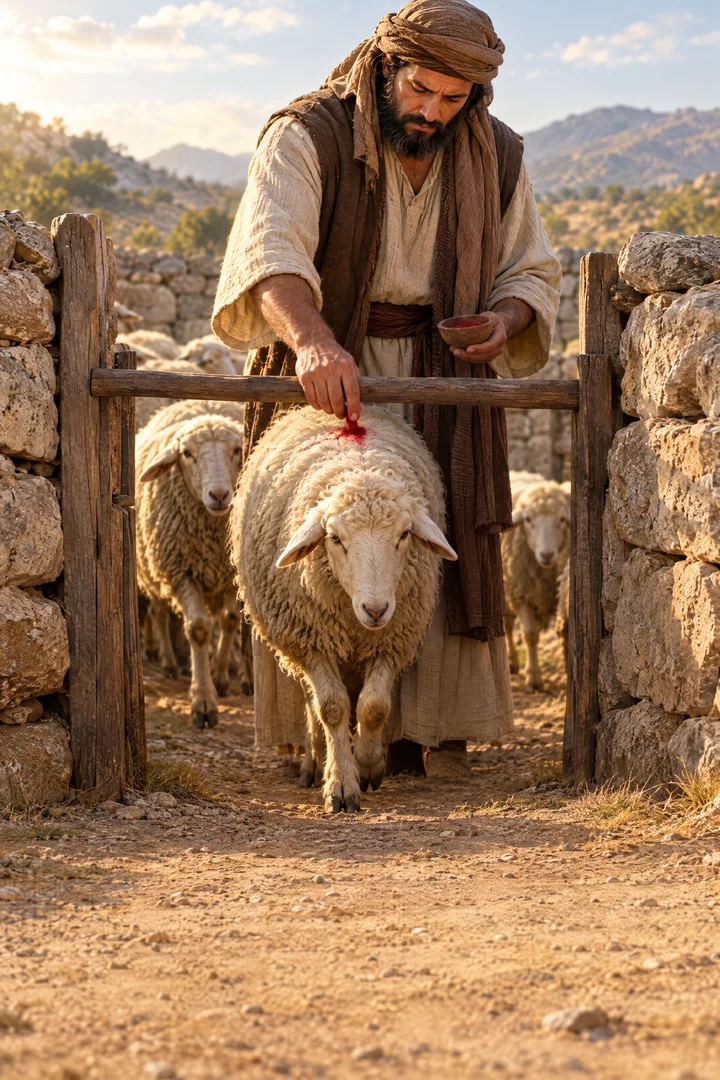
And concerning the tithe of the herd, or of the flock, even of whatsoever passeth under the rod, the tenth shall be holy unto the LORD.
Translations
And concerning the tithe of the herd, or of the flock, even of whatever passes under the rod, the tenth shall be holy to the LORD.
And concerning the tithe of the herd, or of the flock, even of whatsoever passeth under the rod, the tenth shall be holy unto the LORD.
And concerning the tithe of the herd, or of the flock, even of whatsoever passeth under the rod, the tenth shall be holy unto the Lord.
And concerning the tithe of the herd, or of the flock, even of whatever passeth under the rod, the tenth shall be holy to the LORD.
And all the tithe of the herd or the flock, whatsoever passeth under the rod, the tenth shall be holy unto the LORD.
And all the tithe of the herd or the flock, whatsoever passeth under the rod, the tenth shall be holy unto Jehovah.
'And all the tithe of the herd and of the flock — all that passeth by under the rod — the tenth is holy to Jehovah;
And as to every tithe of the herd, or of the flock, of whatever passeth under the rod, the tenth shall be holy to Jehovah.
And, as for all the tithe of herd and flock, all that passeth under the rod, the tenth, shall be holy unto Yahweh.
Berean Standard Bible, Majority Standard Bible
Every tenth animal from the herd or flock that passes under the shepherd’s rod will be holy to the LORD.
All the tithe of the herds or the flocks, whatever passes under the rod, the tenth shall be holy to the LORD.
And a tenth part of the herd and of the flock, whatever goes under the rod of the valuer, will be holy to the Lord.
And euery tithe of bullock, and of sheepe, and of all that goeth vnder the rod, the tenth shalbe holy vnto the Lord.
Douay-Rheims (Challoner revision)
Of all the tithes of oxen, and sheep, and goats, that pass under the shepherd’s rod, every tenth that cometh shall be sanctified to the Lord.
Pictures
Cross-references 20 of 22
- Malachi 3:8-10
Will a man rob God? Yet ye have robbed me. But ye say, Wherein have we robbed thee? In tithes and offerings.
Both identify the tithe as belonging to God and call for its return.
- Genesis 28:22
And this stone, which I have set for a pillar, shall be God’s house: and of all that thou shalt give me I will surely give the tenth unto thee.
Jacob vows to give God a tenth of all he receives.
- Genesis 14:20
And blessed be the most high God, which hath delivered thine enemies into thy hand. And he gave him tithes of all.
Abraham gave Melchizedek a tenth before the Mosaic law.
- Numbers 18:21
And, behold, I have given the children of Levi all the tenth in Israel for an inheritance, for their service which they serve, even the service of the tabernacle of the congregation.
Israel’s tithe is given to the Levites for their service.
- Matthew 23:23
Woe unto you, scribes and Pharisees, hypocrites! for ye pay tithe of mint and anise and cummin, and have omitted the weightier matters of the law, judgment, mercy, and faith: these ought ye to have done, and not to leave the other undone.
Jesus affirms tithing while condemning neglect of justice, mercy, and faith.
- Malachi 3:8
Will a man rob God? Yet ye have robbed me. But ye say, Wherein have we robbed thee? In tithes and offerings.
Withholding what belongs to God in tithes is called robbing Him.
- Deuteronomy 14:22-23
Thou shalt truly tithe all the increase of thy seed, that the field bringeth forth year by year.
Both command a tenth of Israel’s increase, including its herds and flocks.
- Hebrews 7:8
And here men that die receive tithes; but there he receiveth them, of whom it is witnessed that he liveth.
shows tithing is not obsolete
- 2 Chronicles 31:5-6
And as soon as the commandment came abroad, the children of Israel brought in abundance the firstfruits of corn, wine, and oil, and honey, and of all the increase of the field; and the tithe of all things brought they in abundantly.
The people bring tithes of produce and livestock, including oxen and sheep.
- Luke 11:42
But woe unto you, Pharisees! for ye tithe mint and rue and all manner of herbs, and pass over judgment and the love of God: these ought ye to have done, and not to leave the other undone.
Jesus affirms that tithing should be done without neglecting love of God.
- Numbers 18:26
Thus speak unto the Levites, and say unto them, When ye take of the children of Israel the tithes which I have given you from them for your inheritance, then ye shall offer up an heave offering of it for the LORD, even a tenth part of the tithe.
The Levites give the LORD a tenth of the tithe they receive.
- Deuteronomy 26:11-13
And thou shalt rejoice in every good thing which the LORD thy God hath given unto thee, and unto thine house, thou, and the Levite, and the stranger that is among you.
Cited with the verse on giving the tithe.
- Nehemiah 10:38
And the priest the son of Aaron shall be with the Levites, when the Levites take tithes: and the Levites shall bring up the tithe of the tithes unto the house of our God, to the chambers, into the treasure house.
Cited with the verse for Israel’s tithe practice.
- Deuteronomy 14:28-29
At the end of three years thou shalt bring forth all the tithe of thine increase the same year, and shalt lay it up within thy gates:
The tithe is set aside to feed the Levite and those in need.
- Psalms 50:10-12
For every beast of the forest is mine, and the cattle upon a thousand hills.
The cattle and the earth’s abundance belong to God.
- Numbers 18:24
But the tithes of the children of Israel, which they offer as an heave offering unto the LORD, I have given to the Levites to inherit: therefore I have said unto them, Among the children of Israel they shall have no inheritance.
Tithes are given to the Levites for their service.
- Luke 18:12
I fast twice in the week, I give tithes of all that I possess.
Cited as a reference to giving a tenth.
- Hebrews 7:2
To whom also Abraham gave a tenth part of all; first being by interpretation King of righteousness, and after that also King of Salem, which is, King of peace;
It identifies Abraham’s gift as a tenth.
- Nehemiah 13:12
Then brought all Judah the tithe of the corn and the new wine and the oil unto the treasuries.
Judah brought the tithe to support the Levites.
- Leviticus 27:27
And if it be of an unclean beast, then he shall redeem it according to thine estimation, and shall add a fifth part of it thereto: or if it be not redeemed, then it shall be sold according to thy estimation.
cited together on redeeming holy things
Commentary
Each commentary is drawn from primary sources: the writings of Ellen G. White and Adventist pioneers and periodicals. Each commentary is separate. Its own words are not a quotation; follow the references to read the source passages.
Ellen G. White
7 sources
Concerning the herd and the flock, the tenth animal counted as it passes under the rod is holy to the Lord as His own claimed and required portion.ED 138.3Ms 166, 1898, par. 49–51 That tenth is determined by count, not by judging whether it is good or bad, and it is not to be exchanged, but is to be faithfully returned as the Lord's portion. The command reaffirmed a claim God had made from the earliest times, already recognized when Abraham paid tithes to Melchizedek and when Jacob promised the tenth at Bethel.PP 525.1–2 It was given as Israel was about to be established as a nation, as one of the divinely ordained statutes upon obedience to which their prosperity depended, and it was often repeated so it would not be forgotten.Ms 166, 1898, par. 49–51PP 525.1–2
The verse sets apart one tenth of income, increase, and capital for sacred purposes, to support the public worship of God and sustain the ministry, to be used for no other purpose.Ms 166, 1898, par. 49–51PP 525.1–2 Under the Mosaic system that tenth was the least God required.RH Aug 25, 1874 Possessions and earthly riches are entrusted to people as stewards and husbandmen, like rental money held in trust, to be faithfully returned to God and used in His service to carry forward His work on earth.Ms 166, 1898, par. 49–51Ms 40, 1905, par. 13 The Lord's claims come first: the tithe is part of the required first appropriation from fields, orchards, vineyards, flocks, and herds, to be given to Him or redeemed with an equivalent, not left until other expenses are met.ST Jan 29, 1880
Giving the tithe was not forced, but withholding it was recorded as robbery against God, requiring repentance for unfaithfulness and ingratitude.RH Aug 25, 1874 Together with the tithe of harvest and other increase, the livestock tithe kept before the people that everything belongs to God and that they could serve as channels of His blessings.MYP 305.2 This trained them to resist selfishness and develop a generous, noble character by using physical and mental powers and capital of means for Him to yield a large income in tithes and offerings.Ms 166, 1898, par. 49–51MYP 305.2 In addition to the tithe God calls for gifts and offerings and a second tithe devoted to benevolent purposes, the necessities of the church, and the relief of the poor and suffering, so that a constant stream flows into the treasury and the work is not hindered.Ms 166, 1898, par. 49–51MYP 305.2Ms 40, 1905, par. 13
Sources
Pioneers and periodicals
66 sources
Every tenth animal of the herd and flock, counted one by one as it passes under the rod, belongs to the Lord and is holy to Him.ST Oct 23, 1879ST Jan 22, 1880ST Jan 28, 1889 The tenth is already His by His own making holy, with the same authority by which He made the Sabbath holy, holy money as the Sabbath is holy time.ST Jan 28, 1889RH Jan 26, 1905 By reserving that tenth to Himself, God keeps His ownership before selfish hearts, and returning it acknowledges Him as Creator and owner and proves faithfulness as stewards of entrusted property.ST Jan 3, 1905RH Mar 2, 1905RH Apr 8, 1902 That tenth extends to all increase and income from every source, and it is revenue reserved for the support of His gospel work and ministry, which to take for personal use is to steal what belongs to sacred service.ST Jan 22, 1880RH Dec 15, 1904RH Mar 2, 1876 The requirement lays a binding test of loyalty that has never been removed, so to withhold it is to rob God, while to return it first brings His blessing so that nine-tenths with blessing go further than ten-tenths without it.RH Apr 27, 1905RH Dec 15, 1904ST Aug 2, 1905RH Jan 5, 1905
Counting the Herd and Flock
Every tenth animal of the herd or of the flock, counted as it passes one by one under the rod, belongs to the Lord and is holy to Him.ST Oct 23, 1879ST Jan 22, 1880ST Jan 28, 1889RH May 6, 1902 The reckoning applies the tithe to livestock, with the tenth set apart for the Lord and for the support of the priests and for delivery to His house or treasury.ST Jan 22, 1880RH May 6, 1902 The tithe is already the Lord's and is not made His by a new assignment, so its later allocation to the Levites does not change that ownership, and a tenth of the Levites' tithe is still offered to the Lord.ST Jan 28, 1889 The tithe applies to the actual increase, not to what remains after deducting one's own living expenses, for personal needs are met from the remaining nine-tenths.
The counting was done by driving the animals out of a fold through a small door admitting only one at a time, with the owner standing at the narrow opening holding a rod or staff to count each animal as it came out until the tenth.ST Sep 9, 1889 That tenth animal was marked with red color and declared the tithe.ST Sep 9, 1889 The counting was done three times in the year about fifteen days before each of the great festivals, with all animals pastured within sixteen Roman miles gathered into one fold and those beyond that limit forming a separate lot.ST Sep 9, 1889 This setting apart of a tenth of the increase of the herd and flock as holy to the Lord was part of the requirement to return a tithe of the increase of fields and flocks, continuing a plan already practiced by Abraham and Jacob where the change from patriarchal life to nationhood did not alter the requirement.RH Jan 2, 1913
The owner must not search whether the tenth animal is good or bad and must not change or exchange it.ST Aug 2, 1905RH Mar 31, 1903ST Sep 12, 1895 If an exchange is made, both the original and its replacement become holy and cannot be redeemed.RH Mar 31, 1903ST Sep 12, 1895ST Sep 9, 1889 The tenth must be set apart exactly as counted, without choosing between good and bad animals or replacing the tithe with another animal, and the Lord's portion must be faithfully returned as part of treating entrusted possessions in service to God.ST Aug 2, 1905ST Sep 9, 1889 These are commandments commanded for the children of Israel in Mount Sinai, claiming all the tithe of the land as His own holy share for Him to direct.RH Mar 31, 1903
The tithe is holy and cannot be treated as ordinary property or used for any other purpose apart from the support of the Levites, or ministry.RH Oct 29, 1908RH Jan 9, 1913 If it is used it must be returned with one fifth, or twenty percent, added to its determined value, and it applies to everything received, not to money received only.RH Oct 29, 1908 An animal selected as the tithe could not be replaced with an inferior one, though it could be redeemed by paying its determined value plus one fifth, or redeemed with an equivalent.ST Jan 29, 1880RH Jan 9, 1913 The Lord's claims come first, so the first portion of the increase from fields, orchards, vineyards, flocks, and herds was to be given to Him, not left until other expenses were met.ST Jan 29, 1880
History and Continuity of Tithing
These are the commandments the Lord commanded Moses for the children of Israel in Mount Sinai, reaffirming tithing as they were about to be established as a nation as one of the divinely ordained statutes upon obedience to which their prosperity depended.RH Mar 31, 1903RH Mar 9, 1905 The tenth of the herd or of the flock, of whatever passes under the rod, is holy unto the Lord, intended to impress that God is the source of every blessing, the true proprietor of fields, flocks and herds who sends sunshine and rain for seed-time and harvest, that everything possessed is of His creation, that men are stewards of His goods, and that gratitude is due for the good gifts of His providence.RH Mar 31, 1903RH Mar 9, 1905
The law did not originate tithing but restates a principle already known to the patriarchs.ST Feb 16, 1915ST Feb 15, 1910RH Jan 2, 1913 It was practiced by Abraham and Jacob before the Jews existed, paid many years before the Levites were on earth, and was spoken two centuries or more after Jacob.RH Mar 31, 1903ST Apr 20, 1904ST Feb 16, 1915RH Mar 11, 1873ST Feb 15, 1910 The change from patriarchal life to nationhood did not alter the requirement.RH Jan 2, 1913 This obligation existed before the Mosaic law and was not removed by Christianity, giving the tithe as distinct from voluntary gifts and charity.
For the period of Levi's appointed service the Lord's share was wholly given to Levi for an inheritance for the service of the tabernacle of the congregation.RH Mar 31, 1903 This was because while faithfully performing the work assigned them they could not accumulate property nor give attention to finances, so the other tribes were required to turn over the Lord's share to the tribe of Levi, besides many special offerings.RH Mar 31, 1903 The tithe is already the Lord's, not something made His by a new assignment, so its later allocation to the Levites does not change that ownership, and a tenth of the Levites' tithe is still offered to the Lord.ST Jan 28, 1889 The verse is part of that Levitical system of support by tithe, the first tithe, the tenth part of all increase, given for the support of the Levites, or ministry, and continued during the Levitical priesthood.RH Oct 29, 1908RH Mar 9, 1905ST Jun 23, 1914
After man was driven from the garden the tree of knowledge could no longer remind him of God's ownership or provide funds for His cause, so God introduced the tithing system to keep that principle before men and to provide a fund for gospel workers.RH Jan 21, 1909 By it God claims one tenth of all the ground and herds produce and one tenth of the value of all man's income from labor, with its design to keep men informed that God owns all things and to provide for the support of God's servants who labor for the salvation of sinners.RH Jan 21, 1909 It is the property test for man outside Eden, introduced because sin made the gospel necessary to meet the financial needs of gospel work. It lasts only while gospel work lasts, was not required while man remained in paradise and will not be required after he returns to paradise.
The tithing system reaches back to the time of Moses and was instituted to raise means for advancing God's cause.ST Mar 18, 1886ST Feb 16, 1915 One-tenth of income and produce is set apart to the Lord for His own work, so people have control and title to only nine-tenths, and to use all ten-tenths for self is to take what God never gave.ST Nov 22, 1899 Its obligation continues as shown by the later command to bring all the tithes so there may be provision in God's house and by Christ's approval of tithing when rebuking the Pharisees for passing over judgment and the love of God while still requiring that tithing not be left undone.ST Feb 16, 1915ST Nov 22, 1899
God's Ownership and Holiness
The tenth of herd and flock passing under the rod is already the Lord's own, not made His by a later assignment, and its subsequent allocation to Levi for service does not alter that prior ownership, with even a tenth of the Levites' own tithe still offered back to the Lord.ST Jan 28, 1889 It is made holy by God Himself with the same power and authority by which He made the Sabbath holy, so that the holiness of the tithe covers holy money just as the holiness of the Sabbath covers holy time, and neither is more holy than the other.RH Jan 26, 1905 Together the Sabbath and the tithe stand as two grand principles by which loyalty is tested.RH Jan 26, 1905
After the Fall men remained under a test concerning the ownership of property, because humanity is disposed to selfishness and covetousness, and to offset this and keep His ownership in mind the Lord reserved to Himself a part of man's income, the tenth of herd and flock as holy to Him.ST Jan 3, 1905RH Mar 2, 1905 By returning this tenth to the Creator, man acknowledges God's ownership and manifests faithfulness as a steward of property entrusted to him, for which he must give account of his management.ST Jan 3, 1905RH Mar 2, 1905RH Oct 30, 1900 Paying this tithe is like paying rent for the use of God's property and testifies that God owns the world and all it contains, with Christ included in that ownership. The tenth is part of God's reserved portion and a test of loyal obedience that must not be used for personal purposes or diverted from its appointed use, including its use for the support of those who serve in priesthood and advance Christ's kingdom.RH Apr 8, 1902ST Dec 10, 1912 It is small compared with the blessings received, yet God uses it to test His children, and returning it is a duty of faithful stewardship not limited to the Levitical age.RH Mar 2, 1905RH Oct 30, 1900
The tenth is the least share God accepts from those who have received divine grace, while the other nine-tenths are left for people to use.ST Sep 9, 1880 He reserves one tenth of possessions for His work while permitting use of the remaining nine parts, calling people to act as faithful stewards of them, and withholding it denies His ownership and deprives His work of support.RH Jan 23, 1913 As worship belonging to the Lord, the tithe lies beyond any claim of civil government whatsoever, whether to exact it, modify it, or direct it, but it must be rendered to God while tribute for the support of government is rendered to Caesar.ST Mar 6, 1907
The verse also illustrates what it means for something to be set apart, separated, and devoted, showing absolute and irrevocable separation.ST Jan 18, 1877 In that sense it illustrates entire separation of a person from the communion of the faithful, from the number of the living, or from the privileges of society, and the devoting of any man, animal, city, or thing to be extirpated, destroyed, consumed, and as it were annihilated.ST Jan 18, 1877 Something devoted to the Lord in this way may be set apart irrevocably, including for destruction.RH Jun 11, 1872
How to Reckon the Tithe
The tenth of the herd and of the flock belongs to the Lord as holy to Him, and the same tenth extends to fields and trees and to all increase and income from every source, including crops, fruit, cattle, rented land, agricultural pursuits, hand labor, gifts, skill, wages, and whatever is earned by any other proper means, because God gives power to get wealth.RH Mar 2, 1876RH Mar 18, 1873 One-tenth of each year's increase is due to the Lord as His share, reserved for the support of His servants and His own work, while people have control and title to only the remaining nine-tenths for personal needs.RH Mar 2, 1876ST Nov 22, 1899RH Mar 18, 1873 To use all ten-tenths for self is to take what God never gave.ST Nov 22, 1899
Expenses of production are deducted before reckoning the tithe, so farm rent, feed for teams used solely to tend the crop, seed grain, hired labor, and interest representing property owned by others are subtracted from gross receipts and the tithe is paid only on the net profit or increase.ST May 20, 1897ST The general law of tithing is a principle recognizing God's ownership of all rather than a hard and fast rule about burdensome details, with the believer returning the tenth to God and then acting as steward of the remaining nine-tenths to use to God's glory.ST May 20, 1897 In questions of detail the reckoning is between the individual and God, with the counsel to give the Lord the benefit of the doubt.ST May 20, 1897
The tithe applies to the actual increase and is set apart first as the first portion, not left until other expenses are met, with the Lord's portion taken directly as received before payment of debts or personal support.ST Jan 29, 1880ST Jul 3, 1893STST Feb 7, 1884 A farm owner's share or rent is deducted first because it belongs to the owner, but a worker's own time or living costs are not deducted, personal debts do not reduce the tithe because the tithe belongs to God, and living is supported from the remaining nine-tenths, including what a family consumes rather than sells.ST Jul 3, 1893STRH Mar 23, 1905ST Feb 7, 1884 Returning it first recognizes His ownership and develops honesty, integrity, and faith.ST Jul 3, 1893
The tithe is paid on what is received, not again on what is later bought with the remainder, so paying once on money received from a crop or other income meets the requirement and things later purchased such as a wagon or horse do not need to be tithed again, while after God's portion is rendered the nine-tenths belong to the person to use with satisfaction.RH Mar 23, 1905ST Jul 9, 1896ST Nov 3, 1909 Whatever is worth tithing is tithed honestly with the very best set apart, whether sold for money or kept for personal use, including livestock and not only money or crops.RH Mar 23, 1905ST Jul 9, 1896RH Jul 23, 1872 Tithe is due on all things given, including Christmas presents and all other presents, drawn by common sense by worth to the receiver not cost to the giver, so a costly but useless gift not needed like a white elephant, gold-headed cane, or screeching parrot is not tithed, but a needed gift of worth or profit like a suit of clothes, pair of boots, or sack of flour, or anything the receiver would otherwise need to purchase, is tithed, giving God the benefit of the doubt.ST Oct 17, 1906 Tithe means a tenth, not a seventh: the first tithe is a full tenth of income, as one dollar out of ten dollars, and where kept a second tithe is likewise a tenth reckoned on what remains after the first, as ninety cents out of the nine dollars left from ten.ST Aug 9, 1905 The rule applies to livestock as well as other produce, so cattle are tithed by count, as when forty-two cattle were counted, with four set apart for the Lord and two left to be tithed with the next group.RH Apr 27, 1905
Support for Gospel Ministry
The tenth of herd and flock counted as the animals pass under the rod is holy to the Lord and belongs to Him for the support of priests and of the ministry.ST Jan 22, 1880RH Dec 15, 1904RH May 8, 1879 It is revenue reserved for God's gospel work, for those who devote their time to gospel ministry and to advancing Christ's kingdom, and it is not the owner's to keep for personal use.RH Dec 15, 1904RH May 8, 1879ST Jan 18, 1916 To take it for oneself or divert it from its appointed use is to rob God and to steal what belongs to sacred service.RH Dec 15, 1904RH Mar 31, 1903 The Lord claims all the tithe of the land as His own holy share, so it is for Him to say what shall be done with it.RH Mar 31, 1903ST Jan 18, 1916RH Jan 6, 1863 For the period of Levi's appointed service it was wholly given to Levi for an inheritance for the service of the tabernacle, because while faithfully performing that work they could not accumulate property nor give attention to finances, and the other tribes were required to turn over the Lord's share to them besides many special offerings.RH Mar 31, 1903
The same claim reaches beyond Levi, having been paid many years before the Levites were on earth for the support of the Lord's workers, and it continues with the same obligation through the Christian dispensation under every dispensation during all probationary time.RH Mar 31, 1903 Only the portion representing payment for one's labor belongs to the worker, while the rest belongs to God, and this claim extends to income for the support of the gospel ministry.ST Jan 18, 1916 God's people are not required to give less when the work is urgent.RH Jan 6, 1863RH Nov 29, 1864RH Nov 23, 1869
The tithe was collected once a year and, together with the firstborn animals and many special offerings, provided a regular system of giving to sustain God's service, with each person contributing according to ability.RH Jan 6, 1863RH Nov 29, 1864 That tithing requirement sets the standard for God's people now, of whom no less is required when time is short and a great work must be accomplished with their means in giving the last merciful message to the world.RH Jan 6, 1863RH Nov 29, 1864RH Nov 23, 1869
This proportionate system supports God's cause with uniformity and equality, since rich and poor give the same share of what they have without placing a disproportionate burden on the poor.ST Mar 2, 1915 It equalizes the burden and rests evenly upon all so that none can say they are unable to adopt it, and it provides a sufficient sum to meet every need. Its observance keeps evil out of the church and brings prosperity.ST Mar 2, 1915
The tithe of herd and flock is a fixed, permanent minimum for supporting God's service, and gifts could exceed it but not fall below it.RH Aug 25, 1874RH Jul 29, 1862ST Jul 16, 1894 Under the Mosaic system one-tenth was the least God required and belonged to Him for sacred purposes, put by itself as sacred to His service and under no circumstances to be used for self.RH Aug 25, 1874ST Jul 16, 1894 Giving it was not forced, but withholding it or using a penny of it for self was recorded as robbery against God, requiring repentance for that unfaithfulness and ingratitude.RH Aug 25, 1874ST Jul 16, 1894 It does not limit giving to a tenth, for the Christian and all that he has belong to Christ for His service, so to make a tenth the standard is like levying a tax instead of giving a freewill offering, and those who know the blessedness of giving will not stop at the tenth but get real pleasure from giving more.ST Jul 16, 1894 The tithe as ten percent is to be invested in evangelistic work, while offerings are in almost every case specified amounts according to income to be used for various religious interests not provided for by the tithe.
Binding Test of Loyalty
The tenth counted as the herd and flock pass under the rod is holy to the Lord and lays a test of obedience and loyalty on which God is particular.RH Apr 27, 1905ST Aug 2, 1905RH Apr 27, 1905 It must be set apart exactly as counted, without searching whether it is good or bad and without changing it.ST Aug 2, 1905 That test has never been removed and continues till the close of probation, and it remains binding unless the Lord has clearly released people from it, so keeping the tenth still proves obedience and readiness for the immortal state.RH Apr 27, 1905RH Apr 27, 1905
Tithing is not Jewish and is not obsolete.ST Apr 20, 1904 It was practiced by Abraham and Jacob before the Jews existed and before the Levitical system, and it was enjoined by the Saviour and remains binding in the Christian era.ST Apr 20, 1904ST Mar 13, 1901 Christ confirmed it as what ought to be done even while rebuking lack of faith, perverted judgment, and refusal of mercy.ST Nov 22, 1899 The obligation existed before the Mosaic law and was not removed by Christianity, so one-tenth of herd, flock, income and produce belongs to Him for His own work and for those who devote time to gospel ministry, and is not a portion left for the owner to use as he chooses; to use all ten-tenths for self is to take what God never gave and is robbery against God, distinct from voluntary gifts and charity.ST Mar 13, 1901ST Nov 22, 1899
Together the Sabbath and the tithe are two grand principles by which loyalty to God is tested, the tithe over means just as the Sabbath over time.RH Jan 26, 1905ST Nov 3, 1909 The tenth of herd and flock is made holy by God Himself with the same power and authority by which He made the Sabbath holy, so the holiness of the tithe covers holy money just as the holiness of the Sabbath covers holy time, and neither is more holy than the other.RH Jan 26, 1905 Refusing to pay an honest tithe is a sin of the same character as breaking the Sabbath, and paying it faithfully honors Christ as King of kings and Lord of lords.RH Sep 17, 1908RH Jan 26, 1905 Neglect of the holy tithe leads to neglect of the holy Sabbath, and obedience in bringing in the tithe restores the Sabbath and leads to giving the whole self to God in gratitude and with real joy.RH Jan 26, 1905ST Nov 3, 1909
Not one farthing or penny of the tithe can ever belong to man. The tenth of fields and trees and whatever is earned by agricultural pursuits or by any other proper means, by hand labor, by gift, or by skill, belongs to the Lord because He gives power to get wealth, and it is revenue reserved for the support of His gospel work.RH Dec 15, 1904 It is not the owner's to keep for personal use or to divert from its appointed use, even to pay a debt, but must be returned first as an acknowledgment of His ownership and an expression of faithful love and trust in His promises, developing honesty, integrity and faith.ST Jul 3, 1893RH Apr 8, 1902RH Apr 8, 1909 To take possession of it and keep it is robbing the Lord of what belongs to Him and stealing what belongs to sacred service, denying His ownership and depriving His work.RH Dec 15, 1904RH Apr 8, 1909 To withhold the tithe is to rob holy money just as to break the Sabbath is to rob holy time, and an impenitent robber of either cannot meet God in peace nor be saved while continuing as a robber, so repentance for that unfaithfulness is required.RH Jan 26, 1905
Blessing and Faithful Living
The tenth of herd and flock and of fields and trees and of whatever is earned by agricultural pursuits or by any other proper means, by hand labor, by gift, or by skill, belongs to the Lord and is set apart as holy to Him because He gives power to get wealth, and the tithe must be paid so the heavenly blessing may rest upon the giver and his labors.RH Jan 5, 1905RH Mar 9, 1905 With God's blessing nine-tenths will go further than ten-tenths without it.RH Jan 5, 1905 The requirement stands among the divinely ordained statutes upon obedience to which prosperity depended as Israel was about to be established as a nation, intended to impress that God is the source of every blessing, the true proprietor of fields, flocks and herds who sends sunshine and rain for seed-time and harvest, that everything possessed is of His creation, that men are stewards of His goods, and that to Him gratitude is due for the good gifts of His providence.RH Mar 9, 1905 Not one farthing or penny of it can ever belong to man, and to take possession of it and keep it is to rob the Lord of what belongs to Him.
Returning the tithe first recognizes His ownership and develops honesty, integrity, and faith.ST Jul 3, 1893 God asks for the tenth not because He needs it, but as an expression of faithful love and trust in His promises.ST Jul 3, 1893 It applies to all increase, whether farm produce such as loads of rice or small earnings such as coins, so that out of every ten one is given to the Lord, and recognizing God as the giver of all substance, even very poor believers obey willingly and give the Lord His own with new joy.RH Jan 14, 1915
The tenth is put by itself as sacred to His service and under no circumstances to be used for self, and to use a penny of it for self is stealing from the Lord.ST Jul 16, 1894 It applies to all that is received, including wages and the little children have to divide, to be put aside whenever money is received as a habit formed early in childhood.ST Jul 16, 1894 That habit guards the giver from destruction, for when a young man grown dissatisfied, reckless, and away from home tried to get rid of it once for all by throwing the tenth on a saloon counter for brandy, he was seized by indescribable horror, rushed out away from everybody, saw another step meant destruction and his only escape was to turn back, and became a Christian man.ST Jul 16, 1894 Giving is not limited to a tenth, for the Christian and all that he has belongs to Christ for His service, so to make a tenth the standard is like levying a tax instead of giving a freewill offering, and those who know the blessedness of giving will not stop at the tenth but get real pleasure from giving more.ST Jul 16, 1894
Passing beneath the rod, by which every tenth animal counted was holy to the Lord, is also an image for yielding to whatever God requires, and walking with God while refusing to submit to His demands is futile.ST Jun 9, 1914 In the same image it is undergoing affliction under God's providence, where each pang is known to God.RH Jul 10, 1855
Sources