Luke 11:6
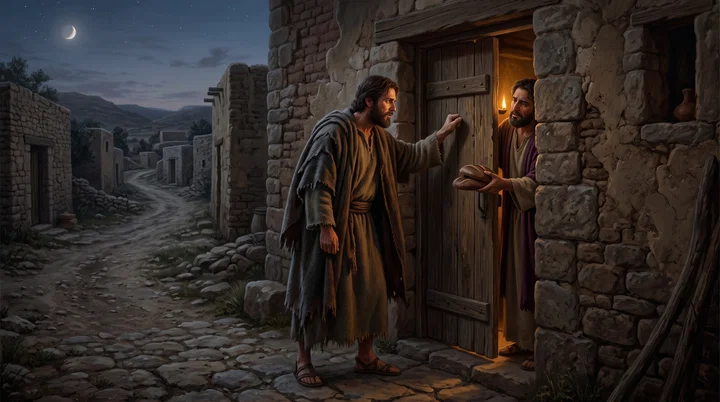
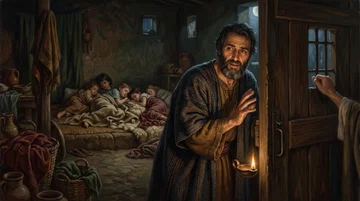
For a friend of mine in his journey is come to me, and I have nothing to set before him?
Translations
For a friend of my in his journey is come to me, and I have nothing to set before him?
King James Version, Webster Bible
For a friend of mine in his journey is come to me, and I have nothing to set before him?
for a friend of mine in his journey is come to me, and I have nothing to set before him:
Revised Version, American Standard Version
for a friend of mine is come to me from a journey, and I have nothing to set before him;
seeing a friend of mine came out of the way unto me, and I have not what I shall set before him,
since a friend of mine on a journey is come to me, and I have nothing to set before him;
forasmuch as, a friend of mine, hath come off a journey unto me, and I have not what I can set before him;
because a friend of mine has come to me on a journey, and I have nothing to set before him.’
because a friend has come to me on a journey, and I have nothing to set before him.’
for a friend of mine has come to me from a journey, and I have nothing to set before him,’
Because a friend of mine has come to me on a journey, and I have nothing to put before him;
For a friende of mine is come out of the way to me, and I haue nothing to set before him:
Douay-Rheims (Challoner revision)
Because a friend of mine is come off his journey to me, and I have not what to set before him.
Pictures
Cross-references
- Matthew 7:7-8
Ask, and it shall be given you; seek, and ye shall find; knock, and it shall be opened unto you:
Both teach that persistent asking leads to receiving.
- Luke 18:6-8
And the Lord said, Hear what the unjust judge saith.
Both parables teach persistence in prayer and contrast human reluctance with God’s response.
Commentary
Each commentary is drawn from primary sources: the writings of Ellen G. White and Adventist pioneers and periodicals. Each commentary is separate. Its own words are not a quotation; follow the references to read the source passages.
Ellen G. White
38 sources
Christ spoke this to enforce asking, seeking, and knocking after repeating the Lord's Prayer at the disciples' request to be taught to pray.COL 139.1COL 140.1–3DA 495.3 A weary traveler arrives unexpectedly at midnight, and the host who has no bread to set before him goes to a friend to ask for three loaves.Ms 111, 1898, par. 2–5Ms 31, 1898, par. 2–3Ms 23, 1899, par. 1–4 The traveling friend pictures hungry souls coming to God's servants in trying, unexpected ways, the bread is the Bread of Life and spiritual strength and light to feed them, and the empty-handed host pictures Christ's representatives feeling destitute and insufficient before that need.Ms 31, 1898, par. 2–3ST Mar 16, 1915COL 140.4–5COL 148.1–3Ms 111, 1898, par. 14–15 Those who would feed others must first receive from God, for they have nothing to impart unless they obtain it from Him, and it is the law of heaven that as we receive we impart.COL 139.1COL 140.4–5RH Aug 11, 1910 The midnight pleading teaches earnest, persistent prayer that does not give up when the answer delays, and the unwilling neighbor does not picture God but teaches by contrast, for God delights to give, never pleads a closed door, and never turns away unblessed those who seek Him with the whole heart.Ms 111, 1898, par. 2–519MR 227.3–228.2Ms 23, 1899, par. 1–4COL 141.1RH Aug 11, 1910
Parable Story and Context
The verse belongs to the teaching on prayer given after the disciples said, Lord, teach us to pray, when the Lord's Prayer as given in the sermon on the mount was repeated and then this parable was spoken to illustrate prayer.COL 139.1COL 140.1–3DA 495.3 It forms part of that instruction to ask, seek, and knock, giving force to it by the picture of a man asking a friend for bread at midnight.COL 139.1COL 140.1–3DA 495.3 In that setting Christ is presented as receiving from the Father in order to give to others, praying for what He could share with them.COL 139.1
A weary, belated friend comes in from a journey late at night, even at the unseasonable hour of midnight and unexpectedly, and the host has nothing, no bread, to set before him.Ms 111, 1898, par. 2–5Ms 31, 1898, par. 2–3Ms 23, 1899, par. 1–4Ms 93, 1898, par. 21–26COL 140.1–3 That lack is stated as the reason he goes to a friend to ask for bread, specifically three loaves.COL 139COL 140.1–3 The traveler's need moves the host to ask a neighbor for help rather than let the need go unmet, and this asking illustrates earnest prayer and seeking from God the grace and spiritual food needed to serve others.Ms 111, 1898, par. 2–5Ms 31, 1898, par. 2–3Ms 23, 1899, par. 1–4Ms 93, 1898, par. 21–26
Instead of sending the traveler away, the host goes to one who has food and presses his request until his need is supplied, so that the visitor can be received.Ms 93, 1898, par. 21–26COL 140.4–52T 28.2 He asks so he can give again, not turning the comer away despite having no food of his own to offer.Ms 93, 1898, par. 21–26COL 140.4–5 Lack of provision is no excuse to refuse hospitality, and sharing what is available to entertain and make a home for God's servant brings blessing and provision, as when the widow of Sarepta shared her morsel with Elijah and she and her son were sustained.COL 140.4–52T 28.2
Symbols of Hunger and Supply
The traveling friend is the hungry soul coming to God's servants for the bread of life, arriving weary and belated and even at the unseasonable hour of midnight in unexpected ways that try faith and expose human insufficiency.COL 140.4–5Ms 111, 1898, par. 14–15 His coming leaves the one visited feeling destitute and helpless, with no food to offer, yet the needy visitor is not to be turned away.COL 140.4–5Ms 111, 1898, par. 14–15
The bread asked for, the three loaves begged at midnight, is spiritual food to set before hungry souls.Ms 31, 1898, par. 2–3ST Mar 16, 1915COL 148.1–3 It is the Bread of Life itself, grace and a clear, intelligent knowledge of truth to give to those who need it, spiritual strength and light, wisdom, and the vitalizing power and impartation of the Holy Spirit sought in order to give spiritual help to others.Ms 31, 1898, par. 2–3ST Mar 16, 19154MR 335.2Ms 59, 1900, par. 19–20Ms 111, 1898, par. 14–15 The midnight begging is coming to God confessing unworthiness and sin and pleading His name, His throne, and His covenant.COL 148.1–3
The host who has nothing to set before his friend is Christ's disciples as His representatives, believers confronted with needy souls while feeling destitute, helpless, insufficient, and keenly aware of great need for grace.COL 140.4–5COL 141.1RH Aug 11, 1910Ms 59, 1900, par. 19–20 Their work, opened in the feeding of the multitude and in the sermon on the bread from heaven, is to give the bread of life to the people, and the empty host must obtain supply in order to give again, relieve his friend, and minister to others.COL 140.4–5COL 141.1RH Aug 11, 1910 In receiving to give he becomes like God.COL 141.1
The petitioner asks not for himself alone but so he can give again and relieve another's need, going to one who has food and pressing the request until the need is supplied.ST Mar 16, 1915COL 140.4–5RH Aug 11, 1910 He asks God persistently for grace and favor both to help another person in need and for himself, making God the only trust, taking hold upon Him as the strength of the soul, and putting implicit confidence in Jesus.COL 140.4–5RH Aug 11, 1910Lt 403, 1906, par. 3 God is pleased when He is importuned in this way, and praying and believing and continuing to pray will certainly be heard.Lt 403, 1906, par. 3
Receiving in Order to Give
Those who would give the bread of life to hungry people must first receive spiritual food from the source of supply, for they will have nothing to impart unless they obtain it from God.COL 140.4–5RH Aug 11, 1910RH Aug 11, 1910RH Aug 11, 1910 The petitioner asks not for himself alone but so he can give again and relieve another's need, for a weary, belated traveler has come to him on his journey even at the unseasonable hour of midnight, and he has no food to offer him, yet he does not turn him away but goes to one who has food and presses his request until his need is supplied.COL 140.4–5RH Aug 11, 1910COL 141.1RH Aug 11, 1910 He stands for Christ's disciples as His representatives, whose work as opened in the feeding of the multitude and in the sermon on the bread from heaven is to give the bread of life to the people, and Christ Himself received from the Father in order to give to others, praying for what He could share with them.COL 139.1COL 140.4–5 Souls hungering for the bread of life will come to them in unexpected positions that try faith and expose human insufficiency, leaving them feeling destitute and helpless, and the empty host must obtain supply in order to minister to others.COL 140.4–5COL 141.1RH Aug 11, 1910
It is a law of heaven that as we receive we are to impart, and in receiving to give one becomes like God.COL 141.1Ms 99, 1902, par. 15 Not one soul is to be turned away unfed, and God who sent His servants to feed the hungry will supply their need for His own work when they seek blessings from Him in order to minister to others.COL 140.4–5RH Aug 11, 1910 The selfish neighbor who at last grants the request only to rid himself of disturbance does not picture God but teaches by contrast, for where a selfish man gives only to be rid of one who disturbs his rest, God delights to give, is full of compassion, and longs to grant the requests of those who come to Him in faith.COL 141.1RH Aug 11, 1910
Humble workers who plead at midnight for loaves to feed hungry souls will succeed and are blessed.COL 148.1–3Ms 99, 1902, par. 15STB 579.1–2PMMEP 19.2STB 426.2 This asking belongs not to learned or eloquent men but to humble men made meek and lowly in the school of Christ, who first receive light and blessing from God in order to impart it.Ms 99, 1902, par. 15 The loaves mean spiritual bread to feed hungry souls, and the begging means coming to God confessing unworthiness and sin and pleading His name, His throne, and His covenant.COL 148.1–3 Unlike the neighbor in the parable, God never makes the excuse of a closed door and never says He cannot help, but all who seek find and all who knock have the door opened, because the honor of His throne is staked on fulfilling His word to them.COL 148.1–3 What they receive is to be shared in going out to invite people to receive the gospel.PMMEP 19.2STB 426.2RH Aug 12, 1909
Persistent Prayer and God's Answer
The midnight petition for loaves teaches earnest, persistent, importunate prayer, keeping on pleading for what is needed and for what is lacking to serve others.Ms 111, 1898, par. 2–519MR 227.3–228.2Ms 23, 1899, par. 1–4Lt 17, 1892, par. 10–1219MR 319.1–2 Although the petitioner is repeatedly refused, he does not give up his purpose, and believers likewise are not to give up or distrust God when the answer does not come at once.ST Mar 16, 1915COL 143.1ST Sep 15, 1898Ms 33, 1898, par. 13–14 The felt need of having nothing to set before the traveler motivates the request and illustrates continuing to ask even when an answer seems delayed.Ms 111, 1898, par. 2–519MR 227.3–228.2Ms 23, 1899, par. 1–4Lt 17, 1892, par. 10–1219MR 319.1–2
More earnest and steadfast asking brings closer spiritual union with Christ, with increased desire to receive and increased faith and blessings.ST Mar 16, 1915COL 146.1–2 Prayer works no change in God but brings the petitioner into harmony with Him.COL 143.1 When the answer is delayed it is because God sees the need to search the heart and repent of sin, taking the petitioner through test and trial and humiliation to show what hinders the working of His Holy Spirit.COL 143.1 This kind of asking means praying and believing, watching unto prayer, and cooperating with the prayer-hearing God by speaking and acting in harmony with the prayers, so that trial proves faith genuine instead of showing prayer to be only a form.COL 146.1–2 There is no improper hour for prayer, for the heavenly Father watches over His sheep and lambs day and night, His eye never slumbers nor sleeps, and He never turns away unblessed those who seek Him with the whole heart.Ms 59, 1900, par. 19–20
The selfish neighbor who at last grants the request only to rid himself of disturbance does not picture God but teaches by contrast.COL 141.1RH Aug 11, 1910 Where a selfish man gives only to be rid of one who disturbs his rest, God delights to give, is full of compassion, and longs to grant the requests of those who come to Him in faith.COL 141.1RH Aug 11, 1910 Unlike the neighbor, God never makes the excuse of trouble with a closed door and never says He cannot help, and all who seek find, all who knock have the door opened, and all who beg at midnight for loaves to feed hungry souls succeed, because the honor of His throne is staked on fulfilling His word to them.COL 148.1–3 God hears prayer and is not indifferent to those who ask even when the answer does not come at once, is not wearied by continued asking even about the smallest concerns, is pleased by importunity, and certainly hears those who pray and believe and continue to pray.Ms 59, 1900, par. 19–20ST Sep 15, 1898Ms 33, 1898, par. 13–14
Such determined faith gains its object in pleading for pardon and for the conversion of relatives and neighbors unto a richer experience of grace.4SP 224.1 The needs of the sick may be brought to God with continued, earnest pleading, with answers coming at once or requiring patient, continued pleading.HPMMW 51.4–52.1HL 240.1 Prayer should plead with God for purity and salvation and remain before Him until assurance of pardoned sin is received.MYP 268.2 The same importunity applies to pleading for support for urgent missionary and medical work in places lacking facilities and where needy fields remain without help, and to seeking instruction, guidance, light, and the Holy Spirit's power while keeping the mind on the request until help is received, joining confident prayer with good works.Lt 143, 1899, par. 10–11Ms 33, 1898, par. 13–14
Sources
Pioneers and periodicals
46 sources
At midnight a man goes to a friend to borrow three loaves because another friend has arrived from a journey and he has no food to put before him.ST Jan 14, 1897ST Jun 4, 1894ST Nov 20, 1901 It is part of the illustration Jesus uses to teach confidence that God answers prayer.ST Apr 20, 1904ST Feb 27, 1896ST Feb 27, 1896 The man asks not for himself alone but for another, so prayer is not to be selfish asking merely for personal benefit but asking that we may give, with the bread sought standing for the Bread of life sought from God for a needy friend.ST Mar 16, 1915ST Nov 20, 1901RH Oct 1, 1901RH Feb 9, 1905RH Jan 8, 1914 The traveler's need moves the host to earnest, persistent seeking that does not give up until supplied even when refused and the answer seems delayed.ST Nov 21, 1911ST Sep 10, 1885RH Dec 11, 1900 The reluctant neighbor who helps only to stop the disturbance is a comparison by contrast, for God is compassionate and eager to bless and is ready to hear and help at the first whisper of prayer.RH Aug 11, 1910ST Jun 4, 1894ST Feb 27, 1896
Parable Setting and Wording
Luke 11:6 belongs to Jesus' illustration of the principle of asking God, the teaching on prayer and promise that gives confidence that God answers prayer.ST Apr 20, 1904ST Feb 27, 1896ST Feb 27, 1896ST Apr 20, 1904ST Jun 4, 1894 It supplies the urgent need behind the midnight request for three loaves, that a friend on a journey has come to the house and the host has nothing to set before him.ST Apr 20, 1904ST Feb 27, 1896ST Feb 27, 1896ST Apr 20, 1904ST Jun 4, 1894 The arrival of the traveler at night with no food to serve him is the situation prompting the request for help, introducing a parable about asking a friend for aid when an unexpected guest comes and there is nothing to offer.ST Feb 27, 1896ST Feb 27, 1896ST Apr 7, 1909ST Jun 4, 1894
At midnight a man goes to a friend to borrow three loaves because another friend has arrived at his house from a journey and he has no food to place before him.ST Jan 14, 1897ST Jun 4, 1894ST Nov 20, 1901ST Nov 20, 1901 The unexpected traveler's arrival explains the urgent appeal that leads into Jesus' lesson about persistence in asking.ST Jun 4, 1894ST Nov 20, 1901ST Nov 20, 1901 The host goes to a neighbor to seek the bread needed to meet his guest's need rather than leaving the late-arriving traveler without assistance.ST Jan 14, 1897ST Jun 4, 1894ST Nov 20, 1901 The story was told to impress the prayer beginning Father, Hallowed be Thy name, that is, the Lord's Prayer.ST Nov 20, 1901ST Nov 20, 1901
The friend has come out of his way, benighted, belated and lost, which makes the case more urgent and a strong reason why he should have prompt relief.ST Jan 19, 1882
The teaching belongs to Luke 11:2-13, given when a disciple asks how to pray as guidance for approaching God with simple trust, bringing needs and pleading His promises.ST Jun 15, 1904ST Mar 12, 1896ST Jan 16, 1901 It is summed up as ask and it shall be given, seek and find.ST Jun 15, 1904ST Mar 12, 1896ST Jan 16, 1901 The Lord's Prayer in that same teaching is a short sample covering daily needs and all things concerning earthly existence as proper subjects to present at the throne of grace, not a set ritual to repeat word for word on every occasion.ST Jun 15, 1904ST Mar 12, 1896ST Jan 16, 1901 God, unlike earthly parents who often tire, never tires of His children asking for things they need or will use for His honor.ST Jun 15, 1904
Asking in Order to Give
The man asks for bread not for himself but for another, because a friend has come to him on a journey and he has nothing to set before him, so the prayer is not a selfish asking merely for personal benefit but an asking that he may give again.ST Nov 20, 1901RH Feb 9, 1905RH Jan 8, 1914ST Nov 20, 1901 The capacity for receiving is preserved only by imparting, and heavenly treasure cannot continue to be received without communicating it to those around us.ST Nov 20, 1901 The need is another person's need, and the lesson is to plead persistently in prayer for others out of compassion and a desire to help them.RH Jan 8, 1914ST Nov 20, 1901
The need that moves him is the traveler's need, a weary traveler arrived without provision, and the bread he seeks from his neighbor represents the Bread of life sought from God to carry to an unsaved friend or relative.ST Mar 16, 1915RH Aug 11, 1910RH Oct 1, 1901 Christ's disciples are sent to give that bread of life to people hungry for it, and therefore must first seek spiritual food from God so they have something to share.ST Mar 16, 1915RH Aug 11, 1910RH Aug 11, 1910 Having nothing to offer, the petitioner goes to one who has food and persists until supplied, which shows that disciples who meet hungry souls while feeling they have nothing and are unable to help are not to turn anyone away unfed but are to seek supply from God.RH Aug 11, 1910RH Aug 11, 1910
Seeking loaves at midnight for hungry souls represents humble, persistent effort to bring them spiritual help, and those who plead for help in this way will succeed, then sharing what they have received.RH Aug 12, 1909RH Sep 21, 1905 The traveler is a needy person sent to the door while the host has nothing of his own to meet the need, picturing human inability apart from God, yet God has bread enough to supply it.ST Jan 19, 1915 The traveler is called a friend, so requests for others should come from genuine love, extended even to enemies, and when the church appeals for resources to help the needy it receives as much as it asks for.ST Jan 19, 1915RH Apr 27, 1911
Persistence That Prevails in Prayer
The verse teaches earnest, persistent, importunate seeking that does not give up but holds fast until the blessing is received.ST Mar 16, 1915ST Sep 15, 1898ST Sep 10, 1885RH Aug 28, 1856RH Mar 4, 1915 A keen sense of need prompts earnest prayer, and having nothing to set before a late-arriving traveler makes the host's need plain and moves him to plead persistently until supplied.ST Nov 21, 1911ST Sep 15, 1898RH Dec 11, 1900 Although repeatedly refused, he does not give up but continues asking earnestly at midnight, and believers are likewise to make their needs known to God and keep praying even when the answer seems delayed and does not come at once.ST Mar 16, 1915ST Sep 15, 1898RH Dec 11, 1900 God hears prayer and is not indifferent to those who ask, and this persistence does not mean He is hard to approach but teaches the seeker to hold fast until receiving.ST Sep 15, 1898ST Sep 10, 1885
As Naaman had to dip seven times in the Jordan and was not cleansed after six, sinners must come persistently to the one fountain that cleanses them, the blood of Christ.ST Sep 10, 1885 Persistent prayer also increases the desire to receive and draws the petitioner into closer spiritual union with Christ, with increased faith and blessings.ST Mar 16, 1915
Persistent, importunate asking can obtain an answer from God, as Hezekiah's prayer for healing was granted because of importunity, not because of goodness and not because longer life was best for him.ST Jun 28, 1905 That request was unwise, for three years after his healing his son Manasseh was born, whose long reign gave the people a terribly wicked administration, and Hezekiah himself became backslidden for a time, with results that came upon the people a hundred years later.ST Jun 28, 1905
People should pray expecting an answer, wait for it, keep asking rather than giving up, and feel disappointed when it does not come.RH Oct 16, 1860RH Oct 15, 1903RH Mar 4, 1915 Success in prayer requires enduring importunity that holds on until success is assured and does not let go too soon, enduring as seeing Him who is invisible.RH Oct 15, 1903 Success comes not to the specially talented but to the persevering who endure and work perseveringly to the end, for he that endureth to the end shall be saved.RH Oct 15, 1903
The friend's statement that he cannot rise does not mean true inability, for a man may say he cannot get up to help a friend yet rise and give him what he needs.ST May 11, 1915 The illustration applies to seeking divine help, deliverance from sin, and the consecration and power needed for service.RH Jan 11, 1912 Those who seek God with sincere purpose in earnest, persistent prayer in time of need are not sent away empty, and God is willing to give the power needed for His work.RH Aug 25, 1910
Importunity is seen when a mother prayed through the night for her son after having no food to offer a visitor and seeking help, and persistent prayer may be answered after distress and waiting, leading not only to physical rescue but to obedience and salvation.RH Mar 5, 1861 Prayer must therefore persevere without ceasing and without losing faith, especially prayer for the salvation of loved ones, trusting that the promises of the Lord are sure.ST Mar 18, 1903 The friend does not rise at once but finally arises and supplies wants because of importunity, and though the answer may not come at once and may take years, keeping on praying and believing brings supply while the Lord does the rest.ST Mar 18, 1903
God's Willing Supply of Need
The reluctant neighbor who finally rises only to stop the disturbance is a comparison by contrast, not a likeness of how God answers.ST Jun 4, 1894 His unwilling help stands opposite God's willing care, for God gave Himself in Christ and lives to save, and therefore is ready to hear and help at the first whisper of prayer.ST Jun 4, 1894 The neighbor's reluctance is no picture of God, who is compassionate, merciful, sympathetic and eager to bless.RH Aug 11, 1910ST Feb 27, 1896 He delights to answer those who come to Him in faith.RH Aug 11, 1910ST Feb 27, 1896
Persistence in asking does not mean that God is hard to approach, annoyed, or must be persuaded to give.ST Feb 27, 1896 Unlike earthly parents who often tire, He never tires of His children asking for things they need or will use for His honor.ST May 28, 1896ST Jun 15, 1904ST Feb 27, 1896 Even the smallest concerns of life may be brought to Him, and brought again and again without wearying Him.ST May 28, 1896 If the answer is delayed, the petitioner is to wait patiently and keep asking, trusting God's wisdom and care.ST Feb 14, 1906 No prayer of faith is unanswered, though He may give what best answers the spirit of the request rather than the very thing asked, and even silent prayer is heard.ST Feb 14, 1906ST Feb 27, 1896 Continued asking helps the petitioner see the importance of the request and his own weakness.ST Feb 27, 1896
Sources