Luke 12:26
If ye then be not able to do that thing which is least, why take ye thought for the rest?
Translations
If you then be not able to do that thing which is least, why take you thought for the rest?
King James Version, KJV Cambridge Paragraph Bible
If ye then be not able to do that thing which is least, why take ye thought for the rest?
If ye then are not able to do that thing which is least, why are ye anxious for the rest?
Revised Version, American Standard Version
If then ye are not able to do even that which is least, why are ye anxious concerning the rest?
If, then, ye are not able for the least — why for the rest are ye anxious?
If therefore ye cannot [ do] even what is least, why are ye careful about the rest?
If then, not even the least thing, ye can do, why, concerning the rest, are ye anxious?
Berean Standard Bible, Majority Standard Bible
So if you cannot do such a small thing, why do you worry about the rest?
If then you aren’ t able to do even the least things, why are you anxious about the rest?
If, then, you are not able to do even that which is least, why are you troubled about the rest?
If yee then bee not able to doe the least thing, why take yee thought for the remnant?
Douay-Rheims (Challoner revision)
If then ye be not able to do so much as the least thing, why are you solicitous for the rest?
Pictures
Cross-references
- Matthew 6:26-30
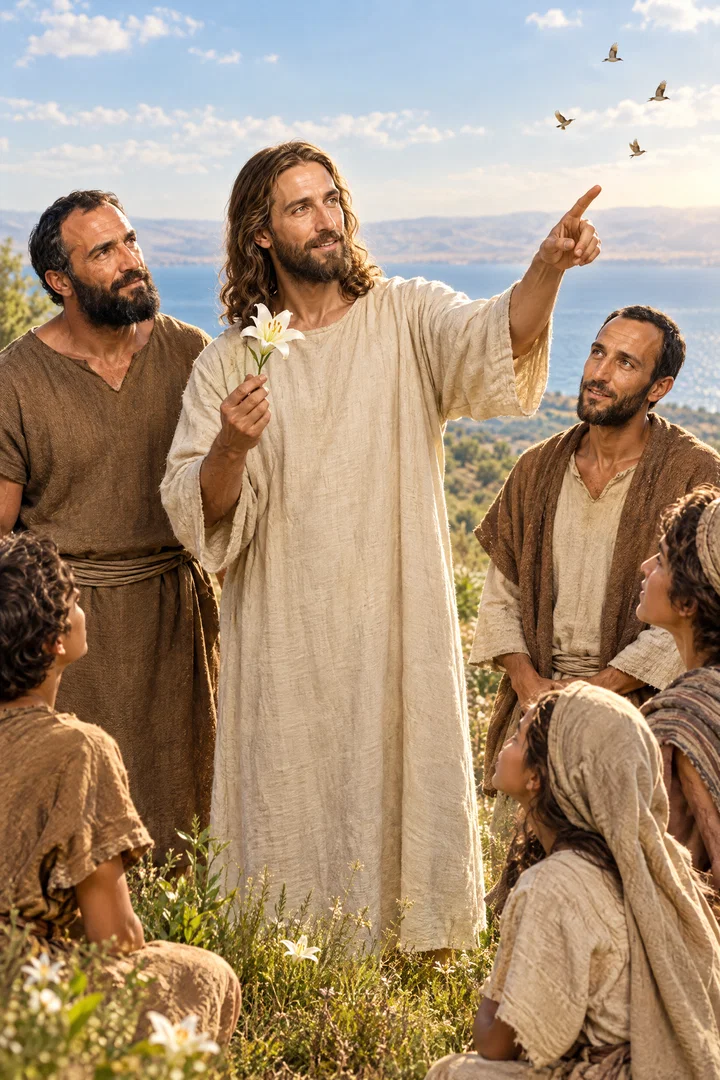
Behold the fowls of the air: for they sow not, neither do they reap, nor gather into barns; yet your heavenly Father feedeth them. Are ye not much better than they?
Birds and flowers illustrate God’s care and the call not to worry.
- Matthew 6:31-33
Therefore take no thought, saying, What shall we eat? or, What shall we drink? or, Wherewithal shall we be clothed?
Both forbid anxious thought about necessities and urge trust in God’s provision.
- Psalms 37:3
Trust in the LORD, and do good; so shalt thou dwell in the land, and verily thou shalt be fed.
Both call for trusting God rather than worrying about provision.
- Matthew 10:29
Are not two sparrows sold for a farthing? and one of them shall not fall on the ground without your Father.
Even a sparrow falls only with the Father’s notice.
- Matthew 6:8
Be not ye therefore like unto them: for your Father knoweth what things ye have need of, before ye ask him.
The Father already knows what his children need.
- Luke 12:30
For all these things do the nations of the world seek after: and your Father knoweth that ye have need of these things.
Anxious concern for necessities is contrasted with trust in the Father.
- Luke 12:31-32
But rather seek ye the kingdom of God; and all these things shall be added unto you.
Seeking God’s kingdom replaces anxious care with trust in the Father’s provision.
- Matthew 6:19-20
Lay not up for yourselves treasures upon earth, where moth and rust doth corrupt, and where thieves break through and steal:
Calls for treasure to be laid up in heaven rather than on earth.
- 1 Peter 5:7
Casting all your care upon him; for he careth for you.
Both urge casting anxieties on God because he cares for you.
- Matthew 10:30
But the very hairs of your head are all numbered.
God numbers each person’s hairs, showing his care and providence.
- Luke 12:16-21
And he spake a parable unto them, saying, The ground of a certain rich man brought forth plentifully:
The rich fool hoards earthly wealth instead of being rich toward God.
- Philippians 4:6
Be careful for nothing; but in every thing by prayer and supplication with thanksgiving let your requests be made known unto God.
Both discourage worry and direct believers to bring their concerns to God in prayer.
- Psalms 50:10-12
For every beast of the forest is mine, and the cattle upon a thousand hills.
God owns all so able to provide
- Matthew 7:11
If ye then, being evil, know how to give good gifts unto your children, how much more shall your Father which is in heaven give good things to them that ask him?
Jesus contrasts human inability with the Father’s generosity toward those who ask.
- Romans 8:32
He that spared not his own Son, but delivered him up for us all, how shall he not with him also freely give us all things?
God gave his Son and will freely give all things.
- 1 Timothy 6:17
Charge them that are rich in this world, that they be not highminded, nor trust in uncertain riches, but in the living God, who giveth us richly all things to enjoy;
Both contrast trusting God with fearful trust in riches.
- Luke 12:33-34
Sell that ye have, and give alms; provide yourselves bags which wax not old, a treasure in the heavens that faileth not, where no thief approacheth, neither moth corrupteth.
Urges giving to lay up treasure in heaven.
Commentary
Each commentary is drawn from primary sources: the writings of Ellen G. White and Adventist pioneers and periodicals. Each commentary is separate. Its own words are not a quotation; follow the references to read the source passages.
Ellen G. White
18 sources
If anxious care cannot accomplish even the smallest thing within human power, such as adding to stature, it cannot secure food and drink and clothing and the other needs of life, so worry about the rest is useless.Ms 83, 1909, par. 4–7Ms 73, 1893, par. 4–8Ms 65, 1902, par. 2–5 That inability shows complete dependence on God for life itself, for every breath and the beating heart and every nerve and muscle are kept in order and activity by the power of an infinite God who upholds the worlds and sustains the body.Ms 73, 1893, par. 4–815MR 98.2–3 If He gives such attention to things so low in the scale of creation, clothing the grass and the flowers and feeding and watching the birds, He will give far more care and love to people formed in His image whose souls are of inestimable value.Ms 73, 1893, par. 4–8CTBH 70.1–2DA 313.2–3 The verse therefore rebukes distrust and preoccupation with earthly needs and calls for unquestioning faith that puts the kingdom first and rests in His care, since He attends to every detail of life and provides what is needed.Ms 83, 1909, par. 4–7Ms 65, 1902, par. 2–5DA 313.2–3
Meaning and Teaching Method
The argument moves from the least to the rest: if anxious thought cannot accomplish even what is least and within human power, it cannot secure food, drink, clothing and other needs, so worry about the rest is futile.Ms 83, 1909, par. 4–7Ms 73, 1893, par. 4–8Ms 65, 1902, par. 2–5CTBH 70.1–2DA 313.2–3 The least includes so small a matter as adding to stature by taking thought, which lies beyond human ability to do.Ms 83, 1909, par. 4–7Ms 73, 1893, par. 4–8Ms 65, 1902, par. 2–515MR 98.2–3DA 313.2–3 Since worry gives no control even over that least thing, it gives no power to provide for the greater necessities of life.Ms 83, 1909, par. 4–7Ms 65, 1902, par. 2–515MR 98.2–3CTBH 70.1–2DA 313.2–3
The inability to do the least reveals complete dependence on God for life itself.Ms 73, 1893, par. 4–815MR 98.2–3 Every breath drawn depends on Him, with the beating heart, the throbbing pulse, and every nerve and muscle in the living organism kept in order and activity by the power of an infinite God.Ms 73, 1893, par. 4–815MR 98.2–3 That same God upholds the worlds by His power, sustains the body, and provides for human needs.Ms 73, 1893, par. 4–815MR 98.2–3
The saying belongs to open-air teaching that made truth plain and simple through familiar objects and scenes.Ms 73, 1893, par. 4–8RH May 30, 18713MR 333.2–3 In groves and by the seaside with commanding view of landscape and scenery, the teaching set before hearers the birds caroling their songs without a care, the ravens fed by God, the little birds watched by Him, the opening bud, the lofty tree, shrub, blooming flower, lily of the field reposing in purity upon the bosom of the lake, grass of the field clothed with living green, cultivated lands, waving grain, barren soil, everlasting hills, lake, bubbling stream, and setting sun tinting and gilding the heavens.Ms 73, 1893, par. 4–8RH May 30, 1871 It led the mind first to nature and then through nature to nature's God, connecting the works of God in nature in heaven and earth with the words of life, using everyday facts to teach spiritual truth, to extol the wisdom of God in creation, and to turn thought toward the unseen.Ms 73, 1893, par. 4–8RH May 30, 18713MR 333.2–3
Those natural objects were bound to the sacred lessons so that what the eye admired would keep the truth in memory and repeat it afterward.RH May 30, 1871Lt 45, 1877, par. 2–3Lt 223, 1905, par. 8–10 When hearers afterward looked upon birds, flowers, trees, hills, lake, and heavens, the truths would be fresh and hallowed in memory and light the way.RH May 30, 1871Lt 45, 1877, par. 2–3 The lilies of the field in particular give a lesson in simplicity and trust.RH May 30, 1871Lt 223, 1905, par. 8–10
Trust Instead of Worry
If God gives such close attention to things so insignificant and low in the scale of creation, clothing the grass of the field with living green and the flowers and lilies with beauty, feeding the ravens and watching the little birds, He will give far more care and love to man formed in His image.Ms 73, 1893, par. 4–8CTBH 70.1–2CH 171.1Lt 45, 1877, par. 4 His care for birds and flowers shows that He values beauty and goodness, yet people are of far greater consequence, their souls of inestimable value.Ms 73, 1893, par. 4–8CTBH 70.1–2 He cares even more for people and attends to every detail of their lives, providing what they need, because He made them in His image and wants them to reflect His character.DA 313.2–3FE 159.2–3CH 171.1Lt 45, 1877, par. 4 Those who put His kingdom first can therefore rest in His care and need not worry over food, drink, and clothing.Ms 73, 1893, par. 4–8DA 313.2–3
The verse thus rebukes distrust, unbelief, and preoccupation with earthly needs and riches, and calls for unquestioning faith and trust in God's care rather than anxious thought about what lies beyond human power.Ms 65, 1902, par. 2–5DA 313.2–3Ms 108, 1905, par. 8–10 Disciples are to cast their cares upon Him, since they cannot carry life's burdens rightly without His help, for He knows what His children need.Ms 83, 1909, par. 4–7Ms 108, 1905, par. 8–10 Jesus is a sympathetic friend to whom all troubles and griefs may be brought, giving courage to the afflicted and hope to the discouraged.Lt 45, 1877, par. 4 It belongs to the appeal for those blessed with great light, yet striving in a tame and listless way, to put the whole heart into the service of Christ with daily prayer and watchfulness, earnestly seeking the Lord and not only claiming to believe the truth but living and practicing it.Ms 185, 1898, par. 7–10
Its lesson is applied by trusting God and serving Him even when obedience brings inconvenience or hardship, rather than fearing that self or family will suffer for standing for the truth.Ms 83, 1909, par. 4–7Ms 83, 1909, par. 8 It is applied by living and working simply and dressing modestly, and by letting the beauty of nature help the heart, especially of children, to trust Him and turn from artificial display toward what is good and holy.FE 159.2–3Ms 83, 1909, par. 8Lt 223, 1905, par. 8–10 Money is to be used faithfully, not spent on unnecessary things or needless adornment, but used to support God's work and to give to those in need.Lt 20, 1897, par. 5–7Lt 147, 1899, par. 2 It means moving out by faith as pilgrims and strangers whose citizenship is above, to build not a cathedral but only what is plain, neat, and tasteful, dedicated to God free from debt, since interest paid on debt is a great loss, and to devote it to educating and training not the elder members alone but children and youth not to live to please themselves or court praise.Lt 20, 1897, par. 5–7 There the heart is to be guarded with perpetual vigilance and jealousy lest it be estranged from God, hungering and thirsting after righteousness, making every sacrifice for the cause without ostentation or display, hiding self in Jesus and walking in lowliness with inward spiritual perception of the truth that never exalts self.Lt 20, 1897, par. 5–7Lt 223, 1905, par. 8–10
Sources
Pioneers and periodicals
31 sources
If anxious thought cannot do even the least thing of adding to one's stature, there is no reason to be anxious about the rest.ST Jul 2, 1894 It belongs to teaching against anxiety about what to eat, drink and wear, illustrated by ravens and birds that neither sow nor reap nor store and by lilies and grass that neither toil nor spin yet are clothed more gloriously than Solomon, with the charge to seek God's kingdom and righteousness while the Father who knows these needs adds these things.RH Aug 1, 1854RH Feb 4, 1909 Anxious worry cannot accomplish what lies beyond human ability without God's help and providence, so worrying about earthly needs and future concerns is futile beside trusting His care.ST Jul 2, 1894ST Feb 2, 1882ST Aug 9, 1899 God who feeds birds and ravens and clothes lilies and grass much more feeds, clothes and cares for believing people who are more valuable to Him, even through poverty, sickness, famine, persecution and other troubles great or small.ST Sep 17, 1896RH Dec 5, 1854RH Jul 16, 1857 The warning gives no leave to stop working and providing for family and the poor, and fear of losing livelihood or ability to support a family gives no excuse for disobedience such as neglecting the seventh-day Sabbath, for provision is secured by doing duty and trusting God to provide rather than by useless worry.ST Jul 18, 1878ST Sep 30, 1880RH Apr 4, 1865RH Apr 28, 1868
Meaning and Setting
The least thing spoken of is adding to stature, even by a cubit, by anxious thought, and anxious thought cannot accomplish even that small thing.ST Jul 2, 1894 If worry cannot do what is least, there is no reason to be anxious about the rest, and the call is to trust God's care rather than worry about needs.ST Jul 2, 1894 The word was spoken to the disciples in the presence of a multitude as a practical sermon.ST Jan 22, 1880ST Oct 3, 1878 In that sermon willing faith with its confidence is set in widest contrast against the fear of unbelief, challenging anxious concern about what lies beyond human ability.ST Jan 22, 1880ST Jan 22, 1880ST Oct 3, 1878
It belongs to teaching against anxiety about what to eat and drink and wear.RH Aug 1, 1854RH Feb 4, 1909ST Apr 8, 1886RH Apr 28, 1868 The point is illustrated by ravens and birds that neither sow nor reap nor store, having neither storehouse nor barn, yet are fed by God, and by lilies and flowers and grass that neither toil nor spin yet are clothed more gloriously than Solomon in all his glory, even the grass that is today in the field and tomorrow is cast into the oven.RH Feb 4, 1909ST Apr 8, 1886RH Jan 9, 1872 People are not to seek what to eat or drink nor to live in careful suspense of doubtful mind as the nations of the world do, for the Father knows they have need of these things.RH Aug 1, 1854 Instead they are to do their duty and seek God's kingdom and righteousness, trusting that all these things shall be added to them.RH Aug 1, 1854RH Feb 4, 1909
The lesson was made plain in the open air, in groves and by the seaside where there was a commanding view of landscape and scenery, so that divine truth could be comprehended by all.RH May 30, 1871 Familiar objects and scenes of humble life were used, the birds caroling their songs without a care and singing birds, the flowers of the valley growing in beauty, the lily reposing in purity upon the bosom of the lake, the lofty trees, cultivated lands, waving grain, barren soil, unfruitful tree, everlasting hills, bubbling stream, and setting sun tinting and gilding the heavens.RH May 30, 1871ST Jul 30, 1912 By these examples from nature, including even the sparrow and the flowers, it was made clear that people cannot control or add to life by worrying and should not be anxious about the rest of their needs.RH May 30, 1871ST Jul 30, 1912 The works of God in nature in heaven and earth were thus connected with the words of life, directing minds through nature up to nature's God and binding sacred lessons to what the eye admired, so that afterward when hearers looked upon birds, flowers, trees, hills, lake, and heavens those truths would be fresh and hallowed in memory and light the way to heaven.RH May 30, 1871
The verse belongs to the exhortations to watch in Luke 12 given in connection with the signs of the second advent and applying to a certain period just prior to that event.RH Oct 15, 1872 That is the waiting, watching time since the disappointment in 1844, when believers wait for the coming of the Lord without definite time and in an especial sense watch and pray.RH Oct 15, 1872
Trust in Providence
Anxious thought cannot accomplish even what is least, adding to one's stature, and therefore cannot secure the rest of life's necessities and future concerns.ST Jul 2, 1894ST Feb 2, 1882ST Aug 9, 1899ST Oct 21, 1886ST May 3, 1899 People cannot control even the least things by worrying and cannot control what lies beyond human ability without God's help and providence, so worrying about the rest is futile and pointless.ST Jul 2, 1894ST Feb 2, 1882ST Oct 21, 1886ST May 3, 1899RH Aug 12, 1862 Future troubles should be left to Him rather than borrowed through anxious thought, and people are not to be consumed by care for earthly needs but to trust His care and providence.ST Jul 2, 1894ST Feb 2, 1882ST Aug 9, 1899ST May 3, 1899RH Aug 12, 1862
Eternal life is more important than physical life, so anyone who truly trusts God for the greater gift can trust Him for the lesser needs of food and clothing.ST Jul 2, 1894 Real trust remains free from worry and alarm even when supplies seem exhausted, while anxious care is a sign of heathenism, not Christianity.ST Jul 2, 1894 Faith concerns life now as well as the life to come, for God who feeds birds and ravens and clothes lilies, flowers and grass much more feeds, clothes and cares for believing people who are more valuable to Him.ST Sep 17, 1896RH Dec 5, 1854RH Jul 16, 1857RH Feb 4, 1909ST Jul 29, 1913
That care holds even through poverty, sickness, famine, persecution for righteousness, and other hardships and great or small troubles.ST Sep 17, 1896RH Dec 5, 1854RH Jul 16, 1857RH Feb 4, 1909ST Jul 29, 1913 Asking God for temporal necessities and daily bread is according to His will because the earth and all its fullness belong to Him and He is able to supply, so anxious thought about what to eat, drink and wear is unnecessary.RH Jul 1, 1902 While people do their duty and seek the kingdom and righteousness, future troubles are to be left to Him rather than borrowed through anxious thought.RH Jul 1, 1902RH Aug 12, 1862RH Feb 4, 1909
The warning is not a command to stop working or providing for family and the poor and gives no rule about the kind or amount of food to eat.RH Apr 28, 1868 It warns against spending life accumulating wealth for self, living in doubtful suspense and careful suspense of doubtful mind like the nations of the world, and making worldly provision and self-gratification life's chief concern instead of seeking God's kingdom.RH Apr 28, 1868 Honest toilers under heavy burdens are to be of good courage and not murmur and complain when sickness comes, but while looking on nature, hearing birds sing and seeing flowers bloom, learn that God feeds the ravens that neither sow nor reap and have neither storehouse nor barn, and clothes the lilies that neither toil nor spin and the grass that is today in the field and tomorrow cast into the oven more gloriously than Solomon in all his glory, so He will much more feed and clothe them because the Father knows they have need of these things.
Worry does not remove troubles and can make people less able to serve well.RH Feb 4, 1909 Trusting God brings peace of mind that helps relieve the effects of worry. People should therefore work and patiently bear burdens and do their duty rather than fret.RH Feb 4, 1909ST Jul 29, 1913
Obedience While Waiting
Worry about supporting a family and keeping business going is powerless and useless because human beings are not able to do even what is least, so fear that keeping the seventh-day Sabbath will interfere with earning a living or conducting business is no valid excuse for disobedience.ST Jul 18, 1878ST Sep 30, 1880RH Apr 4, 1865RH Sep 17, 1857RH Feb 7, 1916 Having a family to support and fearing loss of livelihood do not justify neglect, for provision is secured by trusting God to provide rather than by taking anxious thought for the rest.ST Jul 18, 1878ST Sep 30, 1880RH Apr 4, 1865RH Sep 17, 1857RH Feb 7, 1916 Asking for temporal necessities and daily bread is according to His will because the earth and all its fullness belong to Him and He is able to supply, so anxious thought about what to eat, drink, and wear is unnecessary.RH Jul 1, 1902 He can be safely trusted to direct so that a living can still be obtained while doing His will and keeping the Sabbath, instead of letting material needs govern choices.ST Sep 30, 1880RH Apr 4, 1865RH Jul 1, 1902 When a family is troubled by low wages and hard times, the remedy is to listen to God's Word rather than let worry dominate conversation.RH Jun 2, 1903
The same lesson belongs to those waiting for Christ's second coming, who are to seek God's kingdom and trust that food and clothing will be supplied instead of being consumed by care for them.RH Aug 1, 1854 To continue ordinary pursuits through unbelief while professing to wait is contrary to this trust, and those who profess belief in the third angel's message and present truth must not grasp after the world.RH Aug 1, 1854RH Dec 9, 1852 Earthly concerns are not to dominate, but affections and interests are to be centered in heaven.ST Dec 24, 1894 Since possessions cannot be carried into the promised land, what is owned is to be sold and given as alms, laying up treasure in heaven.ST Dec 24, 1894
In Luke 12:22-37 the command to sell what is owned and give alms binds every disciple, every member of the little flock, and everyone waiting for the Lord to return and professing to look for Him. To keep the Sabbath and profess present truth while claiming exemption from that requirement is hypocrisy. Works must agree with faith, for dead faith gives no protection amid the awful scenes soon to burst upon the world. Failure to obey all requirements according to best knowledge leaves no standing to be acquitted in the judgment and to hear well done, good and faithful servants.
Sources