Matthew 6:26
Behold the fowls of the air: for they sow not, neither do they reap, nor gather into barns; yet your heavenly Father feedeth them. Are ye not much better than they?
Translations
Behold the fowls of the air: for they sow not, neither do they reap, nor gather into barns; yet your heavenly Father feeds them. Are you not much better than they?
King James Version, KJV Cambridge Paragraph Bible, Webster Bible
Behold the fowls of the air: for they sow not, neither do they reap, nor gather into barns; yet your heavenly Father feedeth them. Are ye not much better than they?
Revised Version, American Standard Version
Behold the birds of the heaven, that they sow not, neither do they reap, nor gather into barns; and your heavenly Father feedeth them. Are not ye of much more value than they?
look to the fowls of the heaven, for they do not sow, nor reap, nor gather into storehouses, and your heavenly Father doth nourish them; are not ye much better than they?
Look at the birds of the heaven, that they sow not, nor reap, nor gather into granaries, and your heavenly Father nourishes them. Are ye not much more excellent than they?
Observe intently, the birds of the heaven,—that they neither sow, nor reap, nor gather into barns, and yet, your heavenly Father, feedeth, them: Are no, ye, much better than, they?
Look at the birds of the air: They do not sow or reap or gather into barns— and yet your heavenly Father feeds them. Are you not much more valuable than they?
Look at the birds of the air: They do not sow or reap or gather into barns, and yet your heavenly Father feeds them. Are you not much more valuable than they?
See the birds of the sky, that they don’ t sow, neither do they reap, nor gather into barns. Your heavenly Father feeds them. Aren’ t you of much more value than they?
See the birds of heaven; they do not put seeds in the earth, they do not get in grain, or put it in store-houses; and your Father in heaven gives them food. Are you not of much more value than they?
Behold the foules of the heauen: for they sowe not, neither reape, nor carie into the barnes: yet your heauenly Father feedeth them. Are ye not much better then they?
Douay-Rheims (Challoner revision)
Behold the birds of the air, for they neither sow, nor do they reap, nor gather into barns: and your heavenly Father feedeth them. Are not you of much more value than they?
Pictures
Cross-references 20 of 34
- Matthew 6:33
But seek ye first the kingdom of God, and his righteousness; and all these things shall be added unto you.
Seeking God’s kingdom first is joined to his provision of life’s necessities.
- Luke 12:24
Consider the ravens: for they neither sow nor reap; which neither have storehouse nor barn; and God feedeth them: how much more are ye better than the fowls?
Jesus uses the ravens’ lack of storing and God’s care for them to teach freedom from worry.
- Matthew 10:29-31
Are not two sparrows sold for a farthing? and one of them shall not fall on the ground without your Father.
The Father’s care for sparrows assures people of their greater value to him.
- 1 Peter 5:7
Casting all your care upon him; for he careth for you.
Both affirm that God cares for people.
- Psalms 147:9
He giveth to the beast his food, and to the young ravens which cry.
God provides food for the young ravens.
- Matthew 6:30
Wherefore, if God so clothe the grass of the field, which to day is, and to morrow is cast into the oven, shall he not much more clothe you, O ye of little faith?
Extends God’s care for birds to clothing the grass and caring for people.
- Psalms 104:28
That thou givest them they gather: thou openest thine hand, they are filled with good.
God gives creatures their food, and they gather what he provides.
- Job 38:41
Who provideth for the raven his food? when his young ones cry unto God, they wander for lack of meat.
Both show God providing food for birds, including young ravens.
- Matthew 6:34
Take therefore no thought for the morrow: for the morrow shall take thought for the things of itself. Sufficient unto the day is the evil thereof.
Both teach leaving tomorrow’s concerns to God.
- Matthew 6:19-21
Lay not up for yourselves treasures upon earth, where moth and rust doth corrupt, and where thieves break through and steal:
The warning against earthly treasure accompanies Jesus’ call to trust the Father’s care.
- Luke 12:6-7
Are not five sparrows sold for two farthings, and not one of them is forgotten before God?
Both affirm God’s care for small birds and his greater regard for people.
- Matthew 6:11
Give us this day our daily bread.
Both texts portray reliance on God for food and present needs.
- 1 Kings 17:6
And the ravens brought him bread and flesh in the morning, and bread and flesh in the evening; and he drank of the brook.
God sustained Elijah by sending ravens with food.
- Matthew 10:31
Fear ye not therefore, ye are of more value than many sparrows.
People are worth more than sparrows, whom God cares for.
- Matthew 6:32
( For after all these things do the Gentiles seek:) for your heavenly Father knoweth that ye have need of all these things.
The Father knows his children need these things and contrasts trust with worry over food.
- Psalms 145:16
Thou openest thine hand, and satisfiest the desire of every living thing.
Both teach that God provides food for every living thing.
- Luke 12:32-34
Fear not, little flock; for it is your Father’s good pleasure to give you the kingdom.
Freedom from earthly anxiety rests on the Father’s promise of the kingdom and heavenly treasure.
- Matthew 10:30
But the very hairs of your head are all numbered.
Numbered hairs show God’s detailed, constant care for each person.
- Psalms 37:3
Trust in the LORD, and do good; so shalt thou dwell in the land, and verily thou shalt be fed.
Trust in the Lord brings provision and answers anxious wants.
- Romans 8:32
He that spared not his own Son, but delivered him up for us all, how shall he not with him also freely give us all things?
God’s gift of his Son assures believers he will provide what they need.
Commentary
Each commentary is drawn from primary sources: the writings of Ellen G. White and Adventist pioneers and periodicals. Each commentary is separate. Its own words are not a quotation; follow the references to read the source passages.
Ellen G. White
97 sources
Your heavenly Father feeds the birds of the air though they do not sow or reap or store food in barns, and because you are much better than they and of far greater value to Him, He will feed and provide for you.2T 496.2Ms 24, 1895, par. 15Ms 139, 1897, par. 3–5 You hold a higher place in creation because you were formed in His image with higher powers to know Him, while even creatures without souls are supplied.SC 123.1Ms 94, 1899, par. 25–26Lt 4, 1896, par. 6–8 Therefore take no anxious thought for the necessities of life, what to eat and drink or what to wear, for life is more than food and the body more than clothing, and He who gave the greater gift of life will give what is needed to sustain it.Ms 139, 1897, par. 3–5Lt 175, 1896, par. 19–23Lt 301, 1904, par. 19–21ST Sep 2, 1875 Trust Him by seeking His kingdom and righteousness first and placing every concern great and small in His hands, instead of exhausting yourself in planning for the future or letting business and appetite crowd out serving Him.RH Mar 29, 1870CE 54.4–55.1ST Oct 10, 1900AFUP 9.1SC 85.4–86.1 This dependence does not mean effortlessness, for the birds must gather food and do the work appointed them, so you are to work faithfully and cheerfully and not use the promise as an excuse to stop providing for yourself and your family.SC 123.1ED 117.2–3AA 348.1
Sermon Setting and Context
The saying about the birds belongs to the Sermon on the Mount, spoken especially to the disciples while the gathered multitude also listened, so its words were meant for both.DA 298.2–32SP 204.1 In that sermon the principles and conditions of God's kingdom were taught, the principles governing the kingdom of divine grace.DA 299.32SP 204.1 What was offered was not the worldly greatness, earthly glory, or political deliverance the hearers expected.DA 299.32SP 204.1
There God is made known not as a stern judge but as a Father whose character is compassion, mercy, and love.FE 309.1ST Jun 4, 1874 The carefree songs of birds in nature impress that divine truth of His care, and associating such scenes with His character draws the heart to Him with love, awe, and reverence as a tender, loving Father rather than merely a stern judge.ST Jun 4, 1874 He requires His people to walk in the light He gives them, and failure to walk in that light separates from Him, with darkness coming in proportion as light has shone on the pathway.ST Mar 26, 1896 His requirements are always reasonable and just, yet He claims perfect obedience to His commandments and can accept no less.ST Mar 26, 1896
That sermon sets forth the far-reaching principles of the law of God, showing that the state of the heart regulates life and character.Lt 7, 1886, par. 34 The spirit of the law must be in the heart for obedience to the claims of the law.Lt 7, 1886, par. 34 Receiving this teaching brings cheerfulness, peace, joy, and blessedness here below into life and work.Lt 7, 1886, par. 34
Father Feeds the Birds
The heavenly Father feeds the fowls of the air, though they do not sow or reap or gather into barns or store food.2T 496.2Ms 24, 1895, par. 15Ms 139, 1897, par. 3–5Lt 175, 1896, par. 19–23Lt 70, 1893, par. 29–33 Their dependence is not effortlessness, for they must gather their food, prepare nests, feed their young, build nests and rear their young while remaining exposed to enemies.SC 123.1ED 117.2–3 Their cheerful, joyful daily labor does not keep them from trusting Him, showing that dependence on God goes together with faithful, cheerful work and faithful effort.SC 123.1ED 117.2–3
They obey the orders of His will and act the part He designed them to act.Ms 35, 1899, par. 6–8STB 353.1–3Ms 108, 1905, par. 8–10 They follow the laws that govern them, while human disregard of the laws governing the body dishonors Him who made people in His image.Ms 35, 1899, par. 6–813MR 335.2–3 Providence watches over even the little brown sparrow, the most inferior bird, so that not one falls without His notice.Lt 4, 1896, par. 6–817MR 182.3–183.2 The same notice and care sustains the flowers of the field, the lilies, and the grass that clothes the earth.Lt 4, 1896, par. 6–817MR 182.3–183.2CE 54.4–55.1
The birds warble their carols of praise unencumbered by thoughts of care, singing without care.ST Mar 10, 1909RH May 30, 18712T 579.2–580.2 Their happy songs and life in nature point to a tender, loving Father rather than merely a stern judge.RH May 30, 1871ST Jun 4, 1874RH May 30, 1871 Seeing them again brings the lesson back to mind and draws the heart to Him with love, awe, and reverence.RH May 30, 18712T 579.2–580.2ST Jun 4, 1874
He gives the birds beauty and joy beyond what is needed merely to stay alive.ST Mar 10, 1909 The hand that feeds them is the hand that upholds the world and paints the lily of the field and flowers of varied beauty.Ms 142, 1897, par. 22–23 As the great Master Artist He shapes each with distinctive beauty as an expression of love for human happiness and delight, revealing goodness and sustaining care and desire for happiness.Ms 94, 1899, par. 22–23Ms 142, 1897, par. 22–23 Every drop of rain and every ray of light falling on an unthankful world is evidence of His long forbearance and love.Ms 142, 1897, par. 22–23
People Worth More
People are much better than the birds and of greater value and consequence to the heavenly Father, so because He feeds them though they do not sow or reap or store into barns, He will feed and provide for people.2T 496.2Ms 24, 1895, par. 15Ms 139, 1897, par. 3–5Lt 175, 1896, par. 19–23Lt 70, 1893, par. 29–33 This removes anxious thought about life's necessities, for the Giver of life knows what is needed to sustain it and will bestow what is necessary to make it complete.Ms 24, 1895, par. 15Ms 139, 1897, par. 3–5Lt 175, 1896, par. 19–23Lt 43, 1896, par. 3 Life is a holy trust, and the One who created physical, mental, and spiritual faculties will not withhold what sustains the life He gave.Lt 175, 1896, par. 19–23 Human life is more than food and the body more than clothing, so children and domestic duties are no excuse for neglecting study of the Word and God-given responsibilities, since the Father knows these needs and supplies them when His kingdom and righteousness are sought first.Ms 139, 1897, par. 3–5
Human beings occupy a higher place in creation because they were formed in God's image and likeness, made as spiritual worshipers with higher, nobler powers.SC 123.1Ms 94, 1899, par. 25–26Lt 4, 1896, par. 6–817MR 182.3–183.2ST Nov 19, 1896 Even animals without souls are supplied with their needs, so those made in the image of God may trust their Creator and Preserver to provide.SC 123.1Ms 94, 1899, par. 25–26 Intellect was given to comprehend greater things and to be led higher into divine truth and opened to the divine mind.Lt 4, 1896, par. 6–817MR 182.3–183.2 His care for human beings is greater still, for they are more precious to Him, and He continually loves and cares for them and longs for them to reflect His character.DA 313.2–3ST Nov 19, 1896 This greater care gives the afflicted courage and the desponding hope to bring all troubles and griefs to Jesus as a sympathizing friend.Lt 45, 1877, par. 4
Divine blessing and care are proportionate to the place an object occupies in the scale of creation, so God's regard for people is immeasurably greater than for birds and day-withered flowers.Lt 79, 1900, par. 23–26Lt 4, 1896, par. 6–817MR 182.3–183.2 Providence watches over even the little brown sparrow, the most inferior bird, so that not one falls without His notice, and the same notice rests on the flowers of the field and the grass that clothes the earth.Lt 4, 1896, par. 6–817MR 182.3–183.2 If lilies are made so beautiful that they out-rival Solomon in all his glory and grass is made a beautiful carpet for the earth, the care bestowed on man is beyond measure.Lt 4, 1896, par. 6–817MR 182.3–183.2
That greater care is personal and complete, for God keeps His children never absent from His mind for a moment.Lt 79, 1900, par. 23–26Lt 4, 1896, par. 6–817MR 182.3–183.2 Each life is given a page in the volume or book of providence containing its history and every particular of it.Lt 79, 1900, par. 23–26Lt 4, 1896, par. 6–817MR 182.3–183.2 Even the hairs of the head are numbered.Lt 4, 1896, par. 6–817MR 182.3–183.2 The Lord knows each one by name and knows where each lives, and every soul is personally known and loved. God notices every tear and smile and tenderly watches over people in every circumstance, whether at work, praying, resting, feasting, or facing poverty.CE 54.4–55.1
Though men and women have sinned grievously they are not forsaken, for the hand that upholds the world upholds and strengthens the weakest child.Lt 79, 1900, par. 23–26 Far greater love is shown to beings created in His own image as His purchased heritage.Lt 79, 1900, par. 23–26 The God who sustains life provides what His creatures need, and His care extends even to small, ordinary things.HL 291.2–293.13SP 48.1 He who blesses human life with sunshine and rain knows the need of food to sustain life and raiment for the body He created, cares for temporal needs and cares even more for eternal interests, and desires people to reflect His character.DA 313.2–3ST Nov 19, 18963SP 48.1 The heavenly Father feeding birds proves He will care for human beings formed in His own image who are much better than birds, so the sick can trust His love and have thoughts turned from self to God, and people need not anxiously watch themselves to keep themselves alive, for life depends on His sustaining power.MH 265.3–266.1Lt 42, 1900, par. 1–2
Trust Without Anxious Care
Christ's words forbid anxious, complaining thought about life's necessities, what to eat and what to drink and what to wear, for life is more than food and the body more than clothing.Ms 139, 1897, par. 3–5Lt 301, 1904, par. 19–21ST Sep 2, 1875Ms 190, 1903, par. 46–47Lt 16, 1892, par. 29–30 Food, drink and clothing are lesser matters than serving under Christ's banner, knowing and doing His will, and preparing for eternal life, and they must not become absorbing worries or be allowed to occupy the mind through business, ambition and amusement at the expense of serving God.ST Sep 2, 1875Ms 190, 1903, par. 46–47Lt 16, 1892, par. 29–30 Appetite and material provision must not be made paramount, for indulgence in food and dress can become sinful excess, waste God-given resources, weaken health and hinder service, and giving time and money to fashionable dress to the neglect of the soul is forbidden.Lt 301, 1904, par. 19–21ST Sep 2, 18759MR 120.2 Instead the call is to live simply and work in simplicity, to dress neatly, tastefully, modestly and becomingly without unnecessary trimmings, jewelry, expensive dress and spending more than is necessary, to practice self-denial and teach it to children, since power with God comes not from outward display but from the ornament of a meek and quiet spirit through devotion to Christ.Lt 301, 1904, par. 19–219MR 120.2 Means thus saved are to be used to feed the hungry, clothe the naked and those suffering from hunger and cold, relieve necessity, advance God's cause and proclaim present truth, for kindness and forethought for others are precious in heaven's sight and must be gained without delay.Lt 301, 1904, par. 19–219MR 120.2
The Giver of life and Maker of the body knows the need of food to sustain life and of raiment for the body He created, and He who bestowed the greater gift of life with its physical, mental and spiritual faculties as a holy trust will bestow what is needed to sustain it and make it complete.Lt 175, 1896, par. 19–23ST Mar 10, 1909Ms 21, 1889, par. 93–94 Life depends on His sustaining power rather than on anxiously watching self or trying to keep self alive, and the God who sustains the worlds and provides for His creatures will care for people formed in His image.Lt 175, 1896, par. 19–23Ms 21, 1889, par. 93–94Lt 42, 1900, par. 1–2 His care for living things gives reason to trust Him for food and clothing rather than worry, for anxiety cannot change what a person can do or add to his stature, while the lilies show He also clothes what does not toil or spin.ST Jul 2, 1894RH Feb 23, 1905
The birds are an object lesson to reprove unbelief, distrust, ingratitude and forgetfulness of constant dependence on God, exposing the unbelief and dangers of the present time and calling for simple faith and walking by faith.Ms 73, 1894, par. 1–3Ms 35, 1899, par. 6–8STB 353.1–3Ms 108, 1905, par. 8–10MWISDAP 10.1–3 Though man is gifted with higher, nobler powers than the lower orders of creation, he has chosen to disobey his Creator, departing from God's plan in his behalf and lowering himself to acts that dishonor his Maker.STB 353.1–3Ms 108, 1905, par. 8–10MWISDAP 10.1–3 The lesson keenly rebukes all distrust and every phase of unbelief and invites learning to cast all care upon Christ, to believe and obey God's Word unto eternal life, to become partakers of the divine nature and live pure, holy lives in oneness with Him and with God, and to reveal the pure, unselfish love and unquestioning faith He manifested in clothed divinity with humanity, practicing the virtues that give welcome into the heavenly courts, for without His help the heavy burdens of life cannot be carried aright.STB 353.1–3Ms 108, 1905, par. 8–10MWISDAP 10.1–3 Those who comply with entire obedience to His law as nature obeys law will be kept in health and strength, spending less time preparing elaborate meals to gratify appetite and more time contemplating God's work in nature to be better fitted to serve the Creator.Ms 35, 1899, par. 6–8
Trust leaves room to seek God's kingdom and righteousness first instead of exhausting self in work and planning for future needs while neglecting heavenly things, directing attention away from worldly benefits toward the things of eternity.RH Mar 29, 1870ST Oct 10, 1900AFUP 9.1 God's provision for the birds and the beauty He gives the flowers reveal His goodness and love for His children and are reasons not to be anxious about necessities but to trust that He knows what they need.RH Mar 29, 1870ST Oct 10, 1900 Trusting this care frees from undue anxiety, for the Father tenderly watches His people in every circumstance whether at work, praying, resting, feasting or facing poverty, noticing every tear and smile, so that every concern great and small may be left in His hands.CE 54.4–55.1SC 85.4–86.1Lt 16, 1892, par. 29–30ST Feb 2, 1915Ms 87, 1899, par. 26–27 Trust applies to temporal needs as well as to the greater matter of redemption, so worldly cares should lead to seeking the Saviour's help and comfort rather than separating from Him, with faithful service doing what can be done and leaving to the heavenly Father what cannot be done, trusting He knows cares and can provide help through others.Lt 16, 1892, par. 29–30ST Feb 2, 1915Ms 87, 1899, par. 26–27Lt 18, 1912, par. 10
God will provide food for His faithful people, who are more valuable than birds, so poverty, fear of want and concern about needs should not lead to distrust or become an excuse for disobedience.4T 253.3–254.1ST Nov 17, 1881Ms 8, 1874, par. 11 Humble souls ready to do His will need not be ruled by fear of want but will be guided and supplied as trusting children.4T 253.3–254.1ST Nov 17, 1881Ms 8, 1874, par. 11 The verse holds lessons not yet learned: every gift received comes from God as heavenly Father and is to be recognized with gratitude that fills the heart and surrounds the soul with a heavenly atmosphere.STB 823.2–3AFUP 8.3–4Ms 15, 1912, par. 1–2 Life is to be ordered by the truth of God found in His Word through diligent study of the Scriptures as the truth of the living God, the foundation of faith and the assurance of hope of eternal life in the kingdom of heaven.STB 823.2–3Ms 15, 1912, par. 1–2
Nature as Lesson Book
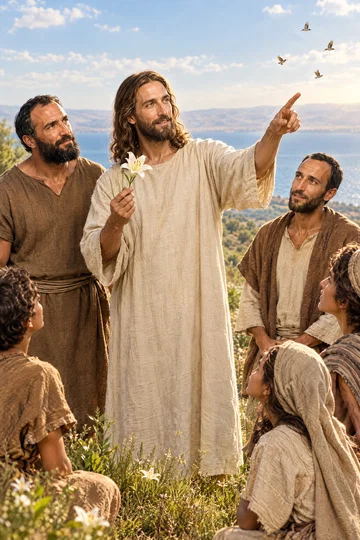
Christ drew the birds of the air from daily life and familiar sights, setting them alongside the flowers and the surrounding landscape to illustrate immortal, heavenly truth, letting the earthly illustrate the heavenly in a simplicity that holds wonderful depth of meaning.CT 261.1Lt 223, 1905, par. 8–10ED 102.3–4DA 253.6–254.11MR 21.4–22.2 He did not disdain repetition of old familiar truths but broke up accustomed thought as little as possible while weaving in new and transforming truth, arousing minds through their most familiar associations and identifying Himself with their interests.1MR 21.4–22.2 His language was fitted to the opening mind of child-life, bringing hearers into contact with nature that they might listen to the voice speaking in all created things, and with tender hearts and receptive minds interpret the spiritual teaching in the scenes before their eyes.Lt 223, 1905, par. 8–10 This showed openness to the influences of nature and delight in gathering spiritual teaching from the surroundings, facts, and experiences of daily life familiar to His hearers.Lt 223, 1905, par. 8–101MR 21.4–22.2 He drew the lesson from the great book of nature in plain, direct manner, making every point clear and distinct without crowding many things together, and calling into activity hallowed recollections and sympathies to reach the inner temple of the soul.1MR 21.4–22.22SP 200.1–2
Because the illustration uses a familiar sight, seeing birds afterward recalls His words, so the truth becomes a living reality and scenes of nature and daily affairs keep repeating His teaching.CT 261.1RH May 30, 18712T 579.2–580.2DA 253.6–254.11MR 21.4–22.2 The works of creation pointed hearers to God's wisdom, and the birds singing without care helped impress the lessons, so that seeing them again could bring the sacred lessons back to mind and keep them fresh in memory.RH May 30, 18712T 579.2–580.2CE 54.2 The daily task is thus brightened and uplifted by constant reminders of the spiritual and the unseen, even amid the busy cares of daily work.CT 261.1Lt 223, 1905, par. 8–10CE 54.2 The picture of the birds points to God's love and wisdom and can direct the mind from what is seen to the unseen and serve as a reminder of God.ED 102.3–4
Together with the nearby teaching about the lilies, the verse presents nature as a lesson book and teacher to everyone who will learn, teaching faith and simplicity and trust.13MR 337.2–3Lt 223, 1905, par. 8–104T 579.2–580.27T 78.1 The natural world offers visible signs of the Creator's wisdom, power, love, and desire for His children's well-being, and Jesus used familiar scenes from nature to make these lessons of truth memorable.Lt 223, 1905, par. 8–10PP 599.2–42SP 200.1–2 By observing how He provides for the birds, people can learn trust in God, since human beings are of greater value to Him than they are, and observing nature can teach about God's love and give confidence in His care.13MR 337.2–3PP 599.2–44T 579.2–580.27T 78.1 The birds in nature thus lead observers from the created world to its Creator and from the seen to the unseen.PP 599.2–4ED 102.3–42SP 200.1–2
The verse turns attention to nature and the wonderful works of God in nature, showing His caring provision for His creatures and giving reason to trust Him instead of worrying.Lt 79, 1900, par. 23–26Ms 230, 1902, par. 24–26Ms 142, 1897, par. 22–23 It calls for enlarged views of His goodness by beholding the works of His hands and enlarges comprehension of His benevolence and love.Lt 79, 1900, par. 23–26Ms 142, 1897, par. 22–23 The hand that feeds the birds upholds the world and paints the lily of the field and flowers of varied beauty as a Master Artist shaping each with distinctive beauty as an expression of love for man's happiness and delight, with every drop of rain and every ray of light on an unthankful world as evidence of long forbearance and love.Lt 79, 1900, par. 23–26Ms 142, 1897, par. 22–23 This gives confidence that God wants everyone to be in health, upholds and strengthens the weakest child, and does not forsake even those who have sinned grievously.Lt 79, 1900, par. 23–26Ms 230, 1902, par. 24–26
Parents and teachers can use this care for birds and flowers as evidence that He will care for people, who are of greater consequence, to teach children to notice creation as a sign of God's work and love.CTBH 70.1–2FE 159.2–3CE 172.2–3 The birds and lilies also show God's love for beauty and goodness, and the lesson draws children's attention from artificial display toward God's gifts and the affections they owe Him.FE 159.2–3CE 172.2–3 Children are thus taught to notice God's care in nature, to value its beauty above artificial display, and to give God their best affections.CTBH 70.1–2FE 159.2–3CE 172.2–3
Living Out Trust Daily
Trust in the Father who feeds the birds does not release anyone from labor, for the teaching forbids idleness and requires faithful work and provision for self and family rather than neglect under pretense of faith.AA 348.1 It calls instead for contentment and surrender of the will to the Holy Spirit, accepting with approval the place assigned rather than striving to become rich.AFUP 13.3STB 828.2–829.1Ms 15, 1912, par. 15–17 That surrender stops pushing fellow workers aside to make room for personal plans and stops grasping after wealth, status, or another's position, making the greatest desire to serve faithfully where placed.AFUP 13.3STB 828.2–829.1Ms 15, 1912, par. 15–17
The same trust governs the use of means, for those entrusted with wealth are not to cling to it or hold it back in anxious fear but to employ it in the divine work and lay up treasure in heaven.Lt 70, 1893, par. 29–33Lt 184, 1907, par. 5–7 When the time to advance has fully come, they are to advance in faith, deny self, and supply churches and workers for new fields rather than withhold for fear about money.Lt 184, 1907, par. 5–7Lt 21, 1900, par. 4–6 This confidence rests on the greater worth of people to the Father who feeds birds that neither sow nor reap nor store, assuring provision for human need.Lt 70, 1893, par. 29–33Lt 184, 1907, par. 5–7Lt 21, 1900, par. 4–6
For those convinced of the duty to keep the Sabbath yet fearing they cannot earn even simple bread for their children if they rest on that day, the care shown to birds that do not sow or reap promises that conscientious and faithful children are seen and will be supplied with physical necessities.HSFM 163.2–3 A way will be made to keep all the commandments even when livelihood is threatened and faith is severely tested.HSFM 163.2–3 So also children and domestic duties give no excuse for neglecting study of the Word and taking up appointed responsibilities, since the Father knows all these needs and supplies them when His kingdom and righteousness are sought first.Ms 139, 1897, par. 3–5
There is to be no anxious, complaining thought about food and drink, and no spending of time and money on fashionable dress to the neglect of the soul.Lt 301, 1904, par. 19–219MR 120.2Ms 83, 1909, par. 8 Life is to be simple, dress neat, tasteful, modest and becoming without jewelry, expensive dress, and unnecessary trimmings, while self-denial is practiced and taught to children.Lt 301, 1904, par. 19–219MR 120.2Ms 83, 1909, par. 8 Power with God comes not from costly display but from the ornament of a meek and quiet spirit formed by devotion to Christ, and kindness and forethought for others, precious in heaven's sight, must be gained without delay.9MR 120.2Ms 83, 1909, par. 8 Means thus saved are to feed the hungry, clothe the naked and those suffering from hunger and cold, relieve necessity, advance the cause, and proclaim present truth.Lt 301, 1904, par. 19–21
Less time is to be given to preparing elaborate meals to gratify appetite and more to contemplating the divine work in nature, that fitness for serving the Creator may increase.Ms 35, 1899, par. 6–8 As birds act the part designed for them and follow the laws governing them, people are to obey the laws of the body, preserve health and strength through entire obedience, and remain able to serve.Ms 35, 1899, par. 6–813MR 335.2–3 The sick especially may trust the love and care of the Father who feeds birds and will much more care for those formed in His image, turning thoughts from self to God.MH 265.3–266.1CH 173.1Ms 86, 1902, par. 4–6 Placing them amid beautiful objects, warm sunshine, pure air, trees, flowers, and the merry songs of birds helps them delight in the handiwork, aids recovery, opens the way to uplift the God of nature, and leads from nature to nature's God.Ms 86, 1902, par. 4–6Lt 249, 1905, par. 5–6
That still greater care and love for those formed in the divine image gives the afflicted courage and the desponding hope, for Jesus is a sympathizing friend to whom all troubles and griefs may be brought.Lt 45, 1877, par. 4 Humble souls ready to do the will need not be ruled by fear of want but may trust to be guided and supplied, assured of Christ's love and provision even to being clothed with His righteousness rather than doubting, worrying, or mourning.Ms 8, 1874, par. 11Lt 43, 1896, par. 4 Like a careful earthly father, only more tenderly and wisely, He watches His children and orders their circumstances for their good and to fit them to serve where greater good can be done.Lt 50a, 1897, par. 49–51Lt 50, 1897, par. 47–48
His people need not be overanxious about burdens and needs but should give faithful service, do what they can, and leave to the heavenly Father what they cannot do, trusting He knows their cares and can provide help through others.Lt 18, 1912, par. 10 This includes practical preparation such as for the Sabbath, without anxious thought on the one hand or careless neglect on the other.Ms 21, 1897, par. 26 As natural provision and growth depend wholly on the Lord and not on anxious thought, so spiritual life and stature depend wholly on the Lord, each growing to his own individual measurement under divine supervision.18MR 3.1–3
The birds' daily songs of praise for this care expose lack of faith and reprove failure to acknowledge gifts with thanksgiving and praise, since those bearing the image and glory owe a special response.Ms 137, 1908, par. 11–15 Beyond food and clothing the teaching points to inward adornment in meekness and righteousness as precious and preparing for immortality, and to turning thoughts from worldly preoccupation to the heavenly home and riches promised the saints.2T 496.2Ms 16, 1886, par. 14 The pure gospel of the Mount thus sets the holy standard of loving God wholly and loving neighbor as required, forbidding mingling human wisdom with the divine, unjustly acquiring means at another's expense, and diverting means to ambitious designs for gain and power.Ms 26, 1899, par. 29–30 Those practicing such methods have not yet learned the lesson and need repentance, conversion, and cleansing of the soul temple to do works worthy of the name.Ms 26, 1899, par. 29–30
Because those fed and cared for are so valued, no selfish, discourteous, unkind act toward another will be passed by, and leading another to dishonor the name and transgress the law will be considered and rewarded according to works.Ms 142, 1897, par. 22–23 The hand that feeds the birds upholds the world, paints the lily and varied flowers as Master Artist, and sends rain and light even on an unthankful world in long forbearance and love.Ms 142, 1897, par. 22–23 Hardship and poverty are known and understood, and provision for the needy comes through those who have means.Ms 85, 1909, par. 7–9 For a season people are even to be as free as the birds, laying aside work, writing, and every burden to be carefree, cheerful, and happy together, roaming, resting, and enjoying nature, so that strength and vitality are built up and fresh vigor gained for future care and labor.9MR 317.1–318.3
Sources
Pioneers and periodicals
87 sources
In the Sermon on the Mount Christ teaches against anxious thought about food, drink, clothing and tomorrow, calling his hearers to seek first God's kingdom and righteousness instead of making these things their chief aim.ST Aug 18, 1887RH Sep 27, 1870ST Aug 6, 1912ST Jun 18, 1912 The birds sow not, reap not, nor gather into barns, yet the heavenly Father feeds them as they fly, seek and gather what he has provided.ST Jan 20, 1898ST Jan 20, 1898ST Jul 22, 1875 His tender, watchful care reaches even sparrows and the smallest and most helpless creatures, marking their fall, hearing their cry, and giving beauty and joy beyond mere survival.ST Mar 10, 1909ST Jan 20, 1898ST Jan 20, 1898ST Mar 13, 1901ST Mar 21, 1911 People are much better and of much greater value than birds, made in God's image, known by name, redeemed by Christ's blood, and loved as children with a possible destiny of eternal life, so he will much more feed and care for them.RH Jan 2, 1908ST May 22, 1884RH Dec 4, 1913RH Aug 4, 1910RH Jul 22, 1902 Therefore childlike trust in the Father's providence for daily needs is to replace distrustful worry about the future, which weakens effort, robs health and joy, and unfits for service.RH Apr 21, 1859ST Jun 6, 1900RH May 12, 1868RH Feb 4, 1909ST Jul 18, 1911 That trust does not excuse idleness but calls for honest, diligent work and present duty while leaving wind, rain, harvest and supply with God, who gave life and the body and will supply food and raiment to complete it.ST Nov 17, 1881ST Oct 10, 1900ST Apr 22, 1903ST Aug 12, 1897RH Mar 21, 1912
Sermon Setting and Wording
The verse belongs to the Sermon on the Mount in Matthew 5-7, spoken on the mountainside to the disciples as Christ's inaugural address setting forth the character and principles of his spiritual kingdom and administration and the underlying principles of the law.ST Aug 6, 1912ST Apr 9, 1896ST That sermon gives a verbal declaration of the law's underlying principles and of the blessings of developing righteousness and God-like character, and with Romans 12 and 1 Corinthians 13 it gives a full-length portrait of a Bible Christian and the high standard to be lived up to in order to stand acquitted when judged by the Bible.ST Aug 6, 1912RH Jan 21, 1875 It was spoken on another mountain nearly fifteen centuries after Sinai by the selfsame voice that uttered the law at Sinai amid thunders and lightnings, thick cloud, loud trumpet, smoke and fire, with ten thousands of saints, and it does not retract or nullify any portion of that law but fulfils it, for not one jot or tittle shall pass from the law till heaven and earth pass.ST Sep 22, 1909 Its words are gracious words to be read, meditated upon, and fed upon, and the discourse in Matthew 5-7 was spoken on a different occasion from the discourse in Luke 6, the two containing some of the same truths because different audiences needed them.ST Sep 22, 1909ST Nov 5, 1894
Within that sermon the verse belongs to the teaching against anxious thought about food, drink, clothing and tomorrow, that trust belongs in God not in riches, for serving God and serving riches are incompatible.ST Aug 18, 1887RH Sep 27, 1870ST Jun 18, 1912 Seeking these things as the chief aim of life is characteristic of the Gentiles and is worldly preoccupation, from which disciples are called away toward trust in God's care.RH Jul 24, 1856 Life has higher concerns, and God's kingdom and righteousness come first, with temporal needs not to consume the mind but to be left to the Father's loving care in daily dependence as acknowledged in the prayer for daily bread.ST Jun 18, 1912RH Nov 21, 1907
The wording says the birds sow not, reap not, nor gather into barns, yet the heavenly Father feeds them.ST Aug 26, 1897ST Aug 26, 1897 They do not find food placed in their nests but must fly, seek, obtain and gather what God has given, with songs of praise and thankfulness for life, receiving it as from heaven and trusting him through changing weather.ST Jul 22, 1875ST Aug 26, 1897RH Jul 26, 1864 In the same way God provides people's daily bread through their daily work, and so his children who are much better than birds should not be concerned nor fear about the morrow but pray only for bread sufficient for the day, with the pledge that God will keep and care for all his trusting saints as a friend who walks with them unto the end.ST Jul 22, 1875 That trust in the Father's care also applies to the soul: just as God provides food for bodily life, he provides spiritual food for the renewed person, with earthly food as a sign of this greater provision and holy writings supplying soul-bread day by day for those who seek it.ST Aug 26, 1897
Father's Care for Birds
Matthew 6:26 shows tender and attentive care for every creature made, with the feeding of birds that neither sow nor reap nor gather into barns standing as evidence of kindness toward them.ST Jan 20, 1898ST Jan 20, 1898ST Mar 13, 1901RH Sep 28, 1916 The heavenly Father feeds the birds of the air, and that provision is watchful over even sparrows, over the lone sea-gull far out at sea helped through danger, and over the smallest and most helpless, marking the sparrow's fall and hearing the young birds when they cry.ST Jan 20, 1898ST Mar 10, 1898ST Feb 14, 1911 Jesus points to this care so that it will be observed and learned from, for the illustration of the birds teaches that the needs of His children are also under His care and that worrying is folly.ST Mar 13, 1901ST Mar 10, 1898
That care gives more than bare survival, for beauty and joy are added beyond what is needed merely to stay alive, and the songs of birds without sorrow and care point to a Father's love that reassures of every needed blessing.ST Mar 10, 1909ST Mar 21, 1911 His unseen power is at work in the growth of crops as well as in the feeding and clothing of living creatures, so that goodness can be learned by observing His work in nature.RH Mar 17, 1904ST Jan 17, 1900 He gives food and other good gifts, including power to give or withhold rain, and He fills barns and bins and boards with harvest abundance for winter need, supplying food, raiment, love's treasures and seed for the future for human cheer.ST Nov 28, 1906ST Jan 17, 1900 As the birds gather what He provides without sowing or reaping, so earthly food becomes a sign of greater provision, with holy writings supplying soul-bread day by day for the renewed person who seeks it.ST Aug 26, 1897 Therefore thanksgiving belongs to the Father in December as in May, for putting by cares and woes, for contented enjoyment, and for sharing fullness with friends, relatives, comrades, and the famished and sad.ST Nov 28, 1906
People Worth More
The question carries its own answer, for human beings are of much greater value than the birds, and because the heavenly Father feeds them though they neither sow nor reap nor store, he will much more remember, feed and keep people.RH Jan 2, 1908RH Aug 4, 1910RH Jul 22, 1902ST May 26, 1914RH May 21, 1901 The birds have a Creator who provides for their needs, but those who have become God's children through faith in Christ can call him Father.RH Jan 2, 1908 Even in deep solitudes where no one but God hears their song, he feeds the birds of the woods and broods with care over the tiny flower, the ferns and the moss, summing myriad creatures in a guarding love that has kept the least for ages in safety and peace.RH Aug 4, 1910RH May 21, 1901 Though birds and flowers may seem inferior, insignificant and worthless, they still receive their proper portion of divine care, and this unceasing care is a pledge that wherever a person is today he may stay in God's gentlest keeping.RH Aug 4, 1910ST May 26, 1914RH May 21, 1901
That greater worth rests on what people are and what has been done for them, for they are made in God's image and are more precious to him, and he continually loves them and longs for them to reflect his character.ST Nov 19, 1896ST May 22, 1884ST May 22, 1884 He feeds even the sparrows and watches over each one, seeing it when it is brought lifeless to the ground, so that no one who feels fearful, poor, forgotten or beyond notice escapes his watchful care.ST May 22, 1884RH Dec 4, 1913ST May 22, 1884 The same God who loves all guards people, knows each by name and dwelling, and will give all good to the meek.ST May 22, 1884RH Dec 4, 1913ST May 22, 1884 Their value is sealed by redemption through Christ's blood and death for them, by adoption as children of an infinite Father through faith, by a possible destiny through Christ's work stretching with the unlimited life of God and inheriting eternity, and by a love surpassing even a mother's love.ST Nov 19, 1896RH Jan 2, 1908RH Aug 4, 1910ST May 26, 1914RH May 21, 1901
Trust Instead of Anxiety
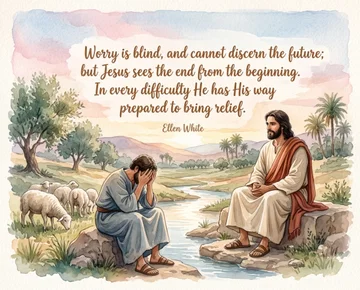
The verse teaches trust in the heavenly Father's providence for food, drink, clothing and daily needs rather than anxious, distrustful worry about the future.ST Jul 2, 1894RH Apr 21, 1859ST Jun 6, 1900RH May 12, 1868ST Apr 9, 1894 Since God feeds the birds which do not sow, reap, or store in barns, and people are more precious and of much greater value to Him, His care for even His humblest creatures gives reason for confidence and not tormenting fear about supporting a family or meeting material wants.ST Jul 2, 1894RH Apr 21, 1859ST Jun 6, 1900RH May 12, 1868ST Apr 9, 1894 Such anxiety cannot change what a person can do, while trust means faithfully obeying God's will and doing the duties of the present day, so that even want, persecution, or death endured in doing right strengthens virtue and serves immortal blessedness.ST Jul 2, 1894RH Apr 21, 1859ST May 3, 1899 Worry is folly and foolish fear, unbelief and atheism, whereas childlike trust leaves tomorrow with God, finds peace in affliction, and rests content day and night.RH Feb 4, 1909ST Jul 18, 1911RH Nov 12, 1908ST Jul 18, 1911RH Jul 3, 1860
Worry does positive harm and takes away no trouble.RH Feb 4, 1909ST Jul 18, 1911RH Nov 12, 1908 It weakens present effort, makes the heart faint for the future, and unfits for best service by leaving the brain feverish and the hand unsteady.RH Feb 4, 1909ST Jul 18, 1911 It brings only discouragement and grief, a darkness that sinks the soul, degrades and weakens the mental and moral powers, and fits the mind to be controlled by evil and led downward.RH Feb 4, 1909ST Jul 18, 1911RH Jul 3, 1860 It robs the form of grace, dims bright eyes into heavy weariness, wrinkles the face, mixes gray hairs with dark, drives away sleep with tossing and pondering the cares of the day, makes people sober and sad and narrow and sordid when they should be cheery and glad, weakens faith in heaven and in the wisdom of God's great plan, and breaks the heart.RH Nov 12, 1908ST Jul 18, 1911RH Jul 3, 1860 It diminishes joy, vigor, health and usefulness to others and the power to bring brightness to others, puts shadow before sunlight and cloud in the blue and taint in the scent of roses and untruth in the notes of song, and deafens the worried to birdsong and to the beauty God has provided around them.RH Nov 12, 1908ST Jul 18, 1911ST Sep 10, 1902
The promise belongs to those who seek first God's kingdom and righteousness, believe, obey, do present duty, pray and leave the rest to God.ST Nov 17, 1881ST Oct 10, 1900ST Mar 10, 1909ST Oct 22, 1902ST Oct 22, 1902 He who gave life knows the need of food to sustain it, and He who created the body knows the need of raiment to clothe it, so He who has bestowed the greater gift will also bestow what is needed to make it complete.ST Oct 10, 1900ST Mar 10, 1909 The Father knows His children's needs, has power to supply them, will not forget them, and will provide food for His faithful people, so poverty and concern about needs, or fear that obedience may limit work or income, should not lead to distrust or disobedience.ST Nov 17, 1881ST Oct 10, 1900RH May 12, 1868 Belief in God is counted as righteousness and gives reason to expect His provision for the necessities of this life, freeing the one who lays life at Jesus' feet from anxious care and from greed of gain, while He sets wise limits on the use of food and clothing.ST Mar 10, 1909ST Oct 22, 1902ST Oct 22, 1902
Working While Trusting
Confidence in the Father's feeding of birds does not release hands from labor, for the birds themselves must fulfill their purpose and fly and gather what is provided, and people with greater faculties are called to work with God rather than fear want.ST Apr 22, 1903ST Aug 12, 1897RH Mar 21, 1912 If birds sat with folded wings they would starve, and in the same way sloth can bring hunger while the diligent gather and live, so trust leaves no room for idleness.ST Apr 22, 1903RH Mar 21, 1912RH Sep 25, 1900 The call is to work honestly and diligently to meet personal need and care for dependents, to do business fervently and labor faithfully without worry, and then to leave wind and rain and harvest and the rest to divine care while seeking first the kingdom and righteousness.ST Aug 12, 1897RH Mar 21, 1912 Work is to be done as duty without corrosive anxiety and without selfish, grudging accumulation, in conscious trust for earthly needs grounded in the greater gifts already given and in the greater worth of human life, returning to labor in assurance that work in the Lord is not in vain but will be rewarded and met with contentment in what is received.ST Apr 22, 1903RH Apr 7, 1904RH Sep 25, 1900
The same feeding of birds rebukes covetousness, envy, discontent, and the heaping up of surplus stores, teaching contentment, simplicity, and meekness instead of greed of gain and dependence on wealth, property, and insurance as guarantees.RH Feb 6, 1866RH Dec 3, 1901 Extensive accumulation of money and possessions for food and clothing expresses covetousness and anxious forethought, whereas a contented mind that does not crave more than is necessary reflects freedom from want.RH Feb 6, 1866RH Apr 7, 1910 Trust is quiet dependence on the Father in contrast to discontent, over-anxiety, and restless dissatisfaction, in which selfishness creates artificial necessities and grows miserable over imagined wants, flaring briefly like a fitful meteor only to burst into darkness and disappointment instead of shining on steadily.RH Apr 7, 1910RH Nov 5, 1872 From birds people are to learn to receive simple food without anxious heaping up, pinching large wants down to little needs rather than seeking sumptuous fare, excess burdens, and costly finery.RH Feb 6, 1866RH Nov 5, 1872RH Dec 3, 1901
As part of the law of the mount, the feeding of the birds sets the pattern for economic life against commercialism and the law of the market, holding the ideal and law needed for the world's economic problems rather than the present economic system.RH Jul 24, 1900 It belongs to the Great Teacher's lesson of contentment that forbids worry about tomorrow and gives confidence in care for people grounded in care for birds.RH Apr 7, 1910RH Nov 5, 1872
Provision in Daily Life
The verse assures daily bread and clothing when obedience narrows the way to earn a living, for the Father who feeds birds that neither plant nor harvest nor store is pledged much more to feed people of far greater worth.RH May 12, 1868RH Feb 13, 1879ST Feb 27, 1879 Keeping the Sabbath, surrendering position or state support, risking employment for conscience' sake, and stepping into ministry without a guaranteed salary are therefore to be met not with fear for family support but with confidence that known needs will be supplied.RH May 12, 1868 That same confidence forbids letting hard times and scarcity of money stop effort and expense for children's religious instruction, requiring parents and teachers to seek moral fitness for heaven for children more earnestly than food and raiment.RH Feb 13, 1879ST Feb 27, 1879 It extends to a child given home, friends, and warm clothes, turning thought from self to God in grateful right action, and to mothers and children and to waiting for travel and other needs to be supplied.RH May 12, 1868ST Jan 11, 1883 It is present even in the mill where toilers labor for those they love, teaching them both to toil and to trust while they cry over sick loved ones with pale cheeks left alone and over how to buy fresh fruits and flowers and tend wants during working hours.ST May 13, 1897 God has not withdrawn to a distant star but smiles on each worker for the sake of Christ the carpenter's son, hears even a thought amid noise, while heaven grows still as He measures tears and counts sighs, remembering and feeding toilers because they are much better and He is just.ST May 13, 1897
The same trust sustains generosity, since seeking first God's kingdom and doing His will comes before food and clothing, and the Father who provides for His creatures will supply what is necessary even when obedience requires selling possessions and giving to the poor.RH May 1, 1855RH Feb 7, 1854RH May 9, 1871 Time and means are therefore to be given to God and to willingly sustaining those who preach the word, spending strength to do good and to preach without anxious calculation.RH May 1, 1855RH Feb 7, 1854 Fear of lacking money, even when provision is expected soon, is no excuse to withhold practical help from a poor widow when help is possible.RH May 9, 1871 Those who lived frugally and gave what they could were supplied, sometimes unexpectedly, showing that looking to God for daily bread upholds giving while dependence on wealth breeds fear of loss and a less willing heart.ST Jul 29, 1897ST Jan 18, 1883 For the same reason the counsel against worry urges beginning to do good now rather than waiting until grown.
The promise has been proved in famine, persecution, poverty, sickness, storm, danger, delay, darkness, and special extremity, for the Lord who sent ravens to feed Elijah and rained manna for Israel forty years in the wilderness never fails His word and will not leave those who prove Him to perish.RH Dec 5, 1854RH Jan 21, 1858 It belongs to those reduced to poverty by famine or persecution for righteousness' sake, and to those who seek first the kingdom of God and His righteousness, with all needed earthly things added.RH Dec 5, 1854RH Jan 21, 1858 Hence fearful believers in the last days are to take Him at His word, walk boldly upon the promise, cast bread upon the waters, loosen grasp on the world's treasures, cares, and vanities, sacrifice all and follow in the footsteps of the Son of God who had nowhere to lay His head, to obtain treasure in heaven and pass through the gates of the holy city.RH Jan 21, 1858 The Father who feeds fluttering sparrows when they cry for food never fails to aid His children in stress great or small, with ears always open to their faintest far-off call, opening doors and making ways for them.RH Apr 8, 1909ST May 16, 1911ST Jul 29, 1913 Even when those around seem indifferent He provides shelter, clothing, and food, and even when life feels dark and empty those who stay close to Him will find comfort and shared goodness.RH Apr 8, 1909ST May 16, 1911RH Nov 1, 1906 Since worry much or little never lifts the load or smooths a stony road, life's burdens are to be met with patience under appointed crosses rather than worry, day and night.RH Apr 8, 1909ST Jul 29, 1913RH Nov 1, 1906 That aid has appeared as food for the Waldenses through hidden grain and a mill, as rice for Indian children, as clothing for a poor family through neighbors and shoes for a child, as sustaining Monroe and Matsumoto, as deliverance through adverse events and extraordinary relief as for John Foxe, as healing of worry-born illness, and as sixty-five years of care for over 120,000 orphans with about $570,000 in buildings and over $7,000,000 sent exactly as needed.RH Apr 8, 1909RH Jan 21, 1858ST May 16, 1911ST Jul 29, 1913RH Nov 1, 1906
Nature Reveals God's Love
Christ turned the familiar sights of birds and flowers, landscape and seasons, into an impressive object-lesson that appeals to the mind, touches the imagination and kindles faith.RH May 30, 1871ST May 26, 1914ST Jun 23, 1909 The direction to consider the birds and the lilies makes nature a means of learning about God and following His guidance, for the works of God reveal His character and lead toward trust, love and rest in Him.ST Mar 11, 1903ST Oct 13, 1898 Observing them teaches His care and will for them, though nature alone cannot fully reveal His will for human beings.ST Mar 11, 1903 The birds singing without care and the modest sparrow and field flower were given great significance, so that creation pointed hearers to divine wisdom and seeing those sights again could bring the sacred lessons back to mind.RH May 30, 1871ST Jun 4, 1874ST Jun 23, 1909 Associating such scenes with His character shows Him as a tender, loving Father rather than merely a stern judge, drawing the heart with love, awe and reverence, and brightening work and study.ST Jun 4, 1874
Though birds and flowers seem inferior, insignificant and worthless, they have their proper portion of divine care, with God feeding the birds and clothing the grass and making the flower beautiful as provision for every creature.ST May 26, 1914 The flower becomes the first means leading through nature up to nature's God, with the eye down on the flower and the thought upward upon God.ST May 26, 1914 It is impossible that the God who clothes the grass and provides for its welfare could forget one of His children, for if He cares for them He will much more care for a human soul whose possible destiny through Christ stretches with the unlimited life of God into inheriting eternity.ST May 26, 1914
That care for even the smallest and most helpless creatures gives reason to trust providential care, for the One who sustains and feeds them will not turn away those who depend on Him.ST Jul 31, 1884 Mothers should take the young child into woods and fields to teach this first lesson about birds and flowers and about Him who made both her and them, and that lesson is to come before thoughts of pretty dress and daintiness.RH Jul 7, 1910 Teaching children in this way instructs them about their Creator and loving heavenly Father, forms trust in His care rather than vanity, and shapes quiet Christian graces and happy lasting memories.RH Dec 22, 1904RH Jul 7, 1910 The care shown to plants through the long, cold winter can help a child understand the Father's love for His human children, while their happy songs and life in nature show His commands are given for happiness and not merely to display authority.RH May 30, 1871RH Dec 22, 1904
What God so carefully regards should receive tender consideration from people, and no true Christian abuses any of His creatures.ST Mar 13, 1901 Harmless, pain-feeling creatures are to be treated gently, sparing even the woodchuck its share of bounty and learning from parent robins the Father's love.ST Jul 31, 1884ST Mar 13, 1901 When tempted to abuse a dumb creature, the thought that the Creator is hurt through pain inflicted on His animal or bird should restrain unkindness and comfort in sorrow.ST Mar 13, 1901
Sources