Translations
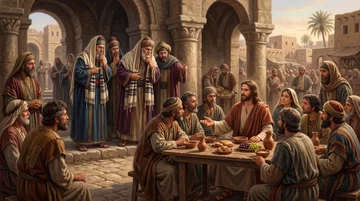
Then drew near to him all the publicans and sinners for to hear him.
King James Version, KJV Cambridge Paragraph Bible
Then drew near unto him all the publicans and sinners for to hear him.
Then drew near to him all the publicans and sinners to hear him.
Now all the publicans and sinners were drawing near unto him for to hear him.
Now all the publicans and sinners were drawing near unto him to hear him.
And all the tax-gatherers and the sinners were coming nigh to him, to hear him,
And all the tax-gatherers and the sinners were coming near to him to hear him;
But all the tax-collectors and the sinners were, unto him, drawing near, to be hearkening unto him;
Berean Standard Bible, Majority Standard Bible
Now all the tax collectors and sinners were gathering around to listen to Jesus.
Now all the tax collectors and sinners were coming close to him to hear him.
Now all the tax-farmers and sinners came near to give ear to him.
Then resorted vnto him all the Publicanes and sinners, to heare him.
Douay-Rheims (Challoner revision)
Now the publicans and sinners drew near unto him to hear him.
Pictures



Cross-references
- Luke 15:11-32
And he said, A certain man had two sons:
The parable answers criticism by portraying sinners welcomed by the Father and resented by the elder brother.
- Luke 15:8-10
Either what woman having ten pieces of silver, if she lose one piece, doth not light a candle, and sweep the house, and seek diligently till she find it?
The parable answers the criticism of Jesus receiving sinners.
- Matthew 18:12-14
How think ye? if a man have an hundred sheep, and one of them be gone astray, doth he not leave the ninety and nine, and goeth into the mountains, and seeketh that which is gone astray?
Both describe the seeking and rejoicing over those who are lost.
- Luke 19:1-7
And Jesus entered and passed through Jericho.
Jesus welcomes Zacchaeus, a publican whom others call a sinner.
- 1 Timothy 1:15
This is a faithful saying, and worthy of all acceptation, that Christ Jesus came into the world to save sinners; of whom I am chief.
Christ came into the world to save sinners.
- Luke 15:7
I say unto you, that likewise joy shall be in heaven over one sinner that repenteth, more than over ninety and nine just persons, which need no repentance.
Heaven rejoices over the repentance of one sinner.
- Matthew 9:10-13
And it came to pass, as Jesus sat at meat in the house, behold, many publicans and sinners came and sat down with him and his disciples.
Christ eats with sinners and explains His mission to call them.
- Luke 5:32
I came not to call the righteous, but sinners to repentance.
Jesus calls sinners to repentance.
Commentary
Each commentary is drawn from primary sources: the writings of Ellen G. White and Adventist pioneers and periodicals. Each commentary is separate. Its own words are not a quotation; follow the references to read the source passages.
Ellen G. White
20 sources
All the tax collectors and outcasts, even those outside the nation who never came to the synagogues, gathered close around him to hear him with rapt attention and gladness, while the scribes and Pharisees murmured that he received sinners and ate with them.ST Nov 20, 1893COL 185.1–186.32T 20.2–21.3 In answer he spoke of the shepherd seeking the one lost sheep until he finds it, the woman seeking the lost coin, and the prodigal son, to teach mercy and joy in heaven over one sinner who repents.ST Nov 20, 1893ST May 24, 1899Lt 200, 1908, par. 11 They were drawn to him because in his presence even they felt escape from sin was possible, for he greeted them as children estranged from the Father's house but not forgotten by the Father's heart, whose misery only made them more the objects of his compassion.COL 185.1–186.3Ms 118, 1898, par. 1–3 His mission was to seek and save the lost rather than to condemn and destroy, welcoming the despised and outcast who felt themselves lost and undone, but giving no countenance to those who counted themselves just and felt no need of repentance.COL 185Lt 80, 1898, par. 3–5COL 182.1ST Jan 29, 1894Ms 198, 1905, par. 5 His welcome rebukes self-righteous contempt and teaches that his followers must actively seek those who have strayed rather than waiting for them to return.2T 20.2–21.3Ms 16, 1868, par. 2–3Lt 200, 1908, par. 11
Setting and Response
All the tax collectors and sinners drew near to listen, gathering close around him to hear him with rapt attention, living interest, and gladness.ST Nov 20, 1893COL 185.1–186.32T 20.2–21.3ST May 24, 1899Ms 118, 1898, par. 1–3 They were publicans and social outcasts, even those outside the Jewish nation, who despised the rabbis and never came to the synagogues, yet now flocked to him.ST Nov 20, 1893COL 185.1–186.3COL 185 They came because they needed all the compassion and tenderness that could be given, and their coming exposed the neglect of unfaithful shepherds who left the lost without help.COL 185.1–186.3Ms 118, 1898, par. 1–3
At the same time the scribes and Pharisees were displeased, murmured, and accused him of receiving sinners and eating with them.ST Nov 20, 1893COL 185.1–186.32T 20.2–21.3ST May 28, 1912 They insinuated that he liked vile company and was insensible to wickedness, faulting him although he came to seek and save the lost.COL 185.1–186.3Lt 80, 1898, par. 3–5 Their resentment contrasted with the sinners' desire to listen, revealing hard-hearted self-conceit while praising themselves for supposed piety and holding aloof from those needing help.Ms 118, 1898, par. 1–3ST May 28, 1912Lt 80, 1898, par. 3–5
In answer he spoke the parables of the chapter, teaching mercy, forgiveness, and joy in heaven in the presence of the angels of God over one sinner who repents more than over ninety and nine just persons who need no repentance.ST Nov 20, 1893ST May 24, 1899Ms 102, 1894, par. 12–14ST May 28, 1912 He told of a man with a hundred sheep who leaves the ninety and nine in the wilderness to seek the one lost until he finds it, lays it on his shoulders rejoicing, and calls friends and neighbors to rejoice with him because his lost sheep is found.ST Nov 20, 1893 He told of a woman who lights a candle and seeks diligently for one lost piece of silver until she finds it and rejoices with friends, and of the prodigal son.ST Nov 20, 1893Ms 102, 1894, par. 12–14 These parables were spoken because the leaders complained that he associated with sinners and publicans, and they set forth his work of seeking the lost until found.ST May 24, 1899Lt 200, 1908, par. 11Ms 102, 1894, par. 12–14Lt 80, 1898, par. 3–5
Christ's Seeking Love
The publicans and sinners drew near to hear because they needed all the compassion and tenderness that could be given, and in His presence they felt that escape from the pit of sin was possible even for them.COL 185.1–186.3Ms 118, 1898, par. 1–3 He greeted them as children of God estranged from the Father's house but not forgotten by the Father's heart, and their misery and sin made them only more the objects of His compassion.COL 185.1–186.3 The farther they had wandered, the more earnest was His longing and the greater His sacrifice for their rescue.COL 185.1–186.3
He did not mingle with the leaders and follow their teaching methods, but worked unpretendingly among all classes of people, drawing even those outside the Jewish nation who had never shown interest in Pharisaic teaching.COL 185.1–186.3ST Nov 20, 1893 He met people where they were — at guest tables, in streets, by lakesides, in synagogues and the temple, and on travel routes — and He ate with them so that light could shine upon them.Ms 118, 1898, par. 13Ms 128, 1903, par. 18–19 With every word He sowed seeds of truth in their hearts.Ms 118, 1898, par. 13Ms 128, 1903, par. 18–19
His mission to the world was to seek and save the lost, not to make miserable, not to condemn and destroy, but to recover what was lost.COL 185Lt 80, 1898, par. 3–5COL 182.111MR 367.3–368.1ST Jan 29, 1894 He did not exclude Himself from sinful people because they were the very ones who needed a Saviour, feeling themselves lost and undone.ST Jan 29, 1894 That receiving of sinners came not from delight in wickedness but from God's love in giving His only-begotten Son, that whoever believes in Him should not perish but have everlasting life (John 3:16). He welcomed the despised and outcast, but He would not countenance those who stood apart in self-esteem, felt they had need of nothing, counted themselves just, felt no need of repentance, and looked down on others.ST Jan 29, 1894Ms 198, 1905, par. 5
Their coming exposed the hard-hearted attitude, neglect, self-conceit, disappointment, resentment, and hatred of the scribes, Pharisees, and leaders, who as unfaithful shepherds left the lost without help while praising themselves for supposed piety and holding aloof from those who needed help.Ms 118, 1898, par. 1–3Lt 80, 1898, par. 3–511MR 367.3–368.1ST Nov 20, 1893 He gave them no flattering words to nourish their pride and did not approve their works, for His mission and work did not harmonize with them.ST Nov 20, 1893 Instead of accepting their criticism for receiving sinners and eating with them, He laid rebuke upon them and made these lost ones His special work rather than those who thought themselves safe.Ms 118, 1898, par. 1–3Lt 80, 1898, par. 3–511MR 367.3–368.1
Call to Seek the Lost
Christ's welcome of publicans and sinners who drew near to hear Him rebukes self-righteous contempt and teaches that the church must actively go after members who have strayed instead of waiting for them to return, finding joy in their recovery.2T 20.2–21.3Ms 16, 1868, par. 2–3LSEGW 187.3 The parable of the lost sheep given in this setting was meant to rebuke that contemptuous spirit and to give a lesson for all, with its teachings to be brought into daily life, though few understand it and few have learned it.2T 20.2–21.3Lt 200, 1908, par. 11LSEGW 187.3 Failure to seek the lost in this way leaves guilt upon the church, which must see and acknowledge the wrong and humble its heart before God.Ms 16, 1868, par. 2–3 Such humbling opens the door to bring a particular wandering one, such as George Lay, into the fold.Ms 16, 1868, par. 2–3
If a lost sheep is valuable enough to be searched for until it is found, a soul straying from God is worth far more, so that even that despised class could not say that no one cared for their souls.Ms 118, 1898, par. 13 The truth sown in those who then heard Him sprang up afterward, for the parable was a gentle rebuke and symbol intended to bring hard-hearted scribes and Pharisees who faulted Him for receiving sinners and eating with them to conviction concerning His mission to seek and save the lost.Lt 80, 1898, par. 3–511MR 367.3–368.1 After His resurrection and ascension those convicted would receive the Holy Spirit and join the disciples in the church, sharing their goods to support poor believers and showing compassion for the needy and helpless.Lt 80, 1898, par. 3–511MR 367.3–368.1 The seeds sown in publicans and sinners who admitted they were sinners sprang up through the apostles' teaching, when five thousand believers were converted in one day.Ms 128, 1903, par. 18–19
He saw the publicans as people He could help, although their work exposed them to temptation and could lead from an initial wrong step to greater dishonesty and crime.Ms 19, 1898, par. 10–11 His association with them in eating with them to let light shine upon them gave Him opportunity to teach them, including through the parable of the unfaithful steward.Ms 118, 1898, par. 13Ms 128, 1903, par. 18–19Ms 19, 1898, par. 10–11
Sources
Pioneers and periodicals
40 sources
All the publicans and sinners drew near to hear Him with living interest, while the scribes and Pharisees murmured because He received sinners and ate with them.ST Nov 11, 1908ST Oct 10, 1900RH Jun 2, 1868 Their complaint called forth on that occasion the designed series of three parables of the lost sheep, the lost coin, and the lost son, setting forth God's pitying love for those straying from Him.ST May 4, 1904ST Nov 22, 1899 The parables sweep away the false view that God has no compassion for the erring but regards them only with wrath, showing instead that Christ came not to condemn and destroy but to seek and to save that which was lost.ST Jan 29, 1894ST May 4, 1904ST Nov 22, 1899RH Mar 22, 1860 God receives the truly penitent returning sinner without reproach, welcoming him warmly and restoring him to the place of a son and heir.RH May 9, 1871ST Aug 29, 1895 Sinners drawing near to hear Christ shows the value He places on a soul, and the church must meet the divine standard of love and tender care by seeking those strayed from the fold rather than despising them.RH May 12, 1868RH Nov 12, 1914RH Jun 2, 1868
Setting in Luke's Gospel
Luke 15:1 opens a discourse of parables that continues into Luke 16, standing within Luke 14-16 and the wider section Luke 8-20 recording the Lord's miracles, teaching and example, to be read carefully and held in mind as a whole, containing much additional to Matthew especially on prayer and forgiveness.ST Sep 26, 1911RH Apr 8, 1858 Its opening helps establish the parabolic setting for the following account of the rich man and Lazarus, with Luke 15:1-32 presented as three parables whose setting addresses people who drew near to hear him.RH Sep 3, 1872 All the publicans and sinners drew near to hear Him, and their presence provides the occasion and setting for what follows, while the Pharisees and scribes murmured that He receives sinners and eats and mingles with them.ST Jun 22, 1915ST Oct 10, 1900ST Aug 6, 1894ST Dec 11, 1901
That complaint specially called forth a designed series of three parables on one occasion — the lost sheep, the lost coin, and the lost or prodigal son — bringing out in distinct lines God's pitying love for those straying from Him.ST May 4, 1904ST May 4, 1904ST Aug 6, 1894 They were given to sweep away the false view that God has no pity and compassion for the erring and fallen but looks on them as fit subjects of divine wrath entirely without mercy and to be shunned by all good people, showing instead His interest and love for lost and wandering souls and that although they have turned away He does not leave them in misery but is full of kindness and tender pity toward all exposed to the temptations of the artful foe.ST May 4, 1904ST Nov 22, 1899 In answer He told of a man leaving the ninety and nine to seek one lost sheep until he finds it, lays it on his shoulders rejoicing, and calls friends to rejoice, and of a woman lighting a candle and seeking diligently for one lost piece of silver until she finds it and rejoices with friends.ST Nov 20, 1893 Likewise there is joy in heaven in the presence of the angels over one sinner who repents more than over ninety and nine just persons who need no repentance.ST Nov 20, 1893ST May 24, 1899ST May 28, 1912ST Aug 6, 1894
The three parables beginning here teach the same lesson as the saving of Zacchaeus the chief publican, showing how a rich man can be saved because the Son of man came to seek and to save that which was lost.ST Nov 21, 1900 The crowd before Him included shepherds and livestock owners who could understand His teaching through the familiar experience of searching for a lost sheep.ST Nov 11, 1908
Those Who Came to Listen
All the publicans and sinners drew near to hear Him, all of them coming to follow Him and listen with living interest and rapt attention.ST Nov 20, 1893ST Dec 11, 1901 Publicans were tax gatherers with a generally bad reputation, and many were sinners, though there were exceptions among them.RH Jun 2, 1868 Their presence together with others regarded as sinners sets the scene for the parables about the lost being found and for the complaint that He welcomed sinners and ate with them.ST Dec 11, 1901
Their coming was not single or isolated but a repeated, continuing and widespread movement.ST Oct 10, 1900ST Oct 10, 1900 They came because they recognized their need and that He could meet it, finding in Him help and hope rather than scorn or contempt.ST Oct 10, 1900ST Oct 10, 1900
The crowd before Him included people of many kinds and conditions.RH Nov 12, 1914 Some sought comfort and life in His words, while others were proud or self-satisfied and some longed for pardon and cleansing.RH Nov 12, 1914 That varied crowd reflects the unchanged human heart in its pride, sin, and need.RH Nov 12, 1914
The publicans and sinners are pictured as the younger son who left home, pursued sin, and returned to his father with godly sorrow and confession.ST Nov 22, 1899 They represent the Gentiles, whether sinner or backslider, who draw near to hear Christ, while the elder brother represents the Jews.STST Nov 22, 1899 The scribes and Pharisees who criticized His welcome are represented by the elder brother in his anger at his returning brother's honor.ST Nov 22, 1899ST Oct 17, 1900 All penitent returning sinners are represented by the younger son, and publicans and sinners are brothers of the scribes and Pharisees and should have been treated as such.ST Oct 17, 1900
They were drawn by His gracious words, which gave the setting for the three parables of the lost sheep, the lost coin, and the lost son.ST Nov 22, 1899 They felt that He was their friend, for His pity and compassion drew people whom others passed by or regarded as hopeless.RH Jan 12, 1911 He spent His time largely in healing the sick and doing good, helping when and where help was most needed, and for the same reason the needy multitudes followed Him.RH Oct 7, 1915 His way of presenting religion made it so attractive that even hardened publicans and sinners came near to Him.RH Feb 22, 1912 He worked in an unpretending manner among all classes of people, including those who did not belong to the Jewish nation and had never shown interest in Pharisaic teaching.ST Nov 20, 1893
Their approach drew the resentment and hatred of the self-righteous scribes and Pharisees, who despised them and could tolerate neither the teacher nor the listeners.RH Jun 2, 1868 The Pharisees charged that He received sinners and ate with them, to make the false impression that He loved association with those who were sinful and defiled and was insensible to their wickedness. His mission and work did not harmonize with them because they were full of self-conceit, He did not approve of their works, and He gave them no flattering words to nourish their pride.ST Nov 20, 1893 They were disappointed that one who manifested so lofty a character would not mingle with them and practice their manner of teaching rather than go about among the common and despised.ST Nov 20, 1893 They counted themselves just in their own eyes, felt they had need of nothing to make them spiritually perfect, and felt no need of repentance.ST Jan 29, 1894
God's Love for Sinners
Jesus met the publicans and sinners who kept drawing near to hear Him with love rather than scorn, contempt or condemnation, seeing their sinful condition clearly yet neither despising nor condemning them but loving them and coming to help and save them.ST Oct 10, 1900ST Oct 10, 1900 Their coming was a repeated and widespread movement, because they recognized their need and that He could meet it, finding in Him help and hope.ST Oct 10, 1900ST Oct 10, 1900 Salvation in Him is for all, including those regarded as outcasts, for God loves Jew and Gentile, sinner and backslider alike without distinction, as one who is no respecter of persons, with the prodigal representing the Gentiles whether sinner or backslider and the elder brother the Jews.STST Oct 10, 1900ST Oct 10, 1900
The complaint that He received sinners and ate with them called forth the three parables of the lost sheep, the lost coin and the prodigal son, which set forth in distinct lines God's pitying love for those straying from Him.ST May 4, 1904ST Nov 22, 1899 They were given to sweep away the false view that God has no pity and compassion for the erring and fallen but regards them as fit subjects of divine wrath entirely without mercy and to be shunned by all good people.ST May 4, 1904ST Nov 22, 1899 They show instead His interest and love for lost and wandering souls, that although they have turned away He does not leave them in misery but is full of kindness and tender pity toward all exposed to the temptations of the artful foe.ST May 4, 1904ST Nov 22, 1899
His mission to the world was not to make miserable, not to condemn and destroy, but to recover that which was lost, for the Son of man came to save the lost.ST Jan 29, 1894 He came from glory to wander over the mountains of this world in search of the lost sheep.RH Mar 22, 1860 He did not shut Himself away from sinful people because they were the very ones who needed a Saviour, feeling themselves lost and undone.ST Jan 29, 1894
When the son turns back the father welcomes him warmly, gives him more than he asks or expects, receives the returning sinner without reproach and restores him to the place of a son and heir.RH May 9, 1871ST Aug 29, 1895 God is willing to pardon and forgive those who truly repent and are truly humble and penitent.RH May 9, 1871RH Dec 27, 1855 Christ's death for the ungodly proves His desire for sinners to return.
His receiving of sinners came not from delight in wickedness or insensibility to it, but from God's love in giving His only-begotten Son so that whoever believes should not perish but have everlasting life. He receives them so they may receive Him, become children of God, and share in the marriage supper of the Lamb, bringing joy in heaven over their recovery. He will complete what concerns them and give what they need if they allow Him to work good in them, giving courage to those who feel lost because of sin.
Belonging to His flock means resting the whole weight of salvation on the merits of the Shepherd and following the meek and lowly Jesus.RH Mar 22, 1860 Though His followers are tried and tempted and exposed to dangers, they must never doubt His love.RH Mar 22, 1860 Feeling weary of sin and earnestly longing for more communion with God is the Spirit working that desire in the heart, calling to continued trust in Christ.RH Mar 22, 1860
The parable of the two sons exposes the ingratitude and jealousy of the scribes and Pharisees that God welcomes people who had wandered away and now return humbly.ST Jan 29, 1894RH Dec 27, 1855 They counted themselves just in their own eyes, felt they had need of nothing to make them spiritually perfect, felt no need of repentance, and condemned His work of seeking to save those who felt their lost condition.ST Jan 29, 1894
Call to Seek Erring
The drawing near of sinners to hear Christ sets the measure of the value He places on a soul, and it lays upon the church the work of seeking and caring for them.RH May 12, 1868RH Nov 12, 1914RH Jun 2, 1868 Their coming to Him makes them worthy of His care and teaching rather than contempt, and to reproach Him for befriending them is to take the place of the scribes and Pharisees.RH May 12, 1868RH Nov 12, 1914RH Jun 2, 1868 The parable of the lost sheep in Luke 15:1-7 therefore reproves any want of tender care for the erring in the churches, and it reaches the hearts of neglected, wandering ones so that they return.RH May 12, 1868RH Jun 2, 1868RH Jun 2, 1868 The divine standard is love, tenderness, long-suffering, care and anxiety for those strayed from the fold, and ministers, officers, and all who bear testimony must meet it.RH May 12, 1868RH Jun 2, 1868RH Jun 2, 1868 That standard rebukes the natural feeling that backslidden Sabbath-keepers and those who have renounced the Sabbath are hardly worthy of labor, and it requires the church itself to be first converted from a rigid, exacting spirit, while plain testimony against sin and strict discipline remain with compassion, plain rebuke of wrongdoing joined to a call to return.RH May 12, 1868RH Jun 2, 1868RH Jun 2, 1868
The lost come when believers have the missionary spirit, for this is the pattern of the lost sheep, and the lost will be brought in every time the work is taken hold of rightly through church action and personal visits to those outside, including those who observe the Sabbath without church membership and youth under conviction.RH May 12, 1868 His way is to be followed by reading God's word with kindness and prayer, so that it convicts even a hardened sinner who would reject personal reproach and leads the hearer to confess sin and turn to Jesus.RH Jun 3, 1862 It is to be followed also by true sociability that accepts invitations to dine in humble homes without excuses about social standing, treats all as brethren with no exclusiveness, takes pleasure in adding to the happiness of all, and uses close, friendly association to raise the fallen, encourage the despondent, and lighten oppressed humanity, since His love reaches to the lowest depths of degradation and poverty and He came to die for the lowest sinner as much as for the highest disciple.ST Nov 9, 1915RH Feb 22, 1912 It is to be followed by helping when and where help is most needed, largely in healing the sick and doing good, for this is why needy multitudes followed Him, and by presenting religion so attractively that even hardened publicans and sinners draw near to hear.RH Oct 7, 1915ST Nov 9, 1915RH Feb 22, 1912 The chapter moves hearers to arise and go to the Father with the prodigal's confession of sin against heaven and before the Father, it teaches the importance of instructing children, and it presents Jesus welcoming lowly people as the comparison for welcoming the lowly, as when brewers and distillers were welcomed.ST Apr 25, 1878ST Aug 10, 1882
Sources