Translations
American King James Version, King James Version, KJV Cambridge Paragraph Bible, Webster Bible, Revised Version, American Standard Version, Bible in Basic English
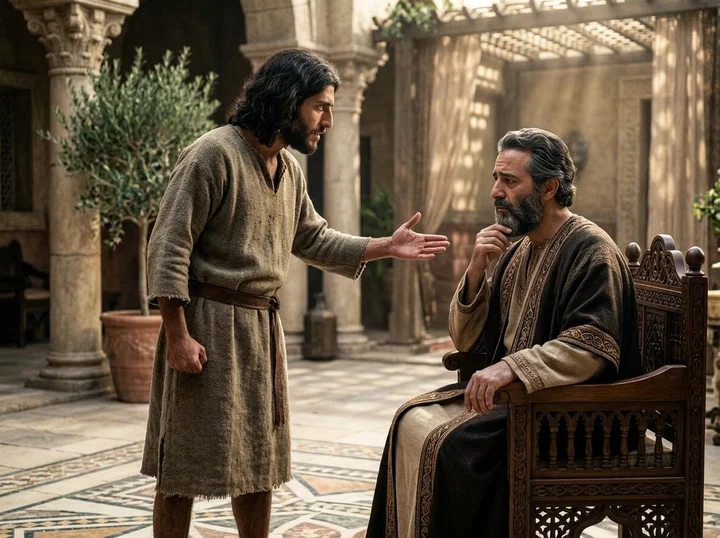
And he said, A certain man had two sons:
And he said, 'A certain man had two sons,
And he said, A certain man had two sons;
And he said—A certain man, had two sons.
Berean Standard Bible, Majority Standard Bible
Then Jesus said, “ There was a man who had two sons.
He said, “ A certain man had two sons.
He sayde moreouer, A certaine man had two sonnes.
Douay-Rheims (Challoner revision)
And he said: A certain man had two sons:
Pictures
Cross-references
- Luke 15:20-24
And he arose, and came to his father. But when he was yet a great way off, his father saw him, and had compassion, and ran, and fell on his neck, and kissed him.
The father compassionately welcomes and restores his returning son.
- Luke 15:24
For this my son was dead, and is alive again; he was lost, and is found. And they began to be merry.
The father restores his returned son and celebrates his return.
- Luke 15:18-19
I will arise and go to my father, and will say unto him, Father, I have sinned against heaven, and before thee,
The prodigal resolves to return to his father and confesses his sin and unworthiness.
- Luke 15:25-32
Now his elder son was in the field: and as he came and drew nigh to the house, he heard musick and dancing.
The elder brother resents the father’s welcome and is entreated by him.
- Luke 15:1-2
Then drew near unto him all the publicans and sinners for to hear him.
Jesus’ welcome of sinners prompts the complaint answered by the parable.
- Luke 15:4-7
What man of you, having an hundred sheep, if he lose one of them, doth not leave the ninety and nine in the wilderness, and go after that which is lost, until he find it?
The lost sheep is found and celebrated, echoing the welcome of the returned son.
- Luke 15:32
It was meet that we should make merry, and be glad: for this thy brother was dead, and is alive again; and was lost, and is found.
The father calls for joy over the lost son’s return.
- Luke 15:16-17
And he would fain have filled his belly with the husks that the swine did eat: and no man gave unto him.
The son eats husks, then remembers the abundance in his father’s house.
- Luke 15:19
And am no more worthy to be called thy son: make me as one of thy hired servants.
The son, feeling unworthy, asks to return as a servant.
- Matthew 18:12-14
How think ye? if a man have an hundred sheep, and one of them be gone astray, doth he not leave the ninety and nine, and goeth into the mountains, and seeketh that which is gone astray?
The lost sheep parallels the returning son and the joy at his return.
- Luke 15:22
But the father said to his servants, Bring forth the best robe, and put it on him; and put a ring on his hand, and shoes on his feet:
The father honors and restores his returning son with a robe and ring.
- Luke 15:21
And the son said unto him, Father, I have sinned against heaven, and in thy sight, and am no more worthy to be called thy son.
The son confesses his sin and unworthiness to be called his father’s son.
- Luke 15:17
And when he came to himself, he said, How many hired servants of my father’s have bread enough and to spare, and I perish with hunger!
The son recognizes his hunger and his father’s servants’ plenty, prompting repentance.
- Luke 15:23
And bring hither the fatted calf, and kill it; and let us eat, and be merry:
The father kills the fatted calf to celebrate his son’s return.
- Luke 15:29
And he answering said to his father, Lo, these many years do I serve thee, neither transgressed I at any time thy commandment: and yet thou never gavest me a kid, that I might make merry with my friends:
The elder son’s complaint reflects Jewish indignation at Gentiles being received.
Commentary part 1 of 2
Each commentary is drawn from primary sources: the writings of Ellen G. White and Adventist pioneers and periodicals. Each commentary is separate. Its own words are not a quotation; follow the references to read the source passages.
Ellen G. White
100 sources
A certain man with two sons opens the story of a father whose younger son demands his inheritance, leaves home to waste it in self-chosen pleasure, and is later welcomed back in pity and forgiveness while the elder son resents his restoration.COL 198.4–199.13T 100.3–101.23T 101.3–102.2 It belongs with the lost sheep and the lost piece of silver to teach the loss of the wanderer and heaven's joy when the lost are brought back to God.Ms 186, 1898, par. 17COL 197.2 Jesus told it when scribes and Pharisees complained that He received publicans and sinners, to show His mission to recover rather than condemn them.ST Jan 29, 1894Ms 102, 1894, par. 12–14 The father is the heavenly Father, tender and compassionate, who watches, runs to meet the returning penitent, forgives without reproach, and restores him with honor.COL 198.13T 103.5–104.1ST Jan 29, 1894COL 203.2–205.1RH Jan 19, 1911 The elder son pictures the self-righteous who feel no need of repentance and refuse to rejoice, and the lesson calls God's people to seek wanderers with pity, forgive as God forgives, and share heaven's gladness over their return.ST Jan 29, 1894ST Jan 29, 1894Lt 80, 1898, par. 9–1318MR 113.5Ms 132, 1902, par. 9
Parable Context and Purpose
A certain man had two sons opens the parable of a father and his two sons, which belongs together with the lost sheep and the lost piece of silver to teach what it means to be lost.Ms 186, 1898, par. 17 That grouping shows heaven's joy when one who was lost is brought back to God.COL 197.2
Jesus gave the story in answer to the scribes and Pharisees murmuring because He received and ate with publicans and sinners.Ms 102, 1894, par. 12–14 His purpose was to reveal that His mission was to recover the lost rather than to condemn and destroy them, and to teach mercy and forgiveness.ST Jan 29, 1894Ms 102, 1894, par. 12–14 The younger son stands for one who needs a Saviour, while the elder son's self-righteousness with no felt need of repentance exposes the spirit of those who condemned Christ for seeking the lost.ST Jan 29, 1894
Christ drew the illustration from facts of life and experience familiar to His hearers, delighting to gather spiritual teaching from the surroundings of daily life.3MR 333.2–3ED 102.3–4GW 408.2 By such familiar events He made immortal truth and the unseen understandable, giving something to interest every mind and appeal to every heart.3MR 333.2–3ED 102.3–4ST Nov 30, 1915 So the daily task is brightened and uplifted by constant reminders of spiritual realities.3MR 333.2–3ST Nov 30, 1915
He taught straight to the point, without long, farfetched and complicated reasoning.19MR 259.1–3 Reading every heart, He drew from His treasure things new and old to illustrate and enforce truth, touching the heart, awakening sympathy, and commending truth to the conscience while leaving hearers free to accept or reject it.19MR 259.1–3 In this most pathetic and touching story the truth is made clear and moving, as the father sees the returning son afar off, runs to meet him, and rejoices that he who was thought dead is alive.19MR 259.1–3Ms 24, 1891, par. 88
The meaning reaches beyond the surface story and involves eternal interests, so it must be carefully studied, considered with purpose, and obeyed.Lt 45, 1894, par. 21–24Lt 71, 1895, par. 27Ms 81, 1893, par. 61–63 It is to be studied together with the lost sheep and the lost piece of silver, which call for going out to search for and bring back those who stray from the fold instead of wounding and driving them away.Lt 71, 1895, par. 27Ms 81, 1893, par. 61–63 The two sons picture contrasting responses to an erring one who repents: the father welcomes him with pity, gladness and love, while the elder brother is cold, jealous, unthankful and resentful.Lt 45, 1894, par. 21–24 Thus the younger son's separation, sinful course, repentance, and loving welcome in humility reveal the father's pity and forgiveness, set against resentment at the lost being restored.3T 101.3–102.2Lt 45, 1894, par. 21–24
Younger Son Leaving Home
The younger son grows tired of the restraint of his father's home and misreads his father's love and care as a restriction on his freedom.COL 198.4–199.1ST Jan 29, 1894ST Apr 20, 1915ST May 26, 1909 He is not dutiful but restless under counsel and loving care, wanting his own way and seeking independence to follow his own desires.ST Jan 29, 1894ST Apr 20, 1915ST May 26, 1909 He mistakes liberty for license, breaks away from his father's authority, and chooses a course of his own.ST Jan 29, 1894ST Apr 20, 1915
Though he feels no gratitude or obligation to his generous father, he claims a child's right to the family goods.COL 198.4–199.13T 100.3–101.2 Rightfully he can claim nothing and should have had nothing, yet he treats his father's property as his own to use as he pleases and rejects mutual obligation.3T 100.3–101.2TCBMP 123.2 He demands his share of the inheritance before his father's death for immediate pleasure without regard for the future, bracing his selfish, rebellious spirit with the thought that part of the property belongs to him.COL 198.4–199.13T 100.3–101.2 He thinks he will be happy using his portion according to his own pleasure without advice or restraint.3T 100.3–101.2
The father grants the request to separate interest and manage the share to suit self-inclination.3T 100.3–101.2TCBMP 123.1 The son then selfishly withdraws and goes far away so he will not be troubled by counsel, correction, advice or reproofs.3T 100.3–101.2TCBMP 123.1 He despises restraint, is fully determined to have pleasure in any way he chooses, and goes so far as even to forget he has a father.3T 100.3–101.2
His departure portrays the sinner's desire to separate interest from God and use God's gifts for self-indulgence.COL 198.4–199.1COL 199.2–200.3 He treats the Father's gifts as his due and manages them to suit his own inclination in a distant country.3T 100.3–101.2COL 199.2–200.3 There he wastes his inheritance and his youth and powers in sinful living.COL 199.2–200.3ST Apr 20, 1915
He represents one who has known the Father's love but has allowed the tempter to lead him captive.ST Apr 20, 1915COL 198.2–3 He is the backslider who leaves the Father's house and service, the lost soul away from blessing, far from home and perishing in need and in hunger.9T 50.2Ms 45, 1901, par. 8Lt 27, 1890, par. 1Lt 52, 1899, par. 1 Those far from God and perishing in sin are pictured in him, to be treated with compassion and brought to saving truth.9T 50.2Ms 45, 1901, par. 8
He also pictures professed commandment keepers who transgress the law and are unthankful and unholy.Ms 75, 1898, par. 13–14 They use entrusted talents with an influence that counterworks God unto unsanctification rather than holiness, having darkness rather than light in them.Ms 75, 1898, par. 13–14 Jesus yearns after these sons and daughters acting as the prodigal and longs to do them the good He delights to do, but He is hindered by perversity of character.Ms 75, 1898, par. 13–14
His waywardness illustrates how indulgence at home and parents' neglect to restrain can contribute to children becoming wayward.11MR 40.3–41.2Lt 117, 1898, par. 4–5 The story is applied to wayward children.11MR 40.3–41.2Lt 117, 1898, par. 4–5
Ruin Repentance and Return
The younger son squanders what he receives in riotous, sinful pleasure, and evil companions deepen his sin, for a life centered on self wastes its years and powers and leads to spiritual poverty and degradation.ST Jan 29, 1894COL 199.2–200.3ST Jan 29, 1894 His restlessness under counsel and loving care makes him mistake liberty for license, break away from authority, and spend his inheritance until famine leaves him hungry and longing for swine's food.ST Jan 29, 1894ST Jan 29, 1894 The freedom he sought becomes bondage and misery, leaving him impoverished, hungry, degraded and enslaved by sin after spending all in sinful indulgence until pinching want brings destitution and the low business of feeding swine.3T 100.3–101.2ST Jan 29, 1894ST May 26, 1909ST Jan 29, 1894
In him is pictured a man ruined by selfish indulgence, once proud, ambitious and successful, but led downward by wine drinking until courage is lost and he comes under Satan's control, whom Christ meets with tender sympathy and words suited to his need.Ms 22, 1898, par. 19 Serving sin and the flesh and the devil gives no profit and only poor wages and no lasting satisfaction, and long separation from God leaves the wanderer with no certain hope of eternal life and in danger of being cut off and perishing in sin.MYP 408.12T 295.1 Those who abandon God for careless pleasure are thus instructed that they find no lasting satisfaction, yet can return humbly and be received with forgiveness and restoration.MYP 408.1
Want and humiliation lead him to remember the kindness and provision of his father's house, regret extravagant pleasure, search his heart over what road he travels and where it will end, recognize his need, and decide to return with humble confession rather than flatter himself with false hopes or neglect to come.3T 100.3–101.2TCBMP 124.12T 295.1 Returning means turning square about at once, leaving sin and Satan's service even at loss of work and position, confessing backsliding, and declaring a purpose to be a Christian from that day before God and angels and witnesses.3MR 64.5–65.3Lt 27, 1890, par. 1 The one who so returns enters a new channel with purified thoughts and changed purposes, feels the solemn responsibility taken, and receives evidence of pardon and love that brings happiness and thankfulness, with the Lord as helper unto eternal life.3MR 64.5–65.3Lt 27, 1890, par. 1
The Father's house is God, and returning is turning unto the Lord with confession and contrition of soul, seeking Him in earnest prayer whether for the first time or after backsliding.Ms 21, 1889, par. 96–97 It is done with full decision of soul giving heart and life to God in unreserved surrender of the whole life, worked by the convicting power of the Holy Spirit upon the heart and by willingness to receive truth and be wisely helped and saved.Lt 200, 1902, par. 8–10Lt 33, 1896, par. 12Ms 21, 1889, par. 96–97Lt 15, 1899, par. 9–1110MR 110.3–5 The lesson is to return without delay as the son came back, humbly confessing sin and seeking forgiveness, trusting firmly that Jesus is sufficient for all things and will do all He has promised so that none who seek Him in this way seek in vain.Ms 21, 1889, par. 96–97Lt 18f, 1890, par. 2Lt 1a, 1890, par. 1 Failure and being betrayed into sin do not make one unworthy to pray, but he should come, tell his mistakes and failures, ask strength for fresh endeavor toward God's ideal, trusting the Lord recognizes every effort and never disappoints confidence, for deliverance comes through Jesus' strength, not one's own.MYP 97.1Ms 21, 1889, par. 96–97Lt 18f, 1890, par. 2
Enjoying a son's privileges is linked with accepting a son's obligations and conditions, for welcome into the house does not remove them.Ms 183, 1901, par. 12Ms 98, 1901, par. 17–20Lt 164, 1900, par. 21–23ST May 8, 190110MR 110.3–5 The returned wanderer must remain under care and in the fold under the shepherd rather than resume wanderings, live in keeping with sonship, repay love by remaining in obedience and self-denying service, renounce the world's favor and friendship, make Christ all and in all, walk according to His Word, and submit to His dominion and reign as King with cordial assent and willing obedience to God's terms.Ms 183, 1901, par. 12Ms 98, 1901, par. 17–20Lt 164, 1900, par. 21–23ST May 8, 190110MR 110.3–5 Such a return brings submission to God's will and way as the Lord leads step by step into a rich experience, bringing praise to the Lord and moving hearers to weeping joy.Ms 89, 1893, par. 1–2 God accepts those who turn with full decision, blesses the returned one, and works through him to help others be converted.Lt 33, 1896, par. 12
Father's Compassionate Reception
The father in the story is the heavenly Father Himself, the One who has been sinned against, and the parable lays open what God really is toward those who stray and stand exposed to temptation.COL 198.13T 103.5–104.1GW 157.318MR 113.511MR 367.1 He is tender, loving, pitying and kind, and though wanderers turn away and choose their own course He does not leave them in their misery or abandon them there.COL 198.118MR 113.5Ms 132, 1902, par. 911MR 367.1 When His children err and stray, yet repent and return, He receives them with the joy of an earthly father welcoming a long-lost son, and calls His people to cooperate with Him in seeking the lost and winning back the erring.18MR 113.5Ms 132, 1902, par. 9
He longs and watches for the estranged son, and goes out to meet him, taking the first step to seek the rebellious.RH Jan 19, 1911ST Jan 22, 1894 He sees him afar off and runs to meet him, rejoicing that one thought dead is alive, and He provides for him even before knowing him.RH Jan 19, 191119MR 259.1–3Ms 24, 1891, par. 88 This taking of the initiative gives courage to sinners who have done wrong, that the wanderer who lets Him bring him home will be welcomed back.19MR 259.1–3ST Jan 22, 1894
When the son comes back sensible of great sin and neglect, valuing his father's love and acknowledging his claims, having suffered and felt his need as only the Father can supply, the Father meets him with great joy, pity and forgiveness.3T 103.5–104.1TCBMP 128.1 He does not meet the returning sinner with denunciations and accusations of wrath, but prepares a feast to celebrate the return.3T 103.5–104.1GW 157.3 The son who has followed sin and now repents comes to the Father as the only One who can supply that need, and his return becomes a source of greatest joy.3T 103.5–104.1TCBMP 128.1
Every repentant soul is welcomed with joy and without reproach or reminders of unworthiness, for penitence and contrition are required and then pardon is free.ST Jan 29, 1894COL 203.2–205.1RH Jan 19, 1911 The past is treated as forgiven, shame is covered, and the wanderer who turns back is restored as a child with tenderness and signs of honor, clothed with the robe of righteousness into the Father's household and not shamed for former sins.COL 203.2–205.1RH Jan 19, 1911GW 140.2Ms 40, 1899, par. 10–1211MR 370.2–371.1 God joyfully receives any sinner who returns to Him in this way.ST Jan 29, 189411MR 370.2–371.1
Anyone who truly desires to return will be received, even the poorest, and failure and being betrayed into sin do not make a person unworthy to pray or to come before the Lord.ST Jan 29, 1894Lt 76, 1898, par. 18–20MYP 97.1 Let him come, tell his mistakes and failures, ask for strength for fresh endeavor toward God's ideal, and trust that the Lord recognizes every effort to reach His ideal and never disappoints or abuses the confidence of the one who returns.Lt 76, 1898, par. 18–20MYP 97.1
The parable reveals the Father's infinite love for the fallen race in the gift of His beloved Son as a sacrifice to die for the human race, making a channel for the outflow of infinite love so that all who believe are restored again to favor.GW 157.3Lt 85, 1886, par. 17–18Ms 41, 1890, par. 45–51 Through Christ's mercy the prodigal is brought back to the Father's house, restored to favor and assured of acceptance, peace and love, giving grand themes for thought and a solid foundation for faith beyond which nothing more can be asked of God.Lt 85, 1886, par. 17–18Lt 15a, 1890, par. 9–11Ms 41, 1890, par. 45–51 Believing on Him brings obedience to all of God's commandments and life in Jesus Christ.Lt 85, 1886, par. 17–18Ms 82, 1894, par. 22–24 That compassion for the lost, shown at Calvary in Christ's sacrifice for human sin and dying love, is the pledge that Christ welcomes the sinner who comes to Him.Ms 45, 1901, par. 8Lt 15a, 1890, par. 9–11Ms 82, 1894, par. 22–24
The very desire to return is the pleading of God's Spirit drawing the wanderer back to the Father, whose compassion exceeds even the tenderness expressed in the story.Lt 15, 1899, par. 9–11 Those convicted by the Spirit who have neglected the invitation and not yet given the life to God are being called back by that fatherly love.Lt 15, 1899, par. 9–11
When even the poorest comes to the Father in repentance, as the prodigal did, there is joy among the heavenly host, marked by heaven's warmth, courtesy and love and the warmth of God's welcome.Ms 19, 1890, par. 21STA 14.1STBk 14.1STOM 11.2 Christ's joy over the repenting sinner, especially one endangered by temptation and for whom He feels tender sympathy and puts forth earnest effort, is greater than over the ninety-nine who need no repentance.STA 14.15T 604.1
The father's loving treatment of the wayward son illustrates God's patient care for Israel, whom He loves as a father loves a son even while Israel resists mercy.ST Feb 27, 1896Ms 56, 1902, par. 5 He is willing to suffer for their sins and bear their guilt, and the parable helps show Christ's anguish over Jerusalem and the judgment He foresaw falling upon it.ST Feb 27, 1896Ms 56, 1902, par. 5
Elder Brother's Complaint
The elder son stands for the self-righteous who feel no need of repentance, answering to the Pharisees who condemned Jesus for seeking the lost, and to unrepenting Israel unwilling to recognize publicans and sinners as brothers to be sought, forgiven and led to everlasting life.ST Jan 29, 1894ST Jan 29, 1894 The Heavenly Father welcomes every truly penitent soul with joy and without reproach or reminders of unworthiness, yet penitence is required.ST Jan 29, 1894 He also pictures believers in an established church upon whom much labor has been bestowed, who ought to rejoice when the Lord brings wandering sheep into the fold through new work elsewhere with souls awakened and baptized.21MR 296.5–6Ms 49, 1898, par. 24–25 Instead he acts in envy and jealousy, murmuring and complaining that others receive the ministry of the Word while he is left without it, sorely displeasing the Lord by gossip, doubt, questioning and evil surmising rather than seeking to save the lost.21MR 296.5–6Ms 49, 1898, par. 24–25 Those so favored should know God and Jesus Christ whom He has sent, and if Christ is formed within as the hope of glory they will be an earnest working church carrying salvation, reflecting light by precept and example, by burden for souls and sincere prayer, stretching out hands all day long to hunt for souls and bring truth close to hearts, instead of selfishly expecting to be constantly fed with sermons while doing no righteousness at home or in church, which is a curse and not a blessing.Ms 49, 1898, par. 24–25
In contrast to the father's pity, gladness, love, tenderness and restoration with signs of honor, he is cold, jealous, unthankful, resentful, stubborn, selfish, indifferent and contemptuous, unwilling to receive his repenting brother or rejoice at his return.Lt 45, 1894, par. 21–24GW 140.2Lt 71, 1895, par. 25 Though remaining in his father's house, he watches for faults, magnifies them while overlooking his own, refuses to forgive, accuses his brother, creates division, is blinded to his own faults and left unreceptive to light, acting in Satan's spirit rather than reflecting the Father's mercy.Lt 80, 1898, par. 9–1311MR 370.2–371.111MR 370.1 God still loves those who separate from Him and works to bring them back, receiving them with joy and covering the restored sinner with the robe of righteousness when they repent, and His people are to seek restoration, forgive as God forgives, and rejoice when sinners return.Lt 80, 1898, par. 9–1311MR 370.2–371.111MR 370.1
He stands for those handling sacred things who show indifference and careless disregard for those ready to die instead of seeking the wandering sheep as the true Shepherd does.Lt 71, 1895, par. 25 He feels his own course righteous and faithful in home duties, supposes he needs no repentance and deserves commendation and honor, contrasts himself with the prodigal, cannot sympathize with the father's joy in receiving back the wanderer, and thereby shows he himself is in need of repentance.Lt 71, 1895, par. 25 His complaints are natural but not right, and the parable forbids his complaining attitude toward the returning one and calls for receiving the repentant with the father's joy.3T 103.5–104.1TCBMP 128.2Lt 71, 1895, par. 27 Those who have erred need pity, help, sympathy and above all free forgiveness rather than efforts to make them feel their error and repeated reminders of their mistakes, lest departing from this lesson wound and drive away the lost sheep instead of seeking it.3T 103.5–104.1TCBMP 128.2Lt 71, 1895, par. 27Lt 45, 1894, par. 25–27 The parable calls people to examine whether they follow the father's compassionate example or the elder brother's self-righteous spirit, and it was given for the benefit of those who claim to love God that they may properly represent Him by sharing heaven's rejoicing over the found lost with sympathy, mercy and personal care rather than censure, suspicion or reproach.Lt 45, 1894, par. 21–24Lt 71, 1895, par. 25Lt 45, 1894, par. 25–27
Seeking and Restoring Wanderers
The church bears responsibility to seek those who have wandered and bring them back into the fold, and failure to seek them is a wrong to be recognized and acknowledged, as in the case of George Lay.Ms 16, 1868, par. 2–3 God still loves those who separate themselves from Him after knowing the Father's love, and He works to bring them back, receiving them with joy and restoring them when they repent.Lt 80, 1898, par. 9–1318MR 113.5Ms 132, 1902, par. 9 His people are to cooperate with Him and with heaven's work to reclaim the lost, seeking restoration, forgiving as God forgives, and rejoicing when sinners return rather than resenting forgiveness in a selfish, jealous, accusing spirit that magnifies another's faults while overlooking its own.Lt 80, 1898, par. 9–1318MR 113.5Ms 132, 1902, par. 9ST Oct 31, 1916 Those who have themselves been sought and restored through Christ can understand how to seek the lost, and those who teach truth must make known the Father's waiting, yearning love, even His giving of His Son to die for the human race, to win souls and bring many prodigals to the Father.GW 157.3MH 179.1–2
Those who have erred need pity, help, sympathy and above all free forgiveness rather than efforts to make them feel their error, reminders of mistakes, harsh condemnation, anger, censure, suspicion or reproach.3T 103.5–104.1TCBMP 128.2RH Nov 25, 1902Lt 45, 1894, par. 25–27Lt 50, 1893, par. 8–9 They should be treated with loving, unselfish, patient, compassionate interest and personal care to lead them toward repentance, since the returning one has suffered, felt need, become sensible of great sin and neglect, and come appreciating the Father's love and acknowledging His claims as the only one who can supply that need.3T 103.5–104.1RH Nov 25, 1902Lt 45, 1894, par. 25–27Lt 50, 1893, par. 8–9 The parable should shape heart, mind and conduct to replace severe judgment of a fallen brother with compassion and a desire to restore, whether dealing with the erring, the fallen, youth, students, or tempted people.Lt 16a, 1887, par. 4Lt 16, 1887, par. 7–1416MR 339.3Ms 113, 1902, par. 30Lt 50, 1893, par. 8–9 To depart from this lesson and take the elder brother's cold, complaining attitude toward the returning one is to wound and drive away the lost sheep instead of seeking it, for those who go astray are souls needing help, not people to be driven further from God.Lt 71, 1895, par. 27Lt 16, 1887, par. 7–14Ms 113, 1902, par. 30Lt 50, 1893, par. 8–9
Youth are instructed that abandoning God for careless pleasure finds no lasting satisfaction, but that even after reckless spending and misery in a foreign country they can return humbly in repentance and be received with forgiveness and restoration to the Father's heart.MYP 408.1 The nearly hopeless are likewise to be offered encouragement and a message of love rather than blame, so that those who have wandered from God may come back to Him in contrition and penitence and grasp redemption through Christ.Lt 178, 1902, par. 28–30 Those who have left the Father's house, turned from God, or once loved and served Him should be encouraged to return, leave sin, confess backsliding, come back to Jesus and receive pardon, love, help and eternal life.Lt 59, 1886, par. 1–5STB 147.59T 50.2STB 620.1–2Lt 27, 1890, par. 1 God still loves such a one and will accept him as His child if he returns, as illustrated by the call to Amos.Lt 52, 1899, par. 3
Prodigals who are sick and sinful in darkness, separated from God and perishing in need, are to be reached where they are, pointed to Christ as the great Healer, and encouraged to return to the Father.STB 119.1RH Mar 16, 1905 This seeking and restoring work belongs to medical missionary work through sanitariums, carried on by sympathetic, kind, straightforward, noble and upright workers who receive light and grace and love from Christ to impart to those in darkness.STB 119.1RH Mar 16, 1905
Sources