Luke 17:11
And it came to pass, as he went to Jerusalem, that he passed through the midst of Samaria and Galilee.
Translations
And it came to pass, as he went to Jerusalem, that he passed through the middle of Samaria and Galilee.
King James Version, KJV Cambridge Paragraph Bible, Webster Bible
And it came to pass, as he went to Jerusalem, that he passed through the midst of Samaria and Galilee.
And it came to pass, as they were on the way to Jerusalem, that he was passing through the midst of Samaria and Galilee.
And it came to pass, as they were on the way to Jerusalem, that he was passing along the borders of Samaria and Galilee.
And it came to pass, in his going on to Jerusalem, that he passed through the midst of Samaria and Galilee,
And it came to pass as he was going up to Jerusalem, that he passed through the midst of Samaria and Galilee.
And it came to pass, during the journey unto Jerusalem, that, he, was going through the midst of Samaria and Galilee.
Berean Standard Bible, Majority Standard Bible
While Jesus was on His way to Jerusalem, He was passing between Samaria and Galilee.
As he was on his way to Jerusalem, he was passing along the borders of Samaria and Galilee.
And it came about that when they were on the way to Jerusalem he went through Samaria and Galilee.
And so it was when he went to Hierusalem, that he passed through the middes of Samaria, and Galile.
Douay-Rheims (Challoner revision)
And it came to pass, as he was going to Jerusalem, he passed through the midst of Samaria and Galilee.
Pictures
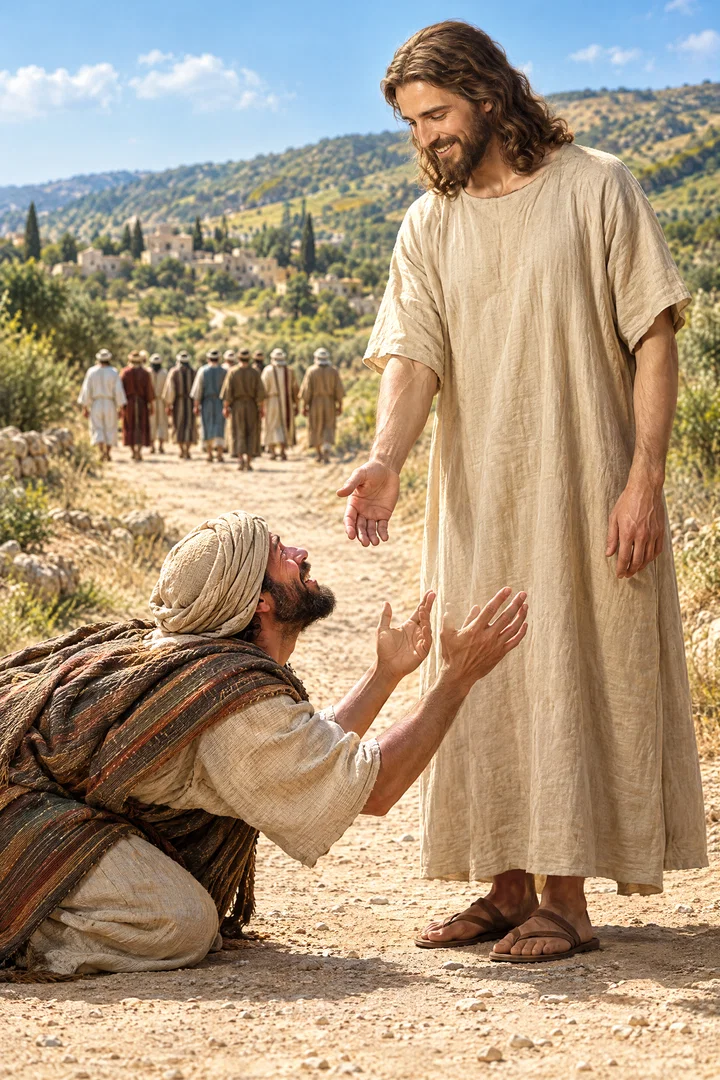
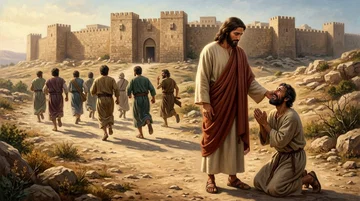
Cross-references
- Luke 17:15-18
And one of them, when he saw that he was healed, turned back, and with a loud voice glorified God,
The healed Samaritan returns to thank Jesus and give glory to God.
- Luke 17:17-18
And Jesus answering said, Were there not ten cleansed? but where are the nine?
Only one of the ten healed lepers returned to give thanks and glory to God.
- John 4:9
Then saith the woman of Samaria unto him, How is it that thou, being a Jew, askest drink of me, which am a woman of Samaria? for the Jews have no dealings with the Samaritans.
woman of Samaria received grace
- Acts 1:8
But ye shall receive power, after that the Holy Ghost is come upon you: and ye shall be witnesses unto me both in Jerusalem, and in all Judæa, and in Samaria, and unto the uttermost part of the earth.
Jesus named Samaria as an early field for preaching the gospel.
Commentary
Each commentary is drawn from primary sources: the writings of Ellen G. White and Adventist pioneers and periodicals. Each commentary is separate. Its own words are not a quotation; follow the references to read the source passages.
Ellen G. White
13 sources
On His last journey from Galilee toward Jerusalem through the country between Samaria and Galilee, He was met just outside a village by ten lepers standing afar off.ST Jun 25, 1896ST Aug 8, 1906CH 412.2 They obeyed His command to go, their faith tested by that direction, and on their way were made entirely whole by divine power working a new creation in them, nine being Jews and one a Samaritan stranger.3T 180.3–181.1ST Jun 25, 1896ST Aug 8, 1906 Only the Samaritan stranger returned to find Him and give glory to God, while the other nine accepted their healing without gratitude or praise.ST Jul 2, 18963T 180.3–181.15T 315.2 He healed all ten for the sake of that one, though He knew the rest would give no thanks, and that mercy lays a renewed obligation on those healed not to remain silent but to remember His kindness, give thanks, and glorify God.ST Jul 2, 18965T 315.2MH 134.5–135.1ST Aug 8, 1906 The mercy to the Samaritan and his gratitude taught that Christ's love extends to Samaritans, and because even one grateful soul is of such worth, workers for suffering souls should not become weary in well-doing from discouragement and apparent defeat.3T 180.3–181.1MH 134.5–135.1DA 488.4–6
Journey Toward Jerusalem
Jesus was on His last journey from Galilee toward Jerusalem, passing through the country and region between Samaria and Galilee, and it was on that traveling route toward Jerusalem that He met the ten lepers.ST Jun 25, 1896ST Aug 8, 1906CH 412.211MR 257.2–258.1 On this journey the seventy were sent two and two before Him to preach the kingdom of God and heal the sick, to proclaim His divine character as Messiah and to prepare the field for His final personal work.ST Jun 25, 1896 They were to depend on hospitality for support and to reach every person without regard to nation, caste, or position.ST Jun 25, 1896 Just on the outskirts of a certain village as He entered it, He was met by ten lepers standing afar off.ST Jun 25, 1896
On this same route He received the poor and afflicted, while those who thought themselves righteous and in need of nothing rejected His word.ST Jun 25, 1896 The mercy shown to the Samaritan leper among the ten, and that leper's gratitude in returning alone to give thanks, taught the disciples that Christ's love extended to Samaritans.DA 488.4–6 By this lesson they were prepared to take the gospel to people who had once been their enemies.DA 488.4–6
Healing and Grateful Response
The ten obeyed His direction to go, and that direction tested their faith.ST Jun 25, 1896 They acted at once without delay upon His word, willing to venture if there was any prospect of healing.ST Jun 25, 1896 The tones of His voice thrilled their hearts and filled them with hope and faith and confidence.ST Jun 25, 1896 On their way they knew that a great change had taken place in themselves and that they were healed.ST Jun 25, 1896
All ten were healed, not merely cleansed of leprosy but made entirely whole, divine power working a new creation in them.3T 180.3–181.1ST Jun 25, 1896ST Aug 8, 1906MH 134.5–135.1 Nine of them were Jews and one was a Samaritan stranger.3T 180.3–181.1 Only that one stranger returned to find Him and give glory to God, while the other nine accepted their healing without expressing gratitude or praise.ST Jul 2, 18963T 180.3–181.15T 315.2ST Aug 8, 1906CH 412.2 He healed all ten for the sake of that one, though He knew the rest would give no thanks and would return to the indulgences that bring disease.MH 134.5–135.1
The healing was mercy from God, and the one who receives it has a renewed obligation to the Creator.ST Jul 2, 1896MH 233.2 Hearts should not remain untouched or ungrateful for such mercy, nor should those healed remain silent, but they should remember His kindness, find Him, give thanks, glorify Him, and praise God for His benefits, His righteousness, and restored health.5T 315.2ST Aug 8, 1906MH 233.211MR 257.2–258.1Ms 9, 1890, par. 22 The return of the one is the example of that gratitude, and his faith and gratitude were rewarded, showing that mercies and healing call for praise and thanksgiving.ST Jul 2, 1896ST Aug 8, 1906
The nine correctly represent Sabbath-keepers who come as patients to the Health Institute.3T 180.3–181.1 They receive much attention often at reduced prices or free of charge, yet they are the most difficult to manage, more free to make complaints and to question than any other class.3T 180.3–181.1 They cause physicians unnecessary care and burdens and speak disparagingly to other patients of the means employed for recovery.3T 180.3–181.1 The stranger represents worldlings and professed Christians of other denominations who appreciate the efforts made for their recovery and when they return to their homes exert an influence more in favor of the Health Institute than Sabbath-keepers do.3T 180.3–181.1
Because even one grateful soul is of such worth, workers for suffering souls should not cease their efforts from discouragement and apparent defeat.3T 180.3–181.1MH 134.5–135.1 They should remember Christ their Pattern and not become weary in well-doing, but thank God and take courage if even one among a large number is grateful and exerts a right influence.3T 180.3–181.1MH 134.5–135.1 He would have chosen His life of toil and humiliation and His death of shame to save even one soul who would accept the gospel of His grace.MH 134.5–135.1 If one human being is uplifted and ennobled and fitted to shine in the courts of the Lord, there is cause for rejoicing.MH 134.5–135.1
Sources
Pioneers and periodicals
40 sources
As he made his last journey from Galilee toward Jerusalem he passed through the border country of Samaria and Galilee and was met on the outskirts of a village by ten lepers standing afar off.ST Jun 25, 1896ST Apr 16, 1896ST Apr 16, 1896ST Aug 13, 1894 Their shared misery had overcome the division between Jew and Samaritan, and together they called for mercy in a region where leprosy was especially common.ST Nov 7, 1900ST Nov 17, 1881ST Nov 7, 1900 He did not test whether they were worthy but told them to show themselves to the priests as the law required, and they were cleansed and made whole as they went in obedience to his word.ST Jun 25, 1896ST Nov 18, 1903RH Nov 26, 1872RH Feb 10, 1874 Of the ten only one returned to bow at his feet and give glory to God, and he was a Samaritan stranger while the nine who gave no thanks were professedly Israel.ST May 6, 1889ST Jul 2, 1896ST Aug 13, 1894RH Dec 11, 1866ST Mar 28, 1906 Jesus was grieved by the ingratitude of the nine, and the one who returned received more than cleansing, for his faith and gratitude were rewarded with the health of soul and the approval of Christ.ST Jul 2, 1896RH Mar 5, 1857ST Jan 28, 1897RH May 27, 1915
Journey to Jerusalem
As he went to Jerusalem he passed through the midst of Samaria and Galilee, on his way back to Jerusalem and toward Jerusalem between Samaria and Galilee, and this journey brought him to a certain village where the encounter with the ten lepers in verses 11-19 follows.ST May 6, 1889ST Apr 16, 1896ST Apr 16, 1896ST Aug 13, 1894ST Nov 18, 1903 Just on the outskirts of the village as he entered it he was met by ten lepers standing afar off and calling to him for mercy and help, who were cleansed and healed as they went in obedience to his direction.ST Aug 13, 1894ST Nov 18, 1903RH Nov 26, 1872 He did not test whether they were worthy but told them to show themselves to the priests as the law required before they could rejoin others, helping them all despite knowing their hearts, and only one returned to find him and glorify God.ST May 6, 1889ST Aug 13, 1894ST Nov 18, 1903
It was his last journey from Galilee toward Jerusalem, passing through the country between Samaria and Galilee with the seventy disciples sent two and two before him to preach the kingdom of God, heal the sick, proclaim him as Messiah and proclaim his divine character, and prepare the field for his final personal work.ST Jun 25, 1896 They depended on hospitality and reached every person without regard to nation, caste, or position, and on this route he was met just on the outskirts of a certain village by ten lepers standing afar off.ST Jun 25, 1896 This account of the ten lepers belongs to his return journey to Jerusalem as he passed through Galilee and Samaria, a return to the north after the raising of Lazarus had intensified the efforts of the Jews to kill him and led him to go north for a time.ST Apr 16, 1896
The region through which he passed on his way to Jerusalem was especially afflicted by leprosy, where leper colonies were common and lepers gathered by the roadsides calling out to travelers for help.ST Nov 7, 1900ST Nov 7, 1900 As he approached a border village ten lepers together called to him for mercy, their shared misery having overcome the divisions between Jew and Samaritan.ST Nov 17, 1881 In the order of his life the account of the healing of the lepers beginning here comes after the healing of the woman with the issue of blood recorded in Luke 8.ST Sep 1, 1909
Healing of the Lepers
Jesus did not put the ten to any test of worthiness but directed them to present themselves to the priests as the law required before they could be restored to society, and as they went in obedience to that direction they were cleansed and healed.ST Nov 18, 1903RH Nov 26, 1872RH Feb 10, 1874 That direction tested their faith, and they acted upon it at once without delay, willing to venture forward if there was any prospect of healing.ST Jun 25, 1896 The tones of his voice thrilled their hearts and filled them with hope and faith and confidence.ST Jun 25, 1896 On the way they knew that a great change had taken place in them, for they were not only cleansed of leprosy but made entirely whole, divine power working a new creation in them.ST Jun 25, 1896
In this he received the poor and afflicted while those who counted themselves righteous and in need of nothing rejected his word, and he helped all ten despite knowing their hearts.ST Jun 25, 1896ST Nov 18, 1903ST Apr 29, 1908 Their healing displayed the divine power and grace manifested among the people, illustrating that the kingdom of God was among them.ST Jul 9, 1874RH Feb 10, 1874
The account belongs to teaching on faith, showing that faith with power even as a grain of mustard seed, be it never so small, will save a man.ST Jun 11, 1896 It is to be used to teach children plainly how Christ healed the lepers, making the manner of the healing clear rather than leaving them confused by figurative explanations.ST Dec 1, 1881
Grateful Samaritan's Return
On his way to Jerusalem through Samaria and Galilee Jesus came to a village where ten lepers met him and were healed, yet only one came back to find him and give glory to God while the other nine went on.ST May 6, 1889ST Aug 28, 1884ST Aug 8, 1906ST Aug 8, 1906ST Aug 13, 1894 That one returned, bowed at his feet, and glorified God for his cleansing, while the rest accepted their healing without expressing gratitude.ST May 6, 1889ST Jul 2, 1896ST Aug 28, 1884ST Aug 8, 1906ST Aug 8, 1906 Those who receive such mercy should therefore respond with gratitude rather than forget the giver, for God's mercies and healing through Jesus call for praise and thanksgiving.ST Jul 2, 1896ST Aug 28, 1884ST Aug 8, 1906 The healed man's return stands as the example of gratitude for restored health and of giving praise to God for his benefits.ST Jul 2, 1896ST Aug 8, 1906ST Aug 8, 1906
The one who returned was a Samaritan, called a stranger, while the nine who gave no grateful word are described as professedly Israel.RH Dec 11, 1866ST Mar 28, 1906 Few of those blessed in body and spirit return in gratitude to praise God, and their course shows how widespread such ingratitude can be.RH Dec 11, 1866ST Mar 28, 1906 Though the Jews had the Scriptures and the temple, they left without returning thanks, while the Samaritan, who had only half the Bible and was excluded from the temple, returned to give glory to God.ST Jan 28, 1897ST Mar 28, 1906
The Samaritan who returned received more than cleansing, for Christ's approval accompanied his cure and he became a partaker of the soul's health.ST Jul 2, 1896ST Jan 28, 1897 His faith and gratitude were rewarded, and his gratitude is pictured as leading him into a life of service to the Lord.ST Jul 2, 1896ST Jan 28, 1897 His return is an example of humble gratitude and praise that comes from the heart, offered for restored health and for God's love and salvation given through his Son.ST May 6, 1889ST Aug 8, 1906 The account therefore calls people to consider whether they honor God for that love and salvation and to respond with gratitude, faith, and obedience.ST May 6, 1889ST Aug 8, 1906
The healing of the Samaritan leper proves that his grace flows freely for all and God is no respecter of persons.ST Mar 17, 1898 Although Christ was sent only to the lost sheep of the house of Israel to lay the foundation of his kingdom among the people God recognized as his own, and told his disciples to go only to the Jews, it was always God's plan to help the stranger of another nation who sought him.ST Mar 17, 1898 So it was with the woman of Samaria, and with the woman of Sidon, and with the Samaritan leper.ST Mar 17, 1898 The healed man's gratitude led him to follow Jesus, including keeping the Sabbath.
Ingratitude of the Nine
Jesus was grieved by the ingratitude of the rest and with feeling asked, Where are the nine, and he still asks the same of those who have found peace in him or have received some special favor at his hand, for few return to praise God.RH Mar 5, 1857RH May 27, 1915 That question challenges believers to respond faithfully to the good they have received.RH Mar 5, 1857RH May 27, 1915 Only about one out of nine of the brotherhood are zealous to honor Christ and his gospel, while the nine accept the blessing and are glad to have hope but do little to commend Jesus to the world or to make his church an honor to his name.RH Mar 5, 1857 Though blessed in a thousand ways temporally and spiritually, physically, socially, intellectually and morally, they give a false testimony of his merits and the power of religion, acting on the policy to take and not to give, to receive but not impart.RH Mar 5, 1857
The nine accepted physical healing without thanking their Benefactor, and their ingratitude revealed hardened hearts that received physical help while remaining careless of their spiritual need.ST Oct 27, 1914ST Nov 8, 1899 They received grace without fruit that leads to eternal life.ST Nov 8, 1899 Receiving such an outward blessing and feeling Christ's gospel influence did not itself mean a person was saved.ST Oct 15, 1902 Their failure shows base ingratitude, while the Samaritan who returned to thank Jesus showed more true gentleness than the other nine.RH Nov 26, 1872ST Jun 18, 1902
Many who receive mercy, like the nine cleansed lepers, fail to return and give God glory.ST Sep 12, 1900RH Jun 16, 1910ST Mar 3, 1898 This proves that many who are helped will fail to be benefited, for after ten people were healed only one returned to give thanks, showing how his service was often received without gratitude.ST Sep 12, 1900ST Mar 3, 1898 Yet Jesus did not stop his benevolent work but kept right on healing, helping and cheering all who came, pouring out his life in daily service and not only in his death.ST Sep 12, 1900ST Mar 3, 1898 When just one person is saved it is a wonderful work.ST Mar 3, 1898
Faith, Praise, and Service
Those who help others must not wait for thanks, for even Jesus found gratitude in only about one in ten when he healed the ten lepers without first asking whether they were worthy and only one returned to thank him.ST Apr 29, 1908 The account shows ten sufferers lifting their voices together in prayer for mercy, yet only one returning to give glory to God, which means that many unite in asking for need but few unite in grateful praise, the rest being satisfied with the benefit while only the thankful one remembers the benefactor.RH Oct 3, 1865 People readily seek the Healer in pain but are slower to praise him when well and joyful.RH Oct 3, 1865ST Oct 1, 1902
Dwelling only on wants as if no supply was ever given displeases God.RH Oct 3, 1865 God may wait for praise for a benefit already given before granting another blessing earnestly desired, and those who abound in praise have more success in prayer.RH Oct 3, 1865 Praise is superior to prayer because prayer can be wholly selfish while praise is unselfish and is the employment of heaven.RH Oct 3, 1865
When God delivers from trouble the one delivered must glorify him, praising him before and after deliverance, returning thanks on every possible occasion, speaking of the grace that saved him, and showing faith in the promises of God by works.RH Mar 7, 1871 He must not forget to thank his kind Benefactor as the nine cleansed lepers did.RH Mar 7, 1871 People should promptly thank God when blessed, helped, or preserved from danger, recognizing him as their deliverer.ST Jun 18, 1902 Gratitude to Jesus should be shown in action, and the returning man's deed is remembered and honored while the other nine went on without thanks.ST Mar 15, 1905ST Jun 18, 1902 The account illustrates the gratitude that can follow healing and encourages giving God glory for success in medical work.
Sources