Luke 17:12
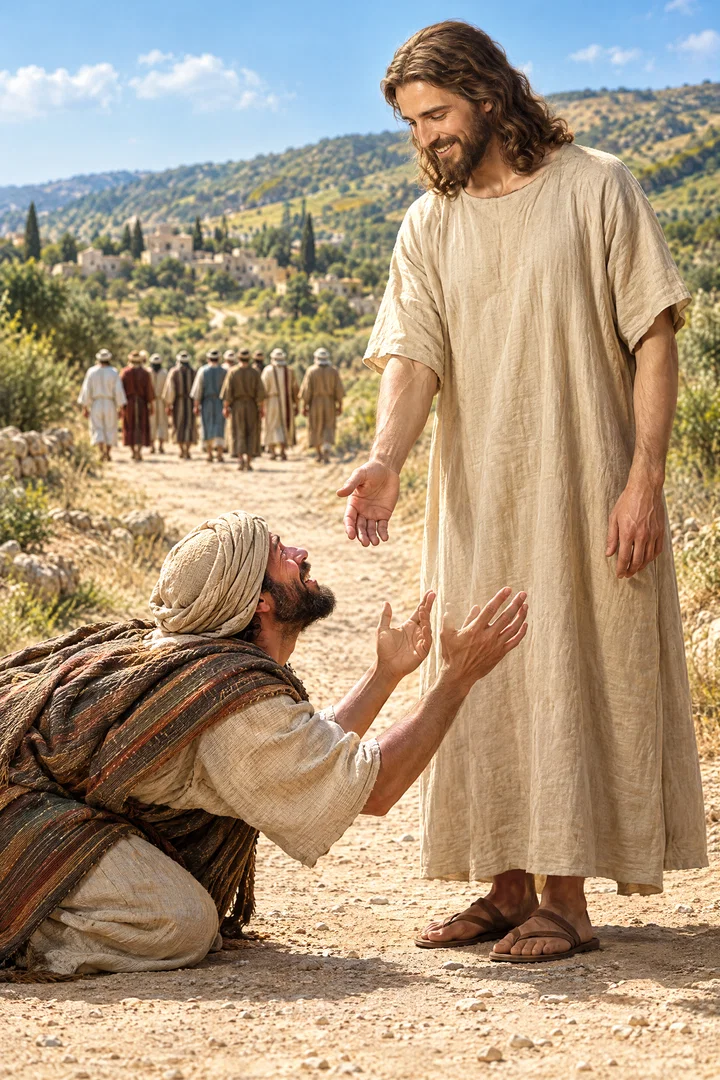
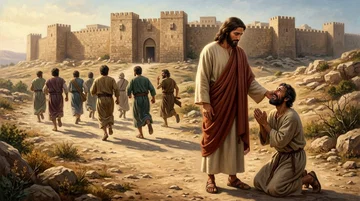
And as he entered into a certain village, there met him ten men that were lepers, which stood afar off:
Translations
American King James Version, King James Version, KJV Cambridge Paragraph Bible, Revised Version
And as he entered into a certain village, there met him ten men that were lepers, which stood afar off:
And as he entered into a certain village, there met him ten men that were lepers, who stood at a distance.
And as he entered into a certain village, there met him ten men that were lepers, who stood afar off:
and he entering into a certain village, there met him ten leprous men, who stood afar off,
And as he entered into a certain village ten leprous men met him, who stood afar off.
And, as he was entering into a certain village, there met him ten leprous men, who stood still, afar off;
Berean Standard Bible, Majority Standard Bible
As He entered one of the villages, He was met by ten lepers. They stood at a distance
As he entered into a certain village, ten men who were lepers met him, who stood at a distance.
And when he went into a certain small town he came across ten men who were lepers, and they, keeping themselves at a distance,
And as hee entred into a certaine towne, there met him tenne men that were lepers, which stoode a farre off.
Douay-Rheims (Challoner revision)
And as he entered into a certain town, there met him ten men that were lepers, who stood afar off;
Pictures
Cross-references
- Leviticus 13:45-46
And the leper in whom the plague is, his clothes shall be rent, and his head bare, and he shall put a covering upon his upper lip, and shall cry, Unclean, unclean.
The law required lepers to remain apart and warn others.
- Luke 17:17-18
And Jesus answering said, Were there not ten cleansed? but where are the nine?
Jesus asks why only one of the ten healed lepers returned to give thanks.
- Leviticus 14:1-32
And the LORD spake unto Moses, saying,
The law prescribed priestly examination and cleansing for a healed leper.
- Luke 17:19
And he said unto him, Arise, go thy way: thy faith hath made thee whole.
Jesus says the returning Samaritan’s faith has made him whole.
- Luke 17:16
And fell down on his face at his feet, giving him thanks: and he was a Samaritan.
The Samaritan leper exemplifies Christ’s grace reaching beyond Israel.
- Mark 1:40-42
And there came a leper to him, beseeching him, and kneeling down to him, and saying unto him, If thou wilt, thou canst make me clean.
Both texts describe Jesus encountering lepers.
Commentary
Each commentary is drawn from primary sources: the writings of Ellen G. White and Adventist pioneers and periodicals. Each commentary is separate. Its own words are not a quotation; follow the references to read the source passages.
Ellen G. White
20 sources
As Jesus entered a certain village on His last journey from Galilee toward Jerusalem through Samaria and Galilee, ten men with leprosy met Him on the outskirts and stood afar off because the law shut them out of towns and society lest they contaminate others.CH 378.1–2Ms 63, 1896, par. 27–31ST Jun 25, 1896 They were a loathsome and distressing spectacle of corrupting disease, suffering and doomed to death, made up of both Jews and Samaritans whose national prejudice was broken down by their common misery so that they associated together.ST Jun 25, 18963T 178.2–180.2 They had heard of Jesus as Teacher and Healer of others in their condition, and from afar they called to Him for mercy as the only one with power to relieve them, and He pitied their weakness and did not stand aloof for fear of contamination.CH 378.1–2ST Jun 25, 1896HRP 37.1–40.1 He told them to show themselves to the priests, and trusting His power they acted at once in faith, and as they went they were cleansed and made entirely whole by divine power.CH 378.1–23T 178.2–180.2ST Jun 25, 1896 Only one, a Samaritan stranger, returned with a loud voice glorifying God and falling on his face at Jesus' feet in gratitude, while the other nine went away without thanks, showing how bodily healing alone does not heal the soul and how those who receive God's mercies are under renewed obligation to remember His goodness and give praise.Ms 63, 1896, par. 27–313T 178.2–180.2ST Jul 2, 1896ST Aug 8, 19065T 315.2
Setting and Encounter
On His last journey from Galilee toward Jerusalem through the midst of Samaria and Galilee, as He entered a certain village ten men with leprosy met Him on the outskirts and stood afar off.CH 378.1–2Ms 63, 1896, par. 27–31ST Jun 25, 1896MH 134.5–135.1 They kept their distance because the law prohibited lepers from entering towns or villages, and the authorities had prescribed limits to separate them from society lest they contaminate others.CH 378.1–2ST Jun 25, 1896HRP 37.1–40.13T 178.2–180.2 Lest anyone come upon them unexpectedly they were required to utter the mournful cry, Unclean! unclean!ST Jun 25, 1896
They were a most distressing spectacle, corrupted by loathsome disease, suffering and separated from others and doomed to death.ST Jun 25, 18963T 178.2–180.2 The company was made up of both Jews and Samaritans, whose national prejudice had been broken down by the terrible malady so that they associated together.ST Jun 25, 1896 They were not ignorant of Jesus as Teacher and Healer, having heard of His wonderful works of mercy and how He had healed others in their same condition.ST Jun 25, 1896
From afar they called to Him for mercy as the one who alone had power to relieve them in their great suffering.CH 378.1–23T 178.2–180.2 Though in many cases disease is brought on by sinful violation of natural law, He came within their sight, pitied their weakness, and did not stand aloof or keep away for fear of contamination.CH 378.1–2HRP 37.1–40.13T 178.2–180.2 He told them to show themselves to the priests, and trusting His power and the hope His voice inspired, they had faith to act at once and start on their way believing He could heal.CH 378.1–23T 178.2–180.2ST Jun 25, 1896DA 347.2–348.1 Their faith was tested in obedience, and as they went the horrible disease left them, and they were not only cleansed but made entirely whole by divine power, as though created anew.CH 378.1–23T 178.2–180.2ST Jun 25, 1896
Healing and Gratitude
The cleansing of all ten was a blessing and act of mercy from God through Jesus Christ, granted for the sake of the one man who would appreciate it and make a right use of the blessing of health.3T 178.2–180.2CH 379.1–2ST Jul 2, 1896GW 221.2MH 134.5–135.1 Only one returned to find Jesus and give Him glory, glorifying God with a loud voice and falling on his face at Jesus' feet in greatest humiliation with feelings of gratitude, thanks, and deep indebtedness.3T 178.2–180.2ST Aug 8, 19065T 315.2DA 347.2–348.1MH 233.2 He was a Samaritan stranger, while the other nine were Jews who went away without appreciating the work, rendering thanks, or giving glory to God.3T 178.2–180.2ST Aug 8, 19065T 315.2MH 134.5–135.1DA 488.4–6
Bodily healing by itself did not heal the soul or prove that sin was healed, for healing disease is no proof that sin has been healed.Ms 63, 1896, par. 27–31 The one who returned glorifying God showed the fruit of healing in body and soul, for faith in Jesus as the one who pardons sin cleanses and restores the soul.Ms 63, 1896, par. 27–31 The nine show how people may receive God's mercies without recognizing or thanking Him, failing to respond gratefully to His mercy.ST Jul 2, 1896ST Aug 8, 1906CH 412.2ST Aug 8, 1906MH 233.2 Anyone healed, including those with restored health, is under renewed obligation to the Creator to remember Him and His goodness and mercy and to give praise and thanksgiving rather than fail to return like the nine.ST Aug 8, 1906CH 412.2GW 221.2ST Aug 8, 1906MH 233.2
The gratitude of the Samaritan who returned alone taught the disciples that Jesus' love for Samaritans remained unchanged despite their earlier rejection of Him.DA 488.4–6 That lesson prepared them to carry the gospel to Samaria.DA 488.4–6
Lessons for Service
Those who labor as physicians and helpers for suffering humanity are not to become discouraged and disgusted, nor to lose pity, sympathy and patience, nor to feel life poorly employed, nor to become weary in well-doing, when they work for those who can never appreciate the labor and will not use regained strength to bless society but will pursue the same self-gratification and will not use benefits rightly.3T 178.2–180.23T 180.3–181.1 They are to remember Christ as their great Pattern, who did not stand aloof from the ten corrupted by loathsome leprosy for fear of contamination, but pitied their weakness though in many cases disease is brought on by sinful violation of natural law.3T 178.2–180.23T 180.3–181.1 He healed the whole ten for the sake of the one who would appreciate it and make a right use of the blessing of health, even though only one returned with gratitude and deep indebtedness, glorifying God with a loud voice and falling on his face at Jesus' feet in greatest humiliation to give thanks.3T 178.2–180.2 Since even the King of glory, the Majesty of Heaven, had so few appreciate His divine aid, prompting the question, Where are the nine, workers should feel grateful and satisfied if even one out of twenty makes a right use of benefits received.3T 178.2–180.23T 180.3–181.1 If one life out of ten is saved and one soul out of one hundred is saved in the kingdom of God, and if one among a large number is grateful and exerts a right influence, they should thank God and take courage, for that one may be a stranger.3T 178.2–180.23T 180.3–181.1
The nine who did not return to give glory to God correctly represent some Sabbath-keepers who come as patients to the Health Institute.3T 180.3–181.1 They receive much attention and should realize the anxiety and discouragements of the physicians and should be the last to cause them unnecessary care and burdens, yet frequently the patients most difficult to manage are those of their own faith, more free to make complaints than any other class.3T 180.3–181.1 Some who question and complain are those treated at reduced prices or even free of charge, and they will speak disparagingly to other patients about the means employed for recovery.3T 180.3–181.1 By contrast worldlings and professed Christians of other denominations appreciate the efforts made for their recovery more than many Sabbath-keepers do, and when they return home they exert an influence more in favor of the Health Institute, while strangers do their duty and appreciate the efforts made for them.3T 180.3–181.1 The Lord regards such complaining Sabbath-keepers as He did the nine lepers who returned not to give Him glory, raising the inquiry, Where are the nine, and why do not all Sabbath-keepers give their interest and support.3T 180.3–181.1
Receiving and witnessing God's mercy calls for open praise.11MR 257.2–258.1Ms 9, 1890, par. 22 The example of the lepers standing at a distance prompts the resolve not to remain silent.11MR 257.2–258.1Ms 9, 1890, par. 22 That resolve is to sing of God's righteousness, to glorify Him, and to praise God and proclaim His righteousness and goodness.11MR 257.2–258.1Ms 9, 1890, par. 22
Sources
Pioneers and periodicals
50 sources
As he journeyed toward Jerusalem through the midst of Samaria and Galilee, ten men with leprosy met him just at the entrance on the outskirts of a certain village.ST Jun 25, 1896ST Aug 13, 1894ST Apr 16, 1896ST Aug 13, 1894 They stood afar off and kept their distance because the law shut lepers out of towns and from society to prevent contamination and required them to warn others with the cry, Unclean, unclean.ST Nov 17, 1881ST Nov 7, 1900ST Apr 16, 1896 Jews and a Samaritan were brought together in that company, their national division broken down by a common doom, and having heard of his works of mercy they lifted their voices together from afar calling to him for help.ST Jun 25, 1896ST Nov 17, 1881ST Nov 18, 1903 He sent them to the priests without first judging their worthiness, and their cleansing came as they went in obedient faith, a manifestation of divine power that made them whole.ST Jun 25, 1896ST Nov 18, 1903RH Nov 26, 1872ST Apr 20, 1876 Yet all ten were cleansed but only the Samaritan stranger returned to glorify God and thank him at his feet while the nine went on without gratitude, teaching that outward blessing without a thankful, converted heart bears no fruit unto eternal life.ST May 6, 1889ST Apr 14, 1909RH Nov 26, 1872RH Feb 5, 1901ST Oct 15, 1902
Journey to Jerusalem Village
The meeting took place while traveling toward Jerusalem through the midst of Samaria and Galilee.ST Jun 25, 1896ST Aug 13, 1894ST Apr 16, 1896 It belonged to the return journey to Jerusalem through Galilee and Samaria.ST Aug 13, 1894ST Apr 16, 1896ST Apr 16, 1896 It was the last journey from Galilee toward Jerusalem.ST Jun 25, 1896 That return followed going north to escape those seeking his life.ST Apr 16, 1896
As he entered a certain village, ten men with leprosy met him.ST Jun 25, 1896ST Aug 13, 1894ST Aug 13, 1894ST Apr 14, 1909RH May 27, 1915 The meeting was just on its outskirts and at its entrance.ST Jun 25, 1896ST Apr 14, 1909 Because of their condition they stood at a distance from him.ST Aug 13, 1894ST Aug 13, 1894ST Apr 14, 1909RH May 27, 1915
The region was one where leprosy was common.ST Nov 7, 1900 The lepers met together outside the town, gathered in a circle to meet one passing by.ST Aug 13, 1894 They lived apart in different haunts outside the town and lived by begging.ST Aug 13, 1894 Some were unable to walk far when injured or lame.ST Aug 13, 1894
Lepers Standing Afar Off
The ten stood afar off and kept their distance because the law barred lepers from entering a town or village or approaching others.ST Jun 25, 1896ST Nov 17, 1881ST Nov 7, 1900ST Apr 16, 1896ST Aug 13, 1894 They were restricted from society and separated from others to prevent contamination.ST Jun 25, 1896 Lest anyone come upon them unexpectedly they were required to utter the mournful cry, Unclean, unclean, and to warn people of their condition.ST Jun 25, 1896ST Nov 17, 1881ST Nov 7, 1900
They were a most distressing spectacle and a picture of human sorrow as outcasts wandering in pain.ST Jun 25, 1896 Their leprosy took many forms, with blurred features, mutilated hands and feet, hoarse rasping voices, hidden wounds and painful disfigurement, though some bore no outward tokens.ST Aug 13, 1894 The company gathered outside the town in different haunts apart from others and living by begging could include women and a boy as well as men, with some afflicted for thirty years and some unable to walk far when injured or lame.ST Aug 13, 1894
The ten were made up of both Jews and a Samaritan.ST Jun 25, 1896ST Nov 17, 1881 National prejudice and divisions of race and faith were broken down by the terrible malady that doomed them to death.ST Jun 25, 1896ST Nov 17, 1881 Suffering brought them together to associate together.ST Jun 25, 1896ST Nov 17, 1881
They were not ignorant of Jesus as Teacher and Healer, having heard of his wonderful works of mercy and how he had healed others in their same condition.ST Jun 25, 1896 They met him outside the village as he passed and lifted their voices together calling to him from afar for mercy and help.ST Jun 25, 1896ST Nov 17, 1881ST Nov 18, 1903RH Nov 26, 1872RH Oct 3, 1865
Healing Through Obedient Faith
The verse opens the account of ten men afflicted with a dreadful disease who stood at a distance from Jesus, and their healing illustrates Christ's power to cure.ST Jun 11, 1896ST Dec 1, 1881 It belongs to the story of the ten lepers which teaches faith, set alongside the prayer Lord, increase our faith.ST Jun 11, 1896 That faith, with power even as a grain of mustard seed, will save a man, be it never so small.ST Jun 11, 1896 The account must be taught clearly rather than through unexplained figures of speech.ST Dec 1, 1881
He did not first judge whether they were worthy of help when they called to Him for mercy as He passed near the village.ST Nov 18, 1903RH Nov 26, 1872 He sent them to the priests, directing them to go and show themselves.ST Nov 18, 1903ST Apr 20, 1876ST Apr 19, 1877 Their healing followed when they obeyed His direction and went on their way, being cleansed as they went and as they followed the way He directed.ST Nov 18, 1903RH Nov 26, 1872ST Apr 20, 1876
Their faith was tested, but they acted at once on His word, trusting the hope His voice had inspired.ST Jun 25, 1896 They were not only cleansed of leprosy but made entirely whole by divine power, as though created anew.ST Jun 25, 1896 Their cleansing was a blessing from God through Jesus Christ.ST Jul 2, 1896 It was a manifestation of divine power and grace among the people, one of the wonderful manifestations in the miracles of Christ then in the midst of the people, proving the work of divine grace was manifested among them, and in this sense the kingdom of God was among them.ST Jul 2, 1896ST Apr 20, 1876ST Apr 19, 1877ST Jul 9, 1874RH Feb 10, 1874
Divinely wrought miracles serve a purpose in the plan of salvation but do not make character.RH Feb 5, 1901 All ten were cleansed yet only one responded to the influence of the Holy Spirit and thereby experienced conversion, the change of heart that is the great miracle God desires to work in every person.RH Feb 5, 1901 Receiving an outward benefit from Christ does not itself mean a person has received salvation.ST Oct 15, 1902 The nine who were healed received help but soon forgot the Healer, and their response was like seed in stony ground, because the grace they received produced no fruit leading to eternal life.ST Oct 15, 1902ST Nov 8, 1899
One Returned Nine Departed
All ten were cleansed, but only one came back to find Jesus and give Him glory, while the nine went on their way without showing gratitude for being restored to health.ST May 6, 1889ST Aug 28, 1884ST Aug 8, 1906ST Sep 29, 1914ST Apr 14, 1909 The ten had met Him as He entered the village and stood at a distance, and after they were healed only the one returned to give glory to God, the other nine failing to respond gratefully to God's mercy.ST Aug 8, 1906ST Sep 29, 1914ST Mar 15, 1905 Those who receive restored health are thereby put under renewed obligation to the Creator and should remember Him and give thanks, giving praise not merely with lips but from hearts and not receiving mercy indifferently.ST May 6, 1889ST Aug 8, 1906ST Sep 29, 1914 Gratitude in this account is an example of keeping faith with Jesus, in contrast to the nine who went on their way.ST Mar 15, 1905
The one who returned was a Samaritan stranger, while the nine who went on were Jewish men.ST Jan 28, 1897RH Nov 26, 1872 He glorified God and thanked Christ, bowing humbly at Jesus' feet on his knees and praising Him, showing a gentleness and gratitude greater than theirs.ST May 6, 1889RH Nov 26, 1872 His gratitude was followed by Christ's approval and a further mercy, the health of the soul.ST Jan 28, 1897
Jesus was grieved by the nine, so that He asked with manifest feeling where the nine were, and He regarded their failure as base ingratitude.RH Mar 5, 1857ST Jun 18, 1902 He still asks the same about those who have found peace in Him or received some special favor at His hand yet do not return to praise God.RH Mar 5, 1857 The nine had accepted the healing freely offered by their Benefactor but did not thank Him and failed to acknowledge their obligation, though Jesus had helped them all knowing their hearts.ST Oct 27, 1914ST Nov 18, 1903 Their condition had kept them apart from Him outside the village and made them dependent on His healing, which sets the scene for the contrast between the grateful Samaritan one and the ungrateful nine after they were healed.ST Mar 28, 1906RH May 27, 1915 He had not first judged whether they were worthy of help but sent them to the priests, and they were healed as they went.ST Nov 18, 1903
Only about one in ten among believers is zealous to honor Christ and His gospel, while the nine accept the blessing and are glad to have hope but do little to commend Jesus to the world or to make His church an honor to His name.RH Mar 5, 1857 Though blessed in a thousand ways temporally and spiritually, physically, socially, intellectually and morally, the many act on a policy of taking and not giving, receiving but not imparting.RH Mar 5, 1857 Returning to report God's blessing is itself a way to glorify Him, yet only about one in ten who are blessed does so.RH Dec 24, 1914
Doctrine Prophecy And Scripture
The verse stands within Christ's prediction of conditions in the social world that forerun the second advent, supplementary to the great lines of prophecy.RH Nov 24, 1910 That predicted social condition is fulfilling before the eyes with a fullness and intensity that admits of no doubt that it applies to this age.RH Nov 24, 1910
The standing afar off reflects the separation belonging to their condition as lepers.ST May 6, 1889 Their cleansing from leprosy is a picture of cleansing from sin.ST May 6, 1889 Faith cleanses the figurative leprosy of superstition.
Linked with the Samaritan among them, the verse shows that Christ's grace was freely available to people of every nation who sought Him, not to Israel only.ST Mar 17, 1898
The warning not to believe those who say lo here or lo there, and the teaching that the kingdom of God is within you, were not spoken to one of those cleansed lepers.RH Jan 16, 1866 To apply them in that way to uphold the commonly received opinion about the kingdom twists Scripture and keeps people in darkness.RH Jan 16, 1866
Receiving healing mercy placed the recipient under renewed obligation to the Creator.ST Sep 29, 1914 The ten appear as outcasts wandering in pain, one picture of human sorrow. Their burden was lifted when Christ the Consolation came, who came to bear sins and sorrows.
Living Out Gratitude Mercy
The ten who met Jesus outside the village were all cleansed, but only one came back to give glory to God, bowing humbly at His feet and praising Him while the other nine went on without gratitude for restored health.ST May 6, 1889ST Jul 2, 1896ST Aug 28, 1884ST Aug 8, 1906ST Aug 8, 1906 The call therefore is to give praise not merely with the lips but from the heart, and not to receive mercy indifferently.ST May 6, 1889ST Jul 2, 1896 Those who receive mercy, including restored health, should remember the Lord's goodness and remember their Creator and give thanks, promptly thanking God and recognizing Him as deliverer when He blesses and helps and preserves from danger or harm.ST Jul 2, 1896ST Aug 8, 1906ST Aug 8, 1906 Those healed in answer to prayer show gratitude by following Him, as the Bengalis' healed leper did by choosing to follow Jesus in keeping the Sabbath.
Ten will lift their voices together in prayer asking for mercy for every one person who offers genuine praise, for all ten prayed but only one returned to give glory, the rest being satisfied with the benefit without grateful thought of the Benefactor.RH Oct 3, 1865 To dwell only on wants displeases God, as if He had never supplied any need.RH Oct 3, 1865 God may wait for praise for a benefit already conferred before conferring another earnestly desired benefit, so those who receive mercy owe acknowledgement of benefits received and not only acknowledgement of dependence through prayer.RH Oct 3, 1865
Returning to report God's blessing is itself a way to glorify Him, yet only about one in ten who are blessed does so.RH Dec 24, 1914 The cleansing of the lepers' spots is a reason to tell others about Christ.ST Jan 9, 1893
He did not first judge whether they were worthy of help but sent them to the priests, and they were healed as they went, though He knew their hearts and though all but one failed to acknowledge their obligation.ST Nov 18, 1903 The story therefore teaches that help should be given to people in need without first requiring proof that they are worthy or will be grateful and without making gratitude a condition.ST Nov 18, 1903ST Apr 29, 1908 Christ's followers should respond to human need with compassionate service even when those they help may never join the church.RH Nov 5, 1901
His life was continually poured out in service, and His gifts were often received without gratitude, for of the ten healed only one returned to give thanks.ST Sep 12, 1900 Many who are helped will fail to be benefited by the help given, and many helped and healed receive the benefit without gratitude to God, illustrating how few show gratitude.RH Jun 16, 1910ST Mar 3, 1898ST Oct 9, 1901 Yet Jesus did not cease His benevolent work but kept right on healing and helping and cheering all who came to Him.ST Mar 3, 1898 The lesson is to keep working to help needy people even when most show no gratitude, because when just one man is saved it is a wonderful work, while seeking this world's goods and losing oneself and failing to rescue others is a redoubled calamity.ST Mar 3, 1898
Gratitude is an example of keeping faith with Jesus, in contrast to the nine who went on their way while the one returned to thank Him.ST Mar 15, 1905 Many who receive bodily and spiritual blessing illustrate the nine by not returning with thankful testimony.RH Dec 11, 1866
Sources