John 4:9
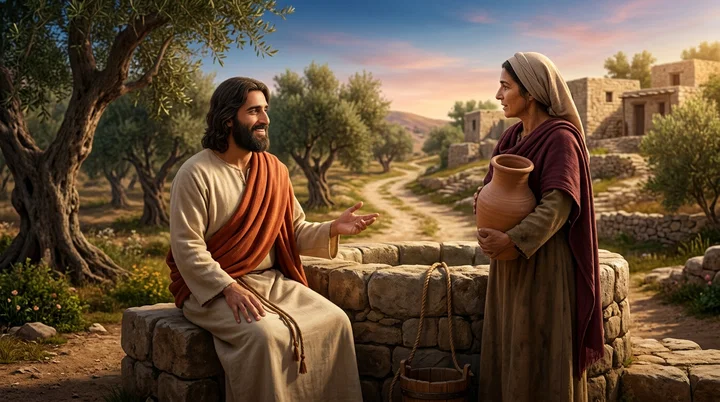
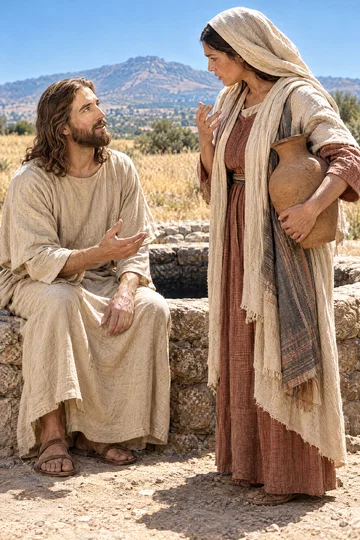
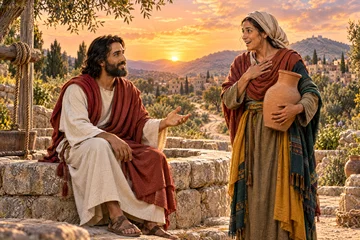
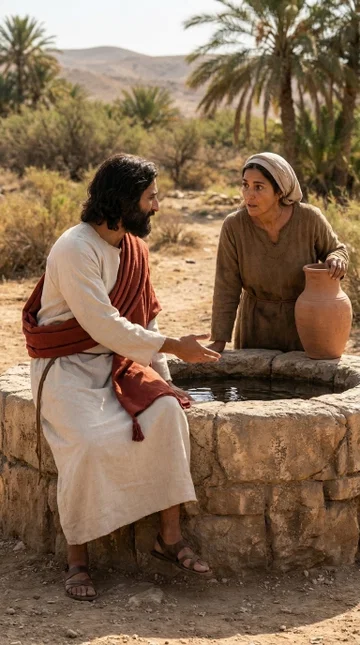
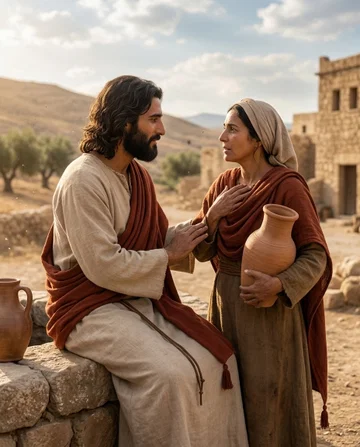
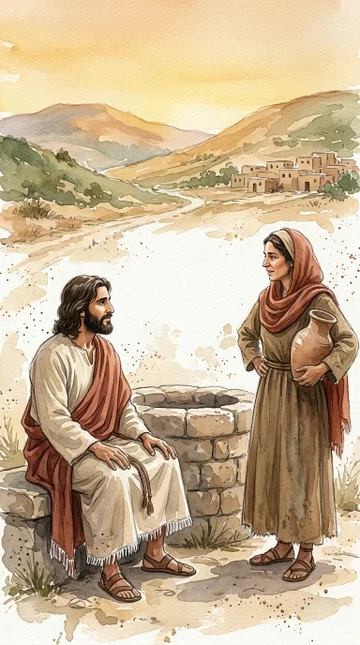
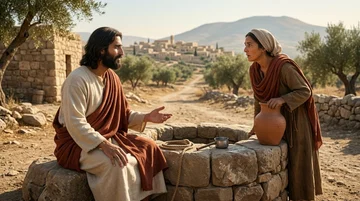
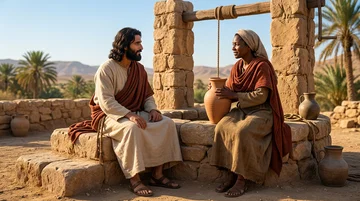
Then saith the woman of Samaria unto him, How is it that thou, being a Jew, askest drink of me, which am a woman of Samaria? for the Jews have no dealings with the Samaritans.
Translations
Then says the woman of Samaria to him, How is it that you, being a Jew, ask drink of me, which am a woman of Samaria? for the Jews have no dealings with the Samaritans.
Then saith the woman of Samaria unto him, How is it that thou, being a Jew, askest drink of me, which am a woman of Samaria? for the Jews have no dealings with the Samaritans.
Then saith the woman of Samaria unto him, How is it that thou, being a Jew, askest drink of me, which am a woman of Samaria? For the Jews have no dealings with the Samaritans.
Then saith the woman of Samaria to him, How is it that thou, being a Jew, askest drink of me, who am a woman of Samaria? for the Jews have no dealings with the Samaritans.
The Samaritan woman therefore saith unto him, How is it that thou, being a Jew, askest drink of me, which am a Samaritan woman? ( For Jews have no dealings with Samaritans.)
The Samaritan woman therefore saith unto him, How is it that thou, being a Jew, askest drink of me, who am a Samaritan woman? ( For Jews have no dealings with Samaritans.)
the Samaritan woman therefore saith to him, 'How dost thou, being a Jew, ask drink from me, being a Samaritan woman?' for Jews have no dealing with Samaritans.
The Samaritan woman therefore says to him, How dost thou, being a Jew, ask to drink of me who am a Samaritan woman? for Jews have no intercourse with Samaritans.
The Samaritan woman, therefore, saith unto him—How dost, thou, being, a Jew, ask to drink, of me, who am, a Samaritan woman? [for, Jews, have no dealings with Samaritans.]
Berean Standard Bible, Majority Standard Bible
“ You are a Jew,” said the woman. “ How can You ask for a drink from me, a Samaritan woman?” ( For Jews do not associate with Samaritans.)
The Samaritan woman therefore said to him, “ How is it that you, being a Jew, ask for a drink from me, a Samaritan woman?” ( For Jews have no dealings with Samaritans.)
The woman of Samaria said to him, Why do you, a Jew, make a request for water to me, a woman of Samaria? She said this because Jews have nothing to do with the people of Samaria.
Then sayde the woman of Samaria vnto him, Howe is it, that thou being a Iewe, askest drinke of me, which am a woman of Samaria? For the Iewes meddle not with the Samaritans.
Douay-Rheims (Challoner revision)
Then that Samaritan woman saith to him: How dost thou, being a Jew, ask of me to drink, who am a Samaritan woman? For the Jews do not communicate with the Samaritans.
Pictures
Cross-references 20 of 27
- John 4:39-42
And many of the Samaritans of that city believed on him for the saying of the woman, which testified, He told me all that ever I did.
Samaritans believe through the woman’s testimony and Jesus’ words.
- John 4:29
Come, see a man, which told me all things that ever I did: is not this the Christ?
The woman testifies to her neighbors about Jesus and invites them to see him.
- John 8:48
Then answered the Jews, and said unto him, Say we not well that thou art a Samaritan, and hast a devil?
Jesus’ opponents use “Samaritan” as a bitter insult, showing their contempt for Samaritans.
- John 4:14
But whosoever drinketh of the water that I shall give him shall never thirst; but the water that I shall give him shall be in him a well of water springing up into everlasting life.
Jesus offers water that brings lasting life.
- 2 Kings 17:24-33
And the king of Assyria brought men from Babylon, and from Cuthah, and from Ava, and from Hamath, and from Sepharvaim, and placed them in the cities of Samaria instead of the children of Israel: and they possessed Samaria, and dwelt in the cities thereof.
Describes the peoples settled in Samaria and their mixed worship.
- Acts 1:8
But ye shall receive power, after that the Holy Ghost is come upon you: and ye shall be witnesses unto me both in Jerusalem, and in all Judæa, and in Samaria, and unto the uttermost part of the earth.
Jesus names Samaria as a field for his disciples’ witness.
- Ezra 4:1-3
Now when the adversaries of Judah and Benjamin heard that the children of the captivity builded the temple unto the LORD God of Israel;
The rejected offer to help rebuild the temple reflects Jewish-Samaritan enmity.
- John 7:37-39
In the last day, that great day of the feast, Jesus stood and cried, saying, If any man thirst, let him come unto me, and drink.
Jesus promises living water to believers, flowing out from them.
- Luke 10:33-37
But a certain Samaritan, as he journeyed, came where he was: and when he saw him, he had compassion on him,
A Samaritan shows mercy to a Jew in need.
- Acts 8:4-17
Therefore they that were scattered abroad went every where preaching the word.
Disciples preached in Samaria, where Philip and the apostles ministered.
- Luke 9:52-53
And sent messengers before his face: and they went, and entered into a village of the Samaritans, to make ready for him.
Samaritans refuse Jesus lodging, showing hostility between Jews and Samaritans.
- Matthew 15:22-28
And, behold, a woman of Canaan came out of the same coasts, and cried unto him, saying, Have mercy on me, O Lord, thou Son of David; my daughter is grievously vexed with a devil.
A Canaanite woman seeks Jesus’ help despite the barrier between Jews and Canaanites.
- Matthew 10:5-6
These twelve Jesus sent forth, and commanded them, saying, Go not into the way of the Gentiles, and into any city of the Samaritans enter ye not:
Jesus initially directed the apostles away from Samaritan towns.
- Luke 17:16
And fell down on his face at his feet, giving him thanks: and he was a Samaritan.
The healed Samaritan leper returned to thank Jesus.
- John 4:22
Ye worship ye know not what: we know what we worship: for salvation is of the Jews.
Jesus says salvation is of the Jews amid the dispute over worship.
- Ephesians 2:14
For he is our peace, who hath made both one, and hath broken down the middle wall of partition between us;
Christ breaks down the dividing wall between peoples.
- John 4:16-18
Jesus saith unto her, Go, call thy husband, and come hither.
Jesus reveals the woman’s past life and her true condition.
- Acts 10:34-35
Then Peter opened his mouth, and said, Of a truth I perceive that God is no respecter of persons:
God accepts people from every nation, without partiality.
- Genesis 33:18-20
And Jacob came to Shalem, a city of Shechem, which is in the land of Canaan, when he came from Padan-aram; and pitched his tent before the city.
Places Jacob near Shechem, where the well is located.
- Acts 8:14-17
Now when the apostles which were at Jerusalem heard that Samaria had received the word of God, they sent unto them Peter and John:
Jerusalem apostles assist Samaritan believers.
Commentary
Each commentary is drawn from primary sources: the writings of Ellen G. White and Adventist pioneers and periodicals. Each commentary is separate. Its own words are not a quotation; follow the references to read the source passages.
Ellen G. White
48 sources
The verse lays bare the deep hostility between Jews and Samaritans who had no dealings with one another, so the woman is astonished that a Jewish man asks a Samaritan woman for a drink at Jacob's well at Sychar, where He sits weary and thirsty and dependent on a stranger.DA 183.1–3Ms 18, 1895, par. 4–5Lt 72, 1903, par. 15–17Lt 48, 1897, par. 3–10RH Apr 7, 1904 By asking for water He deliberately sets that custom of avoidance at naught, using a request for kindness to cross the social and religious divide, mingle freely with Samaritans, and open the way to speak with her.DA 183.1–3Lt 72, 1903, par. 15–17GW 194.2–46MR 323.3GW 47.3 Through ordinary talk about the well He offers something infinitely better and of far greater value, living water that satisfies the craving of mind and heart and springs up into everlasting life.Ms 12, 1901, par. 1–3Lt 72, 1903, par. 15–17Ms 6, 1893, par. 3–4 His earnest words stir her heart so that she leaves her water-pot, goes into the city to invite others to meet Him, and her report brings many Samaritans to believe on Him.MH 28.1GW 195.1–3ST Aug 11, 1914 He treats her as a friend with pity and love, condemning her sinful life yet directing her to divine grace, showing a love not confined to any sect, party, race, nation, territory, or caste.AA 19.2–20.1DA 402.24RED 31.2
Hostility and Historic Setting
The saying lays bare a deep hostility in which Jews and Samaritans held no dealings and no social association with one another, so that a Samaritan woman is astonished when a Jewish man asks her for a drink.Ms 18, 1895, par. 4–5Lt 72, 1903, par. 15–17Lt 48, 1897, par. 3–102SP 140.2–141.34RED 24.1–25.3 Her question turns on exactly that divide, why one who is a Jew would seek water from one who is a woman of Samaria.Lt 72, 1903, par. 15–17Lt 48, 1897, par. 3–10RH Apr 7, 19042SP 140.2–141.34RED 24.1–25.3 Necessary trade might still be permitted, yet rabbinical rule condemned social contact, to the point that a Jew would not accept even bread or water from a Samaritan hand.DA 183.1–32SP 301.1 That refusal extended even to speech, for Jews would decline so much as to speak with Samaritans.DA 183.1–32SP 301.1
The refusal to deal was a Pharisaic custom rooted in prejudice, a separating barrier built up between the peoples.6MR 323.3GW 47.32MR 109.1 Underneath lay religious disagreement over what constituted true worship.COL 380.3–381.1 The enmity ran so deep that opponents could hurl Samaritan itself as an insult.COL 380.3–381.1
The encounter happens at Jacob's well at Sychar in Samaria.RH Apr 7, 1904GW 194.2–4ST Aug 11, 1914 There Jesus sits weary and thirsty, dependent on a stranger for a drink.DA 183.1–33T 217.3–4GW92 186.2–3 Even in weariness He uses the meeting with one woman to open spiritual conversation.GW 194.2–43T 217.3–4GW92 186.2–3
She does not know who is near her.ST Feb 20, 1912ST Apr 22, 1897 She sees nothing especially worthy in Him, and even asks whether He claims to be greater than Jacob.ST Feb 20, 1912Ms 6, 1893, par. 3–4ST Apr 22, 1897 While thirsting for truth, the Truth stands beside her able to enlighten her, and she does not yet recognize Him.ST Feb 20, 1912Ms 6, 1893, par. 3–4ST Apr 22, 1897
Christ Crosses the Divide
Jesus deliberately crossed the social and religious divide by asking the Samaritan woman for water, using a simple request for kindness to build trust and open a way to speak with her and offer her the water of life.DA 183.1–3Lt 72, 1903, par. 15–17GW 194.2–4MH 27.1GW92 337.2 Her surprised question why a Jewish man would ask a Samaritan woman for a drink exposed that barrier, for Jews and Samaritans had no dealings with one another.DA 183.1–3Lt 72, 1903, par. 15–17GW 194.2–4MH 27.1GW92 337.2 Through ordinary talk about water at Jacob's well He created a conversation in which He could present something of far greater value.Lt 72, 1903, par. 15–17GW 194.2–4MH 27.1Ms 79a, 1910, par. 28–32Ms 79, 1910, par. 43–44
Though Himself a Jew, He set the custom of avoidance at naught and mingled freely with Samaritans, accepting their hospitality, sleeping under their roofs, eating at their tables food prepared and served by their hands, teaching in their streets, and treating them with utmost kindness, courtesy, and human sympathy.6MR 323.3Ms 87, 1907, par. 3GW 47.32MR 109.1MH 26.3 By the tie of human sympathy He drew their hearts to Himself, and by divine grace brought them the salvation which the Jews rejected.6MR 323.3Ms 87, 1907, par. 3GW 47.3 His sympathy and social kindliness recognized the dignity of humanity, so that His words fell upon thirsty souls with blessed, life-giving power, awakening new impulses, making men long to become worthy of His confidence, and opening to these outcasts of society the possibility of a new life.2MR 109.1
He did not make His work to constantly thrust upon the Samaritans that they were wrong, nor did He reproach the woman for coming to draw water.6MR 323.3Ms 87, 1907, par. 3Ms 79a, 1910, par. 28–32Ms 79, 1910, par. 43–44 Instead He used the meeting to offer her the fountain of living water, something of far greater value than what she came to draw.Ms 79a, 1910, par. 28–32Ms 79, 1910, par. 43–44 He treated her as a friend with pity and love, condemned her sinful life, and directed her to divine grace as its remedy.4RED 31.2 His pitying love was not confined to any sect or party, race or nation, territory or caste, and His preaching at Sychar showed He did not share the intolerance of His people.AA 19.2–20.1DA 402.24RED 31.2
His visit to Samaria and even the Samaritans' rude treatment of Him did not lessen His love and mercy toward them.DA 488.4–6 They later welcomed His messengers and received the gospel He brought.DA 488.4–6
Living Water Offered
Surprised that a Jewish man would ask a Samaritan woman for water, since Jews and Samaritans had no dealings with one another, she met Him at Jacob's well where His request for ordinary water crossed that social divide and opened a way to speak with her.Ms 12, 1901, par. 1–3Lt 72, 1903, par. 15–17GW 194.2–4MH 27.1 He did not reproach her for coming to draw water, though she was living contrary to God's Word and saw nothing especially worthy in Him, even questioning whether He was greater than Jacob.Ms 6, 1893, par. 3–4Ms 79a, 1910, par. 28–32 Through that ordinary talk about the well He offered her something infinitely better and of far greater value, living water, the joy and hope of the gospel.Ms 12, 1901, par. 1–3Lt 72, 1903, par. 15–17GW 194.2–4MH 27.1Ms 79a, 1910, par. 28–32 That living water satisfies the craving of mind and heart and springs up into everlasting life.Ms 12, 1901, par. 1–3Ms 6, 1893, par. 3–4
At first she understood His words in terms of relief from the daily labor of drawing water, but the conversation led her to recognize her need.Lt 48, 1897, par. 3–10 He saw her, a despised woman at Sychar's well, as an individual with an open, receptive heart, and He shared with her His richest instruction.MH 28.2ED 231.2–232.1 To such hearers open to receive truth He speaks plainly with no parables, revealing the Father and the service acceptable to Him who reads the heart.MH 28.2 In that same plain speech He declared Himself to be the Messiah.MH 28.2
The earnest conversation with this one Samaritan woman shows His deep personal interest in a single soul and how He teaches hearts open to receive truth.MH 28.1MH 28.2
Belief and Widening Witness
His earnest and eloquent words stir her heart with deep personal interest in a single soul.RH Apr 7, 1904MH 28.1GW 195.1–3 Moved by them she leaves her water-pot and leaves her errand at the well to go into the city and invite her friends to meet Christ.MH 28.1GW 195.1–3 The woman whom others and even the disciples despised finds the Saviour and immediately carries the light to her countrymen.MH 28.1GW 195.1–3ST Aug 11, 1914
Her report brings a whole city to hear Him.RH Apr 7, 1904ST Aug 11, 1914GW92 186.2–3 His attention and earnest words to one woman help lead many Samaritans of that city to believe on Him.RH Apr 7, 1904MH 28.13T 217.3–4GW92 186.2–3 The saving influence of those words has continued through the years since then.MH 28.1
His ministry does not depend on having a large audience.3T 217.3–4GW92 186.2–33T 322.2–3 One person reached by Christ can become a means of bringing many others to the Saviour, for a single listener whose understanding is convinced can carry the message to many.GW 195.1–33T 217.3–4GW92 186.2–3 Though weary He uses patient, good-hearted, thoughtful work with one person to teach spiritual truths and reach both her and the wider Samaritan community.3T 217.3–4GW92 186.2–3 That steady, thoughtful interest proves more lasting than excitement stirred by debate.3T 217.3–4
Prophecy Fulfilled and Mission
In asking for a drink while offering the water of life at Jacob's well, His work fulfills the promise in Eden that the Seed of the woman should bruise the serpent's head, a work He will continue until every soul has been tested and tried.ST Apr 22, 1897
The surprise of the woman that a Jewish man would ask a Samaritan woman for a drink shows the deep hostility and separation in which Jews and Samaritans had no dealings and did not associate with one another.3SP 301.1–2ST Dec 5, 1878SLP 38.2–39.1 The later reception of Christian believers in Samaria showed that this division and barrier was diminishing and decreasing.3SP 301.1–2ST Dec 5, 1878SLP 38.2–39.1 By the time Philip preached Christ in Samaria, the Samaritans welcomed the believers, listened to the message about Jesus, and received Christ's followers.3SP 301.1–2ST Dec 5, 1878SLP 38.2–39.1 In this the gospel was shown not to be confined to the Jews.3SP 301.1–2ST Dec 5, 1878
The Samaritans received the light of Christ and later welcomed His messengers and received the gospel, while the Jews rejected the salvation He brought by divine grace.Ms 2, 1890, par. 4–56MR 323.3Ms 87, 1907, par. 3GW 47.3DA 488.4–6 Though a Jew, He set at naught the Pharisaic custom rooted in prejudice that built the separating barrier, and did not make His work to constantly thrust upon the Samaritans that they were wrong.6MR 323.3Ms 87, 1907, par. 3GW 47.3 He mingled freely with them, accepted their hospitality, slept under their roofs, ate at their tables food prepared and served by their hands, taught in their streets and among them, and treated them with utmost kindness, courtesy, and the tie of human sympathy.6MR 323.3Ms 87, 1907, par. 3GW 47.3 His visit to Samaria and even the Samaritans' rude treatment of Him did not lessen His love and mercy toward them, but by divine grace drew their hearts and brought them the salvation which the Jews rejected.6MR 323.3Ms 87, 1907, par. 3GW 47.3DA 488.4–6 The woman listened and accepted Him without any miracle, simply because she believed His word, was glad for the light, and went and published it to her neighbors, while Christ came to the Jews with majesty and grace shown in mighty healings and the mighty outpouring of His Spirit, yet prejudice reigned in their hearts so that even the mightiest miracles had no effect and they would not recognize Him.Ms 2, 1890, par. 4–5
He puts the new wine of kingdom truth and the precious lessons He came to give into the heart of the Samaritan woman though she was a sinner living contrary to God's Word.Ms 6, 1893, par. 3–4Lt 83, 1890, par. 13–1813MR 53.2–55.1 She at first did not recognize anything especially worthy in Him and questioned whether He was greater than Jacob, yet the encounter connects with the living water that springs up into everlasting life.Ms 6, 1893, par. 3–4 The Jewish scribes and Pharisees would not receive that truth, being like old dried-up skin bottles that could not hold new wine, while she became a new bottle that could hold it.Lt 83, 1890, par. 13–18 This proves the most convincing testimony of having truth is the attending spirit sanctifying the heart to be gentle, kind, forbearing, true and Christlike, in contrast to holding incorrect interpretations of Scripture and rejecting the revelation of the Spirit of God when ideas are crossed, even to murdering the Son of God.Lt 83, 1890, par. 13–18 Her receptive response contrasts with the rejection of His work by those whose own interpretations were challenged.13MR 53.2–55.1
After He spoke with the Samaritan woman the Samaritans came out and listened to Him.Ms 2, 1890, par. 14 Their response shows that people who had not previously heard the truth could be more receptive than people who had already received evidence of God's work.Ms 2, 1890, par. 14
Doctrine and Scripture Connections
The question about a Jew asking drink of a Samaritan meets His request with controversy, singular to her, because the Jews thoroughly despised the Samaritans.Ms 173, 1897, par. 20–21 It belongs to His invitations of mercy and goodness that cut away doubt about whether God will hear prayer and give mercy and favor.Ms 173, 1897, par. 20–21 Here His mission work commences, leading to His offer of living water to her.Ms 173, 1897, par. 20–21 Her case is presented to lift Him up and show God's matchless love for fallen humanity, that God gave His Son so that everyone who believes in Him may have everlasting life.Ms 23, 1895, par. 5
The depth of the hostility is seen in that their religious disagreement concerned what constituted true worship, and she found it strange that He, a Jew, asked her for a drink because Jews had no dealings with Samaritans.COL 380.3–381.1Ms 167, 1898, par. 25–26 That enmity also appears when His opponents use Samaritan as an insult.COL 380.3–381.1 His request crosses this division, which the good Samaritan's compassionate care also challenges.Ms 167, 1898, par. 25–26 That hostility makes the Samaritan's compassionate care for a Jewish traveler especially striking, and contrasts with Christ's love for people who were His enemies.COL 380.3–381.1
The separation was such that Jews would refuse even to speak with Samaritans.2SP 301.1 The same kind of hostility toward another despised people is shown in the refusal to speak with Canaanites.2SP 301.1 The Canaanite woman knew of this barrier but appealed because she trusted His power and hoped for His mercy.2SP 301.1 He spoke important truths to one Samaritan woman at a well, showing His ministry did not depend on having a large audience.3T 322.2–3 He is the source of living water, and that living water must also be in His followers, springing up to refresh those they influence.3T 322.2–3Lt 55, 1897, par. 12–15 His work across that divide in reaching someone outside the learned Jewish audience and making the gospel known to a humble Samaritan woman shows that gospel invitations are for everyone.Lt 55, 1897, par. 12–15 She represents those who hear and believe with practical faith, so that receiving the living water makes them a source of spiritual refreshment and missionaries who share with others.Lt 55, 1897, par. 12–15
Present Application and Warning
She was thirsting for truth while the Truth stood beside her able to enlighten her, and she did not know who was near her.ST Feb 20, 1912ST Apr 22, 1897 Her condition pictures thirsting souls today who sit close by the living fountain yet look far away for refreshing water.ST Feb 20, 1912ST Apr 22, 1897 Though they are told the water is close by, they will not believe it.ST Feb 20, 1912ST Apr 22, 1897
In apparently withholding from Christ the water He asked, the woman represents many who withhold from Him the recognition, sympathy, and love He hungers and thirsts for in return for His great love.ST Apr 22, 1897 That sympathy and love is the due of Him who purchased them with His own blood, and it cannot be withheld with safety.ST Apr 22, 1897 With a teachable spirit emptied of prejudice and ready to bring ideas to the Scriptures, a person believes the word and knows the doctrine without any miracle, simply because the word is believed.Ms 2, 1890, par. 4–5 By contrast, a prejudiced heart rejects the light despite seeing majesty and grace in mighty healings and the mighty outpouring of the Spirit, so that even the mightiest miracles have no effect when prejudice reigns in the heart.Ms 2, 1890, par. 4–5
The most convincing testimony of having truth is the attending spirit that sanctifies the heart to be gentle, kind, forbearing, true, and Christlike.Lt 83, 1890, par. 13–18 This stands in contrast to holding incorrect interpretations of Scripture and rejecting the revelation of the Spirit when ideas are crossed.Lt 83, 1890, par. 13–18 Her meeting Christ's request for drink with controversy over a Jew asking drink of a Samaritan shows that gospel invitations of mercy and goodness cut away doubt about whether God will hear prayer and give mercy and favor.Ms 173, 1897, par. 20–21DA 194.3–195.1 Here His mission work commenced in the offer of living water to one outside the learned Jewish audience, though she was a Samaritan stranger living in open sin, proving gospel invitations are for everyone.Ms 173, 1897, par. 20–21DA 194.3–195.1Lt 55, 1897, par. 12–15
His patient, good-hearted work with one listener whose understanding was convinced led her to carry the message to many others, and steady, thoughtful interest of that kind is more lasting than excitement stirred by debate.3T 217.3–4Lt 55, 1897, par. 12–15 By sympathy and social kindliness He recognizes the dignity of humanity, setting at naught the custom of having no dealings with a despised people.2MR 109.1 His words fall upon thirsty souls with blessed, life-giving power, awakening new impulses, making men long to become worthy of His confidence, and opening to outcasts of society the possibility of a new life.2MR 109.1
Sources
Pioneers and periodicals
113 sources
The woman is surprised that Jesus, a Jew, asks drink of her, a Samaritan woman, because Jews have no dealings with Samaritans.ST Sep 3, 1894ST Sep 10, 1912 He sits wearied by His journey at Jacob's well about noon while His disciples have gone to buy food, and she comes to draw water when He, thirsty and with nothing to draw with, asks her for drink.ST Feb 7, 1900ST Jan 11, 1899ST Jul 2, 1885 Jews and Samaritans live in deep bitter hostility, avoiding social intercourse and ordinary courtesies of hospitality.RH Apr 7, 1910ST Nov 25, 1886RH Nov 22, 1864 He deliberately disregards that hostile custom to reach her heart, opening conversation by a simple request and offering her the living water that gives eternal life.ST May 5, 1909ST Jun 16, 1898ST Jul 1, 1889RH Sep 30, 1902ST Jan 17, 1900 The meeting with one lone despised soul leads almost a whole village to receive Him as the Saviour of the world, showing God's great work is done by personal labor one by one.RH Apr 7, 1904ST Jan 17, 1900RH Oct 10, 1907RH Nov 19, 1908ST May 16, 1878
Setting at Jacob's Well
The saying captures the Samaritan woman's astonishment that Jesus, being a Jew, should ask drink of her, a Samaritan woman, because Jews have no dealings with Samaritans.ST Sep 3, 1894ST Sep 10, 1912ST Mar 8, 1899ST Jan 25, 1905 The question turns on that division between the two peoples, with her recognizing Him as a Jew and herself as a Samaritan.ST Jan 27, 1881ST Jan 25, 1905ST Jan 25, 1905
She answers with surprise and a natural reluctance to speak with Him across that national and social line, with apparent resentment and even rudeness toward a Jew addressing her.ST Mar 8, 1899RH Aug 25, 1868 Yet her very question shows she knows Him for a Jew and herself for a Samaritan, and that she is ready to speak with Him.ST Jan 25, 1905ST Jan 25, 1905RH Aug 25, 1868
The exchange takes place about the sixth hour at noon, when Jesus, wearied with His journey, sits thus by Jacob's well at Sychar while His disciples are gone into the city to buy food, and He asks her for drink when she comes to draw water.ST Feb 7, 1900ST Jan 11, 1899ST Jul 2, 1885 He sits by the brink of Jacob's well and by the well of Samaria, waiting for water to drink, weary and thirsty.ST Jul 17, 1901ST Nov 25, 1880ST Apr 15, 1897 Tired and hungry and thirsty and having nothing to draw with, since the well is deep and He has no bucket, He sits alone and waits while His companions are away in the nearby village.RH Aug 25, 1868ST Apr 15, 1897
The well is Jacob's well near Shechem, also called Sychar, now Nablous, in the valley between Mount Gerizim and Mount Ebal where Abraham and Jacob had been before.ST Sep 8, 1898ST Jul 17, 1901ST Feb 14, 1884 It lies near Sychar in the vicinity of ancient Shechem and present-day Nablus, reached by women coming from the city to draw water, whom she joins in the noonday heat.ST Jul 17, 1901ST May 22, 1884 It stands amid ruins in a vaulted chamber beneath the surface of the ground, with a circular mouth cut in a large slab of stone and a stone ledge beside the mouth where Jesus rested, the stone bearing grooves worn by the ropes used to draw up water pots.ST May 22, 1884 That setting is a real place in Palestine, whose reality is confirmed by the name Sychar on an ancient mosaic map, and the wondrous words spoken there revealed God to Samaria and to the world.ST Feb 14, 1884RH Sep 3, 1908
Her surprise is not that a man asks a woman for water, but that a Jew asks a Samaritan for a favor, since Jews and Samaritans are enemies with no dealings with one another.ST Jan 11, 1899ST Feb 7, 1900 In that setting giving and receiving water is an act of hospitality and a truce, even between enemies, so that asking for and receiving water implies a friendly compact.ST Jan 11, 1899ST Feb 7, 1900ST Feb 7, 1900 Jews and Samaritans have business dealings and business relations but no social intercourse or hospitality, which makes His request especially unexpected to her.ST Feb 7, 1900ST Feb 7, 1900
Jews and Samaritans Divided
The division between Jews and Samaritans was a deep, bitter and centuries-long hostility in which the two peoples stood as enemies who avoided contact and would not exchange ordinary courtesies.RH Apr 7, 1910ST Nov 25, 1886RH Jul 13, 1905 That hostility amounted to almost deadly hatred, for which the Jews were chiefly responsible in their sense of superiority and contempt toward Samaritans.ST Sep 3, 1894ST Nov 25, 1886ST May 28, 1894 It is the separation and lack of dealings that makes the woman's surprise at being asked for drink intelligible, and it supplies the comparison for relations marked by mutual disregard and conflict and for imperial thinking that treats another people as an enemy, in contrast to love of enemies without division by nation or race.RH Nov 22, 1864RH Nov 22, 1864RH Jul 13, 1905
The Samaritans were descended largely from peoples brought into Palestine and resettled in the land by Assyria.ST Sep 3, 1894ST Mar 8, 1899 Their worship combined worship of Jehovah, or God, with idolatry.ST Sep 3, 1894ST Mar 8, 1899 Later rejection from the Jerusalem temple community led them to build a rival temple on Mount Gerizim.ST Mar 8, 1899
Enmity began when the Samaritans opposed the rebuilding of Jerusalem's temple, and it grew when the Jews refused their offer to help build the temple in Ezra's time and through later conflicts.ST Aug 29, 1911ST Jul 14, 1887ST Aug 29, 1911 Despite the enmity the Samaritans professed to keep the same law as the Jews, yet they accepted only the books of Moses, indeed the first five books, with many Jewish religious practices outwardly adopted, while the Jews accepted the whole Old Testament.ST Aug 29, 1911ST Aug 29, 1911ST Sep 8, 1898 They held Gerizim to be the holy mountain and centered worship at the temple there, while the Jews held Zion, in Jerusalem, to be holy, each side claiming religious superiority, so that the feud was partly about the right place of worship.ST Aug 29, 1911ST Aug 29, 1911ST Dec 14, 1915ST Sep 8, 1898
The separation meant Jews forbade intercourse with Samaritans and avoided ordinary contact with them, including sharing drinking vessels or meals.ST Mar 8, 1899ST Jun 4, 1902 Receiving a Samaritan into a home was even regarded as bringing a curse, and Jews despised Samaritans as dogs.ST Mar 8, 1899ST May 28, 1894 A Jewish man would not ordinarily drink from a cup used by a Samaritan woman, which makes the request for water especially striking in a hot climate where water was valuable and ordinarily would not be refused.ST Mar 8, 1899RH Nov 22, 1906 Contempt ran so strong that the worst thing Jews could say about Christ was to call Him a Samaritan, which in their minds was the same as saying He had a devil or was possessed by a devil.ST May 28, 1894ST Jun 4, 1902
That division forms the background to the messengers' failure to secure a welcome in a Samaritan village and to the Samaritans having even refused Jesus lodging.RH May 2, 1907 It also made crossing from one side to the other hazardous, so that Philip's mission to Samaria could put a person's life at risk.ST Feb 26, 1902 Yet kindness won hearts, so that later the Samaritans listened to the gospel and became fellow believers, which makes presenting a Samaritan as the compassionate neighbor especially striking and requiring moral courage before a Jewish audience, since the wounded Jew had no claim upon the Samaritan, had done nothing to merit kindness and likely would have despised the Samaritan in the same need, proving that mercy treats people better than they deserve.ST May 28, 1894RH May 2, 1907
The lack of dealings named here concerned the Samaritans, not Gentiles in general.ST Aug 29, 1911 A Samaritan community still living at Sychar remains as a continuing witness connected with the account.RH Jan 11, 1915 A parallel is drawn with a Canaanite woman who knew that Jews had no dealings with Canaanites and refused even to speak with them, yet appealed because she trusted His power to heal her daughter.ST Jan 6, 1888
Christ Crosses the Barrier
Jesus deliberately crossed the social, national, religious and caste barrier between Jews and Samaritans when He spoke with the Samaritan woman and asked her for a drink.ST May 5, 1909ST Jun 16, 1898ST Jan 17, 1900ST Jan 17, 1900ST Oct 29, 1885 He disregarded the malicious and hostile custom that kept the two peoples apart in order to reach her heart and to seek her welfare and salvation.ST Jun 16, 1898ST Jan 17, 1900ST Jan 17, 1900ST Oct 29, 1885 He freely spoke with her and taught her, setting aside the customs and hostility that forbade such intercourse and beginning to break down the wall of separation.ST May 5, 1909ST Jun 16, 1898ST May 24, 1910 His openness in this was striking to His disciples and to others, and it was later used to accuse Him of violating separation.ST Jun 16, 1898ST May 24, 1910
He won her interest by a tactful, ordinary request that she do something for Him, asking for water despite the division that made the request strange.RH Nov 28, 1912ST Jul 17, 1901 When she questioned why He asked drink of her, He did not argue the matter or justify Himself but told her the asking should have been reversed, that she should have asked of Him for living water.RH Nov 28, 1912ST Jul 17, 1901 He treated Samaritan prejudice with patience and care, without taking offense, and met her with honor, courtesy, dignity and a chaste and earnest manner.ST Oct 15, 1902RH Mar 24, 1910ST Apr 21, 1898 He did not adopt her coarse manner of life or speech, and His dignified approach made possible the teaching that followed.ST Oct 15, 1902ST Apr 21, 1898
His request opened a conversation in which He offered her divine grace, the living water that purifies, refreshes and strengthens the soul.ST Jul 1, 1889 That meeting became the occasion for Him to offer her the living water that gives eternal life, and the encounter led to His offering her the water of life.RH Sep 30, 1902ST Jun 22, 1904 He crossed the social barrier to lead her to seek salvation, though at first she understood the conversation only in terms of ordinary water.ST Jul 1, 1889RH Sep 30, 1902
His love reached across the division to see good even in a Samaritan whom others regarded as heretical.RH Jun 2, 1904RH Jul 22, 1902 He witnessed the divisions and prejudices between Jews and Samaritans without sharing in them, treating her with loving compassion.RH Jun 2, 1904RH Jul 22, 1902RH Mar 24, 1910 He mingled with people of every class and sought to help and save them without favoring one group over another, despising no one and offering the word to Samaritans as well as Jews.RH Jan 8, 1914RH Jun 16, 1868 Despite the division He stopped to speak with her and offer eternal truth, showing personal sympathy and helpfulness toward someone outside His own community.ST Jun 19, 1907RH Jan 8, 1914RH Jun 16, 1868
His concern was not limited to the Jewish people, but reached people of every class, nation and place within the reach of salvation.ST Oct 29, 1885ST May 1, 1907ST Mar 17, 1898 His teaching in Samaria was the first fruits of the gospel's work among the Gentile nations, showing that His ministry and message were not confined to the Jews.ST Feb 21, 1906RH Dec 7, 1905ST May 1, 1907 The later reception of His followers in Samaria as fellow believers shows that this barrier diminished.ST Dec 5, 1878ST Aug 4, 1881 Though the foundation of His kingdom was laid among Israel and the disciples were first sent only to the Jews, God's plan was always to help the stranger who sought Him, for God is no respecter of persons, and she stands with the woman of Sidon and the Samaritan leper as proof that His grace flows freely for all.ST Dec 5, 1878ST Mar 17, 1898
Though wearied He made even His weariness an opportunity to share the gospel, crossing the national and social barrier by asking her for a drink.ST Mar 8, 1899ST Apr 15, 1897 Doing God's work took priority over ordinary comfort and bodily needs, and the well itself became a place to serve someone often overlooked.ST Mar 8, 1899 Human divisions do not hinder the work of a teacher sent from God.ST Mar 8, 1899ST Sep 17, 1894 God's truth should be received through whatever source He sends, even across that religious and social division.ST Mar 8, 1899ST Sep 17, 1894
Revival in Samaria Follows
The meeting with a lone woman by the well leads almost a whole village to turn to the Lord.RH Apr 7, 1904ST Jan 17, 1900RH Oct 10, 1907 She receives precious truth and the offer of living water that gives eternal life, leaves her pitcher, calls people from the city, carries light to her countrymen, and brings them to hear Jesus.ST Aug 11, 1914RH Nov 11, 1873ST Jun 22, 1904 Though she is an unlikely and socially discredited person, despised by the disciples, her encounter becomes a revival at Sychar through which many in her town come to believe.RH Apr 7, 1904ST Aug 11, 1914RH Oct 10, 1907 Those who come recognize Him as the Christ, the Saviour of the world, and the report continues to move people to Christ.ST Aug 11, 1914ST Jan 17, 1900ST Jun 22, 1904
She becomes His disciple and a missionary who begins personal work herself to bring other souls to the Master, leaving an example of personal soul-winning to follow.ST Aug 31, 1915 His discourse to this poor, despised sole listener is one of His most delightful and greatest sermons to one soul.RH May 13, 1873 It is a quiet private labor that awakens spiritual life and strong hope in her, speaks truths that bring light to Samaria and, through the Gospel of John, to the world.RH May 13, 1873ST Aug 31, 1915RH Jul 4, 1907 Her personal testimony soon draws others who want to hear the message of salvation.ST Aug 31, 1915
She does not know who is near her when she questions why a Jew would ask drink of her.ST Feb 20, 1912ST Apr 22, 1897 Though thirsting for truth, she does not know that He, the Truth, stands beside her able to enlighten her.ST Feb 20, 1912ST Apr 22, 1897 Her condition pictures thirsting souls today who sit close by the living fountain yet look far away for refreshing water.ST Feb 20, 1912ST Apr 22, 1897 Though told the water is close by, they will not believe it is close by.ST Feb 20, 1912ST Apr 22, 1897
His asking drink while proffering the water of life fulfils the Eden promise that the Seed of the woman should bruise the serpent's head, a work He continues until every soul has been tested and tried.ST Apr 22, 1897 The woman in apparently withholding the water He asked represents many who withhold from Him the recognition, sympathy and love He hungers and thirsts for in return for His great love.ST Apr 22, 1897 That is the sympathy and love of those He purchased with His own blood, which cannot be withheld with safety.ST Apr 22, 1897 Her cry to Him is the cry of the world for redemption, the call in the soul of every man that cannot be put forever away, persisting even when a man tries to drown it in satisfying the lusts of the flesh and the sins of the world.RH Jan 2, 1913
His wondrous words spoken at Jacob's well at Shechem, also called Sychar, now Nablous, between the mountains where Abraham and Jacob had been before, reveal God to Samaria and to the world.ST Feb 14, 1884 Though the glory of Samaria has departed, the glory of those words fills the earth.ST Feb 14, 1884 The water in the conversation illustrates the Holy Spirit.RH Feb 19, 1901 The conversation awakens her conscience, and as she receives the water of life Jesus rejoices, for her spiritual hunger being met satisfies Him more than food or drink.RH Dec 17, 1914 Serving those who hunger and thirst is a source of comfort and joy to Him, and believers remember the scene by the well of Samaria when they seek peace and joy in believing, yet faith must also look to Jesus now at the right hand of God as the same Saviour yesterday, today, and forever, able to save to the uttermost all who come to God by Him through His intercession.RH Dec 17, 1914RH Aug 1, 1854
The incident teaches a deep spiritual lesson to her and to all people.ST Sep 3, 1894 Jesus is present with a woman who is shunned and in need, healing her from sin and gathering her to belong to Him, and through the journey to Samaria one soul acknowledges Him as Master.RH Oct 8, 1908ST Apr 10, 1907 That care shows what is owed to an individual who is shy, lonely, or discouraged.RH Oct 8, 1908ST Apr 10, 1907 Her solitary meeting alone at the well is a blessed privilege, showing that being alone does not cut a person off from spiritual life but can bring direct encounter with Christ, so believers who are alone need not be uneasy.ST Apr 10, 1907RH Mar 25, 1902 Her ordinary coming to the well in the course of life brings her to a spiritual blessing she had not set out to find.RH Apr 8, 1909RH Mar 25, 1902
Pattern for Personal Witness
As the great missionary He labored for people one by one, and His conversation at the well shows personal work with one woman in need.RH Nov 19, 1908ST May 16, 1878 Though tired He took time to speak personally with one soul and point her to God, giving one woman the same care and truth He would give a multitude.ST May 12, 1914ST May 16, 1878 Speaking with and seeking to win a single person is valuable work and not a small thing, for He spoke the truths of the gospel even to one poor, despised listener.RH Feb 9, 1911RH Oct 11, 1870 God's great work is done by individuals under the direct leadership of the Master rather than by great organizations alone, for He is the Discoverer of the individual who does God's work by personal effort where need is found.RH Oct 5, 1905 His sermons are often developments of private interviews, setting the example for systematic personal work and home visiting, and His conversation with her and that with Nicodemus by night are the two most prominent sermons to audiences of one in John.RH Oct 5, 1905 A personal appeal to one person can be a valuable means of winning souls.RH Sep 16, 1902
True faith values each soul and individualizes each person instead of grouping men in masses, bringing the gospel into direct contact with each heart.RH Jun 12, 1856 At the well-side He sat and labored kindly for the salvation of one poor and wicked woman, and labor for those out of Christ gains power in proportion to its directness.RH Jun 12, 1856 He who would win souls must concern himself with one at a time until that heart is renewed by the Holy Spirit and salvation is made a personal concern.RH Jun 12, 1856 Hand-picked fruit gathered one by one is better than fruit shaken from the tree in mass, showing the best work is personal labor for one individual soul.ST Mar 30, 1882 Each member quickened by the Holy Spirit should make an assault of love upon unconverted friends to win them to Christ, supplementing pastoral labor, and this personal effort requires tact as well as piety and zeal.ST Mar 30, 1882 Seeking a person and patiently, lovingly leading that person to the Saviour is the pattern of successful soul-winning.ST May 24, 1905
Ordinary meetings can provide opportunities to speak a helpful word and lead a soul to God, as when He rested at the well in Samaria.RH Apr 27, 1916 Even while busy with His work of salvation He took time to speak about the gospel to an inquiring soul.ST Nov 9, 1915 A quiet personal conversation can open a whole field, and through the one woman many came to accept the truth.ST May 12, 1914 A single listener can be the beginning of a much wider response, for His preaching to one woman at a well led her afterward to bring all Samaria to hear Him.RH Aug 10, 1876
His conversation at the well is an example of doing God's will and giving Himself for another, even someone outside the people one might naturally care for. It teaches love that looks past social differences and values a person's soul. Reaching across a social boundary there is compared to showing care for neglected travelers with their salvation in view.ST Feb 15, 1905 Breaking the Jewish rule of no dealings with Samaritans, as He also ate with publicans, He ends cliques and separation from fellows.RH Apr 20, 1916 Drawing nearer to Him obliterates distinctions of wealth, education and attainments, making men free to associate with rich and poor, learned and ignorant, valuing real worth and character over position, clothes, fluency, education, or agreement in hobbies and opinions.RH Apr 20, 1916 Race and social rules must not keep people from treating one another as neighbors, for need for love and care makes a person a neighbor even across such divisions.ST Sep 3, 1902
He dealt kindly and gently with the erring woman even though He knew her unsavory record, seeking to win her rather than rebuke her harshly and publicly.ST Mar 10, 1909 Placing Himself in the place of the erring with charity instead of condemnation is the pattern, and His gentle teaching won her so that she was convinced He was Christ and at once began bringing others to the Saviour.ST Mar 10, 1909 He is mighty enough to save a fallen, outcast woman, and what He did for her He can do for even the lowest child of the streets.ST Jan 17, 1900 His saving work proves God is gracious and full of compassion, slow to anger and plenteous in mercy, whose love delivers from sin and puts new-found joy within.ST Jan 17, 1900 His words reached her conscience, showing He spoke personally and powerfully across the social and religious divide that made her surprised a Jew would ask her for drink.ST Oct 28, 1889
Suffering sore thirst when He asked for drink, yet in offering her living drink He forgot His own thirst. Filling a neighbor's life with love and giving good to those who have it not makes one's own many needs and burning cares shrink to nothing, and whoever gives most blessing gains the greatest bliss, which is the mystery of ministry. Meeting her at the well and speaking to her about living water when she needed water, He shared good with someone and helped her, and she came to believe through what He told her. He attended to one person's deep need, telling her about living water and seeking to reclaim her as a straying sheep.ST Apr 9, 1894 His chaste speech and earnest manner made the encounter lead her to tell her townspeople about Him, and many came to believe.ST Jan 20, 1914 Her question reflects the barrier that Jews and Samaritans had no dealings with one another, yet He spoke with her through personal effort and won her.RH Apr 16, 1914 He nevertheless approached her in a friendly way despite the prejudice and social separation her surprised response reflects.RH Oct 28, 1915
The living water He offered in that interview is for all who want it, even sinners in saloons, and those who receive it obtain blessing, acceptance by the Lord, and a new peace that changes the heart and life.ST Dec 13, 1905 The hatred was so strong that the woman was astonished He would ask her for drink, for Jews despised Samaritans as dogs and the worst thing Jews could say about Him was to call Him a Samaritan, which in their minds was the same as saying He had a devil.ST May 28, 1894 Therefore the wounded Jew had no claim upon the Samaritan and had done nothing to merit kindness, and would likely have despised the Samaritan in the same need, yet the Samaritan did him great kindness.ST May 28, 1894 This proves that mercy is treating people better than they deserve and showing kindness to those who have no just claim to consideration, requiring moral courage to present a Samaritan as compassionate neighbor.ST May 28, 1894 The phrase of having no dealings also provides the comparison for relations marked by separation, lack of dealings, mutual disregard and conflict.RH Nov 22, 1864RH Nov 22, 1864
Sources