Luke 17:13
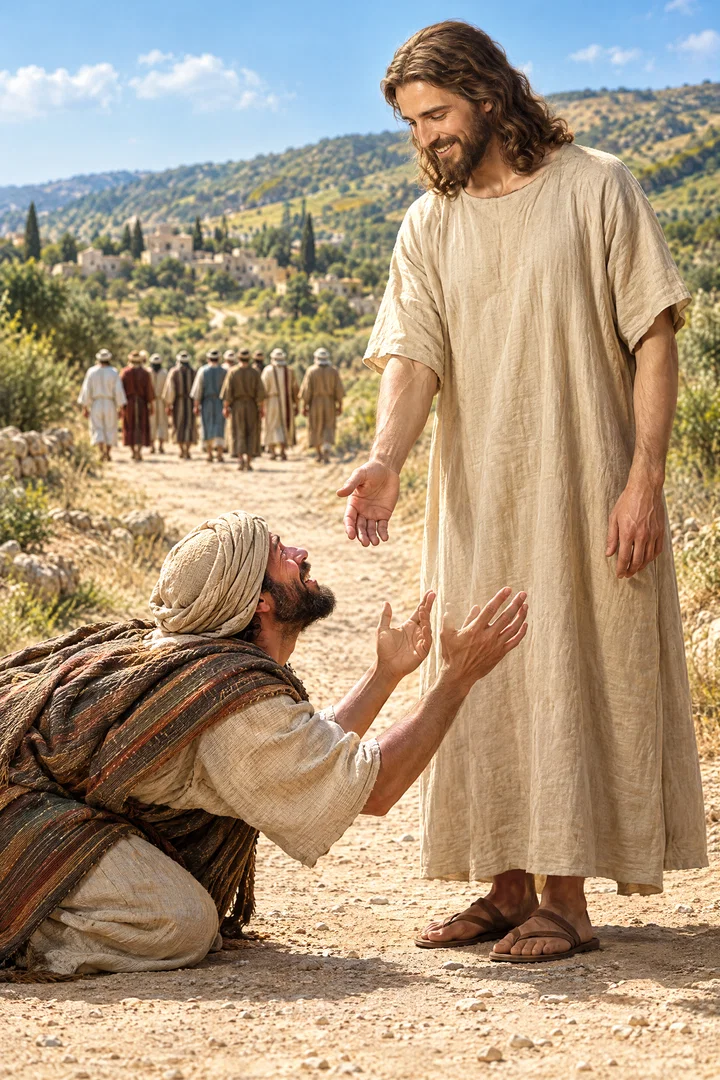
And they lifted up their voices, and said, Jesus, Master, have mercy on us.
Translations
American King James Version, King James Version, Webster Bible
And they lifted up their voices, and said, Jesus, Master, have mercy on us.
and they lifted up their voices, and said, Jesus, Master, have mercy on us.
Revised Version, American Standard Version
and they lifted up their voices, saying, Jesus, Master, have mercy on us.
and they lifted up the voice, saying, 'Jesus, master, deal kindly with us;'
And they lifted up [ their] voice saying, Jesus, Master, have compassion on us.
and, they, lifted up a voice, saying—Jesus! Master! have mercy on us!
Berean Standard Bible, Majority Standard Bible
and raised their voices, shouting, “ Jesus, Master, have mercy on us!”
They lifted up their voices, saying, “ Jesus, Master, have mercy on us!”
Said, in loud voices, Jesus, Master, have mercy on us.
And they lift vp their voyces and saide, Iesus, Master, haue mercie on vs.
Douay-Rheims (Challoner revision)
And lifted up their voice, saying: Jesus, master, have mercy on us.
Pictures
Cross-references
- Luke 17:17-18
And Jesus answering said, Were there not ten cleansed? but where are the nine?
Only one of the ten healed lepers returned to give God glory.
- Mark 1:41
And Jesus, moved with compassion, put forth his hand, and touched him, and saith unto him, I will; be thou clean.
Jesus responds to the lepers’ appeal with compassion and cleansing.
- Mark 10:47
And when he heard that it was Jesus of Nazareth, he began to cry out, and say, Jesus, thou Son of David, have mercy on me.
listed together as one-wish short prayers
- Leviticus 13:45-46
And the leper in whom the plague is, his clothes shall be rent, and his head bare, and he shall put a covering upon his upper lip, and shall cry, Unclean, unclean.
The lepers’ cry reflects the law requiring people with leprosy to proclaim their uncleanness.
- Leviticus 14
And the LORD spake unto Moses, saying,
The law required healed lepers to appear before the priests.
- Luke 18:13
And the publican, standing afar off, would not lift up so much as his eyes unto heaven, but smote upon his breast, saying, God be merciful to me a sinner.
listed together as one-wish short prayers
- Psalms 103:13
Like as a father pitieth his children, so the LORD pitieth them that fear him.
Both express the Lord’s pity and appeal for his mercy.
Commentary
Each commentary is drawn from primary sources: the writings of Ellen G. White and Adventist pioneers and periodicals. Each commentary is separate. Its own words are not a quotation; follow the references to read the source passages.
Ellen G. White
18 sources
Ten men corrupted by loathsome leprosy stood afar off at a distance from society as Jesus came within sight entering a village, kept apart by prescribed limits lest they contaminate others.CH 378.1–2ST Jun 25, 1896HRP 37.1–40.1 Their shared suffering had overcome the hostility between Jews and Samaritans, for nine were Jews and one was a Samaritan stranger, and having heard of His works they looked to Him as Master alone able to relieve suffering and cried in great need and faith for healing mercy.CH 378.1–2Ms 63, 1896, par. 27–31ST Jun 25, 18963T 178.2–180.2 Jesus tested their faith by bidding them go show themselves to the priests, and obeying at once without delay they started on their way believing in His power, and as they went divine power cleansed them and made them entirely whole.HRP 37.1–40.13T 178.2–180.2ST Jun 25, 1896 He healed all ten for the sake of the one who would make right use of health, yet only the Samaritan stranger returned to give God glory while the nine passed on without thanks and forgot Him.HRP 37.1–40.1CH 379.1–23T 178.2–180.2CH 412.25T 315.2 Restored health places the healed under renewed obligation to return with gratitude and praise rather than remain silent, and the lesson is pity and perseverance toward unappreciative sufferers without weariness, satisfied if even one in ten is grateful and saved.HRP 37.1–40.13T 178.2–180.2CH 412.25T 315.2GW 221.2
The Lepers' Plea
The cry comes from ten men corrupted by loathsome leprosy, meeting Jesus as He came within sight entering a village, standing afar off at a distance because prescribed limits set by the authorities restricted them from society lest they contaminate others.CH 378.1–2ST Jun 25, 1896HRP 37.1–40.1CH 379.1–23T 178.2–180.2 Isolated and excluded because of their disease, they lift their voices to Him from that distance.CH 378.1–2ST Jun 25, 1896HRP 37.1–40.1CH 379.1–2 Their common misery had overcome the hostility between Jews and Samaritans, so that those who otherwise would have stood apart stood together in one company.ST Jun 25, 1896 That company included nine Jews and one Samaritan stranger.3T 178.2–180.2MH 134.5–135.1DA 488.4–6
They had heard of His works of healing and therefore sought His help.ST Jun 25, 1896 They looked to Him as Master who alone has power to relieve suffering, and in great suffering they called to Him for mercy and help.CH 378.1–2Ms 63, 1896, par. 27–31HRP 37.1–40.13T 178.2–180.2 Their cry expresses desperate need and weakness and an appeal for healing mercy.CH 378.1–2Ms 63, 1896, par. 27–31HRP 37.1–40.13T 178.2–180.2 It is made in faith in Christ's power to heal, even when disease was brought on by a sinful course in violating natural law.Ms 63, 1896, par. 27–31HRP 37.1–40.13T 178.2–180.2 Jesus pities their weakness and does not stand aloof for fear of contamination.HRP 37.1–40.13T 178.2–180.2
So the poor and afflicted receive His assurances, while those who think themselves righteous and in need of nothing reject Him.ST Jun 25, 1896
Christ's Healing Response
Jesus did not heal on the spot but tested faith by commanding the men to go show themselves to the priests, and they believed in his power to heal and started on their way at his word.HRP 37.1–40.13T 178.2–180.2 They obeyed at once without delay, willing to venture on any prospect of healing, and the tones of his voice thrilled their hearts and inspired hope, faith and confidence.HRP 37.1–40.1ST Jun 25, 1896 As they went the disease left them and they realized they were cleansed.3T 178.2–180.2DA 347.2–348.1 They were not only cleansed but made entirely whole, divine power working a new creation in them.ST Jun 25, 1896
He healed the whole ten for the sake of the one stranger who would make right use of the blessing of health and return with gratitude.HRP 37.1–40.1CH 379.1–23T 178.2–180.2MH 134.5–135.1 The other nine passed on without appreciating the work or rendering grateful thanks, forgetting the one who had healed them.HRP 37.1–40.13T 178.2–180.2DA 347.2–348.1 Only one appreciated the gift, and that one was a stranger and a Samaritan.CH 379.1–2MH 134.5–135.1 He did not cease his efforts for one suffering soul even when most showed no lasting benefit and returned to the indulgences that caused disease.MH 134.5–135.1
The healing was an act of God's mercy and care in sickness, showing what God does in every age through Jesus Christ the healer whom he sent.ST Jul 2, 18965T 315.2GW 221.2 He continually works to benefit mankind by pouring out blessings and imparting bounties, raising the sick from beds of languishing, delivering from peril unseen, and commissioning heavenly angels to save from calamity and guard from pestilence in darkness and destruction at noonday.ST Jul 2, 1896 Every healing is a good and perfect gift from above, placing the healed under renewed obligation to the Creator.GW 221.2MH 233.2 Yet most who receive it center all thoughts on themselves, remain unimpressed, and do not give honor to God.ST Jul 2, 1896
Bodily healing alone does not cleanse the soul.Ms 63, 1896, par. 27–31 Faith in Jesus as the one who pardons sin brings healing to the soul as well as the body.Ms 63, 1896, par. 27–31 The Samaritan's gratitude in returning showed that Jesus' love and mercy reached Samaritans as well as others.DA 488.4–6
Gratitude and Faithful Service
Of the ten who cried for mercy, all were healed, but only one — the Samaritan stranger — turned back to find Jesus and give God glory, while the nine went on without appreciating the work done for them and forgot the one who had healed them.CH 379.1–2CH 412.2DA 347.2–348.1 The nine stand as an example of hearts untouched by mercy who did not return.5T 315.2ST Aug 8, 1906 Their earnest crying for recovery while sick was right, and when mercy came it called for an answer of gratitude and praise rather than forgetfulness or silence.5T 315.2ST Aug 8, 1906
Restored health places the healed under renewed obligation to the Creator to return with a heart touched by mercy, gratefully acknowledging His care in sickness instead of being like the unthinking nine.CH 412.2GW 221.2MH 233.2 Those who have received mercy should raise their voices in praise for His righteousness and glory, since every healing is a good and perfect gift from above.5T 315.2MH 233.2 Christ healed the whole ten for the sake of the one who would make right use of the blessing of health.CH 379.1–23T 178.2–180.2
That act teaches pity, sympathy, patience and perseverance toward debased, unappreciative sufferers without becoming discouraged, disgusted, or weary in well-doing, being satisfied if even one in ten or twenty is grateful, makes right use of health, and is saved.HRP 37.1–40.13T 178.2–180.2 He did not cease His efforts for one suffering soul even when most showed no lasting benefit and returned to the indulgences that caused disease.MH 134.5–135.1 Apparent discouragement and defeat through ingratitude should not stop labor for sufferers, for He shall not fail nor be discouraged and shall see of the travail of His soul and be satisfied.3T 178.2–180.2MH 134.5–135.1
If but one soul accepts the gospel of His grace, Christ would to save that one have chosen His life of toil and humiliation and His death of shame, and if through labor one human being is uplifted and ennobled, fitted to shine in the courts of the Lord, there is cause for rejoicing and thanking God and taking courage.MH 134.5–135.1 The nine correctly represent Sabbath-keepers who come as patients to the Health Institute, receive much attention and even free or reduced-price treatment, and should realize the anxiety and discouragements of physicians and be the last to cause unnecessary care and burdens.HRP 37.1–40.13T 180.3–181.1 Instead they are frequently the most difficult to manage, more free than any other class to complain and question the management and, while receiving attention, speak disparagingly to other patients of the means employed for recovery, while worldlings, strangers, and professed Christians of other denominations appreciate the efforts for recovery more and on returning home exert a stronger influence in favor of the Institute.HRP 37.1–40.13T 180.3–181.1 The Lord regards ungrateful complaining Sabbath-keepers as He regarded the nine lepers.3T 180.3–181.1
Prayer for recovery of the sick must not lose faith in God whatever the outcome, accepting bereavement as a bitter cup held by a Father's hand.MH 233.2
Sources
Pioneers and periodicals
47 sources
The ten met Jesus on His way to Jerusalem and stood at a distance because their disease cut them off from others, lifting their voices together in one united cry to Him as Master for compassion and help in their affliction.ST Jun 25, 1896ST Nov 17, 1881ST Apr 16, 1896ST Nov 7, 1900RH Oct 3, 1865
Their cry was an act of faith in His power to heal, and He helped them on the ground of their need and not their worthiness, even knowing some would never acknowledge the blessing.ST Jun 11, 1896ST Nov 18, 1903ST Apr 29, 1908
His command to go to the priests was a test of faith which they obeyed at once, and as they went they were cleansed and made entirely whole.ST Jun 25, 1896ST Jan 28, 1897ST Nov 7, 1900RH Nov 26, 1872
Though ten were cleansed, only one returned to bow before Him and give God glory from the heart, while the nine went on in base ingratitude that grieved Him.ST May 6, 1889RH Mar 5, 1857ST Apr 29, 1908ST Mar 15, 1905
Bodily cleansing did not itself change character, for only the one who returned responded to the Holy Spirit in the conversion that is greater than physical healing, showing that gratitude for mercy brings a greater blessing than the first petition.RH Oct 3, 1865RH Feb 5, 1901RH Aug 11, 1863ST Oct 15, 1902
Words and Setting
The cry opens the healing of the ten lepers, who met Jesus in a certain village as He was passing through Samaria and Galilee on the way to Jerusalem, and of whom only one afterward returned to thank God.ST Aug 13, 1894 In the course of His life that healing in Luke 17 comes after the healing of the woman with the issue of blood recorded in Luke 8 and its parallel accounts.ST Sep 1, 1909 The ten stood at a distance and called from afar because their disease excluded and isolated them from society and kept them apart from others.ST Jun 25, 1896ST Nov 17, 1881ST Apr 16, 1896ST Nov 7, 1900 As outcast lepers they cried to Jesus for mercy and relief, and when the Consolation came their pain and burdens were lifted.
They lifted their voices aloud together in one united cry.ST Apr 16, 1896ST Nov 7, 1900RH Oct 3, 1865RH Aug 11, 1863 Ten joined with lifted voices in united prayer for mercy, raising their voices together to ask Jesus for mercy.RH Oct 3, 1865RH Aug 11, 1863 Together they lifted their voices in a single brief cry, expressing one wish in a single breath.RH Jul 18, 1871
They addressed Jesus as Master and asked Him to have mercy on them.ST Jun 25, 1896ST Nov 17, 1881ST Apr 16, 1896ST Apr 29, 1908 The address as Master with a plea for mercy was a plea for compassion and help in their affliction.ST Apr 16, 1896 They sought His help because they had heard of His works and cures of healing.ST Jun 25, 1896ST Nov 17, 1881
Their shared misery and illness had overcome the hostility between the Jews and Samaritans among them and brought them together despite their differences.ST Jun 25, 1896ST Nov 17, 1881 The presence and appeal of the Samaritan leper among those appealing for mercy shows that Christ's grace flows freely to people of every nation who seek Him.ST Mar 17, 1898
Faith and Healing
Their lifting of voices to Jesus for mercy was an act of faith in His power to heal, and such faith, even with power as small as a grain of mustard seed, will save a man.ST Jun 11, 1896 Their simple cry is the example of the intelligent, growing faith believers need, meaning that those seeking righteousness receive divine help when they ask and God hears them.RH Dec 16, 1909 The answer may not come at once with the feeling expected, but God still cares for them.RH Dec 16, 1909 If they are in peril Jesus will deliver them, and His praying, believing people are under His special care while heavenly intelligences look on the world with interest.RH Dec 16, 1909
Their need, not their worthiness, was the ground of His help, for He helped sufferers without first requiring proof that they were worthy or would be grateful, even though He knew some would fail to acknowledge their blessing.ST Nov 18, 1903ST Apr 29, 1908 Their plea came before their cleansing and shows that healing came in response to His compassion, and His command to go to the priests confirms that He had granted their request for healing.ST Jan 28, 1897ST Nov 7, 1900 The direction to go was a test of faith, and they obeyed at once without delay, willing to venture on any prospect of healing, and as they went and followed the direction He gave they were cleansed.ST Jun 25, 1896RH Nov 26, 1872
The tones of His voice thrilled their hearts and inspired them with hope, faith and confidence, and in going they knew a great change had taken place in themselves.ST Jun 25, 1896 They were not only cleansed but made entirely whole, divine power working a new creation in them.ST Jun 25, 1896 Those coming to Jesus for help recognized that His power was greater than their own and that they could not meet their need by themselves, which required humility, self-denial and courage, including giving up reliance on self and worldly religious traditions.ST Nov 8, 1899 The healing pictures what God does in every age, continually working to benefit mankind by pouring out blessings, imparting bounties, raising the sick from beds of languishing, delivering men from peril they do not see, and commissioning heavenly angels to save from calamity and guard from pestilence in darkness and destruction at noonday, for Jesus Christ is the healer whom God sent and the mercy asked for comes as the never-failing mercies of God through Him.ST Jul 2, 1896
Their cleansing, with the return of one healed man to give glory to God, was a wonderful manifestation of divine power and grace at work among the people, showing that the kingdom of God was among the Pharisees at that time.ST Apr 20, 1876ST Apr 19, 1877ST Jul 9, 1874RH Feb 10, 1874 When the Consolation came to the outcast lepers, their pain and burdens were lifted.
Gratitude and Ingratitude
Ten were cleansed yet only one returned to Jesus, bowed before Him, and gave God glory and praise from the heart, while the other nine went on without returning.ST May 6, 1889ST Mar 15, 1905RH Dec 11, 1866RH Dec 24, 1914 Their healing calls for gratitude rather than being forgotten, and the healed stranger who does return shows gratitude in returning after being healed.ST Aug 8, 1906RH Dec 11, 1866 The nine who went on without returning represent indifference to what God has done, hearts untouched by His mercy, and forgetting His mercy after healing.ST May 6, 1889ST Aug 8, 1906ST Aug 8, 1906 Earnest prayer for recovery when sick is right, but when mercy comes it should be answered with gratitude and praise.ST Aug 8, 1906
Jesus was grieved so that with manifest feeling He asked where the nine were, and He still asks the same question after those who have found peace in Him or have received some special favor at His hand, because few return to praise God.RH Mar 5, 1857 Of all the brotherhood not more than one out of nine are zealous to honor Christ and His gospel, while the nine accept the blessing and are glad to have hope but do little to commend Jesus to the world or to make His church an honor to His name.RH Mar 5, 1857 Though blessed in a thousand ways temporally and spiritually, physically, socially, intellectually and morally, most give a false testimony and act as if their policy is to take and not to give, to receive but not to impart.RH Mar 5, 1857
After healing, only one in ten returned to give thanks, and the failure of the other nine was base ingratitude.ST Apr 29, 1908ST Jun 18, 1902RH Jun 16, 1910 The majority who are healed follow the nine in ingratitude, while only some respond with tears of gratitude from thankful hearts.RH Jun 16, 1910 When God blesses, helps, or preserves people from danger or harm they should promptly give thanks and recognize that God has delivered them.ST Jun 18, 1902 Their cry sought physical benefit from His hard days of toil in teaching and healing, while with scarcely a thought they neglected their sin-diseased souls and poverty of soul and rejected His heavenly instruction.ST Oct 27, 1914
Jesus freely proffered healing and did not forget them even when they forgot the Healer.ST Oct 27, 1914 The nine later forgot the Healer after they were healed, so the grace they received bore no fruit leading to eternal life.ST Nov 8, 1899 Nine selfishly reaped the healing and did not even thank their Benefactor, showing the hardened, thoughtless ingratitude of sinful men that burdened Christ's soul and sent Him to weep and pray in a solitary place under the star-lit heavens at night while those He had healed slumbered in their homes.ST Oct 27, 1914 Their plea was accompanied by vows and promises in agony before they were healed, but only the Samaritan later showed gratitude.ST Mar 28, 1906
The Samaritan among them returned on his knees to give thanks, showing a humility and gratitude that made him a better example of a gentleman than the other nine.RH Nov 26, 1872 It proves that for every one person who offers genuine praise, ten will pray; only one of the ten afterward returned to give glory to God while the rest were satisfied with the benefit received and did not gratefully remember the benefactor.RH Oct 3, 1865RH Aug 11, 1863 People should remember and praise the benefactor and not merely ask for help or enjoy what they receive.RH Aug 11, 1863 Praise is the superior, unselfish and heavenly exercise that will continue forever, while prayer may begin in selfishness and will one day cease; dwelling only on wants as if God had never supplied any displeases God.RH Oct 3, 1865
Gratitude for mercy brings a greater blessing than the original petition, and God may be waiting for praise for a benefit already conferred before conferring another blessing earnestly desired.RH Oct 3, 1865RH Aug 11, 1863 People readily cry to Jesus for mercy and seek the Healer when in need and in pain, while praise in times of joy is often neglected.ST Oct 1, 1902
Doctrine and Kingdom
Divinely wrought miracles serve a purpose in the plan of salvation, but bodily cleansing does not make character.RH Feb 5, 1901 Though ten lepers were cleansed, only one responded to the influence of the Holy Spirit and thereby experienced the change of heart called conversion.RH Feb 5, 1901 Conversion is the great miracle God desires to have wrought in every person, and it is greater than physical healing.RH Feb 5, 1901 Bodily healing and outward contact with Christian influence are not themselves salvation, since only one of the ten returned to give glory to God.RH Feb 5, 1901ST Oct 15, 1902
Faith is pictured as cleansing the leprosy of superstition and overcoming weakness and discouragement. The appeal for mercy leads to the lesson that people cleansed from the leprosy of sin should give God glory for His work in them.ST May 6, 1889ST Oct 15, 1902 The cleansing is used in teaching on the kingdom to sustain the commonly received opinion that the kingdom is to be sought as within.RH Jan 16, 1866 That use claims Jesus said to one of the cleansed lepers, when they shall say lo here or lo there believe it not, for the kingdom of God is within you, in connection with the command to seek first the kingdom of God.RH Jan 16, 1866 Such a use keeps darkness covering the earth and gross darkness the people.RH Jan 16, 1866
Prayer and Service
Sickness is a time to take refuge in God, and earnest prayer for recovery is right, while mercy when it comes should be answered with gratitude and praise and not forgotten after healing.ST Aug 28, 1884ST Aug 8, 1906 Effective prayer is short and to the point, expressing one wish in a single breath by asking for what must be had and then stopping, because God knows all and does not need long prayers for information.RH Jul 18, 1871 Long, prosy, cold, formal prayers stand condemned by this pattern as an abomination to God.RH Jul 18, 1871 The cry for mercy also belongs with seeking pardon and a purpose to obey, so that asking rightly carries with it gratitude and faithful response.ST Mar 15, 1905
Healing received places the healed under renewed obligation to the Creator, so none should remain unthankful for mercy shown.ST Sep 29, 1914 When God blesses, helps, or preserves from danger or harm, thanks should be given promptly with recognition that God has delivered.ST Jun 18, 1902 Failure to return thanks after cleansing is base ingratitude, and the cleansing itself remains an example of God's goodness that warns against receiving help without returning thanks.ST Jun 18, 1902RH Mar 7, 1871
Jesus poured out His life in service even when people received His help ungratefully or ignored it.ST Sep 12, 1900 He did not cease His benevolent work because most failed to be lastingly benefited, but kept right on healing, helping, and cheering all who came.ST Mar 3, 1898 Work for the needy should therefore continue even when many show no gratitude or lasting change, because the rescue and salvation of even one person is a wonderful work.ST Mar 3, 1898 Christian service should meet people's needs even when they are not expected to join the church, and care for others must not be made to depend on the results of the worker's efforts.RH Nov 5, 1901
The cleansing of those who cried for mercy is a message to be told to those who do not know God's love.ST Jan 9, 1893 People suffering from leprosy still need to hear of the One who cleanses, and workers should go among them with compassion.RH Apr 5, 1906 The poor and afflicted receive Christ's assurances, while those who think themselves righteous and in need of nothing reject Him.ST Jun 25, 1896 The mercy asked for comes as the never-failing mercies of God through Jesus Christ the healer whom God sent, who continually works to benefit mankind by pouring out blessings, imparting bounties, raising the sick from beds of languishing, delivering from unseen peril, and commissioning heavenly angels to save from calamity and guard from pestilence in darkness and destruction at noonday, yet most who receive it center all thoughts on themselves, remain unimpressed, and do not give honor to God.ST Jul 2, 1896ST Jun 25, 1896
Sources