Luke 18:13
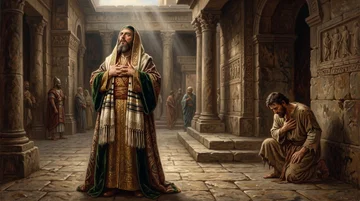
And the publican, standing afar off, would not lift up so much as his eyes unto heaven, but smote upon his breast, saying, God be merciful to me a sinner.
Translations
And the publican, standing afar off, would not lift up so much as his eyes to heaven, but smote on his breast, saying, God be merciful to me a sinner.
King James Version, KJV Cambridge Paragraph Bible
And the publican, standing afar off, would not lift up so much as his eyes unto heaven, but smote upon his breast, saying, God be merciful to me a sinner.
And the publican, standing afar off, would not lift up so much as his eyes to heaven, but smote upon his breast, saying, God be merciful to me a sinner.
But the publican, standing afar off, would not lift up so much as his eyes unto heaven, but smote his breast, saying, God, be merciful to me a sinner.
But the publican, standing afar off, would not lift up so much as his eyes unto heaven, but smote his breast, saying, God, be thou merciful to me a sinner.
'And the tax-gatherer, having stood afar off, would not even the eyes lift up to the heaven, but was smiting on his breast, saying, God be propitious to me — the sinner!
And the tax-gatherer, standing afar off, would not lift up even his eyes to heaven, but smote upon his breast, saying, O God, have compassion on me, the sinner.
But, the tax-collector, afar off, standing,—would not so much as lift up, his eyes, unto heaven, but kept smiting his own breast saying—O God! be propitiated unto me, the sinner!
Berean Standard Bible, Majority Standard Bible
But the tax collector stood at a distance, unwilling even to lift up his eyes to heaven. Instead, he beat his breast and said, ‘ God, have mercy on me, a sinner!’
But the tax collector, standing far away, wouldn’ t even lift up his eyes to heaven, but beat his chest, saying, ‘ God, be merciful to me, a sinner!’
The tax-farmer, on the other hand, keeping far away, and not lifting up even his eyes to heaven, made signs of grief and said, God, have mercy on me, a sinner.
But the Publican standing a farre off, woulde not lift vp so much as his eyes to heauen, but smote his brest, saying, O God, be mercifull to me a sinner.
Douay-Rheims (Challoner revision)
And the publican, standing afar off, would not so much as lift up his eyes towards heaven; but struck his breast, saying: O god, be merciful to me a sinner.
Pictures



Cross-references 20 of 74
- 1 Timothy 1:15
This is a faithful saying, and worthy of all acceptation, that Christ Jesus came into the world to save sinners; of whom I am chief.
Christ came into the world to save sinners, answering the publican’s plea for mercy.
- Psalms 51:1
Have mercy upon me, O God, according to thy lovingkindness: according unto the multitude of thy tender mercies blot out my transgressions.
Both plead for God’s mercy toward a sinner.
- Luke 18:9
And he spake this parable unto certain which trusted in themselves that they were righteous, and despised others:
The parable contrasts the publican’s humility with self-trust and contempt for others.
- 1 John 1:9
If we confess our sins, he is faithful and just to forgive us our sins, and to cleanse us from all unrighteousness.
The publican’s plea exemplifies confessing sin and receiving forgiveness.
- Matthew 9:13
But go ye and learn what that meaneth, I will have mercy, and not sacrifice: for I am not come to call the righteous, but sinners to repentance.
Christ came to call sinners, not the self-righteous.
- Hebrews 4:16
Let us therefore come bold ly unto the throne of grace, that we may obtain mercy, and find grace to help in time of need.
The humble sinner approaches God to receive mercy and grace.
- Luke 23:42-43
And he said unto Jesus, Lord, remember me when thou comest into thy kingdom.
Both show a penitent sinner instantly accepted through a plea for mercy.
- Luke 18:1
And he spake a parable unto them to this end, that men ought always to pray, and not to faint;
Christ teaches people to pray always and not lose heart.
- Romans 3:23
For all have sinned, and come short of the glory of God;
States that all have sinned, supporting the publican’s confession.
- Psalms 51:10
Create in me a clean heart, O God; and renew a right spirit within me.
Both are prayers for God’s mercy and inward renewal.
- Matthew 6:7
But when ye pray, use not vain repetitions, as the heathen do: for they think that they shall be heard for their much speaking.
The publican’s brief, sincere prayer contrasts with reliance on much speaking.
- Isaiah 64:6
But we are all as an unclean thing, and all our righteousnesses are as filthy rags; and we all do fade as a leaf; and our iniquities, like the wind, have taken us away.
Human righteousness is described as filthy rags.
- Ephesians 2:8-9
For by grace are ye saved through faith; and that not of yourselves: it is the gift of God:
The publican seeks mercy as a sinner; salvation is God’s gift, not earned by works.
- James 4:6
But he giveth more grace. Wherefore he saith, God resisteth the proud, but giveth grace unto the humble.
The publican’s humble plea reflects God giving grace to the humble.
- Psalms 51:17
The sacrifices of God are a broken spirit: a broken and a contrite heart, O God, thou wilt not despise.
The publican’s appeal reflects a contrite heart.
- Psalms 32:5
I acknowledged my sin unto thee, and mine iniquity have I not hid. I said, I will confess my transgressions unto the LORD; and thou forgavest the iniquity of my sin. Selah.
Confession of sin to God is linked with forgiveness.
- Isaiah 66:2
For all those things hath mine hand made, and all those things have been, saith the LORD: but to this man will I look, even to him that is poor and of a contrite spirit, and trembleth at my word.
God looks with favor on the poor and contrite in spirit.
- Isaiah 53:5
But he was wounded for our transgressions, he was bruised for our iniquities: the chastisement of our peace was upon him; and with his stripes we are healed.
The wounded substitute bears the sinner’s transgressions.
- Psalms 51:3
For I acknowledge my transgressions: and my sin is ever before me.
Both express an acknowledgment of personal sin.
- Matthew 23:12
And whosoever shall exalt himself shall be abased; and he that shall humble himself shall be exalted.
The publican’s humble prayer illustrates that the humble are exalted.
Commentary
Each commentary is drawn from primary sources: the writings of Ellen G. White and Adventist pioneers and periodicals. Each commentary is separate. Its own words are not a quotation; follow the references to read the source passages.
Ellen G. White
74 sources
The despised tax collector keeps his distance as unworthy to join other worshipers, keeps his eyes lowered in shame, beats his breast in anguish, and utters a short sincere plea for mercy as a sinner.COL 150.1–152.2ST Mar 23, 191521MR 60.5–61.1Lt 31, 1887, par. 8–9LS 212.1 He stands in sharp contrast to the boastful Pharisee who trusts his own goodness, recounts his devotion, and despises others, while the publican claims no merit and compares himself with no one.COL 150.1–152.2DA 495.21T 416.1–417.1ST Oct 21, 1897ST Oct 21, 1897 His attitude shows true conviction, self-knowledge of guilt and helplessness, and a faith that renounces self-trust to lay hold on divine power and love.SC 30.1–2COL 159.2ST Mar 23, 1915Lt 46, 1900, par. 34–38 He goes home forgiven and accepted rather than the Pharisee, for God hears humble reverent prayer and rejects proud self-sufficient prayer, exalting whoever humbles himself.COL 150.1–152.2ST Mar 23, 1915Ms 84b, 1897, par. 17–21ST Oct 21, 18971T 330.3–331.2 Pardon and peace come only through Christ the Lamb of God, not by good works, fasting, or outward religious duty, and must be followed by a merciful life toward others.Lt 117, 1897, par. 17–18Ms 98, 1893, par. 24–26Ms 52, 1890, par. 6–83T 172.2
Posture and Words
The tax collector takes his place at a distance, drawing apart from the other worshipers as unworthy to join in their devotions.COL 150.1–152.2ST Mar 23, 1915ST Oct 21, 1897 His standing far off is humility and reverence before God, with lowered posture expressing dependence rather than self-righteousness.21MR 60.5–61.1Ms 84b, 1897, par. 17–2121MR 61.2 He approaches with a sense of sin and no claim to mercy or approval, trusting not in his own goodness.21MR 60.5–61.1Ms 84b, 1897, par. 17–21ST Oct 21, 1897
He will not so much as lift his eyes toward heaven, keeping them lowered and scarcely daring to look up.COL 150.1–152.221MR 60.5–61.121MR 61.2 That downcast gaze comes from shame, unworthiness, and a deep sense of sin and guilt.LS 212.1RH Feb 28, 1907LSEGW 32.1–3 He does not point to his own righteousness, devotion, or prayerful life, but stands conscious of having nothing to boast of.LS 212.1RH Feb 28, 19071T 330.3–331.2 His trembling restraint shows he is not praying to be seen by others but has business with God alone.Lt 31, 1887, par. 8–9
He beats upon his breast in bitter anguish, self-abhorrence, and humble contrition.COL 150.1–152.221MR 60.5–61.1ST Oct 21, 1897 He bows his head and throws himself upon mercy, seeking pardon and peace from the holy heart-searching God who reads the secrets of the heart.Lt 31, 1887, par. 8–9 His case feels so desperate that no angel can help him, with no merit to commend him and no claim upon mercy and grace though he must have them.COL 150.1–152.2Lt 31, 1887, par. 8–9
His words are short, sincere, and passionate, saying only what he means and speaking the want of his heart.COL 150.1–152.2ST Aug 14, 1884 Feeling himself a sinner, polluted and having transgressed, his great need breaks out in a simple, earnest desire for mercy as his only hope, plea, and desire.COL 150.1–152.2ST Mar 23, 1915ST Aug 14, 1884 That brief cry, uttered with sincerity when there is nothing more to add, expresses the awakened sinner's desire to become God's child and asks as one would ask an earthly friend for a favor and expect it to be granted.Lt 26, 1879, par. 2–4ST Aug 14, 1884Lt 159, 1902, par. 11 One holy desire of this kind outweighs flowery words and eloquent repetitions that do not express the true sentiments of the heart.ST Aug 14, 1884 The same desperate appeal is echoed in the anguished, humble plea for the Lord to have mercy.LS 154.1–3
His posture expresses utter self-despair and intense suffering under conviction.COL 150.1–152.2Lt 31, 1887, par. 8–9Lt 28, 1859, par. 1–3 He is bowed before the Lord nearly all night in groaning, trembling, and indescribable agony, falling on his face and daring not to look up.SG2 16.11T 26.1–3 He bows his face to the ground in shame and unworthiness, pleading in secret through long hours as one crushed by guilt and fear of punishment.1T 26.1–3 He feels wretched, hopeless in himself, without God or hope, brought nearly to despair, dreading to meet death unsaved and unsure how his case will turn as he looks forward to judgment and onward to eternity.Lt 31, 1887, par. 8–9SG2 16.11T 26.1–3Lt 28, 1859, par. 1–3 That broken, humble cry comes from such great suffering that it can waste flesh and strength and make friends think of decline, while he keeps his suffering hidden and envies those who know acceptance with God.SG2 16.11T 26.1–3
Pharisee and Publican Contrast
The parable belongs to those who trust in their own righteousness, feel righteous and meritorious, and despise others, given to warn and rebuke that self-righteous spirit as offensive to God.1T 416.1–417.1ST Feb 26, 188512MR 116.3–117.2Lt 12, 1890, par. 15–18 It was given for the benefit of believers to guard against self-conceit and contempt for others, for self-exaltation leads to abasement while humility is exalted.12MR 116.3–117.2Lt 12, 1890, par. 15–18 The comparison of one's own work with another's stands exposed in it, warning against a self-satisfied religious spirit.RCOC 74.3Ms 27, 1889, par. 16
The Pharisee's prayer stands in sharp contrast as boastful, self-sufficient and self-satisfied, exalting himself and recounting his good deeds.DA 495.21T 416.1–417.11T 330.3–331.2 He virtually gives thanks that he is not as other men, enumerating his devotion and prayerful life.1T 416.1–417.11T 330.3–331.2 His prayer is offered in self-praise and contempt for sinners, to be seen by men, and God does not hear prayers offered in human superiority.ST Mar 15, 1899Lt 204, 1900, par. 1 One truly blessed never tells God of devotion and what has been done, and words of self-praise should never be spoken in prayer.1T 330.3–331.2Lt 204, 1900, par. 1 Such profession hears Christ's sayings but does them not, and crafty overreaching in business is evil fruit that disgusts unbelievers and proves falling short of the perfect and entire obedience God's law requires.1T 416.1–417.1
The publican by contrast does not compare himself with others, does not point to his own righteousness or recount good deeds, and claims no merit, goodness, worth, or right to mercy and approval.COL 150.1–152.2ST Mar 23, 1915ST Oct 21, 1897ST Oct 21, 1897ST Oct 21, 1897 He knows he has transgressed against God and is sinful and polluted, overwhelmed with guilt as if alone in God's presence, with pardon and peace as his only desire and mercy as his only plea.COL 150.1–152.2ST Mar 23, 1915 He approaches aware of his own nothingness, conscious of guilt and unable even to look toward heaven, believing he has no claim upon God.ST Oct 21, 1897ST Oct 21, 1897LS 212.1 He expects no pity from contemptuous onlookers, yet forgiveness is received by those who recognize need rather than trust their own holiness.COL 150.1–152.2LS 212.1
God values a contrite spirit rather than rank, talent, education, position, or outward religious appearance.ST Oct 21, 1897ST Feb 20, 1896 Human praise and much good work do not recommend to favor, for God's judgment is totally different from human judgment.Lt 35, 1885, par. 11–14 Christ gave the parable to lift up the fallen and show how Heaven regards such humility in contrast to the proud, pretentious boaster who thinks himself important and esteems himself righteous.ST Feb 20, 1896 The humble sinner who feels true need, knows himself a sinner, and longs for greater nearness to God has more discernment of heavenly things than the self-confident, and abiding in Christ is found of value with God, made more precious than fine gold.ST Feb 20, 1896 Seeing self as God sees means thinking little of self and much of sin rather than little of sin and much of virtue, seeking mercy through soul cleansing and bruising of self, wearing Christ's yoke in meekness and lowliness of heart, even through the valley of humiliation.Lt 35, 1885, par. 11–14
The opposite spirit is self-sufficiency and feeling righteous with all acts meritorious while far from the right spirit toward God and brethren.Lt 15, 1888, par. 10 It shows itself in wanting to be first, cherished self-esteem, criticism of others for not being first, envy, jealousy, suspicion, fault-finding, and false witness.Lt 15, 1888, par. 10 It turns everything said or done, even under special divine direction, into a wrong way, viewing things in perverted light under strong temptation.Lt 15, 1888, par. 10 Suspicion comes from the critic's own mind, pleasing the enemy by criticism and making a man an offender for a word where often there is no actual sin.Lt 15, 1888, par. 10 It breaks unity and sweet fellowship, feels disgust toward one who crosses its track, draws confiding ones to share its feelings, works secret retaliation, creates disaffection and disunion and plants seeds of jealousy while claiming firm belief in the truth.Lt 15, 1888, par. 10 Striving for superiority brings this sin and strengthens pride and hardness of heart rather than trusting the heart humbly before God, and Pharisaic zeal with unbending severity is not of Christ, kindness, mercy and love being preferable.Lt 110, 1893, par. 10Ms 23b, 1896, par. 16 Greater light and knowledge lay increased accountability not only to profess truth but to practice it by following Jesus, and without constantly elevating and becoming more spiritually minded, profession without doing God's will becomes like the Pharisee rather than the humble publican.Lt 55, 1886, par. 1
Repentance Confession and Faith
The publican's cry is the prayer of one who knows himself to be wicked, guilty, polluted, spiritually poor and sick, and in danger of perishing without help.SC 30.1–2Lt 46, 1900, par. 34–38COL 158.217MR 312.2–3 He is unable to save himself or to do anything righteous without the Holy Spirit working in him, and he senses nothing good in himself.Lt 46, 1900, par. 34–38 His guilt and shame bring him before God asking for mercy, and because his heart is open the Holy Spirit can work to convict him, make him penitent, and free him from the power of sin.SC 30.1–2Lt 46, 1900, par. 34–38 To know the real condition creates felt need of Christ's help, to understand the danger drives flight to the refuge, and to feel the pain of wounds creates desire for healing.COL 158.2 Recognizing sin and need for pardon in this way is necessary to turn from wrongdoing and receive Christ's righteousness, and God's grace helps the humble to discern defects of character.17MR 312.2–3Ms 13a, 1891, par. 19–23
True repentance humbly acknowledges personal guilt without excuse, hypocrisy, or self-justification, taking responsibility for sin.5T 637.2SC 40.1–2 It thinks little of self and much of sin rather than little of sin and much of virtue, seeking mercy through soul-cleansing and bruising of self.5T 637.2SC 40.1–2Lt 35, 1885, par. 11–14 Jesus pleads His blood for the repentant soul who thus acknowledges guilt, and such are justified.5T 637.2SC 40.1–2
Beholding Christ and His matchless love takes the eyes off self and wonderfully lessens self-righteous ideas and high estimates of ability, value, and goodness.SC 30.1–2Lt 46, 1900, par. 34–38 In His presence the sinner confesses sinfulness and asks for sin to be taken away, feeling great spiritual need and poverty of spirit.Lt 46, 1900, par. 34–38 That felt need makes the soul open for the Holy Spirit to convict, pardon, free from sin's power, and heal, for Christ came to heal the broken-hearted, deliver the captive, enlighten the blind, and set free the bruised.SC 30.1–2Lt 46, 1900, par. 34–38COL 158.2 In contrast, pride and self-exaltation close the heart so there is no room for Jesus, and self-righteous armor shuts out the Holy Spirit and His blessings to the meek and lowly.Lt 46, 1900, par. 34–38COL 158.2 Christ first makes penitent through the Holy Spirit all whom He pardons, and those who feel this need appreciate the help only Christ gives as the Lamb of God who takes away the world's sin.Lt 46, 1900, par. 34–38
The prayer was heard because it expressed dependence reaching out to lay hold on God's almighty power, Omnipotence, love, and infinite help.COL 159.2ST Mar 23, 1915Lt 40, 1899, par. 19RH Oct 30, 190021MR 44.3 To the publican self appeared as nothing but shame, with no claim to worth, goodness, or merit, and all who seek God must see self in the same way.COL 159.2ST Mar 23, 1915Lt 40, 1899, par. 19RH Oct 30, 190021MR 44.3 His faith renounced all self-trust and self-dependence, reaching out by faith for divine help to make peace with God.COL 159.2ST Mar 23, 1915Lt 40, 1899, par. 19 True faith and prayer are inseparable means by which the needy seek God, lay hold of His love, and seek peace with Him, and outward religious observances cannot replace this simple faith and surrender.ST Mar 23, 1915Lt 40, 1899, par. 1921MR 44.3
Merely speaking of poverty of spirit does not make a person humble when the heart remains proud and self-righteous.15MR 271.1 True humility is self-abasement of the soul on account of sin, when the soul has the most distinct views of Jesus and His matchless love.Lt 31, 1887, par. 8–9 It recognizes the inferiority mortals are subject to and utter and entire dependence upon God, not a mistaken sense of inferiority from a false standard.Lt 31, 1887, par. 8–9
Justification Mercy and Pardon
The publican went down to his house justified rather than the Pharisee, because forgiveness is received by those who recognize their need rather than by those who trust their own holiness.COL 150.1–152.2ST Mar 23, 1915LS 212.1RH Feb 28, 1907RH May 21, 1908 Drawing apart as unworthy to unite in devotion, standing afar off and refusing to lift so much as his eyes to heaven while smiting his breast in bitter anguish and self-abhorrence, he felt he had transgressed against God and was sinful and polluted.COL 150.1–152.2ST Mar 23, 1915Ms 84b, 1897, par. 17–21 He expected no pity from contemptuous onlookers, claimed no merit to commend him, made no comparison with others and recounted no goodness, but stood as if alone in God's presence in utter self-despair with pardon and peace as his only desire and mercy as his only plea.COL 150.1–152.2ST Mar 23, 1915LS 212.1 His humble prayer, unlike the self-righteous and self-satisfied prayer, led to his being justified and blessed.ST Mar 23, 1915Ms 84b, 1897, par. 17–21
Everyone who exalts himself shall be abased, and he who humbles himself before God shall be exalted.21MR 60.5–61.1Ms 123, 1909, par. 111T 330.3–331.212MR 116.3–117.2Lt 12, 1890, par. 15–18 Humility before God makes a person ready to learn from the great Teacher, while self-conceit, self-righteousness, trust in own goodness, and despising others lead to abasement.21MR 60.5–61.1Ms 123, 1909, par. 1112MR 116.3–117.2Lt 12, 1890, par. 15–18 True righteousness does not produce self-conceit or contempt for others.12MR 116.3–117.2 His humble cry moves the Lord's pity and is heard and accepted, while the boasting prayer that enumerates good deeds, devotion and prayerful life is not regarded and is rejected.ST Oct 21, 18971T 330.3–331.2 God values a contrite spirit rather than rank, talent, education, position, or outward religious appearance, and He hears humble, reverent, solemn prayer but will not hear proud, self-sufficient prayer offered in self-praise and contempt for sinners.ST Oct 21, 1897ST Mar 15, 1899Ms 93, 1898, par. 9–12
Pardon, peace, rest, and cleansing from sin come only through Christ, the Lamb of God who takes away the world's sin.Lt 117, 1897, par. 17–18Ms 52, 1890, par. 6–8 Longing for Christ's righteousness turns the heart from seeking the highest place to confessing sin and asking for mercy, and such confession brings the sinner before God where, through Christ's intercession and the pleading of His blood for the repentant soul, there is forgiveness, pardon, and rest.Lt 117, 1897, par. 17–18Ms 52, 1890, par. 6–85T 637.2SC 40.1–2 Those convicted by the Holy Spirit recognize their deeds are mixed with selfishness and sin, humbly acknowledge personal guilt without excuse, hypocrisy, or self-justification and take responsibility for sin, and Christ pardons them and makes them penitent and blessed.5T 637.2SC 40.1–2 The sinner who feels unworthy and humbly asks for mercy is nearer to God than one who confidently claims holiness.RH Feb 28, 1907RH May 21, 1908ST Feb 6, 1901 His standing before God is measured not by feeling but by the truth of his humble appeal.ST Feb 6, 1901 Jesus receives the plea of a penitent sinner, however lowly, outcast, despised, or defiled, with pity and forgiveness, in contrast to those who trust their own worth, feel no need of a Saviour, stand apart in self-esteem and look down on others.MH 164.23SP 137.1Ms 198, 1905, par. 5
True Versus False Holiness
True holiness in this verse is relying alone on the blood and merits of the crucified and risen Saviour, confessing daily as a sinner in need of divine grace with mercy through the atoning blood as the only plea for salvation through Christ alone.3T 172.2ST Feb 26, 1885Lt 8, 1867, par. 9–10 Pharisaical righteousness springs not from Christ but has its foundation in self alone, trusting good works, wonderful impressions, and meritorious acts to earn salvation and buy heaven, which is false and not the way to heaven.3T 172.2ST Feb 26, 1885Lt 8, 1867, par. 9–10 Self-imposed rigorous fasting that God has nothing to do with does not sustain, and true godliness is Christ's righteousness received by the sinner who confesses need of mercy, exalting God and His grace while rejecting Phariseeism and self-exaltation.ST Feb 26, 1885Lt 8, 1867, par. 9–10 Refusing Satan's temptation to trust in one's own good deeds is done by standing fast on the word of God with "It is written."ST Feb 26, 1885
Fasting and prayer become abominable when practiced in a self-justifying spirit, and outward acts of humiliation or religious duty cannot make anyone righteous or earn entrance into heaven.Ms 84, 1894, par. 16Lt 8, 1867, par. 9–10Ms 37, 1890, par. 24 Christ's offering is sufficient for all who believe, in contrast to self-righteousness that trusts itself.Ms 84, 1894, par. 16 Seeking God's blessing requires coming humbly and contritely without relying on self-righteousness or making a show, and when people do their part in this way God's promise of blessing does not fail.Ms 37, 1890, par. 24
False claims to sanctification stand with the Pharisee and not the publican, professing holiness on the basis of feelings and past emotions with many words saying God leads, God teaches, and I am living without sin.BS 9.2Ms 3, 1862, par. 6–7 Such ones lay aside reason and judgment, will bear no contradiction, stubbornly insist on their own holiness, yet bear no precious fruit as proof, deluding their own souls and leading astray many who earnestly desire to conform to the will of God.BS 9.2 They manifest a dark spirit altogether unlike Christ, the only true pattern, being exalted in their own opinion, just in their own eyes, pointing to their own righteousness, prayerful life and devotion, and depending on their own merits for salvation.BS 9.2Ms 3, 1862, par. 6–7 That hard, self-righteous spirit has no union with the meek spirit of Christ, and thinking that past leading and instruction from God means no need to learn and receive instruction from others is self-righteous deception that despises instruction, leaves the deceived about themselves to their own ways.Ms 3, 1862, par. 6–7
Christ manifests Himself to those who are meek and lowly of heart, and humility with daily confession of sin and need of divine grace is the only safe position to enter heaven.ST Feb 26, 1885Lt 35, 1885, par. 11–14ST Feb 26, 1885 This means seeing self as God sees, thinking little of self and much of sin rather than little of sin and much of virtue, and seeking mercy through soul cleansing and bruising of self, with meekness and lowliness of heart, wearing Christ's yoke, and beholding Christ giving the proper estimate of self even through the valley of humiliation.Lt 35, 1885, par. 11–14 Pride that spreads virtues before God, whose eye reads the intents and purposes of the soul, is rebuked and brings a fatal spell that makes deaf and blind to compassion, mercy, and truth, for human praise and much good work do not recommend to God's favor because God's judgment is totally different from human judgment.Lt 35, 1885, par. 11–14 Those who are spiritually proud must seek the Lord as sinners, humbling themselves before God, otherwise they will fail to develop Christian character, slumber on in imperfections in darkness, and be lost to the second death.Lt 35, 1885, par. 11–14Lt 31a, 1893, par. 11–12
Greater light and greater knowledge of the truth lay on increased accountability not only to profess the truth but to practice it by following Jesus as the light of the world, with constant elevating and becoming more spiritually minded.1T 416.1–417.1Lt 55, 1886, par. 1 The Pharisee prayed and talked in a boastful, self-righteous manner, exalting himself, recounting his good deeds, and virtually thanking God that he was not as other men.1T 416.1–417.1 Profession without doing the will of God becomes like that Pharisee rather than the humble publican, making a profession of hearing the sayings of Christ but doing them not.1T 416.1–417.1Lt 55, 1886, par. 1 Such evil fruits as crafty overreaching in business dealings disgust unbelievers and prove falling short of the perfect and entire obedience the law of God requires.1T 416.1–417.1
Prayer and Daily Living
The verse teaches how to pray, for humility in prayer is answered and blessed while self-righteousness is left unblessed.Lt 31, 1887, par. 8–9 The trembling worshiper scarcely dares to lift his eyes, having business with God alone rather than praying to be seen, seeking pardon and peace before the holy heart-searching God who reads the secrets of the heart.Lt 31, 1887, par. 8–9 He recounts no good deeds and speaks no self-praise, feeling his case so desperate that no angel can help him, with no claim upon mercy and grace though he must have them, in a solemn moment looking toward judgment and eternity, bowing his head, beating his breast, and throwing himself upon the mercy of a sin-pardoning Saviour.Lt 31, 1887, par. 8–9Lt 204, 1900, par. 1 His prayer is the prayer of faith in contrast to the prayer of form, for as a sincere, devoted worshiper his words speak the want of his heart and say only what he means, breaking out in passionate, simple desire as one would ask an earthly friend for a favor and expect it to be granted, so that one holy desire outweighs flowery words and eloquent repetitions that do not express the true sentiments of the heart.ST Aug 14, 1884 True humility is self-abasement of the soul on account of sin when the soul has the most distinct views of Jesus and His matchless love, recognizing the inferiority mortals are subject to and utter and entire dependence upon God, not a mistaken sense of inferiority from a false standard.Lt 31, 1887, par. 8–9 God hears humble, reverent prayer and will not hear proud, self-sufficient prayer that comes with little reverence and human superiority, praising and adoring self while despising those regarded as sinners.Ms 93, 1898, par. 9–12 He even delays answering the prayers of His obedient children so they will not give up in discouragement but will search their own hearts carefully and with humility, considering prayer a solemn thing, watching unto prayer, and speaking and acting in harmony with their prayers.Ms 93, 1898, par. 9–12 If speech has been used to hurt and discourage and bruise saint or sinner, the wrong must be put right and the poisonous sting removed, and soul and tongue and words brought to the altar to glorify God as a trespass offering, and then He will accept the offering.Ms 93, 1898, par. 9–12
To pray like the publican is to wrench away from self-righteousness entrenched as a fortress and anchored like a rock, where while a man stays neither God nor man can do anything for him.Lt 52, 1886, par. 1–2 It is to feel the burden of one's own case, come to the point, surrender to God, seek the Lord, wrestle in supplication till victory is gained, and grasp the promises by faith.Lt 52, 1886, par. 1–2Ms 37, 1890, par. 24 It takes experience in seeking God to do this, for without it a man does not know how to seek or surrender, does not free his soul, and is left enshrouded in dense darkness.Lt 52, 1886, par. 1–2 The seeker must come humbly and contritely, without relying on self-righteousness or making a show, and when people do their part in this way God's promise of blessing does not fail.Ms 37, 1890, par. 24
The short cry for mercy, said with sincerity with nothing more to add, puts a person on the side of Christ.Lt 26, 1879, par. 2–4 It means laying aside dignity and social position, openly admitting the mistake of neglecting God, and starting before one's children as a learner in the school of Christ, beginning as a family to live for God with reading and prayer.Lt 26, 1879, par. 2–4 Though humiliating, this sincere identification brings the light and love of God into the heart as rays from the throne and puts music in the soul.Lt 26, 1879, par. 2–4 By becoming learners parents become teachers who lead their children along, since little children have clear minds and quickly recognize truth and purity, and a softened and subdued heart is needed to come to Christ and help lead children to Him.Lt 26, 1879, par. 2–4ST Jan 19, 1882
Asking God for mercy calls for a life that extends compassion to others.Ms 98, 1893, par. 24–266T 283.4–284.1 God watches whether the person who asks for mercy and receives His gifts and forgiveness will show compassion to those around them and to people in need.Ms 98, 1893, par. 24–266T 283.4–284.1 Such mercy toward others is evidence of connection with God.Ms 98, 1893, par. 24–266T 283.4–284.1
The cry expresses the desire of the awakened, troubled sinner, whose conscience is stirred by continued wrongdoing, to become God's child and find deliverance and peace in Jesus.GW 213.3Lt 159, 1902, par. 1113MR 171.1–2 The penitent who longs for help and acceptance and pleads, Lord, be merciful to me a sinner, is to be assured that there is hope in Jesus.Lt 159, 1902, par. 1113MR 171.1–2 When a sinner cries for mercy in this way the soul should be directed to Jesus, the sin-pardoning Saviour, as a refuge who offers refuge and rest to all.13MR 171.1–2Ms 138, 1897, par. 44–45
The opposite spirit of Pharisaism, holding to self-sufficiency and self-exaltation and trusting in one's own good deeds and wonderful impressions, excludes Christ from the thoughts, shuts out blessing, and places a barrier between the sinner and the Saviour.ST Feb 26, 1885Ms 103, 1901, par. 2 The only safe position is to confess oneself a sinner daily needing divine grace, with mercy through the atoning blood of Christ as the only plea for salvation through Christ alone.ST Feb 26, 1885 The remedy is to reject Phariseeism and self-exaltation to exalt God and His grace, relinquish high estimates of self, humble the heart before God, cast oneself wholly on the mercy of Christ, and stand fast on the word of God with It is written against Satan's temptation.ST Feb 26, 1885Ms 103, 1901, par. 2
Sources
Pioneers and periodicals
123 sources
The despised tax-collector, guilty of the very wrongs named against him, stands apart in shame and unworthiness, with downcast eyes and beating breast, pleading as the sinner alone for mercy that makes atonement through the promised sacrifice.ST Dec 2, 1886ST Sep 25, 1893ST Nov 24, 1881ST Nov 24, 1881ST Apr 23, 1896 In contrast to the self-trusting Pharisee who boasts of fasting, tithing and outward keeping of the law, he offers no merit, excuse or comparison, and he alone goes home forgiven and pronounced just, for whoever humbles himself shall be exalted.ST Mar 23, 1915ST Aug 27, 1894ST Jul 23, 1885ST Apr 23, 1896 His sole cry for compassion is met by grace alone, counting him righteous apart from works through faith in the shed blood that takes away filthy garments and clothes him with the Victim's righteousness.ST Apr 21, 1881ST Jan 29, 1894RH Feb 17, 1852RH Apr 1, 1902RH Jul 8, 1915 It is true repentance of a broken heart, grief over sin with purpose to forsake it, which is the first condition of acceptance and the first step turning from the world to holiness through Christ.ST Dec 2, 1886RH Aug 26, 1862RH Oct 2, 1856ST Nov 18, 1880RH Dec 29, 1868 Brief, direct and from felt need without display, such lowly prayer in the heart's want is heard and brings pardon, peace and a new heart, and it rebukes all contempt for others and self-satisfied display by teaching that humility must abide in daily life.RH Aug 11, 1904RH Jul 1, 1858RH Mar 22, 1870RH Apr 16, 1867
Words, Gestures, Setting
The man was an actual collector of customs and taxes, whose office gave him opportunity to commit the extortions and wrongs named in the Pharisee's boast, and he was a despised social outcast who likely was guilty of them.ST Nov 24, 1881ST Apr 23, 1896ST Aug 27, 1894 Yet his prayer uses the definite form, meaning literally me, the sinner, for he saw himself alone as the sinner and named himself guilty rather than expressing only a vague sense of sin.ST Nov 24, 1881ST Nov 24, 1881ST Aug 27, 1894
Standing afar off, he kept his distance and stood apart in anguish and shame, with a sense of distance from God and unworthiness to approach Him, trembling and abashed to be in the holy temple.ST Mar 23, 1915ST Oct 21, 1897ST Aug 27, 1894ST Nov 27, 1901RH Oct 10, 1871 He stood in an ordinary way with no display, making no claim on mercy or approval, aware of his own nothingness.ST Oct 21, 1897ST Oct 21, 1897ST Apr 23, 1896
He would not lift up so much as his eyes unto heaven but kept them down and bowed his head, daring scarcely to look up.RH Feb 28, 1907ST Dec 2, 1886ST Jun 3, 1908 Shame kept him from looking toward heaven, with anguish, self-reproach, consciousness of guilt, and a sense of sin in thought, word, and act, knowing he had offended God and expecting no help from others.ST Feb 19, 1885ST Dec 2, 1886ST Jun 3, 1908ST Sep 18, 1901
He smote upon his breast as a sign of sorrow and self-reproach, expressing grief over his sinful heart, inwardly sickened by sin including ingratitude, impurity, and unbelief.ST Feb 19, 1885ST Dec 2, 1886ST Nov 24, 1881 His making much of his sin shows conviction striking deep and breaking the heart, exposing wrongs long forgotten and buried, like a plough turning up skeletons long entombed, for sin is not a small disorder needing minor repair but loathsome and fatal poison where one drop kills.ST Oct 14, 1908ST Mar 13, 1884 Jews in Jerusalem likewise beat their breasts while weeping and praying for the restoration of the temple and deliverance from misery.RH May 13, 1902
His words, God be merciful to me a sinner, spoken also in the form Lord, be merciful and Lord, have mercy, are in their deeper sense a plea for God to make atonement for him as a sinner.LS 154.1–3RH Jul 30, 1861ST Apr 11, 1878RH Mar 27, 1866 His prayer looked beyond the temple sacrifices he had seen, the slain lambs that prefigured the true and promised offering for sin, to the divine sacrifice that could meet his need.RH Jul 30, 1861 The plea is paired with the promise that God will be merciful to unrighteousness and remember sins no more.ST Sep 25, 1893
He went up into the temple to pray and is set in the temple at the place of offerings, keeping his distance and striking his chest alongside the rich casting in gold, the showy Pharisee, and the widow's farthing, all under the gaze of Christ who sits over against the treasury and sees every giver and every motive.ST Apr 23, 1896RH Sep 23, 1873 Jesus spoke this on His way to Jerusalem for the last time.ST Apr 23, 1896 Drawing near in this way is to God Himself, not merely to a holy place, entering into the sanctuary for secret communication with God.ST Apr 23, 1896RH Apr 23, 1872
Contrast With Pharisee
The parable was spoken to those who trusted in themselves that they were righteous and despised others, and its picture of the Pharisee's boastful spirit is illustrated by sayings attributed to rabbis.ST Feb 26, 1885ST Apr 23, 1896RH Dec 13, 1853 That self-trusting and contemptuous spirit is offensive to God, and keeping the law requires love for God and neighbor and not merely strong profession of obedience.ST Feb 26, 1885RH Dec 13, 1853 The same self-righteous spirit treats religious fasting as meritorious before God, as with those who fasted through seventy years in the fifth month because the temple and city were burned and in the seventh month because of the assassination of Gedaliah at Mizpah and the dispersion of the remnant, and who judged that long observance made them deserving.ST Jun 14, 1883 The Laodicean church is in that same self-righteous and self-satisfied condition, counting itself well off in the world and well to do in the spiritual kingdom, winning golden opinions, decking one another with titles, and mistaking gifts for graces while its treasures are imaginary, and all hope would lie in feeling its true condition with shame and confession of sin as Ezra did and as David did, but having no such feeling and treating such conviction as extreme it hears no parable but the plain word, I will spue thee out of my mouth.RH Nov 6, 1860
The Pharisee is counted among the best, conscientious and scrupulously careful, outwardly keeping the law, while the publican is counted among the worst with no pretensions to righteousness.RH Aug 11, 1904 He gives thanks that he is not as other men are, as extortioners, the unjust, and adulterers, and boasts in fasting twice in the week and tithing all he possessed, with Sabbathkeeping, health reform, tithe-paying, and liberal giving set alongside.RH Aug 11, 1904ST Apr 23, 1896 His outward acts were his duty and not worthy of censure in themselves, and religious practices such as fasting, tithing, and abstaining from meat are good when joined to faith and sanctified knowledge, yet joined to self-trust and without love for God and others they were not pleasing and do not outweigh that love.ST Jun 14, 1883 He bows before God and gives thanks while considering himself holy, but the contrast shows the law exposing sin and breaking confidence in one's own righteousness, while the gospel brings mercy to sinners.ST Sep 14, 1888
The publican in contrast makes no claim on God's mercy or approval and offers no good deed or other recommendation, no excuse, no comparison with others or with worse sinners, and no trust in his own goodness, righteousness, religious acts, or worth.ST Mar 23, 1915ST Feb 19, 1885ST Feb 19, 1885ST Apr 1, 1897ST Oct 11, 1899 He sees himself alone in God's presence and in the light of that presence as poor, wretched, lost, undone, empty of all good, the chief of sinners, broken and contrite, with God as everything, expecting no help from others.ST Feb 19, 1885ST Apr 1, 1897 He knows he has sinned against God and is polluted and sinful in thought, word, and act, admits that punishment would be just and that he is justly condemned, and relies wholly on God's forgiving love with desire for pardon, peace, cleansing, and salvation.ST Mar 23, 1915ST Feb 19, 1885RH Oct 2, 1856 His humbled heart confesses with purpose to abandon sins, and such honest acknowledgment of need is enough to seek help from One who came to call sinners to repentance as the Friend of the outcast.ST Oct 11, 1899RH Oct 2, 1856
He went down to his house justified, forgiven, pardoned, saved and happy, rather than the Pharisee, and heaven pronounces him justified.ST Aug 27, 1894ST Jul 23, 1885ST Apr 23, 1896ST Jan 29, 1894 The humble petitioner is justified rather than the self-exalting one with his self-praising thanksgiving, for everyone who exalts himself shall be abased and he who humbles himself shall be exalted.ST Aug 27, 1894ST Apr 23, 1896RH Jul 1, 1858 It is the same childlike humility by which the kingdom of God is received and entered, showing that humble dependence on God and not self-righteous boasting leads to acceptance, and that the sinner who humbly recognizes need and pleads for mercy through faith in shed blood is counted as a just man free from sin.ST Jul 23, 1885ST Apr 23, 1896ST Jan 29, 1894
Mercy, Pardon, Justification
The publican's sole appeal is for mercy as one who knows he is a sinner in need of pardon, justification, cleansing that only divine compassion can give, and peace.ST Apr 21, 1881ST Jun 3, 1908RH Nov 18, 1909RH Feb 10, 1863 He stands at a distance, will not lift his eyes to heaven, beats his breast, confesses himself a sinner, and asks God for mercy, and because he feels his need he obtains pardon, unlike the self-righteous who desire none.ST Apr 21, 1881ST Jun 3, 1908RH Nov 18, 1909 That cry for mercy brings salvation, so that he goes home justified before God, with the assurance that Christ came to save sinners.RH Nov 18, 1909RH Sep 19, 1871RH Feb 10, 1863 Even a sinner who cannot manage a fuller prayer can cry this, and such weakness and distrust of his own efforts open him to divine help and bring salvation to the soul.ST Jun 3, 1908RH Sep 19, 1871
Through faith in Jesus' shed blood he receives the propitiation provided through faith in that blood and goes home justified, counted as a just man and free from sin.ST Jan 29, 1894RH Apr 1, 1902 He stands before God entirely helpless, justly condemned, without any righteousness of his own and with no possible means of obtaining any, without one excuse to lessen guilt or punishment, clothed only in his own righteousness which God counts as filthy rags.RH Apr 1, 1902RH Jul 8, 1915 Uttered in helpless despair while he is yet a sinner, the plea does not earn righteousness as reward for right doing but is met by God's gift of grace alone.RH Apr 1, 1902RH Jul 8, 1915 The Holy Spirit answers by bidding him look to the cross to One dying in his stead with his sins laid upon Him, and as he hears, heeds and believes that He was wounded for transgressions, bruised for iniquities and healing by His stripes, God imputes his sins to the bleeding Victim and imputes the Victim's righteousness to him, takes away filthy garments, causes iniquity to pass away, clothes him with change of raiment, and accounts him righteous apart from works of law, which is justification that brings salvation.ST Jan 29, 1894RH Apr 1, 1902 His hope is not his own effort or good works but faith in Christ's sacrifice and merits, through which he is justified and, receiving Christ's sacrifice and the Spirit, Christ works in him what pleases God, while resulting service and good works are fruits of the Spirit's work and not a way to earn righteousness.RH Jul 8, 1915 Convicted by the law and unable to free himself from guilt, seeing his lost condition with sorrow and need, beholding the suffering Saviour on the cross, confessing and believing, he receives forgiveness with past guilt removed, condemnation lifted, and peace with God through Jesus Christ.
Salvation by grace leaves no room for Pharisaic self-righteousness or proud trust in obedience to the law, for accepted obedience flows from love and not self-reliance.RH Feb 17, 1852ST Sep 14, 1888RH Sep 3, 1857RH Aug 27, 1857 The law exposes sin and breaks confidence in one's own righteousness, while the gospel brings mercy to sinners, in contrast to bowing before God in thanks while considering oneself holy.RH Feb 17, 1852ST Sep 14, 1888 With contrite heart and conscious guilt his plea depends on pardoning grace, not on alms or good deeds which cannot atone for sin, for his own life cannot atone and Christ and the cross are his only plea.ST Oct 2, 1893RH Mar 13, 1866RH Sep 3, 1857 Salvation comes through the redeeming power of the Lamb, and his name is marked in heaven for the sake of the Son.ST Oct 2, 1893RH Mar 13, 1866 The prayer must be learned better still because the Pharisee spirit is always busy creeping back in, and true faith does not rest only on sweet felt enjoyment of grace procured by Christ and promised through Christ.RH Sep 3, 1857RH Aug 27, 1857 God sometimes denies sensible enjoyment so that true faith acts like itself and depends on nothing but free grace in Christ, and even when faith, godly sorrow and repentance seem to fall short of due measure there is boldness to depend on grace, for there is no merit in those things and no certain measure and degree prescribed for all, but it is enough truly to hate sin, to desire grace, and sincerely to enter upon the Christian race.RH Sep 3, 1857RH Aug 27, 1857
The prayer expresses continuing need for mercy, for even after daily labor a person needs the saving blood of Christ at every moment, and God's cleansing provision remains open and gives the soul an anchor.RH Nov 9, 1916ST Jan 24, 1884RH Feb 23, 1905 Christians at every stage need Christ's pardoning and cleansing continually and should not claim sinlessness or boast that they no longer need forgiveness, but like the publican confess need and rely on God's mercy.ST Feb 26, 1885ST Jan 24, 1884RH Feb 23, 1905 Approaching God humbly, confessing himself a sinner and depending wholly on forgiving mercy, he is accepted and justified, and continuing humility and confession retain justification, since righteousness comes from Christ rather than any merit of one's own.ST Feb 26, 1885RH Feb 23, 1905RH Sep 30, 1909 He would have lost justification had he returned the next day boasting like the Pharisee, for claiming to be free from sin is the first step toward sin.ST Jan 24, 1884RH Feb 23, 1905 The only safe position is confessing oneself a sinner daily needing divine grace, with mercy through the atoning blood of Christ as the only plea for salvation through Christ alone, rejecting Phariseeism and self-exaltation to exalt God and His grace, refusing temptation to trust in good deeds and impressions by standing fast on It is written.ST Feb 26, 1885RH Feb 23, 1905RH Nov 26, 1857 It is the cry of one who feels deep sinfulness and unworthiness of even the least favor when he thinks how much Christ suffered that poor sinful creatures might have eternal life, spoken while keeping God's commandments and striving through grace in Christ Jesus to overcome all faults and attain holiness needed to stand without spot or wrinkle, and prayed in self-examination with cutting away of cherished sin, facing obligations toward others without excuse, repenting thoroughly with no return, keeping name, obligations and vows instead of casting them away in continual need of Christ's righteousness.RH Nov 26, 1857RH Sep 30, 1909
Repentance, Faith, New Life
The prayer is true repentance from a contrite and broken heart, grieving with anguish over wrongs against perfect righteousness, justice and goodness, purposing to abandon sins and ready to confess with desire to forsake them, without excuse and without any plea of merit or claim of good works.ST Dec 2, 1886RH Oct 2, 1856RH Jul 27, 1876ST Nov 24, 1881 It claims no personal purity or spiritual attainment, but owns just condemnation and relies wholly on forgiving love to cleanse, pardon and save, and on that ground the one who prays is accepted and justified.ST Dec 2, 1886RH Oct 2, 1856RH Jul 27, 1876ST Nov 24, 1881ST Nov 24, 1881 True confession of this kind ordinarily names particular faults rather than resting in general statements, justifies God whatever the sentence may be, and is poured out to God alone, while wrongs done to a brother still require confession to men.RH Oct 2, 1856 Inward sickness over sin includes ingratitude, impurity and unbelief, with grief centered on the sinful heart itself, and honest shame and penitence of this sort are set above any telling of a good life.ST Nov 24, 1881ST Nov 24, 1881
Conviction by the law, the Holy Spirit and deep plowing of the soul breaks the heart and exposes wrongs long forgotten and evils lurking and buried, like skeletons turned up by a farmer's plough.RH Dec 10, 1872ST Oct 14, 1908ST Mar 13, 1884 Sin so seen is not a little disorder needing a little repair but an appalling, loathsome and fatal injury, a deadly poison where one drop is enough to kill the soul, and without a broken heart there is no religion.ST Oct 14, 1908ST Mar 13, 1884 The moral law reaches even to thoughts, so that looking into the gospel mirror shows what a person is by nature and what must become by grace in order to be accepted, revealing the extent of personal guilt and the need for a mighty helper and Saviour.RH Dec 10, 1872RH Feb 18, 1858RH Mar 17, 1853 The more deeply and intelligently guilt is recognized, even in cherished evil thoughts, anger, stubbornness and rebellion without outward acts, the more likely pardon and favor are found through the mercy of Jesus Christ, and under such conviction the sinner with no claim to justice humbly pleads for mercy and feels unfit to live.RH Dec 10, 1872ST Mar 2, 1904
Recognizing poverty and sin is the first condition of acceptance and the first step in prayer, turning away from the world and its miserable comforts like stepping off the ground onto a stair, though not yet establishing the person in heaven.RH Aug 26, 1862ST Nov 18, 1880RH Dec 29, 1868 That acknowledgment and humility must come before conversion from a life of sin to a life of holiness through Christ, when the hatefulness of sin and enormity of guilt are felt in contrast to goodness and mercy, Jesus alone is believed able to save, and the sense of sin is so great that one sees oneself as the only sinner in the world.RH Aug 26, 1862ST Apr 1, 1886 Seeing true character in the light of the holy law, the sinner stops trusting own goodness, renounces self-trust, casts himself on mercy in Christ, and reaches out by faith to lay hold of infinite power and divine help, receiving pardon and grace to help in time of need, since outward religious observances cannot replace simple faith and surrender.ST Mar 23, 1915RH Apr 7, 1868 No one should wait until feeling worthy or fit, since the heart remains sinful, but must come as a penitent with lowered eyes and a plea for mercy, enter through the Door into the fold, and will not be refused but go home pardoned and saved.RH Aug 26, 1862ST Apr 1, 1886
The burden of guilt is then lifted, and the one who prays finds pardon, peace, rest, strong consolation from sure oath and promise, joy in the Holy Spirit, and a new heart and divine nature with love shed abroad fulfilling the law, for though anger was against him it is turned away and he is comforted.ST Nov 24, 1881RH Apr 16, 1867ST Jun 28, 1877 Such confession gives words for owning sin and asking forgiveness, bringing confidence to plead with God and assurance of forgiveness, and the first prayer that repeats this plea is met with justification as his was.RH May 8, 1866RH May 28, 1901 The troubled man who had no peace though urged to trust is heard, the workman alone before God who recognizes wickedness done and intended to repeat resolves never to swear again, and others repeating the plea in anguish, in business conviction, in drug bondage, or in a king's guilt find relief, deliverance and adoption when they give the heart to God.ST Feb 20, 1901 The man enslaved by drink and appetite who submits and cries from the depths with sobbing and broken words for pity on himself and wife and children and for release from chains burning into the soul is heard with compassion, every chain of sin and appetite is broken and every burden lifted, so that he rises free and redeemed, able to leave drink behind and restore purity and provision to his home.ST Apr 8, 1897
True Prayer Heard
True prayer is prayer in the name of Jesus even when that name is not spoken, because self is left out.ST Apr 1, 1897ST Apr 1, 1897 It is worship of the heart and not cold form of the lips, unlike self-praising thanksgiving.RH Jul 1, 1858RH Feb 18, 1858 The sinner sees himself alone in the light of God's presence, not looking at others or comparing himself with them, but as poor, wretched, lost, undone, empty of all good, the chief of sinners, broken and contrite, with God as everything.ST Apr 1, 1897 He speaks only what he means, the want of his heart, as to a friend expected to grant it, reaching out in dependence to lay hold of power from love, gratitude, and felt need. True prayer includes confession of sin and petition for mercy, and prayer without them is suspicious, in contrast to self-complacency, contempt for neighbors, comparison with other men, boasting in outward works, and display of achievements.ST Apr 1, 1897RH Feb 18, 1858ST Jan 27, 1876
It is brief, direct, and plain, six words against a much longer pompous address about five times as long, going right to the point of need without circumlocution.ST Jun 23, 1881RH Dec 11, 1860 Great and urgent need is always direct and short, needing no eloquent or polished words and no special gift, but only humble dependence and recognition of guilt, sinfulness, lost condition, and unworthiness.RH Mar 22, 1870RH Feb 13, 1872ST Oct 11, 1877 Such a short confessing prayer is well pleasing to God and a model for receiving answers.RH Mar 22, 1870RH Dec 16, 1873 Length neither condemns nor commends, for the other prayer was also short, and brevity is right when one prays no more than is truly felt.RH Dec 11, 1860 Prayers should be stripped of stale repetition and pretense until only this humble, hearty, sincere appeal remains, for reliance on one's own ability to pray can reflect pride.ST Jun 23, 1881ST Oct 11, 1877ST Feb 17, 1888
Its words and posture please only when true.RH Sep 9, 1902 Honest shame and penitence, keeping distance, refusing to look up, striking the chest and asking mercy as a sinner, are commended in tender love above telling of a good life.RH Sep 9, 1902 Copying them with unchanged heart, proud of humility and owning sins without feeling them, is still rejected as hypocrisy, for outward breast-smiting does not make prayer acceptable and God regards the heart.RH Sep 9, 1902ST Mar 24, 1887 Merely speaking humbly while remaining self-satisfied and blind to personal fault does not amount to genuine repentance.ST Nov 24, 1881 Repeating the prayer while asking for humility does not itself prove freedom from hidden pride and selfishness, which conscience may uncover beneath a display of humility.RH Dec 8, 1863
Such lowly, genuine, bold prayer from felt unworthiness and unwavering faith in a pardoning God is heard infinitely more than a request granted ungraciously from selfish motives by an earthly judge, for God delights in mercy and in giving good gifts and gives generously.ST Apr 23, 1896 Prayer that obtains is prayer of faith, answered because it comes from a genuine heart and felt need, with humility from a sense of sin and personal unworthiness and boldness from faith in a God who abundantly pardons.RH Oct 10, 1907 Even a weak, feeble, sorrowful cry from afar reaches Him amid noise and turmoil, and He hears the longing soul and meets the need.RH Sep 30, 1915RH Mar 30, 1905 Anguish may make trouble a time to seek the Lord for deliverance, to rescue from destruction, draw toward truth and light, and save the vile who felt past saving as soon as asked.ST Mar 23, 1882
It is the plea to bring before God in private prayer.RH Apr 16, 1857 After preparation by meditation and self-examination, entering as into the presence of God and seeing the invisible One, thinking on His greatness, majesty, glory, purity, holiness and justice, and feeling one's own insignificance, sin, guilt and misery in contrast with Him, the worshiper comes with reverence, godly fear and humility, prostrate in the dust, and asks mercy as a sinner.RH Apr 16, 1857 This remains the right plea no matter how great a person's attainments in holiness and fruitfulness in good works.RH Apr 16, 1857 It is to be earnest, with the spirit and with the understanding, with thanksgiving, with confession and repentance and earnest appeal, waiting upon God for a renewal of His covenant mercies, fitting for united seasonal prayer for revival and rejoicing in God.RH Dec 16, 1902 It may be spoken aloud in words as vocal prayer and not merely silent thought, and prayed from the heart while going about daily work, teaching what it means to pray without ceasing and in everything give thanks.ST May 4, 1882RH Jun 30, 1863 Entering into the sanctuary for secret communication with God means transacting all affairs with an unseen Saviour, walking with God, having no confidence in the flesh, and triumphing only in Christ, and its heartfelt petition can reach even a sinful child's heart.RH May 23, 1871RH Apr 23, 1872
Humility in Daily Life
The commended one is not the self-praiser who compares himself with others, but the one counted among the worst who makes no pretension to righteousness and pleads humbly without excuse or comparison.RH Aug 11, 1904RH Dec 13, 1853RH Dec 21, 1911ST Dec 19, 1900 That warning presses especially on those with great light, strict obedience, and more truth, who boast in Sabbathkeeping, health reform, tithe-paying and liberal giving, lest they overlook their own faults while seeing the faults of others as with a magnifying glass.RH Aug 11, 1904ST Dec 17, 1874 No one can know another's full life, hidden sins, temptations, penitence, or heart, so judging is forbidden and sympathy rather than aloof contempt is owed to the struggling, fallen, and discouraged.RH Dec 21, 1911 Prayer must not assume enemies alone are wrong, but must ask for one's own errors to be revealed with grace to confess them and seek forgiveness when injury has been caused, remembering that one's own sins placed the Saviour on the cross.ST May 21, 1885ST Dec 19, 1900
The same contrast rebukes ostentatious display religion and national exhibition Christianity, for there is no ostentatious display in the Christian standard and true Christianity is shown by love one to another.RH May 2, 1907ST Oct 29, 1902 It rebukes self-satisfied confidence in one's own goodness and Laodicea counting itself rich with golden opinions, titles, and gifts mistaken for graces yet spiritually wretched, as well as Pharisaical prayers that neglect the suffering poor and fail to oppose wickedness, and outward Sabbath exercises that cannot erase a selfish week.ST Dec 12, 1911 Religious practices such as fasting twice in the week, tithing all possessed, abstaining from meat, Sabbathkeeping and liberal giving are duty and not worthy of censure in themselves, yet joined to self-trust they are vain, empty worship that does not erase debt to God and others.RH Aug 11, 1904RH May 2, 1907ST Dec 12, 1911 False professors copy the self-truster who thanked God he was not as other men are, extortioners, the unjust, adulterers, measuring themselves by themselves and sharp-sighted to others' faults while admiring their own supposed excellencies, whereas true saints judge themselves by God's word alone and if they differ praise grace for making them to differ.RH Jun 3, 1858 Salvation from sin is offered to every kind of sinner from Pharisee to prodigal, but self-righteousness and mistaking self-esteem for holiness are unfit for Christ's service and must be humbled to be exalted.
There is no genuine religion without humility, for men are nothing and even sinless dust would become them as angels veil faces and cast crowns crying Holy.ST Feb 19, 1885RH Mar 25, 1862 The humble sin-conscious one who feels unworthy and poor in spirit should not conclude rejection but look up and claim promises by faith, for feeling confident or despondent is not itself faith, and those recognizing unworthiness are nearer God than confident claimants of holiness.ST Jul 23, 1885ST Sep 1, 1881ST Apr 20, 1915 Professing goodness one lacks excludes from the grace that alone makes anyone valuable, and Christians at every stage need pardoning and cleansing continually rather than claiming faultlessness, sinlessness, or no further need of forgiveness.ST Feb 19, 1885ST Jul 23, 1885ST Jan 24, 1884 Boasting of personal holiness, thinking the righteous are those who think themselves righteous while sinners think themselves righteous, and trusting claimed excellence for salvation have no promise, while heaven stands ready to answer the one who knows he cannot save himself.RH Mar 25, 1862ST Apr 20, 1915
The plea must be offered now without delay, for now is the accepted time to ask mercy as a sinner.RH Sep 15, 1859 It is wrongly assumed that it can be postponed until just before death, as if salvation could then be arranged, for the gospel is free and simple yet momentous and urgent and requires a sense of need.ST Jun 30, 1881 Still it remains the most suitable prayer for dying lips even for one kept from grosser sins, meaning refusal to look back on a well-spent life and looking to Christ alone who spent His life gloriously to redeem the soul.ST Sep 29, 1881 At life's end with no other ground than grace and no personal merit, even one who receives the gospel then may plead in faith that God has provided and accepted the sacrifice for him.RH Aug 12, 1915
God accepts fallen man's effort when put forth in a proper spirit, which shows unbounded mercy and condescension since every power has become demoralized and weakened by transgression, and acceptance depends more on heart and motive than on outward acts, duty, or social standing.ST Sep 22, 1881ST Aug 14, 1884 Awareness of personal defect and remorse turns toward improvement, impelling to seek needed faith, fidelity, courage, virtuous resolve and continual help, giving discernment of heavenly things, whereas self-satisfaction leaves insensible to sin and unable to improve.RH Jun 26, 1855 The larger, better and nobler the heart becomes through goodness, the more fully the prayer is said and felt, enlarging the heart to make allowance for others.ST Nov 5, 1894 A softened and subdued heart in contrast to the Pharisaical spirit is needed to come to Christ and help lead children to him, to comfort and win the erring, and greater light and truth bring greater accountability to keep striving to do right.ST Jan 19, 1882ST Dec 17, 1874 Much professedly done for Christ's sake is not acceptable, so understanding what makes service acceptable is of greatest importance, leading to practical Christianity that reaches need.ST Sep 22, 1881
The verse gives words for many needs, belonging with the trust of little children and showing the true humility God wants in prayer.ST Jun 11, 1896 It is the humble testimony that moves a meeting, where the sorrowful appeal without presuming on goodness is regarded as justified and does good to others.RH Sep 14, 1869 It is the penitent's cry of one strayed from the right who trusts Christ's saving work, turns from sin, waits on the Word, and asks Christ to dwell within to make holy life possible, ending in confidence in promised mercy.ST Mar 29, 1899 It is owned fault to an injured brother without blaming any other, bowing low with bitter weeping and asking the Father to forgive, and even when answered with scorn turning away weeping and praying blessing on the stern neighbor. It voices the burdened conscience after repeated failures, the earnest inquiry for Zion with living experience, the confession of inability for twelve hours of duty, self-examination before the Lord's Supper by cutting cherished sin and facing obligations with David's confession and no return, reaching a child's heart, amending swearing by deciding to serve God and praying for self, and conversion in which two men repeat the plea as they repent and turn toward Jesus.RH Jan 31, 1907ST May 21, 1885
Sources