Luke 23:30
Then shall they begin to say to the mountains, Fall on us; and to the hills, Cover us.
Translations
American King James Version, King James Version, KJV Cambridge Paragraph Bible, Webster Bible, Revised Version, American Standard Version
Then shall they begin to say to the mountains, Fall on us; and to the hills, Cover us.
then they shall begin to say to the mountains, Fall on us, and to the hills, Cover us; —
Then shall they begin to say to the mountains, Fall upon us; and to the hills, Cover us:
Then, will they begin to say—unto the mountains, Fall upon us! and unto the hills, Cover us!
Berean Standard Bible, Majority Standard Bible
At that time
‘ they will say to the mountains, “ Fall on us!”
and to the hills, “ Cover us!”’Then they will begin to tell the mountains, ‘ Fall on us!’ and tell the hills, ‘ Cover us.’
And they will say to the mountains, Come down on us, and to the hills, Be a cover over us.
Then shall they begin to say to the mountaines, Fall on vs: and to the hilles, Couer vs.
Douay-Rheims (Challoner revision)
Then shall they begin to say to the mountains: Fall upon us; and to the hills: Cover us.
Pictures
Cross-references
- Revelation 6:16
And said to the mountains and rocks, Fall on us, and hide us from the face of him that sitteth on the throne, and from the wrath of the Lamb:
People call for mountains to hide them from divine judgment.
- Hosea 10:8
The high places also of Aven, the sin of Israel, shall be destroyed: the thorn and the thistle shall come up on their altars; and they shall say to the mountains, Cover us; and to the hills, Fall on us.
Both describe people calling for mountains and hills to cover them amid judgment.
Commentary
Each commentary is drawn from primary sources: the writings of Ellen G. White and Adventist pioneers and periodicals. Each commentary is separate. Its own words are not a quotation; follow the references to read the source passages.
Ellen G. White
13 sources
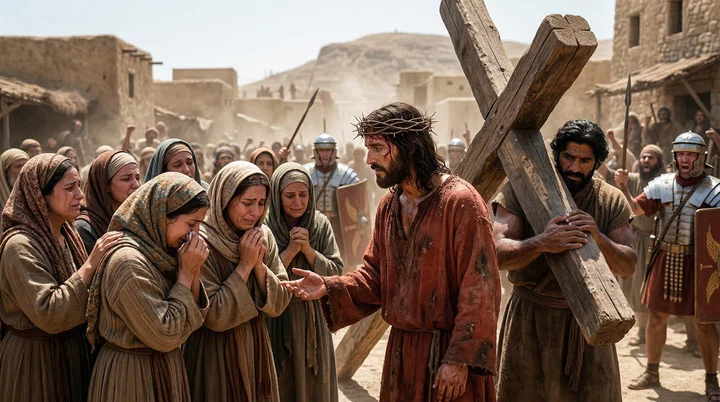
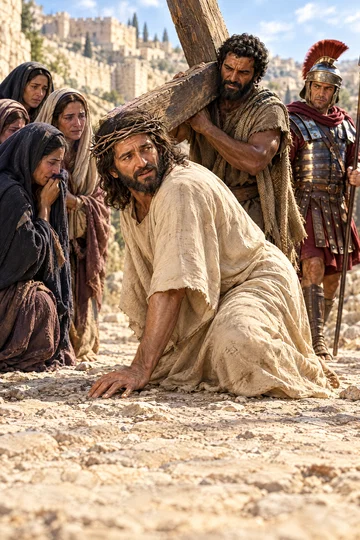
On the road to Calvary Jesus told the pitying women of Jerusalem who wailed for Him without believing in Him to weep for themselves and their children instead.ST Jul 18, 18785RED 71.1–3Ms 95, 1897, par. 14 The plea for mountains to fall and hills to cover is the longing of the guilty to be hidden when condemnation for sin comes upon them.ST Jul 18, 1878ST Nov 16, 1882 It first meant the siege and destruction of Jerusalem, when its people would suffer famine and the horrors of war and long for covering, and many of those women and their children would perish in fulfillment of their own cry for His blood to be upon them.ST Jul 18, 18785RED 71.1–3Ms 205, 1899, par. 4 That fall of Jerusalem stands as a symbol and sign of the final destruction of the impenitent world, when all who persist in sin and slight the mercy purchased by His death will face unbearable sorrow at the coming of the Son of man with God's mighty hosts.3SP 151.1–3ST Jul 18, 1878ST Nov 16, 1882DA 743.2DA 742.4–743.1 For Christ as the green and innocent tree bore in crucifixion the wrath due to the sins of the world, so far greater terror awaits the dry trees who guiltily reject that mercy.3SP 151.1–3ST Jul 18, 1878ST Nov 16, 1882
Setting on Way to Calvary
On the road from the judgment-hall to Calvary Jesus spoke to the daughters of Jerusalem who wailed for Him out of common pity and humanity, not because they believed Him to be a teacher sent from God.ST Jul 18, 18785RED 71.1–3Ms 95, 1897, par. 14 He told them to weep not for Him but for themselves and their children.ST Jul 18, 18785RED 71.1–3 The women who were moved at the sight had come undesignedly into that procession to the crucifixion.Ms 95, 1897, par. 14
This took place after the news of His condemnation had spread throughout Jerusalem, when a vast multitude of people of all classes and all ranks flocked toward the place of crucifixion.DA 741.3 Disciples and believers from the city and the surrounding region joined the throng that followed the Saviour.DA 741.3 They did so under the promise of the priests and rulers not to molest Christ's followers if He Himself were delivered to them.DA 741.3
At that moment He was being led from Pilate's court with the cruel cross prepared for Barabbas laid upon His bruised and bleeding shoulders.DA 741.4–742.1Ms 6, 1889, par. 45–46 He had taken neither food nor drink since the Passover supper, and after agonizing in Gethsemane, enduring betrayal and the flight of His disciples, being taken to Annas and to Caiaphas and to Pilate and to Herod and back to Pilate, and bearing insult upon insult and mockery upon mockery and two scourgings, He was too weak to carry it.DA 741.4–742.1 A crown of cruel thorns pierced His temples and left traces of blood upon His face, yet He was making a voluntary sacrifice, bearing Himself with firmness and dignity and speaking no word but what glorified God.DA 741.4–742.1Ms 95, 1897, par. 14 Human nature could bear no more, so He fell fainting beneath the burden, while the crowd showed no compassion but taunted Him for being unable to carry the heavy cross.DA 741.4–742.1Ms 95, 1897, par. 14
The saying belongs to His facing the Jewish priests and rulers, who forced the Roman governor to carry out their will.RH Dec 24, 1908 It belongs also to the taking away of the Bridegroom, when mourning and fasting become fitting for the disciples.ST Jul 7, 1898 He was delivered into the hands of wicked men, with His own nation clamoring for His blood, mocked by Herod and his soldiers with a crown of thorns and a purple robe and a reed, and scourged as the worst of criminals while the murderous Barabbas was chosen in His place.ST Jul 7, 1898 Then He was lifted up on the cross to die as a malefactor, though He had been hoped to take David's throne.ST Jul 7, 1898 To see Him in whom hopes of eternal life were centered so humiliated tries faith and makes hope and courage fail, leaving days of trial and temptation when the presence of the Comforter is not clearly discerned.ST Jul 7, 1898
Terror of Coming Judgment
The cry to the mountains to fall and to the hills to cover is the longing of guilt to be hidden when condemnation for sin arrives.ST Jul 18, 1878ST Nov 16, 1882 It is what the impenitent will wish for when they stand exposed in judgment.ST Jul 18, 1878ST Nov 16, 1882
Its first fulfillment came in the siege and destruction of Jerusalem, when its people suffered amid famine and the horrors of war and longed for covering.ST Jul 18, 18785RED 71.1–3Ms 205, 1899, par. 4 Many of those very weeping women with their children perished in that siege, blindly fulfilling their own cry for His blood to be on them and on their children.ST Jul 18, 18785RED 71.1–3 Yet Jerusalem's fall is a symbol and a sign pointing beyond itself to the final destruction of the impenitent world.DA 743.2DA 742.4–743.1
The same cry therefore belongs also to a wider judgment at the end of the world, when all the impenitent and unbelieving will suffer condemnation for their sins.3SP 151.1–3ST Jul 18, 1878ST Nov 16, 18825RED 71.1–3 It will fall upon those who persist in sin and slight the mercy purchased by His death.3SP 151.1–3ST Jul 18, 1878ST Nov 16, 18825RED 71.1–3 Their sorrow and misery will be unbearable, so that they will call for mountains and hills to cover them.DA 743.2DA 742.4–743.1 That terror will come at the coming of the Son of man, attended not by a murderous mob but with God's mighty hosts.3SP 151.1–3ST Jul 18, 1878ST Nov 16, 18825RED 71.1–3
The force of the warning is explained by the green and the dry trees.3SP 151.1–3ST Jul 18, 1878ST Nov 16, 18825RED 71.1–3 The green tree is the innocent Christ, upon whom the wrath due to the sins of the world was allowed to fall in death by crucifixion.3SP 151.1–3ST Jul 18, 1878ST Nov 16, 18825RED 71.1–3 If God permitted that for the Redeemer, far greater terror awaits the dry, those guilty, impenitent and unbelieving who reject the mercy secured by His death.3SP 151.1–3ST Jul 18, 18785RED 71.1–3
Sources
Pioneers and periodicals
24 sources
Spoken on the road to Calvary to the women who wailed from pity at His suffering, it bids them weep for themselves and their children because far greater distress lies ahead.ST Jul 18, 1878ST Apr 4, 1906ST Nov 19, 1894 It foretells the terror coming upon Jerusalem for rejecting and killing Him, first fulfilled in its siege and destruction, and it also reaches to the great day of the Lord when the Son of man comes in glory and the impenitent face condemnation and the full consequence of sin.ST Jul 18, 1878ST Nov 16, 1882ST Nov 19, 1894ST Apr 4, 1906 On that day sinners in terror will beg the mountains and hills to hide them rather than face Christ, yet that hiding will be vain, for no refuge can cover them from God's coming judgment.ST Jun 23, 1881RH May 20, 1858RH Jan 30, 1866RH Jun 10, 1915 Its force lies in the contrast between the green and the dry, that if Christ the innocent and fruitful suffered death under wrath due to the sins of the world, the guilty who reject the mercy purchased by His death will face far greater terror and judgment.ST Jul 18, 1878ST Nov 16, 1882ST Feb 15, 1883 The prospect of that doom for those who refuse mercy caused Him greater agony than the physical suffering of the cross, and it warns all who persist in rejecting offered eternal life and who trust in false security that they will at last join that fearful cry, which is reason to weep and labor urgently for the salvation of loved ones while opportunity remains.ST Apr 30, 1902RH Jan 6, 1859RH Mar 22, 1860RH Jan 13, 1859
Saying and Its Setting
On the road to Calvary Jesus spoke these words to the daughters of Jerusalem who wailed for him out of common pity at his physical suffering, telling them to weep not for him but for themselves and their children because greater trouble was ahead for them.ST Jul 18, 1878ST Apr 4, 1906ST Nov 19, 1894ST Apr 30, 1902ST Mar 27, 1901 The warning belonged to his counsel to those weeping women, that a terrible calamity was coming upon them and their children and that the prospect of the doom of those who reject mercy caused him greater agony than the suffering of the cross.ST Apr 30, 1902ST Mar 27, 1901 It is part of the account of his trial and crucifixion and passion, when he faced the Jewish priests and rulers who forced the Roman governor to carry out their will.RH Dec 24, 1908ST Mar 6, 1879 In that same account he bore the cross to Calvary and endured taunts silently and submissively, and on the cross he endured anguish out of love while burdened for souls as the Father watched above.RH Jan 16, 1908RH Jun 28, 1870
The saying belongs to the taking away of the Bridegroom, when mourning and fasting become fitting for the disciples.ST Jul 7, 1898 It shows Christ approaching the cross and descending into the depths of humiliation, delivered into the hands of wicked men with his own nation clamoring for his blood.ST Jul 7, 1898 He was mocked by Herod and his soldiers with a crown of thorns and a purple robe and a reed, scourged as the worst of criminals while the murderous Barabbas was chosen in his place, then lifted up on the cross to die as a malefactor though he had been hoped to take David's throne.ST Jul 7, 1898 That trial of seeing him in whom hopes of eternal life were centered so humiliated tries faith and makes hope and courage fail, leaving days of trial and temptation when the presence of the Comforter is not clearly discerned.ST Jul 7, 1898
The words draw on Old Testament prophecy, showing Jesus relying on it in his teaching during the final months before his crucifixion.ST Feb 15, 1883 Their force comes from the contrast in the next verse between the green and the dry.ST Jul 18, 1878ST Nov 16, 1882RH May 3, 1870 Christ is the innocent and fruitful green tree, upon whom the wrath due to the sins of the world was allowed to fall in death by crucifixion under the burden of the world's sins.ST Jul 18, 1878ST Nov 16, 1882 If he so suffered, the guilty dry tree that rejects mercy purchased by his death will face far greater terror and judgment, deserving tribulation and punishment when the full consequence of sin and God's wrath falls at the opening of the great day of the Lord.ST Jul 18, 1878RH May 3, 1870
The verse stands in the record of the four evangelists of preparation day, Friday, when Jesus was laid in the tomb, followed by the Sabbath day on which the women rested and then early the first day of the week when they came to anoint his body and found the stone rolled away and Jesus risen.ST Jun 3, 1908ST Feb 1, 1905 There the seventh day and the first day are named in immediate connection, with the Sabbath according to the commandment shown to be the day just before the first day of the week.ST Jun 3, 1908ST Feb 1, 1905 That joint naming shows the first day and the seventh traveling side by side ever since the cross with no break in reckoning, so the identity and succession of the seventh day from the crucifixion to the present is certain and in true succession from the beginning and the count of the week has not been lost.ST Jun 3, 1908ST Feb 1, 1905 This is confirmed by the agreeing reckoning of Jews, Christians and others, so that if Sunday is kept in true succession from the cross the seventh day is equally certain.ST Feb 1, 1905
Judgment on Jerusalem and the World
The words foretell the terror of coming days for Jerusalem and its people because of rejecting and killing Jesus, when suffering will be so great that people will long for the mountains and hills to hide them from what they face.ST Nov 19, 1894ST Apr 4, 1906 They were directed to the women who saw only physical suffering, turning them to mourn for themselves and their children because greater trouble lay ahead.ST Apr 4, 1906
The first fulfillment came in the siege and destruction of Jerusalem, when many of those same weeping women and their children would perish under the doom they had blindly invoked.ST Jul 18, 1878 The same hiding of guilt belongs also to the wider judgment at the end of the world and the opening of the great day of the Lord, when the Son of man comes in glory with the mighty hosts of God and all the impenitent and unbelieving who slighted mercy purchased by the death of the Son face condemnation for their sins.ST Jul 18, 1878ST Nov 16, 1882 Then the impenitent wicked face the full consequence of sin as God's wrath falls, and the visitations of wrath on the wicked bring tribulation and punishment at the great day of retribution.RH May 3, 1870 The force lies in the contrast of the green and the dry in the next verse: Christ the innocent and fruitful green tree suffered death under the wrath due to the sins of the world, so if he suffered so, the guilty dry tree that rejects mercy will face far greater terror and judgment.ST Jul 18, 1878ST Nov 16, 1882
At that coming sinners and the unrepentant will be so terrified that rather than face Christ they will call for the mountains to fall on them and the hills to cover or crush them.RH May 20, 1858RH Jan 30, 1866RH Jun 10, 1915 It is the day of wrath and death and pain, the lost soul's funeral, when the Christless dead awake from sleep and tomb to judgment and endless hopeless doom.RH Jan 30, 1866
That call for refuge will be in vain and bring no cover, for hiding will be useless with no refuge or hope.ST Jun 23, 1881RH Jan 30, 1866RH Jun 10, 1915 God's hand will find them all, and no refuge can hide them from his coming judgment, bringing the sinner's doom.ST Jun 23, 1881RH May 20, 1858RH Jun 10, 1915
The prospect of that doom for those who reject mercy caused Jesus greater agony than the physical suffering of the cross.ST Apr 30, 1902
Warning and Call to Repentance
Those who keep turning away from mercy offered and refuse the invitation to receive eternal life will at last join in the fearful prayer for rocks and mountains to fall upon them.RH Jan 6, 1859 The days when people will cry to the mountains to fall on them and to the hills to cover them are near, and that fearful time of judgment is reason to weep and to labor urgently for the salvation of loved ones while opportunity still remains.RH Mar 22, 1860 On the awful day of ruin the unready will seek too late to be hidden by rocks and mountains.RH Jan 13, 1859
That late seeking warns against assuming that tomorrow will continue as today, for trust in a theory of human progress lulls souls into false security before coming destruction.RH Jan 13, 1859 The same despair meets the one who has lived in worldly ease and pleasure instead of laboring after Christian perfection and then meets death unprepared for eternity.RH Jul 16, 1857 After a life esteemed by friends, undisturbed by enemies, and spent in gratifying natural tempers, happiness sinks away, time shortens, and death stands at hand.RH Jul 16, 1857 Having separated from God and lost a share in the realms of light, such a person must either die in the painful bitter sorrows of deep repentance or in hopeless despair crying for the mountains to fall and cover him.RH Jul 16, 1857
The setting on the journey to Calvary gives an example for bearing burdens, for there Jesus bore the cross and endured taunts silently and submissively.RH Jun 28, 1870
Sources