Luke 23:31
For if they do these things in a green tree, what shall be done in the dry?
Translations
American King James Version, King James Version, KJV Cambridge Paragraph Bible
For if they do these things in a green tree, what shall be done in the dry?
For if they do these things in a green tree, what will be done in the dry?
Revised Version, American Standard Version
For if they do these things in the green tree, what shall be done in the dry?
for, if in the green tree they do these things — in the dry what may happen?'
for if these things are done in the green tree, what shall take place in the dry?
Because if, in moist wood, these things, they are doing,—in, the dry, what shall happen?
Berean Standard Bible, Majority Standard Bible
For if men do these things while the tree is green, what will happen when it is dry?”
For if they do these things in the green tree, what will be done in the dry?”
For if they do these things when the tree is green, what will they do when it is dry?
For if they doe these things to a greene tree, what shalbe done to the drie?
Douay-Rheims (Challoner revision)
For if in the green wood they do these things, what shall be done in the dry?
Pictures
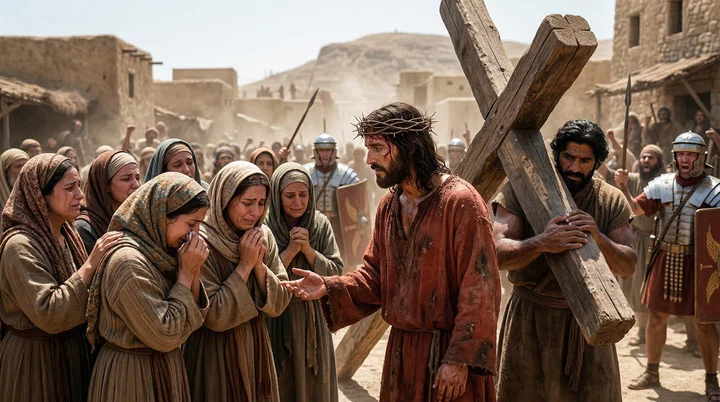
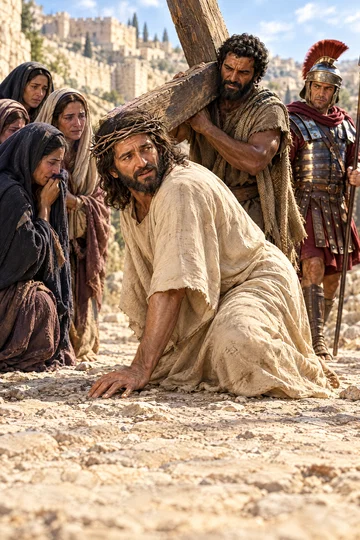
Cross-references
- John 19:16-18
Then delivered he him therefore unto them to be crucified. And they took Jesus, and led him away.
Describes Jesus being led away and crucified.
- Mark 15:20-38
And when they had mocked him, they took off the purple from him, and put his own clothes on him, and led him out to crucify him.
Parallel account of the way to Calvary.
- Ezekiel 20:47
And say to the forest of the south, Hear the word of the LORD; Thus saith the Lord GOD; Behold, I will kindle a fire in thee, and it shall devour every green tree in thee, and every dry tree: the flaming flame shall not be quenched, and all faces from the south to the north shall be burned therein.
Both use green and dry trees to picture coming judgment.
- Ezekiel 21:3-4
And say to the land of Israel, Thus saith the LORD; Behold, I am against thee, and will draw forth my sword out of his sheath, and will cut off from thee the righteous and the wicked.
Green and dry represent the righteous and wicked facing judgment.
- Matthew 27:31-53
And after that they had mocked him, they took the robe off from him, and put his own raiment on him, and led him away to crucify him.
parallel account of march to Calvary
Commentary
Each commentary is drawn from primary sources: the writings of Ellen G. White and Adventist pioneers and periodicals. Each commentary is separate. Its own words are not a quotation; follow the references to read the source passages.
Ellen G. White
23 sources
Fainting beneath the cross on the way to Calvary, Jesus answered the wailing women with tender compassion and told them to weep not for Him but for themselves and for their children.ST Jul 18, 1878DA 742.4–743.1Ms 95, 1897, par. 14 The green tree is Himself, the innocent Redeemer full of life, and the dry tree is the guilty, impenitent and unbelieving, spiritually barren like dry wood fit for burning.3SP 151.1–312MR 393.1–2Ms 111, 1897, par. 63–64DA 741.1–2 If God permitted His wrath for the sins of the world to fall on the innocent by death through crucifixion, far greater misery, judgment and condemnation will come on the guilty who slight the mercy purchased by His death.3SP 151.1–3DA 741.1–2DA 741 It points first to the destruction of Jerusalem, when those then weeping would perish with their children in the siege under the doom invoked in crying for His blood, and beyond it to the wider condemnation of all the impenitent at the coming of the Son of man, which Jerusalem's destruction foreshadows.3SP 151.1–3ST Nov 16, 1882ST Jul 18, 1878 In another sense it warns that if such cruel killing is done to Him who is innocent, still worse will be done to His followers who bear testimony that He came from God, when they are hated, betrayed and put to death for His name.Ms 101, 1897, par. 21–2312MR 393.1–2Ms 39, 1894, par. 17
Words and Setting
On the way from the judgment-hall to Calvary a vast multitude that had flocked to the crucifixion followed Jesus after the news of His condemnation had spread throughout Jerusalem among people of all classes and ranks, and because the priests and rulers were bound by promise not to molest His followers if He Himself were delivered to them, disciples and believers from the city and the surrounding region joined the throng, including the weeping daughters of Jerusalem who were undesignedly in the procession and were moved by human pity.DA 741.3DA 742.4–743.1Ms 95, 1897, par. 14 He was then bearing the cross prepared for Barabbas, laid upon His bruised and bleeding shoulders, too weak to carry it after taking neither food nor drink since the Passover supper, agonizing in Gethsemane, enduring betrayal and the desertion of the disciples, being taken to Annas then to Caiaphas then to Pilate then to Herod then again to Pilate, and suffering insult upon insult and mockery upon mockery through the night without failing.DA 741.4–742.1Ms 95, 1897, par. 14 After the second scourging and the crown of cruel thorns that pierced His temples and left traces of blood upon His face, with a purple robe and a reed put upon Him in mockery, human nature could bear no more and He fell fainting beneath the burden while the crowd that followed showed no compassion but taunted Him.DA 741.4–742.1Ms 95, 1897, par. 14ST Jul 7, 1898 His own nation was clamoring for His blood, forcing the Roman governor to carry out the will of the priests and rulers, choosing the murderous Barabbas in His place and lifting Him up to die as a malefactor.RH Dec 24, 1908ST Jul 7, 1898
He answered the wailing women with tender compassion and did not despise their sympathy, telling them to weep not for Him but for themselves and for their children.ST Jul 18, 1878DA 742.4–743.1 Those women were not believers in Him as one sent from God and did not lament Him as such, but were moved by human pity at His suffering.DA 742.4–743.1Ms 95, 1897, par. 14 The green tree is Jesus Himself, the innocent Redeemer, full of life, their divine Lord, God in human flesh whose glory was so completely veiled by humanity that even His disciples struggled to believe in Him.3SP 151.1–3Ms 101, 1897, par. 21–23Ms 111, 1897, par. 63–64ST Nov 16, 1882ST Jul 18, 1878 He had no friend to defend Him except the admission of His innocence by the heathen Pilate.Ms 101, 1897, par. 21–2312MR 393.1–2 The dry tree is the guilty, the impenitent and unbelieving, spiritually barren and lifeless like dry wood fit for burning, who slight the mercies of God purchased by the death of His Son.3SP 151.1–3Ms 111, 1897, par. 63–64DA 741ST Nov 16, 1882ST Jul 18, 1878
In another sense taught by some, the dry tree is those who bear testimony that He came from God and was God in human flesh.Ms 101, 1897, par. 21–2312MR 393.1–2
Warning and Fulfillment
The saying reasons from the lesser to the greater: if God permitted His wrath for the sins of the world to fall upon the innocent Redeemer in death by crucifixion, far greater suffering, misery, judgment and condemnation will come upon the guilty who reject the mercy purchased by that death.3SP 151.1–3DA 741.1–2DA 741ST Nov 16, 1882ST Jul 18, 1878 The green is the innocent One full of life, the dry is the impenitent and unbelieving, spiritually barren and lifeless like dry wood fit for burning, who slight the mercies of God purchased by the death of His Son.3SP 151.1–3DA 741ST Nov 16, 1882ST Jul 18, 18785RED 71.1–3 It pointed first to the destruction of Jerusalem, for from the scene before Him He looked forward to the time when many of those then weeping for Him would perish with their children in the siege under the doom blindly invoked in crying for His blood to be upon them and their children.ST Jul 18, 18785RED 71.1–3DA 742.4–743.1 Beyond Jerusalem it points to a wider judgment at the end of the world, when all the impenitent will suffer condemnation for their sins at the coming of the Son of man attended not by a murderous mob but by the mighty hosts of God, of which Jerusalem's destruction is the foreshadowing.3SP 151.1–3ST Nov 16, 1882ST Jul 18, 18785RED 71.1–3DA 743.2
It was also spoken beforehand to His disciples about what He must suffer at the hands of wicked men, warning that if such cruel acts and killing are done to Him who is innocent and full of life like a green tree, still worse will be done to His followers who bear testimony that He came from God.Ms 101, 1897, par. 21–2312MR 393.1–2Ms 39, 1894, par. 17Ms 111, 1897, par. 63–6412MR 420.2 The green tree is their divine Lord Himself, God in human flesh, whose glory was so veiled by humanity that even His disciples struggled to believe, who had no friend to defend Him except the heathen Pilate's admission of His innocence.Ms 101, 1897, par. 21–2312MR 393.1–2 The dry tree in this sense is those who witness for Him, and the guilty and lifeless like dry wood, who will be brought before councils and rulers, betrayed by family, hated and even put to death for His name.Ms 101, 1897, par. 21–23Ms 39, 1894, par. 17Ms 111, 1897, par. 63–64 This belongs to the time when Satan's agencies have their last chance to display their true character before the world, angels and humanity.Ms 39, 1894, par. 17
The disciples remembered this warning after His death, and His suffering in rejection, condemnation and crucifixion made the warning vivid to them.AA 25.1Ms 111, 1897, par. 63–6412MR 420.2 Lonely and sick at heart because their hope that He would redeem Israel had perished, they applied it to themselves, believing their beloved Teacher's fate might at any time become theirs at the hands of the same powers.Ms 111, 1897, par. 63–6412MR 420.2 So in grief, trouble, loss and fear of being seized and killed they met together in the upper chamber with doors closed and fastened, their faith tried and their hope and courage failing.Ms 111, 1897, par. 63–6412MR 420.2ST Jul 7, 1898 This was the time when the Bridegroom was taken away and they had cause to mourn and fast, as He who bore their hopes of eternal life descended into the depths of humiliation into the hands of wicked men.DA 794.5ST Jul 7, 1898 Their grief kept them from seeing the hope of His resurrection already close beside them, even while the warning that if such suffering comes while the tree is green, still full of life, far worse will come when it is dry, belonged to their sense of trouble and loss.DA 794.5DA 794.4
His agony and sacrifice on the way to the cross and at the crucifixion show that giving up all for Him is not too great a cost, and His suffering is the measure by which self-denial is seen.Lt 1a, 1861, par. 2–5 His bearing of the cruel cross to Calvary is the basis for the appeal not to burden others with what God would release them from.Ms 6, 1889, par. 45–46
Sources
Pioneers and periodicals
29 sources
Spoken on the way to Calvary to the weeping daughters of Jerusalem as a warning about themselves and their children, the saying argues from the green tree to the dry, that if such suffering comes while the tree is green with life and growth, far worse will come when it is dry in decay and death.ST Jul 18, 1878ST Apr 28, 1909ST Apr 4, 1906ST Aug 6, 1896 The green tree is Jesus himself, innocent, fruitful and ever-flourishing, bearing the punishment for the sins of the whole world, and the dry tree is the guilty, impenitent and unbelieving wicked who must at last bear their own sin.ST Nov 19, 1894ST Sep 2, 1897 In another reading the green is the Jews as they then were, still having life because not yet rejected and their cup not yet full, and the dry is the Jews when cut off from God as a withered lifeless tree.RH Aug 3, 1876 If God permitted his wrath for the sins of the world to fall upon the innocent Redeemer in death by crucifixion for others, far more terrible condemnation will fall upon those who by that act filled up their cup, utterly rejected him and slighted the mercy purchased by his death.ST Nov 16, 1882ST Sep 2, 1897 It points first to the coming distress for Jerusalem, when those women and their children would perish in the siege under the self-invoked doom for rejecting and killing him.ST Nov 16, 1882ST Nov 19, 1894ST Apr 4, 1906 Beyond Jerusalem it applies to the final judgment at the end of the world, when all the impenitent suffer for their sins at the coming of the Son of man and cry for the mountains to fall on them.ST Nov 16, 1882ST Jul 18, 1878
Meaning and Context
The saying reasons from the green to the dry: if such suffering and judgment fall while the tree is green, far worse must fall when it is dry, for the green pictures life and growth and the dry pictures decay and death.ST Apr 28, 1909ST Aug 6, 1896 The green tree is Jesus himself, innocent, fruitful and ever-flourishing, bearing the punishment for the sins of the whole world, and the righteous are his branches, while the dry tree is the guilty, impenitent, unbelieving and incorrigible wicked who must bear their own sin.ST Nov 16, 1882ST Sep 2, 1897 If such things were done to the innocent one suffering on their behalf, just judgment will fall on those whose guilt makes them like a dry tree and who by that act filled up their cup.ST Nov 19, 1894ST Sep 2, 1897ST Nov 19, 1894 If God let wrath for the sins of the world fall on the innocent Redeemer by permitting him to suffer death by crucifixion for others, those who reject the mercy purchased by his death face condemnation, and they will cry for the mountains to fall on them.ST Nov 16, 1882ST Jul 18, 1878
In another reading the green is the Jews as they then were, still having life because not yet rejected of God and their cup of iniquity not yet quite full, and the dry is the Jews when entirely cut off from God as a withered lifeless tree.RH Aug 3, 1876 If they would condemn the innocent to death while still green, they would go to far greater lengths once dry, and then would call down upon themselves the judgments just spoken before.RH Aug 3, 1876 In the setting of the preceding verse the green also represents the righteous and the dry the wicked, pointing to God's wrath at the opening of the great day of the Lord and the day of retribution, so that if the righteous are treated as Christ was, the wicked will face still greater tribulation and punishment.RH May 3, 1870
The saying belongs to Jesus' counsel to the weeping daughters of Jerusalem on the way to Calvary in his final hours, warning them about themselves and their children, for still greater judgment and trouble would come upon those responsible and their children.ST Jul 18, 1878ST Apr 4, 1906 It stands in the account of his condemnation and crucifixion as the saddest tragedy in history, carried out by a bloodthirsty, sin-hardened mob, with Jesus wearily carrying the cross toward Calvary and standing against the priests and rulers who forced the Roman governor to carry out their will.RH Dec 24, 1908RH Jun 28, 1870 His words show his deepest agony was over the doom of those who rejected mercy and would not be reconciled to God, not the physical pain of crucifixion, which was a small part, if any, of his concern.ST Apr 30, 1902 From this scene is drawn the lesson that he endured suffering and taunts silently and submissively.RH Jun 28, 1870
The details of the trial and execution fit the customs and political circumstances of the time and therefore support the credibility of the Gospel narrative.RH Feb 11, 1862 The condemnation, death, burial and Sabbath rest stand within the record of crucifixion and resurrection where the seventh day and the first day are mentioned in immediate connection, proving the law of God still binding, with the seventh day as the Sabbath preceding the first day of the week.ST Feb 1, 1905RH Dec 8, 1874 The two days have traveled side by side in unbroken succession ever since, so the reckoning and identity of the seventh day from the cross to the present is certain and has not been lost.ST Feb 1, 1905 The verse marks the time when the Bridegroom would be taken away and the disciples would have cause to mourn and fast, as Christ descended into humiliation with his own nation clamoring for his blood, Herod and his soldiers mocking him with thorns for his brow, purple robe and reed in his hand, scourging him who they thought would take his place on David's throne, choosing the murderous Barabbas in his place, and lifting him on the cross to die as a malefactor, so that their faith was tried and their hope and courage failed.ST Jul 7, 1898
Judgment Foretold
If the Father let the weight of the world's guilt fall on the innocent Redeemer and permitted Him to die by crucifixion for others, His suffering measures the wrath due the guilty.ST Nov 16, 1882ST Jul 18, 1878ST Sep 2, 1897RH May 5, 1859 The green tree is Christ Himself, innocent, ever-flourishing and fruitful, bearing the punishment of the whole world's sins for those who are His branches, while the dry tree is the wicked, guilty, impenitent, unbelieving and incorrigible, who must bear their own sin because they do not know Him.ST Sep 2, 1897ST Apr 4, 1906RH May 5, 1859 If such affliction came upon Him who suffered in their place, far more terrible condemnation will come upon those who by that very deed filled up their cup of iniquity, utterly rejected Him, and slighted the mercy purchased by His death.ST Nov 16, 1882ST Jul 18, 1878ST Sep 2, 1897ST Apr 4, 1906
The warning looked first to the coming days of distress for Jerusalem.ST Jul 18, 1878ST Nov 19, 1894ST Nov 19, 1894 What was done to the innocent One while the tree was green foretold what would be done when it became dry, and the call to weep for themselves and their children pointed to the calamity awaiting them.ST Nov 19, 1894ST Apr 4, 1906ST Nov 19, 1894 The weeping women and their children would perish in the siege, under the self-invoked doom of His blood upon them for rejecting and killing Him.ST Jul 18, 1878ST Apr 4, 1906ST Apr 4, 1906
Beyond Jerusalem the same measure reaches to the end of the world and the wider judgment.ST Nov 16, 1882ST Jul 18, 1878ST Apr 4, 1906 When the Son of man comes with God's mighty hosts, all the impenitent will suffer condemnation for their own sins.ST Nov 16, 1882ST Jul 18, 1878ST Apr 4, 1906 Having filled their cup of iniquity and utterly rejected Him, they will face wrath far greater than what fell on Christ and will cry for the mountains to fall on them.ST Nov 16, 1882ST Jul 18, 1878
Wider Applications
If drunkenness, crime, violence and murder overwhelm the green tree, far worse must be expected in the dry.RH Jun 21, 1870RH Nov 2, 1869 The green is enlightened Christian countries possessing Bibles and a hundred thousand ministers, with Bibles and ministries as thick as the green leaves of summer, living in a time of relative favor and spiritual light.RH Jun 21, 1870RH Nov 2, 1869 The dry is ages of darkness and heathen lands such as India, and the time when wickedness has reached its fullness.RH Jun 21, 1870RH Nov 2, 1869 That such evil prevails where gospel light is abundant proves man incapable of governing the earth, points toward coming divine judgments, and shows the great want of the times is for Jesus to come and rule the world in everlasting righteousness.RH Jun 21, 1870RH Nov 2, 1869
If severe treatment comes while conditions are favorable and restraints remain, far worse will follow when they become harsh and restraints are removed.ST Oct 31, 1895RH Feb 8, 1870RH Sep 11, 1900 The absence of persecution while Sunday laws are unenforced does not prove them harmless, for zealous enforcement will bring persecution.ST Oct 31, 1895 Exemptions for seventh-day observers will not prevent persecution of others, and existing exemptions may be overridden and eventually ignored.ST Oct 31, 1895 Opposing Christ's command and persecuting those who keep the Sabbath he made and observed under gospel light will bring still worse judgment when that light is rejected.ST Jul 9, 1894 Past slavery and religious persecution under a government professing freedom show what is done while restraints remain, warning of greater violence against God's people when restraining influences are gone and the wicked are given over to Satan's power, and likewise what is done in the present before the Catholic federation has gained the political power it seeks shows what will be done in the dry when it gains that power.RH Feb 8, 1870RH Sep 11, 1900
What is done in the green shows what will be done in the dry in personal faithfulness.RH Aug 21, 1856ST Nov 29, 1910ST May 1, 1884 Lightness toward family Scripture reading and prayer by professed disciples guarantees worse neglect in the world, whether that lightness is wholly neglecting it, attending to it only once a day or only occasionally, putting it aside for business, or avoiding it when visitors or strangers are present.RH Aug 21, 1856 Such neglect explains why so many children of religious parents go astray and dishonor and disown the religion of their fathers, leaving no reason to wonder at it.RH Aug 21, 1856 If sin brought lasting grief and turmoil to David's family and kingdom even after he confessed and forsook it and received forgiveness, the final outcome for those abandoning themselves to wickedness will be far worse in the lake of fire.ST Nov 29, 1910 Yet even the dry tree can be full of sap, namely the aged believer left as a lone, helpless, dependent and blind survivor after companion and friends of youth are gone, still full of happiness in God worshiped for sixty years, free approach to the same throne of grace to find the same Jesus, the same Spirit softening the heart, enlightening spiritual eyes and renewing the inner man day by day, and the same hope anchoring the soul within the veil like a strong cable holding fast to the world beyond, giving light in darkness and strength in weakness, connecting past joys with a foretaste of sweeter joys to come, with light on the pathway growing brighter and brighter as the end nears, so that if there is so much sap in the dry there should be far more in the green.ST May 1, 1884
What is done in the green tree shows what will be done in the dry tree in attacks on Scripture.RH Sep 9, 1909 The green tree is the New Testament and the dry tree is the Old Testament.RH Sep 9, 1909 If verbal inspiration and authority are thrown overboard, Christ's pre-existence doubted, his words alone kept as the highest rule while the Gospels are put into the crucible of criticism that peels off much history as excrescence, Jesus treated as a man of his generation liable to error in human knowledge with limitations to be allowed for, and Paul set aside as dominated by rabbinical and Pharisaic ideas to be followed only so far as personal judgment leads, then still more destructive work will be done upon the Old Testament.RH Sep 9, 1909
Sources