Luke 8:24
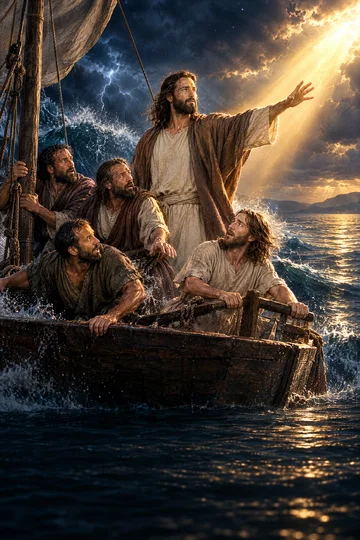
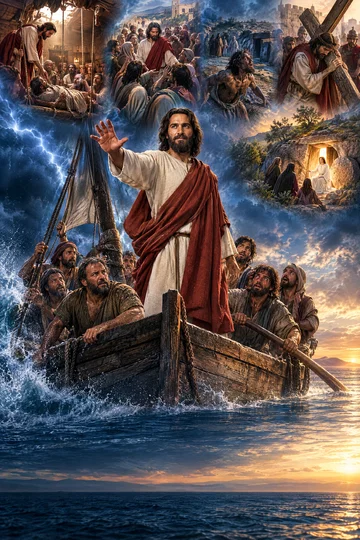
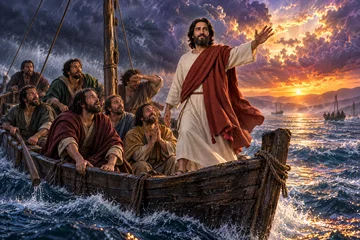
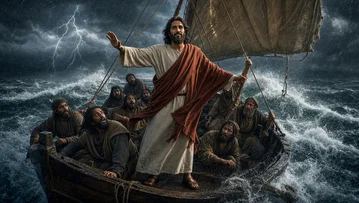
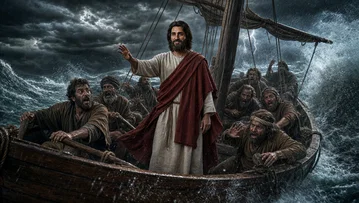
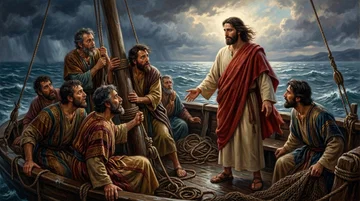
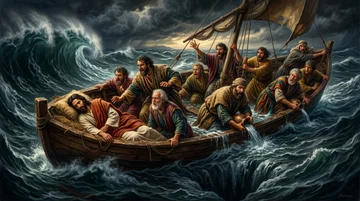
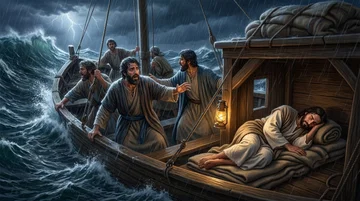
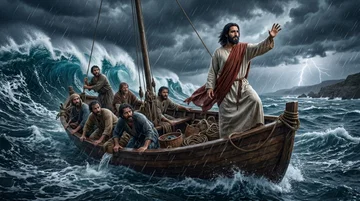
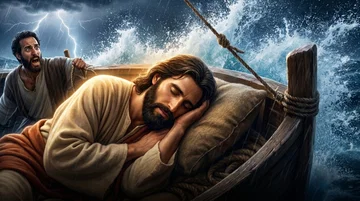
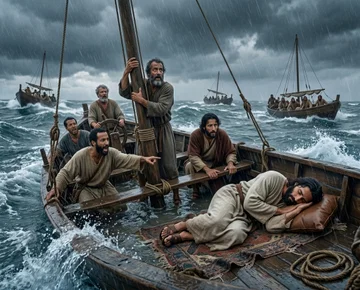
And they came to him, and awoke him, saying, Master, master, we perish. Then he arose, and rebuked the wind and the raging of the water: and they ceased, and there was a calm.
Translations
American King James Version, King James Version
And they came to him, and awoke him, saying, Master, master, we perish. Then he arose, and rebuked the wind and the raging of the water: and they ceased, and there was a calm.
And they came to him, and awoke him, saying, Master, master, we perish. Then he rose, and rebuked the wind and the raging of the water: and they ceased, and there was a calm.
And they came to him, and awoke him, saying, Master, master, we perish. Then he arose, and rebuked the wind, and the raging of the water: and they ceased, and there was a calm.
Revised Version, American Standard Version
And they came to him, and awoke him, saying, Master, master, we perish. And he awoke, and rebuked the wind and the raging of the water: and they ceased, and there was a calm.
And having come near, they awoke him, saying, 'Master, master, we perish;' and he, having arisen, rebuked the wind and the raging of the water, and they ceased, and there came a calm,
and coming to [ him] they woke him up, saying, Master, master, we perish. But he, rising up, rebuked the wind and the raging of the water; and they ceased, and there was a calm.
And, coming near, they roused him up, saying—Master! Master! we perish! And, he, roused up, rebuked the wind, and the surging of the water; and they ceased, and it became a calm.
The disciples went and woke Him, saying, “ Master, Master, we are perishing!”Then Jesus got up and rebuked the wind and the raging waters, and they subsided, and all was calm.
The disciples went and woke Him, saying, “ Master, Master, we are perishing!” Then Jesus arose and rebuked the wind and the raging waters, and they subsided, and all was calm.
They came to him and awoke him, saying, “ Master, Master, we are dying!” He awoke and rebuked the wind and the raging of the water; then they ceased, and it was calm.
Then they came to him and, awaking him out of his sleep, said, Master, Master, destruction is near. And he, when he was awake, gave orders to the wind and the rolling waves, and the storm came to an end, and all was calm.
Then they went to him, and awoke him, saying, Master, Master, we perish. And he arose, and rebuked the winde, and the waues of water: and they ceased, and it was calme.
Douay-Rheims (Challoner revision)
And they came and awaked him, saying: Master, we perish. But he arising, rebuked the wind and the rage of the water; and it ceased, and there was a calm.
Pictures
Cross-references
- Mark 4:39
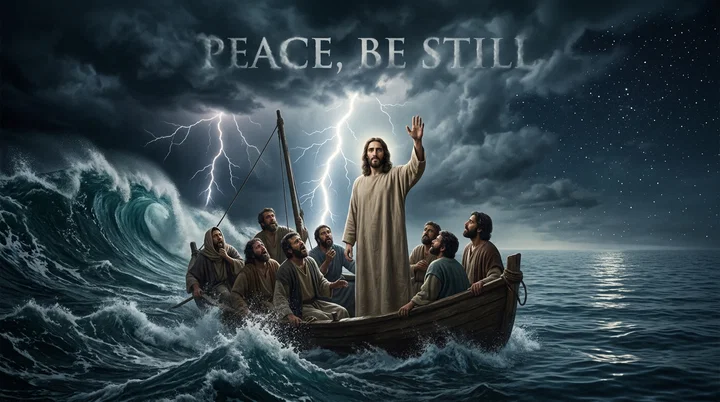
And he arose, and rebuked the wind, and said unto the sea, Peace, be still. And the wind ceased, and there was a great calm.
Jesus rebukes the wind and sea, and the storm becomes calm.
- Matthew 8:23-27
And when he was entered into a ship, his disciples followed him.
Parallel account of Jesus calming the storm and correcting the disciples’ fear.
- Matthew 8:26
And he saith unto them, Why are ye fearful, O ye of little faith? Then he arose, and rebuked the winds and the sea; and there was a great calm.
Jesus rebukes the storm and brings calm amid the disciples’ fear.
- Mark 4:38
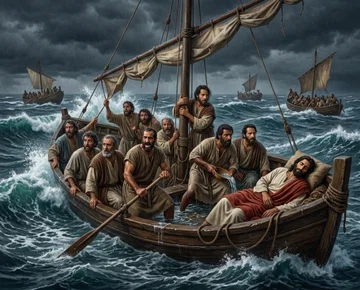
And he was in the hinder part of the ship, asleep on a pillow: and they awake him, and say unto him, Master, carest thou not that we perish?
Both accounts record the disciples waking Jesus and crying that they will perish.
- Mark 4:37
And there arose a great storm of wind, and the waves beat into the ship, so that it was now full.
describes waves filling boat before cry
- John 6:16-21
And when even was now come, his disciples went down unto the sea,
Both recount Jesus coming to his disciples on the water.
- Matthew 14:32
And when they were come into the ship, the wind ceased.
In both accounts, the wind ceases after Jesus comes to the disciples on the water.
- Matthew 8:24
And, behold, there arose a great tempest in the sea, insomuch that the ship was covered with the waves: but he was asleep.
Jesus rests during the storm before calming it.
- Matthew 8:27
But the men marvelled, saying, What manner of man is this, that even the winds and the sea obey him!
Both describe the disciples’ awe that the wind and water obey Jesus.
- Psalms 107:29
He maketh the storm a calm, so that the waves thereof are still.
Both describe the storm and waves becoming calm.
Commentary
Each commentary is drawn from primary sources: the writings of Ellen G. White and Adventist pioneers and periodicals. Each commentary is separate. Its own words are not a quotation; follow the references to read the source passages.
Ellen G. White
28 sources
On a night crossing to seek rest, a sudden violent storm filled the boat until even skilled fishermen despaired, and forgetting Jesus slept aboard exhausted, they woke Him in terror crying they were perishing, when He rose without fear and by divine command stilled wind and waves into perfect calm for His boat and those with Him.ST Jul 14, 1881Ms 130, 1903, par. 15–173RED 82.22SP 308.2–309.1ST Jan 18, 1877 The instant obedience of the elements revealed His absolute authority over nature as equal with the Father, a power later remembered as proof He was the Son of God.Ms 130, 1903, par. 15–17ST Oct 24, 19002SP 316.27MR 280.4–281.2EW 139.3 Their panic exposed unbelief and self-reliance, for they struggled to save themselves and should have called on Him at the first sign of danger instead of waiting until human skill failed.Lt 208, 1902, par. 42–443RED 85.1ST Jan 18, 18772SP 307.1–308.12SP 309.2 Yet though He sorrowfully reproves such fear, He never ignores an earnest humble cry for help but is instantly moved by it and gives the deliverance needed.Lt 208, 1902, par. 42–44Ms 130, 1903, par. 15–172SP 310.13RED 85.23RED 85.1 That night is repeated in the tempests of temptation and dangers of the sea of life, when the remedy is to remember Jesus is on board, trust Him by faith as He trusted the Father, and pray to Him rather than battle alone.Lt 208, 1902, par. 42–44ST Jan 18, 1877DA 336.1ST Oct 24, 1900Ms 130, 1903, par. 19
The Storm and Rescue
The crossing took place at night after dismissal of the multitude to seek rest on the desert side of the sea from fatigue, with other boats full of people following to learn more of doctrine.ST Jan 18, 1877 Wearied from long and arduous labors and relieved for a time from the claims of the multitude, Jesus stretched Himself upon the hard plank of the fisherman's boat and slept.ST Jan 18, 1877 The calm and pleasant weather changed suddenly after sunset into dark clouds and a furious storm such as often visited there, with blackness of night on the water, angry waves dashing against the ship and threatening every moment to engulf it.ST Jan 18, 1877 The boat was tossed on the crest of a mountain billow then plunged into the trough until it sprang a leak and filled fast with water amid hurry and confusion.3RED 82.2ST Jan 18, 1877
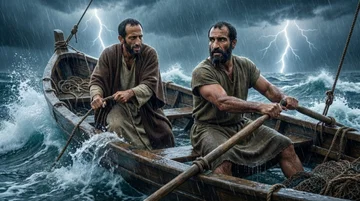
Even the strong and courageous fishermen, skilled in managing their craft and experienced in the changing moods of the sea, knew not what to do.ST Jan 18, 1877 The boat became unmanageable and must drive before the gale, with the deck flooding and wave after wave filling the ship until human strength and skill availed nothing.Lt 208, 1902, par. 42–44Ms 130, 1903, par. 15–17 Helpless in the grasp of the tempest with the boat filling and sinking, they looked into one another's faces and found only discouragement and despair.Lt 208, 1902, par. 42–443RED 82.2ST Jan 18, 1877 Absorbed in their efforts to save themselves and the ship, they had forgotten that Jesus was on board.Lt 208, 1902, par. 42–443RED 85.12SP 307.1–308.1DA 334.2–5 Suddenly they came to their senses and remembered at whose command they had set out to cross the sea, and that in Jesus was their only hope.Lt 208, 1902, par. 42–44
They cried in terror, Master, Master, we perish, when their efforts failed and they feared they would die.Lt 208, 1902, par. 42–442SP 307.1–308.1DA 334.2–5 At first there was no response, until a flash of lightning revealed Him sleeping.Lt 208, 1902, par. 42–44 The thunder of the elements could not wake Him from sleep as an exhausted man, but an alarmed touch and agonized cry for rescue in accents of despair reached His heart and He was instantly upon His feet.Lt 208, 1902, par. 42–44Ms 130, 1903, par. 15–17
Without alarm He rose as a commander to be obeyed and by divine authority rebuked the wind and the raging water.ST Jul 14, 1881Ms 130, 1903, par. 15–17 The winds and waves obeyed His voice at once, because nature recognizes the voice of her Lord and Master, until there was a great and perfect calm.ST Jul 14, 1881Lt 208, 1902, par. 42–44Ms 130, 1903, par. 15–17 His command ended the danger for the disciples and for the other boats nearby, and the boat rested on a calm sea.2SP 308.2–309.1DA 334.6–335.23RED 86.1–88.2 The witnessed miracle filled those aboard with reverence and awe.ST Jul 14, 18812SP 308.2–309.1
Christ's Divine Authority
The calming shows absolute control over wind and water, for the winds and the waves obey His voice at once into a perfect calm because nature recognizes the voice of her Lord and Master.Ms 130, 1903, par. 15–17ST Oct 24, 1900MH 91.1ST Jan 29, 1908 He rises without alarm as a commander to be obeyed, speaking with authority equal with the Father to rebuke the wind and the raging water, surrounded by glory and majesty in all His ways.Ms 130, 1903, par. 15–17ST Oct 24, 1900 His trustworthiness for God's people rests on this authority, so that weakness comes from losing sight of God and laying burdens on finite minds and human hearts instead of going to Him for help.ST Oct 24, 1900 The stilling of the tempest vividly demonstrated His power and supremacy over the elements, impressing the reality of the tempest upon those buffeting the waves who crossed the lake with Him and witnessed control by His command.2SP 316.27MR 280.4–281.2 That exercise of divine power over wind and sea was later remembered as evidence that He was the Son of God.EW 139.3
The same authority over the storm enabled Him to stand calmly before the demons after landing in the country of the Gadarenes, confront and conquer Satan, and deliver the tormented men from the tombs.ST Feb 4, 18892SP 311.1–312.2 The power that made the waves rest at His command also brings peace to minds distracted and oppressed by Satan.MH 91.12SP 311.1–312.2 Even after hearing of power over the elements, the people asked Him to leave because concern for property outweighed the good of having Him among them.3RED 91.1–2 The disciples who remembered His power over wind and sea expected Him to use it to escape His enemies and disperse the crowd, not understanding that He would willingly suffer and die.EW 139.3 On board the ship of God's cause He remains Chief Director, able to command winds and waves and guide His bark safely into port because the cause belongs to the Lord.Lt 121, 1900, par. 7–8
Calling on Jesus in Trouble
The disciples' terror in the storm exposed unbelief and self-confidence, for they strained to save themselves and forgot Jesus was with them until their own efforts failed.3RED 85.1ST Jan 18, 18772SP 309.2DA 336.1 Jesus Himself had no fear for His own safety, for He rested by faith in the Father's care, and His concern was for them in their danger.3RED 85.1ST Jan 18, 18772SP 309.2DA 336.1 They should have called upon Him at the first sign of danger instead of battling alone in their own strength and skill.3RED 85.1ST Jan 18, 18772SP 309.2DA 336.1
Though He sorrowfully reproves unbelief, fear, and self-reliance, He hears the earnest, humble cry for help even when it comes only after self-effort has failed.3RED 85.1ST Jan 18, 18772SP 309.2Ms 130, 1903, par. 19 He accepts the petition and gives the help needed, delivering in the way He knows is best, and no soul's plea is ignored and none cries in vain.3RED 85.1ST Jan 18, 1877DA 334.6–335.2Ms 130, 1903, par. 193RED 85.3 The stilling of wind and water into calm shows that a soul's cry for rescue is answered and danger is ended.2SP 310.13RED 85.2DA 334.6–335.2 His followers are therefore to trust their Saviour in danger rather than struggle alone, for living faith in the Redeemer brings peace through trials and pictures how faith calms life's troubles.ST Jan 18, 1877DA 336.1Ms 130, 1903, par. 193RED 85.3
The storm was wrought for present believers as well as for the disciples, and their experience is repeated.Ms 130, 1903, par. 19 Wind and waves, flashing lightning and sweeping waters are the tempests of temptation and the dangers of the sea of life, when people battle alone, forget that One can help, and trust their own strength until hope is lost and they are ready to perish.Ms 130, 1903, par. 19 Then remembering Jesus and calling upon Him to save never cries in vain.Ms 130, 1903, par. 19 In confusion and helplessness under pressure, when not knowing which way to turn and when human strength and skill avail nothing, the remedy is to remember Jesus is on board, to pray together, and to call on Him instead of speaking words of retaliation.Lt 208, 1902, par. 42–44Ms 130, 1903, par. 19 God's people are to make Him their trust and dependence and go to Him for help instead of laying their burdens on finite minds and human hearts, for help received from human helpers is only like the helpers sought.Lt 208, 1902, par. 42–44ST Oct 24, 1900Ms 130, 1903, par. 19
Whether on land or on sea, having the Saviour in the heart removes need for fear, and living faith smooths the sea of life.Ms 130, 1903, par. 19 In peril people may remember that He was present with His disciples in like danger, hears the agonized cry of those who trust Him, and will not forsake them.2SP 310.13RED 85.2 Yet unanswered cries and fear may make them wonder whether He has forsaken them or can help them, as the disciples wondered when they had forgotten He was with them.DA 334.2–5 Because the cause is His and He is on board the ship of God's cause as Chief Director, able to command winds and waves and guide His bark safely into port, His workers are only to obey His orders and do what He says without worry, anxiety, or trouble.Lt 121, 1900, par. 7–8 God has not forsaken His commandment-keeping people working in His lines but gives them His richest endowments of reason and reasoning.Lt 121, 1900, par. 7–8
Sources
Pioneers and periodicals
35 sources
After a wearying day of teaching and healing, Jesus crossed Galilee by boat and slept in the stern while a sudden furious gale filled the vessel with water, until His terrified disciples, unable to save themselves though skilled fishermen, awoke Him crying in despair that they were perishing, and He at once arose and rebuked the wind and raging water into a perfect calm.ST Jul 14, 1881ST May 17, 1899ST Feb 6, 1896ST Jan 23, 1893ST Nov 22, 1910 The instant obedience of wind and sea displays His divine authority as Creator over the elements and over the power of Satan that sought to destroy Him.ST Feb 4, 1889ST May 17, 1899ST Jan 23, 1893STST Jun 26, 1879 Their terror showed shaken faith and unbelief, for they tried to save themselves first instead of calling on Him at once and trusting Him in danger as well as in calm.ST Jan 18, 1877RH Feb 16, 1860RH Jan 1, 1861 Yet the presence of a tempest does not prove He is absent, for when He is in the vessel even asleep it can never be lost, and He now reigns and never sleeps.ST Jan 23, 1893ST Jul 25, 1911RH Jul 1, 1862RH Jul 2, 1901 The same Lord still cares for trembling souls on life's dark ocean, hearing their cry when sin and trial overwhelm them, quieting the inward storm of fear and grief and giving rest and courage to bear what remains.ST Feb 6, 1896ST Jun 26, 1879ST Mar 13, 1884RH Jul 1, 1862ST Dec 7, 1882
Setting of the Storm
After a day spent teaching a thronging multitude and healing diseases until sunset, Jesus sent the crowd away to get rest from fatigue and crossed to the other side, to the desert side and the east side of Galilee at Gadara.ST Jan 18, 1877ST Jan 23, 1893ST Nov 22, 1910 Other small boats full of people followed to learn more of His doctrine.ST Jan 18, 1877ST Nov 22, 1910 The crossing began on a beautiful calm and pleasant night on the memorable lake of Galilee.ST Jan 18, 1877ST Nov 22, 1910RH May 14, 1872
The calm changed suddenly after sunset into a furious storm, a terrible gale from the north falling after a dead calm that hid moon and stars.ST Jan 18, 1877ST Nov 22, 1910 Dark clouds came, with blackness of night on the water, loud wind, and billows rolling like a heaving cloud with white foam.ST Jan 18, 1877ST Nov 22, 1910 Angry waves dashed against the ship, shook it, threatened to tear the sails, tossed it on mountain billows on the crest of a mountain billow then plunged it into the trough until it sprang a leak and filled fast with water amid hurry and confusion.ST Jan 18, 1877ST Jan 23, 1893ST Nov 22, 1910
Wearied from long and arduous labors and relieved for a time from the claims of the multitude, Jesus stretched Himself on the hard plank of the fisherman's boat, asleep in the stern on the cushion or pillow in the hinder part with a calm face, even when spray dampened His pillow.ST Jan 18, 1877ST Jan 23, 1893ST Nov 22, 1910RH Jul 1, 1862ST May 18, 1904 He slept from exhaustion after a day of loving work and from childlike trust in His heavenly Father's care as the beloved Son who would not be forgotten or neglected.ST Jan 18, 1877RH Nov 13, 1860
Disciples' Cry and Calming
Though skilled fishermen able to handle their craft, the disciples could not control the boat against the tempest and fought it with sails and oars until they knew not what to do.ST Jul 14, 1881ST Feb 11, 1886ST Nov 22, 1910 In wild terror they for a time forgot He was on board, then overwhelmed as the boat filled and sank and they were about to perish, they finally remembered He was with them.STRH Feb 16, 1860ST Nov 22, 1910ST Jan 18, 1877 They woke Him in terror crying out for deliverance and rescue.ST Jul 14, 1881ST May 17, 1899STRH Feb 16, 1860ST Jan 18, 1877
Their plea rose through successive cries, first reproaching Him for seeming not to care, then asking Him to save them, and finally crying in despair, Master, Master, we perish.ST Jan 23, 1893ST Nov 22, 1910ST Jul 19, 1905 Luke's cry is almost the language of despair, distinct from Matthew's earnest appeal and alarm and Mark's impatient and reproachful entreaty, though all three cries were probably spoken, with John adding carest Thou not that we perish.ST Jan 23, 1893ST Nov 22, 1910 The plea acknowledged they could not overcome the storm themselves and must depend on Him, yet when He did not act at once they feared even He could not save them.ST Jan 23, 1893ST Jul 19, 1905
He at once arose, went to the open deck, and by sovereign power and divine authority rebuked the wind and the raging water.ST Jul 14, 1881ST May 17, 1899ST Nov 22, 1910ST Jun 26, 1879ST Jul 19, 1905 Lifting His right hand toward the sky He said Peace, be still.ST Nov 22, 1910ST Jun 26, 1879 With a word the wind and waves instantly ceased and gave way to a calm where moon and stars were reflected again and the sinking vessel righted so there was no danger.ST Jul 14, 1881ST May 17, 1899ST Feb 6, 1896ST Nov 22, 1910ST Jul 19, 1905
The sudden stillness ended the danger and filled the witnesses with reverence and awe at the one who speaks and is obeyed by nature.ST Jul 14, 1881ST Jun 26, 1879ST Jan 18, 1877 Their fear gave way to astonishment and to the question what manner of Man is this that even the winds and the sea obey Him, a cry taken up also by the men in the nearby boats.ST Nov 22, 1910ST Jan 18, 1877ST Jul 19, 1905 His command over wind and waves thus displayed divine power and authority over the elements.ST May 17, 1899ST Jun 26, 1879ST Jan 18, 1877
Christ's Power and Authority
The waking and the rebuke show absolute authority over the elements, for wind and raging water obey their Creator who formed the sea.ST May 17, 1899ST Jun 26, 1879ST Jan 18, 1877ST Mar 13, 1884ST Jul 24, 1907 The sudden stillness when He speaks to sea and wind displays divine power and sovereign command bringing instant calm out of violent danger.STST Jun 26, 1879ST Jan 18, 1877ST Mar 13, 1884ST Jul 24, 1907 The sea becomes calm at His word and saves those who cannot save themselves from perishing, picturing both rescue in danger and peace for a restless fearful heart.ST May 17, 1899STST Jun 26, 1879ST Mar 13, 1884ST Jul 24, 1907
He holds the program of events in His hands and controls the machinery of circumstances as fully as a master controls his factory.RH Mar 17, 1910 Toiling disciples amid billows on storm-lashed Galilee, seemingly about to perish among elements they could not control, were delivered by a simple appeal, for with a word He hushed the tempest and stilled the foam-crested billows that threatened destruction.RH Mar 17, 1910 Circumstances and perplexities that surround life and tend to harass are within the reach and control of an infinite hand, so worry is unbelief.RH Mar 17, 1910
He needed no fear even though the prince of the power of the air was determined to destroy Him, because the sea was His own creature.ST Jan 23, 1893 His word stilled wind and raging water so there was no danger but calm, proving no power can harm him in whose heart Christ dwells by faith.ST Jan 23, 1893 That same authority over the storm stands alongside His calm authority over the demons who confronted Him after landing in the country of the Gadarenes, revealing power to confront and conquer Satan.ST Feb 4, 1889ST Jan 23, 1893
Though He slept then, He keeps power over the mad elements and can say to them, Peace, be still.RH Jul 1, 1862RH Jul 2, 1901 When He is with believers in the ship during a furious storm, even though He is sleeping, their vessel can never be lost in the dark waters.RH Jul 2, 1901 He now reigns in glory and never sleeps, knowing silent weeping before His throne and still speaking Peace, be still to trembling souls on life's dark and restless ocean amid wild commotion.RH Jul 1, 1862RH Jul 2, 1901 God makes the ocean serve His own, so where man is there is God and His people are not left alone, and His spoken word makes the storm flee with its fear and dread and speeds the storm-tossed vessel on to win the port.RH Jul 1, 1862
Faith, Fear and Trust
The waking cry in the storm exposed unbelief and shaken faith, and the rebuke that followed was for fearing as though forsaken by God and for lack of faith.ST Jan 18, 1877RH Feb 16, 1860RH Jan 1, 1861 Help should have been sought at the first appearance of danger instead of struggling to save the boat first and only crying out in distress afterward.ST Jan 18, 1877 The tempest thus tests whether trust endures in danger as fully as in calm.RH Jan 1, 1861
Jesus Himself had no fear for His own safety, and His concern in the danger was for the disciples.ST Jan 18, 1877 The contrast between His childlike calm in sleep and their terror shows a faith truer and better than theirs.RH Nov 13, 1860 That rest joins active effort in the work that can be done, holding calm trust where human power and skill are insufficient.RH Nov 13, 1860
The presence of tempests and storms in the ship does not prove absence from it.ST Jul 25, 1911 No power can harm the one in whose heart Christ dwells by faith.ST Jan 23, 1893
Glory and majesty surround Him in all His ways as the One who commands winds and waves, so He is to be made the trust and dependence and the place to go for help rather than laying burdens on finite minds and human hearts.ST Oct 24, 1900 Weakness comes because God has been lost sight of, and help drawn from human helpers is only like the helpers sought.ST Oct 24, 1900 Need should lead to Him, but the lesson is to trust Him at all times and not only when danger drives to prayer.ST May 7, 1894
Help in Present Storms
The stilling of the storm is a powerful lesson of faith for troubled souls on life's dark and restless ocean amid wild commotion.ST Feb 6, 1896RH Jul 1, 1862 They remain His care, for the same Lord is there even when He seemed asleep on a pillow in the stern while waves dashed and winds raged.RH Jul 1, 1862 He now reigns in glory and never sleeps, and He knows silent weeping before His throne.RH Jul 1, 1862 When the world is dark before them and billows roll over souls filled with terror, He speaks Peace, be still.RH Jul 1, 1862
When temptation and sin overwhelm people so they cannot save themselves, He is near.ST Jun 26, 1879 Those who humbly come to Him find joy as He calms their trials.ST Jun 26, 1879 He sustains His servants through trying times and saves a soul overwhelmed by passions.ST Mar 13, 1884 He brings peace to storms of passion and fear within the soul and to a restless fearful heart, and His authority reaches also to upheaval in the world, nation, or professed church.ST Jul 19, 1905ST Jul 24, 1907 He brings turbulent passions under control so a person can fulfill the mission given and reach home safely.ST May 18, 1904
Those facing danger and trouble should remember His presence, trust Him, and call on Him.ST Jan 18, 1877ST Mar 22, 1899 They should have called as soon as danger appeared rather than first struggling to save themselves, yet even after self-reliant toil He hears humble distress and gives the help He knows is best.ST Jan 18, 1877ST Mar 22, 1899 He may reprove self-reliance, but need itself should lead them to Him.ST Jan 18, 1877 His rising to command wind and water quiets the storm and brings peace to troubled minds.ST Mar 22, 1899
His spoken word makes the storm flee with its fear and dread, spreads the tattered sails again beneath the sun, and speeds the storm-tossed vessel on to win the port. Where man is there is God, and God makes the ocean serve His own so His people are not left alone. Taking the helm of the tempest-tossed bark He turns a voyage of doubt and overwhelming billows into a voyage of glory nearer shore to the harbor of heaven, for winds hear His will and seas cease to roar and become quiet and still. The might of His name that awed Gennesaret's raging water to sleep into morning calm and light calms the waves of death for the believer whose life bears His name.ST Nov 22, 1899 Christ does not sleep and needs no awaking, so the call to awake falls on the soul to keep its own vigil lest a rising storm shatter it and drive it a wreck at sea.
When toil with might and main to bring the ship to land has proved vain, He who is passing by over the rude and troubled sea hears the feeble cry of one perishing and turns to rescue.RH May 17, 1864 He sends a helping hand to the weary tempest-tossed soul struggling for a leeward coast, makes the storm a calm, bids the billows rage no more, shields the trembling soul from harm, and brings it quickly to shore.RH May 17, 1864 When prayer lays a passive heart at His throne, a flood of light fills the inner soul, gloom rolls back, and holy joy and pure trust take its place. He calms the soul when angry waves rise on life's troubled sea, so the distressed and grieving need not fear trouble, and He can protect in danger from a thunderstorm today.ST Jun 26, 1893ST Jun 3, 1880
His peace does not remove the cross or the troubles a person must still bear.ST Dec 7, 1882 It quiets the inward storm of grief, fear, doubt, and awareness of sin.ST Dec 7, 1882 It gives rest and courage to face those troubles while leaning on Him near and able to help and save.ST Dec 7, 1882
Sources