Luke 9:18
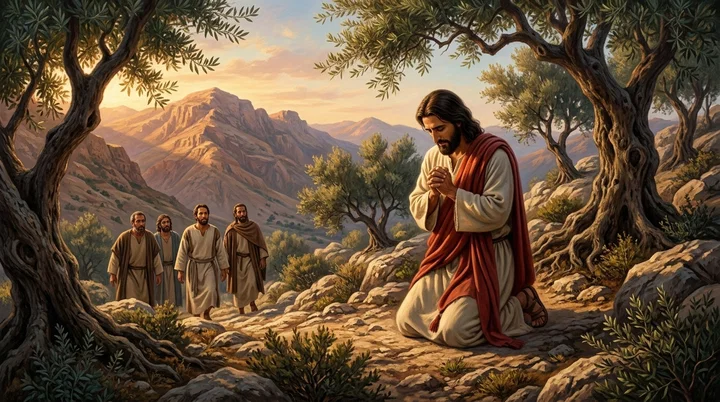
And it came to pass, as he was alone praying, his disciples were with him: and he asked them, saying, Whom say the people that I am?
Translations
American King James Version, King James Version, KJV Cambridge Paragraph Bible
And it came to pass, as he was alone praying, his disciples were with him: and he asked them, saying, Whom say the people that I am?
And it came to pass, as he was in retirement praying, his disciples were with him; and he asked them, saying, Who say the people that I am?
And it came to pass, as he was praying alone, the disciples were with him: and he asked them, saying, Who do the multitudes say that I am?
And it came to pass, as he was praying apart, the disciples were with him: and he asked them, saying, Who do the multitudes say that I am?
And it came to pass, as he is praying alone, the disciples were with him, and he questioned them, saying, 'Who do the multitudes say me to be?'
And it came to pass as he was praying alone, his disciples were with him, and he asked them saying, Who do the crowds say that I am?
And, it came to pass, when he was praying in solitude, the disciples, were with him. And he questioned them, saying—Who do the multitudes say that I am?
Berean Standard Bible, Majority Standard Bible
One day as Jesus was praying in private and the disciples were with Him, He questioned them: “ Who do the crowds say I am?”
As he was praying alone, the disciples were near him, and he asked them, “ Who do the multitudes say that I am?”
And it came about that when he was in prayer, by himself, and the disciples were with him, he put a question to them, saying, Who do the people say I am?
And it came to passe, as hee was alone praying, his disciples were with him: and he asked them, saying, Whom say the people that I am?
Douay-Rheims (Challoner revision)
And it came to pass, as he was alone praying, his disciples also were with him: and he asked them, saying: Whom do the people say that I am?
Pictures
Cross-references
- Matthew 16:13-16
When Jesus came into the coasts of Caesarea Philippi, he asked his disciples, saying, Whom do men say that I the Son of man am?
Jesus asks whom people say he is, and Peter confesses him as the Christ.
- Mark 8:27-29
And Jesus went out, and his disciples, into the towns of Cæsarea Philippi: and by the way he asked his disciples, saying unto them, Whom do men say that I am?
Jesus asks whom people say he is, and Peter confesses him as the Christ.
- Matthew 16:16
And Simon Peter answered and said, Thou art the Christ, the Son of the living God.
parallel account of Peter's confession
- Matthew 16:14
And they said, Some say that thou art John the Baptist: some, Elias; and others, Jeremias, or one of the prophets.
It reports the people’s views, including that Jesus was a prophet or Jeremiah.
- Matthew 16:17
And Jesus answered and said unto him, Blessed art thou, Simon Bar-jona: for flesh and blood hath not revealed it unto thee, but my Father which is in heaven.
The Father revealed to Peter who Jesus is.
- Matthew 22:42
Saying, What think ye of Christ? whose son is he? They say unto him, The Son of David.
It asks what people think of Christ, a vital personal question.
- Luke 9:35
And there came a voice out of the cloud, saying, This is my beloved Son: hear him.
The Father’s voice also identifies Jesus to the disciples.
- John 6:14-15
Then those men, when they had seen the miracle that Jesus did, said, This is of a truth that prophet that should come into the world.
The people identify Jesus as the coming prophet and try to make Him king.
- Malachi 4:5
Behold, I will send you Elijah the prophet before the coming of the great and dreadful day of the LORD:
The people expected Elijah to precede the Messiah.
- Luke 9:10
And the apostles, when they were returned, told him all that they had done. And he took them, and went aside privately into a desert place belonging to the city called Bethsaida.
sets the return of the apostles just before the private question
- Matthew 16:21-23
From that time forth began Jesus to shew unto his disciples, how that he must go unto Jerusalem, and suffer many things of the elders and chief priests and scribes, and be killed, and be raised again the third day.
Jesus reveals his coming suffering, and Peter rejects this further revelation.
Commentary
Each commentary is drawn from primary sources: the writings of Ellen G. White and Adventist pioneers and periodicals. Each commentary is separate. Its own words are not a quotation; follow the references to read the source passages.
Ellen G. White
5 sources
Jesus had withdrawn into seclusion with His disciples, alone in prayer yet with them present, using the quiet for prayer and teaching as His death drew near.DA 411.3–5ST Feb 25, 1889ST Oct 28, 1913 He asked whom the people said He was just before telling them of His coming suffering and death, preparing them for that trial and giving them opportunity to confess their faith and be strengthened.DA 410.1DA 410.2DA 411.3–5 That question led directly into teaching about His mission.DA 410.2 The people did not recognize Him as the Messiah, though they called Him a prophet or the Son of David and some wanted to make Him king.DA 411.3–5
The disciples still expected a temporal, worldly reign bringing earthly honor and a throne.ST Feb 25, 1889ST Oct 28, 1913 In this setting He taught more clearly the true nature of His kingdom, correcting that expectation by explaining that shame and the cross, not earthly honor, awaited Him.ST Feb 25, 1889ST Oct 28, 1913 He already knew the full path from His birth to Calvary, with its anguish, insults, and hardship, yet willingly came to do God's will and save the lost.DA 410.1 He saw that His work would bring the world back to loyalty to God, and that prospect gave Him joy as He chose to endure the cross and its shame.DA 410.2
His prayer at this time included intercession that the disciples' faith would remain steadfast through persecution and that His suffering and death would not leave them overwhelmed with despair.ST Oct 28, 1913 He also taught that those who follow Him and seek salvation must be willing to endure reproach and contempt.ST Feb 25, 1889
Sources
Pioneers and periodicals
12 sources
The moment came as he journeyed on in seclusion, when he paused to pray alone while his disciples were with him, and this prayer belonged among his fervent prayers in which he sought help from God.ST Nov 11, 1889ST Mar 30, 1904ST Feb 13, 1896ST May 7, 1894 After praying he came back to the disciples and put the question to them.ST Sep 29, 1881ST Mar 30, 1904 In taking weak human nature he humbled himself and showed that personal communion with God is necessary, recognizing that help from God is needed to overcome inner temptations and outward conflicts in human life in a sinful world.ST Feb 13, 1896 Even he needed frequent secret prayer to overcome and to carry on the gospel work, so no one can expect to succeed without it.ST Feb 13, 1896
As his death drew near and the disciples' coming trials and persecution drew near, his prayer was intercession with the Father that their faith would remain steadfast and that his suffering and death would not overwhelm them with despair.ST Oct 28, 1913ST Sep 29, 1881 As master with his household he was often with his disciples, praying with them, teaching them, and asking them questions, and those who abide in him must pray with their households and walk even as he walked.RH Jul 29, 1858 The moment follows the teaching and feeding of the multitude in a wilderness place.ST Jul 26, 1905 When the disciples would have sent the people away to find food he told them to feed the crowd, and with five loaves and two fish he blessed and broke the food, which multiplied as it was distributed until all ate and twelve baskets remained.ST Jul 26, 1905 The people recognized a mighty miracle and declared him to be the prophet who was to come into the world.ST Jul 26, 1905
It was the private moment after the apostles returned from their first preaching and healing tour, having preached the gospel as far as they had learned it.RH Feb 10, 1916 In asking whom the people said he was, he tested how carefully they had observed people's views as they mingled with them.ST Mar 30, 1904 The question drew out their report that some said John the Baptist or Elijah or one of the risen prophets.RH Feb 10, 1916ST May 7, 1894 Peter's answer identifying him as the Christ of God, the Messiah, could be known only through direct enlightenment from the Spirit, for human insight alone could not reveal it.ST Mar 12, 1896RH Feb 10, 1916
In that seclusion he used the question to teach more clearly about the true nature of his kingdom and to correct the expectation of a temporal reign with worldly honor and a throne.ST Feb 25, 1889ST Oct 28, 1913 Shame and the cross, not earthly honor, awaited him, and he must go to Jerusalem, suffer, be killed, and rise the third day.ST Feb 25, 1889ST Oct 28, 1913RH Feb 10, 1916 Those who followed him and sought salvation must be willing to endure reproach and contempt.ST Feb 25, 1889 Peter's true confession did not mean he was prepared to receive that further light about suffering, and his rebuke of Jesus grieved the Spirit.RH Feb 10, 1916 Although Jesus had told them he would suffer, be killed, and rise again the third day, their failure to expect the resurrection was unbelief.ST May 24, 1899
Sources