Mark 12:26
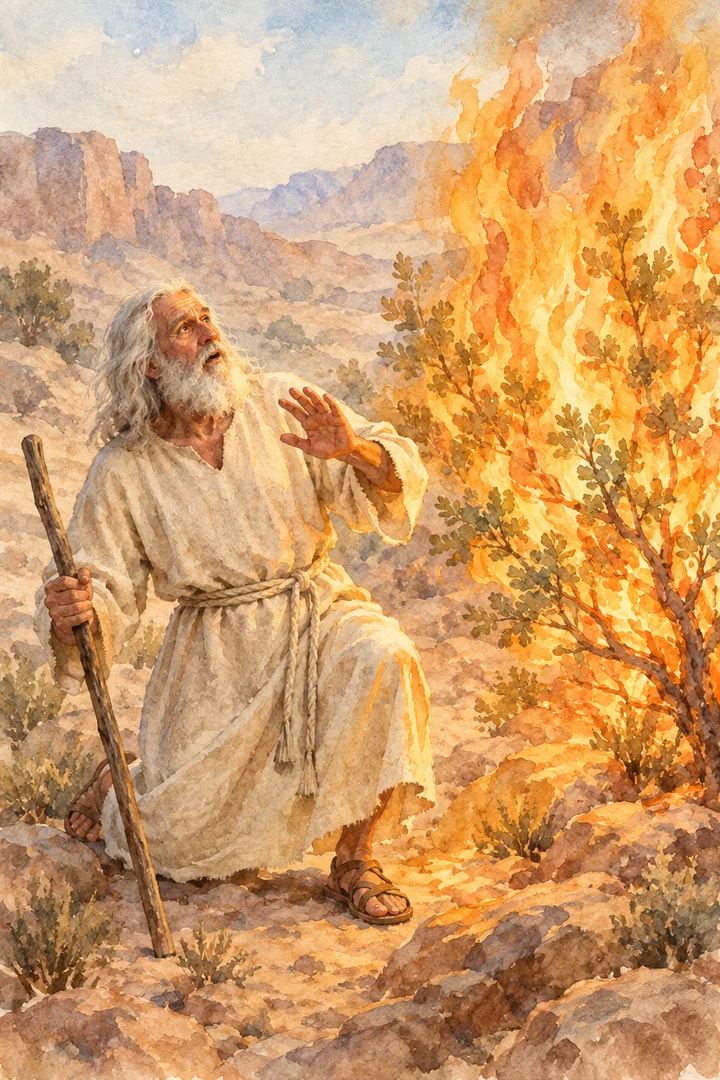
And as touching the dead, that they rise: have ye not read in the book of Moses, how in the bush God spake unto him, saying, I am the God of Abraham, and the God of Isaac, and the God of Jacob?
Translations
And as touching the dead, that they rise: have you not read in the book of Moses, how in the bush God spoke to him, saying, I am the God of Abraham, and the God of Isaac, and the God of Jacob?
King James Version, KJV Cambridge Paragraph Bible
And as touching the dead, that they rise: have ye not read in the book of Moses, how in the bush God spake unto him, saying, I am the God of Abraham, and the God of Isaac, and the God of Jacob?
And concerning the dead that they rise; have ye not read in the book of Moses, how in the bush God spoke to him, saying, I am the God of Abraham, and the God of Isaac, and the God of Jacob?
Revised Version, American Standard Version
But as touching the dead, that they are raised; have ye not read in the book of Moses, in the place concerning the Bush, how God spake unto him, saying, I am the God of Abraham, and the God of Isaac, and the God of Jacob?
'And concerning the dead, that they rise: have ye not read in the Book of Moses (at The Bush), how God spake to him, saying, I [am] the God of Abraham, and the God of Isaac, and the God of Jacob;
But concerning the dead that they rise, have ye not read in the book of Moses, in [ the section of] the bush, how God spoke to him, saying, I [ am] the God of Abraham, and the God of Isaac, and the God of Jacob?
But, as touching the dead, that they, do rise,—Have ye not read in the book of Moses, at the Bush, how God spake unto him, saying—I [am] the God of Abraham, and God of Isaac, and God of Jacob:—
Berean Standard Bible, Majority Standard Bible
But concerning the dead rising, have you not read about the burning bush in the Book of Moses, how God told him, ‘ I am the God of Abraham, the God of Isaac, and the God of Jacob’?
But about the dead, that they are raised, haven’ t you read in the book of Moses about the Bush, how God spoke to him, saying, ‘ I am the God of Abraham, the God of Isaac, and the God of Jacob’?
But as to the dead coming back to life; have you not seen in the book of Moses, about the burning thorn-tree, how God said to him, I am the God of Abraham, and the God of Isaac, and the God of Jacob?
And as touching the dead, that they shall rise againe, haue ye not read in the booke of Moses, howe in the bush God spake vnto him, saying, I am the God of Abraham, and the God of Isaac, and the God of Iacob?
Douay-Rheims (Challoner revision)
And as concerning the dead that they rise again, have you not read in the book of Moses, how in the bush God spoke to him, saying: I am the God of Abraham, and the God of Isaac, and the God of Jacob?
Pictures
Cross-references 20 of 31
- Exodus 3:6
Moreover he said, I am the God of thy father, the God of Abraham, the God of Isaac, and the God of Jacob. And Moses hid his face; for he was afraid to look upon God.
God identifies himself to Moses as the God of the patriarchs, forming the basis of Christ’s argument.
- Luke 20:37-38
Now that the dead are raised, even Moses shewed at the bush, when he calleth the Lord the God of Abraham, and the God of Isaac, and the God of Jacob.
Jesus argues from Moses that God is the God of the living and the dead are raised.
- Matthew 22:31-32
But as touching the resurrection of the dead, have ye not read that which was spoken unto you by God, saying,
Matthew gives the parallel account of Christ’s proof of the resurrection from the bush.
- Romans 4:17
( As it is written, I have made thee a father of many nations,) before him whom he believed, even God, who quickeneth the dead, and calleth those things which be not as though they were.
God gives life to the dead and regards them as living in his purpose.
- John 5:46
For had ye believed Moses, ye would have believed me: for he wrote of me.
Jesus says Moses wrote of him.
- Luke 20:38
For he is not a God of the dead, but of the living: for all live unto him.
God is God of the living; the patriarchs live to him.
- Luke 20:35
But they which shall be accounted worthy to obtain that world, and the resurrection from the dead, neither marry, nor are given in marriage:
Luke adds that those counted worthy will attain the future resurrection.
- John 5:28-29
Marvel not at this: for the hour is coming, in the which all that are in the graves shall hear his voice,
The dead hear the Son’s voice and come from their graves to life or condemnation.
- Matthew 22:32
I am the God of Abraham, and the God of Isaac, and the God of Jacob? God is not the God of the dead, but of the living.
Both texts use God’s words about the patriarchs in an argument for the resurrection.
- 1 Thessalonians 4:16
For the Lord himself shall descend from heaven with a shout, with the voice of the archangel, and with the trump of God: and the dead in Christ shall rise first:
The dead in Christ will rise, comforting believers who grieve.
- Hebrews 11:16
But now they desire a better country, that is, an heavenly: wherefore God is not ashamed to be called their God: for he hath prepared for them a city.
God is called their God because he has prepared a heavenly city for them.
- Luke 24:27
And beginning at Moses and all the prophets, he expounded unto them in all the scriptures the things concerning himself.
Jesus explains what Moses and the prophets wrote about him.
- Acts 7:32
Saying, I am the God of thy fathers, the God of Abraham, and the God of Isaac, and the God of Jacob. Then Moses trembled, and durst not behold.
Stephen quotes God’s words to Moses at the bush.
- Exodus 3:16
Go, and gather the elders of Israel together, and say unto them, The LORD God of your fathers, the God of Abraham, of Isaac, and of Jacob, appeared unto me, saying, I have surely visited you, and seen that which is done to you in Egypt:
God identifies himself as the God of the patriarchs.
- Luke 20:27
Then came to him certain of the Sadducees, which deny that there is any resurrection; and they asked him,
Luke’s account identifies the Sadducees as denying the resurrection and recounts their challenge.
- Matthew 22:23
The same day came to him the Sadducees, which say that there is no resurrection, and asked him,
Identifies the Sadducees’ denial of the resurrection.
- John 6:39-54
And this is the Father’s will which hath sent me, that of all which he hath given me I should lose nothing, but should raise it up again at the last day.
Jesus promises raising up at last day
- Acts 26:8
Why should it be thought a thing incredible with you, that God should raise the dead?
The passage opens with this question about God raising the dead.
- Romans 14:9
For to this end Christ both died, and rose, and revived, that he might be Lord both of the dead and living.
Christ’s resurrection confirms his lordship over the dead and the living.
- 1 Corinthians 15:12-18
Now if Christ be preached that he rose from the dead, how say some among you that there is no resurrection of the dead?
Christian hope depends on the resurrection of the dead.
Commentary
Each commentary is drawn from primary sources: the writings of Ellen G. White and Adventist pioneers and periodicals. Each commentary is separate. Its own words are not a quotation; follow the references to read the source passages.
Ellen G. White
4 sources
The verse is Christ's answer to the Sadducees in their denial of the resurrection.Ms 28, 1904, par. 3–6ST Apr 25, 1878 Those questioners also rejected future rewards and punishments, and they brought the case of a woman who had seven brothers as husbands to entangle Him, to heap ridicule on the law of Moses, and to bring all the Mosaic institutions into contempt.Ms 28, 1904, par. 3–6 In reply He exposed their false foundation and false premises and charged them with greatly erring through ignorance of the Scriptures and the power of God.Ms 28, 1904, par. 3–6ST Apr 25, 1878 He silenced them with dignity and power.ST Apr 25, 1878
By citing what God spoke to Moses in the bush about being the God of Abraham and the God of Isaac and the God of Jacob, He proved that the dead rise, because God is not the God of the dead but of the living.Ms 28, 1904, par. 3–6DA 605.2–606.2ST Apr 25, 1878 So the patriarchs must live again, and the dead live to Him.DA 605.2–606.2ST Apr 25, 1878 If there is no resurrection, the Scriptures are of no avail.ST Apr 25, 1878 God sees His purpose for the dead as already accomplished.DA 605.2–606.2
The verse promises that the precious dead from Abel down to the last saint who dies will hear the voice of the Son of God, come forth from their graves, and live again to immortal life.DA 605.2–606.2ST Apr 25, 1878 God will be their God and they will be His people, and there will be a close and tender relationship between God and His resurrected saints in accordance with the divine plan.DA 605.2–606.2ST Apr 25, 1878
The verse is part of words that warn people in every age who refuse to receive Him as Redeemer; the warning applies to every sinner, and the doom foreshadowed will be theirs unless they repent.DA 600.3 A right understanding of the Scriptures is the fountain from which flows all pure, heavenly knowledge.Ms 28, 1904, par. 3–6
Sources
Pioneers and periodicals
46 sources
Jesus answered the Sadducees, who claimed to follow Moses yet denied that the dead will rise and held that death leaves good and bad alike unconscious without future existence, when they tried to disprove the resurrection with the case of the woman married in turn to seven brothers who died childless.RH Oct 16, 1855RH Dec 12, 1854RH Aug 13, 1872RH Dec 12, 1854ST Aug 21, 1907
He rebuked them for knowing neither the Scriptures nor the power of God and proved the resurrection from the book of Moses, in the burning-bush account in Exodus 3:6 which they had and could read.STST Jan 24, 1900ST Feb 15, 1883RH Dec 12, 1854ST Aug 21, 1907
The words frame the whole saying as proof that the dead will be raised in the future, not proof that the soul is immortal or that the dead are conscious between death and resurrection.STST Feb 6, 1901RH Nov 25, 1858ST Oct 25, 1899
The force rests on Abraham, Isaac, and Jacob being actually dead, asleep in the dust and knowing nothing, when God still called Himself their God, for He is not the God of those eternally dead but of the living who live to Him in His purpose and will surely come forth by His power who gives life to the dead.STST Jul 7, 1887ST Feb 6, 1901ST Jan 27, 1898ST Feb 11, 1903
That rising is still future at the last day, when from Abel to the last saint the dead will hear the Son's voice and come from their graves with identity preserved as His people, which is the comfort of believers and the place where reward is received; those who held otherwise read the same words to mean the patriarchs remained alive to God without bodies and had not ceased to exist.ST Apr 25, 1878RH Jun 8, 1869ST Apr 20, 1915ST Aug 21, 1907ST Jul 15, 1875
Context and Wording
The saying belongs to Jesus' answer to the Sadducees, who professed to believe Moses yet denied that the dead will rise.RH Oct 16, 1855RH Dec 12, 1854RH Mar 18, 1902 Their teaching was that a person dies and so remains for all time to come, withholding any future existence from good or bad and regarding the dead in death as unconscious.RH Dec 12, 1854RH Jun 12, 1856 The agreement of Mark with Luke and the other evangelists confirms that He was showing from Moses that the dead would be raised.RH Oct 16, 1855RH Dec 12, 1854 The controversy was not about a conscious intermediate state and not about the existence of immortal souls between death and resurrection.RH Dec 12, 1854RH Mar 18, 1902ST Jun 29, 1882
To disprove the resurrection they posed the case of a woman successively married to seven brothers who all died childless, and asked whose wife she would be in the resurrection.STST Aug 21, 1907ST Oct 25, 1910 Their question applied Moses' law requiring a man to raise up offspring for his deceased brother and was designed to trap Jesus.STST Oct 25, 1910 The dispute was about that future event after seven brothers and the woman had all died, not about whose wife she was then in the spirit world.RH Aug 13, 1872RH Mar 18, 1902
Jesus answered that they erred because they knew neither the Scriptures nor the power of God.STST Aug 21, 1907 He explained that when they rise from the dead they neither marry nor are given in marriage.ST By this proof from Moses He exposed their false premises and ignorance, confounded them, silenced them with dignity and power, and gained the approval of those who believed in the resurrection.ST Apr 25, 1878RH Dec 12, 1854ST Aug 21, 1907
The phrases have ye not read in the book of Moses and how in the bush point to the burning-bush account in Exodus 3:6, which hearers had and could read.ST Jan 24, 1900ST Feb 15, 1883ST Feb 15, 1883 The account is identified as being in the book of Moses.ST Jan 24, 1900RH Oct 21, 1851 The opening words as touching the dead, that they rise frame the whole saying as proof of resurrection, concerning that they are raised and not that they are now living.STST Oct 25, 1899 Even the precise wording I am the God of Abraham, and the God of Isaac, and the God of Jacob carries weight in the argument, with a single word of Scripture supporting this important teaching.ST Oct 25, 1899ST Feb 15, 1883
Resurrection Proved
The saying proves that the dead will be raised in the future, not that the soul is immortal or that the dead are conscious between death and resurrection.STST Feb 6, 1901RH Nov 25, 1858ST Oct 17, 1906RH Dec 12, 1854 The dispute it settles is the denial that the dead will rise, pressed by the question about the woman successively married to seven husbands whose wife she would be in the resurrection, and the answer is that they err from not knowing the Scriptures nor the power of God, since when they rise they neither marry nor are given in marriage.STRH Dec 12, 1854RH Jun 10, 1862 The opening frame as touching the dead, that they are raised, fixes the point as future resurrection rather than a present living state.STRH Nov 25, 1858RH Jun 10, 1862 God is not a dead deity ruling a dead kingdom with dead subjects brought by sin, but the living God and source of life in whose plan death has no place, and just as truly as He lives all who are His live in His purpose and are counted alive because in that purpose they will be raised.STST Feb 6, 1901ST Oct 17, 1906
The force of the proof depends on Abraham, Isaac and Jacob being actually dead when God spoke at the bush, having died and having no earthly power.ST Jul 7, 1887ST Jan 27, 1898ST Feb 11, 1903RH Sep 8, 1859ST Aug 21, 1907 They sleep in the dust and while dead are unconscious knowing nothing until made alive again.ST Jul 7, 1887ST Jan 27, 1898RH Aug 13, 1872 Though fallen under the power of death they are not irrecoverably and eternally dead, for God remains their God and therefore they will live again.RH Sep 8, 1859ST Aug 21, 1907RH Aug 13, 1872 Since God is God of the living and not of the dead, He must raise them from the dead in the future resurrection in order truly to be their God.ST Feb 11, 1903RH Sep 8, 1859ST Aug 21, 1907
They live to God in His purpose as surely as those already raised, reckoned as living because by His power they will surely come forth at His appointed time.STST Feb 6, 1901ST Jan 27, 1898ST Feb 11, 1903ST Oct 17, 1906 In that purpose they live in their righteous characters recorded in heaven, and He who gives life to the dead speaks of what He purposes and what does not yet exist as though it already were.ST Feb 6, 1901ST Oct 17, 1906ST Oct 1, 1894 Calling Himself their God many years after they died therefore proves their future resurrection and does not mean they are alive apart from their bodies.ST Jan 27, 1898ST Feb 11, 1903ST Oct 1, 1894
To make the saying mean the patriarchs were already living without bodies turns the proof of resurrection into proof that no resurrection is needed.STST Oct 1, 1894RH Dec 12, 1854RH Sep 8, 1859ST Aug 12, 1875 That reading perverts the whole exchange, confounds nothing, leaves the one who set out to prove resurrection proving the opposite, namely that men do not really die but live on, and sets the resurrection entirely aside.RH Dec 12, 1854RH Dec 12, 1854RH Sep 8, 1859 It fails to answer the question asked, makes the argument unnecessary and ineffective, and ends in absurdities and contradictions, as if living men who are not subjects of a resurrection will never be raised and then God is not their God.RH Dec 12, 1854RH Dec 12, 1854RH Sep 8, 1859ST Aug 12, 1875 The expected rising remains instead the hope that gives meaning to suffering and the comfort for those grieving the dead.ST Aug 12, 1875
Those who held the other reading taught that the declaration means the patriarchs remain alive to God after bodily death and have not ceased to exist or become unconscious, because God is not the God of the dead but of the living.RH Mar 4, 1862
Authorship and Authority
By calling the burning-bush account the book of Moses, Jesus plainly taught that Moses wrote Exodus.ST Jan 24, 1900ST Oct 21, 1930 In pointing to where God spoke to Moses at the bush in answer to the Sadducees about the resurrection, He treated Exodus 3:6 as found in Moses and as what the hearers had and could read.ST Jan 24, 1900ST Feb 15, 1883ST Jun 28, 1883 By so using it He endorsed Exodus as the work of Moses and affirmed the trustworthiness and authority of the Pentateuch as foundation for the gospel.ST Oct 21, 1930ST Jun 28, 1883
The book of Moses so named is the law written by Moses' hand in a book.RH Nov 25, 1852RH Apr 21, 1851RH Apr 30, 1857 It is the book of the covenant with its ordinances, the written ordinances distinguished from God's commandments written on stone.RH Sep 13, 1853RH Apr 21, 1851 The Ten Commandments written by God on stone and placed inside the ark are therefore distinct from Moses' writings in a book, to which the reference to Moses and the bush belongs.RH Sep 13, 1853RH Apr 21, 1851RH Apr 30, 1857
In teaching and in answering opponents Jesus appealed to the written Scriptures rather than tradition.RH Jan 11, 1915 He asked whether His hearers had read the written book of Moses and used it as His authority.RH Jan 11, 1915
Because the Sadducees professed to believe Moses, He proved from the book of Moses that the dead will be raised, and the agreement of Mark with Luke and the other evangelists confirms that this was His aim to convince them.RH Oct 16, 1855ST Oct 1, 1894 He drew the proof by necessary inference from what God said to Moses at the bush about being the God of Abraham, Isaac, and Jacob, for a necessary inference is valid proof.RH Oct 16, 1855ST Feb 15, 1883ST Mar 11, 1880 By calling Himself their God many years after they had died, God claimed them as His people in a relationship remaining meaningful beyond their deaths, and that claim establishes that they will rise.ST Oct 1, 1894ST Mar 11, 1880 The precise wording carries weight, so that even a single word of Scripture supports this important teaching.ST Feb 15, 1883 This does not mean they were still alive, since that would remove the need for their resurrection; God gives life to the dead and speaks of what does not yet exist as though it did.ST Oct 1, 1894 Moses thereby testified to the gospel and to the resurrection just as Luke and John did, though the Sadducees who accepted only Moses' writings failed to accept what those writings taught.ST Oct 1, 1894 Moses himself knew the hope of bodily resurrection and believed he would receive the promised reward through it, and the patriarchs likewise knew the truths of the resurrection and God's coming judgment.RH Jul 15, 1875
Promise and Application
The promised rising is future, at the last day, not at death.RH Jun 8, 1869ST Apr 20, 1915ST Aug 21, 1907 The saying therefore denies that men go to their final reward at the moment of death, the righteous to heaven and eternal life or the wicked to endless agony.ST Aug 21, 1907 The patriarchs had not already gone to heaven, but will have life when raised.RH Jun 8, 1869ST Apr 20, 1915 They are dead, yet God remains their God, and since He is not the God of the dead but of the living He must raise Abraham, Isaac and Jacob from the dead in order truly to be their God.RH Jun 8, 1869ST Aug 21, 1907 They are counted as living because His eternal purpose will surely be carried out, alive in His purpose though the resurrection has not yet taken place.ST Apr 20, 1915
The promise preserves personal identity, so those raised will remember their lives and recognize themselves as the same people who died, even if the particles that once composed their bodies have entered other bodies.ST Jul 15, 1875 From Abel down to the last saint who dies the precious dead will hear the voice of the Son of God and come forth from their graves and live again.ST Apr 25, 1878 Then God will be their God and they shall be His people, and there will be a close and tender relationship between God and His resurrected saints in accordance with the divine plan.ST Apr 25, 1878 If there is no such resurrection the Scriptures are of no avail.ST Apr 25, 1878
God is the source of life and death has no place in His plan, so when He calls Himself the God of Abraham, Isaac and Jacob He counts the righteous dead as alive.ST Oct 17, 1906 Though fallen under the power of death, in His purpose they live in their righteous characters recorded in heaven, and by His power will come forth at the resurrection at His appointed time.ST Oct 17, 1906 Future existence depends absolutely on a resurrection of the dead or a translation without seeing death at all, not on a soul that lives on by itself, and disciples were always pointed to the resurrection as that through which alone they could obtain the promised reward.ST Dec 3, 1885 To say their souls are already in heaven would make the argument for resurrection unnecessary and ineffective.ST Aug 12, 1875 The expected rising is the hope that gives meaning to believers' suffering and the comfort offered to grieving believers, as to the Thessalonians.ST Aug 12, 1875
Mistaken calculations about the number of the dead can make resurrection seem incredible, and doubts about it weaken confidence in the gospel and lead to unbelief.RH May 26, 1859 The same proof of resurrection is connected with Christ's lordship over the Sabbath, which remains in force as one of the living oracles, not a dead type or shadow.RH Sep 2, 1851
Sources