Exodus 3:6
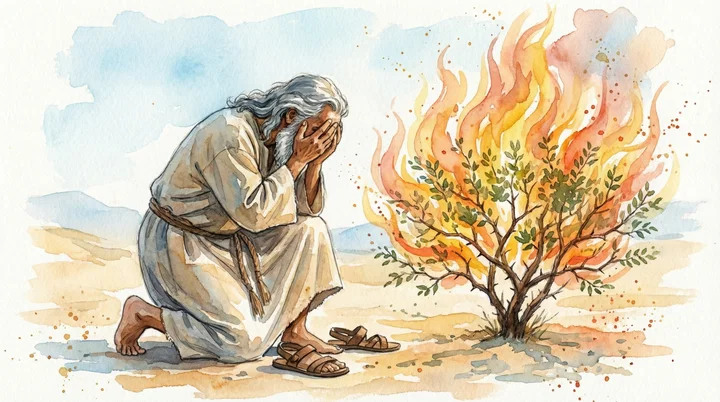
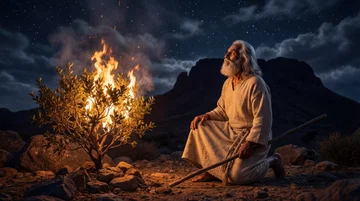
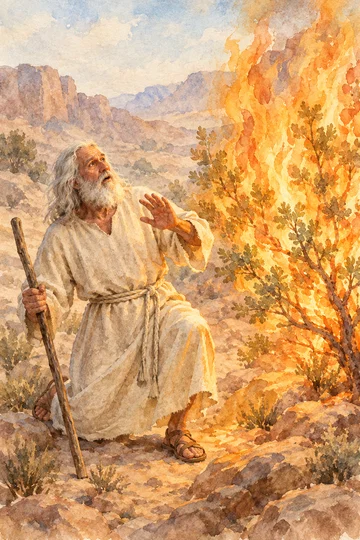
Moreover he said, I am the God of thy father, the God of Abraham, the God of Isaac, and the God of Jacob. And Moses hid his face; for he was afraid to look upon God.
Translations
Moreover he said, I am the God of your father, the God of Abraham, the God of Isaac, and the God of Jacob. And Moses hid his face; for he was afraid to look on God.
King James Version, KJV Cambridge Paragraph Bible, Revised Version, American Standard Version
Moreover he said, I am the God of thy father, the God of Abraham, the God of Isaac, and the God of Jacob. And Moses hid his face; for he was afraid to look upon God.
Moreover he said, I am the God of thy father, the God of Abraham, the God of Isaac, and the God of Jacob. And Moses hid his face: for he was afraid to look upon God.
He saith also, 'I [am] the God of thy father, God of Abraham, God of Isaac, and God of Jacob;' and Moses hideth his face, for he is afraid to look towards God.
And he said, I am the God of thy father, the God of Abraham, the God of Isaac, and the God of Jacob. And Moses hid his face; for he was afraid to look at God.
And he said—I, am the God of thy father, God of Abraham, God of Isaac and God of Jacob. And Moses hid his face, for he was afraid to look upon God.
Berean Standard Bible, Majority Standard Bible
Then He said, “ I am the God of your father, the God of Abraham, the God of Isaac, and the God of Jacob.”At this, Moses hid his face, for he was afraid to look at God.
Moreover he said, “ I am the God of your father, the God of Abraham, the God of Isaac, and the God of Jacob.”Moses hid his face because he was afraid to look at God.
And he said, I am the God of your fathers, the God of Abraham, the God of Isaac, and the God of Jacob. And Moses kept his face covered for fear of looking on God.
Moreouer he saide, I am the God of thy father, the God of Abraham, the God of Izhak, and the God of Iaakob. Then Moses hid his face: for he was afraid to looke vpon God.
Douay-Rheims (Challoner revision)
And he said: I am the God of thy father, the God of Abraham, the God of Isaac, and the God of Jacob. Moses hid his face: for he durst not look at God.
Pictures
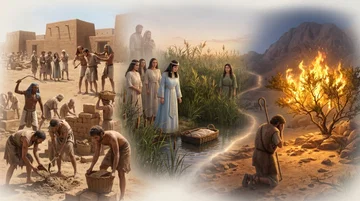
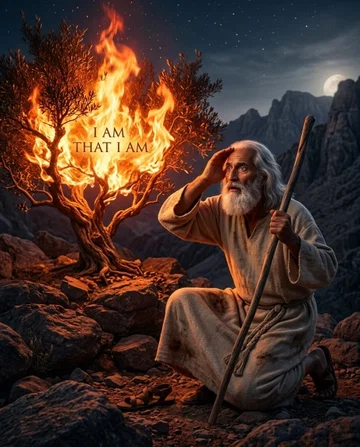
Cross-references 20 of 54
- Matthew 22:31-32
But as touching the resurrection of the dead, have ye not read that which was spoken unto you by God, saying,
Jesus cites God’s words about the patriarchs to prove the resurrection.
- Luke 20:37-38
Now that the dead are raised, even Moses shewed at the bush, when he calleth the Lord the God of Abraham, and the God of Isaac, and the God of Jacob.
Jesus infers the patriarchs’ resurrection from God declaring himself their God.
- Mark 12:26-27
And as touching the dead, that they rise: have ye not read in the book of Moses, how in the bush God spake unto him, saying, I am the God of Abraham, and the God of Isaac, and the God of Jacob?
Jesus uses God’s words to Moses about the patriarchs to prove resurrection.
- Exodus 3:15
And God said moreover unto Moses, Thus shalt thou say unto the children of Israel, The LORD God of your fathers, the God of Abraham, the God of Isaac, and the God of Jacob, hath sent me unto you: this is my name for ever, and this is my memorial unto all generations.
God names himself as the God of Abraham, Isaac, and Jacob.
- Luke 20:38
For he is not a God of the dead, but of the living: for all live unto him.
God’s title as patriarchs’ God proves they will rise, for all live to him.
- Acts 7:32
Saying, I am the God of thy fathers, the God of Abraham, and the God of Isaac, and the God of Jacob. Then Moses trembled, and durst not behold.
Repeats God’s words to Moses at the burning bush.
- Genesis 28:13
And, behold, the LORD stood above it, and said, I am the LORD God of Abraham thy father, and the God of Isaac: the land whereon thou liest, to thee will I give it, and to thy seed;
God identifies himself to Jacob as the God of Abraham and Isaac, confirming the ancestral promise.
- Exodus 3:16
Go, and gather the elders of Israel together, and say unto them, The LORD God of your fathers, the God of Abraham, of Isaac, and of Jacob, appeared unto me, saying, I have surely visited you, and seen that which is done to you in Egypt:
Both identify the LORD as the God of Abraham, Isaac, and Jacob.
- Joshua 5:15
And the captain of the LORD’s host said unto Joshua, Loose thy shoe from off thy foot; for the place whereon thou standest is holy. And Joshua did so.
Both encounters with God include a command to remove one’s shoes because the ground is holy.
- Genesis 15:13-14
And he said unto Abram, Know of a surety that thy seed shall be a stranger in a land that is not theirs, and shall serve them; and they shall afflict them four hundred years;
God’s deliverance of Israel fulfills his earlier promise to Abraham.
- Exodus 3:10-12
Come now therefore, and I will send thee unto Pharaoh, that thou mayest bring forth my people the children of Israel out of Egypt.
God commissions Moses to lead Israel out of Egypt, and Moses hesitates.
- Genesis 32:30
And Jacob called the name of the place Peniel: for I have seen God face to face, and my life is preserved.
Jacob sees God face to face and lives.
- Romans 4:17
( As it is written, I have made thee a father of many nations,) before him whom he believed, even God, who quickeneth the dead, and calleth those things which be not as though they were.
God calls the patriarchs living, showing he is God of the dead.
- Hebrews 11:16
But now they desire a better country, that is, an heavenly: wherefore God is not ashamed to be called their God: for he hath prepared for them a city.
God is still called the patriarchs’ God because he prepared a heavenly city for them.
- Acts 7:35
This Moses whom they refused, saying, Who made thee a ruler and a judge? the same did God send to be a ruler and a deliverer by the hand of the angel which appeared to him in the bush.
God sent Moses, after appearing in the bush, to deliver Israel.
- Genesis 17:7-8
And I will establish my covenant between me and thee and thy seed after thee in their generations for an everlasting covenant, to be a God unto thee, and to thy seed after thee.
God identifies himself as the God of Abraham and his descendants, establishing his everlasting covenant.
- Genesis 12:1
Now the LORD had said unto Abram, Get thee out of thy country, and from thy kindred, and from thy father’s house, unto a land that I will shew thee:
God calls Abraham, whose God later identifies himself to Moses.
- Mark 12:27
He is not the God of the dead, but the God of the living: ye therefore do greatly err.
God’s covenant with the patriarchs shows that the dead will rise.
- Exodus 3:2
And the angel of the LORD appeared unto him in a flame of fire out of the midst of a bush: and he looked, and, behold, the bush burned with fire, and the bush was not consumed.
The burning bush was not consumed, and Moses hid his face before God.
- Genesis 28:17
And he was afraid, and said, How dreadful is this place! this is none other but the house of God, and this is the gate of heaven.
Both respond with awe and fear before God’s presence.
Commentary
Each commentary is drawn from primary sources: the writings of Ellen G. White and Adventist pioneers and periodicals. Each commentary is separate. Its own words are not a quotation; follow the references to read the source passages.
Ellen G. White
27 sources
At Horeb while leading the flocks of Jethro, Moses turned aside to a bush that burned without being consumed and heard God call him by name as the God of his father and of Abraham, Isaac, and Jacob.1SP 168.2–169.1ST Nov 17, 1898PP 251.2–252.1Ms 132, 1903, par. 34SG3 186.1–187.1 The Speaker is Jehovah, the I AM, Christ Himself speaking from the bush as He later spoke from the glory over the tabernacle.Ms 20, 1895, par. 29MR 62.1Ms 8a, 1891, par. 25–27 He commanded Moses not to draw near and to remove his shoes because His presence made the ground holy, and Moses hid his face in fear, humility, and holy awe before His majesty.1SP 168.2–169.18T 284.1MH 436.2–3 In that self-revelation He assured Moses that He had seen the affliction of His people in Egypt, heard their cry, knew their sorrows, and had come down to deliver them to a large good land flowing with milk and honey, commissioning Moses to go to Pharaoh with the rod of God made mighty for signs so the deliverance would be by His own power alone.1SP 168.2–169.1Ms 142, 1897, par. 17–20SG3 186.1–187.19MR 62.1 Jesus used these words to prove the resurrection, that God is not the God of the dead but of the living, so that the patriarchs live to Him and the faithful dead from Abel onward will hear the Son of God's voice and rise to immortal life as His people.3SP 50.1DA 605.2–606.2ST Apr 25, 1878
Bush, Speaker, Response
The meeting took place at Horeb, the mountain of God, in the desert of Midian while Moses was leading the flocks of Jethro his father-in-law.1SP 168.2–169.1Ms 132, 1903, par. 34SG3 186.1–187.1 He saw a bush burning yet not consumed and turned aside to see why it was not burnt.1SP 168.2–169.1Ms 132, 1903, par. 34SG3 186.1–187.1 Out of the midst of the burning bush God spoke to Moses, calling him by name.1SP 168.2–169.1Ms 142, 1897, par. 17–20Ms 132, 1903, par. 34
The Speaker declared Himself to be the God of Moses' father, the God of Abraham, the God of Isaac, and the God of Jacob.1SP 168.2–169.1ST Nov 17, 1898SG3 186.1–187.1 He was the same covenant God who had made covenant with Abraham, Isaac, and Jacob and who had revealed Himself to the fathers as the Angel of the covenant.1SP 168.2–169.1PP 251.2–252.1PP 471.3–472.2 He was Jehovah, the I AM, revealed in the bush.9MR 62.1Ms 8a, 1891, par. 25–27Ms 45, 1890, par. 11–13 He was Christ, Jesus Christ Himself, talking with Moses from the burning bush as He later talked with Moses from the midst of the glory in the cloud standing over the tabernacle.Ms 20, 1895, par. 2Ms 126, 1901, par. 4–617MR 30.1–2
God commanded Moses not to draw near and to put off his shoes, because the place where he stood was holy ground made holy by God's presence.1SP 168.2–169.18T 284.1MH 436.2–3Ms 142, 1897, par. 17–20Ms 132, 1903, par. 34 Moses had turned aside to look without at first recognizing that God was present there.8T 284.1MH 436.2–3 Moses then hid his face because he was afraid to look upon God.1SP 168.2–169.1ST Nov 17, 1898Ms 132, 1903, par. 34SG3 186.1–187.1 His hiding showed holy awe, humility, and reverence before God's holiness and majesty, the humility and reverence appropriate in God's presence.1SP 168.2–169.18T 284.1MH 436.2–3ST Nov 17, 1898PP 251.2–252.1
This self-declaration introduced God's assurance that He had surely seen the affliction of His people in Egypt, heard their cry by reason of their taskmasters, knew their sorrows, observed every movement, and had come down to deliver them from the Egyptians.1SP 168.2–169.1Ms 142, 1897, par. 17–20SG3 186.1–187.1 He would bring them to a good and large land flowing with milk and honey, to the place of the Canaanites, Hittites, Amorites, Perizzites, Hivites, and Jebusites.1SP 168.2–169.1SG3 186.1–187.1
Deliverance and Resurrection Promise
The self-declaration as the God of his father and of Abraham, Isaac, and Jacob introduces the assurance that He has surely seen the affliction of His people in Egypt, heard their cry under their taskmasters, knows their sorrows, observes every movement, and has come down to deliver them from the Egyptians to a good large land flowing with milk and honey, to the place of the Canaanites, Hittites, Amorites, Perizzites, Hivites, and Jebusites.1SP 168.2–169.1SG3 186.1–187.1 Upon that ground Moses is commissioned and sent to Pharaoh to bring Israel out, exchanging the shepherd's staff for the rod of God made powerful for signs and wonders, for deliverance from oppression and preservation from enemies.1SP 168.2–169.1SG3 186.1–187.1PP 471.3–472.2 The deliverance will be by God's own mighty power for His glory alone and not by warfare as Moses had supposed when he first tried by force and haste, slaying an Egyptian and hiding him in the sand and thinking Israel should recognize him as deliverer.SG3 186.1–187.19MR 62.1Ms 8a, 1891, par. 25–27 That special work required special preparation, so only after he proved not ready was he sent for forty years as a keeper of sheep in the rocks, mountains, and desert, patiently hunting stray sheep until he learned to be a tender, patient, loving, faithful shepherd with the education needed for the work.9MR 62.1Ms 8a, 1891, par. 25–27
The verse means God is not regardless of the world and its concerns but is in direct communication with fallen inhabitants of earth.Ms 142, 1897, par. 17–20 From the bush that was not consumed He bends toward those deceived and troubled, listening to every word uttered and to every groan and prayer and cry.Ms 142, 1897, par. 17–20 He approves or condemns every action, raises up the fallen, and befriends all who love and fear Him.Ms 142, 1897, par. 17–20 He will punish and reprove everyone who oppresses His people or leads them astray from safe paths into distress.Ms 142, 1897, par. 17–20
Jesus used these words identifying God as the God of Abraham, Isaac, and Jacob to prove that the dead will be raised, for God is not the God of the dead but of the living.3SP 50.1DA 605.2–606.2ST Apr 25, 1878 He sees the end as already accomplished, so that the patriarchs live to Him in present relationship.DA 605.2–606.2 The faithful dead from Abel onward will therefore hear the Son of God's voice, rise from their graves to immortal life, and live again as God's people.3SP 50.1DA 605.2–606.2ST Apr 25, 1878 God will be their God and they will be His people in a close and tender relationship.3SP 50.1ST Apr 25, 1878
God's glory was veiled in the humble form of the burning bush, where the Infinite was enshrined in a lowly shrub and Christ appeared talking with Moses, subduing His glory so Moses could look upon it and live.Ms 126, 1901, par. 4–617MR 30.1–2 It was on the same plan by which His brightness was enshrouded in the darkness of the cloud He made His pavilion over the tabernacle, so the people could endure to look upon the cloud as seeing Him who is invisible.Ms 126, 1901, par. 4–6 That veiling was God's plan to approach fallen man and meet with him, with the tabernacle as His dwelling place on earth where His voice was often heard, revealing Him as the living God and Lawgiver who wonderfully delivered Israel from Egypt.Ms 126, 1901, par. 4–6 In connection with Israel's deliverance from four hundred years of bondage, the encounter made God's holiness, grace, and love known to the idolatrous Egyptians and appointed Moses to show that Jehovah was superior to every false deity.Ms 20, 1895, par. 2
Reverence and Shepherd Preparation
Where God is present the ground is holy and must be approached with reverent fear and humility rather than with common familiarity.8T 284.1MH 436.2–3PP 251.2–252.1 Moses turned aside to look at the burning bush without at first recognizing that God was present there, and God commanded him not to draw near and to put off his shoes because the place was made holy by that presence.8T 284.1MH 436.2–3 Moses hid his face because he was afraid to look upon God, showing the humility and reverence fitting before God's holiness and majesty.8T 284.1MH 436.2–3PP 251.2–252.1GC88 470.2 That view of God's purity and perfection reveals human unworthiness in contrast, so that people may approach God confidently in Jesus' name but not presumptuously as though God were their equal.PP 251.2–252.1GC88 470.2
The bush burning without being consumed represents those suffering reverses, deprivation, affliction, and adversity.MH 211.3–212.2 The angel of the Lord in the midst of the bush means that in deprivation and affliction the brightness of the presence of the Unseen is with people in need to comfort and sustain them.MH 211.3–212.2 The valley of humiliation where need is felt and dependence is placed on God to guide the steps is comparatively safe, while prosperity and influence are most dangerous to spiritual life and those entrusted with them most need prayer.MH 211.3–212.2
Moses was sent as deliverer only after forty years as a faithful shepherd, for God could not take him directly from the king's court as the prospective ruler of Egypt to do his appointed work but required training amid the humble duties of the most lowly position in life.1SP 168.2–169.1SG3 186.1–187.1GW 332.3–333.19MR 62.1Ms 8a, 1891, par. 25–27 He had first tried to do the work by force and haste when he slew an Egyptian and hid him in the sand, thinking Israel should recognize him as deliverer, and proved he was not ready.9MR 62.1Ms 8a, 1891, par. 25–27 God therefore sent him for forty years as a keeper of sheep in the rocks, mountains, and desert, patiently hunting stray sheep, in retirement training in self-control, humility, and care-taking thoughtfulness and tender solicitude.1SP 168.2–169.1SG3 186.1–187.14T 442.19MR 62.1Ms 8a, 1891, par. 25–27 By that he learned to be a tender, patient, loving, faithful shepherd and gained the education needed to become a spiritual shepherd to tenderly care for erring Israel.1SP 168.2–169.1SG3 186.1–187.14T 442.19MR 62.1Ms 8a, 1891, par. 25–27
In that retirement the God of nature taught him the highest wisdom, and in the school of nature Christ was his teacher.CT 406.2 As he led his flocks through the wilds of the mountains and into the green pastures of the valleys, in solitude and care-taking thoughtfulness, he learned lessons of humility, meekness, faith, and trust that bound his soul closer to God.4T 442.1CT 406.2 All his thorough education as the king's grandson in the wisdom of Egypt was unable to impart that simple, unwavering faith and constant trust in the Lord.CT 406.2 Jehovah revealed Himself to Moses when Moses was prepared to see God in singleness of heart, having worked steadily upward toward the light with help to gain correct faith.Ms 130, 1898, par. 4Ms 45, 1890, par. 11–13 He had learned his helplessness and inefficiency without the Lord's support, had been proved and tested and tried until he humbled his soul before God and came forth from furnace fire refined and purified, and his faith shown by obeying God's commands even when the way seemed impossible or contrary to human reason made him a channel through whom God could work.OEWP 14.1–16.2Lt 77, 1902, par. 7–8
Moses spoke with God at the bush before being sent and before hearing God's message to Pharaoh, and that communion with God prepared him to be God's instrument in delivering Israel.ST Jul 27, 1915 It followed forty years of communing with God in the mountains, proving that work for God requires prior fellowship with God for power and guidance.ST Jul 27, 1915 The same experience is essential for those who preach the truth, for to lead souls to the life-giving fountain the preacher must first drink at the fountain himself, must see the infinite sacrifice made by the Son of God to save fallen men, and must have his own soul imbued with undying love.4T 442.1
Sources
Pioneers and periodicals
110 sources
At the burning bush on holy ground at Horeb, God calls to Moses from unconsumed flame and names Himself the God of his father and of Abraham, Isaac and Jacob, and Moses hides his face in fear of looking upon God.ST Nov 17, 1898ST Dec 2, 1880ST Mar 24, 1887ST Aug 19, 1880RH May 11, 1869 The speaker is Christ, the Angel of the Lord and great I AM, distinct from the Father who sent Him yet one with Him as the divine leader and protector of Israel.ST Apr 22, 1889ST Aug 19, 1880ST Jul 23, 1912ST May 20, 1908ST Mar 24, 1887 By that covenant title He identifies Himself as the same living, unchanging Creator already known through the patriarchs, who still owns Israel in Egyptian affliction and will bring them out as He promised.RH Jan 20, 1916ST Dec 25, 1901RH Dec 17, 1861RH Dec 31, 1861ST Nov 27, 1901 When He calls Himself their God centuries after their death, He pledges their future bodily resurrection, for He is not the God of those eternally dead and nonexistent but of the living who sleep in death and will surely live again unto Him.RH Mar 22, 1870RH Dec 12, 1854ST Mar 11, 1880RH Aug 8, 1871ST Nov 3, 1881 His presence therefore demands humble reverence and holy fear, and the forty years that emptied Moses of self-sufficiency show that such secret communion fits the called to know their weakness and to go in His strength.ST Nov 17, 1898ST Feb 26, 1880ST Jan 24, 1911ST Nov 24, 1887ST Jun 17, 1889
Burning Bush Setting
The declaration belongs to the meeting with Moses at Horeb, the mountain of God, after he had led the flock of Jethro his father-in-law, the priest of Midian, to the back side of the desert.ST Mar 24, 1887ST Dec 21, 1888 The Angel of the Lord appeared in flame of fire out of the midst of a bush that burned without being consumed, and when Moses turned aside to see this sight, God called him by name from the midst of the bush.ST Mar 24, 1887ST Dec 21, 1888RH Oct 29, 1914 He was told not to draw near and was commanded to put off his shoes because the place where he stood was holy ground.ST Mar 24, 1887ST Dec 21, 1888 God then declared Himself the God of his father and the God of Abraham, Isaac, and Jacob, and Moses hid his face and trembled because he was afraid to look upon God.ST Nov 17, 1898ST Mar 24, 1887ST Dec 21, 1888 That identification joins the call of Moses to the patriarchs and to Israel's history, and it shows Moses hiding his face in holy awe at God's presence.ST Aug 19, 1880RH Jan 20, 1916ST Dec 25, 1901
The bush burning without being consumed represents God's people preserved through affliction.ST Dec 2, 1880ST May 14, 1894 Israel endured the intense oppression of Egypt without being destroyed, and the church likewise lives through fiery trials until deliverance comes.ST Dec 2, 1880ST May 14, 1894 The identification comes immediately before God tells Moses He has surely seen the affliction of His people in Egypt, heard their cry by reason of their taskmasters, and known their sorrows.ST Apr 22, 1889ST May 14, 1894 He had come down to deliver them out of the hand of the Egyptians and to bring them up to a good and large land flowing with milk and honey, and He commissions Moses as His prophet to go to Pharaoh to bring the children of Israel out of Egypt.ST Apr 22, 1889ST May 14, 1894 In this self-revelation at the crisis of their most grievous and almost intolerable bondage and cruelty He espouses Israel's cause and sets Himself against Pharaoh their oppressor, so that aroused hope, gratitude, love, and admiration fix a deep impression of Him upon memory and heart.RH Dec 30, 1858
The call and the burning bush are presented as historical events, confirmed by Stephen's rehearsal of the chapter in Acts 7 and not as fiction.ST Apr 13, 1904 The encounter takes place after Moses has lived in Midian for forty years, dated around 1493 B.C. by Usher's chronology.ST May 14, 1894 In Exodus 3 and 4 God proved His word to Moses by visible signs, placing Himself under test to satisfy His own fallible servant who was slow to accept His word without such a test.ST May 1, 1901 Israel in Egypt still remembered the God of Abraham, Isaac, and Jacob and owned Him as their God and had been His peculiar people since the days of Abraham, however wicked some were.RH Dec 24, 1861ST Jan 15, 1885 This was though belief in many gods belonged to all nations, so that Israel also held the idols of Egypt to be truly divine as the gods of the Egyptians with power to send good and evil, and with Egypt counted the tricks of the Egyptian magicians and priests as real miracles proving the power of those idols and the priests' right to act in their name.ST Jan 15, 1885
God chose to appear to Moses as flaming fire while Moses was still an alien in the land of Midian.RH Feb 10, 1910 The great sight drew Moses toward the One who was about to deliver Israel from Egyptian bondage.RH Feb 10, 1910 This drawing pictures His design to attach Himself to a rescued Israel as the type of His promised eternal union with the finally redeemed of all ages.RH Feb 10, 1910 Horeb is the mountain of God where the Lord called His people, and upon its peak Sinai He manifested His glory and presence, twice calling Moses up into the mount to commune with him forty days and nights.ST Sep 20, 1899 The verse belongs also to the account of God calling Moses from his ordinary work keeping his father-in-law's sheep on Mount Horeb to confront a powerful king, lead Israel out of slavery, and enter a greater service.ST Oct 18, 1877
Speaker's Divine Identity
The speaker who calls Himself the Angel of the Lord and also the Lord and God is Christ, the leader who brought ancient Israel from Egypt to Canaan and who spoke to Moses to declare Himself the God of his father and of Abraham, Isaac, and Jacob, the One who had seen the affliction of His people, heard their cry because of their taskmasters, known their sorrows, and come down to deliver them and bring them to a good large land flowing with milk and honey.ST Apr 22, 1889ST Aug 19, 1880 He is the same Angel who spoke at Sinai, identified as Michael the Commander of the angels and Protector of Israel, and as Jesus the Messenger of the Covenant and God's representative to the world.ST Jul 23, 1912ST Aug 14, 1901 He is the great I AM, whose name should be written in capital letters, and the God the Son through whom the Father is revealed.RH Oct 9, 1900ST Mar 18, 1903
The visible appearance in the flame and the voice from the bush belong to one and the same being, not an angel appearing while the Father speaks from elsewhere nor an angel merely speaking in God's name.ST Mar 24, 1887 That being is properly called God and declares Himself the God of Abraham, Isaac, and Jacob and the I AM, yet as one sent by God He cannot be God the Father.ST Mar 24, 1887 He stands distinct from the Father who gave His only-begotten Son and distinct from the Comforter the Spirit of God, standing in subjection as servant and representative of the invisible Father, so that all His manifestations as the Angel of the covenant and afterward as Jesus of Nazareth were in that servant capacity to reveal the Father rather than Himself.ST May 20, 1908
In taking the form of an Angel He took the nature of angels as the first step downward to lift the fallen race, before the next step of being made in the likeness of men and the final step of becoming obedient unto death on the cross, all carrying out His purpose from the beginning to give Himself fully. His name and memorial express His character as personal, self-existent, unchangeable, eternal, invisible, and living, the God who made promises to Abraham, Isaac, and Jacob and now sends Moses to deliver Israel, with I AM equivalent in meaning to Jehovah.ST May 14, 1894
The threefold naming of the God of Abraham and of Isaac and of Jacob names one God and not three Gods, for repeating God with three names does not multiply Him.ST May 20, 1880ST Jun 14, 1883 It is as naming Father, Son, and Holy Ghost does not make three baptisms, and as naming three glories does not make three comings.ST Jun 14, 1883 He is the one pure monotheistic Creator and Preserver of all things, holy and merciful, the same God worshiped by Enoch and Abraham and by Moses, Joshua, David, and Isaiah, and the God and Father of the Lord Jesus Christ.RH Jan 7, 1904ST Nov 27, 1884 He is not the Universal Spirit of ancient Babylonian and Eastern error now returning as New Thought and New Theology, but the living Creator whom those called to give His final message worship as Him that made heaven and earth and the sea and the fountains of waters, in instructive contrast to gross polytheism and as a God whom nineteenth-century culture need not be ashamed to worship.RH Jan 7, 1904ST Nov 27, 1884
Those who held that being called God does not by itself prove one is the very and eternal God taught that here the title God is given to an angel, since the angel of the Lord in the flame calls Himself Lord and the God of Abraham, Isaac, and Jacob. The weight of the passages holds that His foretelling of events beforehand, His existence before Abraham's day, and His leading Israel out of Egypt prove His divinity as the divine Son, the I AM who met Moses at the bush and through whom the Father is revealed.ST Mar 18, 1903ST Mar 30, 1915
Moses's Call and Training
The call came at the end of forty years in Midian tending sheep, after a self-sent attempt to deliver Israel in the strength of Egyptian education, knowledge of warfare and human planning had failed and forced flight into wilderness schooling.ST Jan 24, 1911RH Mar 23, 1869 That early plan formed in Egyptian learning did not fit for leading God's flock, and keeping sheep in Midian was the training to fit for leading them out toward Canaan, so that when God spoke the former self-sufficiency was gone.ST Jan 24, 1911RH Mar 23, 1869 The hour of deliverance had come when the angel appeared in the burning bush near the base of Sinai to give the great commission to lead Israel out of Egypt, and where forty years before there had been self-confidence ending in bitter failure there was now true preparation and such self-abasement as to beg for some other more suitable person to be sent.ST Jan 24, 1911RH Mar 23, 1869RH Mar 23, 1869
Forty years alone with God in the desert taught own weakness and God's greatness, unlearning Egypt and learning humility, patience, submission, poverty of spirit and death to self.ST Jan 24, 1911ST Jun 15, 1904ST Jun 17, 1889RH Mar 23, 1869ST Sep 24, 1896 The delay was not wasted but removed what hindered God's work, for while mighty in words and deeds in Egyptian wisdom there was no readiness, and caring for the flock by night and day through forty more years in Midian taught man's littleness and God's greatness with the compassion and tenderness necessary to be a true shepherd to God's flock.ST Jun 15, 1904ST Jun 17, 1889RH Aug 11, 1863ST Sep 24, 1896 From feeling all-sufficient Moses came to feel utterly insufficient, learning how little he was and how great God was, becoming patient, wise, tenderly solicitous, earnestly devoted and constantly self-sacrificing until fitted to lead a people out of bondage into freedom.ST Jan 24, 1911ST Mar 8, 1910RH Mar 23, 1869ST Sep 24, 1896 Affliction had driven him from Egypt, and that long education made him humble as a child, emptied of self-sufficiency and dependence on own great capacity, showing that exalted views of self come from lack of grace while learning from Christ who is meek and lowly makes men meek and lowly also.ST Jan 24, 1911RH Aug 11, 1863RH Mar 23, 1869
The call was direct and impressive from the voice of God Himself from the burning bush, not from the counsel of Jethro nor from the suffering condition of Israel in Egypt.RH Mar 23, 1869RH Mar 23, 1869 It laid hold of conscience with unyielding grip with unmistakable evidence in majestic display of glory so that there could be no doubt and no sense of being misled, until surrender and promised obedience.RH Mar 23, 1869 Yet knowing own weakness and lack of grace, Moses sincerely and earnestly begged God to select some other and fitter instrument, small in his own eyes though alone possessing the natural ability and deep experience in God required for the work.RH Mar 23, 1869RH Mar 23, 1869
God called him to leave his flock in the wilderness and devote the rest of his life to leading His people out of Egypt into the promised land.ST Nov 27, 1901 The encounter gave courage to face a powerful king and Pharaoh without fear, though naturally meek and timid and shrinking from responsibility, and through him God would deliver Israel from bondage, humble Egypt, give a code of laws, and give through the sanctuary a great multiple object-lesson by various forms and rites comprehending the plan of salvation after hundreds of years of slavery had unfitted them to comprehend His salvation and required character.ST Oct 29, 1902ST Mar 23, 1882 God's pledged word to Abraham ensured the work would be accomplished, and the plagues, Passover deliverance, Red Sea crossing and provision afterward would give fuller personal knowledge of the God already known through the patriarchs.ST Nov 27, 1901ST Mar 23, 1882 When human insufficiency is felt and the called depend on Him, He fits them for the work and supplies all need, so human insufficiency is no excuse, and the mission begun in that insufficiency was successful.ST Jan 24, 1911ST Jun 17, 1889
The call came in the full time when deliverance had arrived and Moses was ready, part of God's order of having men and agencies in training beforehand to meet the questions and crises of their age.RH May 13, 1915RH Mar 23, 1869RH Feb 2, 1911 Moses was the willing man God had for that hour of great oppression a few hundred years after Abraham, and with the call God gave His Spirit and instruction with abundance of the Spirit to accomplish its object.RH May 13, 1915RH Mar 23, 1869RH Feb 2, 1911 He was permitted to lead Israel only to the border of Canaan, where Joshua would then be found to lead across Jordan and bring down the walls of Jericho.RH May 13, 1915RH Feb 2, 1911 After forty years communing with God in the mountains, speaking with the Angel in the bush before hearing the message to Pharaoh, Moses was prepared to be God's instrument, proving that work for God requires prior fellowship with God for power and guidance.ST Jul 27, 1915ST Sep 10, 1902 That communion at the Mount of God prepared him to lead Israel out, and at that same mountain Israel would learn the lesson of human weakness and God's strength.ST Jul 27, 1915ST Sep 10, 1902 His admission to God's presence marked the assignment of the life-work for which years of preparation had fitted him, and his character stands luminous against the blackness of surrounding idolatry, second only to the Lord Jesus Christ whom he feebly typified, through whom God gave wonderful lessons that shaped marvelous civilizations through the Book molded under God.RH Feb 4, 1873ST Mar 8, 1910
Covenant God of Patriarchs
By naming Himself the God of Abraham and of Isaac and of Jacob, God joined the call of Moses to the patriarchs and to the history of Israel, making plain that the God commissioning Moses was the God already known through them.RH Jan 20, 1916ST Dec 25, 1901ST Nov 27, 1901 Moses hid his face because he was afraid to look upon God.RH Jan 20, 1916ST Dec 25, 1901 The mission given with that self-identification was to lead His people out of Egypt and into the promised land.ST Nov 27, 1901
From His choice of Abraham onward He used this covenant title in His relationship with the Hebrew people, owning Abraham's family as His peculiar heritage and setting them apart for Himself while idolatrous nations were given up to their own ways.RH Dec 17, 1861RH Dec 31, 1861 He still owned them in Egypt during brief prosperity followed by long and terrible oppression, foreshadowed to Abraham by the horror of great darkness and the smoking furnace and the smoking furnace vision, when his descendants were walled off from mankind to preserve the knowledge and worship of God in the earth.RH Dec 17, 1861 The living God who sanctified Israel was thus the God of their ancestors.RH Dec 31, 1861 That title shows Israel in Egypt already knew the true God and had been His peculiar people since the days of Abraham, however wicked some were, so making Himself known there was not a first revelation but a confirmation of an existing relationship, implying the prior existence of both the Law-giver and His Sabbath.RH Dec 24, 1861
The declaration repeats the promise already made to Abraham, Isaac, and Jacob to give them an everlasting inheritance in the land of Canaan and to be their God.RH Oct 3, 1854 Since they died without receiving the promised land, the promise can only be fulfilled if God raises them from the dead, so their future life depends not on natural immortality but on resurrection, and they and all their children by faith will not receive their promised rewards until they are raised.RH Oct 3, 1854 Their hope is resurrection, not continued life in their tombs, for God has prepared a city for them which they will possess in the future.RH Jan 19, 1864ST Jun 29, 1882RH Oct 16, 1855 Their concern for their bones testified to this trust that they would receive incorruptible life through resurrection though they had to wait for it.RH Jan 19, 1864 While dead they are unconscious and the next they will know is being alive again, yet in God's purpose they are counted the same as living because His immutable word guarantees they shall live again, and He is not ashamed to be called their God.ST Jun 29, 1882RH Oct 16, 1855
God existed eternally before Abraham existed, and becoming the God of Abraham did not make Him a new God but added a new relation to the same unchanging Being, for a thing remains the same thing when it takes a new relation.RH Feb 24, 1859 This proves that the Sabbath of the Lord made at creation could afterward become the Sabbath of the fourth commandment without losing its identity and without becoming a different Sabbath.RH Feb 24, 1859 The title recalled what was known of God before Israel's deliverance, while the plagues, the Passover deliverance, the crossing of the Red Sea, and God's provision afterward would give the people fuller personal knowledge of Him.ST Nov 27, 1901 After hundreds of years of slavery had unfitted them to comprehend His great salvation and the character He required, God gave through Moses the sanctuary as a great multiple object-lesson by various forms and rites comprehending the great plan of salvation.
The God of Abraham, Isaac, and Jacob lives and still guards His people with a Keeper who does not slumber and a hand not shortened to save, so fear is needless and there is safety on the road and protection from murderous kings.ST Mar 8, 1910 He is the God Christians worship as the God of Abraham, and honoring Him is connected with keeping the Bible Sabbath, and He will be worshiped from Sabbath to Sabbath on this earth when it is brought back to its Eden state where sickness, sorrow, pain, and death are no more and commandment-keepers receive eternal life and the immortality Paul tells to seek, so daily watchfulness is needed to be counted worthy to obtain those promises.RH Apr 9, 1861ST Oct 19, 1915 His knowledge, favor, and covenant belonged to Israel, the one nation to whom the promises and prophetic messages were given, while other nations were treated as having no share in them.ST Feb 10, 1881 Orthodox Jews still claim Him by that name as the God of the Jewish fathers and call upon Him while rejecting Jesus as an impostor, even using that name to curse a son who leaves his father's religion and the synagogue to follow Jesus, asking that God strike him blind, deaf, and dumb and damn his soul forever.
Resurrection Proof from Verse
Jesus quoted the words spoken to Moses concerning the bush to prove the resurrection of the dead to the Sadducees, who denied it, professed to believe Moses, taught that death ends all existence, and held that the dead remain dead forever.RH Dec 12, 1854ST Mar 11, 1880RH Nov 25, 1858ST Aug 12, 1875RH Sep 8, 1859 The proof was taken deliberately from Moses rather than Job, Isaiah, David or the other prophets because the Sadducees accepted only Moses as inspired, and it is useless to cite authorities in which people have no faith.ST Oct 25, 1899ST Oct 25, 1899 In citing the book of Moses He treated Moses' writings as Scripture.ST Feb 15, 1883 It is an example of Scripture that does not speak directly about the resurrection but proves it when correctly interpreted, and He used it to silence denial after establishing that in the resurrection there is neither marrying nor giving in marriage.ST Oct 25, 1899ST Jul 7, 1887
When God says He is the God of Abraham, Isaac and Jacob centuries after their death, it necessarily implies they are His people and servants, for the relation is reciprocal, as husband implies wife.RH Mar 22, 1870ST Mar 11, 1880 The relation ends at death and the dead cannot worship Him as His people, for only the living can sustain that relation and offer worship before Him.RH Mar 22, 1870ST Mar 11, 1880 Since God is not the God of the dead, meaning those irrecoverably and eternally dead or utterly nonexistent, but of the living, the patriarchs cannot remain dead forever but must live again by resurrection.RH Mar 22, 1870RH Sep 8, 1859RH Dec 12, 1854 By styling Himself their God He virtually pledged to raise them from the dead.RH Mar 22, 1870RH Aug 8, 1871ST Mar 11, 1880
The patriarchs were really dead when God spoke and still dead when Jesus spoke, with graves among the Jews.ST Feb 6, 1901RH Dec 12, 1854ST Oct 1, 1894ST Aug 21, 1907 The words do not teach that they were then alive, conscious, or in need of no resurrection, for living men are not subjects of resurrection and those taken alive like Enoch and Elijah need none.RH Dec 12, 1854ST Oct 1, 1894RH Sep 8, 1859ST Sep 22, 1881RH Oct 16, 1855 To take the words to mean that all men are alive now destroys that proof, leaves no need for a resurrection, and makes Christ fail to meet the Sadducees' question.RH Sep 8, 1859 If they were then actually alive the words would prove no resurrection and would show no resurrection was needed to sustain their relation to God; because they were actually dead but counted alive in God's purpose, the words are decisive proof they shall be raised.ST Sep 22, 1881
The verse therefore proves a future bodily resurrection at the last day into the better world where the worthy neither marry nor are given in marriage, can die no more, are equal to angels, and are immortal sons of God and children of the resurrection.RH Jul 15, 1875ST Feb 6, 1901ST Aug 21, 1907ST Oct 25, 1899 It proves not a conscious intermediate state, immortal soul, or disembodied spirits living at death, nor the separate existence of spirits apart from the body nor admission at death to the general assembly of the blessed.ST Jul 7, 1887ST Nov 3, 1881RH Nov 25, 1858ST Jul 7, 1887ST Aug 12, 1875 The resurrection is not at death but at the last day, and the promise concerning the patriarchs pointed to their future resurrection, not to their continued life elsewhere.ST Jul 7, 1887ST Aug 21, 1907 The verse supports the resurrection of the dead and the reality of death.ST Jul 7, 1887
God speaks of the dead patriarchs as alive at the time He spoke because in His purpose they were certainly to live again; all live unto Him, He calls things that do not exist as though they existed, counts them living in a purpose that cannot fail, and has their names in the book of life.RH Mar 22, 1870RH Aug 8, 1871ST Feb 6, 1901ST Mar 11, 1880ST Sep 22, 1881 The dead in themselves are not alive but silent in the grave, knowing nothing, with thoughts and emotions perished, and left to themselves would never live again.ST Jan 28, 1889 For the same reason His name is I AM, not I was or shall be, so at the Exodus He could call Himself the God of Abel dead over 2,000 years and the God of Paul not to exist for 1,500 years, and call Cyrus His shepherd nearly 200 years before his birth.ST Jan 28, 1889
Death is an unconscious sleep-like blank with no pain, happiness, or keeping of time, so one raised after being dead two thousand years will feel no more time has passed than one who has slept an hour.RH Oct 16, 1855 Death is contrary to God's nature; God purposes to raise up all who sleep and counts them living because in His time they will live.RH Oct 16, 1855ST Jan 28, 1889ST Nov 24, 1898 While dead they are unconscious, and the next they will know is being alive again.RH Oct 16, 1855 In God's purpose they are counted the same as living because His immutable word guarantees they shall live again, and God is not ashamed to be called their God because He has prepared a city for them, not because they are already alive.RH Oct 16, 1855
The saying means God is not the God of those with no existence as annihilated, but of those who merely sleep waiting to be raised; the dead in themselves are not alive but in God's wisdom they will surely live and be raised to life.ST Jan 7, 1889ST Mar 20, 1879 While the dead do not live unto themselves, they all live unto Him.ST Jan 7, 1889 The resurrection taught here is the only hope of the dead, settling whose wife the woman married to seven brothers under Moses's marriage law will be in the future resurrection, not whose wife she is now in a spirit world.ST Feb 6, 1901ST Aug 12, 1875RH Sep 8, 1859 The issue was not claims in the spirit world but whose wife she shall be after seven brothers in turn had her, and the answer is that they err not knowing the Scriptures nor the power of God.ST Aug 12, 1875RH Sep 8, 1859
God will raise the patriarchs as the same persons with memories and personal identity intact, even if former matter entered other bodies.ST Jul 15, 1875 Sameness does not require the same particles but identity of organization and memory, by direct divine power with no philosophy to explain it and no immortal soul needed to preserve responsibility.RH Apr 22, 1858 The faithful dead from Abel onward will hear the Son's voice, rise from graves, and live again as God's people in close tender relationship, becoming children of God in the kingdom who die no more.ST Apr 25, 1878ST Oct 11, 1883RH Oct 12, 1869 The resurrection implies Christ's coming to execute judgment, and the title can only be fulfilled by resurrection to immortality.ST Oct 11, 1883RH Oct 12, 1869
Moses himself taught the resurrection at the bush and understood the declaration to signify God will raise His servants.ST Oct 1, 1894ST Oct 11, 1883ST Aug 12, 1875 Moses wrote the gospel as surely as Luke and John, and those who accept his writings will believe.ST Oct 1, 1894 Moses knew the hope of the resurrection, a reward he looked toward by faith, and the patriarchs knew this hope as part of God's truth.RH Jul 15, 1875 The promise already made to Abraham, Isaac and Jacob to give them an everlasting inheritance in Canaan and to be their God can only be fulfilled if God raises them, since they died without receiving it, and they and all their children by faith will not receive rewards until raised.RH Oct 3, 1854 Knowledge of life beyond death thus existed before Christ's victory over the grave.ST Jul 22, 1886
Some have read the declaration that God is the God of the living to argue that the patriarchs had not ceased to exist or become unconscious, that they continued to exist after bodily death, that souls of the dead are alive and immortality belongs naturally to all.RH Mar 4, 1862RH Jul 13, 1869ST Jan 11, 1883 Modern theologians use it to claim conscious disembodied spirits while bodies remain in the grave.RH Mar 18, 1902 Against this, to deny the resurrection and teach that souls are received into heaven immediately at death blasphemes the God of Abraham, Isaac and Jacob whose name means the God of the resurrection.RH Aug 6, 1857 Those who teach it only seem to be God's people and are not to be counted among Christians.RH Aug 6, 1857
Reverence and Christian Living
God's presence filled Moses with awe and a deep sense of his own weakness and unworthiness, and he hid his face because he was afraid to look upon God.ST Nov 17, 1898ST Feb 26, 1880 Sinful human beings must approach God with reverence and humility rather than presumption, yet they may come boldly through Jesus as their righteousness and substitute.ST Feb 26, 1880 The voice from the bush demanded holy reverence shown by hastening to remove the shoes and by uncovering the head in sudden silent awe.RH Oct 29, 1914 Humility is the fitting attitude before God, as seen also in Joshua's encounter with the Lord.ST Nov 27, 1901
Moses hid his face in fear because he could not look upon the effulgent glory and power present in the burning bush where the God of Abraham was present.RH Mar 5, 1861 That fear expressed his humility when the great burden of going to Pharaoh and bringing Israel out of Egypt was laid upon him.RH Mar 5, 1861 His proving there pictures how God's servants in the last days must turn aside with intrepidity to be proved for what they will really endure for God.RH Mar 5, 1861 God's divine presence alone made the ordinary ground holy, proving that His presence alone makes holy whether in man or in objects of nature.ST Feb 7, 1900
The same God who spoke to Moses from the burning bush speaks through fields, bushes, and trees, calling people to notice the divine in the wonders of nature.RH Oct 29, 1914ST Nov 21, 1900 The same voice still speaks from the sky, and when God omnipotent passes by He permits sinful fallen people to gaze for one little moment on His loveliness.RH Oct 29, 1914 In that voice He declares Himself the God of Abraham, Isaac, and Jacob and also the personal God of the one who hears.RH Oct 29, 1914 Alone with God when He communed from the bush, Moses was appointed deliverer of Israel.ST Nov 24, 1887 Secret communion brings nearness to God and richest blessing from on high for self and others, fulfilling the Saviour's promise that the Father who sees in secret will reward openly.ST Nov 24, 1887
Meeting the Lord at the bush gave Moses true knowledge of himself, his weakness and selfishness and his needs.RH Sep 23, 1902 That self-knowledge comes through effectual, fervent prayer and brings power for works, intercession, and fruit-bearing.RH Sep 23, 1902 The revelation made God's presence real to Moses, and the memory of that solemn encounter stayed with him through later trials, persecution, and rebellion.ST Sep 22, 1914 It enabled him to endure as though seeing the invisible God.ST Sep 22, 1914
After Moses turned aside to see, God gave a definite program for that hour for the relief of His oppressed nation.ST Oct 21, 1930 That same turning aside to note what His word says today brings knowledge of God's program for this time to the inquiring soul.ST Oct 21, 1930ST Oct 6, 1909 Horeb is the mountain of God where the Lord called His people, and upon its peak Sinai He manifested His glory and presence.ST Sep 20, 1899 There He twice called Moses up into the mount to commune with him forty days and nights.ST Sep 20, 1899 Communion with God there prepared Moses to lead Israel out of Egypt, and at that same mountain Israel would learn the lesson of human weakness and God's strength.ST Sep 10, 1902
Sources