Mark 4:5
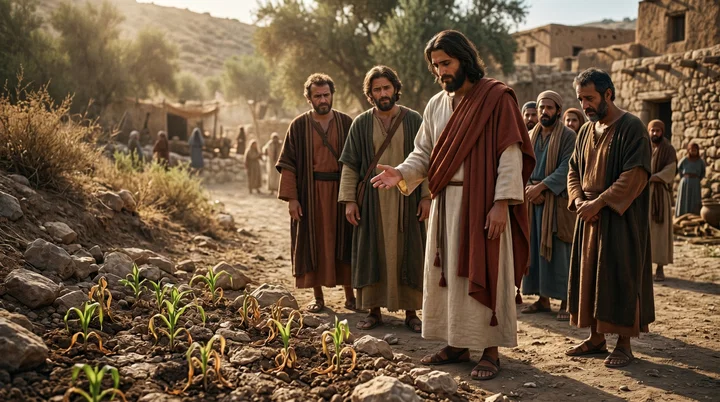
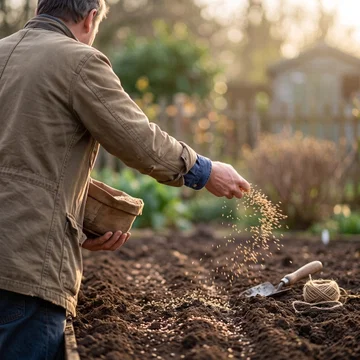
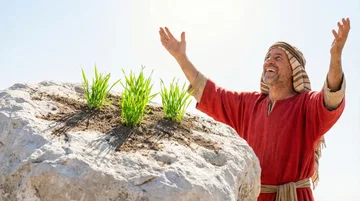
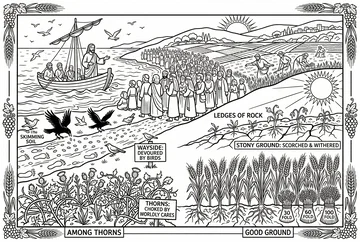
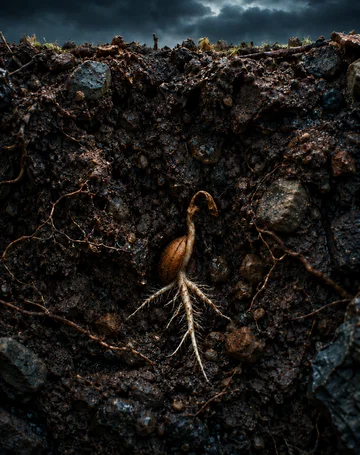
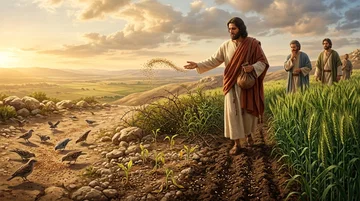
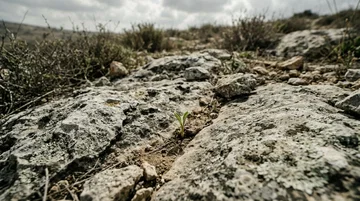
And some fell on stony ground, where it had not much earth; and immediately it sprang up, because it had no depth of earth:
Translations
American King James Version, King James Version, KJV Cambridge Paragraph Bible
And some fell on stony ground, where it had not much earth; and immediately it sprang up, because it had no depth of earth:
And some fell on stony ground, where it had not much earth; and immediately it sprang up, because it had no depth of earth.
Revised Version, American Standard Version
And other fell on the rocky ground, where it had not much earth; and straightway it sprang up, because it had no deepness of earth:
and other fell upon the rocky ground, where it had not much earth, and immediately it sprang forth, because of not having depth of earth,
And another fell on the rocky ground, where it had not much earth, and immediately it sprung up out [ of the ground] because it had no depth of earth;
And, some, fell on the rocky places, [even] where it had not much earth,—and, straightway, it sprang forth, by reason of its not having depth of earth;
Berean Standard Bible, Majority Standard Bible
Some fell on rocky ground, where it did not have much soil. It sprang up quickly because the soil was shallow.
Others fell on the rocky ground, where it had little soil, and immediately it sprang up, because it had no depth of soil.
And some went on the stones, where it had not much earth; and it came up straight away, because the earth was not deep:
And some fell on stonie grounde, where it had not much earth, and by and by sprang vp, because it had not depth of earth.
Douay-Rheims (Challoner revision)
And other some fell upon stony ground, where it had not much earth; and it shot up immediately, because it had no depth of earth.
Pictures
Cross-references
- Matthew 13:5-6
Some fell upon stony places, where they had not much earth: and forthwith they sprung up, because they had no deepness of earth:
Parallel account of seed springing up quickly in shallow, stony soil and withering.
- Luke 8:6
And some fell upon a rock; and as soon as it was sprung up, it withered away, because it lacked moisture.
Seed springs up on rocky ground but withers for lack of moisture.
- Mark 4:16-17
And these are they likewise which are sown on stony ground; who, when they have heard the word, immediately receive it with gladness;
Stony-ground hearers receive the word gladly but fall away under affliction or persecution.
- Matthew 13:20-21
But he that received the seed into stony places, the same is he that heareth the word, and anon with joy receiveth it;
The rocky-ground hearer receives the word with joy but falls away under trouble.
- Luke 8:13
They on the rock are they, which, when they hear, receive the word with joy; and these have no root, which for a while believe, and in time of temptation fall away.
Joyful reception of the word gives way to falling away in temptation.
- Mark 4:11-12
And he said unto them, Unto you it is given to know the mystery of the kingdom of God: but unto them that are without, all these things are done in parables:
Jesus explains why he taught in parables and how hearers could fail to understand.
- Mark 4:15
And these are they by the way side, where the word is sown; but when they have heard, Satan cometh immediately, and taketh away the word that was sown in their hearts.
Satan takes away the word sown in a person’s heart.
- Luke 8:11
Now the parable is this: The seed is the word of God.
Identifies the seed as the word of God.
- Mark 4:13
And he said unto them, Know ye not this parable? and how then will ye know all parables?
Christ identifies the parable of the sower as a key to understanding the others.
- Mark 4:14
The sower soweth the word.
The parable’s seed is explained as the word.
- Mark 4:20
And these are they which are sown on good ground; such as hear the word, and receive it, and bring forth fruit, some thirtyfold, some sixty, and some an hundred.
The fruitful seed illustrates children receiving instruction.
- Mark 4:18-19
And these are they which are sown among thorns; such as hear the word,
Describes another kind of seed in the same parable.
- Jeremiah 4:3
For thus saith the LORD to the men of Judah and Jerusalem, Break up your fallow ground, and sow not among thorns.
Calls for prepared soil as an image of spiritual readiness.
Commentary
Each commentary is drawn from primary sources: the writings of Ellen G. White and Adventist pioneers and periodicals. Each commentary is separate. Its own words are not a quotation; follow the references to read the source passages.
Ellen G. White
44 sources
The verse pictures seed falling on thin soil over rock, shooting up at once because it has no depth of earth, then scorched and withered when the sun rises because it has no root.ST Jun 30, 18814RED 78.3–79.12SP 232.1–233.3ST May 3, 1877COL 34.2–3
It describes hearers who are stirred at first and receive the word quickly and with joy, yet whose impression soon fades when they return to worldly cares and unfavorable surroundings.2SP 232.1–233.34RED 79.2–80.13T 111.2–112.12SP 234.1–2TCBMP 140.1–142.1
Their response rests on feeling rather than firm principle, the word never taking root in a renewed heart, so when trial, temptation, sacrifice, or the call to sanctification tests them they are offended and give up the truth rather than submit to it.3T 111.2–112.1TCBMP 140.1–142.1COL 49.3–50.1
The outcome turns on the soil of the heart, yet no hearer must remain shallow, for by cooperating with divine power in deep repentance and earnest effort the heart can be prepared and harmful tendencies uprooted.COL 56.1–2ED 111.1–2
It is part of Christ's picture of His own work and His servants' work as sowers casting the truth everywhere, who are not to stop when some seed falls on stony ground and yields nothing, but to sow beside all waters in hope of the thirty, sixty, and hundredfold harvest from good ground.STMW7 4.2Ms 1a, 1874, par. 4–8Ms 1, 1874, par. 5
Words and Parable Setting
Some fell on stony ground where there was not much earth, and sprang up immediately because it had no depth of earth.ST Jun 30, 18814RED 78.3–79.12SP 232.1–233.3ST May 3, 18772SP 234.1–2 On shallow rocky ground with thin soil the seed sprouts quickly because the soil is not deep.4RED 78.3–79.12SP 232.1–233.3ST May 3, 18772SP 234.1–2COL 34.2–3 That quick growth belongs to Jesus' illustration of the spreading of the gospel and the different ways people receive its teaching.2SP 232.1–233.3ST May 3, 1877 Its early response lacks the depth needed to endure, for the impression soon fades when hearers return to worldly surroundings, cares, and temptations.2SP 232.1–233.3ST May 3, 18772SP 234.1–2
When the sun rises the plant that sprang up at once is scorched and withers away because it has no root and no depth of earth.ST Jun 30, 1881ST May 3, 1877COL 34.2–3Ms 1a, 1874, par. 4–85MR 300.4–301.1 This withering shows an initial response that cannot endure.ST May 3, 18775MR 300.4–301.1 The verse is part of the parable of the sower, which is also recounted in Matthew 13:1-9, 18-23 and Luke 8:4-15.COL 33
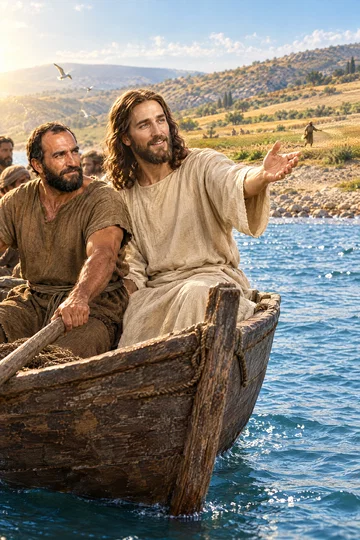
The parable illustrates the kingdom of heaven and the work of Christ, the great Husbandman, in sowing heavenly truth.COL 33.1 The parable itself is seed planting the precious truths of grace, and the natural seed leads the mind to the gospel seed whose sowing brings people back to loyalty to God.COL 33.1 The same laws govern the sowing of earthly seed and the sowing of truth, with earthly sowing representing spiritual sowing.COL 33.1Ms 28, 1898, par. 12 It was spoken to an eager company gathered to hear Jesus by the Sea of Galilee, and the seed that fell on stony ground is the word of God.COL 30.1
Jesus gave it when people rejected Him because He did not establish the national kingdom they expected.4RED 80.2 Even His disciples were impatient for Him to take temporal authority, and His relatives were disappointed in Him.4RED 80.2 It addressed the disappointment and doubt of those who expected a kingdom of worldly power and were troubled that many learned and wealthy people rejected Him.ST May 3, 1877
Christ drew the illustration from the great book of nature by using familiar objects of the sower and the springing seed.Ms 25, 1890, par. 11 He presented divine truth through the agency of the most familiar associations, calling into activity hallowed recollections and sympathies to arouse minds while breaking up their accustomed train of thought as little as possible.Ms 25, 1890, par. 11 He identified Himself with human interests to reach the inner temple of the soul and to weave a new and transforming economy of truth into experience, so that looking upon the sower and the springing seed afterward would remind them of the lesson.Ms 25, 1890, par. 11 The things of nature convey spiritual and eternal truths and call people to heed God's voice.Ms 28, 1898, par. 12
Stony Ground Hearers
The stony ground pictures one of the characters Christ came to teach and one of the tendencies of the human heart, one of the classes He had to meet.2SP 241.1–2ST May 3, 18774RED 86.2–3 It helps explain why His personal ministry produced meager immediate results despite miracles of goodness and mercy in healing the afflicted and casting out demons.2SP 241.1–2ST May 3, 18774RED 86.2–3 Men were left to themselves to do the work of correcting the evils of their natures, and were instructed how to unite human effort with divine power and triumph through His strength over besetting sins.2SP 241.1–2 This was necessary to give moral power to the Christian character and fit it for the courts of heaven.2SP 241.1–2 No miraculous agency was employed to compel belief, but men were left free to choose or reject Him of their own free will, with no direct power forcing obedience that would destroy the free moral agency given to man.2SP 241.1–2ST May 3, 18774RED 86.2–3
The seed springing up at once where there is not much earth and no depth represents people initially moved by the gospel who welcome the teaching and are stirred at first with desire for a holier life.2SP 232.1–233.34RED 79.2–80.12SP 234.1–2 That impression soon fades when they return to worldly surroundings, cares, temptations, and unfavorable surroundings, and they relapse into indifference.2SP 232.1–233.34RED 79.2–80.12SP 234.1–2 Stony-ground hearers receive the truth quickly and with joy, with eager zeal.3T 111.2–112.1TCBMP 140.1–142.1 They are led by feeling rather than firm principle, and the half-hearted effort to serve both self and Christ leaves them weak in purpose and changeable in desire.3T 111.2–112.1TCBMP 140.1–142.1COL 49.3–50.1
The word has not taken root in a renewed heart nor reached the principles that guide their actions.3T 111.2–112.1TCBMP 140.1–142.1 Their enthusiasm fades when trials, temptation, sacrifice, or persecution test them.3T 111.2–112.1TCBMP 140.1–142.1 When the truth exposes their faults and calls for sanctification they may refuse correction and give up the truth rather than submit to it, being offended by the word rather than submitting to its sanctifying work.3T 111.2–112.1TCBMP 140.1–142.1 Though they may speak fervently about faith and even reprove experienced believers for lacking enthusiasm, they abandon the truth when it requires them to act.TCBMP 140.1–142.1
Heart Preparation and Responsibility
The outcome of the sowing depends on the soil, for shallow stony ground lets the seed spring up quickly yet prevents it from taking root, and where the soil is too shallow the seed can perish; the heart is the soil and the truth is the seed.COL 56.1–2COL 57.1–2ED 111.1–2 The stony-ground hearer need not remain shallow, for people are accountable for resisting the Spirit and can cooperate with God in preparing the heart; this preparation comes through deep repentance and earnest effort in the name and strength of Jesus, uprooting the harmful tendencies that choke what is good.COL 56.1–2ED 111.1–2 The truths of the parable are understood by those who open their minds to instruction and are willing to believe, while those who refuse truth, neglect their opportunities, or close their hearts remain in darkness.4RED 82.1–2 Whether the seed takes root and bears good fruit or is overcome shows the result of what has been received in the heart, and the resulting actions reveal which has prevailed.4RED 82.1–2ST May 10, 1877
A stony, hard heart can be softened by Christlike personal ministry shaped by sympathy and love, allowing the seed of truth to take root.COL 57.1–2GW 185.1 Believers should therefore be taught the foundations of the Christian life from the beginning so that their faith does not remain shallow.COL 57.1–2 The seed is the principles sown in the heart and its springing up is the development of character.CT 142.2 The stony ground pictures the garden of the heart where good seed or bad seed is sown, and as the garden must be prepared for natural seed so the heart must be prepared for the seed of truth.CT 142.2 That correspondence is to be taught practically, with children preparing the soil and sowing seed while learning about the garden of the heart, and the lesson continued as the plant grows.CT 142.2
Parents must take great pains to cultivate the minds of little children and form correct habits so that their hearts are ready to receive truth.CTBH 67.3 They are the best teachers until children are eight or ten years old, and should not send them away to school too early nor trust the molding of the infant mind to other hands.CTBH 67.3 The schoolroom is the open air amid the flowers and birds, and the textbook is the treasures of nature opened as fast as their minds can comprehend, for lessons given amid such surroundings will not soon be forgotten.CTBH 67.3 Time and labor now worse than wasted in following the fashions of the world, if given to this cultivation, would bring a marked change in families.CTBH 67.3 Early life is especially impressionable, and good seed sown then in good soil can bear fruit unto eternal life.CTBH 67.34T 499.2
Sowing Work and Application
The verse belongs to Christ's illustration of His own work and that of His servants as a sower casting seed upon all kinds of soil.STMW7 4.2Ms 1a, 1874, par. 4–8Ms 1, 1874, par. 5 The seed is truth to be proclaimed everywhere as a worldwide message, not localized, in all cities and villages and in the highways and byways, at home, in the workshop, in the market as well as in the meeting-house, by holding forth the Word wherever access can be gained and sowing beside all waters.STMW7 4.2Ms 1, 1874, par. 54T 285.1 Some seed falls on poor soil like stony ground and yields no fruit unto eternal life, while seed on good ground brings forth some thirty, some sixty, and some a hundredfold.STMW7 4.2Ms 1, 1874, par. 5 That failure does not stop the sower, so servants are to work in His lines, follow His example, speak the words He gives, and sow without discouragement when results are not at once seen.STMW7 4.2Ms 1, 1874, par. 54T 285.1
Every gospel laborer will have just this experience of varied reception, with some hearers rising quickly and then withering when the sun rises because the seed has no depth of earth.Ms 1a, 1874, par. 4–85MR 300.4–301.1 Christ Himself placed Himself in the great thoroughfares where travel streamed from all parts of the world in order to sow the gospel seed broadcast to all.Ms 1a, 1874, par. 4–8 To do this sowing work members must be Bible students studying the will of God earnestly, reading the Bible carefully and prayerfully to become familiar with it, learning to cast themselves and their burden on Christ, realizing the value of the cross of Christ and learning to bear it, and having the fear of God before them in order to live holy lives.4T 285.1
The seed represents truth planted in minds whose effect may not be seen at once but can later spring up, bear fruit, and help save souls.ST May 2, 1878TBC1872 111.1 What is taught to attentive listeners can be revived and passed on to later generations.ST May 2, 1878 The seed may remain dormant for a time until God's grace convicts the heart, awakens it to life, and causes it to bear fruit for His glory.TBC1872 111.1 The lasting good of planting truth in children through clear, skillful instruction may not be known until the day of God, which is the call to sow spiritual instruction with hope of a harvest.6T 205.1Ms 183, 1898, par. 5–6
Seed of truth sown by personal, interested, wise distribution of publications can lie buried for years beneath the rubbish of the world and pleasing deceptive fables.GW92 409.1 After earthly sorrow or affliction softens the heart it springs up and bears fruit to God's glory.GW92 409.1 In this way people are reached who will not listen to a living preacher but will read a tract or paper.GW92 409.1 Placing books containing light and truth in the homes of all, including businessmen, even when all are not willing to purchase them, is sowing gospel seed that meets the needs of those seeking help and will spring up to bear fruit.Ms 157, 1902, par. 11
For the gospel seed to take root and bear fruit, hearers must be given heavenly food in small measure so they can retain it, carry it away, digest it, comprehend the truth, have souls impressed, and want to hear again.Lt 47, 1886, par. 8–10 This requires careful, pleasant, calm, earnest, impressive delivery as God's voice, governing the voice with pathos and melody and preaching short discourses.Lt 47, 1886, par. 8–10 Long protracted preaching, or raising the voice to a high key shouting truth as through a trumpet, brings exhaustion and loses effect.Lt 47, 1886, par. 8–10 The message is to be presented in a way hearers can understand, retain, and carry into their lives, with Christ and angels as listeners in the audience and Jesus the greatest teacher as the example in all things.Lt 47, 1886, par. 8–106MR 181.2–182.1
Preaching the theory of truth with its evidences sows seed in listening souls who are impressed.4T 393.3 When Christ as Saviour of the world with His redeeming love and cross is presented as part of the discourse, that seed springs up and bears fruit to God's glory and balances hearers on His side.4T 393.3 Discourses wholly argumentative that do not exalt Christ leave that work undone and let a golden opportunity that may never come again, even a last sermon heard, be lost forever.4T 393.3 Teaching given to children and youth is likewise seed sown in the heart that grows and bears fruit.CT 186.3–187.2 Books of science and philosophy where the thorns of skepticism are only partially concealed, vague fanciful fairy stories, and works on Scripture subjects that weave in fanciful human interpretations also sow such seed, and its growth produces a plentiful harvest of infidelity whose result is seen in the depravity of the human family.CT 186.3–187.2
Sources
Pioneers and periodicals
67 sources
It pictures seed landing on thin soil over rock, shooting up at once because it cannot go deep, then drying out when heat comes because it has no root to sustain it.ST Jun 30, 1881ST Jan 28, 1889ST May 3, 1877 The seed is God's word, truth and gospel, and the soil is the heart and mind of the hearer, so the result turns on how it is received.ST Oct 19, 1882RH Jul 9, 1914ST Sep 16, 1886 Stony hearers welcome it gladly and profess it quickly, yet have no depth in themselves.ST Nov 26, 1894ST Aug 20, 1894 When trial, reproach, persecution or temptation comes they wither and give it up, which shows the fault lies not in the living seed but in a heart not awakened, prepared and made fit by faith.ST Nov 26, 1894ST Apr 11, 1900RH Aug 6, 1861ST Sep 16, 1886 Therefore the word is to be scattered everywhere in hope even though some will prove shallow, and hearts are to be searched and cleared of weeds and stones so the seed can take lasting root and bear fruit.RH Jul 10, 1856RH Jul 10, 1860RH Jan 26, 1860RH May 18, 1916RH May 20, 1909
Words and Parable Setting
The seed falls on stony ground where there is little earth, and it springs up immediately and quickly because it has no depth of earth.ST Jun 30, 1881ST Jan 28, 1889ST May 3, 1877ST Aug 5, 1913ST Aug 20, 1894 It cannot take deep root because the soil is too thin and shallow to sustain growth.ST Jan 28, 1889ST May 3, 1877ST Aug 5, 1913RH Apr 10, 1900 It soon withers because it lacks enough soil to continue, and when the sun rises it is scorched because it has no root.ST Jun 30, 1881ST May 3, 1877ST Aug 5, 1913RH Apr 10, 1900 The second growth appears happy and even takes pride in its choice, yet its growth lacks depth.ST Aug 20, 1894
The word for stony is the Greek adjective petrodes, derived from petros.ST Aug 26, 1880 Petros means a stone or piece of rock such as lies loose upon stony ground and may be picked up and used, such as were thrown by ancient warriors in war.ST Aug 26, 1880 The verse belongs to the parable of the sower that shows different responses to Christ's teaching and helps explain why His ministry had limited immediate results.ST May 3, 1877 People were left free to receive or reject Him without being forced into belief or obedience.ST May 3, 1877 The parable was given to meet disappointment and doubt because many learned, prominent, wealthy people did not accept Him as Messiah and Redeemer when a kingdom of worldly power was expected, and it serves as a key to understanding His parables and teachings.ST Jan 28, 1889ST May 3, 1877RH Oct 6, 1904
In the parable the seed represents truth, the Word of God, the gospel and present truth planted in minds, while the soil represents the hearts, minds and people who hear it.ST May 2, 1878ST Oct 19, 1882RH Jul 9, 1914ST Sep 16, 1886ST How the seed is planted and received affects its growth and whether it takes root and bears fruit.ST Oct 19, 1882RH Jul 9, 1914ST Sep 16, 1886 Too much teaching such as scolding, needless repetition or excessive explanation can bury and smother the truth instead of helping it take root, whereas helpful questions, remarks and illustrations can prepare the soil so long as the truth itself remains central.ST Oct 19, 1882 The Spirit of God prepares the heart and the person must be willing to receive the word, and even minds cold like frozen ground can be warmed by God's love so that the word will grow where good soil lies beneath.RH Jul 9, 1914ST Sep 16, 1886 Its effect may not be seen at once, but it can later spring up, bear fruit and help save souls, being revived in attentive listeners and passed on to later generations, and whether it takes root and bears good fruit or is overcome shows by resulting actions which has prevailed in the heart.ST May 2, 1878ST May 10, 1877 By contrast with shallow stony soil that cannot sustain growth, receptive soil takes the Word and produces lasting fruit that endures.ST
The verse is also used simply as part of the general seed-sowing picture of seed springing up, without the shallow stony soil being separately explained.RH Feb 10, 1910ST Dec 9, 1897 In that use the scattered gospel seed is to be sown everywhere because its growth and fruit may appear in an obscure place and lead to eternal life. Truth planted in hearts is sown with hope that it will eventually spring up and bear fruit unto eternal life.RH Feb 10, 1910 So the sown message is pictured as taking root and continuing to bear fruit even despite persecution and banishment.ST Dec 9, 1897
Stony-Ground Hearers Described
The stony ground is the hearer who receives the word at once with joy, charmed by it and desiring the salvation it promises, appearing happy and even taking pride in the choice, giving immediate attention and professing to give self to Christ, yet without firm depth or root.ST Nov 26, 1894ST Aug 20, 1894RH Jan 9, 1913 The quick springing up comes from shallowness of soil, so there is lively early promise but no capacity for deep rooting.ST Nov 26, 1894ST Aug 20, 1894RH Jan 9, 1913
Such hearers are unwilling to bear the trials required to win the crown, so when trouble, trial, persecution, reproach, or temptation comes they quickly wither, grow weary, fall away, and abandon the truth.ST Nov 26, 1894RH Aug 6, 1861RH Jul 6, 1869 Some are overcome by the cares and pleasures of life, while others go on to bear abundant fruit.ST Nov 26, 1894RH Aug 6, 1861RH Jul 10, 1860 The same truth thus produces different results according to the condition of the heart.RH Aug 6, 1861
One who takes the truth for inadequate or secondary reasons, instead of making it the ruling principle of life, will not endure testing.RH Aug 6, 1861 That superficial religion turns away from God and the truth when displeased by others, because it lacks depth.RH Aug 6, 1861ST Aug 27, 1885 It is like wanting immediate growth on the surface rather than following the farmer's plan, even resisting being planted for fear of the damp, dirty soil.ST Aug 20, 1894
The failure is not in the seed, for the Word is living and powerful, but in receiving it without the conditions faith provides.ST Apr 11, 1900 The Spirit prepares the heart, and the person must be willing to receive the word so that it takes root in prepared ground and bears fruit.ST Sep 16, 1886RH May 11, 1869 The heart must first be awakened to the danger and power of sin and made ready to seek healing from Jesus, which is the preparatory work John was sent to do.RH May 11, 1869 A heart that is unfit to bear fruit need not remain so, for it can be made fit by doing in faith what God says.ST Sep 16, 1886ST Jun 9, 1898
To trust in such an unprepared, shallow, rocky state is as untenable as expecting a crop from seed sown on rock.RH May 11, 1869 Hearing alone is not enough, for growth without firm depth is unfruitful and yields no harvest.RH May 11, 1869RH Apr 14, 1859RH May 11, 1869 The seed of life may begin to grow there but lacks the soil needed to continue, and it soon withers because the soil cannot sustain it.RH Apr 10, 1900 By contrast, seed on good ground takes lasting root, endures opposition and argument, and bears fruit.RH Apr 10, 1900RH Apr 14, 1859
Those who receive eagerly but have no root in themselves wither and fall away when persecution and reproach arise.RH Jul 6, 1869 That separation is necessary for the spiritual health of those who remain faithful.RH Jul 6, 1869
Sowing in Gospel Work
The parable calls for scattering gospel seed everywhere among all people whether they listen or not, by preaching and by publications, papers, tracts, literature and canvassers spreading truth through the population, and by isolated believers quietly sharing present truth and living daily lives that prepare the way for ministers.RH May 18, 1916RH May 20, 1909RH Nov 11, 1909RH Feb 16, 1905ST Aug 12, 1880 The work is to persevere in sowing at every opportunity with prayer and hope for blessing, because although few may attend meetings and only some may read or hear, some seed will still find good soil, spring up and produce an abundant harvest.RH Feb 16, 1905ST Aug 12, 1880RH Aug 13, 1914 Sharing religious papers plants a message in the heart with the hope that it will spring up and bear fruit.RH Aug 13, 1914
Some seed lost on stony ground, by the wayside and among thorns means some efforts to spread the special message for this time will seem lost, with some hearers growing weary in well-doing and overcome by life's cares and pleasures while others bear abundant fruit.RH Jul 10, 1860RH Jan 26, 1860RH Aug 26, 1902 Such loss is expected and should not cause discouragement, for in teaching and character training some efforts fail to take deep root while others reach good soil and bear fruit later.RH Aug 26, 1902ST Nov 16, 1888 The call therefore is to sow the more bountifully, as in sowing seven grains where four are left for crows, moles, worms and squirrels and three for the harvest, so that enough remains to yield a hundredfold harvest.RH Aug 26, 1902
The parable illustrates the work of God's people in the last days into whose hands are committed the great truths of the last message to a perishing world, having application in every age since Christ uttered it but never more than at the present time, fulfilled every time present truth is sown in new fields.RH May 14, 1872 The sower applies more particularly to the minister but more generally to all who bear the truth.RH May 14, 1872 Disciples must work difficult fields including hard paths, stony ground and thorn-filled ground, rather than only among receptive hearers.ST Aug 4, 1881
The Philippines are hard, shallow, resistant stony ground where seed struggles to take root amid unsettled public thought, while the Batonga are slow in thought yet the sown seed is already bearing fruit as they understand salvation and are saved through Christ.RH Dec 24, 1908ST Oct 24, 1900 In contrast, the German Russian wheat-growing colonies in Entre Rios were receptive soil that received the Word, grew into several neighboring churches, endured and became the backbone of believers in the River Plate district.ST Florida's winter visitors are like good soil because, less tied to business, church and social obligations, they are more willing to read and hear the message.RH Dec 26, 1907
Sowing may produce interest without an immediate decision, so patient care and time are needed before hearers are fully decided to obey and lasting fruit appears.RH Jan 24, 1907 Seed sown in Tuscola had taken root in some hearts, with prayer for blessing that it would keep growing and spread from heart to heart.RH Apr 2, 1867 Truth planted in hearts with hope of eternal life may later take root and grow, and seed planted by preaching and tracts can be kept and cherished in the heart for many years, even eleven years, then grow when clear light comes and lead to a decided stand.RH Feb 10, 1910ST May 5, 1881
Preparing and Keeping Soil
The human heart is soil that must be made ready for the good seed of the word of God.RH Jul 10, 1856 Every ill weed takes root and spreads in it, including thorns of worldly care and thistles of worldly vanity, with unprofitable weeds and roots of bitterness.RH Jul 10, 1856 As the husbandman watches his land, the Christian must search and examine the heart and cast all these out.RH Jul 10, 1856 When this work is rightly done the soil is ready, and the seed springs up and prospers under divine grace, as corn grows by rain and sunshine from heaven.RH Jul 10, 1856
How truth is planted affects whether it takes root, for too much teaching such as scolding, needless repetition, or excessive explanation can bury and smother the truth instead of helping it root.ST Oct 19, 1882 Helpful questions, remarks, and illustrations can prepare the soil, but the truth itself must remain central.ST Oct 19, 1882 Teaching on temperance likewise falls like seed on shallow, stony ground or by the wayside when people believe stimulants are necessary for health and vigor.ST Oct 28, 1875
Good seed from a sermon or lesson can find a ready heart in a boy and in children, springing up quickly where the soil is shallow yet lacking depth for roots.ST Mar 11, 1886ST Jun 18, 1885ST Dec 2, 1897 That good influence can be diverted before it settles and takes root, for criticism at home can spoil its effect and carry the good seed away before it can grow.ST Mar 11, 1886ST Jun 18, 1885ST Dec 2, 1897 Instruction of children carries the hope that the seed will fall on good ground and produce fruit, and mothers can help the teacher toward that end.ST Jun 18, 1885RH Oct 7, 1915
Because the word may reach hearers who do not receive it deeply and therefore may fail to bear fruit, preaching should be applied pointedly to awaken the hearer, while prayer is made that the word will take effect rather than be taken away and become unfruitful.ST Jun 16, 1887 Song telling of Jesus and his love can break up and soften resistant stony hearts where the message seems to find no response, allowing the good seed to spring up to everlasting life.RH Oct 23, 1913 Practical advice should be received rather than fall on stony ground fruitless and fail to take root.RH May 30, 1912
Even lives that seem small and insignificant are soil sought for God's seed, and when people give what they have much can be brought from little.ST Aug 5, 1913
Teaching once received without depth may still be present before it takes root and ripens.RH Dec 10, 1867ST Feb 11, 1875 The seed sown may still be there, as Tom said of the seed Deacon Gray had sown in him, and seeing faith expressed in compassionate action and joined with works can help it take root, grow, and bear fruit.RH Dec 10, 1867ST Feb 11, 1875
What is sown in words and actions may rest like seed on the surface of dry, unyielding ground, failing to take root and grow, or bearing fruit for good or ill.RH Jul 7, 1874 Sowing seeds is thus joined to acts of kindness and truthful words that may later bear fruit, even as some seed in character training falls on stony ground without deep root while other seed reaches good soil and bears fruit later.ST Dec 31, 1874ST Nov 16, 1888 Even a small effort inspired by love, sown where little is expected as on shallow, stony ground, can be made to grow far beyond intent, as seen when scattered missionary seed takes root.RH Nov 23, 1905ST Sep 4, 1879
The sower putting seed into the ground and afterward reaping of the same impresses the certainty of receiving hereafter according to the deeds of this life.RH Sep 17, 1857 The present lifetime is the world's sowing time, in which all are busily putting in seed and preparing for a future harvest either good or bad, so that none can expect to reap differently from what was sown.RH Sep 17, 1857 The good seed is the message of love heralding salvation abroad, preaching faith in the Saviour and service to God, sown each week to refresh each soul who reads, and scattered far afield with prayer to yield its hundredfold grains to feed waiting children.RH Apr 29, 1902RH Jul 23, 1857
Sources