Mark 9:21
And he asked his father, How long is it ago since this came unto him? And he said, Of a child.
Translations
And he asked his father, How long is it ago since this came to him? And he said, Of a child.
King James Version, KJV Cambridge Paragraph Bible
And he asked his father, How long is it ago since this came unto him? And he said, Of a child.
And he asked his father, How long is it since this came to him? and he said, From a child.
Revised Version, American Standard Version
And he asked his father, How long time is it since this hath come unto him? And he said, From a child.
And he questioned his father, 'How long time is it since this came to him?' and he said, 'From childhood,
And he asked his father, How long a time is it that it has been like this with him? And he said, From childhood;
And he questioned his father—How long a time, is it, that, this, hath befallen him? and he said—From childhood;
Berean Standard Bible, Majority Standard Bible
Jesus asked the boy’s father, “ How long has this been with him?”“ From childhood,” he said.
He asked his father, “ How long has it been since this has been happening to him?”He said, “ From childhood.
And Jesus questioning the father said, How long has he been like this? And he said, From a child.
Then he asked his father, How long time is it since he hath bin thus? And he said, Of a childe.
Douay-Rheims (Challoner revision)
And he asked his father: How long time is it since this hath happened unto him? But he said: From his infancy:
Pictures
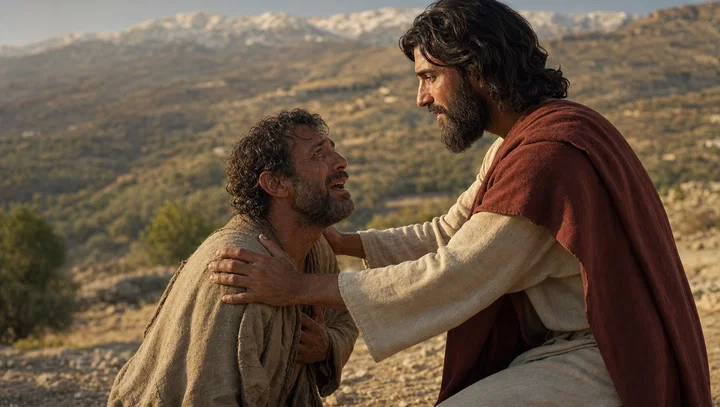
Cross-references
- Matthew 17:14-18
And when they were come to the multitude, there came to him a certain man, kneeling down to him, and saying,
Matthew recounts Jesus healing the afflicted boy and describes his affliction.
- Luke 9:37-43
And it came to pass, that on the next day, when they were come down from the hill, much people met him.
Parallel account of the boy’s long affliction and healing.
- Mark 9:25-27
When Jesus saw that the people came running together, he rebuked the foul spirit, saying unto him, Thou dumb and deaf spirit, I charge thee, come out of him, and enter no more into him.
Jesus casts out the spirit and restores the boy.
- Mark 9:29
And he said unto them, This kind can come forth by nothing, but by prayer and fasting.
The afflicted boy is freed through prayer.
Commentary
Each commentary is drawn from primary sources: the writings of Ellen G. White and Adventist pioneers and periodicals. Each commentary is separate. Its own words are not a quotation; follow the references to read the source passages.
Ellen G. White
15 sources
Jesus asked the father how long his son had been tormented by the unclean spirit, and the father answered that the affliction had lasted since childhood, a lifelong ordeal of many years.2SP 334.1–24SP 334.1DA 426.3–427.2 This took place the morning after the night on the mountain, when Jesus descended from being glorified before His companions and proclaimed the Son of God to meet the opposite extreme of grief in a demon-possessed child in Satan's power whom the disciples had failed to deliver.DA 426.1–2DA 426.3–427.22SP 336.1 By the question He brought the father's mind to the long years of watching his son's suffering in hope and fear, deepening his anguish, yet He used that remembrance to encourage him to believe and prepare him to seek help in faith.2SP 334.1–2DA 428.1–5ST Jun 7, 18773RED 123.1–124.1 He then freed and healed the boy forever with a command that the dumb spirit leave and torment him no more, stooping from the Father's glory to restore him to soundness of mind and body and return him to his father as an object lesson of redemption.GC88 515.2GC 515.22SP 336.1DA 429.2–430.1
Setting and Suffering
The scene belongs to the morning after the night on the mountain, when Jesus and His three companions came down to the plain.DA 426.1–2 On the way He charged them to tell the vision to no one until the Son of man was risen from the dead, a charge to be pondered and not published.DA 426.1–2 Even the nine and the three did not understand it until after the resurrection, for the three were slow to comprehend and questioned among themselves what rising from the dead should mean.DA 426.1–2 They asked Him no explanation because His words about the future filled them with sorrow.DA 426.1–2 Only a few short hours after He had stood glorified before the favored disciples by the glory of God, talked with the messengers of Heaven, and been proclaimed the Son of God by the Father's voice from the radiant glory, He descended to meet the opposite extreme of grief.2SP 336.1 There lay a lunatic child, a victim of Satan, with distorted countenance and gnashing teeth in spasms of agony that no mortal could relieve, wallowing on the ground.2SP 336.1
The episode concerns a son tormented by an unclean spirit, also described as a dumb spirit, evil spirit, and demon, whom the disciples had failed to deliver.DA 426.3–427.2 His affliction had lasted since childhood, a lifelong ordeal persisting for many years before Jesus healed him.2SP 334.1–24SP 334.1DA 428.1–5ST Jun 7, 18773RED 123.1–124.1 That long duration highlights the severity and continuance of his suffering.2SP 334.1–24SP 334.1DA 428.1–5ST Jun 7, 18773RED 123.1–124.1 The father's answer that it had been so since childhood records years of watching in hope and fear.2SP 334.1–2DA 426.3–427.2DA 428.1–5ST Jun 7, 18773RED 123.1–124.1
The dumb spirit repeatedly tried to destroy the youth by casting him into fire and water.GC88 515.2GC 515.2 The case stands as an example of the suffering caused by demonic possession.GC88 515.2GC 515.2 Jesus' question about how long the affliction had lasted brought the father's mind to those long years of his son's suffering as he had watched in hope and fear.2SP 334.1–2DA 428.1–5ST Jun 7, 18773RED 123.1–124.1 The recall deepened his anguish and his fear that even Jesus might not be able to help or overcome the demon.2SP 334.1–2DA 428.1–5ST Jun 7, 18773RED 123.1–124.1
Deliverance and Faith
Jesus permitted the evil spirit to show its strength for a short time, so that those watching would grasp more fully the deliverance that was about to take place.DA 428.1–5 By asking how long the affliction had lasted, He turned the father's thoughts to the long years of watching his son suffer in hope and fear, deepening his anguish and his fear that even Jesus might be unable to help.ST Jun 7, 1877 That same recalling of years of suffering was used to urge the father to believe and to ready him to seek help in faith, since the long duration had made him fear the demon could not be overcome.ST Jun 7, 18773RED 123.1–124.1
The boy was tormented by a dumb spirit that again and again cast him into fire and into water in an effort to destroy him.GC88 515.2GC 515.2 Jesus healed him and ordered the spirit to come out and torment him no more, freeing the youth from the demon's power and from Satan's power forever.GC88 515.2GC 515.22SP 336.13RED 125.2 The Mighty Redeemer stooped down to lift the sufferer up, restoring him to soundness of mind and body and giving him back to his father and to his home.2SP 336.1DA 429.2–430.1 After the deliverance both father and son rejoiced in their freedom and praised their Deliverer.3RED 124.2
The rescue is an object lesson of redemption, revealing the Divine One stooping from the Father's glory to save the lost.DA 429.2–430.1 In that scene the boy stands enslaved by Satan, and only faith and prayer can set such captives free.DA 429.2–430.1ST Jan 22, 1902 That need for faith and prayer pictures the work of the disciples among people waiting to be freed through faith and prayer.DA 429.2–430.1 By contrast, Martha's situation does not call for her to pass through the severe conflicts and trials endured by this demon-afflicted child since childhood.4MR 177.3–180.1
Sources
Pioneers and periodicals
24 sources
Jesus asked the boy's father how long the affliction had been upon him, and the father answered that it had been since childhood, having lasted many years before Jesus healed him.ST Aug 16, 1905RH Nov 30, 1916ST Aug 16, 1905 The suffering was possession by a dumb evil spirit that threw him into grievous fits and danger from fire and water, holding him enslaved in Satan's grip.ST Aug 16, 1905ST Jul 18, 1900ST Jan 28, 1875 The father had brought his son after the disciples could not cure him, and his doubt turned to pleading until Jesus led him to believe, healing the son in answer to the father's faith while curing the father of unbelief.ST Jul 21, 1914ST Jul 18, 1900ST Jan 8, 1902 Jesus is compassionate and mighty to relieve suffering, just as willing now to forgive the sinful, heal the sick and comfort the troubled as when He was on earth.RH Oct 30, 1860ST Jul 29, 1908RH Dec 16, 1902 The disciples had failed through jealousy and love of supremacy, and needed prayer and fasting and cleansing from unchristlike traits to become pure channels for God to work through.RH Dec 16, 1902RH Sep 25, 1913 Those who have been with Christ on the mount are to come down to serve the needy in the valley, where suffering and possession still call for relief.ST Jun 13, 1900RH Jan 4, 1912ST May 8, 1901
Setting and Suffering Described
The verse stands inside the account that follows the transfiguration, when Jesus came down from the mountain with the three disciples to the multitude waiting in the valley below.ST Aug 16, 1905RH Jan 4, 1912ST May 8, 1901 It belongs to the Mark 9:2-29 sequence covering the transfiguration and the events immediately following it, which shows the fulfilment of the promise that some standing there would not taste death till they see the Son of man coming in His kingdom.ST Mar 31, 1898 The scene sets Christ's glory followed by compassionate service, as after the view of God's triumphant kingdom He ministers to a demon-afflicted boy and the needy crowd in the valley.RH Jan 4, 1912ST May 8, 1901 Suffering, sickness and demon possession were still everywhere on earth and still called for relief, and the work of helping had to be done down where the need was.RH Jan 4, 1912
The verse records Jesus asking how long the affliction had been on the boy, and the father answering, of a child.ST Aug 16, 1905RH Nov 30, 1916 The question and answer establish that the boy's affliction had been with him since childhood and emphasize that the condition was long-standing.RH Nov 30, 1916ST Aug 16, 1905ST Aug 16, 1905 His suffering had persisted for many years before Jesus healed him.ST Jan 20, 1904
The suffering was possession by an evil spirit, described as a dumb spirit, which caused severe epileptic fits.ST Aug 16, 1905ST Jan 8, 1902 The boy was in danger of being cast into fire and water.ST Jul 18, 1900 The devil had gained control of him and acted through him, so his actions were attributed to the devil rather than to the boy himself.ST Jan 28, 1875 He is described as enslaved by Satan and held in the enemy's grip.ST Jan 22, 1902RH Apr 9, 1914
Jesus' question brought the father's mind to the many long years of his son's suffering.ST Jun 7, 1877ST Oct 6, 1881 That remembrance deepened his grief and his anguish and fear that the disciples — and even Jesus — could not help.ST Jun 7, 1877ST Oct 6, 1881 Jesus recognized his despair and used the moment to lead him toward faith and encourage him to believe.ST Jun 7, 1877ST Oct 6, 1881
At this point in the account the demon-tormented boy was waiting below the mountain, where the disciples had been unable to help or free him.ST Dec 17, 1896ST Apr 17, 1901 Their failure indicated their state of mind and heart.ST Apr 17, 1901 It led them to question Jesus privately about it and learn from Him, and afterward they succeeded.RH Sep 25, 1913
Faith, Healing, and Service
The father had brought his grievously afflicted son to Jesus after the disciples could not heal him, and his doubt about Jesus' ability gave way to a plea for help.ST Jul 21, 1914ST Jul 18, 1900ST Jan 8, 1902 Jesus taught him to believe, and he confessed both his faith and his need for help with his unbelief, which set the scene for Jesus' call to believe.ST Jul 18, 1900ST Jan 8, 1902 The son was healed in answer to the father's faith, and the father himself was cured of unbelief.ST Jul 21, 1914ST Jul 18, 1900 The account presents Jesus as compassionate and powerful, relieving suffering without selfish ambition and showing God's power to heal.RH Oct 30, 1860RH Dec 16, 1902 He is just as willing now to forgive the sinful, to heal and restore the sick, and to comfort the troubled as He was to those who came directly to Him.ST Jul 29, 1908 The recorded miracles are only a small part of those He wrought to give comfort to every class of people who may live upon the earth, because the Bible is not for the Hebrew people alone but as truly for all outside the Hebrew tribes, and God is the God of all those who will seek Him.ST Jul 29, 1908
The disciples could not cure the boy because jealousy and love of supremacy had deprived them of their power.RH Dec 16, 1902 They needed prayer and fasting, and cleansing from jealousy and other unchristlike traits, to become pure channels through which God could work.RH Dec 16, 1902 Having questioned Jesus privately about their failure and learned from Him, they succeeded afterward.RH Dec 16, 1902RH Sep 25, 1913 The episode shows that those who have been with Christ on the mount can serve people in need in the valley, with Christ's glory followed by compassionate service to suffering people and the needy crowd.ST Jun 13, 1900ST May 8, 1901 After the transfiguration Christ and the three disciples came down from the view of God's triumphant kingdom to the multitude below, where suffering, sickness and demon possession were still everywhere on earth and still called for relief, and the work of helping had to be done down where the need was.ST Jun 13, 1900RH Jan 4, 1912ST May 8, 1901
The boy's condition had been present since childhood and is linked with epilepsy, with danger of being cast into fire and water by a dumb spirit and evil spirit.ST Jul 18, 1900RH Mar 7, 1912ST Jan 8, 1902 He was enslaved by Satan and held in the enemy's grip, yet was saved by Jesus through deliverance by prayer and Christ's power.ST Jan 22, 1902RH Mar 7, 1912RH Apr 9, 1914 Faith and prayer are needed to set such a one free from Satan's enslavement.ST Jan 22, 1902RH Mar 7, 1912
Sources