Mark 9:22
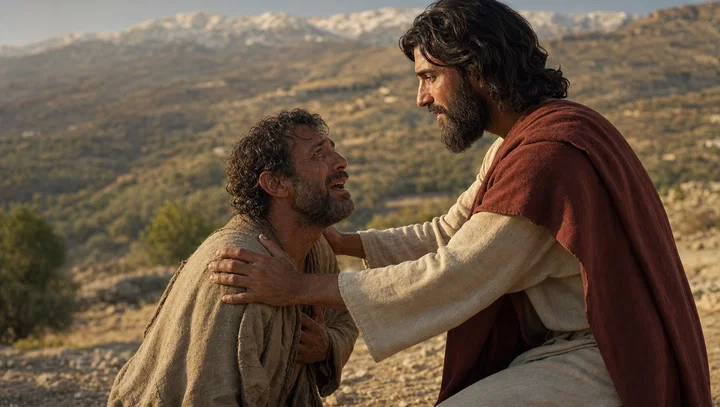
And ofttimes it hath cast him into the fire, and into the waters, to destroy him: but if thou canst do any thing, have compassion on us, and help us.
Translations
And often it has cast him into the fire, and into the waters, to destroy him: but if you can do any thing, have compassion on us, and help us.
King James Version, KJV Cambridge Paragraph Bible
And ofttimes it hath cast him into the fire, and into the waters, to destroy him: but if thou canst do any thing, have compassion on us, and help us.
And often it hath cast him into the fire, and into the waters to destroy him: but if thou canst do any thing, have compassion on us, and help us.
Revised Version, American Standard Version
And oft-times it hath cast him both into the fire and into the waters, to destroy him: but if thou canst do anything, have compassion on us, and help us.
and many times also it cast him into fire, and into water, that it might destroy him; but if thou art able to do anything, help us, having compassion on us.'
and often it has cast him both into fire and into waters that it might destroy him: but if thou couldst [ do] anything, be moved with pity on us, and help us.
and, many times, hath it cast him, both into fire, and into waters, that it might destroy him; but, if anything be possible to thee, help us, have compassion upon us.
Berean Standard Bible, Majority Standard Bible
“ It often throws him into the fire or into the water, trying to kill him. But if You can do anything, have compassion on us and help us.”
Often it has cast him both into the fire and into the water to destroy him. But if you can do anything, have compassion on us and help us.”
And frequently it has sent him into the fire and into the water, for his destruction; but if you are able to do anything, have pity on us, and give us help.
And oft times he casteth him into the fire, and into the water to destroy him: but if thou canst do any thing, helpe vs, and haue compassion vpon vs.
Douay-Rheims (Challoner revision)
And oftentimes hath he cast him into the fire and into waters to destroy him. But if thou canst do any thing, help us, having compassion on us.
Pictures
Cross-references
- Matthew 17:14-18
And when they were come to the multitude, there came to him a certain man, kneeling down to him, and saying,
Matthew recounts the afflicted boy’s suffering and Jesus’ deliverance.
- Luke 9:37-42
And it came to pass, that on the next day, when they were come down from the hill, much people met him.
Jesus heals and delivers the boy afflicted by an evil spirit.
- Matthew 17:20
And Jesus said unto them, Because of your unbelief: for verily I say unto you, If ye have faith as a grain of mustard seed, ye shall say unto this mountain, Remove hence to yonder place; and it shall remove; and nothing shall be impossible unto you.
Jesus explains the disciples’ failure to heal the boy as unbelief and speaks of faith’s power.
- Mark 9:28-29
And when he was come into the house, his disciples asked him privately, Why could not we cast him out?
The disciples ask why they failed to cast out the spirit, and Jesus explains.
- Luke 4:33-36
And in the synagogue there was a man, which had a spirit of an unclean devil, and cried out with a loud voice,
Jesus commands an unclean spirit to leave a man in the synagogue.
- Mark 9:17-18
And one of the multitude answered and said, Master, I have brought unto thee my son, which hath a dumb spirit;
The father describes the spirit’s torment of his son.
- Matthew 15:22-28
And, behold, a woman of Canaan came out of the same coasts, and cried unto him, saying, Have mercy on me, O Lord, thou Son of David; my daughter is grievously vexed with a devil.
A parallel account tells of a demon-tormented child healed through her mother’s plea.
- Matthew 17:1-9
And after six days Jesus taketh Peter, James, and John his brother, and bringeth them up into an high mountain apart,
parallel account of same section
- Isaiah 49:15
Can a woman forget her sucking child, that she should not have compassion on the son of her womb? yea, they may forget, yet will I not forget thee.
God promises not to forget His people, even more surely than a mother.
- Mark 9:29
And he said unto them, This kind can come forth by nothing, but by prayer and fasting.
Jesus gives need for prayer and fasting
Commentary
Each commentary is drawn from primary sources: the writings of Ellen G. White and Adventist pioneers and periodicals. Each commentary is separate. Its own words are not a quotation; follow the references to read the source passages.
Ellen G. White
17 sources
An evil spirit had long enslaved the boy and repeatedly driven him into fire and water to destroy him, leaving him in life-threatening danger with severe seizures and agonizing spasms no human power could relieve.2SP 334.1–24SP 334.1GC88 515.2ST Jan 20, 19043RED 125.2 Within hours of His transfiguration glory Jesus came down to meet this grief after His disciples had failed to cast out the spirit, and the father's plea for compassion and help came from anguish and desperation yet doubted whether even Jesus could overcome the demon.2SP 334.1–2DA 426.3–427.2ST Jan 20, 1904ST Jun 7, 18773RED 123.1–124.1 Jesus as a compassionate Saviour and mighty Redeemer with unlimited power dealt with the demon as an intelligent, cruel agent and commanded it to leave and torment the boy no more, then lifted the child, freed him permanently, and restored his mind and body.4SP 334.1GC88 515.2GC 515.23RED 125.22SP 336.1 The conditional form of the plea questioned Christ's power when He lacks no power, and He taught that the healing depended on the father's faith by calling him to believe.ST Jan 20, 1904ST Jun 7, 1877DA 428.1–5 Even in unbelief the father turned to Christ's mercy and asked help for his struggling faith, showing that those weak in faith are not to stay away but to come in helplessness and trust His mercy, for faith connects people with heaven and gives strength to resist darkness and temptation.ST Jan 20, 1904DA 428.1–5DA 428.6–429.13RED 124.2 The plea is the cry of a sin-burdened soul that knows its helplessness, and the boy's deliverance is an object lesson of redemption showing those held by Satan and calling Christ's servants to work with faith and prayer to set them free.ST Jan 20, 1904DA 428.6–429.1DA 429.2–430.1ST Jan 22, 1902
Tormented Child, Pleading Father
An evil spirit enslaving the boy repeatedly drove him into fire and into water in an attempt to destroy him, putting him in life-threatening danger.2SP 334.1–24SP 334.1GC88 515.2ST Jun 7, 18773RED 123.1–124.1 The spirit was dumb and cruel, throwing the youth again and again into places meant to kill him.4SP 334.1GC88 515.2GC 515.2
The boy had suffered for years under this torment, seized by severe fits that cast him down wallowing on the ground.ST Jan 20, 19043RED 125.22SP 336.1 His spasms were agonizing, with distorted countenance and gnashing of teeth, in a condition no mortal or human power could relieve.2SP 336.1DA 429.2–430.1 Satan's destructive power held him enslaved and repeatedly drove him into danger, leaving him helpless before any human help.3RED 125.2DA 429.2–430.14MR 177.3–180.1
Within hours of the glory of His transfiguration Jesus came down to meet this deep human grief.2SP 336.1 He had descended from the mount to find the disciples had failed to cast out the spirit and heal the son.2SP 334.1–23RED 123.1–124.1 Their inability left them perplexed and brought humiliation upon them, while the father was left discouraged.2SP 334.1–2DA 426.3–427.23RED 123.1–124.1
The father's appeal for compassion and help came from anguish, desperation, hope and fear together.2SP 334.1–2ST Jan 20, 1904DA 428.1–5 Years of suffering and the disciples' failure had worn him down, so that he doubted whether even Jesus could overcome the demon.2SP 334.1–2ST Jan 20, 1904ST Jun 7, 18773RED 123.1–124.13RED 124.2 His conditional plea questioned Christ's power after long discouragement, yet he still turned to Christ's mercy even in unbelief.ST Jan 20, 1904DA 428.1–53RED 124.2
Compassionate Deliverance by Christ
The boy was held by a dumb, evil spirit that again and again cast him into fire and into water in a determined effort to destroy him.4SP 334.1GC88 515.2DA 429.2–430.1 Jesus met him as a compassionate Saviour and mighty divine Redeemer, possessing unlimited power over evil spirits.4SP 334.1GC88 515.2DA 429.2–430.1 He stooped to rescue a helpless victim, answering the father's pleading for compassion and help by casting out the demon and healing the son.4SP 334.1GC88 515.2DA 428.1–5DA 429.2–430.1
He dealt with the demon not as mere affliction but as an intelligent being and a cruel agent.GC88 515.2GC 515.2 He spoke to it directly and commanded it to leave the youth and torment him no more.GC88 515.2GC 515.2 By that word of authority He healed the youth and broke the spirit's hold.GC88 515.2GC 515.2
He lifted the suffering child and set him free permanently, so that never again would the demon have power over him.3RED 125.22SP 336.1DA 429.2–430.1 In that act He restored both mind and body and gave the boy back to his father to return home.3RED 125.22SP 336.1DA 429.2–430.1 No mortal or human power could have relieved those spasms of agony, and the deliverance exposed that utter helplessness.2SP 336.1DA 429.2–430.1
Faith and Present Help
The father's "if thou canst" put a condition on Christ's power, as if after years of suffering and the disciples' failure even Jesus might not be able to overcome the demon, yet there is no lack of power in Christ.ST Jan 20, 1904ST Jun 7, 1877DA 428.1–53RED 124.2 Jesus answered by calling him to believe, teaching that the son's healing depended on the father's faith.ST Jan 20, 1904ST Jun 7, 1877DA 428.1–53RED 124.2 Even in unbelief the father did not turn away but turned to Christ's mercy, admitting his weakness and asking for help with his struggling faith.ST Jan 20, 1904DA 428.1–53RED 124.2
Faith is the link that connects human beings with heaven and gives strength to resist the powers of darkness, sinful traits, and temptation.DA 428.6–429.1 Those who feel weak in faith are not to stay away from Christ or rely on themselves, but to come in helplessness and unworthiness and trust His mercy.DA 428.6–429.1 The same mighty Redeemer who healed and cast out demons in His earthly ministry is able to help today, and faith comes through God's word.DA 428.6–429.1 The father's plea for compassion and help is also the cry of a sin-burdened soul that knows its own helplessness and appeals to Christ's mercy.ST Jan 20, 1904DA 428.6–429.1 Such a soul is pointed away from self and toward the compassionate Saviour, who helps those who come to Him in faith.ST Jan 20, 1904DA 428.6–429.1
The boy's deliverance is an object lesson of redemption, for his condition under a destructive enslaving power that repeatedly drove him into fire and water, which no human power could relieve, represents people held by Satan.DA 429.2–430.1ST Jan 22, 1902 Christ's servants are therefore called to work among those enslaved by Satan, using faith and prayer to help set them free.DA 429.2–430.1ST Jan 22, 1902 By contrast, one who belongs to Christ and is held in His care need not undergo severe conflicts and trials like those of the demon-possessed child, nor take on a burden of self-condemnation, but should trust that he is kept in His care.4MR 177.3–180.1
Sources
Pioneers and periodicals
34 sources
The verse tells of a boy long possessed by a dumb, unclean spirit that repeatedly seized control and threw him into fire and into water to kill him, leaving him in grievous suffering and constant danger of death.ST Mar 26, 1885ST Aug 16, 1905ST Jul 21, 1914RH Nov 30, 1916RH Sep 27, 1864 His father brings him to Jesus with a desperate plea for pity and help, yet his if thou canst do any thing betrays doubt about Christ's power after the disciples had tried and failed to cure him.ST Aug 16, 1905ST Jul 21, 1914RH Nov 30, 1916ST Jul 18, 1900ST Jan 20, 1898 Jesus turns the doubt back upon the father, making the father's own faith the question, for all things are possible to him that believeth and implicit trust in divine power is the condition of receiving help.ST Jan 20, 1904RH Nov 7, 1907ST Jan 20, 1898 The boy is then healed in answer to faith mingled with unbelief, when the father both confesses belief and cries for help against his unbelief, and Christ in compassion commands the demon to depart.ST Jan 20, 1904ST Mar 26, 1885ST Jul 18, 1900RH Dec 16, 1902ST Aug 16, 1905 The failure behind the plea was the disciples' lack of faith, prayer, watchfulness and humility, for they had grown self-confident and contentious, and this kind goes out only by prayer and fasting.RH Nov 30, 1911RH Sep 25, 1913ST Apr 17, 1901
The Boy and His Father
The father describes a spirit repeatedly seizing his boy and hurling him into fire and into water to destroy him, putting him again and again in mortal danger.ST Aug 16, 1905ST Jul 21, 1914RH Nov 30, 1916ST Jul 12, 1899ST Jul 12, 1899 These were violent, life-threatening convulsions that had gone on for years and left the child in severe and pitiful suffering.ST Jan 20, 1904ST Jun 7, 1877ST Aug 16, 1905ST Jul 18, 1900ST Aug 16, 1905 The evil behind the attacks drove the son to destruction and kept him in continual peril.ST Jul 21, 1914RH Nov 30, 1916ST Jul 12, 1899ST Jul 12, 1899
In telling this, the father begs Jesus to have compassion on them and to help them, laying the desperate need of the whole family before Him.ST Aug 16, 1905RH Nov 30, 1916ST Jul 18, 1900RH Nov 7, 1907ST Jan 20, 1898 His cry is for pity toward both himself and his afflicted son, and it rests entirely on dependence on Jesus for healing.ST Aug 16, 1905RH Nov 7, 1907ST Jan 20, 1898ST Jul 12, 1899 It is the appeal of a household at the end of its resources seeking relief from Christ.ST Aug 16, 1905RH Nov 30, 1916ST Jul 18, 1900
His words if thou canst do any thing frame the appeal with doubt and uncertainty about Jesus' ability to heal.ST Jan 20, 1904ST Jul 21, 1914ST Jan 20, 1898ST Jul 12, 1899ST Aug 16, 1905 That hesitation was born of discouragement after the disciples had tried and failed to cure the boy, leaving the father unsure whether help could be had at all.ST Jan 20, 1904ST Jul 21, 1914ST Jul 12, 1899 Out of years of suffering grew the fear that even Jesus might not be able to overcome the demon, so his faith was uncertain even while he pleaded.ST Jan 20, 1904ST Jun 7, 1877ST Aug 16, 1905
The plea was brought to Christ at the base of the mountain before the multitude below, after the disciples had failed to cure the boy.ST Jul 12, 1899RH Jan 4, 1912ST May 8, 1901 It belongs to what Christ and the three with Him found when they came down from the transfiguration to the waiting crowd, where sick and demon-possessed souls were still calling for relief.ST Dec 17, 1896RH Jan 4, 1912ST May 8, 1901 It stands in Mark 9:2-29, the section that parallels the transfiguration lesson and covers the transfiguration and the events immediately following it, showing the fulfilment of the promise that some standing there would not taste of death till they see the Son of man coming in His kingdom.ST Jul 12, 1899ST Mar 31, 1898
The throwing into fire and water is not charged to the boy himself but to the devil's control acting through him and making him act as it pleased.ST Jan 28, 1875 The boy was possessed and driven, not acting of himself.ST Jan 28, 1875
The verse belongs to Mark's account of Jesus as a compassionate Deliverer who relieves suffering and helps the burdened.RH Oct 30, 1860ST Jul 29, 1908 It records one of Christ's miracles of help and healing in Mark 6-13, which are only a small part of the number He wrought.RH Oct 30, 1860ST Jul 29, 1908 They were recorded to show He is just as willing now to forgive the sinful who come to Him, to heal and restore the sick, and to comfort those in trouble as He was to those who came directly to Him, and to give comfort to every class of people on earth, because though the Bible was written by Hebrews it is not for Hebrews alone but for all outside the Hebrew tribes, for God is God of all who will seek Him.RH Oct 30, 1860ST Jul 29, 1908
Faith Unbelief and Healing
Jesus turned the father's doubting if thou canst back upon the father himself, making the father's own believing the real question rather than any lack of power to help.RH Nov 7, 1907ST Jan 20, 1898ST Jan 8, 1902 He taught in reply that all things are possible to the one who believes, so that implicit faith in divine power is the condition for receiving help.ST Jun 7, 1877RH Nov 7, 1907ST Jan 20, 1898ST Aug 16, 1905 For that reason people may come to God in prayer with faith, assured that belief opens the way to compassion and help after long suffering and repeated attempts of the spirit to destroy the son in fire and water.ST Jan 20, 1904ST Jun 7, 1877RH Nov 7, 1907 The father's plea did voice both desperation after years of affliction and uncertainty whether even Jesus could overcome the demon.ST Jan 20, 1904ST Jun 7, 1877ST Aug 16, 1905
The son was healed in answer to faith though that faith was mixed with unbelief.ST Jan 20, 1904ST Jul 18, 1900ST Aug 16, 1905 The father both believed and asked for help with his unbelief, appealing to Christ's mercy even while still in unbelief.ST Jan 20, 1904ST Aug 16, 1905ST Jan 8, 1902 When he affirmed his belief and put away doubt, Jesus immediately and permanently healed the boy.ST Jul 18, 1900ST Jan 8, 1902
Jesus responded with compassion to the appeal born of severe suffering and dependence on Him for healing, and healed the sufferer.ST Mar 26, 1885RH Dec 16, 1902 He healed sufferers of such demonic possession, including this youth, by commanding the demons to leave.ST Mar 26, 1885RH Dec 16, 1902
The verse belongs to the account in which the disciples tried to cast out the devil and met defeat instead of victory.RH Nov 30, 1911RH Sep 25, 1913ST Apr 17, 1901 Although authority over demons and diseases had been given them, and they had before rejoiced that devils were subject to them and had cast out many, they now had no courage to meet this evil spirit and no faith in the power of Christ.RH Nov 30, 1911RH Sep 25, 1913 They had neglected to watch and pray and to study the Bible, had been reasoning which should be greatest, and felt injured at not being chosen to witness the transfiguration, so the devil knew their condition and had nothing to fear.RH Nov 30, 1911ST Apr 17, 1901 Unlike Peter, James and John, who were the most earnest, nearest to God, and better prepared to appreciate and use what God gives, the nine in the valley had not kept their eyes on Jesus only but had them on someone else too or off Him entirely, which is the origin of troubles, downcast despondency and faultfinding.RH Nov 30, 1911ST Apr 17, 1901 This kind comes forth by nothing but by prayer and fasting, and the lesson is that when power and results fail workers should go away alone with Jesus as the disciples did and ask why, searching out lack of faith, neglected prayer and Bible study, and unholy ambition and jealousy, because success depends on what they are in His sight.RH Nov 30, 1911RH Sep 25, 1913
The father's plea for compassion and help amid his son's suffering also expresses the cry of a sin-burdened soul that knows its helplessness and appeals to Christ's mercy.ST Jan 20, 1904 It points such a soul away from self and toward the compassionate Saviour, who can help those who come to Him in faith.ST Jan 20, 1904
Demonic Power and Wider Meaning
The boy's affliction was possession by an evil, unclean and dumb spirit, the kind of demonic power recognized in Christ's day.ST Mar 26, 1885RH Sep 27, 1864ST Sep 4, 1879ST Jul 16, 1902 That controlling power repeatedly seized its victim and drove him into fire and into water with intent to destroy him, showing how destructive demonic dominion is when it takes hold of a person.ST Mar 26, 1885RH Sep 27, 1864ST Sep 4, 1879ST Jul 16, 1902 Such influence is gained when men yield to satanic suggestions and persist in disobedience, resisting the Spirit of God until that Spirit is driven from the heart and evil is submitted to instead.ST Jul 16, 1902 That submission remains willing and does not destroy free agency, yet the one who so yields becomes bound to the master obeyed.ST Jul 16, 1902
The bondage was cruel and epileptic, casting the sufferer down to fall in street or room and to endure torture, misery, sapped vitality and reason, and depression and despair at repeated intervals over many years.RH Mar 7, 1912 Even then the sufferer may still believe God will heal in His providence and ask for prayer, and God hears when believers study the Word, pray earnestly, lay hands on the sufferer's head and command the unclean spirit to come out in the name of Jesus of Nazareth.RH Mar 7, 1912 The spirit resists deliverance by throwing the sufferer violently backward prostrate with shrill piercing screaming and a dying appearance, after which taking him by the hand and lifting him up brings revival and lasting freedom from being overcome.RH Mar 7, 1912 This shows Christ's nearness in disease and distress and His willingness to rebuke the one responsible, bind up wounds and set captives free.RH Mar 7, 1912 Those whom the demonic power of Spiritualism throws down in public are like those possessed by evil spirits in Christ's day.ST Sep 4, 1879
The boy repeatedly cast into fire and water by the power enslaving him represents people held by Satan who need faith and prayer to be set free.ST Jan 22, 1902RH Apr 9, 1914 Jesus' rescue of the young man from the enemy's power is applied to young people in the enemy's grip, who need earnest unceasing effort for salvation through prayer, fasting, wise plans and the loving interest of older church members.ST Jan 22, 1902RH Apr 9, 1914 The earth itself is like the boy, in that fire and water afflicted both at the same time, while some regions suffered drought, fires and burning winds others were overwhelmed by rain and floods.RH Dec 12, 1871
Coming down from the transfiguration mountain to the multitude below, Christ and the three disciples found sick and demon-possessed souls still waiting, with suffering and sorrow everywhere calling for relief.ST Dec 17, 1896RH Jan 4, 1912ST May 8, 1901 The needy, demon-haunted multitude in the valley, with its demon-tormented sufferers looking for help from those who had been on the mountain listening to Christ and heavenly voices, shows that the view of God's triumphant kingdom had not put an end to earth's needs.ST Dec 17, 1896RH Jan 4, 1912ST May 8, 1901 There was still ministry to suffering people to do where the people were after the mountain experience.RH Jan 4, 1912ST May 8, 1901 The fire spoken of in Mark 9 is the unquenchable fire of punishment, unquenchable in the sense that nothing can stop it from completing its work of consuming the wicked with lasting consequences, not in burning forever after its work is done.RH Dec 8, 1868
Sources