Mark 9:24
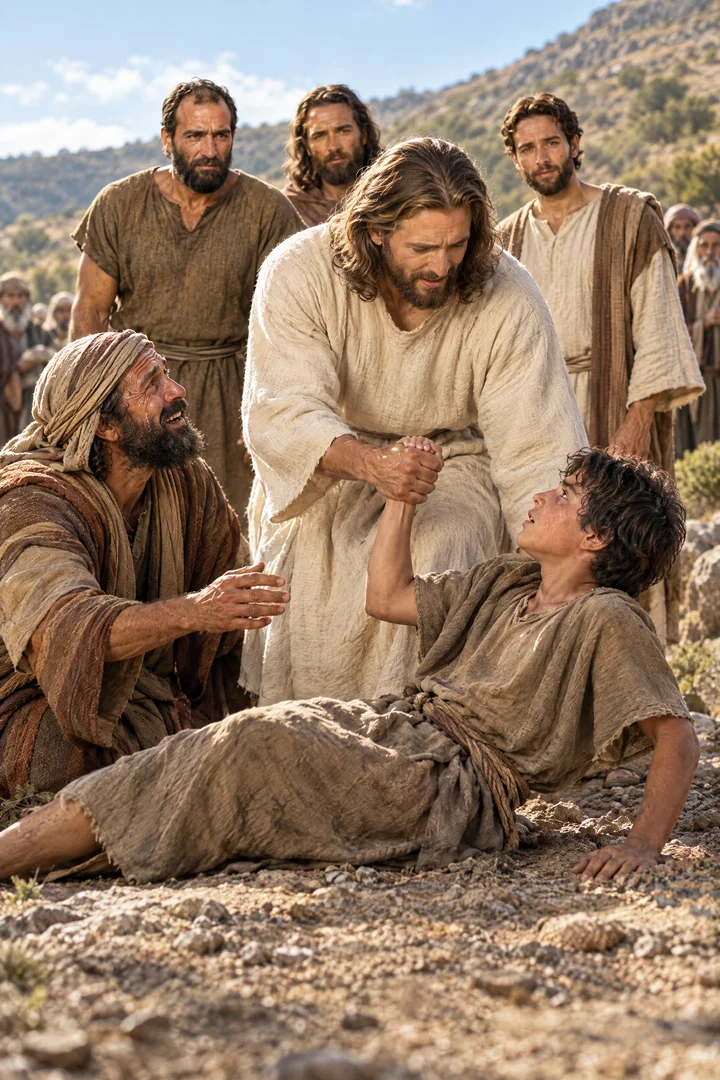
And straightway the father of the child cried out, and said with tears, Lord, I believe; help thou mine unbelief.
Translations
And straightway the father of the child cried out, and said with tears, Lord, I believe; help you my unbelief.
King James Version, KJV Cambridge Paragraph Bible
And straightway the father of the child cried out, and said with tears, Lord, I believe; help thou mine unbelief.
And immediately the father of the child cried out, and said with tears, Lord, I believe; help thou my unbelief.
Revised Version, American Standard Version
Straightway the father of the child cried out, and said, I believe; help thou mine unbelief.
and immediately the father of the child, having cried out, with tears said, 'I believe, sir; be helping mine unbelief.'
And immediately the father of the young child crying out said [ with tears], I believe, help mine unbelief.
Straightway crying out, the father of the child was saying—I have faith! help my, want, of faith.
Immediately the boy’s father cried out, “ I do believe; help my unbelief!”
Immediately the boy’s father cried out with tears, “ Lord, I do believe; help my unbelief!”
Immediately the father of the child cried out with tears, “ I believe. Help my unbelief!”
Straight away the father of the child gave a cry, saying, I have faith; make my feeble faith stronger.
And straightway the father of the childe crying with teares, saide, Lord, I beleeue: helpe my vnbeliefe.
Douay-Rheims (Challoner revision)
And immediately the father of the boy crying out, with tears said: I do believe, Lord: help my unbelief.
Pictures
Cross-references
- Matthew 17:14-20
And when they were come to the multitude, there came to him a certain man, kneeling down to him, and saying,
Parallel account of the afflicted boy’s healing and the disciples’ failure, emphasizing faith.
- Luke 9:37-42
And it came to pass, that on the next day, when they were come down from the hill, much people met him.
Jesus heals the afflicted boy after his father brings him and appeals for help.
- Matthew 17:20
And Jesus said unto them, Because of your unbelief: for verily I say unto you, If ye have faith as a grain of mustard seed, ye shall say unto this mountain, Remove hence to yonder place; and it shall remove; and nothing shall be impossible unto you.
Jesus explains the disciples’ failure and teaches that faith can move mountains.
- Luke 17:5
And the apostles said unto the Lord, Increase our faith.
Both texts express a plea to the Lord for help with faith.
- Mark 9:18
And wheresoever he taketh him, he teareth him: and he foameth, and gnasheth with his teeth, and pineth away: and I spake to thy disciples that they should cast him out; and they could not.
The spirit repeatedly throws the child down and afflicts him.
- Hebrews 11:6
But without faith it is impossible to please him: for he that cometh to God must believe that he is, and that he is a rewarder of them that diligently seek him.
Both teach that faith is necessary in approaching God.
- Hebrews 3:12
Take heed, brethren, lest there be in any of you an evil heart of unbelief, in departing from the living God.
Both texts speak of unbelief in the heart.
- Matthew 17:17-18
Then Jesus answered and said, O faithless and perverse generation, how long shall I be with you? how long shall I suffer you? bring him hither to me.
Parallel account of Jesus answering the father’s plea.
- John 3:18
He that believeth on him is not condemned: but he that believeth not is condemned already, because he hath not believed in the name of the only begotten Son of God.
Belief in Christ is linked to escaping condemnation.
- Mark 11:24
Therefore I say unto you, What things soever ye desire, when ye pray, believe that ye receive them, and ye shall have them.
Receiving what is asked for is connected with believing.
- Mark 5:36
As soon as Jesus heard the word that was spoken, he saith unto the ruler of the synagogue, Be not afraid, only believe.
Jesus tells the hearer to believe rather than fear.
- James 1:5-6
If any of you lack wisdom, let him ask of God, that giveth to all men liberally, and upbraideth not; and it shall be given him.
Both express seeking God’s help in faith.
- Mark 9:29
And he said unto them, This kind can come forth by nothing, but by prayer and fasting.
Jesus says this kind of deliverance requires prayer and fasting.
- Hebrews 10:38-39
Now the just shall live by faith: but if any man draw back, my soul shall have no pleasure in him.
The father expresses faith while asking for help with his unbelief.
- Matthew 13:58
And he did not many mighty works there because of their unbelief.
Unbelief limits the mighty works done in Nazareth.
- Mark 11:23
For verily I say unto you, That whosoever shall say unto this mountain, Be thou removed, and be thou cast into the sea; and shall not doubt in his heart, but shall believe that those things which he saith shall come to pass; he shall have whatsoever he saith.
faith in Christ removes mountains blocking His entrance
Commentary
Each commentary is drawn from primary sources: the writings of Ellen G. White and Adventist pioneers and periodicals. Each commentary is separate. Its own words are not a quotation; follow the references to read the source passages.
Ellen G. White
29 sources
The father of a youth tormented by a dumb spirit that threw him into fire and water sought deliverance for his son, and with tears admitted his weak, doubting belief while asking Christ for help where belief was lacking.2SP 334.1–2MYP 109.1Lt 2, 1914, par. 7GC88 515.2GC 515.2 After years of suffering and the disciples' failure to cast the spirit out had left him discouraged and fearing Jesus might not be able, Jesus' appeal to believe kindled hope, and Christ drove the spirit out and restored the child freed forever to his father.2SP 334.1–2GC 515.2DA 426.3–427.2ST Jun 7, 18772SP 336.1 The healing did not fail for lack of power in Christ but waited on the father's faith, and by placing himself and his son wholly on Christ's mercy he received help.ST Jan 20, 1904DA 428.1–53RED 124.2 Helpless, sin-burdened people who feel unworthy and weak in faith are to bring both faith and doubt to Christ at once rather than staying away until they feel they have enough faith, acting in will on the light already given while the Holy Spirit supplies further light and strength.MYP 109.1Lt 47, 1896, par. 2–3Lt 36, 1900, par. 1–3DA 428.6–429.1ST Jan 20, 1904 Doubts that weaken the soul should be faced without delay and brought to the Lord in prayer in the light of God's Word, asking Him to remove unbelief while trusting that He hears and answers.Lt 70, 1897, par. 12–16Lt 46, 1896, par. 4–5
Story and Sense
The cry belongs to the account of a father seeking deliverance for his son, a youth tormented by a dumb, unclean spirit that often threw him into fire and water to destroy him.GC88 515.2GC 515.2DA 426.3–427.2 Jesus healed him by driving the spirit out and freeing him forever from the demon's power.GC88 515.2GC 515.22SP 336.1 The disciples had been given authority to cast out spirits, but in this case they failed, bringing disappointment and public humiliation.DA 426.3–427.2 After years of his son's suffering and this failure, the father was discouraged and feared Jesus might not be able to help, until Jesus' appeal to believe kindled hope.2SP 334.1–2ST Jun 7, 18773RED 123.1–124.1
The cry takes place in sharp contrast between glory and grief, a brief space after Jesus was transfigured by God's glory on the mount, talked with messengers of heaven, and was proclaimed the Son of God by the Father's voice out of radiant glory.2SP 336.1 Coming down, He met a lunatic child with distorted countenance, gnashing his teeth in spasms of agony no mortal could relieve, a victim of Satan wallowing on the ground.2SP 336.1 The mighty Redeemer who had stood glorified only hours before stooped to lift the wallowing, afflicted child from the ground and restored him to his father, freed forever from the demon's power.2SP 336.1 The account is Mark 9:9-29, told also in Matthew 17:9-21 and Luke 9:37-45.DA 426
The healing represents redemption, in which the Divine One stoops to save the lost.DA 429.2–430.1 It also shows the disciples' mission: people enslaved by Satan await the word of faith and prayer to set them free.DA 429.2–430.1ST Jan 22, 1902 Faith and prayer are the means by which those enslaved by Satan may be set free.ST Jan 22, 1902 The bringing of the demon-possessed child involved severe conflicts and trials, an ordeal distinct from Martha's situation, who need not assume she must endure such struggles before she can come to Christ.4MR 177.3–180.1
Weak Faith Helped
The cry is real, sincere belief held together with weakness, doubt and unbelief, spoken with tears by one who admits his lack and leans on the merciful Saviour alone while asking for help where belief falls short.2SP 334.1–2Lt 2, 1914, par. 7Lt 47, 1896, par. 2–3Lt 36, 1900, par. 1–3LS 101.1–102.2 Discouraged by years of his son's suffering and by the disciples' failure, the father feared help might be beyond reach, until the appeal to believe kindled hope and he relied on Christ while confessing his need for greater faith.2SP 334.1–23RED 124.2 That trusting struggle itself may be brought to the Lord in prayer, with doubts faced without delay, examined in the light of God's Word and talked over with Jesus while holding to His promises, rather than left to undermine faith or voiced so as to cause another to stumble.Lt 70, 1897, par. 12–16
The child's healing turns not on any lack of power in Christ but on the father's faith, for Christ is fully able and the issue is trust.ST Jan 20, 1904DA 428.1–5 By admitting weakness and placing himself and his son wholly on Christ's mercy, the father receives help, Jesus drives out the demon and fully restores the son, and father and son praise their Deliverer.ST Jan 20, 1904DA 428.1–53RED 124.2 Faith in this way connects the soul with heaven and brings strength against the powers of darkness.DA 428.1–5DA 428.6–429.1ST Jan 20, 1904
That heavenly connection gives strength to resist temptation and to overcome sinful traits through the means God has provided in Christ.DA 428.1–5DA 428.6–429.1ST Jan 20, 1904 Those who come to Christ relying on His promise need not perish, and those who come to Him are not cast out.DA 428.6–429.1ST Jan 20, 1904 Freedom in Christ does not come from waiting for more light or evidence, for abundant evidence alone does not make a person free.MYP 109.1Lt 2, 1914, par. 7HSP 12.4
Freedom comes through the soul's will and effort to act on the light already given and to depend on divine power, by actively exercising will and energies to trust God.MYP 109.1Lt 2, 1914, par. 7Lt 47, 1896, par. 2–3 The cry itself is that earnest choice to trust, not a demand for further proof.MYP 109.1Lt 47, 1896, par. 2–3 As the person so acts, the Holy Spirit supplies further light and strength and works with that resolve, strengthening and enlightening the soul, but does not replace the individual exercise of faith.MYP 109.1Lt 2, 1914, par. 7Lt 47, 1896, par. 2–3HSP 12.4
So sin-burdened, helpless people who feel unworthy, weak in faith and lacking are to bring both faith and doubt to Christ at once.Lt 36, 1900, par. 1–3DA 428.6–429.1ST Jan 20, 1904LS 101.1–102.2 They are to trust His mercy and grace to pardon sin and to endure tribulation, rather than staying away, waiting until they feel they have enough faith, or relying on themselves.Lt 36, 1900, par. 1–3DA 428.6–429.1ST Jan 20, 1904LS 101.1–102.2 It is words for relying on Jesus rather than on oneself, asking Him to strengthen the faith already possessed.Lt 36, 1900, par. 1–3ST Jan 20, 1904
Living the Prayer
The cry supplies the very words for asking God to take away unbelief while trusting that He hears and answers prayer.Lt 46, 1896, par. 4–5 It is not enough to believe that Christ saves others; each person must trust Him as his own Redeemer.Lt 46, 1896, par. 4–5 The one who still doubts can seek rest in Jesus while asking for help with what of doubt remains.Lt 46, 1896, par. 4–5
Doubts that weaken the soul are to be faced without delay, examined in the light of God's Word, and talked over with Jesus while holding fast to His promises.Lt 70, 1897, par. 12–16 They are to be brought to the Lord in prayer, asking Him to remove them, rather than left to undermine faith.Lt 70, 1897, par. 12–16 Nor are they to be voiced in ways that might cause another to stumble.Lt 70, 1897, par. 12–16
The cry is a prayer of helpless dependence, made by one who comes to Christ in living, active faith while admitting that faith is weak and asking the Lord to help unbelief.Ms 33, 1909, par. 26–27 It seeks Christ's divine power through that living, active faith for help to study His life of self-denial and self-sacrifice and to become a Christian in every sense.Ms 33, 1909, par. 26–27 As a continuing prayer it asks for the Holy Spirit's power, and for strength, wisdom, grace, instruction, guidance, and light, while seeking God and working.FE 530.3RH Oct 21, 1909Ms 62, 1896, par. 13–14Ms 23, 1909, par. 7 Believers are to keep their minds upon what they have prayed for, with continued, living faith rather than dependence on another person's spiritual experience or on their own understanding.RH Oct 21, 1909Ms 62, 1896, par. 13–14Ms 23, 1909, par. 7
Sources
Pioneers and periodicals
70 sources
The cry is a father's plea for his suffering child, spoken at once with tears as he brings his helplessness to Jesus, confessing trust while admitting his doubt and asking for help against it.ST Jul 21, 1914ST Jul 18, 1900ST Jan 24, 1906ST Jul 21, 1914ST Jan 8, 1902 It shows faith that is genuine yet incomplete and mixed with unbelief, which can vary in strength and still struggle even in sincere believers.ST Jul 18, 1900ST Jan 24, 1906ST Oct 4, 1910RH Jan 3, 1865ST Mar 10, 1887 Christ does not turn away such helpless trust but pities it, loves it and answers it, so that whoever cries out in this way receives aid that drives doubt away and brings healing and salvation.ST Oct 25, 1905ST Jan 20, 1904ST Oct 6, 1881ST Jul 21, 1914 Receiving his help depends on belief, for healing comes according to faith, and even faith as small as a mustard seed, exercised in watchfulness and prayer, can set free those bound by evil.ST Jan 20, 1904ST Jun 7, 1877ST Jul 18, 1900ST Oct 4, 1905ST Nov 17, 1898 The same plea remains the prayer for salvation today, turning to Jesus as Mediator and Saviour rather than relying on perfect faith, asking him to remove unbelief, give the Holy Spirit and make the whole person well and clean from sin.RH Oct 21, 1909RH Feb 10, 1863ST May 8, 1879RH Nov 29, 1870
Narrative Setting and Wording
The cry belongs to a father pleading for mercy for his only child, who suffered epilepsy and was held by an evil, wicked and unclean spirit, a dumb spirit.ST Aug 16, 1905RH Mar 7, 1912RH Sep 27, 1864 That bondage was cruel, sapping vitality and reason and bringing untold torture and years of agony, casting the boy down in fits in which he was seized and often fell into fire and into water.RH Mar 7, 1912RH Sep 27, 1864RH Dec 12, 1871 He had first been brought to the disciples to have the spirit cast out, but they could not help him, so the father came to Jesus himself seeking mercy for his son.ST Aug 16, 1905
The plea was spoken at the base of the mountain after the transfiguration, when Jesus came down with the three disciples to the multitude below.ST Jul 12, 1899RH Jan 4, 1912ST May 8, 1901 There sick and demon-possessed sufferers were waiting for help, and the nine disciples left behind had failed to cast the demon out of the boy.ST Jul 12, 1899RH Jan 4, 1912 After rejoicing on the mountain in Christ and heavenly voices and blessing, the work still had to be done below among demon-tortured, needy and demon-haunted sufferers calling for relief, for the view of the triumphant kingdom had not ended earth's needs.ST Dec 17, 1896RH Jan 4, 1912ST May 8, 1901
The setting stands within Mark 9:2-29, the parallel account to the transfiguration lesson, covering the transfiguration and what followed six days after the promise that some standing there would not taste death till they see the Son of man coming in his kingdom, as the fulfilment of that promise.ST Mar 31, 1898 The nine left in the valley could not cast out the demon because they were less earnest, less near to God and less prepared than Peter, James and John who had been taken up into the mountain apart from the world.RH Jan 4, 1912ST Apr 17, 1901 The need revealed is to keep the eyes on Jesus and on Jesus only in all work and experience.ST Apr 17, 1901
It was spoken straightway, cried out with tears as the father placed his helplessness before the Saviour, affirming belief while admitting doubt and asking for help.ST Jul 21, 1914ST Jul 21, 1914ST Jan 8, 1902 He was burdened with doubt in saying If thou canst, unlike the leper's confident If thou wilt, yet his tearful casting of the helpless soul upon Christ was real trust asking Christ to help where faith was weak.ST Jul 21, 1914ST Jul 21, 1914 When he discarded the if, Jesus immediately and permanently relieved his afflicted son, delivering the boy and releasing the father from unbelief.ST Jul 21, 1914ST Jan 8, 1902
The account presents Jesus as a powerful and compassionate King who sympathizes with sufferers and relieves their burdens.RH Oct 30, 1860 As part of Mark 6-13 showing the work of Christ, it is to be read with the parallel stories in the other Gospels and taken home to the heart as a lesson of life, showing Christ just as willing now to forgive the sinful, to heal and restore the sick, to give health to the leper and hearing to the deaf, and to comfort those in trouble.ST Jul 29, 1908 The miracle is recorded to give comfort to every class of people who may live upon the earth, because though written by Hebrews the Bible is for all outside the Hebrew tribes and God is the God of all who seek him.ST Jul 29, 1908
The episode displays God's power and compassion before the crowd without explaining the father's words about belief and unbelief.RH Dec 16, 1902 The disciples' failure to cure the boy with the dumb spirit is attributed to little faith and to prayers and fasts that had not been genuine, showing neglect of prayer.ST Jul 12, 1899ST Apr 1, 1897 Even faith as small as a mustard seed can accomplish what seems impossible.ST Jul 12, 1899
Faith Mixed with Unbelief
The cry expresses faith that is real yet incomplete and mixed with doubt.ST Jul 18, 1900ST Jan 24, 1906ST Oct 4, 1910RH Jan 3, 1865ST Mar 10, 1887 The father believes Jesus can help, yet he recognizes his faith is weak and asks Jesus to strengthen him against his remaining unbelief.ST Jul 18, 1900ST Oct 4, 1910RH Feb 10, 1863RH Mar 22, 1860 He chooses to trust while asking for help where faith is weak, believing while still struggling with unbelief and asking the Lord to help that weakness.ST Jan 24, 1906RH Mar 22, 1860RH Jan 3, 1865ST Mar 10, 1887 That joining of faith with acknowledged weakness still holds the possibility of receiving what is sought, even when understanding is incomplete.ST Jan 24, 1906 The plea is for stronger trust in Christ, so that the believer can commit all to him and keep every vow, and for help in receiving salvation through Christ's merits and escaping condemnation.RH Feb 10, 1863RH Mar 22, 1860
Genuine faith can coexist with unbelief, and faith is imperfect and varies in strength even among sincere believers.ST Mar 10, 1887 Even at the lowest point of faith a person may believe while struggling with doubt and ask God for help with unbelief.RH Jan 3, 1865 The father's doubt had been deepened because the disciples' failure had discouraged him, had not strengthened his faith, and had led him to judge Jesus by them and to fear that Jesus could not overcome the demon.ST Jun 7, 1877ST Aug 16, 1905ST Aug 16, 1905 In his plea he surrenders doubt and dependence on human ability, recognizing that his son's deliverance depends on God's power rather than human ability.ST Aug 16, 1905ST Aug 16, 1905 Jesus pities him, and Jesus' appeal to believe kindles hope, leading the father to recognize that he needs help only Christ can give and to rely on the merciful Saviour alone.ST Jun 7, 1877ST Aug 16, 1905 His faith is not in vain, for Jesus answers the appeal and frees his son from the demon, healing the child in response to the father's faith.ST Jun 7, 1877ST Jul 18, 1900
The prayer is for stronger faith: faith that obeys, waits through delay and fear, trusts God's care and purposes even when they are not visible, and rests on the enduring certainty of his Word.RH May 26, 1910 It brings burdens, tears and need for strength to God, relying on his promises and seeking forgiveness and help.RH May 26, 1910 It asks him to make the whole person well and clean from sin, with confidence to praise God through both joy and grief.RH May 26, 1910 It is an example to follow by cultivating simple, trusting, childlike faith in God's word and in his wisdom and goodness, remaining firm even when what it says goes contrary to the senses.RH Apr 21, 1868 As the prayer of one who believes yet recognizes his faith is incomplete, it is a fitting continual prayer for help when belief is mixed with unbelief.RH Apr 21, 1868
Christ's Answer and Healing
Christ does not turn the helpless away but looks on them with pity and bids them rest on his mercy instead of their own worthiness, and all who come to him in that trust will not perish.ST Oct 25, 1905 Such tearful casting of a helpless soul upon him from the heart is loved by him, and the prayer of faith is always answered.ST Jul 21, 1914 His assurance that all things are possible to the one who believes kindles hope in the doubting father.ST Oct 6, 1881 That hope leads him to see that he needs a help only Christ can give, and to rest on the merciful Saviour alone.ST Jun 7, 1877ST Oct 6, 1881
The hindrance to the child's healing lies not in any lack of power in Christ but in the father's faith.ST Jan 20, 1904 The father's faith is real yet incomplete, believing Jesus can help while asking to be strengthened against remaining unbelief.ST Jul 18, 1900 By admitting his weakness and relying on Christ's mercy he receives help, and the child is healed in answer to his faith.ST Jan 20, 1904ST Jul 18, 1900 Christ fully frees the son from the demon, casting out the spirit and restoring him, so faith is not in vain.ST Jan 20, 1904ST Jun 7, 1877ST Oct 6, 1881 Faith and prayer are thus the means by which those enslaved by Satan are set free.ST Jan 22, 1902
Cruel unbelief defeats the work Christ longs to do for sinful men, yet whoever cries out like the afflicted father receives divine aid that causes doubt and unbelief to disappear.ST Jul 21, 1914 That aid brings healing to many sick and salvation to souls.ST Jul 21, 1914 Faith joins people to heaven and gives strength to resist temptation and overcome sinful traits.ST Jan 20, 1904 Those who feel helpless, unworthy, or lacking in faith should therefore come to Christ rather than stay away or lean on themselves.ST Jan 20, 1904 He remains able to save and to help, and those who come to him are not cast out.ST Jan 20, 1904
Conditions for Receiving Help
Belief in God's word and trust in his care are essential to receiving his special blessings, which are offered without compulsion and are conditioned on belief.ST Oct 4, 1905 Those who are healed are healed according to their faith when they place their will on Christ's side in the exercise of faith.ST Nov 17, 1898
Even faith as small as a mustard seed can accomplish what seems impossible, for the failure to cure the boy was due to little faith.ST Jul 12, 1899 Success in confronting evil depends on faith in Christ's power and a life of watchfulness and prayer, since neglect of prayer leaves power wanting.RH Nov 30, 1911 Faith and prayer are the means by which those enslaved by Satan may be set free, as the father brought both his belief and his unbelief to Christ and asked for help.ST Jan 22, 1902
Faith is the gift of God given to be exercised, and without exercising it its benefit is lost.ST Nov 17, 1898 It should grow by learning faith and trust from every providence and from Christ's earthly ministry, where every act of mercy and every miracle of healing was done to strengthen every trembling soul to believe.ST Nov 17, 1898 Prayer both expresses the need for stronger faith and helps bring faith into exercise, as patient faith grapples with the great difficulty before it and overcomes it.RH Nov 7, 1865 When unbelief steps in because the full evidence for faith and hope is not always before the mind and Satan takes advantage of that lapse, the prayer to use is for Christ's help against unbelief, joined with continually reviewing the reasons that first led to embracing the truth, and to pray it now is better than waiting until the time when people will cry to mountains and rocks for shelter from wrath.RH Apr 1, 1873 Faith means taking God at his word, and it is right to ask for a willing heart and disposition to do so, for God gives faith which everyone may exercise, and he does not give it as a reward for obedience, because true obedience itself comes from faith.ST Jun 18, 1896 It is lawful to pray for increased faith, and faith can be cultivated through obedience to God even under difficulty by one who has faith while recognizing and asking help for remaining unbelief.RH Oct 27, 1910
Faith in sickness and trouble does not require rejecting ordinary medical care, for trust in God can work in harmony with natural laws and physical means of treating illness.ST Feb 19, 1902 This marks the distinction between faith and fanaticism, and between belief and presumption, while still holding that a person may believe while struggling with unbelief and may ask God for help.ST Feb 19, 1902
Praying the Verse Today
The cry is a plea for help in receiving salvation through Christ's merits and escaping condemnation, prayed in conviction as one seeks God with a whole heart.RH Feb 10, 1863ST May 8, 1879 It turns to Jesus for help rather than relying on perfect faith, accepting his death as the atonement for one's own sins, taking him as the only Mediator with God and as one's personal Savior.RH Sep 23, 1858 It rests on confidence that Jesus is able and willing to save everyone who comes to him, even the greatest sinner.RH Aug 26, 1862 The plea for help with unbelief asks Jesus to remove unbelief as he heals the disease of sin.RH Mar 30, 1869 Hope revives as the troubled person believes that Christ intercedes and God pardons, bringing peace.RH Nov 29, 1870
It is a prayer to Christ for faith and help, made by someone who comes to him helpless and dependent, affirming trust in the Lord and asking for the Holy Spirit's power.RH Oct 21, 1909 The words Lord, I believe are a prayer that can be kept in mind even while working, together with a request for the Holy Spirit's power and for God's instruction and guidance while the hands are occupied.RH Jul 1, 1909RH Jul 29, 1909 This is continued, living faith rather than dependence on another person's spiritual experience.RH Oct 21, 1909 It is also a way to seek Christ's divine power through living, active faith and to ask for help in studying his life of self-denial and sacrifice and becoming a Christian in every sense.
The words are applied to believing that Christ will come as Judge: believers should not merely repeat this belief but should expect his coming, wait for it, and seek to be ready.RH Jul 19, 1864 Living in light of the coming judgment should shape every duty, because the judgment will decide the final and irreversible outcome for the wicked and the righteous.RH Jul 19, 1864 The plea is likewise applied to waiting for Christ to appear, trusting that God's ways and timing are just.ST Dec 17, 1874
The plea describes people battling doubts, and historical evidence from buried records can encourage such faith.ST Jun 14, 1905 It expresses humility in recognizing the limits of knowledge, declares trust in Scripture while facing pressure to reject it, and voices unresolved questions about heaven and hell.ST Oct 4, 1883ST May 17, 1910 It also voices growing conviction that the visions are from God while acknowledging remaining unbelief.RH May 6, 1862
Praying Lord, I believe; help thou mine unbelief opens the barrier when doubt has demolished the road to the citadel of the soul, and the ruined road is restored so Christ can freely enter the heart.ST Sep 20, 1905 It is the cry of a soul whose hope is dead and who cannot even lift her eyes, until at Christ's command to take hold of faith's hand faith declares that all things are possible through him, even the raising of the dead.ST Oct 29, 1896 That confession of belief in helplessness is met at once by Christ taking dead hope by the hand and commanding her to awake and arise in beauty and strength to minister, turning sorrow into joyful worship.ST Oct 29, 1896 The plea sustains one beset by temptation, remorse, and shame yet determined to reject former appetite, as faith, hope, and love return.ST Jun 28, 1899 It belongs to earnest prayer and loving care for young people facing the enemy's power and to rescue from the enemy, and to asking God to replace unbelief with faith and doubt with trust.RH Apr 9, 1914ST Mar 25, 1903
The prayer confesses want of faith and asks help to believe when labor to preach and scatter publications in a discouraging weak field seems to bear little immediate fruit and brings regret, then small beginnings grow into many churches, new laborers, and liberal giving.ST Jun 25, 1874 Praying it admits the regret was unbelief and affirms that God's blessing attends well-directed generous efforts, expressing regret for doubting God's blessing after an effort seemed to bear little fruit.ST Jun 25, 1874RH Jun 30, 1874 It also expresses need for strength to keep God's law and walk in the light despite earthly ties and opposition, and amid isolation with confidence that truth will prevail.RH May 13, 1873RH May 15, 1855 It rests in Christ's grace as sufficient to endure tribulation for him beyond personal strength.ST Mar 7, 1878 It relies on the certainty of God's promise confirmed by an oath that his word will accomplish his intent, giving faith sure ground to enter his rest.ST Dec 9, 1913
It is the prayer of a lost soul whose faith has been wrecked by faithless faith and false wisdom given as delusion and snare.ST Mar 8, 1899 It is spoken at the altar rail on the narrow path, nervous in doubt's anxious aftermath with quavering voice out of the dark dread deep where furious waters leap and clamor.ST Mar 8, 1899 It is addressed to the unknown God, the Infinite who stills the tempest, asking for swift relief, for every doubt to be stilled, and for the chastening rod to be spared.ST Mar 8, 1899 It is also used when trying to hold the assertion that thinking a thing is not so makes it not so and that matter does not exist even while dinner is burning, on the reasoning that if there is no matter a burning dinner does not matter, while the ruined dinner and the family's agreement it is ruined show cold facts are not changed by that use.ST Feb 27, 1901
Sources