Matthew 2:5
And they said unto him, In Bethlehem of Judaea: for thus it is written by the prophet,
Translations
And they said to him, In Bethlehem of Judaea: for thus it is written by the prophet,
King James Version, Revised Version
And they said unto him, In Bethlehem of Judaea: for thus it is written by the prophet,
And they said unto him, In Bethlehem of Judea: for thus it is written by the prophet,
And they said to him, In Bethlehem of Judea: for thus it is written by the prophet,
And they said unto him, In Bethlehem of Judæa: for thus it is written through the prophet,
And they said to him, 'In Beth-Lehem of Judea, for thus it hath been written through the prophet,
And they said to him, In Bethlehem of Judaea; for thus it is written through the prophet:
And, they, said to him, In Bethlehem of Judaea,—for, so, is it written through the prophet:
Berean Standard Bible, Majority Standard Bible
“ In Bethlehem in Judea,” they replied, “ for this is what the prophet has written:
They said to him, “ In Bethlehem of Judea, for this is written through the prophet,
And they said to him, In Beth-lehem of Judaea; for so it is said in the writings of the prophet,
And they saide vnto him, At Beth-leem in Iudea: for so it is written by the Prophet,
Douay-Rheims (Challoner revision)
But they said to him: In Bethlehem of Juda. For so it is written by the prophet:
Pictures
Cross-references
- Micah 5:2
But thou, Beth-lehem Ephratah, though thou be little among the thousands of Judah, yet out of thee shall he come forth unto me that is to be ruler in Israel; whose goings forth have been from of old, from everlasting.
Names Bethlehem as the place from which Israel’s ruler would come.
- Luke 2:8-16
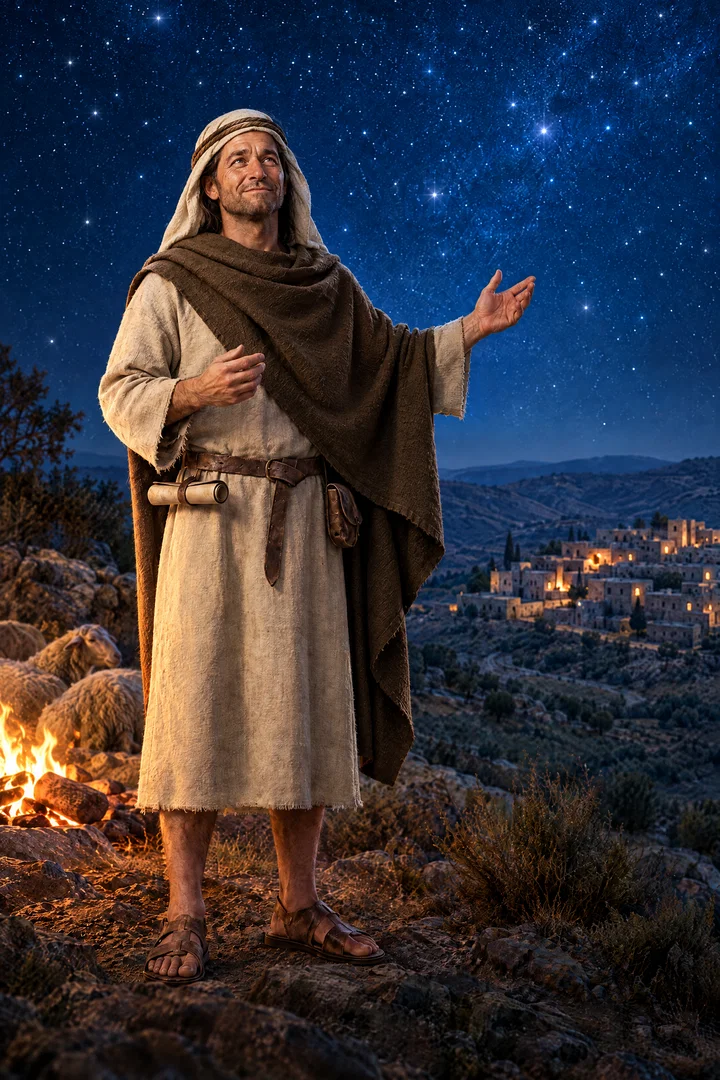
And there were in the same country shepherds abiding in the field, keeping watch over their flock by night.
Angels announce Jesus’ birth to shepherds near Bethlehem, who go to see him.
- Matthew 2:11
And when they were come into the house, they saw the young child with Mary his mother, and fell down, and worshipped him: and when they had opened their treasures, they presented unto him gifts; gold, and frankincense, and myrrh.
The wise men bring gifts and bow before the child.
- Luke 2:4-7
And Joseph also went up from Galilee, out of the city of Nazareth, into Judæa, unto the city of David, which is called Bethlehem; ( because he was of the house and lineage of David:)
Records Jesus’ birth in Bethlehem, David’s city, and his manger bed.
- Matthew 2:16
Then Herod, when he saw that he was mocked of the wise men, was exceeding wroth, and sent forth, and slew all the children that were in Bethlehem, and in all the coasts thereof, from two years old and under, according to the time which he had diligently enquired of the wise men.
Herod orders the slaughter of Bethlehem’s infants.
- Luke 2:25-35
And, behold, there was a man in Jerusalem, whose name was Simeon; and the same man was just and devout, waiting for the consolation of Israel: and the Holy Ghost was upon him.
Simeon recognizes the infant Messiah and prophesies about him.
- Numbers 24:17
I shall see him, but not now: I shall behold him, but not nigh: there shall come a Star out of Jacob, and a Sceptre shall rise out of Israel, and shall smite the corners of Moab, and destroy all the children of Sheth.
Balaam’s star prophecy foretells the coming Messiah, whose star leads the Magi to Bethlehem.
- Matthew 2:13
And when they were departed, behold, the angel of the Lord appeareth to Joseph in a dream, saying, Arise, and take the young child and his mother, and flee into Egypt, and be thou there until I bring thee word: for Herod will seek the young child to destroy him.
An angel warns Joseph to take Jesus to Egypt to escape Herod’s threat.
- John 7:42
Hath not the scripture said, That Christ cometh of the seed of David, and out of the town of Bethlehem, where David was?
Both identify Bethlehem as the Messiah’s birthplace.
- Luke 2:4
And Joseph also went up from Galilee, out of the city of Nazareth, into Judæa, unto the city of David, which is called Bethlehem; ( because he was of the house and lineage of David:)
Identifies Bethlehem as David’s city and the place of Jesus’ birth.
- Luke 2:15-16
And it came to pass, as the angels were gone away from them into heaven, the shepherds said one to another, Let us now go even unto Bethlehem, and see this thing which is come to pass, which the Lord hath made known unto us.
The shepherds hasten to Bethlehem and find the newborn Jesus.
- Revelation 12:4-5
And his tail drew the third part of the stars of heaven, and did cast them to the earth: and the dragon stood before the woman which was ready to be delivered, for to devour her child as soon as it was born.
The dragon seeks to destroy the child born to the woman.
- Jeremiah 31:15
Thus saith the LORD; A voice was heard in Ramah, lamentation, and bitter weeping; Rahel weeping for her children refused to be comforted for her children, because they were not.
Rachel’s lament is applied to Herod’s slaughter of Bethlehem’s children.
- Matthew 2:9-10
When they had heard the king, they departed; and, lo, the star, which they saw in the east, went before them, till it came and stood over where the young child was.
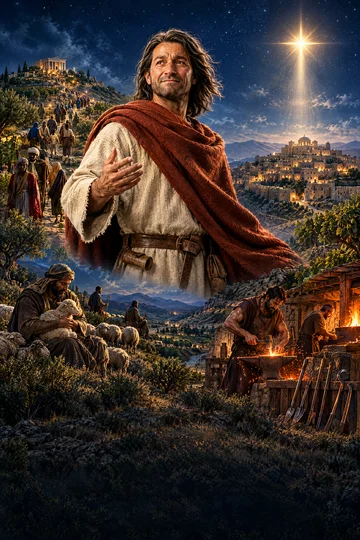
star led Magi to house in Bethlehem
- Matthew 2:1
Now when Jesus was born in Bethlehem of Judaea in the days of Herod the king, behold, there came wise men from the east to Jerusalem,
princely strangers from the Far East came
- 1 Samuel 16:1-13
And the LORD said unto Samuel, How long wilt thou mourn for Saul, seeing I have rejected him from reigning over Israel? fill thine horn with oil, and go, I will send thee to Jesse the Beth-lehemite: for I have provided me a king among his sons.
David is chosen and anointed at Bethlehem.
- Luke 2:12
And this shall be a sign unto you; Ye shall find the babe wrapped in swaddling clothes, lying in a manger.
babe in manger wrapped in swaddling clothes
- Matthew 1:22
Now all this was done, that it might be fulfilled which was spoken of the Lord by the prophet, saying,
Also cited as a place where Matthew quotes without naming the prophet.
- 2 Samuel 7:12-16
And when thy days be fulfilled, and thou shalt sleep with thy fathers, I will set up thy seed after thee, which shall proceed out of thy bowels, and I will establish his kingdom.
The promised Messiah is associated with David’s everlasting throne.
- Luke 2:1
And it came to pass in those days, that there went out a decree from Cæsar Augustus, that all the world should be taxed.
The enrollment occurred in connection with Jesus’ birth.
Commentary
Each commentary is drawn from primary sources: the writings of Ellen G. White and Adventist pioneers and periodicals. Each commentary is separate. Its own words are not a quotation; follow the references to read the source passages.
Ellen G. White
26 sources
The chief priests and scribes answered Herod that the Messiah, Christ, the expected King, was to be born in Bethlehem of Judea because the prophet had written it.DA 62.2COS 23.3–4LC1 17.1–2
Bethlehem is not insignificant, for from it was to come a Ruler and Governor to shepherd and rule Israel, and Jesus' birth there fulfilled this and marked Him as that promised Ruler.DA 62.2LC1 17.1–2Ms 147, 1906, par. 14–15Ms 60, 1886, par. 6
Though the priests and scribes knew this testimony and Herod knew the prophetic word, they did not welcome or seek the infant Christ, and Herod was determined to destroy Him while the people were absorbed in their own plans and unaware of His coming.2SP 22.1–24.1RH Dec 24, 1872DA 621.1–622.2
The wise men had learned from the prophecies by searching the Scriptures that His coming was near, and God revealed Him to them in a way suited to them by a remarkable star attended by angels leading them onward, so that men from a distant foreign land found Him in Bethlehem as a babe in a manger and worshiped Him with gold, frankincense, and myrrh as the Son of God and Saviour.3MR 362.1ST Dec 5, 19162SP 378.3Ms 1, 1890, par. 11–13Ms 60, 1886, par. 6
Their homage proves no sacrifice is too costly to offer the exalted Son of God, calling for gifts and thanksgiving to be directed to God's work and to helping those in need, for the shepherds and the Eastern magi gave heed to the light they received while the proud and unbelieving failed to recognize their time of visitation.4RED 111.1Ms 52, 1890, par. 10–13GC88 316.1
Bethlehem's Prophesied Birthplace
The reply given to Herod was that the expected King, the Messiah, Christ, was to be born in Bethlehem of Judea because the prophet had written it.DA 62.2COS 23.3–4LC1 17.1–22SP 22.1–24.1Ms 147, 1906, par. 14–15 It was the chief priests and scribes who gave this answer to his inquiry, identifying from prophetic scripture the birthplace of the infant king.LC1 17.1–22SP 22.1–24.1RH Dec 24, 1872 They knew this prophetic testimony, yet their knowledge did not lead them to welcome or seek the infant Christ.2SP 22.1–24.1RH Dec 24, 1872
The prophecy means Bethlehem is not insignificant, for out of it would come a Ruler and Governor who would shepherd and rule Israel.DA 62.2LC1 17.1–2Ms 147, 1906, par. 14–15ST Dec 5, 1916 Jesus' birth in Bethlehem fulfilled what the Scriptures foretold, marking Him as that promised ruler.Ms 147, 1906, par. 14–15Ms 60, 1886, par. 6 The wise men searched the Scriptures and traced the prophecies to learn when Christ would come.Ms 60, 1886, par. 6 Bethlehem was also David's birthplace, more than a thousand years earlier, and the infant Jesus was worshiped there by wise men from the East.PP 637.1–2
Priests, Herod and Wise Men
The priests and scribes gave Bethlehem in Judea as the birthplace of the Messiah in answer to Herod's inquiry, drawing the location from what the prophet had written.RH Dec 24, 1872ST Sep 27, 1877 Their answer supplied Herod with the place of the infant king whom he feared as a rival to his throne.ST Sep 27, 1877 The chief priests and scribes knew this prophetic testimony, yet their knowledge did not lead them to welcome or seek the infant Christ.2SP 22.1–24.1RH Dec 24, 1872
Herod also knew the prophetic word about Christ's coming, but despite that knowledge he was determined to destroy Jesus.COS 27.1–2 While wise men from a foreign land came to worship Him in Bethlehem of Judea, the Jewish people were absorbed in their own plans and unaware of His coming.DA 621.1–622.2 In this way the prophetic identification of the birthplace stands joined to the leaders' failure to receive Him.2SP 22.1–24.1
The wise men arrived in Jerusalem seeking the newborn King and Prince, asking about His birth.ST Jun 16, 1887ST Dec 5, 1916ST Dec 5, 1916 Their inquiries met surprise and fear rather than joy, and they found no one who seemed to know of Him.ST Dec 5, 1916 Yet their arrival and questions made the nation aware of the important events surrounding Jesus' coming.ST Jun 16, 1887 They had learned from prophetic writings that the Messiah's coming was near, and by searching the Scriptures and tracing the prophecies they learned when Christ would come, which guided them to search for Him.ST Dec 5, 1916Ms 60, 1886, par. 6 The shepherds of Bethlehem and the Eastern magi gave heed to the light they had received, and God revealed truth to them, unlike the proud and unbelieving who failed to recognize their time of visitation.GC88 316.1
Star, Worship and Offerings
God met the Magi in a way fitted to them as readers of His works in the heavens, revealing Christ to them by a remarkable star attended by angels that moved before them and drew them onward.3MR 362.1Ms 1, 1890, par. 11–13 They studied the heavens, so a wonderful star appeared and led them, for angels appeared in the heavens in the shape of a star which the Magi saw and followed.3MR 362.1Ms 1, 1890, par. 11–13 The star in the east guided the wise men to find Jesus, and its guidance also pictures how souls who love Him can be led to Christ.3MR 362.1Lt 91, 1887, par. 13
Signs and wonders were given in the heavens for the wise men from the east as they searched for Christ.5RED 90.2–3Ms 52, 1890, par. 10–135MR 353.1–354.1 His birth drew the attention of heaven, with angels announcing the Redeemer's arrival to shepherds keeping their flocks near Bethlehem and heavenly hosts praising Him over Bethlehem's plains.5RED 90.2–3Ms 52, 1890, par. 10–135MR 353.1–354.1
Wise men from a distant foreign land in the east, guided by the star, came to Bethlehem of Judea to find Jesus and worship Him.5RED 90.2–3DA 621.1–622.2Ms 52, 1890, par. 10–13Ms 58, 1895, par. 4–6 They came to honor Him while He was but a babe cradled in a manger, bringing precious gifts of gold, frankincense, and myrrh and bending in homage before Him.2SP 378.34RED 111.1Ms 52, 1890, par. 10–13Ms 58, 1895, par. 4–6 Their precious gifts and homage showed they recognized His exalted position as Son of God and Saviour and the honor due Him more clearly and definitely than His own disciples did, even though the disciples received His instruction and beheld His mighty miracles while the Jewish people were absorbed in their own plans and unaware of His coming.2SP 378.3DA 621.1–622.24RED 111.1 Their homage proves that no sacrifice is too costly to offer to the exalted Son of God.2SP 378.34RED 111.1 These gifts show that Christ's birth calls for offerings to honor God, with gifts and thanksgiving directed to God's work and to helping those in need rather than diverted to selfish indulgence or human glory.4RED 111.1Ms 52, 1890, par. 10–13
Christ's birth in Bethlehem of Judea, in the humble setting of an inn's manger, fulfilled the plan of redemption.Lt 150, 1899, par. 7 He entered human life there and passed through its stages, temptations, and needs so that He could sanctify every part of human experience and show that people need not continue in sin.Lt 150, 1899, par. 7
Sources
Pioneers and periodicals
112 sources
The chief priests and scribes answered Herod that the Christ was to be born in Bethlehem of Judea because it was written by the prophet Micah.ST Dec 3, 1896ST Jan 11, 1899ST Dec 11, 1893RH Sep 11, 1860ST Dec 11, 1893 The prophecy meant that from that obscure village would come a ruler to shepherd Israel, making it great in God's purpose as the city of David and the birthplace of the promised Seed.ST Jan 11, 1899ST Jul 2, 1894RH Nov 8, 1906RH Nov 18, 1862 Herod had demanded the place when the wise men came seeking the newborn King of the Jews, and he used the answer to send them to Bethlehem under a false claim of wanting to worship Him while intending to kill Him as a dreaded rival.ST Sep 27, 1877ST Dec 3, 1896ST Dec 2, 1880ST Jul 30, 1912ST Jan 18, 1899 Jesus was born there in literal fulfillment of the prophets, which proves His Messiahship and His descent from David.ST Sep 29, 1909RH Nov 8, 1906ST Aug 30, 1905ST Jan 2, 1879RH Mar 17, 1859 Though the priests and rulers knew from the prophet where He was to be born, they did not seek or welcome Him, while humble shepherds and Gentile wise men believed and came to worship Him, showing God reveals Himself to the lowly and teachable of every nation.RH Dec 24, 1872ST Jul 30, 1912ST May 20, 1897ST Dec 3, 1896
Bethlehem Named by Prophet
The chief priests and scribes answered Herod that the Christ or Messiah was to be born in Bethlehem in Judea or Judah, because it was written by the prophet.ST Dec 3, 1896ST Jan 11, 1899ST Dec 11, 1893ST Dec 24, 1896ST Jul 2, 1894 They gave this answer when Herod had gathered them together and demanded where Christ should be born, after wise men from the east came to Jerusalem asking for Him who was born King of the Jews because they had seen His star in the east and had come to worship Him.ST Dec 3, 1896 Their answer identified Bethlehem as the foretold place and appealed to what the prophet had written as their authority.ST Dec 11, 1893ST Dec 24, 1896ST Jul 2, 1894
The prophetic word they cited declares that from Bethlehem would come a ruler who would shepherd or govern Israel.ST Dec 5, 1916ST Jan 11, 1899RH Nov 8, 1906ST Jun 16, 1887 It presents Bethlehem in Judea as the place of Jesus' birth in fulfillment of the prophecy that a ruler in Israel would come from there.ST Jan 11, 1899RH Nov 8, 1906 Though small, the town was therefore not insignificant in God's purpose, since it would produce the shepherd-ruler of Israel.ST Dec 5, 1916
The prophet cited is Micah, who announced beforehand the birthplace in Bethlehem of Judea so the scribes could identify where the Messiah was to be born when Herod asked.ST Dec 11, 1893ST Jul 30, 1912 The verse is an example of Matthew quoting a prophet without naming him, presenting the quotation as written prophecy.RH Sep 11, 1860
Bethlehem was an obscure country village, not Jerusalem the capital, about five miles south of Jerusalem.ST Jul 2, 1894RH Nov 18, 1862 Jesus was born there through a particular providence, in fulfillment of prophecy about the Saviour's first advent and the promised Seed.RH Nov 18, 1862ST Mar 30, 1904 Its name means house of bread, fitting the birthplace of Jesus the Bread of Life.ST Jul 2, 1894RH Sep 26, 1912 It is David's city and lowly place, the tribal home of Judah whose heir Jesus was, through whom the lost inheritance would be restored and forgiveness of sins and eternal life made possible, and from which comes the light that dispels humanity's darkness and begins uniting humanity with God.ST Nov 25, 1930ST Mar 30, 1904RH Dec 22, 1904
Bethlehem is the dear and happy city where heaven met with earth, where the rod from Jesse's stem sprang and where Jacob's star first shone.RH Dec 19, 1865 Though princely Tyre, great Sidon, Rome, Babylon, hundred-gated Thebes, and Athens with its wisdom and art are praised for pride, pomp and greatness, Bethlehem surpasses them all.RH Dec 19, 1865
Herod and Wise Men Encounter
After wise men from the east came to Jerusalem asking for Him who was born King of the Jews because they had seen His star in the east and had come to worship Him, Herod was troubled and gathered the chief priests and scribes together and demanded of them where Christ should be born.ST Dec 3, 1896ST Mar 1, 1910RH Jan 8, 1857 Their answer was that Christ should be born in Bethlehem of Judea because the prophet had written it, and so they supplied Herod with the location of the infant king he feared would rival him.ST Sep 27, 1877ST Dec 3, 1896ST Dec 2, 1880 Their indifference and apparent ignorance irritated him, though they were asked to search the prophecies for the birthplace of the infant king.ST Sep 27, 1877ST Dec 2, 1880 When the star led strangers from the far East to Jerusalem and hung over the temple, Herod demanded of the wisest men of Jerusalem, of Annas and of Hillel and of all the learned Sanhedrin, where the prophets said Christ would be born, and they answered that according to the holy prophets Messiah must be born at Bethlehem of Judea.ST Mar 1, 1910 The announcement of His birth troubled Herod and Jerusalem and led to the decree to kill the children in Bethlehem.RH Jan 8, 1857
Herod then called the strangers to his presence not publicly, so as not to appear in the eyes of the people to pay heed to strangers from the East, and bade them seek the young King at Bethlehem and bring him word of the exact whereabouts of the royal Babe so that he might come to worship Him.ST Mar 1, 1910ST Jul 30, 1912 Instructed by the Jewish Scriptures and seeking the truth, the Magi had come first to Jerusalem, the center of Jewish worship, but none there knew of the newborn King until their questions stirred the people, and after Herod called an ecclesiastical council all it could tell him was that the King was to be born in Bethlehem.ST Jul 30, 1912 On that word Herod sent the Magi to Bethlehem and charged them to bring him word when they found the Child so he could join them in worship, though his expressed desire was a wicked ruse.ST Jul 30, 1912ST Dec 23, 1897 His stated wish to worship the Child concealed his intent to destroy Him, for he secretly intended to kill Him while using their answer to direct the wise men toward the Child.ST Jan 18, 1899ST Jan 18, 1899ST Dec 23, 1897 In this attempt Herod acted as Satan's agent under Roman rule, but wisdom guided the wise men to disregard Herod's crafty directions, and God watched over the Child and His family there and thwarted the hidden plan.ST Jan 18, 1899RH May 9, 1865ST Jan 18, 1899
The Magi then went on to Bethlehem after the events connected with Christ's presentation in the temple, and found Jesus no longer in the stable where He was born but in a house.ST Jul 30, 1912 Matthew 2:1-16 recounts Herod's attempt to destroy the Child there by ordering the deaths of children in Bethlehem and its surrounding region in the hope of killing the infant Jesus.ST Oct 2, 1893ST Mar 5, 1912 The passage links that killing of the little children with Jeremiah's prophecy and calls the children the first martyrs for Jesus.ST Feb 11, 1886 The birth of Christ as King of the Jews fulfilled the expectation of an extraordinary ruler arising in Judah, an expectation that stirred Herod and led to the killing of Bethlehem's children.RH Feb 11, 1915 The account recalls the birth there and the events surrounding it, including the star guiding the magi, the angels appearing to the shepherds, Herod's massacre of the infants, Simeon's prophecy, and the family's flight into Egypt, for Jesus is the Messiah and the King of the Jews born there whom Herod sought to kill while He was an infant.
As soon as Christ was born the empire then ruling the world sought to slay Him, and that empire was Rome acting through its governor Herod, a governor holding office under the jurisdiction of Rome which then ruled over all the earth.ST Dec 13, 1883RH Mar 31, 1874 This means Satan ruled the world through the undivided Roman Empire at the birth of Christ, with Rome standing ready to devour the man-child as soon as He was born.ST Dec 13, 1883ST Dec 22, 1881 The man-child is Jesus Christ, to whom alone the words about being caught up unto God and to His throne apply, and Christ was delivered out of his hand and was afterward caught up to God and to His throne and is soon to rule all nations with a rod of iron.ST Dec 22, 1881RH Mar 31, 1874 This proves the great red dragon of Revelation 12 is the Roman Empire before the church obtained supremacy, not the Catholic church, standing before the woman, the church, to devour her child, and proves that Rome in the time of Christ was pagan.ST Dec 22, 1881RH Mar 31, 1874 That birth took place during the loss of Judea's kingly power under Rome, when Herod sought to destroy Him as a rival king.
The wise men who came to see Jesus were magi, a learned, influential, and wealthy priestly class whose members were deeply versed in the learning and astronomy of their time, and some among them were devout and worshiped the true God.ST Sep 11, 1901 They were wise men from the East who studied prophecy, knew the time of the Messiah's coming was near, and went to seek Him, having learned from prophetic writings that His coming was near.ST Dec 5, 1916ST Dec 2, 1880 They belonged to the very few in the visible church who lived in vital union with God, were filled with the Spirit and guided by the Spirit in studying the prophecies, and were led through the many Messianic predictions to see that the time was fulfilled and the Redeemer was at the door.ST Jul 30, 1912 Therefore they recognized and hailed Jesus of Nazareth as the Seed of the woman, the Desire of Ages, the Son of the living God, and they knew the prophecies about the Messiah and His mission, believed in Him, and worshiped Him.ST Dec 3, 1896ST Jul 30, 1912 A bright star led them toward Jerusalem, but it disappeared from view near the city, and they then asked nearby because they reasoned that the Jews would know of the Messiah's coming, for they had not heard the angels' announcement to the shepherds and God's Spirit moved them to seek the heavenly Visitor to the fallen world.ST Jun 16, 1887 Their coming to herald the new King shows that people considered heathen were prepared to recognize His advent before many of the Jews who had received greater light.ST Dec 3, 1896 Beforehand knowledge of the newborn Saviour had spread extensively through the dispersion of the Jews even beyond the Roman Empire, with the star only pointing out the precise time and way.ST Dec 5, 1916
Star Guidance to Bethlehem
The consultation with Herod and the chief priests came before the journey to Bethlehem. The star was not visible during that consultation. Afterward it guided them about two miles to Bethlehem and stopped over the house where the Child lay.
The answer to the inquiry in Jerusalem identified Bethlehem as the place to seek Christ.ST Sep 17, 1894ST Jan 24, 1906ST Jul 10, 1901 Guided by the star the wise men went from Jerusalem to Bethlehem and there found Jesus.ST Sep 17, 1894GSAM 60.1ST Jul 10, 1901 The priests in Jerusalem knew the prophecies about where and how Christ would be born and directed the wise men to Bethlehem, where they found Him as an infant and worshiped Him as King of the Jews with gifts of gold, frankincense, and myrrh.ST Jan 24, 1906GSAM 60.1ST Jul 10, 1901 The star that led them was a special light sent by God, not an ordinary star or a recurring object in the heavens.ST Jan 6, 1888 It is described as a glorious company of angels, and it led Gentiles regarded as heathen by the Jews to Christ with His mother in the humble place where He lay.ST May 8, 1907
A literal star led the wise men to the infant Saviour at His first advent.RH Aug 18, 1874 This literal heavenly guidance proves God works through literal signs in the heavens, making it proper for literal signs in sun, moon, and stars to appear before the second coming of Christ and the ushering in of the day of wrath.RH Aug 18, 1874 Bethlehem’s star sheds a pure and sweet luster leading to the Messiah’s feet, hymned with peace on earth, and its light and guidance are still sought.ST Dec 15, 1909ST Dec 25, 1901 That holy star should grow brighter every year and send its glorious beams afar to fill the world with light, for its rays are not dimmed by earth.ST Dec 15, 1909ST Dec 25, 1901
Timing and Movements Harmonized
Jesus was born toward the close of 5 B.C., in the latter part of the Jewish year B.C. 5, a little over four years before the era marked by His name.ST Dec 16, 1897 His birth took place some time before the death of Herod, and His baptism was around the close of A.D. 26 or the beginning of A.D. 27. Herod the Great died a few days before Passover in 4 B.C., a date the verse itself does not give.ST Oct 6, 1914
When the wise men arrived, Jesus and His family were in Bethlehem, the city where He had been born and the city of David whose heir He was.ST Aug 17, 1904 The family had moved there from Nazareth and apparently intended to make it their home, for reasons that are uncertain, though Bethlehem offered religious and educational advantages and prospects for Joseph's work.ST Aug 17, 1904 After completing all things required by the law when the child was eight days old and forty days old, Mary and Joseph returned to Bethlehem, where the wise men found them.ST Jun 5, 1879RH Jun 16, 1874 After God warned Joseph they fled to Egypt and stayed there till Herod's death, then returning out of Egypt feared to stop in Bethlehem and retired to Nazareth to his old home in Galilee.ST Jun 5, 1879RH Dec 22, 1868RH Jun 16, 1874 All this occurred between the infancy rites and the return to Nazareth described in Luke 2:39, which Luke passes over in his brief account.ST Jun 5, 1879RH Dec 22, 1868RH Jun 16, 1874
The wise men's visit came after Jesus and His family had left the inn and stable and moved to a house, several weeks and more than a month after His birth.ST Feb 2, 1915ST Dec 20, 1910ST May 15, 1907ST Mar 8, 1910 What is described in Luke 2:21-24 probably took place before their visit, and Joseph took Jesus and His mother to Egypt immediately afterward.ST Dec 20, 1910 Their gifts did not belong to the birth itself but came sometime in the following month, while the birth itself involved only God's gift and the adoration of the shepherds.ST Dec 20, 1910 Matthew does not tell the shepherds' visit, which Luke records.ST Mar 8, 1910ST May 8, 1907
Prophecy Fulfilled and Proved
Jesus was born in Bethlehem because the prophet had foretold it, and His birth there was a literal fulfillment of the prophetic prediction naming Bethlehem in Judea or Judah as the Messiah's birthplace.ST Aug 30, 1905ST Jan 2, 1879RH Mar 17, 1859 The New Testament history of Jesus carries out the Old Testament prophets' words in detail, and Matthew 2:5-6 shows that fulfillment in the place of His birth.ST Aug 30, 1905ST Nov 15, 1910 His being born there was a sign connected with His first advent, even though He later lived in Nazareth.ST Jan 2, 1879ST Nov 15, 1910
The fulfilled prophecy specifies Bethlehem as birthplace and declares that from it would come a ruler to shepherd or govern Israel, and that correspondence makes Jesus' birthplace evidence of His Messiahship.RH Nov 8, 1906 Its testimony supports the Scriptures' account of His birth and descent from David rather than the claim that He was born in Galilee.ST Sep 29, 1909 It likewise challenges the claim that He was born in Nazareth, since He was in fact born in Bethlehem though He later lived in Nazareth.ST Sep 29, 1909ST Aug 16, 1910
The facts of the Saviour's birth belonged to the Christians' own writings and were already known by A.D. 176, taken from those writings as needing no other evidence.ST Jul 16, 1885 Those facts included the star seen at His birth, the adoration paid to the newborn Saviour by the Magi at Bethlehem, and the murder of the infants by Herod after being deceived by the wise men.ST Jul 16, 1885
As the time drew near for God to accomplish His promise, many in Israel who had faith in God were impressed by His Spirit and the light of His word that the coming of the Messiah was very near.RH Aug 17, 1876 The sure Old Testament word made the introductory and progressive work of the first advent plain, with definite time given in prophecy, especially the seventy weeks, so the Jews had everything needed to know the time of their visitation.RH Nov 3, 1874 They could have hailed the babe of Bethlehem with joy like Simeon and Anna and the wise men from the East, sharing its blessings and heralding the event to others, but neglect of that word, clinging to types and Abrahamic descent in darkness and unbelief, left them not knowing the visitation, clamoring for Christ's blood, with their house left desolate, so Christ became to them a stone of stumbling and rock of offense.RH Nov 3, 1874 The wise men's disappointment while seeking the newborn Christ parallels the disappointment of those who expected Christ to come in 1844.ST Jan 16, 1893
Leaders Knew Yet Rejected
The priests, scribes and Pharisees knew from the prophet in His very words that the King of the Jews had come and was to be born in Bethlehem of Judea, and they could give that answer to Herod when the wise men from the east asked where He was born.RH Dec 24, 1872ST May 20, 1897 Yet at the very time He had come into the world they did not know that the babe born in Bethlehem's manger was that very child, and their knowledge did not lead them to welcome Him, seek Him, or have faith that He was the promised Christ.RH Dec 24, 1872ST May 20, 1897 His coming made no appeal to their proud hearts while the helpless Babe lay in the manger to save humanity.ST Aug 6, 1912
Their knowledge told Herod where to find the prophecy and gave the nation an opportunity to recognize Jesus, and that knowledge made them accountable when they rejected Him.RH Jun 9, 1868ST Jul 2, 1894 The learned rejected Him because He came humbly and not in the way they expected, for rejecting God's truth is rejecting Christ.ST Jul 2, 1894 The wise men and the shepherds, from very different walks of life, believed the evidence presented to them.ST Jul 2, 1894
Entire devotion to studying the Bible, especially its words about the Messiah, left them ignorant concerning Christ and His work, ignorant of His true character and the divine purpose of His coming.ST May 20, 1897 The Pharisees were blind to fulfilled prophecy while the wise men and shepherds believed, the wise men recognizing the star of Bethlehem because they had studied God's word and were guided by a peculiar star and the Spirit of God to Bethlehem where they honored Christ and gave Him gifts.ST Jul 2, 1894RH Jun 8, 1869ST Feb 10, 1898 Their recognition of Jesus as Saviour was the result of believing God's word, unlike those who saw only an ordinary man, for they were led by the heavenly sign to Christ.ST Mar 24, 1914 The few who received Him were not made right by being in the majority, but by recognizing and welcoming Him.RH Jun 8, 1869
They held a mistaken expectation that the Messiah would take David's throne by force, end foreign rule, and restore the Jews' liberty and exalted status, and they used prophecy to support pride rather than to shape their lives by its teaching.ST Jun 16, 1887 They treated prophecies of His return in power and glory as describing a temporal ruler to whom every kingdom and nation would submit.ST Jun 16, 1887 The Jewish people expected a national hero to free them from Rome and failed to distinguish prophecies of His first advent from those of His second coming as deliverer from earthly oppression.ST May 19, 1909
The Jewish people were so occupied with their own plans and engrossed in ambitious plans that they did not know of His coming and did not know the time of the Messiah's coming, because they were not studying the prophecies of the momentous events about to take place and were unprepared to receive Him.ST Jul 1, 1897ST Mar 26, 1912ST Apr 12, 1905 The communication that should have been given to priests and rulers was given to humble shepherds who were guided by a bright star to the birthplace and worshiped Him, while the magi from the east also came to the manger with gifts and frankincense and myrrh.ST Jul 1, 1897ST Mar 26, 1912 Those wise men from the east at the beginning of Christ's life represent the same as the Greeks from the west at its close, representing the nations and tribes and peoples awakening to their need of a power out of and above finite power to come to see Jesus.ST Jul 1, 1897ST Mar 26, 1912 The announcement of His coming was made by humble people, including shepherds and foreign visitors, while the Jewish leaders objected that God was communicating with them.RH May 13, 1915
Christ Revealed for All
The Child in Bethlehem of Judaea is the promised King, Christ born heir to David's throne after Saul and David, chosen by God as king and receiving the throne by God's gift through the resurrection, since death would otherwise have left Him unable to reign.RH Aug 14, 1856 He is Shiloh, the Messiah, the King of Israel and of the Jews, Emmanuel, the Christ of God, the Son of God come to save sinners, worshiped as God by princely strangers from the Far East who bowed before the Babe in His mother's arms and gave many gifts of great value.ST Mar 15, 1910RH Jan 9, 1866ST Jun 30, 1909 Though He later lived in Nazareth, He was born in Bethlehem in fulfillment of the prophets' words, and His mission determines the eternal welfare of every person.ST Nov 15, 1910ST Apr 26, 1910 His birth was foretold by seers in wondrous prophecy of old, the hour came when His virgin mother laid Him in a lowly manger bed, and the wisest princes came from afar with only a gleaming star for guide bringing gold and incense, for His birth brought heaven down to earth.ST Jun 30, 1909
In Bethlehem's manger the infant is the perfect embodiment of God's boundless love, combining all the fullness of Deity with weak and frail humanity. Born in David's lowly city He began His work of uniting humanity with God, and from this lowly place comes the light that dispels humanity's darkness.ST Nov 25, 1930RH Dec 22, 1904 There He accepts an earthly destiny of toil, weariness and pain to open for all lost Adam's race a way to everlasting life, while angels guide shepherds from the plains and eastern magi following the star meet and pour their treasures at His feet. His birth joins a mother's prayer and a baby's cry with a star in the sky and song from the heavenly throng, and the light of that star and the song from afar have swept over the world bringing tumult of joy so that every hearth is aflame.ST Dec 15, 1909
Though a tiny helpless babe lying in a manger wrapped in swaddling clothes with no royal throne and no golden scepter, cradled as a King, He was worthy of precious gifts and homage.ST Oct 9, 1879RH Jan 9, 1866 Sages came from afar guided by a star bringing gifts and bowing in reverence before Him, and the child lying in Bethlehem's manger drew shepherds and kings of the east by the power of His helpless infancy.RH Dec 19, 1865ST Nov 18, 1897 The Bethlehem scene brings crowned wise men and humble shepherds to the cradle of their common King, showing that differences of rank are temporary and that all share equal worth before Him.RH Dec 11, 1856RH May 28, 1861 Around Him angels thronged, shepherds rejoiced, and the heavenly host sang in sweet harmony in the stillness of the night with tidings of greatest joy for all people that unto them a Saviour is born, while the Father smiled upon a world in which a Saviour had appeared.RH Jan 9, 1866
The record belongs to the visit of the wise men to Bethlehem in the days of Herod the king, which shows that God is no respecter of persons and reveals Himself and His truth to earth's great men as readily as to poor and lowly shepherds when they are meek, humble, teachable and willing to be taught and led.ST Jul 30, 1912 People considered heathen knew the prophecies about the Messiah and His mission, believed and worshiped Him, and were prepared to recognize His advent before many of the Jews who had received greater light.ST Dec 3, 1896 Expectation of the promised Deliverer at the first advent was shared beyond the Jews among Gentile thinkers from another nation who came in response to God's drawing, for God is near to people everywhere.RH May 10, 1915 Their inquiries met surprise and fear rather than joy, for Jerusalem's people showed little interest and the priests emphasized religious traditions and outward signs of devotion, yet God gives people of every rank light and the privilege of choosing, and their inquiry gave even Herod opportunity to learn of Jesus and receive Him.ST Dec 5, 1916ST Jun 16, 1887ST Dec 23, 1897
The wise men sought Christ and brought gifts to Him rather than exchanging gifts with one another, bringing gold, frankincense and myrrh to the infant Saviour at Bethlehem.ST Dec 20, 1905ST Dec 21, 1888ST Nov 25, 1886 Those gifts did not belong to the birth itself but came sometime in the following month, for the birth itself involved only God's gift to mankind and the adoration and worship of the shepherds.ST Dec 20, 1910 The customary sending and giving of gifts from one to another, with feasting and revels, does not belong to this biblical event but comes down from the old heathen Saturnalia.ST Dec 20, 1910 Jesus' birthday is not known and was probably in September or October, the date not revealed for commemoration because Christ asks for recognition of His whole life, and their gifts point to the greater gift of giving the heart to Jesus.RH Mar 7, 1912
His preservation amid turmoil belongs to the account of the wise men seeking Jesus and asking about His birth, whose arrival and inquiries made the nation aware of the important events surrounding His coming.ST Jun 16, 1887 Led by a star to the Child-King they brought Him gifts and knelt before Him as the Wisest One and as God.RH Dec 19, 1912 Their role does not mean God revealed Christ's birth through heathen astrology. One near the humble manger with the star-guided Magi bringing gifts did not recognize or believe the child was the promised King, a warning against unbelief in the presence of the King.ST Dec 19, 1892ST Dec 19, 1892
Sources