Matthew 2:1
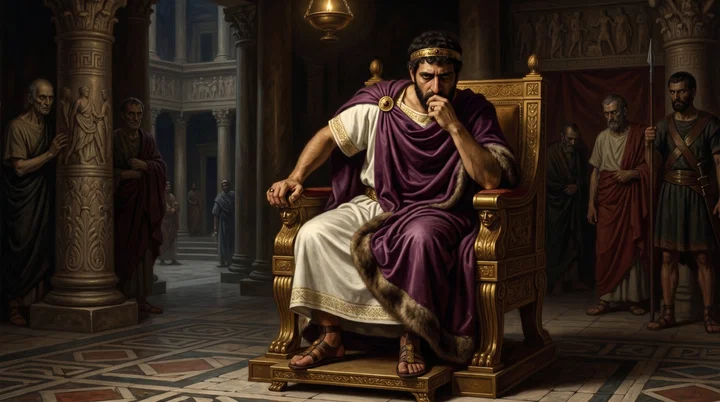
Now when Jesus was born in Bethlehem of Judaea in the days of Herod the king, behold, there came wise men from the east to Jerusalem,
Translations
American King James Version, King James Version
Now when Jesus was born in Bethlehem of Judaea in the days of Herod the king, behold, there came wise men from the east to Jerusalem,
Now when Jesus was born in Bethlehem of Judea in the days of Herod the king, behold, there came wise men from the east to Jerusalem,
Now, after Jesus was born in Bethlehem of Judea in the days of Herod the king, behold, there came wise men from the east to Jerusalem,
Now when Jesus was born in Bethlehem of Judaea in the days of Herod the king, behold, wise men from the east came to Jerusalem,
Now when Jesus was born in Bethlehem of Judæa in the days of Herod the king, behold, Wise-men from the east came to Jerusalem, saying,
And Jesus having been born in Beth-Lehem of Judea, in the days of Herod the king, lo, mages from the east came to Jerusalem,
Now Jesus having been born in Bethlehem of Judaea, in the days of Herod the king, behold magi from the east arrived at Jerusalem, saying,
Now, when, Jesus, was born in Bethlehem of Judaea, in the days of Herod the king, lo! wise men from eastern parts, came into Jerusalem:
Berean Standard Bible, Majority Standard Bible
After Jesus was born in Bethlehem in Judea, during the time of King Herod, Magi from the east arrived in Jerusalem,
Now when Jesus was born in Bethlehem of Judea in the days of King Herod, behold, wise men from the east came to Jerusalem, saying,
Now when the birth of Jesus took place in Beth-lehem of Judaea, in the days of Herod the king, there came wise men from the east to Jerusalem,
When Jesus then was borne at Bethleem in Iudea, in the dayes of Herod the King, beholde, there came Wisemen from the East to Hierusalem,
Douay-Rheims (Challoner revision)
When Jesus therefore was born in Bethlehem of Juda, in the days of king Herod, behold, there came wise men from the east to Jerusalem.
Pictures
Cross-references 20 of 39
- Luke 2:8-14
And there were in the same country shepherds abiding in the field, keeping watch over their flock by night.
Heavenly hosts praise Christ over Bethlehem.
- Micah 5:2
But thou, Beth-lehem Ephratah, though thou be little among the thousands of Judah, yet out of thee shall he come forth unto me that is to be ruler in Israel; whose goings forth have been from of old, from everlasting.
Foretells that Israel’s ruler would come from Bethlehem.
- Matthew 2:11
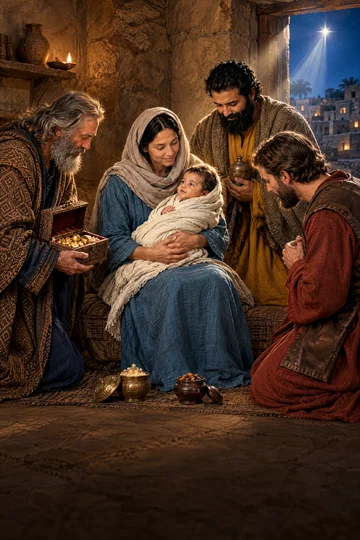
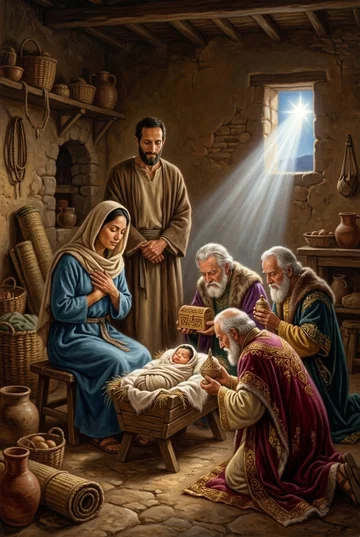
And when they were come into the house, they saw the young child with Mary his mother, and fell down, and worshipped him: and when they had opened their treasures, they presented unto him gifts; gold, and frankincense, and myrrh.
The wise men worship Jesus and present him with precious gifts.
- Numbers 24:17
I shall see him, but not now: I shall behold him, but not nigh: there shall come a Star out of Jacob, and a Sceptre shall rise out of Israel, and shall smite the corners of Moab, and destroy all the children of Sheth.
Balaam foretold a star from Jacob associated with the Messiah’s coming.
- Matthew 2:13-15
And when they were departed, behold, the angel of the Lord appeareth to Joseph in a dream, saying, Arise, and take the young child and his mother, and flee into Egypt, and be thou there until I bring thee word: for Herod will seek the young child to destroy him.
God warns Joseph to take Jesus to Egypt for safety from Herod.
- Luke 2:7
And she brought forth her firstborn son, and wrapped him in swaddling clothes, and laid him in a manger; because there was no room for them in the inn.
Both place Jesus’ birth in Bethlehem, where he is laid in a manger.
- Matthew 2:16
Then Herod, when he saw that he was mocked of the wise men, was exceeding wroth, and sent forth, and slew all the children that were in Bethlehem, and in all the coasts thereof, from two years old and under, according to the time which he had diligently enquired of the wise men.
Herod orders Bethlehem’s children killed in an attempt to destroy the infant Jesus.
- Luke 2:25-32
And, behold, there was a man in Jerusalem, whose name was Simeon; and the same man was just and devout, waiting for the consolation of Israel: and the Holy Ghost was upon him.
Simeon recognizes and testifies to the infant Messiah through the Spirit.
- Matthew 2:9-10
When they had heard the king, they departed; and, lo, the star, which they saw in the east, went before them, till it came and stood over where the young child was.
The star leads the wise men to the Child, and they rejoice.
- Luke 2:1
And it came to pass in those days, that there went out a decree from Cæsar Augustus, that all the world should be taxed.
Augustus’s decree to tax the empire is linked to the time of Jesus’ birth.
- Isaiah 9:6
For unto us a child is born, unto us a son is given: and the government shall be upon his shoulder: and his name shall be called Wonderful, Counsellor, The mighty God, The everlasting Father, The Prince of Peace.
Describes the promised Messiah and his birth.
- Luke 2:11
For unto you is born this day in the city of David a Saviour, which is Christ the Lord.
The angels announce the Saviour’s birth in Bethlehem.
- Luke 1:13-17
But the angel said unto him, Fear not, Zacharias: for thy prayer is heard; and thy wife Elisabeth shall bear thee a son, and thou shalt call his name John.
John’s birth and role as the Lord’s forerunner were announced to Zacharias in the temple.
- Genesis 3:15
And I will put enmity between thee and the woman, and between thy seed and her seed; it shall bruise thy head, and thou shalt bruise his heel.
The promised Seed who would conquer the serpent came as Jesus.
- Matthew 2:7-8
Then Herod, when he had privily called the wise men, enquired of them diligently what time the star appeared.
Herod questions the wise men and sends them to find Jesus.
- Genesis 35:19
And Rachel died, and was buried in the way to Ephrath, which is Beth-lehem.
Identifies Bethlehem as the place where Rachel died and Benjamin was born.
- 1 Samuel 16:1
And the LORD said unto Samuel, How long wilt thou mourn for Saul, seeing I have rejected him from reigning over Israel? fill thine horn with oil, and go, I will send thee to Jesse the Beth-lehemite: for I have provided me a king among his sons.
Bethlehem is identified as David’s birthplace.
- Luke 2:16
And they came with haste, and found Mary, and Joseph, and the babe lying in a manger.
The shepherds find the newborn Jesus in Bethlehem, contrasting with the wise men’s later visit to a house.
- 2 Chronicles 11:6
He built even Beth-lehem, and Etam, and Tekoa,
Rehoboam fortified Bethlehem, where Jesus was born.
- Matthew 1:18-25
Now the birth of Jesus Christ was on this wise: When as his mother Mary was espoused to Joseph, before they came together, she was found with child of the Holy Ghost.
Both recount facts surrounding the Saviour’s birth.
Commentary part 1 of 2
Each commentary is drawn from primary sources: the writings of Ellen G. White and Adventist pioneers and periodicals. Each commentary is separate. Its own words are not a quotation; follow the references to read the source passages.
Ellen G. White
55 sources
Jesus was born in Bethlehem of Judea in the days of Herod the king, and wise men from the east came to Jerusalem seeking the child born King of the Jews to worship him.DA 59.11RED 16.2Ms 147, 1906, par. 14–15 The wise men were Gentile philosophers and students of the heavens who watched the stars nightly, lived uprightly according to the light they had, and had learned from Scripture and prophecy that the Messiah was due.2SP 19.3–21.1LC1 16.2DA 59.3DA 59.2ST Dec 5, 1916 God met them in a way suited to them by a bright unusual light in the sky, which was a distant company of shining angels, and by His Spirit moved them to seek Christ.2SP 19.3–21.13MR 362.1ST Dec 5, 1916Ms 1, 1890, par. 11–13 Their coming exposed the darkness of the Jewish leaders, who had the prophecies yet expected an earthly conqueror and did not recognize His birth, while these strangers from a heathen land were more faithful to their light and more ready to receive heavenly light.2SP 19.3–21.1ST Sep 27, 1877GC88 314.3RH Dec 24, 18722SP 15.1–16.3 Though He came with divine glory veiled as a frail infant in a manger, He was recognized as exalted and worthy of homage, and the costly gifts of the wise men provided for His poor parents in their flight to Egypt and preservation from Herod's wrath.1RED 20.1LC1 20.12SP 378.32SP 15.1–16.31RED 15.1
Birthplace, Time, Arrival
Jesus was born in Bethlehem of Judea in the days of Herod the king, and after His birth wise men from the east came to Jerusalem seeking the child born King of the Jews to worship Him.DA 59.11RED 16.2Ms 147, 1906, par. 14–15RH Dec 24, 1872RH Dec 24, 1872 They had studied prophecy and believed the time of the promised Messiah was near, watching for a sign so they could welcome and worship Him, and having seen His star they followed a heavenly sign in search of Jesus.DA 59.11RED 16.2RH Dec 24, 1872RH Dec 24, 1872 That sign was a bright, unusual star that appeared after angels announced Christ's birth to the shepherds, and the Spirit of God moved them on their journey to seek Him.1RED 16.2 The star guided them toward Jerusalem but was hidden as they approached, so they made inquiries of the people there asking where the Messiah had been born.1RED 16.2 Though regarded as heathen and not Jews, they had also studied God's works in nature and lived according to the light they had received, and they were purer before God and more ready to receive heavenly light than people with greater religious light who did not live by it.RH Dec 24, 1872
God used them to carry news of the infant Redeemer because the Jews had turned so far from Him and become so separated from God that angels could not communicate the news to them.RH Dec 24, 1872 Their arrival quickly became known, stirred Jerusalem, and troubled Herod, whose apparent courtesy concealed envy and hostility toward the infant king.RH Dec 24, 1872 Christ's birth thus brought joy to heaven but was met by indifference among the Jews and fear among worldly rulers.RH Dec 24, 1872 Their visit begins the account of Herod's effort to kill Jesus, in which Satan stirred people against Him to take His life.Ms 147, 1906, par. 14–15
Bethlehem as Jesus' birthplace connects Him with David, who was born there more than a thousand years earlier.PP 637.1–2 Being born in Bethlehem also places His birth within His earthly human life, and His experience as a man fitted Him to represent and intercede for humanity after ascending to heaven.ST Oct 31, 1878
Who the Wise Men Were
The wise men belonged to a large and influential class of philosophers that included people of noble birth and accounted for much of their nation's wealth and learning.DA 59.2ST Dec 5, 1916 They were learned observers of nature who studied the stars, knew their movements, watched them nightly, studied God's providence in nature, and were respected for integrity and wisdom.DA 59.2ST Dec 5, 1916COS 22.3 Though some in that wider class deceived the credulous people, those who came to Jesus were upright.DA 59.2ST Dec 5, 1916
Though regarded by the Jews as heathen from a heathen land, they were upright, sincere seekers of truth who wanted to do God's will, lived according to the light they had, and were trusted by God who knew their hearts.DA 59.2ST Dec 5, 1916RH Dec 24, 1872COS 21.3–22.2 They were Gentile, non-Jewish scholars, and though the Jews called them heathen they were not idolaters.2SP 19.3–21.1ST Sep 27, 1877RH Dec 24, 1872COS 21.3–22.2DA 621.1–622.2 They were more faithful to the light they had received than people who professed piety and had greater religious light but did not live by it, and were purer before God and more ready to receive heavenly light than the selfish, proud Jewish priests whose selfishness and pride hindered them.ST Sep 27, 1877RH Dec 24, 1872COS 21.3–22.2GC88 316.1 Like the shepherds of Bethlehem they heeded the light they had received, in contrast to those who through pride and unbelief failed to recognize the time of their visitation, while the Jewish people were so absorbed in their own ambitions that they did not know He had come.DA 621.1–622.2GC88 316.1
They had studied prophecy and the Hebrew Scriptures, recognized that the promised Messiah was due and the time for His coming was near, and were watching for a sign so they could welcome and worship Him as the infant King and King of the Jews.2SP 19.3–21.1LC1 16.2DA 59.31RED 16.2RH Dec 24, 1872 They learned of the coming Saviour more clearly from the Old Testament, from Balaam's prophecy of a star preserved by tradition, and specifically from the prophecy of a Star coming out of Jacob and a Scepter rising out of Israel.DA 59.3GC88 314.3ST Dec 5, 1916PP 475.2–3 That prophecy taught that knowledge of the Lord's glory would fill the world and that the Messiah would bring light and salvation to Gentiles as well as to Israel, and they eagerly awaited Him.GC88 314.3ST Dec 5, 1916 They are described as neither Jews nor Gentiles who had lived according to the light they had and by searching Scripture and tracing prophecy had learned about the time Christ would come.Ms 60, 1886, par. 6
Star That Guided Them
God met the seekers in the way they could understand, for they were students of the heavens, and He drew their attention by a remarkable, bright, unusual light in the sky.3MR 362.1Ms 1, 1890, par. 11–13 That light was not a common star but a distant company of angels appearing like a star, though they did not know this, and the Spirit of God moved them to seek Christ.2SP 19.3–21.13MR 362.1ST Dec 5, 1916Ms 52, 1890, par. 10–13
It appeared after the birth had been announced to the shepherds, for on the night of Jesus' birth they first saw the glory surrounding those angels, and when that light faded they saw the star and took it as a possible sign that the Messiah had come.LC1 16.21RED 16.2ST Dec 5, 1916COS 23.1–2 Dreams also instructed them to seek the newborn Prince, and signs and wonders in the heavens were given in connection with their search.ST Dec 5, 19165MR 353.1–354.1Ms 39, 1898, par. 21–22
The star guided them toward Judea and Jerusalem but grew dim, was hidden, and disappeared from view as they drew near, so they made inquiries of the people, thinking the chief priests and scribes would know of His birth.1RED 16.2ST Jun 16, 1887LC1 20.1ST Sep 27, 1877COS 23.1–2 Following it to Jerusalem, they came to the temple, where it rested above it before fading from view.DA 61.1ST Dec 5, 1916
Expecting joyful knowledge of the Messiah's birth, they were astonished to meet surprise, fear, and contempt and to find no one who seemed to know of the newborn King and no unusual interest or preparations to welcome Him.DA 61.1ST Dec 5, 1916ST Sep 27, 1877 At His birth the star recognized Jesus and bore witness to His divinity and mission, guiding the seers to the manger where He lay and marking His advent and coming.DA 770.45RED 90.2–33SP 169.2–170.2DA 405.3–406.2Ms 72, 1895, par. 20–24
Jewish Unbelief and Opposition
God entrusted the news of the infant Redeemer to Gentile wise men from the East because the Jews had turned so far from Him and become so separated from God that angels could not communicate the news to them.2SP 19.3–21.1ST Sep 27, 1877RH Dec 24, 1872 Their arrival in Jerusalem after Jesus' birth in Bethlehem in the days of Herod the king quickly became known, stirred the city, and reached Herod's palace.RH Dec 24, 1872ST Dec 5, 1916DA 61.3–62.1 Herod was troubled because he saw the child born to be king as a rival with a higher claim to the throne than his own.RH Dec 24, 1872ST Dec 5, 1916DA 61.3–62.1 His apparent courtesy concealed envy and hostility, he expected Christ to rule an earthly kingdom and resisted the idea of a Jewish king, and he sought to destroy Christ.RH Dec 24, 1872RH Dec 24, 1872
Their arrival and inquiries made the whole nation aware of the search, drew attention to the events surrounding Jesus' birth and to what prophecy had foretold for that time, and brought the priests and rabbis to consider the prophecies about the Messiah and the event that had just taken place.ST Jun 16, 18871RED 20.1LC1 20.1ST Sep 27, 1877DA 64.3 Though the Son of God appeared outwardly as a frail, helpless infant with divine glory veiled by humanity and laid in a manger among animals, the great people of the earth did not know of His birth or recognize the manner of His coming.2SP 15.1–16.31RED 15.1 Even the learned Jewish leaders who studied the law and prophecies did not recognize Him.2SP 15.1–16.31RED 15.1
Those leaders remained in spiritual darkness and were spiritually blind.GC88 314.31RED 15.1 They expected a mighty earthly prince and temporal deliverer who would rule from David's throne, overthrow other powers by force, restore Jewish liberty, and rule the nations.RH Dec 24, 18722SP 15.1–16.31RED 15.1 They misread prophecies of Christ's second appearing in power and glory as describing His first coming, while pride, desire to support their own status, and Satan's leading darkened their understanding of Scripture toward ruin, so that priests and rulers had lost the true sense of the Old Testament prophecies and the news of His birth was given to humble shepherds rather than to them.RH Dec 24, 1872Ms 72, 1895, par. 20–24 Like the shepherds of Bethlehem, the Eastern magi heeded the light they had received and God revealed truth to them, in contrast to those who through pride, unbelief, selfish ambition, and absorption in their own plans and ambitions failed to recognize the time of their visitation and did not know He had come.RH Dec 24, 1872DA 621.1–622.2GC88 316.1 Christ's birth brought joy to heaven but was met by indifference among the Jews and fear among worldly rulers.RH Dec 24, 1872
Christ's Humility and Divinity
His birth in Bethlehem in the days of Herod the king came when the appointed time for His advent was fulfilled.2SP 15.1–16.3 He came in humble circumstances, with divine glory veiled in the frail appearance of an infant laid in a manger among animals.2SP 15.1–16.31RED 15.1 Though the law and the prophecies foretold this humble first coming, the great people of the earth, including the learned religious leaders, did not know of His birth or recognize the manner of His coming, for they were spiritually blind and expected a mighty earthly prince to rule from David's throne.2SP 15.1–16.31RED 15.1 Though He was the Son of God He chose a lowly life without wealth or outward grandeur and was regarded as having poor parentage, so that the poorest would not feel shut out from His company and every believer could know that He understood the strain of poverty and trials, making heavenly truth available to all.FE 401.1Ms 72, 1895, par. 20–24 For this reason the news of His birth was given to humble shepherds rather than to priests and rulers, who had lost the true sense of the Old Testament prophecies.Ms 72, 1895, par. 20–24
His birth in a humble place was part of the plan of redemption, for He entered human life with its necessities and temptations, sanctifying every stage of it and showing that people need not continue in sin.Lt 150, 1899, par. 7 Even as a babe in a manger He was recognized as exalted and due honor, receiving homage and precious, costly gifts of gold, frankincense, and myrrh.2SP 378.34RED 111.1Ms 52, 1890, par. 10–13 The wise men from the east bowed before Him in this way, while His own disciples later failed to appreciate His worth.4RED 111.1
His birth took place in a moment of intense heavenly attention, when the created worlds watched how He would be received, though His nation had made no preparation for Him.Ms 52, 1890, par. 10–13 Angels proclaimed the Redeemer's arrival on Bethlehem's plains.Ms 52, 1890, par. 10–13
Providence, Conflict, and Example
God directed the wise men from the east to seek Jesus by guiding them with a star, and their arrival and inquiries made the nation aware of the search and drew attention to the events surrounding His birth.1RED 20.1LC1 20.1 Their gifts and offerings met the needs of the poor family during the flight to Egypt and the stay there, so that God provided for the journey and helped preserve the child from Herod's wrath.1RED 20.1LC1 20.1
From the time He appeared in Bethlehem as a babe, Satan kept watch over Him and set out to destroy Him, working through Herod at the first and then striving throughout His faultless childhood, holy ministry, and saving sacrifice to prevent His work, lead Him into sin, discourage Him, and turn Him aside.3SP 183.2DA 759.3–42SP 87.2 He was upheld by His Father and could not be turned from His work, so that Satan's plans failed.3SP 183.2DA 759.3–42SP 87.2 The continued attacks only revealed His spotless character more clearly.3SP 183.2DA 759.3–4
As the star guided the wise men who came from the east to find Jesus, it represents God's guidance for those who follow Him, seek Him, and seek His help.Lt 91, 1887, par. 13Lt 2, 1886, par. 21 Guided by a star from a distant country, they came to find Jesus and presented Him with gold, frankincense, and myrrh, offering frankincense and myrrh in pure, uncorrupted faith.Lt 150, 1899, par. 7Ms 58, 1895, par. 4–6 Their coming provides the example for Christmas giving, that gifts should honor and remember Jesus as the great Giver of blessings rather than be spent selfishly on indulgence.Ms 58, 1895, par. 4–6
Sources
Pioneers and periodicals
192 sources
Jesus was born in Bethlehem of Judea, the city of David about five or six miles south of Jerusalem, in the days of Herod the Great when Rome ruled the world.ST May 1, 1907ST Jul 2, 1894 There came to Jerusalem wise men from the east, Magi who were Gentiles, learned philosophers and seekers after God who had learned from Daniel, the Hebrew Scriptures and Balaam's prophecy that the Messiah was near.ST Jun 16, 1887ST Nov 28, 1911 They were guided by a small light sent from God, the glory of the angelic host, which stood over the house in Bethlehem and fulfilled the prophecy of the star out of Jacob.ST Jun 16, 1887ST Dec 11, 1879AUST Jun 14, 1920 His birth in little Bethlehem fulfilled Micah 5:2 spoken more than six hundred years before, proving Him the true Messiah, the born King of the Jews and ruler in Israel.ST Jan 9, 1879ST Jan 8, 1880RH Apr 17, 1855 While Herod and all Jerusalem were troubled and the priests who knew the prophecy showed no joy or welcome, these strangers from afar believed the light they had, worshiped the infant with costly gifts of gold, frankincense and myrrh, and carried the news to those who should have rejoiced.RH Dec 24, 1872ST Dec 25, 1901ST May 20, 1897ST Nov 19, 1902ST Dec 3, 1896
Bethlehem Place Described
Matthew 2:1 places the birth of Jesus in Bethlehem of Judea, also called Bethlehem-Judah, a village known as the city of David lying about five or six miles south of Jerusalem.ST May 1, 1907ST Jul 2, 1894ST Aug 17, 1904ST May 1, 1907ST Aug 26, 1913 The town is tied to the coming of wise men from the east to Jerusalem and to the guiding of a mysterious star to the birthplace, while the surrounding hills frame the shepherds' nighttime hearing of glory to God with peace and goodwill on earth, a declaration continuing through time to the ends of the earth.ST Jul 2, 1894RH Jul 20, 1905 The family is later found at Bethlehem, having moved from Nazareth and evidently meaning to make it their home, for there the heir to David's throne was born.ST Aug 17, 1904
Bethlehem was formerly called Ephrath or Ephratah.ST May 1, 1907ST May 1, 1907 Its name means house of bread, fitting the birthplace of Jesus as the Bread of Life and the living bread for souls.ST Jul 2, 1894RH Jan 8, 1875 A Christian missionary home becomes to many such a Bethlehem, a veritable house of bread where others find Christianity's sweetest fruits and most gracious work in home life.RH Sep 26, 1912
It was already a very ancient city in Christ's day, one of the oldest in Palestine.ST May 1, 1907 It was the birthplace of Benjamin and the city near which Rachel died about 1700 years before Christ.ST May 1, 1907ST May 1, 1907 It was the city where Naomi lived with Ruth the Moabitess about 400 years later, near 1300 years before Christ.ST May 1, 1907 It was the birthplace of King David, whose childhood well by the city gate made its water seem sweetest to him, and about 975 years before Christ the city was fortified by King Rehoboam.ST May 1, 1907ST May 1, 1907 There was an inn or tavern in or just outside Bethlehem called the Inn of Chimham, from which travelers generally left Palestine for Egypt, which may have been there at the time of the birth of Jesus.ST May 1, 1907
The birthplace is a specific, still-known spot now covered by the Church of the Nativity, a rocky subterranean chamber with an adjacent cavern.ST Aug 25, 1881 Its identity is established by unbroken tradition and by the fact that Bethlehem has never been overthrown in sieges.ST Aug 25, 1881 Jerome in the fourth century was so sure of the site that he came and spent his long laborious life in the cavern close by the birth-spot, where he meditated and prayed and wrought the Vulgate translation.ST Aug 25, 1881 The dispute over the holy places in Palestine centered on the church at Bethlehem and the grotto where Jesus was believed to have been born.RH Mar 9, 1911 The town stands beautiful on a lofty hill surrounded by olive orchards, reached from Jerusalem past Rachel's tomb by the roadside and the pools of Solomon and the aqueduct running from those pools to Bethlehem, overlooking the deep fertile vale of Urtas with its gardens and fruit trees, and now filled with many new convents and other religious buildings giving it an almost modern look.ST Aug 25, 1881
The verse establishes birth in Bethlehem of Judea, not Jerusalem, thus contradicting the Book of Mormon's claim that he would be born at Jerusalem.RH Jan 14, 1909 It presents Him as a Jew descended from David, not as a Gentile born in Galilee, consistent with Luke's record and with the other scriptures saying Jesus was of David's line.ST Sep 29, 1909 Bethlehem in Judah's tribal home is where the Messiah of the tribe of Judah was born as the promised Seed through whom the lost inheritance would be restored and people would receive forgiveness and eternal life.ST Mar 30, 1904 Bethlehem's location with the image of the Eastern Star pointing to it serves as evidence that the sacred places described in the Bible correspond to the land itself.RH Aug 29, 1871
Bethlehem is a place where Christ's light shone in the star, but it is not the Christian's final or exclusive homeland.RH Mar 4, 1873 The Christian's true home is wherever Christ's Spirit inspires holiness, faith, and love.RH Mar 4, 1873
Herod Time Dated
The days of Herod the king are the reign of Herod the Great, not one of the later rulers bearing the Herod name and not the Pharaoh of Moses' time.ST Oct 6, 1914 He was king in Judea and in Syria, placed in power by Rome and ruling under Augustus when Rome stood at the height of its power.ST Oct 6, 1914RH Jan 24, 1871 His reign fell in the widespread Augustan peace, when broad peace prevailed among the nations and the temple of Janus was closed.ST Jan 13, 1914RH Jan 24, 1871RH May 16, 1912
Herod was an Idumean or Edomite by race, not Jewish by birth, but Jewish in religion, a proselyte who rebuilt Jerusalem's temple.ST Jul 2, 1894ST Dec 30, 1889 He ruled Judea under Rome together with the Sanhedrin and the priests, reigned thirty-seven years, and died at age sixty-nine in Jericho a few days before Passover.ST Oct 6, 1914ST Dec 30, 1889 Having lifted his hand against God's word and set himself against its plans and precepts, his name lives only in infamy and his fate is written in hopeless doom.ST Jul 15, 1908
His death is dated April 1, 4 B.C., in the latter half of March 4 B.C., reckoned from the lunar eclipse of March 13, 4 B.C., shortly before Passover.ST Jul 2, 1894ST Jul 2, 1894RH Apr 9, 1908 Jesus therefore was born before Herod died, toward the end of 5 B.C.RH Apr 9, 1908 The wise men's visit came only a few weeks before Herod's death.ST Jul 2, 1894ST Jul 2, 1894
The birth is also dated to the autumn of 4 B.C., before the November rains, because the shepherds were outdoors at night.ST Aug 17, 1904 Those who held this reckoning placed it probably in September or October. The exact day is not revealed, no day is appointed for its commemoration, and the verse itself gives no date.RH Dec 2, 1909
The reckoning rests on the A.D. calendar devised centuries later, which when counted backward was miscalculated by about four years, so that the year labeled 4 B.C. corresponds roughly to A.D. 1 or 2 and Jesus was born four years before the common era's usual reckoning.GSAM 88.1–2ST Dec 30, 1889 That dating is used to convert 1847 years from His actual birth to 1844.GSAM 88.1–2 It places His baptism when about thirty around the end of A.D. 26 or the beginning of A.D. 27, 483 years after the decree issued in Artaxerxes' seventh year, with His birth no later than 4 B.C. from the eclipse dating before His baptism.RH Dec 23, 1852
The peaceful setting under Augustus is the auspicious hour for the birth of the Lord as the Prince of Peace.ST Jan 13, 1914RH Jan 24, 1871RH May 16, 1912 The quiet of the Augustan age allowed Jesus to travel, heal, teach, train the apostles, and lay the foundation of His church.ST Jan 13, 1914 It was a brief opportunity for the people to recognize the Messiah and escape threatened doom through repentance and humility.ST Jan 13, 1914 Yet the highly cultured and powerful age had not brought people nearer to God, because sin still reigned, and the world full of philosophy and science falsely so-called was in darkness through the confusion and error of Grecian and Roman teaching about God, the soul, matter, demons, virtue, and worship.ST Nov 25, 1930ST Dec 18, 1901
The word for days is hemera, the Greek word for day, here referring to a span of twenty-four hours rather than daylight alone.RH Dec 12, 1871
Wise Men Identified
The visitors are called Magi in the original Greek, and the word rendered east is anatole, describing the direction from which they came to Jerusalem.ST Feb 28, 1911ST More than one came, but how many is not stated.STST Aug 17, 1904 The star that marked the birth had appeared earlier, and the journey from Persia, possibly as far as 750 miles, could have taken months or more than a year of study, planning and travel.ST Aug 17, 1904 Herod's inquiry about when the star appeared, followed by his order against boys up to two years old according to that time, suggests Jesus may have been more than a year old when they came, perhaps about a year and a half.ST Aug 17, 1904
They were not three kings, and the number three and the kingship rest only on later tradition with no Scripture evidence.ST Oct 28, 1930 Their names are not given, and it is not stated that one was a Black man.ST Oct 28, 1930 The names Gaspar, Melchior and Balthazar, and the claim about race, are later traditions, not facts stated in Scripture.ST Oct 28, 1930
They belonged to the ancient Magi, originally a class of Persian and Median priests who served as royal counselors.ST Nov 28, 1911ST Sep 11, 1901ST Jul 2, 1894 They were a learned and influential priestly class versed especially in astronomy, with astrology, medicine and occult natural sciences also named as their studies, the name later broadened to include philosophers and men of the magician class.ST Nov 28, 1911ST Sep 11, 1901ST Jul 2, 1894 Persia was especially known for such men, and Babylon and Persia are named as their center, with Persia, Babylon, Padan-aram, Chaldea, Arabia and possibly India given as the east noted for such wisdom.ST Jul 2, 1894 Daniel had been placed at their head as chief among such men.ST Nov 28, 1911ST Jul 2, 1894
They are identified as a priestly order among Eastern peoples, especially the Medes, associated with the Zoroastrian religion, serving at sacred fires, performing ritual washings, and observing the stars.ST The class included people of noble birth and learning, and some deceived the credulous.ST Dec 5, 1916 One description calls wise men an improper translation for Persian sorcerers whose coming caused public excitement, while another denies that God revealed Christ's birth through heathen, idolatrous star-reading.ST Jun 3, 1875
Those who came to Jesus were upright men of integrity, respected for integrity, philosophers studying God's providence and works in nature.ST Dec 5, 1916ST Dec 2, 1880 They were not idolaters and not Jews, but lived according to the limited light they had, including devout and wise worshipers of the true God and men of God whose purpose was to worship Him.ST Nov 28, 1911ST Sep 11, 1901ST Dec 2, 1880ST Jan 18, 1899 They are also called seers, the wisest princes of the East, and Persian princes, and in one portrayal Indian sages bringing gold, frankincense and jewels.ST Jul 25, 1878ST Dec 19, 1892ST Apr 26, 1910 A bright sign in the heavens drew them to seek the infant King, and the Spirit of God moved them to follow it toward Jerusalem.ST Dec 2, 1880
Through contact with Daniel, the influence of pious Jews, Balaam's prophecy, Daniel's prophecies and the Hebrew Scriptures they learned of Christ's coming and that the time was near.ST Nov 28, 1911STST Jul 2, 1894 Some learned from Scripture that the Messiah, the King of the Jews, was near and were also warned by God.ST Jul 2, 1894 They went to Jerusalem because it was the country's capital and they expected the newborn King to be there.ST Jul 2, 1894
They were Gentiles, not Jews, though regarded as heathen.ST Jun 16, 1887RH May 10, 1915ST Dec 20, 1905 They are called men in Babylon who received a message from God at Christ's birth, just as Zacharias, Mary, Joseph and the shepherds did.RH May 23, 1912 Though regarded as heathen they lived according to the light received, while those with greater privilege turned away.ST Jun 16, 1887 God used them to bring news of the infant Redeemer to Jerusalem when the nation otherwise would not have known.ST Jun 16, 1887 Their coming reflected a wider expectation of the promised Deliverer shared by Gentiles as well as Jews, showing that people beyond Israel could respond to God's call and that God is near to people of every nation.RH May 10, 1915ST Dec 20, 1905
Star Appearance Explained
The phrase in the east describes where the wise men were, east of Judea, not the direction in which they looked, for they saw the star to the west of themselves and followed it westward.RH Feb 28, 1871 After passing the Jordan they halted upon Judea's plain and kneeling in fervent prayer knew their quest was not in vain.ST Dec 24, 1912
The star was a small special light sent by God that could guide to Bethlehem and stand over the particular house where the child lay, not a vast astronomical star.ST Dec 11, 1879ST Jan 6, 1888 It was not a comet or an ordinary star, nor a sidereal body or planetary conjunction, for a meteor could account for such a guiding light but a comet or star could not.ST Jul 30, 1912 It led them for days, rested above the temple and then disappeared, and was not visible while they consulted Herod and the chief priests before going ahead of them about two miles to Bethlehem and standing over the house.ST Dec 5, 1916ST Jul 30, 1912
It was the same company of angels that appeared to the shepherds, shining with heavenly glory like a low brilliant star.ST Jul 30, 1912 A luminous star appeared after angels had announced Christ's birth to shepherds and after the glory of God shone over Bethlehem, though the magi did not know it was a company of angels.ST Dec 5, 1916ST Jun 16, 1887 It fulfilled Balaam's prophecy of a star rising out of Jacob made more than fourteen hundred years before, and Jacob's star first shone at Bethlehem.AUST Jun 14, 1920ST Jul 30, 1912RH Dec 19, 1865
The star appeared far away near the Euphrates where watchers studied the heavens.RH Jul 3, 1879 It was newly appearing and unusually bright, softly gleaming as the answer to prayer.ST Dec 24, 1912ST Jan 2, 1912 Dreams instructed them to seek the newborn Prince, and the Spirit of God moved them to seek Jesus.ST Dec 5, 1916ST Jun 16, 1887 Herod's inquiry about when the star appeared, followed by his order against boys up to two years old, suggests Jesus may have been more than a year old when they came, perhaps about a year and a half.ST Aug 17, 1904
As they neared Jerusalem the star was hidden and no longer guided them, so they asked about the Messiah's coming.ST Jun 16, 1887 They made inquiries in Judah because they thought the chief priests and scribes would know of His birth, and they expected the Jews to know the time and place and were astonished to find no unusual interest or preparation to welcome Him.ST Jun 16, 1887ST Sep 27, 1877 Its guidance to the stable, manger and house is as the Bible guides people to Christ.RH Jun 14, 1867 Christ is pictured as love coming from that east like a star, the light who leads people through sin and sorrow to God.RH Sep 3, 1903RH Jan 20, 1903
The stars of night shone bright down on sleeping Bethlehem, but another star, the Christ-star, outshone and dimmed them all.ST Dec 24, 1912 Its light pours down and holds the ages, and its song has swept over the world.ST Dec 15, 1909ST Jun 23, 1909 That star endures and still leads to the Messiah's feet, growing brighter every year until its glorious beams fill the world with light, and its rays still guide to Him.ST Dec 15, 1909ST Dec 25, 1901 His story reaches from birth to death as the Lamb, resurrection, and coming again for His own, bringing tumult of joy with a star in the sky and singing from the heavenly host, kindling every home so that the nations confess Jesus is King.ST Dec 24, 1902ST Dec 15, 1909ST Jun 23, 1909
The star in the east was a divine manifestation associated with Jesus' birth, but it does not prove that a worldly sanctuary was established on earth after Christ's death and resurrection.
Sources