Matthew 23:13
But woe unto you, scribes and Pharisees, hypocrites! for ye shut up the kingdom of heaven against men: for ye neither go in yourselves, neither suffer ye them that are entering to go in.
Translations
But woe to you, scribes and Pharisees, hypocrites! for you shut up the kingdom of heaven against men: for you neither go in yourselves, neither suffer you them that are entering to go in.
King James Version, KJV Cambridge Paragraph Bible
But woe unto you, scribes and Pharisees, hypocrites! for ye shut up the kingdom of heaven against men: for ye neither go in yourselves, neither suffer ye them that are entering to go in.
But woe to you, scribes and Pharisees! hypocrites! for ye shut up the kingdom of heaven against men: for ye neither go in yourselves, neither suffer ye them that are entering, to go in.
Revised Version, American Standard Version
But woe unto you, scribes and Pharisees, hypocrites! because ye shut the kingdom of heaven against men: for ye enter not in yourselves, neither suffer ye them that are entering in to enter.
'Woe to you, Scribes and Pharisees, hypocrites! because ye shut up the reign of the heavens before men, for ye do not go in, nor those going in do ye suffer to enter.
But woe unto you, scribes and Pharisees, hypocrites, for ye shut up the kingdom of the heavens before men; for ye do not enter, nor do ye suffer those that are entering to go in.
Woe to you, scribes and Pharisees, you hypocrites! You shut the kingdom of heaven in men’s faces. You yourselves do not enter, nor will you let in those who wish to enter.
Woe to you, scribes and Pharisees, you hypocrites! You defraud widows of their houses, and for a show make lengthy prayers. Therefore you will receive greater condemnation.
“ Woe to you, scribes and Pharisees, hypocrites! For you devour widows’ houses, and as a pretense you make long prayers. Therefore you will receive greater condemnation.
But a curse is on you, scribes and Pharisees, false ones! because you are shutting the kingdom of heaven against men: for you do not go in yourselves, and those who are going in, you keep back.
Wo therefore be vnto you, Scribes and Pharises, hypocrites, because ye shut vp the kingdome of heauen before men: for ye your selues go not in, neither suffer ye them that would enter, to come in.
Douay-Rheims (Challoner revision)
But woe to you scribes and Pharisees, hypocrites; because you shut the kingdom of heaven against men, for you yourselves do not enter in; and those that are going in, you suffer not to enter.
Pictures
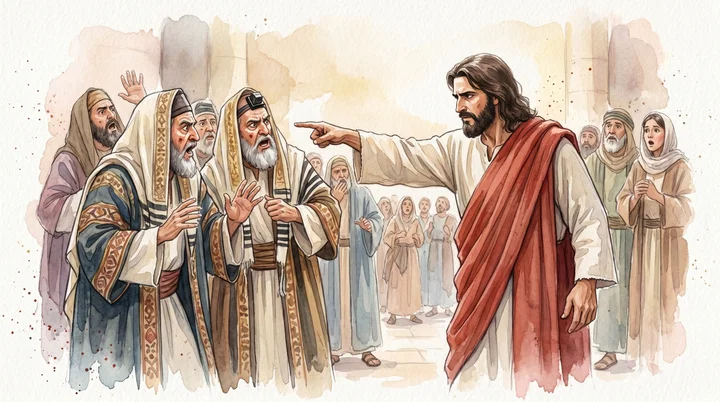
Cross-references 20 of 25
- Luke 11:52
Woe unto you, lawyers! for ye have taken away the key of knowledge: ye entered not in yourselves, and them that were entering in ye hindered.
Religious leaders take away the key of knowledge and hinder people from entering.
- Matthew 23:23
Woe unto you, scribes and Pharisees, hypocrites! for ye pay tithe of mint and anise and cummin, and have omitted the weightier matters of the law, judgment, mercy, and faith: these ought ye to have done, and not to leave the other undone.
They neglect justice, mercy, and other weightier duties while attending to minor details.
- Matthew 23:4-7
For they bind heavy burdens and grievous to be borne, and lay them on men’s shoulders; but they themselves will not move them with one of their fingers.
The leaders burden others while seeking honor and prominent places for themselves.
- Luke 17:20-21
And when he was demanded of the Pharisees, when the kingdom of God should come, he answered them and said, The kingdom of God cometh not with observation:
The kingdom was among the Pharisees, not within them.
- Matthew 23:27-28
Woe unto you, scribes and Pharisees, hypocrites! for ye are like unto whited sepulchres, which indeed appear beautiful outward, but are within full of dead men’s bones, and of all uncleanness.
Their outward righteousness hides inward hypocrisy and uncleanness.
- Matthew 23:33
Ye serpents, ye generation of vipers, how can ye escape the damnation of hell?
Their rejection of God’s messengers brings judgment.
- Matthew 15:8
This people draweth nigh unto me with their mouth, and honoureth me with their lips; but their heart is far from me.
Their lips honored God while their hearts were far from him.
- Matthew 15:14
Let them alone: they be blind leaders of the blind. And if the blind lead the blind, both shall fall into the ditch.
Warns against following blind religious guides.
- Luke 20:45-47
Then in the audience of all the people he said unto his disciples,
same denunciation of scribes
- Luke 11:37-44
And as he spake, a certain Pharisee besought him to dine with him: and he went in, and sat down to meat.
Jesus condemns Pharisaic hypocrisy and ritual observance while addressing handwashing.
- Matthew 21:43
Therefore say I unto you, The kingdom of God shall be taken from you, and given to a nation bringing forth the fruits thereof.
gives particulars of Jewish church fall with it
- Matthew 16:19
And I will give unto thee the keys of the kingdom of heaven: and whatsoever thou shalt bind on earth shall be bound in heaven: and whatsoever thou shalt loose on earth shall be loosed in heaven.
The passage connects Christ’s promise of the kingdom’s keys with the Word of God.
- Matthew 6:33
But seek ye first the kingdom of God, and his righteousness; and all these things shall be added unto you.
Both verses concern seeking the kingdom of God and righteousness.
- Matthew 5:19
Whosoever therefore shall break one of these least commandments, and shall teach men so, he shall be called the least in the kingdom of heaven: but whosoever shall do and teach them, the same shall be called great in the kingdom of heaven.
Both warn teachers who break commandments and hinder others.
- Luke 16:16
The law and the prophets were until John: since that time the kingdom of God is preached, and every man presseth into it.
Both speak of people entering the kingdom before Pentecost.
- John 3:3
Jesus answered and said unto him, Verily, verily, I say unto thee, Except a man be born again, he can not see the kingdom of God.
Both connect entry into the kingdom with seeing it.
- Luke 16:15
And he said unto them, Ye are they which justify yourselves before men; but God knoweth your hearts: for that which is highly esteemed among men is abomination in the sight of God.
earlier warning growing to Matthew 23
- John 18:36
Jesus answered, My kingdom is not of this world: if my kingdom were of this world, then would my servants fight, that I should not be delivered to the Jews: but now is my kingdom not from hence.
Jesus says his kingdom is not of this world.
- Ezekiel 34:2-10
Son of man, prophesy against the shepherds of Israel, prophesy, and say unto them, Thus saith the Lord GOD unto the shepherds; Woe be to the shepherds of Israel that do feed themselves! should not the shepherds feed the flocks?
Self-serving shepherds fail to care for the flock, which is scattered.
- Matthew 23:4
For they bind heavy burdens and grievous to be borne, and lay them on men’s shoulders; but they themselves will not move them with one of their fingers.
quotes its heavy burdens to describe the hypocrites
Commentary
Each commentary is drawn from primary sources: the writings of Ellen G. White and Adventist pioneers and periodicals. Each commentary is separate. Its own words are not a quotation; follow the references to read the source passages.
Ellen G. White
62 sources
Christ's woe pronounces guilt and coming judgment on the scribes and Pharisees as hypocrites because they shut the kingdom of heaven against men, neither entering themselves nor suffering those who were entering to go in.DA 610.1–611.2Ms 105, 1893, par. 1–2Ms 5, 1882, par. 14–16 The kingdom they barred is opened by the key of knowledge, which is knowing the only true God and Jesus Christ whom He sent as eternal life, an inward divine life essential to true holiness that is unlocked in the Scriptures.3SP 60.1–2ST Jun 14, 1899Ms 71, 1897, par. 6–7DA 613.4Ms 25, 1890, par. 9 They took away that key by distorting and falsely interpreting Scripture and Christ's words, fixing attention on outward forms and endless religious services while enslaving minds to tradition, deception, and fear of exclusion from the synagogue.DA 610.1–611.2Ms 105, 1893, par. 1–23SP 60.1–2ST May 2, 1878Lt 367, 1905, par. 15–17 This was not excusable ignorance but willful blindness from selfish ambition for wealth, honor and position, with outward zeal concealing jealousy, pride, hatred and love of the world, so Christ exposed them in fearless, scathing words of righteous indignation joined with love and mercy.Ms 5, 1882, par. 14–16ST Aug 22, 1878Ms 1, 1878, par. 56–593SP 9.2Ms 5, 1882, par. 12–13 The same woe falls just as surely on priests, ministers, teachers and all in responsibility today who assume authority over conscience, falsely interpret God's word and hinder seekers and God's messengers, and they are accountable for the souls they turn away unless they repent.4SP 414.3GC 596.2RH Jun 7, 1906Ms 175, 1897, par. 81Lt 134, 1902, par. 13–14
Words and Setting
The woe pronounces guilt and coming judgment on the scribes and Pharisees as hypocrites because they shut the kingdom of heaven against men, neither going in themselves nor permitting those who were entering to go in.DA 610.1–611.2Ms 105, 1893, par. 1–2Ms 5, 1882, par. 14–16ST Jun 14, 1899Ms 77, 1899, par. 1–3 Their refusal to enter and their hindrance of seekers bore terrible guilt, for by teaching and example they rejected the salvation brought to them and kept others from it.Ms 105, 1893, par. 1–2Ms 5, 1882, par. 14–16Ms 77, 1899, par. 1–3 This was not excusable ignorance, since selfish motives and ambition for wealth and honor with attachment to old customs led them to close their eyes to light and oppose gospel reform.Ms 5, 1882, par. 14–16 Reverence for tradition and blind faith in a corrupt priesthood enslaved the people, and the leaders obstructed the way of life by distorting words spoken to give life, falsely interpreting Scripture, making God's law ineffective in practice, and leading people away from truth.DA 610.1–611.2Ms 105, 1893, par. 1–2Ms 77, 1899, par. 1–3 They also used deception, false reports and misrepresentation to turn others against the truth, so the warning reaches all who follow that example, including ministers who turn people from truth to fables and malign those who teach it.ST Mar 21, 1878
The exposure took place openly, with authority and fearless denunciation of the Jewish religious leaders and their hypocrisy.RH May 12, 1910ST Apr 5, 1905Ms 81, 1893, par. 43 It was on the last day in the temple courts, in the very setting where they taught human commandments as doctrine and practiced dishonesty.RH May 12, 1910ST Apr 5, 1905Ms 81, 1893, par. 43 The severity of the rebuke revealed true greatness and the purity of the teaching set against theirs.ST Apr 5, 1905
The kingdom is opened by the key of knowledge, which is knowing the only true God and Jesus Christ whom He sent, as eternal life for all who believe.ST Jun 14, 1899Ms 71, 1897, par. 6–7 The rabbis and teachers took away this key that should have unlocked the wisdom of the Old Testament Scriptures.Ms 25, 1890, par. 913MR 240.3–241.1 By doing so they shut the kingdom against the poor, the afflicted and the ignorant, barring them and leaving them to perish.Ms 25, 1890, par. 9ST May 1, 190113MR 240.3–241.1 Against that barring stands the purpose to proclaim the gospel to all people, learned and unlearned, rich and poor.ST May 1, 1901
What was shut out was entrance into a kingdom whose nature includes inward divine life essential to true holiness.3SP 60.1–2DA 613.4ST May 2, 1878 By distorting and twisting Scripture the leaders blinded those who might otherwise have learned that nature.DA 613.4ST May 2, 1878 Their endless religious forms fixed attention on outward services while true religion was neglected, so people could not recognize the kingdom set before them.3SP 60.1–2ST May 2, 1878
How They Barred Entry
The barring of entry was done by distorting, twisting and falsely interpreting Scripture and Christ's words, so that people could not recognize the nature of Christ's kingdom and the inward divine life essential to true holiness.Ms 105, 1893, par. 1–23SP 60.1–2Ms 77, 1899, par. 1–3DA 613.4ST May 2, 1878 That false teaching and misinterpretation led people away from truth and made God's law ineffective in practice.DA 610.1–611.2Ms 105, 1893, par. 1–2Ms 77, 1899, par. 1–3 Reverence for tradition and blind faith in a corrupt priesthood enslaved the people, and the guilt lay in refusing to enter while hindering those who were trying to enter and thirsting for life.DA 610.1–611.2Ms 105, 1893, par. 1–2Ms 77, 1899, par. 1–3 Endless religious forms fixed attention on outward services while true religion was neglected.3SP 60.1–2ST May 2, 1878
Enslavement came through customs, traditions and unquestioning trust in a corrupt priesthood that kept people from truth.DA 610.1–611.23SP 57.1Ms 105, 1893, par. 7–8 It was maintained by repeating tradition after tradition and long-spun theories and talk of Abraham, by those who supposed control was in their own hands because of position and authority and felt no need of gospel reform.Lt 367, 1905, par. 15–17Ms 105, 1893, par. 7–8 Human traditions and false teaching thus perverted Christ's words, so that leaders neither entered themselves nor allowed those who were coming to enter, bringing judgment for rejecting mercy and resisting truth.Lt 367, 1905, par. 15–17Ms 105, 1893, par. 7–8
Deception was another bar, for leaders who rejected Christ used false reports and misrepresentation to turn others against Him and the truth, neither entering themselves nor letting seekers enter.ST Mar 21, 1878ST Jul 16, 1896 They sought in every way to destroy the force of truth and to eclipse God's light from the view of the people, while professing under garb of religion to be representatives of God even while committing gross transgressions and stirring with enmity to put Him out of the way.ST Mar 21, 1878ST Jul 16, 1896 Coercion joined deception, for they shut the kingdom against those who would enter by threatening to denounce them and turn them out of the synagogue.Lt 367, 1905, par. 15–17 Pushing and crowding people out of the church repeats the same hypocrisy of self-righteous leaders whose outward zeal and religious show cannot hide hearts ruled by jealousy, hatred and malice, and it can lead to loss of souls.Lt 367, 1905, par. 15–17Ms 1, 1880, par. 68–71
They stood between seekers and truth as false interpreters of God's word, quieting concern and fears about salvation and obstructing acceptance of the message.4SP 226.1GC 372.1GC88 371.2 In doing so they refused to enter themselves while hindering those beginning to enter, and became accountable for the souls they hindered.4SP 226.1GC 372.1GC88 371.2 Closing people off from light repeats that conduct, for rejecting the light God sends and trying to keep it from reaching others leads people to mistake truth for error and turn away from entering.Ms 44, 1900, par. 16 Hindering the advancement of Christ's kingdom by standing in the way of God's messengers kept people from receiving the gospel and entering, and the same obstruction continues through envy, jealousy, distrust and refusal to cooperate.16MR 321.3–322.1Lt 2a, 1878, par. 14
Motives and Spiritual Blindness
Their shutting of the kingdom was not excusable ignorance, for selfish and corrupt motives led them to close their eyes to the light, reject the salvation brought to them, and oppose gospel reform.Ms 5, 1882, par. 14–163SP 9.2Ms 5, 1882, par. 12–13 Ambition for wealth, honor, position and status, together with attachment to old customs, kept them from entering themselves while their teaching and example kept others from entering.Ms 5, 1882, par. 14–16Ms 5, 1882, par. 12–13 The same condemnation rests on all who claim to represent Christ yet deny Him by life, reject the light of truth and despise mercy through selfishness and love of wealth and worldly honor.3SP 9.2
Outward zeal, pretended godliness and religious show concealed hearts overflowing with deceit and iniquity.Lt 367, 1905, par. 15–17Ms 1, 1880, par. 68–7115MR 142.1 Those hearts were ruled by jealousy, hatred, malice, pride, envy, selfishness and love of the world, without humility, mercy and love.ST Aug 22, 1878Ms 1, 1878, par. 56–59Ms 1, 1880, par. 68–7115MR 142.1 Seeking status and authority and striving to be first and to rule over others, they appeared zealous for God while remaining unsubdued, unsanctified, unhumbled and proud, and by their example and treatment of others drove souls away to their loss.Ms 1, 1878, par. 56–5915MR 142.112MR 291.2–292.2
They were so spiritually blinded that they could not discern the relative importance of what they should understand.7MR 234.4–235.1Lt 165, 1901, par. 11–147MR 235.2–3 That blindness showed itself in neglecting justice, mercy and love for God and giving no practical evidence of love for the brethren, while being very scrupulous about little matters.7MR 235.2–3Lt 134, 1902, par. 13–1412MR 291.2–292.2 They made a man an offender for a word, dealt unjustly, tampered with conscience by subtle reasoning and imaginary distinctions between degrees of guilt, lightly passing over very serious wrongs while severely condemning lesser wrongs.Lt 134, 1902, par. 13–14
Practicing iniquity under a cloak of godliness brings especially heavy retribution.CH 671.25T 144.2 Christ hates all vain pretense, and His severe and burning denunciations fall heavily upon all hypocrisy, self-deception and cherishing of sin.CH 671.24T 614.4ST Jan 6, 1881 There is more hope for an open sinner than for a hypocrite, for even the chief of sinners who comes in penitence with a sense of sinfulness is treated with tenderness and accepted, while the pretender who persists in evil while professing godliness faces judgment.CH 671.2ST Aug 22, 18784T 614.45T 144.2Ms 9, 1880, par. 37–42
Christ's Fearless Denunciation
His denunciation laid bare the real condition, corrupt character and terrible guilt of the scribes and Pharisees as hypocrites who shut the kingdom of heaven against men.DA 610.1–611.2Ms 105, 1893, par. 1–23SP 57.1Ms 105, 1893, par. 7–8 They neither entered themselves nor allowed those who were entering and thirsting for life to go in, but obstructed the way of life by distorting Christ's words, by human traditions and false and corrupt teaching that led away from truth.DA 610.1–611.2Ms 105, 1893, par. 1–23SP 57.1Ms 105, 1893, par. 7–8 Their reverence for tradition and blind faith in a corrupt priesthood enslaved the people, and He sought to break those chains and expose the rulers so that Israel's hope of receiving and obeying the light He brought would not be lost.DA 610.1–611.2Ms 105, 1893, par. 1–23SP 57.1 Those condemned made great pretensions and presented themselves as having superior knowledge, yet they were ignorant of the Scriptures and the power of God, worshiping in vain while teaching for doctrines the commandments of men.ST Jul 16, 1896 To pervert His words and hinder souls from entering through such traditions was guilt that, if mercy was rejected and truth resisted, would bring judgment.Ms 105, 1893, par. 1–2Ms 105, 1893, par. 7–8
He spoke openly in the temple courts where human commandments were taught as doctrine, speaking with authority and fearlessly denouncing and condemning the hypocrisy and dishonest practices of the Jewish religious leaders.DA 610.1–611.2RH May 12, 1910ST Apr 5, 1905 His words were keen, searching, scathing and burning earnestness with terrible severity against hypocrisy, self-deception, iniquity cloaked by godliness, and the abominations He saw in the church and in the world.5T 144.2ST Jan 6, 1881ST Aug 27, 1912STB 79.5–80.1 An open sinner has more hope than one who practices iniquity under a cloak of godliness, for religious hypocrisy is the greater danger.5T 144.2 He would not allow the people to be deceived by false claims to righteousness and sanctity.STB 79.5–80.1
His rebuke was righteous indignation against grave sins hateful to God, in which love and mercy were joined with indignation against wrongdoing.ST May 2, 1878 It was not retaliation or unholy anger, and not spoken with irritated temper, unkindness or discourtesy.ST Aug 27, 1912ST May 2, 1878
He rebuked those who took high religious titles to themselves as hypocrites who neither enter the kingdom nor permit others who would enter to go in.ST Jul 16, 1896 True highest honor is humility learned from Him who was most exalted among men and angels yet meek and lowly of heart.ST Jul 16, 1896 No fallible, sinful man should be called by a title such as reverend, which belongs to God alone.ST Jul 16, 1896
His messages in Matthew 23:13-36 warned against an exacting and intolerant spirit and against rejecting the Lord's reproof, and those who persist in that path face judgment.Ms 18, 1896, par. 29–30 They warned against cherishing sin while emphasizing mercy and passing over His judgments against sin and sinners.ST Jan 6, 1881
Warning for Later Generations
Christ's denunciation of the scribes and Pharisees and His warning not to follow blind leaders was recorded as an admonition for future generations.4SP 414.3GC 596.2RH Jun 7, 1906GC88 595.3–596.1 The reason is that assuming authority over conscience and exalting human authority to rule the conscience would continue as a curse afflicting the church in every age.4SP 414.3GC 596.2RH Jun 7, 1906GC88 595.3–596.1 Religious leaders who claim such authority obstruct people from entering God's kingdom, for they neither enter themselves nor allow those entering to go in.4SP 414.3GC 596.2RH Jun 7, 1906 They bar the way by rejecting clear evidence about Christ and turning others away from the truth.GC88 595.3–596.1
The same woe pronounced upon the Pharisees is a scathing rebuke upon priests and rulers for impenitence and opposition to truth and righteousness.Ms 175, 1897, par. 81 That woe falls just as surely on priests, rulers, and all in positions of responsibility today who do a like work unless they repent.Ms 175, 1897, par. 81Lt 134, 1902, par. 13–14 It comes through misrepresenting Christ's righteousness, spiritual blindness, an overbearing and imperious spirit, lack of principle, and dimmed spiritual eyesight that neglects God's great and sacred work.Lt 134, 1902, par. 13–14 It belongs to those not actuated by right principles who reveal no justice, mercy and love of God and give no practical evidence of love for the brethren, who are scrupulous about little matters and make a man an offender for a word yet deal unjustly with the Lord's heritage, tamper with conscience, make imaginary distinctions between degrees of guilt by subtle reasoning, lightly pass over very serious wrongs while severely condemning lesser wrongs, and cherish and work false principles, for righteousness exalts a nation and sin brings it to ruin, as true of individuals as of nations.Lt 134, 1902, par. 13–14
The warning applies to ministers who turn people from truth to fables and malign those who teach it, using deception, false reports and misrepresentation to turn others against Christ and the truth.ST Mar 21, 1878 It applies to those who seek status and appear zealous for God while acting without humility, mercy and love, so that by example and treatment of others they shut people out of heaven and cause loss of souls.Ms 1, 1878, par. 56–59 It applies to the self-righteous who seek to be first in everything and love the best places at feasts and in worship, whose outward zeal and religious practice conceal proud, unsubdued, unsanctified, unhumbled hearts open to envy, jealousy, hatred and malice, while they neglect justice, mercy and love for God.15MR 142.112MR 291.2–292.2 Striving for status and ruling over others in this way drives souls away and causes their loss.12MR 291.2–292.2 Christian Pharisaism repeats this obstruction when rigid, restrictive practices or the exercise of kingly power hinder rather than advance God's work and confine the spread of present truth.RCOC 35.3 Like the Pharisees, popular ministers oppose the message when people question their authority, denouncing it as Satan's work and stirring others to revile and persecute its messengers.4SP 424.1
Those who hinder in this way are accountable for the souls they hinder.4SP 226.1GC 372.1GC88 371.2 They stand between seekers and the truth by falsely interpreting God's word and quieting concern about salvation, refusing the kingdom themselves and obstructing acceptance of the message by those beginning to enter.4SP 226.1GC 372.1GC88 371.2 The priests in Jesus' day had turned lawful authority to unlawful ends.GC 102.1 A pharisaical spirit still separates people from the Bible standard, while human inventions and plans eclipse sacred things and exclude divine instruction, and those who assume authority over others without God's sanction exercise a corrupting influence rather than the spirit of Christ.Lt 81, 1896, par. 6–8
Call to Present Faithfulness
Neglecting granted light and joining in the world's works leaves people in darkness and in a more unfavorable, even worse position than the Jews on whom the woe was pronounced.TBC1882 58.15T 75.3 Darkness comes from neglect to improve light and opportunities granted, so that professing to have light far in advance of others while works do not correspond with profession leaves men and women in darkness.4T 614.4 Christ hates all vain pretense and his denunciations fall heavily upon all hypocrisy, while he treats the penitent with tenderness even when they have been the chief of sinners.4T 614.4 Those who have spent life in sin in the darkness of error but gladly accept truth when opened to their understanding, and come to God in penitence with a sense of sinfulness, are accepted by him and are in a more favorable position for the perfection of Christian character than are those who have had great light and have failed to improve upon it.4T 614.4
Refusing to repent and yield pride can shut a person out of the kingdom of heaven, especially when wrongdoing is concealed and truth is turned from, while confession and forsaking of sin offer hope of mercy.2T 302.3–303.1 Those who have entered the kingdom must not bar the way for people who want to leave error and come to Christ, for opposing the truth and its call to Christ repeats the obstruction of leaders who refuse to enter themselves and prevent others from entering.4SP 159.1 The Pharisees hindered the advancement of Christ's kingdom by standing in the way of God's messengers while he was among them, and their opposition kept people from receiving the gospel and entering the kingdom of heaven.16MR 321.3–322.1Lt 2a, 1878, par. 14 In the same way, people who obstruct God's work by envy, jealousy, distrust, and refusing to cooperate stand in the way of others who might otherwise be reached.Lt 2a, 1878, par. 14
Christ denounced with burning earnestness and words of terrible severity the abominations he saw in the church and in the world, and would not allow the people to be deceived by false claims to righteousness and sanctity.STB 79.5–80.115MR 258.2–259.1 His example means those who follow him must stand where no binding influence holds them speechless when they hear wrong sentiments expressed.STB 79.5–80.115MR 258.2–259.1 They must exercise God-given manhood with freedom of speech and freedom of faith, refusing to be cowered into silence by a masterful spirit.15MR 258.2–259.1 When they hear wrong sentiments and false statements they must not harmonize with them or listen without protest or verify statements they know are not true, but must speak out in protest and correction.STB 79.5–80.115MR 258.2–259.1
Those in sacred positions of trust must reform their characters, because people judge Christ by the mercy, tenderness, patience, and love they see in his professed representatives.Lt 71a, 1894, par. 19–21 Character and conduct that repeat the hypocrisy of the scribes and Pharisees deserve the same judgment pronounced in the denunciation extending through Matthew 23:13-36.Lt 71a, 1894, par. 19–21
Sources
Pioneers and periodicals
136 sources
It is the first of the seven woes pronounced upon the scribes and Pharisees, and in plain sense it means they stood at the entrance of the kingdom of heaven and shut it against men, neither going in themselves nor suffering those who were entering to go in.RH Sep 26, 1865ST Nov 1, 1899ST Nov 1, 1899RH Jun 2, 1868ST Jan 19, 1882
Hypocrites in this charge are those who appear outwardly righteous while inwardly full of hypocrisy, iniquity and uncleanness, making great pretensions to knowledge of Scripture while neglecting judgment, mercy, faith and the love of God.ST Jul 16, 1896ST Jul 7, 1887RH Sep 20, 1853RH Sep 2, 1858ST Jul 15, 1908
They shut the kingdom by taking away the key of knowledge, which is the Word of God received by faith and the knowledge of the only true God and Jesus Christ, twisting Scripture, hiding truth and fixing attention on outward forms so the poor and ignorant were kept from inward divine life.ST Jun 14, 1899ST May 2, 1878ST Apr 25, 1906ST Jul 23, 1894ST Jan 9, 1893
They shut it by making God's Word void through human tradition and human commandments taught as doctrine, and above all by rejecting Christ himself through misinterpretation, misrepresentation and enmity, so that the Messiah they awaited was unrecognized and put to death.ST Mar 21, 1878ST Jul 23, 1894ST Jan 9, 1893ST Sep 6, 1899ST Nov 15, 1910
Men were already entering the kingdom in a certain sense as heirs by faith before Pentecost, for the kingdom of grace was among them in the presence of Jesus, though those who hold it was not yet set up teach that it was neither in the Pharisees nor then established among them and remains future to be revealed visibly at Christ's coming.ST Nov 24, 1881RH Apr 9, 1857RH Oct 31, 1854ST Jan 19, 1882RH Apr 9, 1872
The same woe warns all later religious leaders, churches, parents and professed Christians who remain outside themselves while hindering others by human authority, creeds, coercion, unbiblical teaching and unconsecrated example, and though spoken in righteous indignation without sinful anger it was given in pity to expose their true condition that they might turn and be saved.RH Jun 7, 1906ST May 19, 1914ST Apr 16, 1912ST Nov 25, 1913
Words Context and Meaning
The verse is the first woe in a solemn sevenfold denunciation of the scribes and Pharisees.ST Nov 1, 1899RH Apr 15, 1909RH May 13, 1909 It belongs among the strongest and most terrible expressions of warning, growing more terrible to the close of the ministry, and it was pronounced upon the generation then living when false christs appeared.ST Feb 10, 1898RH Apr 15, 1909RH May 13, 1909 It is not given merely to condemn but so that men may seek the kingdom of God and His righteousness.ST Feb 10, 1898 Its denunciation is fully consistent with meekness and compassion.RH Sep 26, 1865 Its rebuke of rejection of what was good is connected with the coming destruction of Jerusalem, reaching its climax in that destruction and the end of the Jewish nation.ST Jan 6, 1887RH Apr 15, 1909
The verse belongs to the closing discourse to the multitude and the disciples, in which warning was given against false teachers and false doctrines.RH Apr 15, 1909 It was spoken on the final day of teaching in the temple for hypocrisy, before the temple was left for the last time.RH Jan 29, 1914ST Mar 30, 1888 It is part of the outline of the condemnation of the scribes and Pharisees, whose misinterpretation of Scripture and rejection of the Messenger of the covenant brought judgment upon them and the chosen people.RH Apr 15, 1909 It reproves them for blocking people seeking to enter the kingdom of heaven.RH Nov 19, 1908
In plain sense it means the scribes and Pharisees stood at the entrance to the kingdom of heaven that Jesus came to establish and shut it against men.ST Jan 19, 1882 They neither went in themselves nor suffered those entering to go in.ST Nov 1, 1899ST Nov 1, 1899ST Dec 1, 1887 They closed the way Jesus had opened, blocking people seeking to enter while refusing to enter themselves.ST Nov 1, 1899ST Jan 19, 1882 False teaching and corrupt example that lead multitudes away from salvation bring severe judgment on those who mislead them.RH Jun 2, 1868 The rebuke is a truthful warning.ST Dec 1, 1887
Hypocrite means outwardly appearing righteous while inwardly full of hypocrisy, iniquity and uncleanness.ST Jul 7, 1887 The charge means seeking to appear righteous when in reality one is not.ST Jul 15, 1908 It can describe a false professor who is sincere in his professed religion yet spiritually corrupt, charged with uncleanness despite devotion to the religion professed.RH Sep 2, 1858 The same hypocrisy is linked with neglecting judgment, mercy, faith and love of God, while outward purity masks inward uncleanness.ST Apr 29, 1908
The Pharisees are presented as seekers of titles, chief seats and public honor, the opposite of the meek.RH Sep 20, 1853 Those rebuked take high religious titles to themselves, yet true highest honor is humility learned from Christ, who was most exalted yet meek and lowly of heart and never gave a fallible sinful man a title belonging to God alone.ST Jul 16, 1896 They make great pretensions and present themselves as having superior knowledge of the Scriptures, yet they are ignorant of the Scriptures and of the power of God, worshiping in vain while teaching for doctrines the commandments of men.ST Jul 16, 1896 They neglect judgment, mercy, faith and love of God, masking inward uncleanness with outward purity.ST Apr 29, 1908
The verse contains fearful words pronounced upon those who rejected all light and blessing.ST Jul 15, 1908 It is addressed to the generation living at Christ’s first advent, with warnings and admonitions belonging to that generation.ST Oct 19, 1915 That is the same generation as the Jews living in Paul’s day, repeatedly warned as self-righteous.ST Jul 15, 1908 They had made a public covenant with God but violated it in letter and spirit through intolerant self-righteousness. Their hypocrisy came from zeal for God without knowledge, ignorance of God’s righteousness, and seeking to establish their own righteousness.ST Jul 15, 1908
Real belief is revealed by life, not by religious claims or ideas, so that outward orthodoxy without Christlike practice exposes what is truly believed.ST Sep 15, 1887 Emphasis on outward observances, religious traditions and formal rules shut people out of God’s kingdom by losing religion’s moral spirit, so that one could be regarded as highly religious despite serious moral failings.ST May 19, 1881 Outward religious service does not please God when heart and life are not holy, and leaders who carefully police others’ conduct while relying on outward observance are strongly denounced.ST Oct 3, 1895 Profession alone therefore proves nothing about doctrine.RH Apr 7, 1859
The verse belongs to the rebuke of sins rooted in hypocrisy, pride, covetousness and a spirit of caste, whose exposure shows the opposition truth-telling brings from those resisting correction.RH Jun 2, 1859 It declares the doom of the Jews, their city and their temple.ST Jan 14, 1875RH Dec 20, 1870 It is a denunciation of past leaders that preachers are allowed to address while being discouraged from confronting sin in their own time.RH Feb 19, 1861 Joined with association with publicans and people of lower standing, such denunciation of the Pharisees would provoke rejection by fashionable society.RH Jun 6, 1871 The rebuke is part of the denunciation of hypocritical religious leaders.
How Leaders Close Kingdom
Leaders close the kingdom by taking away the key of knowledge that opens it, which is the Word of God received by faith and the knowledge of the only true God and Jesus Christ whom He sent as eternal life for all who believe.ST Jun 14, 1899ST Apr 25, 1906 By twisting Scripture, hiding truth, and fixing attention on endless outward forms and services they kept people from understanding the nature of Christ's kingdom and the inward divine life essential to true holiness, neglecting true religion while appearing religious.ST May 2, 1878 In this way the rabbis and Jewish teachers barred the poor and ignorant and left them to perish, though Christ came to proclaim the gospel to all, learned and unlearned, rich and poor.ST May 1, 1901
They close the kingdom by making God's Word of none effect through human tradition, teaching human commandments as if they were God's commandments until hearts are filled with tradition and minds blinded to the light of the glorious gospel.ST Jul 23, 1894ST Jan 9, 1893 That hypocritical leaven worked silently and stealthily until it permeated and corrupted the whole nation, so that as blind leaders of the blind both they and their followers fall into the ditch.ST Jul 23, 1894ST Jan 9, 1893 They boasted of good works while laying heavy burdens grievous to be borne on others in ceremonial exactions, numerous fastings and ablutions, covering inward sins with a cloak of hypocrisy and producing teachings contrary to the Word, departing from God's plan and substituting the human until conscience becomes hard and speechless.ST Nov 15, 1910 By emphasizing outward observances and formal rules while losing religion's moral spirit they could regard one as highly religious despite serious moral failings, and by setting aside God's commandments through tradition they refused the path themselves and obstructed others who were entering, so that exposure of their hypocrisy serves to save rather than merely condemn.ST May 19, 1881RH Aug 27, 1914
They close the kingdom by professing to teach God's law while failing to keep it, subverting it by teaching that it has been abolished or changed, refusing plain requirements of obedience, and even teaching that keeping the moral law denies Christ.ST Aug 5, 1886ST Feb 3, 1887RH Feb 19, 1857 This brings awful responsibility as fighting against God, bringing woe on themselves when they turn from light themselves and use influence to keep others from the path of obedience and hinder those willing to obey.ST Aug 5, 1886ST Feb 3, 1887RH Feb 19, 1857 Those who now transgress any part of God's law through the instruction of the church they belong to while claiming God will save them do no worse than the Pharisees and will likewise be lost rather than saved.RH Jun 18, 1872
They close the kingdom by rejecting Christ and the Messenger of the covenant through misinterpretation of Scripture, deception, false reports and misrepresentation, using them to turn others against Him and the truth and against those who teach it.ST Mar 21, 1878 Though they saw His walk, heard of His wondrous works, listened to His gracious words, and heard of His miracles in healing, lifting the fallen and saying to the sin-sick soul to go and sin no more, they refused Him, and by false teaching and example led the people to reject the Messiah.ST Sep 6, 1899ST Apr 12, 1883 That hypocritical leaven of human commandments blinded the people so deeply that when the Messiah they awaited came, though He did the will of God and manifested His Father's perfect law in His life, they could not recognize Him but utterly rejected Him and put Him to death because He would not observe their traditions.ST Jul 23, 1894 While professing to be representatives of God under garb of religion they sought in every way to destroy the force of truth and eclipse God's light from the people, committing gross transgressions and, because Christ came to represent the Father, stirred with enmity determined to put Him out of the way.ST Jul 16, 1896
They close the kingdom by conspiring to close the ears of the people against the truth, neither going in themselves nor suffering those entering to go in, bringing doom through self-exaltation, hypocrisy and misuse of Scripture and rejection of the covenant Messenger.RH Apr 15, 1909RH May 29, 1856 Entrusted with knowledge of God's truth and revealed will, they distort Scripture with empty reasoning and misuse spiritual privilege and power for personal ambition and greed, instead of guiding others toward God obstructing them, showing greater privilege brings greater temptation and the first becoming last.ST May 10, 1883ST Jan 8, 1885 The same shutting is done by leaders of Sabbath-breakers as blind guides on the road to death who will answer for the blood of souls leaning on them as a broken reed, and among whom as false shepherds there will soon be howling.RH May 29, 1856
They close the kingdom by making their own belief and creeds the standard of truth, denouncing any who would explore a new field of truth unless they have led the way, holding people in blind devotion to the opinions of the great so that the test for newly developed truth becomes whether any rulers have believed it.RH Jun 12, 1856 With strong denominational prejudice they fortify themselves against every new teaching as an aggression and set themselves as sentinels to block others who would enter, while professed churches whose creeds and practices uphold teachings contrary to the Bible block people from following biblical truth in the same condition as the Jewish church condemned by Jesus.RH Feb 25, 1862RH Sep 22, 1874 Human wisdom without the Spirit produces confused creeds, and forsaking the Bible as the fountain of living water to rely on them prevents entering, for salvation is not committed to leaders but every man must give account for himself, work out his own salvation with fear and trembling, and inquire for himself from God's plain and simple Word concerning the way to life and gospel requirements.RH Jun 12, 1856RH Dec 6, 1853
They close the kingdom by rejecting specific truths and hindering their preaching, namely the seventh-day Bible Sabbath, the speedy personal second coming of Jesus Christ, immortality alone through Him, and the timely message that the Lord's coming is near.ST Apr 28, 1898RH Jun 12, 1855 Willfully blind shepherds shut the way by refusing to let those truths be preached in their pulpits and by speaking hard and bitter things against those who keep the Sabbath and love the Saviour's appearing, repeating the obstruction of Jewish teachers before and during Christ's first advent.ST Apr 28, 1898RH Jun 12, 1855 Ministers who oppose testimony about the near coming of Christ and resist those who speak God's word repeat that rejection, and traditions that bury the plain Word lead people to reject Christ and make teachers answerable for hindering seekers.ST Apr 28, 1898RH Mar 22, 1860
They close the kingdom by teaching the commandments of men as doctrine in the specific form that man has eternal life and immortality in himself, repeating the Eden falsehood that man shall not surely die though eternal life and immortality are obtained only in Christ.ST Jul 23, 1894 On that tradition is reared Spiritualism with its seductive delusions luring men to death, and its advocates most effectually shut the kingdom against their deluded adherents.ST Jul 23, 1894 To shut the kingdom by outward religion without inward consent is hypocrisy, a contemptible sin under Christ's most scathing denunciation, so that to enforce Sabbath observance where the heart rebels is to offer God the essence of that hypocrisy.ST Dec 25, 1893
Nature of the Kingdom
The Pharisees did not have the kingdom of grace in their hearts, for they blocked others from entering it while refusing to enter themselves.ST Nov 24, 1881 The kingdom was nevertheless among them, because Jesus himself was present among them as the living embodiment of divine grace, working miracles and teaching.ST Nov 24, 1881
The verse proves the kingdom of God was not within the Pharisees, since they shut the kingdom of heaven against men, neither going in themselves nor suffering those entering to go in.RH Apr 9, 1857RH Oct 31, 1854RH Dec 23, 1852RH Feb 1, 1870 Their relation to the kingdom was one of exclusion and opposition rather than possession, so it was neither in them nor then set up among them.RH Apr 9, 1857 It remains future, to be revealed visibly at Christ's coming, and within you in Luke 17:21 means among them, not in their hearts.RH Apr 9, 1857RH Feb 1, 1870
Men could enter the kingdom of heaven in a certain sense before the day of Pentecost, that is, become heirs of that kingdom.RH Apr 9, 1872 The verse proves the kingdom was not first set up at Pentecost when Peter unlocked it, because during the lifetime of Christ men were already entering while the scribes and Pharisees were shutting it up against men.RH Apr 9, 1872 They stood at the entrance to the kingdom Jesus came to establish, neither entering themselves nor allowing those who wanted to enter to do so, closing the way Jesus had opened.ST Jan 19, 1882RH Apr 9, 1872 In the same sense the Christian church now receives the kingdom by faith, as heirs of that which is promised to be given hereafter.RH Apr 9, 1872
Judgment and Prophecy
The verse belongs to Jesus' closing discourse to the multitude and his disciples, in which he warned against false teachers and false doctrines and laid out the condemnation of the scribes and Pharisees whose misinterpretation of Scripture and rejection of the Messenger of the covenant brought judgment upon them and the chosen people.RH Apr 15, 1909 It is one of the woes pronounced against the hypocritical scribes and Pharisees for rejecting what was good, and that rebuke is connected with the coming destruction of Jerusalem.ST Jan 6, 1887 In the same chapter Jesus rebuked the scribes and Pharisees for their sins and declared the doom of the Jews, their city, and their temple.ST Jan 14, 1875RH Dec 20, 1870 It belongs to the sevenfold woes pronounced upon the generation then living, which reached their climax in Jerusalem's destruction and the end of the Jewish nation, with calamities following their rejection of him.RH Apr 15, 1909RH May 13, 1909
The chapter gives the particulars of the fall of the Jewish church, which was her rejection by God for wickedness and alienation from God, not her immediate destruction, which was deferred for a considerable period.RH Mar 6, 1855 That fall illustrates the fall of Babylon, proving that fall means moral fall and rejection as a body by God, with the Holy Spirit leaving and the body left to the spirits of devils.RH Mar 6, 1855 The chapter shows that the Jews had no further claim to religious favor through Abraham.RH Sep 9, 1858 The leaders claimed they would not have shared their ancestors' guilt in killing the prophets, yet when the hour and the power of darkness came they rejected the Messiah, persecuted his followers, and killed him and many of his saints, exposing themselves as under Satan's power despite their professions of innocence.RH May 19, 1851
The woe belongs to the strongest and most terrible expression of Jesus' warnings, coming close upon the proclamation of the kingdom and the call to repentance and growing more and more terrible to the close of his ministry.ST Feb 10, 1898 Though severe, it was not given merely to condemn men, but so that through it men may seek the kingdom of God and his righteousness.ST Feb 10, 1898 Jesus told the Pharisees their true spiritual condition so they could turn from their course and be saved, a warning meant to lead them to repentance rather than a needless attack.RH Mar 6, 1913 Though spoken without sinful anger or revenge, the denunciations are the words of the Eternal Judge, which people of the same class will hear at the last judgment.ST Nov 1, 1899 By exposing their setting aside of God's commandments by tradition and their refusal to enter the path into God's kingdom while obstructing others who were entering, the brief rebuke served his purpose of saving rather than condemning, so people would not be misled.RH Aug 27, 1914
The verse condemns the scribes and Pharisees as sinners, not criminals, for their pride and hypocrisy obstructed people from entering God's kingdom.ST Oct 7, 1930 Their respectable social standing did not make them right with God, and their unbelief and rejection of light brought divine judgment.ST Oct 7, 1930
Spirit of Christ's Rebuke
The stern denunciation stands in full harmony with meekness and compassion, condemning wrong without sinful anger, revenge, irritated temper, retaliation, or unholy feeling.ST Aug 27, 1912ST May 2, 1878RH Sep 26, 1865 Sin was condemned while sinners were yearned over with pity in order to draw them, and love and mercy were joined with indignation against wrong.ST May 2, 1878 Wrongdoing was exposed by one who was not guilty of the same sins, and keen searching words against hypocrisy were spoken without unkindness or discourtesy.ST Aug 27, 1912RH Feb 24, 1859
He spoke with authority, fearlessly and openly denouncing hypocrisy and the teaching of human commandments as doctrine, revealing true greatness and purity of teaching.RH May 12, 1910ST Apr 5, 1905 He did not shrink from necessary truth for fear of leaders, nor did he speak to deceive or to win the priesthood for his own gain.ST Dec 8, 1887ST Oct 16, 1884 His rebuke was a truthful warning, not evidence of a bad spirit.ST Dec 1, 1887 That open confrontation shows fear of Jewish leaders cannot explain any concealment of a supposed change of the Sabbath.ST Jul 31, 1884
The sharp severity was righteous indignation and God's wrath against sin, of the kind defenders of truth are at times permitted to exercise against false teaching.RH Dec 17, 1857ST Jul 17, 1884 It exemplifies opposing both wrongdoing and those who practice it, stating truth with reference to opposite errors and censuring not only false doctrine but its abettors.ST Dec 9, 1880ST May 27, 1913 To oppose what is wrong strenuously in this way is not contrary to Christian meekness.ST May 27, 1913
The woes fall not merely on evil acts but on concealed corruption masked by outward godliness, on leaders hiding corruption of heart while appearing to serve God and leading souls away to perdition.ST Nov 1, 1899 Fruitless religious profession is sternly condemned as less hopeful than open sin, calling for cleansing from selfishness, pride, envy, and love of the world.ST Aug 22, 1878 They warn against cherishing sin while presuming on mercy and passing over judgments, for the gospel brings blessing to the faithful but terror and loss to the faithless.ST Jan 6, 1881ST Nov 1, 1899 Outward practices that conceal inward sin and selfishness, with boasting of good works while laying heavy ceremonial burdens on others, mark departure from God's plan growing more evident as apostasy continues.RH Oct 7, 1902 Hypocrisy is thus a barrier keeping people from heaven's kingdom, in contrast to any repulsion toward the poor and degraded.ST Jan 27, 1904
His searching rebukes courageously confronted conduct and could make hearers tremble.RH Jul 29, 1875RH Mar 9, 1905 His controversy addressed promoters as well as doctrines, directly censuring hypocrisy and the keeping of others from the kingdom.ST Apr 1, 1889 Severe rebukes to hypocritical Pharisees warn leaders to avoid conduct deserving the same.RH May 7, 1901 The denunciation before priests and scribes was later cited among accusations against him, though it carried no weight with Romans or Sadducees.ST May 27, 1889
Scathing rebuke of religious leaders does not make denunciation of civic affairs the clergy's calling, since church and state have distinct spheres.ST Oct 7, 1930 Warning people against an evil course remains Christian duty, not political activity.ST Dec 11, 1901
Greater spiritual privilege brings greater temptation, for leaders knowing God's revealed will can misuse privilege and power for ambition and greed, obstructing instead of guiding toward God, so that the first become last.ST Jan 8, 1885 Pronouncing woe on proud Pharisees rather than seeking their favor exemplifies rejection of worldly honor and pride.RH Jun 23, 1863 Hypocrisy also includes seeing and condemning a fault in another without self-examination, when careful searching may show the fault is only a reflection of one's own.RH Jul 16, 1914
Warnings for Later Times
The verse warns that religious leaders who use outward piety to control the faith and worship of others shut the way into God's kingdom while refusing to enter themselves, and this exposure stands as a warning for later generations facing zealous religious coercion.RH Jun 7, 1906ST May 19, 1914 It warns against leaders who exalt human authority to rule the conscience, a curse that has afflicted the church through the ages by keeping people from entering.RH Jun 7, 1906 It shows authorities who claim power to decide who may enter heaven placing themselves at its gateway, obstructing the way to God and imposing their own standards of reward and punishment.RH Jul 16, 1908 Establishing religion by law turns conscience into an object of control and leads to persecution and hypocrisy.RH Jul 16, 1908
The verse applies to coercive religious efforts that suppress the religious practice of others, whose methods resemble the Inquisition's persecution of those regarded as heretics and lead to similarly harmful results.RH May 12, 1904 Enforcement of religious views by civil power to impose doctrines on others repeats the Pharisees' obstruction of those entering the kingdom.RH Sep 7, 1911 Obstructing the way to Christ so as to shut people out of the kingdom includes driving people from Christ because they keep the Sabbath.ST Aug 30, 1883 Denunciation of civic affairs is not made the clergy's calling by Christ's rebuke in Matthew 23:13-33, because church and state have distinct spheres.ST Oct 7, 1930
The verse warns against priests who would not enter the kingdom themselves and hindered truth-seekers by taking the Bible from the people and opposing God's law, especially the Sabbath.ST Mar 25, 1889 It applies to spiritual advisers who claimed power to forgive sins and release people from purgatory for a price, and who could shut heaven's gates against those they guided.RH Sep 24, 1914 It shows the Papacy claiming authority over entry to heaven by treating Protestants as heretics and apostates from the faith.ST Nov 18, 1903 Priests have hedged up the path to eternal life, keeping people from finding the way to God and obstructing those seeking salvation.RH Feb 22, 1912 Professing to open and shut heaven while living in ways that shocked even worldly observers, leaders repel people from true religion and obstruct rather than draw them toward God.RH Apr 29, 1909
The verse applies to churches whose nominal religion excuses sin, neglects the poor, and fails to live out genuine Christianity, a condition compared with that of the Jewish church condemned by Jesus.RH Feb 4, 1858 It applies to churches whose worldliness, hypocrisy, and failure to obey or uphold the duties of God's word obstruct others from entering, like the scribes and Pharisees.RH Mar 3, 1874 It applies to professed Christian churches whose creeds and practices uphold teachings contrary to the Bible and whose standards block people from following biblical truth.RH Feb 25, 1862 It condemns the Jewish church's leaders as hypocrites who shut others out of heaven's kingdom, presenting the similarly corrupt churches as harmful in the same way.RH Sep 5, 1854 Religious leaders may possess and promote truth in outward form and undertake missionary and religious activities yet lack vital godliness, for extensive efforts to make proselytes and other religious works did not prevent individual spiritual decline, and outward church activity cannot take the place of personal piety.RH Jul 13, 1916
The verse warns that religious teachers can claim to do God's work while blocking people from entering God's kingdom, professing to teach God's Word yet remaining outside and hindering others.ST Apr 16, 1912 People can likewise become barriers or stumbling blocks keeping others from the kingdom and from the joys God intends for them by taking away the key of knowledge, and should instead help others move toward God.ST Nov 25, 1913 Opposing people's conversion to God is a sign of final ruin, neither entering nor allowing others to enter. Opposing the truth and discouraging others from accepting it shuts the kingdom against seekers.RH Oct 18, 1906 It illustrates the wrong use of truth in neglecting personal conversion and using religious influence to condemn or defeat others instead of serving God, refusing truth oneself and preventing those turning toward it from entering.ST Mar 2, 1882 Using one's influence to shut anyone out of the kingdom is warned against.RH Sep 24, 1861
The verse applies to a prejudiced elder whose opposition to the Sabbath left little opportunity to discuss it with the missionaries under his leadership.RH Nov 30, 1905 Conduct at South Windham that opposed preaching and hindered others from hearing is compared to leaders obstructing people from entering God's kingdom.RH May 2, 1871 It applies to churches that kept people away from hearing and to preachers who told others to obey God's commandments for eternal life but would not practice their own teaching.RH Jan 8, 1867 Refusing meeting places to Bible teachers because they preach doctrines opposed by religious prejudice shuts the way against those seeking to hear and obey.RH May 9, 1871
The verse shows that worldly professing parents stand in the very gate of heaven to keep their children out, shutting the kingdom against them while desiring their salvation and urging ministers to labor until the children take on a profession.RH Mar 18, 1858RH Sep 3, 1857RH Mar 18, 1858 They do this by pushing on in the interests of this life, laying up treasures in this world, laboring to increase wealth, burying themselves in its cares and interests, and being imbued with its spirit and love instead of forming characters for the kingdom.RH Mar 18, 1858RH Sep 3, 1857RH Mar 18, 1858 Their children see this influence, pattern after them, drink in the spirit of this world, and follow them instead of entering in, so nothing is gained except more young, worldly, hypocritical professors destitute of the vitality of the religion they profess.RH Mar 18, 1858RH Sep 3, 1857 Parents whose unconsecrated lives, harsh words, and strife turn children away from God stand in the gateway and hinder their salvation, and if a child is lost they are accountable for their part.RH Nov 26, 1901 Neglect of family prayer stands in the way of children's conversion even when the children long to give themselves to God.RH Oct 7, 1858 Labor on the children is more than lost while parents remain unconverted and fail to come up to a saving standard, so work must commence at the right point by converting the parents and getting the standard raised high with them, and then the children will be easily moved to the same high standard to lasting effect.RH Mar 18, 1858RH Sep 3, 1857 Hope for the young depends on parents getting this world out of their affections, consecrating themselves and their substance to the Lord, and setting an example of sacrifice, consecration, devotion and zeal in the things of the Spirit, with thorough reform of the whole lukewarm church as the only hope.RH Sep 3, 1857RH Mar 18, 1858RH Sep 3, 1857
Those with the best opportunities to enter God's kingdom can fail to enter themselves and by bad example discourage others from entering.ST Feb 15, 1899 Religious people who know the way to God but do not follow it cannot enter and hinder others, for failure to bear fruits exposes insincerity, and self-righteousness and careless inaction close the way to eternal life, while genuine faith and love are shown by obedience to God's will and law with strength to do right.ST Jun 3, 1908 Professed Christians who live evil lives do what the Pharisees did and shut the kingdom against men, for instead of letting light shine through good works so others glorify God, only evil works are seen, God is blasphemed, and unbelievers excuse their own wrongdoing by pointing to church members in good standing.RH Sep 18, 1900 False sympathy that excuses wrongdoing or magnifies grievances can encourage people to turn away from the right path, making those who offer it responsible for hindering them.ST Apr 12, 1883 Clinging to appetite and prejudice can stand in the way of accepting health reform, neither accepting it nor allowing others to enter into it.RH Feb 19, 1867 The warning against hypocrites applies to church members whose conduct is false, including those who make long prayers to be seen and heard by others, who should be removed from the church.RH Aug 3, 1869 Keeping outward forms without living power closes eternal life, and knowing without following or bearing fruit gives unbelievers excuse.ST Feb 15, 1899ST Jun 3, 1908RH Sep 18, 1900
The warning applies to all who follow the Pharisees' example, including ministers who turn people from truth to fables and malign those who teach it after rejecting Christ through deception, false reports, and misrepresentation to turn others against him.ST Mar 21, 1878 It applies to leaders of Sabbath-breakers as blind guides taking the road to death, who shut up the kingdom by conspiring to close the ears of the people against the truth and will answer for the blood of souls who lean upon them, whose followers will awake to find they leaned on a broken reed, with howling soon among the false shepherds.RH May 29, 1856 It condemns religious leaders who oppress others and darken or change God's truths, thereby obstructing access to the kingdom.ST Jul 23, 1912 Leaving the Bible unread on the shelf, reading it hurriedly with no food for meditation, and refusing to read carefully and meditate and listen when God talks in His Word treats the Father and Son the same way the scribes and Pharisees treated Christ after seeing his walk, hearing of his works, listening to his gracious words, and hearing of his miracles in healing, lifting the fallen, and saying to the sin-sick soul to go and sin no more.ST Sep 6, 1899 The same hostility toward Jesus' teaching and his association with people of low social standing could also appear among those who claim they would welcome him.ST Jan 26, 1882
Sources