Matthew 23:27
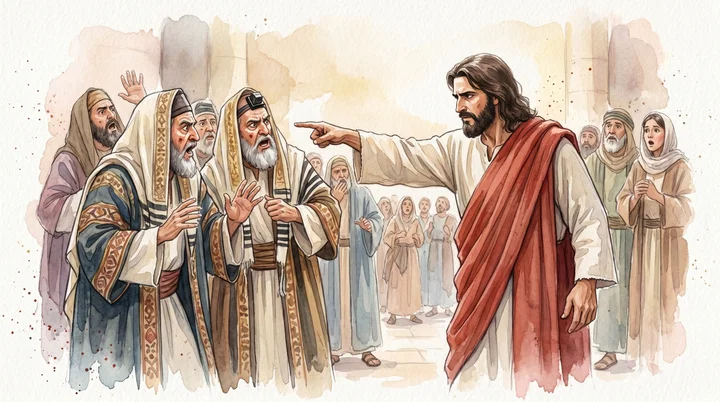
Woe unto you, scribes and Pharisees, hypocrites! for ye are like unto whited sepulchres, which indeed appear beautiful outward, but are within full of dead men’s bones, and of all uncleanness.
Translations
Woe to you, scribes and Pharisees, hypocrites! for you are like to white washed sepulchers, which indeed appear beautiful outward, but are within full of dead men’s bones, and of all uncleanness.
King James Version, KJV Cambridge Paragraph Bible
Woe unto you, scribes and Pharisees, hypocrites! for ye are like unto whited sepulchres, which indeed appear beautiful outward, but are within full of dead men’s bones, and of all uncleanness.
Woe to you, scribes and Pharisees, hypocrites! for ye are like whitened sepulchers, which indeed appear beautiful outward, but are within full of dead men's bones, and of all uncleanness.
Revised Version, American Standard Version
Woe unto you, scribes and Pharisees, hypocrites! for ye are like unto whited sepulchres, which outwardly appear beautiful, but inwardly are full of dead men’s bones, and of all uncleanness.
'Woe to you, Scribes and Pharisees, hypocrites! because ye are like to whitewashed sepulchres, which outwardly indeed do appear beautiful, and within are full of bones of dead men, and of all uncleanness;
Woe to you, scribes and Pharisees, hypocrites, for ye are like whited sepulchres, which appear beautiful outwardly, but within are full of dead men's bones and all uncleanness.
Alas for you, Scribes and Pharisees, hypocrites; because ye make yourselves like sepulchres whitewashed, which, outside, indeed, appear, beautiful, but, within, are full, of dead men’s bones and all uncleanness,—
Woe to you, scribes and Pharisees, you hypocrites! You are like whitewashed tombs, which look beautiful on the outside, but on the inside are full of dead men’s bones and every kind of impurity.
Woe to you, scribes and Pharisees, you hypocrites! You are like whitewashed tombs, which look beautiful on the outside but on the inside are full of dead men’s bones and every kind of impurity.
“ Woe to you, scribes and Pharisees, hypocrites! For you are like whitened tombs, which outwardly appear beautiful, but inwardly are full of dead men’s bones and of all uncleanness.
A curse is on you, scribes and Pharisees, false ones! for you are like the resting-places of the dead, which are made white, and seem beautiful on the outside, but inside are full of dead men's bones and of all unclean things.
Wo be to you, Scribes and Pharises, hypocrites: for ye are like vnto whited tombes, which appeare beautifull outward, but are within full of dead mens bones, and all filthines.
Douay-Rheims (Challoner revision)
Woe to you scribes and Pharisees, hypocrites; because you are like to whited sepulchres, which outwardly appear to men beautiful, but within are full of dead men’s bones, and of all filthiness.
Pictures
Cross-references 20 of 29
- Acts 23:3
Then said Paul unto him, God shall smite thee, thou whited wall: for sittest thou to judge me after the law, and commandest me to be smitten contrary to the law?
Paul calls Ananias a whited wall while rebuking his unjust judgment.
- Matthew 23:14
Woe unto you, scribes and Pharisees, hypocrites! for ye devour widows’ houses, and for a pretence make long prayer: therefore ye shall receive the greater damnation.
Religious show conceals the leaders’ exploitation of widows.
- Matthew 23:23
Woe unto you, scribes and Pharisees, hypocrites! for ye pay tithe of mint and anise and cummin, and have omitted the weightier matters of the law, judgment, mercy, and faith: these ought ye to have done, and not to leave the other undone.
Both woes expose Pharisees who keep minor rules while neglecting justice, mercy, and faith.
- Matthew 23:33
Ye serpents, ye generation of vipers, how can ye escape the damnation of hell?
Jesus condemns the hypocrites and warns them of hell’s judgment.
- 1 Samuel 16:7
But the LORD said unto Samuel, Look not on his countenance, or on the height of his stature; because I have refused him: for the Lord seeth not as man seeth; for man looketh on the outward appearance, but the LORD looketh on the heart.
Human judgment focuses on outward appearance, but God sees the heart.
- 2 Timothy 3:5
Having a form of godliness, but denying the power thereof: from such turn away.
Both describe outward godliness without inward reality.
- Luke 11:44
Woe unto you, scribes and Pharisees, hypocrites! for ye are as graves which appear not, and the men that walk over them are not aware of them.
Both compare hypocritical Pharisees to graves, exposing hidden uncleanness beneath outward appearance.
- Matthew 23:2-3
Saying, The scribes and the Pharisees sit in Moses’ seat:
The leaders hold teaching authority but fail to practise what they teach.
- Matthew 23:5
But all their works they do for to be seen of men: they make broad their phylacteries, and enlarge the borders of their garments,
Their outward piety concealed self-serving conduct.
- Matthew 5:20
For I say unto you, That except your righteousness shall exceed the righteousness of the scribes and Pharisees, ye shall in no case enter into the kingdom of heaven.
Contrasts true righteousness with the Pharisees’ outward religious practice.
- Matthew 15:8
This people draweth nigh unto me with their mouth, and honoureth me with their lips; but their heart is far from me.
Both contrast outward religious appearance with a heart far from God.
- Matthew 7:3-5
And why beholdest thou the mote that is in thy brother’s eye, but considerest not the beam that is in thine own eye?
Both expose hypocrites who condemn others while ignoring their own faults.
- Psalms 51:6
Behold, thou desirest truth in the inward parts: and in the hidden part thou shalt make me to know wisdom.
God desires truth in the inward parts.
- Matthew 3:7
But when he saw many of the Pharisees and Sadducees come to his baptism, he said unto them, O generation of vipers, who hath warned you to flee from the wrath to come?
Both texts sharply rebuke religious leaders and warn them of judgment.
- Luke 11:39
And the Lord said unto him, Now do ye Pharisees make clean the outside of the cup and the platter; but your inward part is full of ravening and wickedness.
Jesus contrasts outward cleanliness with inward wickedness.
- Isaiah 29:13
Wherefore the Lord said, Forasmuch as this people draw near me with their mouth, and with their lips do honour me, but have removed their heart far from me, and their fear toward me is taught by the precept of men:
Lips honor God while the heart remains far from him.
- Titus 1:16
They profess that they know God; but in works they deny him, being abominable, and disobedient, and unto every good work reprobate.
Both describe people who profess godliness but reveal their hypocrisy through their deeds.
- Hebrews 4:13
Neither is there any creature that is not manifest in his sight: but all things are naked and opened unto the eyes of him with whom we have to do.
God sees the inward life, and nothing is hidden from him.
- Romans 2:21-24
Thou therefore which teachest another, teachest thou not thyself? thou that preachest a man should not steal, dost thou steal?
Religious teachers’ lawbreaking dishonored God and caused his name to be blasphemed.
- Matthew 7:16
Ye shall know them by their fruits. Do men gather grapes of thorns, or figs of thistles?
Conduct reveals what outward appearance conceals.
Commentary part 1 of 2
Each commentary is drawn from primary sources: the writings of Ellen G. White and Adventist pioneers and periodicals. Each commentary is separate. Its own words are not a quotation; follow the references to read the source passages.
Ellen G. White
83 sources
Christ's word likens the scribes and Pharisees to tombs whitened and made beautiful without but full within of dead men's bones and all uncleanness, unmasking a show of righteousness that hides inward hypocrisy, iniquity and defilement.3SP 64.1–2ST Jun 14, 1899DA 610.1–611.2 Spoken in His final day of teaching in the temple, it is one of His woes that fearlessly exposed the rulers who taught the law yet did not practice it, laying bare their pretension for the sake of the deceived people in every age.DA 610.1–611.2Ms 71, 1897, par. 8–103SP 57.1Ms 175, 1897, par. 81Ms 81, 1893, par. 43 His severity was not passion or retaliation but holy zeal and righteous indignation, shining as light against darkness to keep men from being misled by false claims to sanctity.Ms 143, 1897, par. 19–21ST Apr 5, 1905ST May 2, 1878STB 79.5–80.1ST Aug 27, 1912 The same condemnation reaches beyond those leaders to all in sacred trust and to all professed followers who exalt human authority, neglect justice, mercy and love, and cling to outward correctness while the heart remains unrenewed.4SP 414.3GC 596.2GC88 595.3–596.1Ms 175, 1897, par. 81Lt 134, 1902, par. 13–14 God hates all vain pretense and secrecy, for no outward profession, knowledge or polish can hide inner corruption from Him or make one a Christian; truth must cleanse the soul temple, take root in the heart and govern the life in faith and vital connection with Christ.Lt 13, 1893, par. 45–465T 397.1ST Sep 11, 18794T 614.4ST Jan 6, 1881
Words and Setting
The comparison likens the scribes and Pharisees to burial places whitened on the outside and decorated and made beautiful to the eye, yet filled within with dead men's bones and decay and all uncleanness.3SP 64.1–2ST Jun 14, 1899DA 610.1–611.2Ms 71, 1897, par. 8–10ST May 2, 1878 What appears outwardly as religious beauty, respectability and righteousness conceals inward corruption, for they look righteous and beautiful to others while inside they are full of hypocrisy, iniquity, evil and sin.3SP 64.1–2ST Jun 14, 1899Ms 71, 1897, par. 8–10Ms 77, 1899, par. 1–3ST May 2, 1878 Their pomp and ceremony, outward show of holiness, and professed devotion to and possession of God's law in the heart are a cloak and vain pretense, empty because they teach the law under claim of divine authority yet do not practice their own teaching.3SP 64.1–2DA 610.1–611.2Ms 77, 1899, par. 1–3ST May 2, 1878 Their outward religious care likewise conceals disregard for the law's principles of love for God and for others.Ms 77, 1899, par. 1–3
The saying belongs to Christ's final day of teaching in the temple courts, when He publicly exposed the real condition of the rulers and elders, including the Pharisees and lawyers.DA 610.1–611.23SP 57.1Ms 81, 1893, par. 43 In that exposure He warned and condemned those leaders, instructed the people who were seeking understanding, and spoke for every people and age.3SP 57.1 It stands as one of the woes of Matthew 23:13-33, in which Jesus called the scribes and Pharisees hypocrites and laid bare their religious pretensions.Ms 71, 1897, par. 8–10Ms 175, 1897, par. 81ST May 27, 1889ST Jun 13, 1878 That denunciation of priests and scribes as hypocrites used language already familiar between contending parties, so that it would carry no weight as a persuasive charge before Roman authorities or Sadducees.ST May 27, 1889ST Jun 13, 1878
Exposure of the Pharisees
The verse lays bare men who claimed divine authority and set themselves up as teachers of the law, professing to have it in their hearts and to be devoted to it, yet failing to practice their own teaching.DA 610.1–611.2ST May 2, 1878GC 102.1 Their fair outward show of holiness was vain pretense, for like a white decorated tomb that looks beautiful while holding decaying remains, they were inwardly full of hypocrisy and sin.DA 610.1–611.2ST May 2, 1878 Lawful office itself could thus cover unlawful ends, with outward position concealing inward corruption and wickedness.GC 102.1
Their pomp and ceremony, outward honors, care for the prophets' tombs, and show of holiness were a cloak for iniquity, deceit, and opposition to God's messengers.3SP 64.1–2Ms 5, 1882, par. 14–16 That pretended sanctity looked deeply holy and deceived the people, while their deeds revealed an evil inner character and a different spiritual father than they claimed.ST Dec 23, 1886ST Dec 16, 1897 Their burdensome man-made demands and religious display hid hearts opposed to the light brought by the prophets and by Jesus, and Christ exposed their abominations and sternly rebuked their refusal of reform and salvation through Him.Ms 5, 1882, par. 14–16Ms 5, 1882, par. 12–13Ms 50, 1897, par. 11 His pure, humble, meek, and compassionate life set the contrast in clear light, making plain the difference between true and false religion and stirring their hatred.ST Dec 23, 1886ST Dec 16, 1897Ms 50, 1897, par. 11
They were scrupulous about lesser and outward matters while imposing burdens they would not bear, neglecting justice, mercy, and love for God and others.Ms 5, 1882, par. 14–16Ms 77, 1899, par. 1–37MR 235.2–3 Outward religious carefulness concealed disregard for the principles of the law in heart and life, with tombs appearing beautiful while containing uncleanness within.Ms 77, 1899, par. 1–3Lt 165, 1901, par. 11–14 This was spiritual blindness that could not discern relative importance, focusing on lesser concerns while neglecting weightier matters.7MR 234.4–235.1Lt 165, 1901, par. 11–14 The same condemnation rests on those in responsibility who act imperiously, pass lightly over serious wrongs while severely condemning lesser faults, and unless they repent the woes will fall on them.7MR 235.2–3
They condemned sick and needy sufferers as sinners under God's anger, while their own hearts and lives were more corrupt than those they judged.2SP 293.1ST Oct 16, 1879 Outward claims to holiness and appearance of purity did not make them truly pure.2SP 293.1ST Oct 16, 1879 Their lives, despite godly appearance, were marked by hypocrisy, selfishness, covetousness, and unfair dealing.ST Dec 16, 1897 That Pharisaism also appears as self-righteousness, self-exaltation, pride of position, and self-importance, which are outward forms of religion without its true life, and when they take hold of the heart and shape the character true religion dies out, leaving need of Christ's righteousness rather than display of self.Lt 9, 1886, par. 8–9
They resisted light and refused reform, rejecting salvation through Christ and clinging in selfish attachment to custom, wealth, status, and human authority.Ms 5, 1882, par. 14–16Ms 5, 1882, par. 12–13 Their outward honors and godly appearance concealed deceitful, impure hearts opposed to God's messengers, maintaining religious appearance while practicing evil.Ms 5, 1882, par. 14–16Ms 5, 1882, par. 12–13 For that reason His rebuke was stern, addressing hearts that would not yield.Ms 5, 1882, par. 14–16Ms 5, 1882, par. 12–13 Against their pretentious religion stood Christ's pure, humble, and compassionate life, exposing the contrast between appearance and true character and deceiving the people no longer once the light shone.ST Dec 16, 1897Ms 50, 1897, par. 11
Christ's Manner and Aim
He laid bare their professed sanctity and exposed their pretensions to piety by which they deceived the people, for their outward profession was beautiful while inwardly they were defiled.Ms 143, 1897, par. 19–21ST Apr 5, 1905RH Jul 2, 1908 He did this fearlessly, from holy zeal for truth and with the authority of true greatness.ST Apr 5, 1905RH Jul 2, 1908Lt 257, 1904, par. 14–17 Shining as the Sun of Righteousness amid moral darkness, He revealed the contrast between sin and holiness and between purity and defilement.Ms 143, 1897, par. 19–21RH Jul 2, 1908 He read the human heart and spoke with burning earnestness and words of terrible severity, for He would not allow the people to be deceived by false claims to righteousness and sanctity.Lt 257, 1904, par. 14–17STB 79.5–80.1Ms 76, 1904, par. 10 His indignation against such grievous sin was righteous, not retaliation or unholy passion, and even in keen, searching denunciation He showed no irritated temper.ST May 2, 1878ST Aug 27, 1912 A Christian can therefore remain in harmony with God and possess love and mercy while feeling righteous indignation against serious sin.ST May 2, 1878
His sinless life of untainted purity rebuked such hypocrites, and the exposure of this hypocrisy brought Him sorrow and pain.Ms 2, 1896, par. 10–11ST Dec 23, 1886Lt 12, 1869, par. 27 He hated sin alone, the one thing He could hate, and His denouncing of every evil produced bitter hostility against Him.Ms 2, 1896, par. 10–11Lt 12, 1869, par. 27 His pure character and His denunciation of their abominations stirred their hatred.ST Dec 23, 1886Lt 12, 1869, par. 27 Had He allowed license to transgressors, praised evildoers, tolerated sin, allowed evil license to passions, or called sin holiness and holiness sin, He would have been hailed with shouts of praise instead of being sneered at, despised, rejected, exposed to insult and abuse, enduring the contradiction of sinners against Himself, and hurried out of the world.Lt 12, 1869, par. 27 They rejected Him not because He lacked external honor and riches and glory, but because His holiness condemned their sins and that light was not welcome.Ms 143, 1897, par. 19–2116MR 120.2–4 He was not such an one as themselves, and they could have borne their disappointed hopes of an earthly deliverer better than His righteous denunciation of their sins.Ms 143, 1897, par. 19–2116MR 120.2–4
That He had called the priests and scribes hypocrites and exposed their religious pretensions was not brought forward as a charge at His trial, because similar language had been used between the Pharisees and Sadducees and would carry no weight with the Romans.ST Jun 13, 1878DA 704.1–705.1 Such language was familiar among them, but it would not serve as a persuasive charge before Roman authorities or the Sadducees.ST Jun 13, 1878DA 704.1–705.1 At the cross those whom He had called whited sepulchers reviled Him, though He had come from heaven to save the perishing and was devoted to right, justice, and God's glory.Ms 106, 1897, par. 5ST Apr 14, 1898 In choosing Barabbas they showed that profession of piety and love for God, knowledge of Scripture, and claim to know God do not make people God's children or lead them to represent His character.Ms 106, 1897, par. 5ST Apr 14, 1898 His example means His followers must stand where no binding influence holds them speechless when they hear wrong sentiments expressed, and must stand free to speak against them.STB 79.5–80.1Ms 76, 1904, par. 1015MR 258.2–259.1 They must refuse to verify statements they know are not true, refuse to harmonize with wrong plans or be cowered into silence by a masterful spirit, and must protest and correct false statements and wrong sentiments plainly even when it cuts, rather than listen without protest and thereby do great harm to the speaker.STB 79.5–80.1Ms 76, 1904, par. 1015MR 258.2–259.1
Links to Other Scriptures
Paul's calling the high priest a whited wall was a prophetic denunciation of the same hypocrisy of outward beauty covering inward uncleanness, spoken under the Holy Spirit and not from passion.SLP 221.2–223.1 It was terribly fulfilled when that iniquitous hypocritical high priest was murdered by assassins in the Jewish war.SLP 221.2–223.1
Ananias and the chief priests and rulers were outwardly fair in office and zeal but inwardly full of wickedness and uncleanness, like a whitewashed tomb beautiful in appearance but full of dead men's bones and uncleanness within.AA 413.3–414.1SLP 225.1–226.2 Their outward religious office concealed inward moral corruption, and their willingness to eagerly agree to the cruel murderous assassination plot against Paul instead of rebuking it proved Paul right to compare Ananias to a whited sepulchre.AA 413.3–414.1SLP 225.1–226.2
Like a fruitless fig tree that makes a show of serving God but bears no fruit to His glory, outward forms of worship and profession of honoring God's law without repentance, faith and obedience is empty hypocrisy without inward godliness.DA 584.1 Such empty profession is more hateful and more guilty than open sin.DA 584.1
The verse is akin to the image of the outside of the platter appearing clean while the inside is corrupt, for God sees what is within as one who judges righteous judgment.Lt 27, 1887, par. 12–14 Among those who know and profess the truth there are whited sepulchres whitewashed by sin covered over and concealed for years while appearing beautiful outwardly, whom mere nominal assent, profession, knowledge of truth, or great light will not save or improve in heart.Lt 27, 1887, par. 12–14 Unless its pure principles are brought into the soul to sanctify it and are interwoven in life practice to make a man like-minded with God, battling every inherent tendency to evil, he remains all impurity and moral deformity within, bearing thorn berries instead of grapes, without a pure heart, communion with God, and the fruit of righteousness, holiness, mercy, truth, purity and love.Lt 27, 1887, par. 12–14
Warning to Later Generations
Christ's denunciation of the scribes and Pharisees and His warning against following blind leaders were recorded to admonish future generations.4SP 414.3GC 596.2GC88 595.3–596.1 That warning reaches beyond the dispersion of the Jews, because the effort to exalt human authority and rule the conscience would persist in the church through every age and bring great harm.4SP 414.3GC 596.2 The assumed authority and influence that led people away from truth then remains the danger addressed to later times.GC 596.2GC88 595.3–596.1
The self-righteous Jewish nation stands as a symbol of people in every age who claim to represent Christ while their lives deny Him.3SP 9.2 Such people scorn infinite love and reject the light of truth, counsel and mercy when selfishness, love of money and desire for worldly honor possess their hearts.3SP 9.2 Pharisaism is not extinct but appears in rigid, established ways of working that hinder rather than advance God's work.RCOC 35.3 It appears also in assuming kingly power and restricting where divine wisdom and present truth may go.RCOC 35.3 It is seen in pride, desire to rule, combative resistance to correction, and human plans eclipsing sacred instruction, showing departure from the Bible standard.Lt 81, 1896, par. 6–8 Those entrusted with God's work must cherish what is sacred and keep it pure, for authority exercised without God's sanction harms others, while the spirit of Christ hides self and guides human passions.Lt 81, 1896, par. 6–8 The same spirit becomes angry when authority is questioned and denounces those who proclaim unwelcome truth.4SP 424.1
The woes pronounced on the scribes and Pharisees apply to priests and rulers and men in positions of sacred trust who are impenitent and oppose truth and righteousness.Ms 175, 1897, par. 81Ms 18, 1896, par. 29–30 They apply to those who cherish the same exacting, intolerant, overbearing spirit and keep the stumbling block of iniquity before their eyes while rejecting reproof.Ms 18, 1896, par. 29–30 Unless converted and reformed they will be separated from the work, and the same judgments that fell on the Pharisees will verily fall on them.Lt 134, 1902, par. 13–14Ms 18, 1896, par. 29–30Lt 71a, 1894, par. 19–21 The warning concerns the gap between religious standing and a character that misrepresents Christ's righteousness.Lt 134, 1902, par. 13–14Lt 71a, 1894, par. 19–21 The time is near when providence will make manifest what principles have been cherished by men connected with the management of God's work.Ms 18, 1896, par. 29–30
The same condemnation falls on men in positions of trust whose spiritual eyesight is dimmed, who lack principle, neglect God's great and sacred work, and do not reveal justice, mercy and the love of God nor give practical evidence of love for their brethren.7MR 235.2–3Lt 134, 1902, par. 13–14 While very scrupulous about little matters, they make a man an offender for a word, deal unjustly with the Lord's heritage, and tamper with conscience.Lt 134, 1902, par. 13–14 By subtle reasoning they make imaginary distinctions between degrees of guilt, lightly passing over very serious wrongs while condemning with great severity wrongs that do not compare with their own sin in cherishing and working on false principles.Lt 134, 1902, par. 13–14 Such sins are great in God's sight and bring ruin to individuals as surely as to nations, and unless they repent the woes spoken against the Pharisees will fall on them.7MR 235.2–3Lt 134, 1902, par. 13–14 Rejecting light and failing to follow a holy calling brings severe condemnation, for religious leaders may look pure and honorable outwardly while corrupt and unclean within.TBC1882 58.1 Neglect to improve given light and opportunities leaves men and women in darkness, and those with great light who fail to improve it stand in a worse and less favorable position for the perfection of Christian character than those from the darkness of error and a life of sin who penitently accept the truth when it is opened to them.TBC1882 58.14T 614.45T 75.3 In contrast to severity toward hypocrites, the penitent is treated with tenderness even when having been the chief of sinners.4T 614.4
Call to Inward Purity
Christ hates all vain pretense, deception, secrecy, guile, duplicity and hypocrisy, and His denunciations fall heavily upon it.4T 614.4ST Jan 6, 1881STMW6 12.1 Outward religious appearance, profession, nominal acceptance of truth, knowledge of truth, great light, outward correctness and polish cannot hide inner corruption, sin and moral defilement from God, nor make the soul pure nor make a person a Christian.Lt 13, 1893, par. 45–464T 614.4Lt 27, 1887, par. 12–14Lt 101, 1893, par. 6–71MR 92.3 Appeals to God's mercy must not be used to excuse or overlook sin.ST Jan 6, 1881 Neglect to improve given light and opportunities leaves men and women in darkness.4T 614.4
Truth must take root in the heart and govern the life, and must become part of the character.Lt 13, 1893, par. 45–465T 397.1Lt 101, 1893, par. 6–7 The soul temple must be cleansed and the heart renewed before the life can be right.ST Jul 8, 1875Lt 101, 1893, par. 6–7 Otherwise outward honesty and goodness, outward religious forms, theory and profession of truth, and profession of Christ without inward rectitude and without good fruit to God's glory is hypocrisy like a tomb beautiful without but corrupt and full of uncleanness within, with the heart uncleansed and filled with idols.5T 397.1ST Sep 11, 1879ST Jul 8, 1875 A person may appear fair, honest and pious while the heart is stained with sin, and that condition is recorded in heaven.5T 397.1
Continuing merely to whiten the sepulcher without cleansing it means appearing religious while the heart remains polluted by evil thoughts, evil speech, jealousy, envy and suspicion, and the soul temple needs cleansing.Lt 57, 1889, par. 6–7 Under test and trial it will be manifested whether carnal traits have been subdued or one remains pure only in appearance, fair without but within full of impurity and defilement like a whited sepulcher.Lt 41, 1890, par. 181MR 203.21MR 92.3 Merely professing Christianity does not make a person a Christian.1MR 92.3
Among those who know and profess the truth there are whited sepulchres, whitewashed by sin covered over and concealed for years while appearing beautiful outwardly.Lt 27, 1887, par. 12–14 Knowing the truth or professing it or having great light will not save unless its pure principles are brought into the soul to sanctify it and are interwoven in life practice to make a man like-minded with God, battling every inherent tendency to evil.Lt 27, 1887, par. 12–14 Without a pure heart, communion with God, and the fruit of righteousness, holiness, mercy, truth, purity and love, bearing thorn berries instead of grapes, a man remains all impurity and moral deformity within, with the outside of the platter appearing clean while the inside is corrupt, for God sees what is within as one who judges righteous judgment.Lt 27, 1887, par. 12–14
Outward religious forms that do not accord with inward purity are meaningless rites.DA 309.4–310.1 Taking it for granted one is a Christian because of subscribing to certain theological tenets, without bringing truth into practical life, believing and loving it, and receiving through sanctification of the truth its power and grace, leaves profession without making a person sincere, kind, patient, forbearing and heavenly minded, and such profession is a curse to its possessor and through influence a curse to the world.DA 309.4–310.1 The righteousness Christ taught instead is conformity of heart and life to the revealed will of God, which sinful men gain only by faith in God and vital connection with Him, so that true godliness elevates the thoughts and ennobles the life and outward forms agree with inward purity.DA 309.4–310.1 Observing forms of worship and professing to honor God's law without repentance, faith and obedience is like a fruitless fig tree making a show of serving God but bearing no fruit to His glory.DA 584.1
The verse exposes the gap between outward show of righteousness and true condition of the heart in those who act devotional to appear righteous before others while motives and conduct remain wrong; outward reform that does not reach the heart is only a flimsy covering for deception.2T 87.2 Being ruled by self, self-love and self-confidence, and lacking simplicity, true modesty, humility and meekness, churches and members who profess godliness but do not bring it into daily practice walk ground trodden by the Pharisees of old.Lt 5, 1898, par. 23–26 They intercept light from God, lose power to distinguish between light and darkness, unwittingly sustain evil, pick to pieces faithful messengers through whom God works while receiving words of those who misunderstand and misinterpret, and are unable to travail in soul for convicted sinners or to educate and lead them forward step by step.Lt 5, 1898, par. 23–26
Meeting a brother day by day with apparent friendship while working in silence and secrecy and plotting against him in perfect unity with unbelievers and satanic agencies to uproot, tear down and remove him is the Lord's hated deception, secrecy, guile, duplicity and hypocrisy, like sepulchers hidden from sight yet full of corruption.STMW6 12.1 Instead one should go to him openly to redeem and heal him if in error, or to vindicate him and put the rebuke on the evil plotters if he is not in the wrong.STMW6 12.1 Working against a child of God on the strength of the Lord's enemy's testimony in that concealed, suggesting, instigating, planning manner is Satan's work, while God's work is open and frank.STMW6 12.1
An attractive outward appearance can conceal inward corruption and uncleanness.1T 134.1SG4 178.1RH Jan 6, 1863 Spending hours adorning the body to look beautiful like the world, with pride in decorating the body to please the eye while spiritually dying and full of spiritual pride and decay, makes a person beautiful outside but corrupt within.1T 134.1SG4 178.1RH Jan 6, 1863 Outward ornament cannot hide this from God, and the mortal body will soon decay in the grave.1T 134.1
Appearing honest, true and fair without while the heart is spotted and stained with sin stands recorded in the heavenly courts.5T 397.1GW92 344.1MC 55.2–56.2CEv 44.1–2Ms 122, 1899, par. 15–20 A process has gone on in the mind that has made men callous and past feeling so they do not recognize the danger.5T 397.1MC 55.2–56.2CEv 44.1–2 If character when weighed in the balances of the sanctuary is pronounced wanting in the great day of God, it will be a calamity not now comprehended.5T 397.1GW92 344.1MC 55.2–56.2CEv 44.1–2 Therefore precious untarnished truth must become part of the character and the heart must be garrisoned with pure principles, with constant battle against selfishness and corruption of the human heart and prayer to be held up from slipping, because carelessness toward eternal interests opens the way to the tempter's nets and uncertain paths and to habits that bind like iron and forfeit God's blessing, with little account made of glaring inconsistencies especially among young men who appear what they are not.MC 55.2–56.2CEv 44.1–2
Profession that hides iniquity brings especially heavy retribution, with Christ's severe woe against hypocrites who appeared godly outwardly while inwardly filled with corruption making their profession more dangerous than open sin.CH 671.25T 144.2 There is more hope for an open sinner than for a pretender who hides iniquity behind profession of faith, and empty profession without fruit is more hateful to Christ and more guilty than open sin.ST Aug 22, 18785T 144.2DA 584.1 Those who claim to follow Christ yet defile the soul through licentiousness and other sinful deeds bring reproach on the truth they profess, and when they reject truth and persist in unrighteousness they become more hopeless.Ms 9, 1880, par. 37–42 In contrast Christ treats the penitent with tenderness even when they have been the chief of sinners, while those with great light who fail to improve it stand in a less favorable position for perfection of Christian character than those from darkness of error and a life of sin who penitently accept truth when opened to them.4T 614.4
Outward religion without inward renewal, in which men prayed and fasted and observed outward forms of godliness while corrupt at heart, illustrates the deceitfulness of sin by which Satan blinds and leads to destruction while leaving prayer, fasting and religious duties intact. High-professing subjects who talk of heaven yet remain corrupt become more useful in his service as decoys to draw others into the same net. An appearance of devotion or knowledge of truth does not prove true worship, for what looks beautiful from a distance may prove deformed on close examination, and may hide presumption, apostasy, resistance to God's word and Spirit, and exaltation of human reason above revealed wisdom.5T 79.1 Appeals to God's mercy must not excuse sin.ST Jan 6, 1881
True religion is not external display or self-righteousness as a covering.Lt 51, 1888, par. 11–12Lt 9, 1886, par. 8–9 Those who bear the name Christian must show Christ's purity, holiness, devotion and righteousness, with the heart shaped by Christ's Spirit and its transforming influence appearing throughout life and work.Lt 51, 1888, par. 11–12 Phariseeism expressed as self-righteousness, self-exaltation, pride of position and self-importance is outward form of religion without its true life, and when it takes hold of the heart and shapes the character true religion dies out, so that Christ's righteousness, not display of self-righteousness, is the needed covering.Lt 9, 1886, par. 8–9
Sources