Matthew 27:49
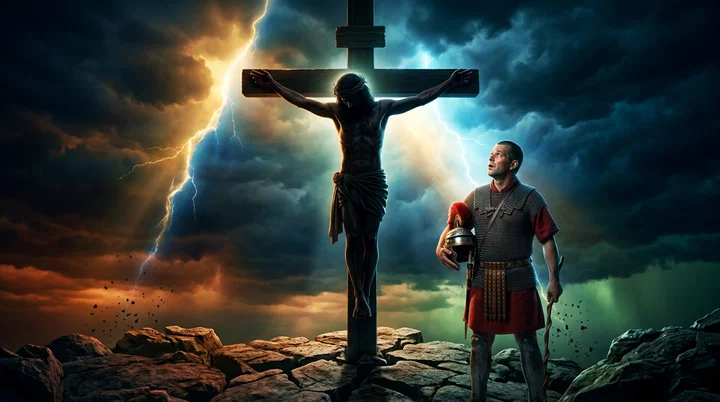
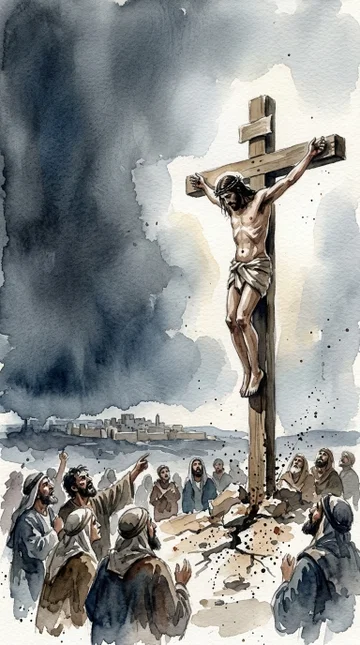
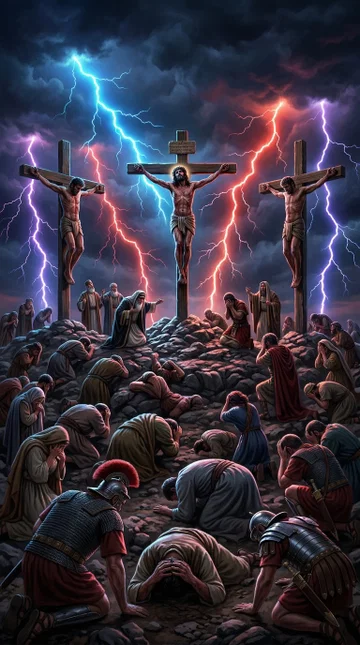
The rest said, Let be, let us see whether Elias will come to save him.
Translations
American King James Version, King James Version, KJV Cambridge Paragraph Bible
The rest said, Let be, let us see whether Elias will come to save him.
The rest said, Forbear, let us see whether Elijah will come to save him.
Revised Version, American Standard Version
And the rest said, Let be; let us see whether Elijah cometh to save him.
but the rest said, 'Let alone, let us see if Elijah doth come — about to save him.'
But the rest said, Let be; let us see if Elias comes to save him.
but, the rest, said—Stay! let us see whether Elijah is coming, and will save him. [[But, another, taking a spear, pierced his side, and there came forth water and blood]].
Berean Standard Bible, Majority Standard Bible
But the others said, “Leave Him alone. Let us see if Elijah comes to save Him.”
The rest said, “ Let him be. Let’s see whether Elijah comes to save him.”
And the rest said, Let him be; let us see if Elijah will come to his help.
Other said, Let be: let vs see, if Elias wil come and saue him.
Douay-Rheims (Challoner revision)
And the others said: Let be, let us see whether Elias will come to deliver him.
Pictures
Cross-references
- Mark 15:35-36
And some of them that stood by, when they heard it, said, Behold, he calleth Elias.
Bystanders mistake Jesus’ cry and offer vinegar while waiting to see whether Elijah will come.
- John 19:17-30
And he bearing his cross went forth into a place called the place of a skull, which is called in the Hebrew Golgotha:
Parallel account of Jesus’ journey to Calvary and death.
- Luke 23:26-46
And as they led him away, they laid hold upon one Simon, a Cyrenian, coming out of the country, and on him they laid the cross, that he might bear it after Jesus.
A parallel account of Jesus’ crucifixion and death.
- Psalms 22:1
My God, my God, why hast thou forsaken me? why art thou so far from helping me, and from the words of my roaring?
Jesus’ cry from the cross echoes the psalm’s cry of abandonment.
- Matthew 27:27-31
Then the soldiers of the governor took Jesus into the common hall, and gathered unto him the whole band of soldiers.
Jesus was mocked and cruelly treated before his crucifixion.
- Matthew 27:45
Now from the sixth hour there was darkness over all the land unto the ninth hour.
The sun hid its light during Christ’s suffering on the cross.
- Matthew 27:42-43
He saved others; himself he cannot save. If he be the King of Israel, let him now come down from the cross, and we will believe him.
The verses record taunts against Jesus at the cross.
- John 19:30
When Jesus therefore had received the vinegar, he said, It is finished: and he bowed his head, and gave up the ghost.
Records Jesus’ words and death at the ninth hour.
Commentary
Each commentary is drawn from primary sources: the writings of Ellen G. White and Adventist pioneers and periodicals. Each commentary is separate. Its own words are not a quotation; follow the references to read the source passages.
Ellen G. White
23 sources
At Calvary outside Jerusalem, after condemnation, scourging and mockery, Jesus was nailed to the cross, and after He cried out and said He thirsted one bystander gave Him vinegar while the rest said to leave Him alone to see whether Elijah would come to save Him, mistaking His cry to God for a call for Elijah.Lt 230, 1907, par. 12–16Ms 45, 1897, par. 16–17DA 741.1–23SP 164.3–165.1Lt 1a, 1861, par. 2–5 The words were mockery and scorn from the priests, people and crowd, refusing Him relief and sympathy and failing to recognize Him as the Son of God who needed no rescue.Ms 29, 1909, par. 18Ms 45, 1897, par. 16–171T 240.2Lt 9a, 1891, par. 21–22 The darkness, earthquake, rent rocks and His death hushed the mockers with fear that He was the Son of God, while His disciples saw their hopes of a temporal deliverer die and were left crushed and doubting.EW 148.1ST Feb 4, 1913ST Jul 7, 1898 His agony was suffering greater than any human could bear, endured as humanity's substitute and curse to redeem from the curse of the law and open the way to salvation.Lt 230, 1907, par. 12–16DA 741.1–21T 240.2STSE 45.1 Because He gave up all, He demands all, entire consecration, separation from the world, self-sacrifice and patience under affliction.Lt 1a, 1861, par. 2–5ST Jul 7, 1898GW92 360.3
Setting and Words Spoken
This saying belongs to what happened after Jesus left Pilate's court for Calvary to be crucified, following condemnation, scourging, mockery and insults through the night, with the cross laid upon His bruised and bleeding shoulders.DA 741.4–742.1 It belongs to the taking away of the Bridegroom, when He approaches the cross and descends into humiliation with His own nation clamoring for His blood, crowned with thorns, clad in the purple robe, struck with the reed, scourged as the worst of criminals, replaced by Barabbas, and finally lifted up on the cross dying as a malefactor.ST Jul 7, 1898
The crucifixion took place outside Jerusalem, where criminals were executed.DA 741.1–2 There He was led pale, weak and fainting to His crucifixion, stretched upon the wooden cross with nails driven through His tender hands and feet.Lt 1a, 1861, par. 2–5 There on Calvary He hung as a malefactor in the hands of a cruel mob, crowned with thorns and treated with derision and insult and mockery.Ms 80, 1886, par. 3–5
Immediately after He cried out to God and said He thirsted, one bystander gave Him vinegar on a reed to drink, while the rest held back to watch whether Elias would come to rescue Him.Lt 230, 1907, par. 12–16 One was a Roman soldier who offered Him vinegar on a reed or sponge, while the rest said to leave Him alone and wait to see whether Elias or Elijah would come to save Him and take Him down.Lt 230, 1907, par. 12–163SP 164.3–165.1 They had misread His cry to God as a call for Elijah, and refused to ease His thirst, saying they would wait to see whether Elijah came to save Him.DA 754.3 Their words were spoken in ridicule of His cry and His thirst and expressed pitiless scorn rather than pity.Ms 45, 1897, par. 16–17 The offer of drink was the last opportunity for His persecutors to sympathize with and relieve Him, but they mocked His cry, wrongly claiming He was calling for Elijah and challenging one another to wait and see whether Elijah would come to save Him and take Him down.5RED 85.1–2ST Jan 27, 1914
A mysterious darkness covered the earth for three hours and passed away when He died.5RED 93.2–3Ms 39, 1898, par. 21–22 The darkness had lifted from His oppressed spirit and He had revived to a sense of physical suffering when He said He thirsted and received vinegar on a reed.5RED 85.1–2 His death came sooner than was usual for those crucified, and the centurion confirmed that He was dead.5RED 93.2–3 His death at Calvary was witnessed by His followers before they laid Him in the tomb.EW 206.4
His suffering and death were accompanied by darkness in which nature was shrouded and showed sympathy.5MR 353.1–354.1Ms 39, 1898, par. 21–22 The sun refused to behold the scene and hid its light, while angels veiled their faces from the horrid agony on the wooden cross.Lt 1a, 1861, par. 2–5 The earth quaked and rocks were rent or split as the heavenly host approached, yet heaven's angels were present at His death while the darkness concealed them.5MR 353.1–354.1Ms 39, 1898, par. 21–22
Mockery and Witness Responses
The words were spoken by the bystanders, the people, the priests and the crowd, including the religious leaders gathered at the cross.Ms 29, 1909, par. 18Ms 45, 1897, par. 16–173SP 164.3–165.1DA 754.3ST Apr 15, 1897 They were part of the mockery, insults, ridicule, reproach and contempt poured upon the suffering Christ in His dying agony.Ms 45, 1897, par. 16–171T 240.2DA 754.3ST Jan 27, 1914Lt 9a, 1891, par. 21–22 They mocked Him for His cry to God and for His thirst, having misread His cry as a call for Elijah.Ms 45, 1897, par. 16–17DA 754.3ST Jan 27, 1914 One gave Him vinegar on a reed or sponge, while the rest refused to ease Him and told others to leave Him alone and wait to see whether Elijah or Elias would come to save Him and take Him down.Ms 45, 1897, par. 16–173SP 164.3–165.1DA 754.35RED 85.1–2ST Jan 27, 1914 That refusal denied Him the last opportunity for relief and sympathy, expressing pitiless scorn rather than pity.Ms 45, 1897, par. 16–175RED 85.1–2ST Jan 27, 1914
Their terror had eased yet they still dreaded that He might escape them.3SP 164.3–165.15RED 85.1–2 When the gloom was removed and the darkness lifted from His oppressed spirit, their terror abated and the old fear and dread returned that He might yet escape or be taken down.3SP 164.3–165.1DA 754.35RED 85.1–2 So they watched to see whether Elijah would come, with fear that He might yet be rescued returning as their terror subsided.3SP 164.3–165.1DA 754.35RED 85.1–2
Their challenge showed mockery and failure to recognize Him as the Messiah and the Son of God.Ms 29, 1909, par. 18Ms 45, 1897, par. 16–17Lt 9a, 1891, par. 21–22 He was the One who died to bring everlasting life to sinners and who needed no rescue from Elijah.Ms 29, 1909, par. 18Lt 9a, 1891, par. 21–22 Heaven's angels watched Him in His suffering without being permitted to intervene.ST Apr 15, 1897
The darkness, earthquake, final cry and death troubled His enemies and made His murderers tremble.EW 148.1 As His death and the signs in nature made the spectators fear that He was the Son of God, their mocking was hushed.EW 148.1ST Feb 4, 1913 The disciples, whose hopes were centered on Him as a temporal prince who would deliver Israel and in whom their hopes of eternal life were centered, saw their hopes die when they beheld Him dying as a malefactor and a criminal.EW 148.1ST Jul 7, 1898Ms 80, 1886, par. 3–5 Their faith was tried and their hope and courage failed, leaving them crushed, doubting, afflicted and in terrible anguish that cannot be appreciated, so that afterward they could not believe He had risen, and even His mother wavered in her faith that He was the Messiah.EW 148.1ST Jul 7, 1898Ms 80, 1886, par. 3–5
Sacrifice and Its Demands
The moment belongs to a life and death of humiliation and suffering greater than any human being could suffer.Lt 230, 1907, par. 12–16 After he cried out, one bystander gave him vinegar on a reed to drink while the rest held back to watch whether Elias would come to rescue him.Lt 230, 1907, par. 12–16 That crucifixion took place outside Jerusalem where criminals were executed, and there he suffered as humanity's substitute and was made a curse to redeem people from the curse of the law.DA 741.1–2
His agony on the cross, following mockery and insult and being led away to be crucified, shows the great cost of his sacrifice for humanity.1T 240.2 It was part of the hardship he endured as Redeemer to show the way to salvation and bring the help people need.1T 240.2STSE 45.1
He was led away pale, weak and fainting to his crucifixion and stretched upon the wooden cross with nails driven through his tender hands and feet, in dreadful hours of agony while angels veiled their faces from the horrid scene and the sun refused to behold and hid its light.Lt 1a, 1861, par. 2–5 Because he gave up all, he demands all, an undivided affection and entire consecration, with separation from the world and from dead heartless professors.Lt 1a, 1861, par. 2–5 What he gave up puts anything called self-denial in the shade and proves the narrow way is not too strait.Lt 1a, 1861, par. 2–5 His agony on the cross teaches self-sacrifice and patience under affliction, with solemn consecration to God and preparation for holy work.GW92 360.3
The taking away of the Bridegroom is seen as he approaches the cross and descends into humiliation, witnessed by disciples in whom their hopes of eternal life were centered, now in the hands of wicked men with his own nation clamoring for his blood.ST Jul 7, 1898 He was crowned with thorns, clad in the purple robe, struck with the reed, scourged as the worst of criminals, replaced by Barabbas, and finally lifted up on the cross dying as a malefactor.ST Jul 7, 1898 That sight gives cause to mourn and fast, while their faith is tried and their hope and courage fail.ST Jul 7, 1898
Sources
Pioneers and periodicals
64 sources
The saying records bystanders at the cross urging others to wait and see whether Elijah would come to rescue and save the dying Jesus, mocking and taunting Him in unbelief about His deliverance.ST Jul 8, 1913ST Jul 25, 1878ST Apr 8, 1903RH Sep 11, 1866RH Feb 21, 1865 They mistook His cry in forsakenness for a call to Elijah, in His final moments at the ninth hour on Friday afternoon at the time of the Passover sacrifice, amid darkness, earthquake and rent rocks.ST Jan 27, 1914RH Aug 15, 1854RH Apr 7, 1851ST Jan 24, 1911RH Mar 25, 1873 On the cross He was alone and despised, crushed beneath the load of the sin of the whole world and shedding His blood as a voluntary atoning sacrifice for the ruined race.RH Nov 18, 1862RH May 27, 1873RH Nov 10, 1863RH Feb 21, 1865RH Jul 19, 1864 Apparently forsaken of God and fearing eternal separation, He still rested by faith in the Father, committed His spirit to Him, and was victor, showing Him to be very God, the Son of God.ST Apr 3, 1893RH Jan 14, 1904RH Oct 14, 1862RH Aug 26, 1875 His death on Friday before the Sabbath proves the atonement was finished before the first day, so the Sabbath was confirmed and not altered, and because His agony was caused by human sin it calls sinners to dread evil and resist transgression.RH Aug 15, 1854ST Oct 22, 1885RH Sep 8, 1863
Saying and Setting
The rest at the cross, the bystanders watching the dying Jesus, urged one another to wait and see whether Elijah, or Elias, would come to rescue and save Him.ST Jul 25, 1878ST Jul 8, 1913ST Jul 25, 1878ST Apr 8, 1903ST Jun 7, 1899 Their words belong to the account of Christ's death and to the crucifixion scene itself, spoken while He suffered and while the scoffing crowd watched to see whether He would be rescued.ST Jul 25, 1878ST Apr 8, 1903ST Jun 7, 1899RH Dec 19, 1912 They were placed in the final moments of His death, as those present waited to see whether Elijah would come to save Him before He cried that His work was finished and entrusted His spirit to the Father.ST Jul 25, 1878ST Jul 8, 1913
The saying was mockery and insult, scorning Him and taunting Him about being saved.ST Apr 15, 1897RH Sep 11, 1866RH Feb 21, 1865ST Oct 22, 1885RH Apr 21, 1863 Those around Him mocked and humiliated Him as He was nailed to the cross and bore the sin of the whole world, enduring cruel mockings before He expired on Calvary.RH Sep 11, 1866RH Feb 21, 1865ST Oct 22, 1885 Onlookers, though Jesus was right, doubted that He could be saved, and their challenge to wait for Elijah reflected the scorn He endured alone and friendless.ST Apr 15, 1897RH Apr 21, 1863 It was part of the insults directed at the suffering Christ, whom heaven's angels watched without being permitted to intervene, and as His death and the signs in nature made the spectators fear He was the Son of God their mocking was hushed.ST Feb 4, 1913ST Apr 15, 1897
The speakers mistook His cry to God in His forsakenness for a call to Elijah.ST Jan 27, 1914ST Jan 24, 1911RH Mar 25, 1873 As He ascended Calvary's mount beneath the sinner's load of guilt, with His precious blood spilt amid a jeering multitude, He cried, My God, my God, hast Thou forsaken Me, and expired in quivering agony as the Lamb of God for the sinner.ST Jan 24, 1911RH Mar 25, 1873 The priests refused Him the last opportunity for relief from suffering and wrongly claimed He was calling for Elijah, mocking His cry and challenging one another to wait and see whether Elijah would come to deliver and save Him.ST Jan 27, 1914ST Jan 24, 1911
The saying belongs to the final moments of Jesus' death, when after crying that His work was finished He entrusted His spirit to the Father, said it is finished, bowed His head and died.ST Jul 25, 1878RH Apr 7, 1851 His final moments were at the ninth hour, or about three o'clock in the afternoon.ST Jul 25, 1878RH Apr 7, 1851
That death occurred at the ninth hour, about three o'clock in the afternoon on Friday, the sixth day of the week.RH Aug 15, 1854RH Apr 7, 1851ST Oct 27, 1881 It took place in the afternoon of the Passover at three o'clock, after the ninth hour when the darkness had ended, at the regular time of the Passover sacrifice between the two evenings indicated by Exodus 12:6.RH Aug 15, 1854ST Jun 20, 1911RH Sep 5, 1865 The Babylonian Talmud expressly states this same Passover crucifixion and this same hour of the day, and since that Jewish record was kept by bitter enemies it stands as credible outside confirmation.RH Sep 5, 1865 Friday was the day of His crucifixion and passion, Wednesday the day on which He was betrayed and Sunday the day on which He rose, and Friday with Wednesday and Sunday came to be honored in the early church as voluntary festival days for public religious assemblies without abstinence from ordinary labor, while the Saturday or ancient Sabbath was meanwhile retained in the eastern churches.ST Oct 27, 1881
The scene was marked by supernatural signs in nature in sympathy with its Creator.ST Apr 3, 1893RH Aug 26, 1875ST Feb 13, 1907 Thick darkness veiled the sun from noon, the brightness of morning was vailed when God placed a sign in the sun so that light went out at noon, the sun hid its face for shame and refused to look.ST Apr 3, 1893RH Aug 26, 1875ST May 27, 1897RH Jun 13, 1854 Then came earthquake, with the earth feeling throes of pain and shaking as seized with terror, rocks rent in two and shivering, and tombs opened with startled graves giving up their dead.ST Apr 3, 1893RH Aug 26, 1875RH Jun 13, 1854 The Jewish officials observed these midday darkness and earthquake events, which helped Nicodemus understand that the Messiah had died, and even amid that darkness and fear He who resigned His life appeared to those who watched as the Light of men, eclipsed yet shining, His course cut short in mid-afternoon as an example of a life's day ending early.ST Jul 8, 1913RH Aug 26, 1875ST May 27, 1897
The crowd had accepted the priests' false accusations and, caught up in the leaders' spirit, joined in mocking and railing against Him.ST Feb 4, 1913ST Jul 25, 1878 When darkness fell their consciences convicted them and they recognized that Jesus was no pretender, and as His death and the signs in nature made them fear that He was the Son of God their mocking was hushed.ST Feb 4, 1913ST Jul 25, 1878
Suffering and Saviour
This verse belongs to the account of Jesus in His suffering as despised and rejected, a man of sorrows acquainted with grief.RH Nov 18, 1862 On the cross He was alone and friendless, with no one standing by Him while the powers of darkness pressed upon Him.RH Jul 19, 1864RH Apr 21, 1863 In that loneliness He endured Satan's fiercest temptations without sin, while onlookers mocked Him and doubted that He could be saved.RH Jul 19, 1864RH Apr 21, 1863
On the way from Pilate's bar to Calvary His sacred body was all one wound, and on the tree He was stretched fainting and crushed beneath the load of sin.RH May 27, 1873 He ascended Calvary's mount beneath the sinner's load of guilt, surrounded by a jeering multitude, with His precious blood spilt.RH Mar 25, 1873 There, at the moment of His cry of forsakenness, the Lamb of God expired in quivering agony for the sinner.RH Mar 25, 1873
What He bore was the sin of the whole world, mocked and humiliated and nailed to the cross.ST Jun 9, 1898RH Feb 21, 1865 His death was not merely an act of mercy toward sinners, for He Himself endured the penalty of death justly due to sinners.RH Oct 20, 1863 This shows the dreadful evil and exceeding sinfulness of sin and what He did and suffered to redeem the ruined race.RH May 27, 1873 His agony was caused by sin and is therefore reason to resist sin.RH Sep 8, 1863
His death was a voluntary, sin-atoning sacrifice, in which after years of toil and suffering He was publicly rejected and then gave Himself up to death.RH Nov 10, 1863 That suffering and death came after mocking and abuse, scourging and unjust condemnation, ending in crucifixion.RH Oct 20, 1863
Even while suffering He remained a forgiving and saving Friend, pitying His persecutors, praying for His executioners, and saving a condemned criminal.ST Jun 9, 1898 Guilty sinners crucified Him despite His love.RH Feb 6, 1879 On the cross He suffered in agony burdened for souls while the Father beheld Him from above.RH Jan 16, 1908
The dying thorn-crowned Man who bows His head and tastes death alone is very God, God manifest in flesh, who trod the winepress for humanity.ST Apr 3, 1893 He is more than human, and the surrounding events testify that He died as such.RH Oct 14, 1862 In His darkest hour on the cross the sun refused to look, hell seemed armed with conquering power, and the earth shook as seized with terror, while anguish wrung a dying cry from His lips as He, the Son of God, resigned His life.ST Apr 3, 1893RH Aug 26, 1875 Even amid that darkness and fear He appeared to those who watched as the Light of men, eclipsed yet shining.RH Aug 26, 1875 Heaven's angels watched the suffering Christ without being permitted to intervene.ST Apr 15, 1897
In awful darkness apparently forsaken of God He drained the last dregs in the cup of human woe.RH Jan 14, 1904 Darkness still enveloped Him after it lifted from the people at the ninth hour as a symbol of the agony and horror weighing on His heart, with no eye piercing the gloom around the cross or the deeper gloom enshrouding His soul.RH Jan 14, 1904 Satan wrung His heart so that He could not see through the portals of the tomb, hope did not present to Him coming forth from the grave a conqueror nor tell Him of the Father's acceptance of the sacrifice, and He feared sin was so offensive to God that their separation was to be eternal.RH Jan 14, 1904 His loud cry of being forsaken led voices to exclaim that the vengeance of heaven and bolts of God's wrath were upon Him because He claimed to be the Son of God, and led many who believed on Him to lose hope and ask what they could trust if God had forsaken Jesus.RH Jan 14, 1904 Yet acquainted with His Father's character and understanding His justice, mercy and great love, He relied on the evidence of His Father's acceptance given Him before and rested by faith in Him whom it had ever been His joy to obey.RH Jan 14, 1904 As in submission He committed Himself to God, the sense of the loss of His Father's favor was withdrawn, and by faith He was victor.RH Jan 14, 1904
His suffering and death at Calvary, borne amid darkness and the earth's trembling under the burden of the world's sin, show the measure of God's love and His mercy toward humanity.ST Aug 19, 1886RH Oct 23, 1860 His visage was marred more than any man, yet His love did not lessen and God's love for Him did not lessen.ST Oct 7, 1897 God loved Him no less in the wilderness of temptation, in Gethsemane, and in the darkness of Calvary than by the Jordan and on the holy mount when the voice declared Him the beloved Son in whom He was well pleased, proving love abides above changing feeling as an eternal, abiding, life-giving principle.ST Oct 7, 1897 His calm self-possession on the cross exemplifies repose in God, a steady state of mind that endures pressure and expresses faith in the heavenly Father and confidence in His promises.ST Jul 29, 1886 That love for afflicted humanity brings comfort to those who suffer.RH Apr 10, 1900
History Prophecy and Victory
The crucifixion narrative to which the saying belongs is a true account of what happened at the death of Jesus, and the surrounding events testify that He died and was more than human.RH Oct 14, 1862 The single history of trial, execution and burial in Matthew 27:11-60 shows minute accuracy in the customs, opinions, political events and circumstances of that time.RH Feb 11, 1862 The mocking words at the cross belong to the derision shown to Him, and derision before and during execution was customary practice with criminals at that time.RH Feb 11, 1862 The same history agrees with outside testimony that Pontius Pilate was then governor of Judea, that sentence by him was necessary and that power of life and death was vested in the Roman governor, that scourging before crucifixion was usual among the Romans, that the crime was affixed to the instrument of punishment, that public notices in Jerusalem were commonly written in three languages, that the condemned bore his cross, and that the body was given for burial at the request of friends when the criminal was not infamous.RH Feb 11, 1862 These subordinate details occur naturally and without forcing, with only slight or distant allusion, so that no inventor would have risked so many points of comparison with other authors and no false narrative would blend truth and falsehood so artfully.RH Feb 11, 1862
The crucifixion is recorded as occurring in the afternoon of the Passover at three o'clock, in Matthew 27:45-50.RH Sep 5, 1865 The Babylonian Talmud expressly states this same crucifixion of Jesus of Nazareth and this same hour of the day.RH Sep 5, 1865 Since that Jewish record was kept by bitter enemies of Christianity, it stands as credible outside confirmation of the event.RH Sep 5, 1865 The death occurred after the ninth hour, when the darkness had ended.ST Jun 20, 1911 Its timing matched the regular Passover sacrifice between the two evenings, as indicated by Exodus 12:6.ST Jun 20, 1911 It came before His body was placed in Joseph's tomb, and it is identified as the Messiah's death at the prophetic midst of the week, set after the Sabbath that followed the crucifixion.ST Jun 20, 1911ST Jan 31, 1911
The crucifixion under pagan Roman rule was Satan's final effort to destroy Jesus.ST Nov 7, 1906ST Oct 25, 1905 The Roman governor Pilate authorized His crucifixion, His body was placed in a tomb sealed with the Roman seal, and Roman power acted as Satan's instrument in this effort.ST Nov 7, 1906ST Oct 25, 1905 It failed, because God broke the seal and Jesus rose from death triumphant over death.ST Nov 7, 1906ST Oct 25, 1905ST Apr 15, 1897 He was nailed to the cross, died, was buried, and rose again.ST Apr 15, 1897 He conquered even in death and was caught up to God and His throne.ST Nov 7, 1906ST Oct 25, 1905
That last act on Calvary amid jeers from throats that had once praised Him belonged to the relentless persecution of the Harmless One in the streets of Galilee and Judah by the fiend who turned Judea's heart against her Lord.ST Mar 11, 1903 It sealed the doom of evil and its king and stands as the climax of the lurid history of evil traced from the first fratricide.ST Mar 11, 1903 It was watched with reverent suspense by countless millions peopled on circling orbs.ST Mar 11, 1903 It forever showed what cherishing thoughts of self produces, even in one endowed with glory, beauty and wisdom and familiar with the love and peace of heaven, transforming a cherub into a malignant fiend warring ever against his God.ST Mar 11, 1903 It inspires dread of evil and loathing and fear of transgressing the perfect law of love even by a thought, placing eternal safeguards against further experiment, while the redeemed and those proof against its wiles find age by age new beauties in Him whose law is freedom, love and perfect bliss.ST Mar 11, 1903
The cross where Christ hung at Calvary is the central point in the history of redemption.ST Jul 22, 1886 The gospel's provisions reach back to humanity's first sin and fall and look forward to the final restoration of the race to God's Paradise.ST Jul 22, 1886 The crucifixion brought bitter disappointment to the disciples, who had escorted Him into Jerusalem in triumph expecting Him to take the kingdom and be crowned and rule as Israel's king.ST Aug 13, 1902ST Jul 27, 1882RH Jul 6, 1869ST Mar 24, 1887 The only throne to which He then went was the cross, and instead of being hailed as king in a royal palace He was laid a lifeless form in Joseph's new sepulcher.ST Jul 27, 1882 They saw Him in whom their hopes of eternal life were centered in the hands of wicked men, with His own nation clamoring for His blood, crowned with thorns, clad in the purple robe, struck with the reed, scourged as the worst of criminals, replaced by Barabbas, and finally lifted up on the cross dying as a malefactor.ST Jul 7, 1898
That sight gave them cause to mourn and fast as the Bridegroom was taken away and descended into humiliation.ST Jul 7, 1898 Then their faith was tried and their hope and courage failed as they witnessed Him crucified and dying on Calvary contrary to their hope.ST Jul 7, 1898ST Aug 13, 1902 Yet they were blessed in receiving the truths they had heard.ST Jul 27, 1882 Their experience shows how disappointment tests whether the heart remains steadfast with God and how disappointment and trial could test and develop God's people.RH Jul 6, 1869ST Mar 24, 1887 The crucifixion of Christ was a time when the majority was wrong in religion.RH Sep 10, 1872 Truth is not found by the tests of sincerity, majority, and antiquity, and from Enoch till now majorities have generally, if not always, been wrong in religion.RH Sep 10, 1872
Sabbath and Atonement Doctrines
The death at the ninth hour, about three in the afternoon on Friday, the sixth day of the week, places the finishing of the atonement before the first day of the week.RH Aug 15, 1854 Because the atoning work was thus completed before Sunday, the Sabbath of the fourth commandment stands confirmed and not altered by the atonement.RH Aug 15, 1854
That sixth day was the day of crucifixion and passion, while Wednesday was the day of betrayal and Sunday was the day of resurrection from the dead.ST Oct 27, 1881 Friday came to be honored in the early church, together with Wednesday and Sunday, as a voluntary festival day for public religious assemblies, not as a day of abstinence from ordinary labor.ST Oct 27, 1881 Meanwhile the Saturday or ancient Sabbath was retained in the eastern churches.ST Oct 27, 1881 As bystanders at the cross told others to wait and see whether Elijah would come to save the dying sufferer, so the Sabbath like its Master could be mocked and treated as defeated yet remain upheld by God.ST Oct 11, 1899
The saying belongs to the taking away of the Bridegroom in His descent into humiliation.ST Jul 7, 1898 His disciples witnessed Him in whom their hopes of eternal life were centered in the hands of wicked men, with His own nation clamoring for His blood, crowned with thorns, clad in the purple robe, struck with the reed, scourged as the worst of criminals, replaced by Barabbas, and finally lifted up on the cross dying as a malefactor.ST Jul 7, 1898 That sight gives them cause to mourn and fast, while their faith is tried and their hope and courage fail.ST Jul 7, 1898 The suffering on the cruel cross shows the Father permitting affliction to fall without cause upon His beloved Son in whom He was well pleased, as He permitted Satan to afflict Job.RH Mar 21, 1912 The cross stands with the affliction in the wilderness and in Gethsemane as the enemy's carefully planned plot, with Satan concealing himself to make it look as if God is responsible, seeking to weaken and afflict so that faith will loosen and the sufferer will curse God.RH Mar 21, 1912 Affliction coming to the child of God, even to Christ Himself, is no evidence that God does not love him or has forsaken him, and the sufferer can still be benefited by bereavement, sickness, or any other suffering.RH Mar 21, 1912
The account of the death shows that apparent defeat was not failure, for the earthly mission was a success even when the stone sealed the tomb.ST Feb 4, 1913 Jesus faced Gethsemane and Calvary and the prison house and the tomb, and came forth a conqueror.RH Feb 4, 1915 The Jesus who endured that mocking at Calvary is the same God who lived in Daniel's day.RH Feb 4, 1915 He is the same Pilot who directed and steadied the ark through the tempests of the deluge and landed it safely, and who walked with His feet on storm-tossed Galilee.RH Feb 4, 1915 That Pilot is on board today, not as a passenger but as the pilot, with His hand on the helm, and so long as one Paul remains on board with the real Pauline message burning in heart, the ship will sail on or be driven on by the winds of divine providence.RH Feb 4, 1915
Call to Faithful Living
The reading of the account of the sufferings at Calvary subdues pride and discontent, and is help for fretful, gloomy, or discontented Christians.ST Apr 17, 1879 That life and death show unselfishness in contrast to self-serving and the instinct for self-preservation.RH Dec 19, 1912 They belong to the scene where Christ patiently bore wrong.RH Dec 19, 1912RH Sep 4, 1855
The torture and mockery He bore on the cross, when those around taunted Him about being saved, met with the desolation of His cry that hid the sky in darkness and rent the earth, where all sorrows met.ST Oct 22, 1885 Those sorrows were wrought by human sins and guilt, borne in love to win and keep sinners His own.ST Oct 22, 1885 His agony at the cross was caused by sin and is reason to resist sin, to dread evil and to loathe transgressing the perfect law of love even by a thought.ST Oct 22, 1885RH Sep 8, 1863
His suffering at Calvary is part of the painful process through which God brings about righteousness and Christlike character.ST Aug 22, 1900 The trials He endured are like dark, tangled threads that become part of a beautiful pattern, and are means by which God works in people, who are called to trust and hope while yielding to His will.ST Aug 22, 1900 The suffering of that hour on the cross, the climax in the earthly career of the Saviour of men, was not isolated but the cumulation of a life filled with cruel crosses and crowns of thorns.ST Jul 22, 1908 It was endured through strength built by lifelong growth in faith, just as Abraham met the offering of his son through a life of faith that fixed his character, so the Christian must grow day by day in faith and consequent strength of character so that crucial tests will find him strong to endure the most fiery trial.ST Jul 22, 1908
His suffering on the cross shows His love for afflicted humanity and brings comfort to those who suffer.RH Apr 10, 1900 His course was cut short in mid-afternoon, when the brightness of morning was veiled and God placed a sign in the sun so that light went out at noon, giving an example of a life's day ending early.ST May 27, 1897 The crucifixion brought bitter disappointment to the disciples after they had escorted Him into Jerusalem in triumph and then saw Him crucified.RH Jul 6, 1869ST Mar 24, 1887 That experience shows how disappointment tests whether the heart remains steadfast with God, and how disappointment and trial could test and develop God's people.RH Jul 6, 1869ST Mar 24, 1887
His anguish on the cross, fearing and trembling and crying out in bitterness of soul, like His anguish in the garden, is the same bitter crying out that the remnant people of God will experience for their safety in the time of the seven last plagues, as Israel did when pressed by the Egyptians at the Red Sea.RH Apr 3, 1866 The inspired narrative of the crucifixion of the Man of Galilee is the saddest of all tragedies ever written since the creation of the world. It shows His death by a blood-thirsty and sin-hardened mob.
Sources