Psalms 22:1
My God, my God, why hast thou forsaken me? why art thou so far from helping me, and from the words of my roaring?
Translations
My God, my God, why have you forsaken me? why are you so far from helping me, and from the words of my roaring?
King James Version, Revised Version
My God, my God, why hast thou forsaken me? why art thou so far from helping me, and from the words of my roaring?
My God, my God, why hast thou forsaken me?
Why art thou so far from helping me, and from the words of my roaring?To the chief Musician upon Aijeleth Shahar, A Psalm of David. My God, my God, why hast thou forsaken me? why art thou so far from helping me, and from the words of my roaring?
My God, my God, why hast thou forsaken me?
Why art thou so far from helping me, and from the words of my groaning?To the Overseer, on 'The Hind of the Morning.' — A Psalm of David. My God, my God, why hast Thou forsaken me? Far from my salvation, The words of my roaring?
My God, my God, why hast thou forsaken me? [why art thou] far from my salvation, from the words of my groaning?
My GOD, my GOD, why hast thou forsaken me? Far from saving me, The words of my loud lamentation?
My God, my God,
why have You forsaken me?
Why are You so far from saving me,
so far from my words of groaning?For the choirmaster. To the tune of “ The Doe of the Dawn.” A Psalm of David. My God, my God, why have You forsaken me? Why are You so far from saving me, so far from my words of groaning?
My God, my God, why have you forsaken me?
Why are you so far from helping me, and from the words of my groaning?My God, my God, why are you turned away from me? why are you so far from helping me, and from the words of my crying?
To him that excelleth upon Aiieleth Hasshahar. A Psalme of Dauid. My God, my God, why hast thou forsaken me, and art so farre from mine health, and from the wordes of my roaring?
Douay-Rheims (Challoner revision)
Unto the end, for the morning protection, a psalm for David.
O God my God, look upon me: why hast thou forsaken me? Far from my salvation are the words of my sins.
Pictures

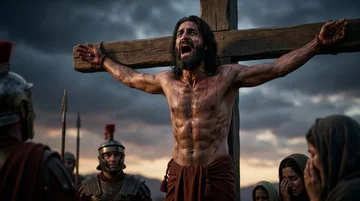
Cross-references 20 of 59
- Matthew 27:46
And about the ninth hour Jesus cried with a loud voice, saying, Eli, Eli, lama sabachthani? that is to say, My God, my God, why hast thou forsaken me?
Jesus cries the words of abandonment from the cross.
- Mark 15:34
And at the ninth hour Jesus cried with a loud voice, saying, Eloi, Eloi, lama sabachthani? which is, being interpreted, My God, my God, why hast thou forsaken me?
Records Jesus’ cry of abandonment on the cross.
- Isaiah 53:4-6
Surely he hath borne our griefs, and carried our sorrows: yet we did esteem him stricken, smitten of God, and afflicted.
The suffering servant bears humanity’s griefs and iniquities.
- 2 Corinthians 5:21
For he hath made him to be sin for us, who knew no sin; that we might be made the righteousness of God in him.
Christ, though sinless, bore sin for others so they could receive God’s righteousness.
- John 19:30
When Jesus therefore had received the vinegar, he said, It is finished: and he bowed his head, and gave up the ghost.
Jesus’ declaration that his saving work was finished follows the cry of agony.
- Luke 23:46
And when Jesus had cried with a loud voice, he said, Father, into thy hands I commend my spirit: and having said thus, he gave up the ghost.
After the anguished cry, Jesus entrusts his spirit to the Father.
- Luke 22:44
And being in an agony he prayed more earnestly: and his sweat was as it were great drops of blood falling down to the ground.
Christ’s agony and bloody sweat accompany the distress reflected in the cry.
- Hebrews 4:15
For we have not an high priest which can not be touched with the feeling of our infirmities; but was in all points tempted like as we are, yet without sin.
Christ’s genuine human trials give force to his cry.
- Galatians 3:13
Christ hath redeemed us from the curse of the law, being made a curse for us: for it is written, Cursed is every one that hangeth on a tree:
Christ bears the law’s curse as humanity’s substitute.
- Isaiah 53:4
Surely he hath borne our griefs, and carried our sorrows: yet we did esteem him stricken, smitten of God, and afflicted.
Christ is described as stricken and afflicted by God while bearing human griefs and sorrows.
- Isaiah 53:12
Therefore will I divide him a portion with the great, and he shall divide the spoil with the strong; because he hath poured out his soul unto death: and he was numbered with the transgressors; and he bare the sin of many, and made intercession for the transgressors.
Christ was counted among transgressors and poured out his soul unto death.
- 1 Peter 2:24
Who his own self bare our sins in his own body on the tree, that we, being dead to sins, should live unto righteousness: by whose stripes ye were healed.
Christ bears sins in his suffering, and his wounds bring healing.
- John 19:28
After this, Jesus knowing that all things were now accomplished, that the scripture might be fulfilled, saith, I thirst.
Jesus’ thirst follows his cry from the cross.
- Isaiah 59:2
But your iniquities have separated between you and your God, and your sins have hid his face from you, that he will not hear.
Sin separates people from God, a separation Christ felt.
- Matthew 27:47
Some of them that stood there, when they heard that, said, This man calleth for Elias.
Bystanders mistake Jesus’ cry for a call to Elijah.
- Matthew 26:39
And he went a little further, and fell on his face, and prayed, saying, O my Father, if it be possible, let this cup pass from me: nevertheless not as I will, but as thou wilt.
Jesus prays in agony for the cup to pass, yet submits to the Father’s will.
- John 3:14-16
And as Moses lifted up the serpent in the wilderness, even so must the Son of man be lifted up:
Christ is lifted up so believers may have eternal life.
- Mark 15:35-36
And some of them that stood by, when they heard it, said, Behold, he calleth Elias.
Bystanders mistake Jesus’ cry for a call to Elijah and offer him vinegar.
- Hebrews 5:7
Who in the days of his flesh, when he had offered up prayers and supplications with strong crying and tears unto him that was able to save him from death, and was heard in that he feared;
Describes the agony and prayers predicted by Psalm 22.
- Psalms 22:16
For dogs have compassed me: the assembly of the wicked have inclosed me: they pierced my hands and my feet.
The psalmist describes the piercing of Christ's hands and feet at the cross.
Commentary
Each commentary is drawn from primary sources: the writings of Ellen G. White and Adventist pioneers and periodicals. Each commentary is separate. Its own words are not a quotation; follow the references to read the source passages.
Ellen G. White
43 sources
The cry was uttered by Jesus from the cross at the ninth hour while darkness still surrounded Him.ST Jan 27, 19143SP 164.3–165.15RED 84.3 His deepest suffering was not bodily pain or dread of death but the crushing weight of the world's guilt and the hiding of His Father's face, favor and sustaining presence, leaving Him to feel fully the separation that sin makes between God and humanity.COS 161.1ST Aug 28, 1879ST Dec 21, 18882T 209.1–3 In that darkness He could see nothing beyond the tomb and had no assurance of coming victory, resurrection or acceptance, and was fiercely tempted to fear He was forsaken forever, yet He yielded nothing to the foe and continued to trust the Father.ST Aug 28, 1879ST Dec 21, 18882T 209.1–3ST Dec 21, 1888ST Jun 10, 1889 As the sinner's substitute and surety He had the disobedience of all imputed to Him and endured the penalty of the broken law, so that believing sinners might have His righteousness imputed to them and be treated as loyal and obedient children.18MR 335.2–337.3DA 752.2–753.1ST Nov 25, 188918MR 73.1 The Father suffered with Him even in that withdrawal, and by that final soul-struggle He paid the price, purchased redemption and opened the gates of Paradise.2T 212.1–2ST Nov 25, 1889ST Aug 28, 1879DA 754.4
Words and Setting
The cry was uttered from the cross in darkness, at the ninth hour while darkness still surrounded Him.ST Jan 27, 19143SP 164.3–165.15RED 84.3DA 754.2DA 754.3 It was a despairing cry expressing the terrible sense of being forsaken by God.ST Jan 27, 19143SP 164.3–165.15RED 84.3DA 754.2 The darkness had lifted from the people but still enveloped Him.ST Jan 27, 1914
The remaining darkness around Him was a symbol of the agony and horror weighing on His heart.ST Jan 27, 1914 A deeper gloom enshrouded His suffering soul, as if angry lightnings were hurled at Him.ST Jan 27, 1914
He hung as the spotless Lamb of God, wounded and suffering.3SP 165.2–3 His cry came amid oppressive gloom and severe physical suffering as He yielded His life, and His death was not accompanied by triumphant joy.5RED 85.1–23SP 165.2–3 His physical pain was so great that it was hardly felt beside His soul anguish, which pierced His heart with a sorrow never fully understood.ST Jan 27, 1914
The priests heard the cry and deliberately misinterpreted it as a call for Elijah.DA 754.3ST Jan 27, 1914 With bitter contempt and scorn they mocked Him, saying He was calling for Elias.ST Jan 27, 1914 They used that claim to refuse the last opportunity to relieve His suffering, saying to leave Him and see whether Elias would come to save Him.DA 754.3ST Jan 27, 1914 Their mockery came after the fear that had filled them while darkness covered the earth, and as that terror abated they were driven by dread that He might still escape them.ST Jan 27, 1914
Moses was permitted to look down the stream of time and see the crucifixion and hear the agonizing cry.ST Mar 31, 18811SP 340.1–341.1 It came in His first advent at the last crowning act of nailing Him to the tree, after His birth as a babe at Bethlehem and His humble life in Nazareth.ST Mar 31, 1881 Before it lay His ministry of love and sympathy and healing, His rejection by a proud and unbelieving nation, His agony in Gethsemane, His betrayal, and cruel mockery and scourging amid hypocrisy and Satanic hatred by the Jewish nation against their Redeemer.ST Mar 31, 1881 As Moses had lifted up the serpent in the wilderness so the Son of God must be lifted upon the cross to give His life a sacrifice for men that whosoever believes should not perish but have eternal life.ST Mar 31, 1881 Afterward Moses saw Him rising from the dead and ascending to His Father escorted by adoring angels through shining portals to welcome by the hosts of heaven with songs of everlasting triumph.ST Mar 31, 1881
Even on the cross He was still praying.RH Oct 30, 1900 He had taken human nature with human bodily wants and weariness, and through His whole ministry prayer went before and sanctified every act.RH Oct 30, 1900 He communed with His Father to the end, was braced for duty and trial by prayer, spent whole nights in prayer and sought souls by day.RH Oct 30, 1900 Following this bitter cry near the close of His life, He commended His spirit to the Father.RH Oct 30, 1900
Nature of Christ's Anguish
The keenest anguish behind the cry was mental and spiritual, not bodily pain or dread of death.COS 161.1ST Aug 28, 1879ST Dec 21, 1888ST Feb 15, 1883DA 752.2–753.1 Bodily pain was only a small part of the agony, and others have suffered as much bodily torture by crucifixion or slow torment.ST Dec 21, 1888ST Feb 15, 1883 What made His suffering different from that of martyrs was bearing the sins of the world and the sense of the Father's displeasure and wrath as He suffered the penalty of the law, which crushed His divine soul with an intensity man can but faintly conceive.ST Dec 21, 1888ST Feb 15, 1883 His inexpressible agony as Prince of sufferers came not from the pain and ignominy of the cross but from a sense of the malignity of sin, so great that physical pain was hardly felt beside soul anguish.ST Jan 27, 1914
It is a great mistake to think He suffered only a small portion of the penalty while having through it all evidence of His Father's love and acceptance with bright hope illuminating the tomb before Him.ST Feb 15, 1883 He had no light to brighten the future and not one ray to relieve the gloom, but was oppressed by the powers of darkness.ST Aug 28, 1879ST Dec 21, 1888ST Feb 15, 18832T 213.2 The bitterness of His cup was the crushing weight of the world's sins and guilt laid upon Him, with the sense of the Father's displeasure and wrath against sin as He bore sin's penalty, which is death, and this broke His heart.COS 161.1ST Aug 28, 18792T 209.1–3ST Dec 21, 1888ST Jun 10, 1889 He felt sin with all its terribleness to the utmost, realizing through the amazing darkness only the Father's displeasure for sin and its penalty of death.ST Aug 21, 1879
In Him the innocent Man of Calvary fully realized and keenly felt the separation that sin makes between God and man.ST Dec 21, 1888ST Feb 15, 1883 The Father's face, glory, sustaining presence, approving smile, reconciling favor and assurance were hidden and withdrawn, leaving Him surrounded by the powers of darkness.ST Aug 28, 1879ST Dec 21, 18882T 209.1–3ST Dec 21, 1888ST Jun 10, 1889 In the darkness He could not see beyond the tomb or through the portals of the tomb and of death, and had no bright hope of coming forth a conqueror.2T 209.1–3ST Feb 15, 1883ST Aug 21, 1879 He had no assurance then of coming victory, resurrection, or the Father's acceptance of His sacrifice, and feared their separation would be eternal.2T 209.1–3ST Dec 21, 1888ST Jun 10, 1889ST Feb 15, 1883DA 752.2–753.1
He was fiercely tempted to fear that His own Father had left Him forever and could not be reconciled to Him because sin was so offensive in His sight, and doubts assailed Him in that horror.2T 209.1–3ST Feb 15, 1883ST Aug 21, 1879ST Feb 4, 1913 In that terrible hour, with the Father's face hidden and the sins of the world upon Him, despair pressed crushing darkness upon Him and the words were wrenched and forced from His pale and quivering lips.ST Dec 21, 1888ST Feb 15, 1883ST Aug 21, 1879 Legions of evil angels enshrouded and oppressed Him while holy angels were bidden not to break ranks to fight the taunting foe nor permitted to minister to His anguished spirit.ST Dec 21, 1888ST Feb 15, 18832T 214.1–3 He struggled with Satan's claim that He was in Satan's hands and superior in strength, disowned by God and no longer in favor with God, asking why He must die if still in favor when God could save Him from death.ST Dec 21, 1888ST Feb 15, 1883
Even in bitterest anguish He yielded not in the least to the foe but continued to trust the Father by faith.ST Aug 28, 1879ST Dec 21, 1888ST Jun 10, 1889 He relied on the evidence of His Father's character and past acceptance of His work, though He had no sustaining sense of presence and approval.ST Dec 21, 1888 As He bore the guilt of every descendant of Adam He saw how deep is sin's hold on the human heart, how familiarity with evil blinds men to its enormity, how few will break from its power, and how humanity without help from God must perish with multitudes perishing within reach of abundant help.ST Jan 27, 1914 The withdrawal of the divine countenance pierced His heart in supreme anguish with a sorrow never fully understood by man, even as the Father suffered with the Son.ST Nov 25, 1889ST Jan 27, 1914
Substitution and Redemption
On the cross He hung as the sinner's substitute, surety and ransom, taking the guilt of the disobedient upon Himself, counted a transgressor to redeem from the condemnation of the law, with the sword of justice awakened against Him.ST Nov 25, 1889ST Jan 27, 1914ST Jan 6, 1881 He bore the full penalty for human transgression and cried out as one forsaken by God, with the iniquity of all laid upon Him and the guilt of every descendant of Adam pressing His heart.18MR 335.2–337.3ST Jan 27, 1914 His inexpressible agony came not from dread of death nor from the pain and ignominy of the cross, for bodily pain was hardly felt beside the weight of guilt and the withdrawal of the Father's revealed presence.DA 752.2–753.1ST Jan 27, 1914 Bearing that terrible weight He could not see the Father's reconciling face, though all His life He had published the Father's mercy and pardoning love with salvation for the chief of sinners as His theme, and the withdrawal of the divine countenance pierced His heart with a sorrow never fully understood by man.ST Nov 25, 1889ST Jan 27, 1914 In that supreme anguish He feared their separation would be eternal, having no assurance then of His resurrection or of the Father's acceptance of His sacrifice, while the wrath of God against sin and the terrible manifestation of His displeasure filled His soul with consternation.DA 752.2–753.1ST Jan 27, 1914 As Prince of sufferers He felt the malignity of sin, seeing how deep is sin's hold on the human heart, how familiarity with evil blinds men to its enormity, how few will break from its power, and how humanity without help must perish with multitudes perishing within reach of abundant help.ST Jan 27, 1914 Even as He suffered in fearful conflict with the powers of darkness under oppressive gloom without triumphant joy, His immeasurable love remained stronger than death and even increased for perishing sinners in that darkness.2T 212.1–2ST Aug 28, 1879ST Feb 15, 1883 The Father Himself suffered with the Son even in that forsakenness and despairing cry.ST Nov 25, 1889
Though innocent He was treated as a sinner because the sins of the world were imputed to Him, so that guilty sinners who believe might be treated as righteous and as God's loyal and obedient children through His merits, having His righteousness imputed to them.18MR 335.2–337.318MR 73.1 His cry marks the loss of His Father's favor and the final depth of His suffering.18MR 73.1 Even in that fearful conflict He was accomplishing humanity's salvation, and by His own arm and final soul-struggle He paid the price and purchased man's redemption.2T 212.1–2ST Aug 28, 1879ST Feb 15, 1883 He bore the burden of guilt and the wrath of divine justice, and by His sacrifice opened the gates of Paradise.DA 754.4 His suffering as the sin-bearer was endured for humanity amid unutterable anguish at feeling His Father's face hidden.DA 754.4
The cry reveals the offensive character of sin as seen in the light of the cross and proves that God is not too merciful to punish transgressors of His law.ST Jan 6, 1881 On Calvary He suffered in the sinner's place with intense agony caused by our sins pouring darkness into His soul, taking upon Himself the guilt of the disobedient and suffering in the sinner's stead.ST Jan 6, 1881 He endured scorn and mockery to save us from shame and everlasting contempt.ST Jan 6, 1881 The withdrawal of the Father's light, love and glory while He bore the horror of sin shows how offensive sin is to God.ST Jan 6, 1881ST Dec 9, 1897 Following the hours of anguish in Gethsemane where His sweat was as great drops of blood, He was uplifted on the cross with wounded head, pierced side and marred feet and uttered the despairing cry.COL 196.4 It shows that in redeeming sinners He risked all and heaven itself was imperiled, and it measures the value of a soul, proving He would have laid down His life for even one sinner.COL 196.4
Witnesses and Effects
At the ninth hour, while darkness still enveloped Him after lifting from the people, He uttered a despairing cry expressing the terrible sense of being forsaken.ST Jan 27, 19145RED 84.3 Those who heard it concluded that Heaven's vengeance and the bolts of God's wrath were upon Him because He claimed to be the Son of God.ST Jan 27, 19145RED 84.3 Many who believed on Him were filled with terror when they heard the cry of agony in the darkness.ST Jan 27, 19143SP 164.3–165.15RED 84.3DA 754.2
They lost hope, feeling that if God had forsaken Jesus their hope was gone and they had nothing to trust.ST Jan 27, 19145RED 84.3DA 754.2 Their cherished teaching seemed lost, their faith seemed lost, and they wondered what they could trust if God had forsaken Jesus.ST Jan 27, 19143SP 164.3–165.15RED 84.3DA 754.2
Wider Applications
The same cry will be uttered by the remnant in the time of trouble to express their feeling that God has forsaken them.Ms 2, 1852, par. 4–5Ms 1, 1852, par. 4 Those words supply what they will cry when that sense of being forsaken comes upon them.Ms 2, 1852, par. 4–5Ms 1, 1852, par. 4
A person in distress may take up this cry of feeling forsaken by God, far from help, with prayers seemingly bringing no answer and favor seemingly withdrawn.2T 273.4LS 195.1–2 Poverty and care can bring this question to the heart, and in times of deep gloom and distress that feeling of abandonment can arise.2T 273.4LS 195.1–2SG2 194.2 Yet the feeling does not mean God has abandoned the sufferer, and trust in His love and mercy must hold firm through darkness as well as in times of relief.2T 273.4
The thought that God had forsaken Him made Christ's suffering especially acute in His anguish at separation from His Father's favor.ST Aug 9, 1905Ms 134, 1905, par. 4 His anguish also portrays what sinners will feel when, too late, they realize that God's Spirit has withdrawn from them under wrath.ST Aug 9, 1905Ms 134, 1905, par. 4
Jesus uttered this agonizing cry as He suffered for humanity under the burden of the world's sins, expressing the depth of His agony.ST Mar 31, 18811T 137.1–138.1 Beside His trials and sacrifices all other trials appear small, yet believers are permitted in small measure to be partakers in His sufferings.ST Mar 31, 1881 His suffering for others is a reason believers should be willing to suffer for His sake.ST Mar 31, 18811T 137.1–138.1
He had taken human nature with human bodily wants and weariness, was tempted in all points yet without sin, and through His whole ministry prayer went before and sanctified every act.RH Oct 30, 1900 He communed with His Father to the end, was braced for duty and trial by prayer, spent whole nights in prayer and sought souls by day, and even on the cross He still prayed, following this bitter cry near the close of His life by commending His spirit to the Father.RH Oct 30, 1900 Strength for duty and trial, with refreshing and invigorating of soul and body to meet temptation, is derived from worship, and those striving to live His life will feel the same need for seasons of devotion.RH Oct 30, 1900
Sources
Pioneers and periodicals
89 sources
It is the cry of one who still claims God as his own while feeling abandoned, asking why help stays far away and why his groaning seems to bring no answer.RH Jan 31, 1871RH Sep 10, 1857RH Nov 13, 1856RH Sep 2, 1862
Though in measure David's own experience, it is preeminently prophetic of the humiliation of David's greater Son as he stood in the sinner's place, and was literally fulfilled when Christ spoke it on the cross.ST Mar 15, 1910ST Mar 26, 1912RH Sep 16, 1902ST Dec 5, 1911RH Sep 17, 1872
He spoke it because the sins of the whole world were laid upon him as substitute and transgressor, and since sin separates from God, the guilt he bore hid the Father's face, love and sustaining presence and brought the curse and wrath against sin upon him.ST Aug 28, 1879ST Dec 21, 1888ST Mar 15, 1910ST Feb 27, 1907
His keenest anguish was not bodily pain but mental agony under the sense of his Father's displeasure, surrounded by darkness and powers of evil with no ray of light beyond the tomb, yet yielding nothing to the foe and trusting the Father by faith.ST Aug 28, 1879ST Dec 21, 1888ST Dec 21, 1888ST Feb 15, 1883ST Feb 15, 1883
By bearing what the broken law deserved he magnified the law and made it honorable, proving sin could not be removed by changing the law and laying the righteous foundation for pardoning and justifying believers.ST May 13, 1886ST Nov 25, 1897ST Sep 9, 1875ST Nov 20, 1879ST May 10, 1883
Because he felt seeming abandonment, he is the sympathizing helper of all who feel forsaken, showing that such despondency does not prove one is not God's child, and that the answer is to wait, trust and submit until darkness breaks.ST Jan 28, 1897RH Jun 6, 1912RH Aug 11, 1903RH Jan 31, 1871RH Sep 10, 1857
Words and Original Setting
The cry is that of one who feels forsaken yet still clings to God as his own God, pleading in agony over why help that could be sent remains far away and why the listening ear seems not to attend the raised plea for aid.RH Sep 10, 1857ST Jun 1, 1904 It gathers up every human cry over lonely burdens, rebellious children, bereaved mothers, helpless children, unchecked oppression, shepherdless multitudes, forsaken churches, straying Christendom, lost opportunities, taken leaders, prospering evil, failing good, mysterious sad human life, and distant divine life, yet it holds God as still his own and does not forsake God in return.RH Jan 31, 1871 Even in an hour of deep darkness and distress at the ninth hour on the cross, faith can so address God as its own while asking why He has forsaken and is far from helping.RH Sep 10, 1857ST Jun 1, 1904 The answer comes not in word but in act, by not giving way and not despairing but waiting, enduring, looking forward and upward until darkness breaks and desolation ceases and God is known as Father, with assurance that the interrupted work will be accomplished and finished in God's good time by self or by others, and the spirit received in calm and peace.RH Jan 31, 1871
The language describes the anguish of feeling that God has hidden Himself, deserted His servant, withdrawn favor, and is far from helping at the very moment when help is most needed and the struggle seems nearly lost.LS 195.1–2RH Nov 13, 1856RH Sep 2, 1862 In that deep despair prayers seem to bring no answer, courage can fail, and discouragement and doubts about God's promises can arise.LS 195.1–2RH Nov 13, 1856RH Sep 2, 1862 Such appearance does not show that God has truly abandoned His people and does not reveal the whole truth.RH Nov 13, 1856RH Sep 2, 1862 For this reason its words warn against declaring that God has forsaken when hardship surrounds or loved ones die.RH Dec 30, 1862
In a measure the psalm was David's own experience and has a primary application to David, with some of its experiences present in his life.ST Mar 15, 1910ST Mar 26, 1912RH Sep 17, 1872 It is typical and prophetic of David's greater Son, speaking of Christ and not of David alone, as a prophetic utterance through David about the sufferings and experience of Jesus Christ for humanity in the flesh when the sins of the world were laid upon Him.ST Mar 15, 1910ST Mar 26, 1912 Its full agony and sacrifice were realized in Christ, showing what He passed through for us.ST Mar 15, 1910ST Mar 26, 1912 Portions are quoted in the New Testament as fulfilled in Christ, yet this does not mean every verse of such psalms applies to Him, since to apply Psalm 69:5 to Him would make Him a sinner while other parts of that psalm were fulfilled in Him.RH Sep 17, 1872
The psalm is preeminently prophetic of the Lord in His humiliation and describes the experience of the Lord Jesus Christ.ST Apr 15, 1913 It is filled with Jesus' experience as He stood on earth in the sinner's place, giving Himself to die on the cross.ST Dec 5, 1911 For sinners' sake He passed through what the repentant sinner must pass through, and even what the lost must face.ST Dec 5, 1911
Prophecy and Fulfillment
Psalm 22 is prophecy of Christ's sufferings, to be read alongside his betrayal, condemnation, and crucifixion, which it foretold literally and in detail.ST Mar 14, 1911ST Nov 16, 1882ST Apr 23, 1912 It is a prophecy of his first coming fulfilled in the closing events of the Gospels, showing that God foresaw those events.ST Apr 23, 1912RH Jun 8, 1911 It foretells particulars of the Messiah's life and ministry, and Jesus' life fulfilled what it predicted.ST Jul 8, 1913ST Jul 8, 1913 Alongside Isaiah 53 its fulfillment supports belief that Jesus is the Son of God and shows prophecy to be unfailing.RH Jun 8, 1911
The verse foretells the very words of agony Christ would speak on the cross.RH Sep 16, 1902ST Jan 2, 1879 It gives his cry of being forsaken by God and left far from help and from his groaning, belonging to the climax of suffering when he bore his cross to Golgotha where he was crucified.ST Mar 31, 1909 That cry stands joined to poured-out weakness, disjointed bones, melted heart, dried strength, thirst, the dust of death, encircling enemies, and pierced hands and feet as the prophetic voice of his crucifixion torment.ST Mar 31, 1909 It describes his expiring cries of agony at the crucifixion, foretold by David, and predicts his prayers of agony as he suffered on humanity's behalf as its representative and vicarious offering.RH Sep 16, 1902RH Mar 8, 1915ST Jul 16, 1912
Matthew 27:46 records him speaking these words on the cross, crying out to God asking why he had forsaken him, as the fulfillment of what was foretold.RH Sep 16, 1902 They are among the Old Testament words Jesus uttered on the cross.ST Apr 23, 1885 David there pictures the crucifixion in detail and gives the very words Christ spoke in his agony, showing the reality of his suffering.RH Sep 25, 1900 The verse thus points to the cross and glows under gospel fulfillment, proving the prophets true when Christ confirms their declarations.RH Sep 25, 1900
Its fulfillment proves Christ was the true Messiah to come, who died and rose again and ascended to heaven according to the Scriptures.RH Dec 16, 1862 It supports belief that Jesus is the Son of God and shows prophecy is unfailing.RH Jun 8, 1911 It shows that God fulfills prophecy even when its fulfillment appears impossible to human judgment.RH Nov 25, 1873
The psalm is linked with promises of an eternal reign of righteousness, which could not have been fulfilled in their fullness without the Lord's resurrection.ST Apr 22, 1897 The agonizing cry belongs to his first advent, at the last crowning act of nailing him to the tree after his birth as a babe at Bethlehem, his humble life in Nazareth, his ministry of love and sympathy and healing, his rejection by a proud and unbelieving nation, his agony in Gethsemane, his betrayal, and cruel mockery and scourging.ST Mar 31, 1881 Moses was permitted to look down the stream of time and hear the cry, and to see that as Moses had lifted up the serpent in the wilderness so the Son of God must be lifted upon the cross to give his life a sacrifice for men that whosoever believes should not perish but have eternal life, followed by his rising from the dead and ascension to his Father escorted by adoring angels through shining portals to welcome by the hosts of heaven with songs of everlasting triumph.ST Mar 31, 1881
The psalm is one of the prophecies that revealed that a terrible tragedy would take place when Jesus, the Messiah, was offered as a sacrifice.ST Jul 8, 1913 It helped recognize the crucifixion as the event in which God gave his Son to die for the world.ST Jul 8, 1913
Reason for Forsakenness
The cry is the experience in the flesh of Jesus Christ when the sins of the whole world were laid upon him, in a measure David's own experience but typical of what David's greater Son passed through for us.ST Mar 15, 1910ST Feb 27, 1907 As substitute and surety the iniquity of all was laid upon him and he was counted a transgressor to redeem from the condemnation of the law, bearing the guilt, condemnation, penalty and death of every descendant of Adam with their guilt pressing his heart.ST Jan 27, 1914ST Aug 28, 1879ST Nov 25, 1897 The darkness both symbolized and concealed the atoning agonies of his sacrifice as the sin of the whole world pressed upon him, and his inexpressible agony came not from dread of death nor from the pain and ignominy of the cross.ST Jan 27, 1914ST Feb 27, 1907 His suffering as Prince of sufferers came from a sense of the malignity of sin, seeing how deep is sin's hold on the human heart, how familiarity with evil blinds men to its enormity, how few will break from its power, and how humanity without help must perish with multitudes perishing within reach of abundant help.ST Jan 27, 1914 Though all his life he had published the Father's mercy and pardoning love with salvation for the chief of sinners as his theme, now bearing that terrible weight he could not see the Father's reconciling face, and the withdrawal of the divine countenance in supreme anguish pierced his heart with a sorrow never fully understood by man, so great that physical pain was hardly felt.ST Jan 27, 1914 As the Majesty of Heaven dying in man's stead his immeasurable infinite love was stronger than death and even increased for perishing sinners in that darkness, and his own arm brought salvation when the price was paid to purchase man's redemption in the last soul-struggle, making it possible for people to be brought near to God.ST Aug 28, 1879ST Nov 25, 1897
Because sin makes separation between God and humanity, the sins he bore hid the Father's face, glory, sustaining presence, love and approving assurance from him through his humanity, bringing the Father's displeasure, wrath and curse against sin upon him.ST Aug 28, 1879ST Dec 21, 1888ST Feb 15, 1883ST Feb 15, 1883ST Aug 21, 1879 His keenest anguish was mental agony from a sense of his Father's displeasure and wrath as he suffered the penalty of the law with the sins of the world upon him, which crushed his divine soul, while bodily pain was only a small part of his suffering.ST Dec 21, 1888ST Feb 15, 1883ST Aug 21, 1879 His suffering differed from the death of martyrs by crucifixion or slow torture not in physical torture but in bearing the sins of the world and the sense of his Father's wrath, correcting the great mistake that he suffered only a small portion of the penalty and through all his sufferings had evidence of his Father's love and acceptance with bright hope illuminating the tomb before him.ST Dec 21, 1888ST Feb 15, 1883 The hiding of his Father's face and the sense that his own dear Father had forsaken him brought despair, as in him the innocent Man of Calvary fully realized and keenly felt the separation that sin makes between God and man.ST Dec 21, 1888ST Feb 15, 1883 He was oppressed by the powers of darkness with not one ray of light to brighten the future, struggling with Satan declaring that Christ was in his hands and superior in strength, that God had disowned his Son and he was no longer in favor with God, asking why he must die if still in favor when God could save him from death.ST Aug 28, 1879ST Dec 21, 1888ST Feb 15, 1883 Legions of evil angels enshrouded him while holy angels were bidden not to break ranks to engage the taunting foe nor permitted to minister to his anguished spirit, and in that terrible hour of darkness with his Father's face hidden and the sins of the world upon him the words were wrenched from his lips, yet he yielded not in the least to the foe even in bitterest anguish.ST Dec 21, 1888ST Feb 15, 1883
The bitterness of his cup was the sense of his Father's displeasure, and it was not bodily suffering that so quickly ended his life but the crushing weight of the sins of the world and the sense of his Father's wrath that broke his heart.ST Aug 21, 1879 The Father's glory and sustaining presence had left him, and despair pressed crushing darkness upon him and forced the anguished cry from his pale and quivering lips.ST Aug 21, 1879 He could not see through the portals of the tomb, with no bright hope before him of coming forth a conqueror and of his Father's acceptance of his sacrifice, feeling the sin of the world with all its terribleness to the utmost and through the amazing darkness realizing only the Father's displeasure for sin and its penalty of death.ST Feb 15, 1883ST Aug 21, 1879 He was tempted to fear that sin was so offensive in his Father's sight that the Father could not be reconciled to his Son, and the fierce temptation that his own Father had forever left him caused the piercing cry, though he continued to trust the Father by faith.ST Jun 10, 1889ST Feb 15, 1883ST Aug 21, 1879 In bearing sin he passed through, for sinners' sake, what the repentant sinner must pass through and even what the lost must face, as he gave himself to die on the cross, suffering the very agony of the lost.ST Sep 29, 1914ST Dec 5, 1911 His human heart and human feelings trembled over the consummation, efficiency and success of the plan of salvation, questioning not God but whether he himself was sufficient for the work, with his human limitations shutting from him the knowledge of his triumph so that all he could do was leave his case in the hand of God, yet in all the temptation and doubt that harassed him there was no sin and no distrust of God.ST Sep 29, 1914 He tasted the death that belongs to sinful man, which is alienation from the life of God, as the sense of man's forsaken condition as an alien from God's sustaining life came upon his soul and made him conscious of the temporary withdrawal of the life of the Godhead.ST Mar 17, 1914 That depressing soul-sense grieved him even unto death and was intensified to the limit in the agony of the cross, breaking his own heart, while his soul was thus made an offering for sin so that the souls of men might again live by the inbreathing of God's life, and he endured the sinner's death so that sinners could turn to him and know they were not forsaken by God.STST Mar 17, 1914 It shows what he passed through, the same hard battle the sinner passes through in overcoming sinful habits, pouring out his soul with strong crying and tears even unto death, not to purchase what he desired but because his desires were so great, leaving the pattern for his followers to fight hard battles, exert full effort and trust God, whether victory comes instantaneously or through prolonged struggle.
Depth of Christ's Suffering
The keenest anguish on the cross was mental agony from the sense of the Father's displeasure, wrath toward sin, and hidden face, which crushed the divine soul, broke the heart, and ended life so quickly.ST Aug 28, 1879ST Dec 21, 1888ST Feb 15, 1883ST Feb 15, 1883ST Aug 21, 1879 Bodily pain was only a small part of that suffering, so great was the spiritual anguish that physical pain was hardly felt, and others have suffered as much bodily torture.ST Dec 21, 1888ST Feb 15, 1883ST Aug 21, 1879ST Jan 27, 1914 The burden was the world's sins with their guilt, penalty, and death pressing upon the innocent sufferer, who felt to the utmost the separation that sin makes between God and humanity, with glory, sustaining presence, approving assurance, and light for the future withdrawn.ST Aug 28, 1879ST Dec 21, 1888ST Feb 15, 1883ST Feb 15, 1883ST Aug 21, 1879 Despair pressed crushing darkness upon him, doubts assailed him, and the cry was forced from pale and quivering lips, yet he did not yield to the enemy.ST Aug 28, 1879ST Dec 21, 1888ST Aug 21, 1879 This deepest anguish is the King's suffering amid darkness and mockery, in contrast with the beauty and glory in which he will be seen at his coming again.ST Dec 8, 1914
That suffering differed from the death of martyrs by crucifixion or slow torture not in physical torture but in bearing the sins of the world and suffering the penalty of the law, correcting the mistake that he suffered only a small portion of the penalty with evidence of the Father's love and bright hope illuminating the tomb before him.ST Dec 21, 1888ST Feb 15, 1883 As Prince of sufferers and substitute and surety counted a transgressor to redeem from the condemnation of the law, his inexpressible agony came not from dread of death nor from the pain and ignominy of the cross but from a sense of the malignity of sin.ST Jan 27, 1914 He saw how deep is sin's hold on the human heart, how familiarity with evil blinds men to its enormity, how few will break from its power, and how humanity without God's help must perish with multitudes perishing within reach of abundant help.ST Jan 27, 1914 The forsakenness he endured shows more fully than the fall of Adam and the ruin of the race how God hates and abhors sin, because the law had been transgressed and he suffered what the broken law deserved.ST Nov 20, 1879
He was surrounded by oppressive gloom and the powers of darkness with not one ray of light to brighten the future, and in that darkness he could not see beyond the tomb to victory, resurrection, coming forth a conqueror, or the Father's acceptance of his sacrifice.ST Dec 21, 1888ST Dec 21, 1888ST Jun 10, 1889ST Feb 15, 1883ST Aug 21, 1879 The withdrawal of the divine countenance and reconciling face pierced his heart with a sorrow never fully understood by man, leaving him to realize only displeasure for sin and its penalty of death.ST Feb 15, 1883ST Aug 21, 1879ST Jan 27, 1914 He was tempted to fear that sin was so offensive that the Father could not be reconciled to the Son and had left him forever.ST Dec 21, 1888ST Jun 10, 1889ST Feb 15, 1883ST Aug 21, 1879 He experienced the despair sinners will face under God's wrath, yet relied by faith on the evidence of the Father's character and past acceptance of his work, continuing to trust and submit himself to God until darkness should break.ST Dec 21, 1888ST Jun 10, 1889RH Jan 14, 1904
In that terrible hour he struggled with Satan declaring that Christ was in his hands and superior in strength, that God had disowned his Son and he was no longer in favor with God, asking why he need die if still in favor when God could save him from death.ST Dec 21, 1888ST Feb 15, 1883 Legions of evil angels enshrouded him while holy angels were bidden not to break ranks to engage the taunting foe nor permitted to minister to his anguished spirit, and even at his death he received no relief or word of sympathy.ST Dec 21, 1888ST Feb 15, 1883ST Feb 11, 1913ST Jul 25, 1878 Satan pressed the claim that God had disowned him, yet Christ yielded not in the least to the foe even in bitterest anguish, and through conflict with the powers of darkness his love for sinners remained strong.ST Dec 21, 1888ST Feb 11, 1913ST Feb 15, 1883 The cry came amid that conflict as he suffered for guilty humanity, bore the penalty of God's law, and through his suffering brought salvation and paid the price of human redemption.ST Feb 11, 1913ST Feb 15, 1883
The cry was wrenched from his lips as he yielded up his precious life as the spotless Lamb of God in oppressive gloom with no cheering triumphant joy.ST Dec 21, 1888ST Jul 25, 1878ST Feb 15, 1883 His flesh was lacerated with stripes and wounds, his hands that had relieved the oppressed fastened by cruel nails, his feet that had carried blessing and the doctrine of salvation bruised and spiked to the cross, and his royal head wounded by a crown of thorns.ST Jul 25, 1878 He hung with blood-matted hair, marble features, drooping eyelids, bowed head, deathly pallor, pierced hands and feet, anguished countenance, and gaping side, forsaken and accursed of God and man and forsaken by every friend until he stood alone.RH Oct 4, 1870 That dreadful cry thrilled all who heard it with strange emotion, holding in it the wail of ages of sin and woe and the gathered agonies of a thousand lost souls, after which struggle, anguish, quenchless thirst, fevered frame, wailing prayer, and last sob and sigh were over.RH Oct 4, 1870 The same agony stands at the last crowning act after birth at Bethlehem, humble life in Nazareth, ministry of love and sympathy and healing, rejection by a proud and unbelieving nation, agony in Gethsemane, betrayal, and cruel mockery and scourging, beside whose trials and sacrifices all other trials appear small.ST Mar 31, 1881
His human heart and human feelings trembled over the consummation, efficiency, and success of the plan of salvation, questioning not God but whether he himself in humanity was sufficient for the work.ST Sep 29, 1914 His human limitations shut from him the knowledge of his triumph, so all he could do was leave his case in the hand of God, commit himself to the Father by faith on God's word and keeping power, and he was not disappointed.ST Sep 29, 1914RH Dec 7, 1905 The cry of feeling forsaken was not an acted part but genuine human agony that made his trust real, and in all the temptation and doubt that harassed him there was no sin and no distrust of God.ST Sep 29, 1914RH Dec 7, 1905 Though he feared that sin had made separation eternal, he relied on the evidence of the Father's acceptance already given, trusted the Father's character, submitted himself to God, and by faith was victorious even while facing the possibility of failure.ST Sep 29, 1914RH Jan 14, 1904RH Dec 7, 1905 Even in accomplishing the work of human redemption he spoke as one not experiencing happy feeling in that saving work.RH Dec 13, 1864
Surroundings at the Cross
About the ninth hour, after darkness had covered the land from the sixth hour until the ninth, the forsaken cry was uttered with a loud voice, though some standing by misunderstood it as a call for Elijah.ST Jan 27, 1914ST Feb 27, 1907ST May 26, 1898 The darkness still enveloping him after it lifted from the people both symbolized and concealed the atoning agony and horror weighing on his heart.ST Jan 27, 1914ST Feb 27, 1907 A deeper gloom enshrouded his suffering soul, with angry lightnings hurled at him.ST Jan 27, 1914
The people took the words as a call for Elijah and treated the darkness as proof of their accusation against him.ST Jan 24, 1911 The priests heard the cry of Eloi, Eloi and deliberately misinterpreted it, saying with bitter contempt and scorn that he was calling for Elias.ST Jan 27, 1914 They used that claim to refuse the last opportunity to relieve his suffering, saying to leave him and see whether Elias would come to save him, their mockery coming after the fear that had filled them while darkness covered the earth and driven by dread that he might still escape them as that terror abated.ST Jan 27, 1914 Meanwhile Roman soldiers mocked and hating priests ridiculed and blasphemed while he, the dying Victim, endured the excruciating pains of crucifixion to the utmost with a sensitive human soul, the Father's face hidden and the awful darkness of sin pressing upon him.ST Mar 7, 1906ST May 26, 1898
Onlookers said that heaven's vengeance and the bolts of God's wrath were upon him because he claimed to be the Son of God.ST Jan 27, 1914 Many who believed on him lost hope, feeling that if God had forsaken Jesus his followers had nothing to trust.ST Jan 27, 1914 His followers' hearts and hope failed because they had trusted him to redeem Israel and knew not where to go.ST Jan 24, 1911 Even while he hung forsaken, the glory of Jehovah shone about him on the illuminated cross while the cloud settled over the city and the temple.ST Jan 24, 1911
After this cry he cried out that his work was finished and died with drooping head.ST Jan 24, 1911 Even in that anguish, when the heavens seemed shut to him, before he gave up his life he offered peace and forgiveness to the burdened sinner beside him.ST Aug 8, 1900 He communed with his Father to the end, and even on the cross he still prayed, following this cry by commending his spirit to the Father, showing that strength for duty and trial, refreshing and invigorating of soul and body to meet temptation, is derived from worship and that those striving to live his life will feel the same need for seasons of devotion.RH Oct 30, 1900
That moment on the cross was not alone the supreme crisis of the world and the universe; the crucifixion and the resurrection were only the demonstration in life of the submission already made in Gethsemane.ST Mar 7, 1906 Jonah's distress when swallowed by the fish foreshadowed this final suffering, in which he desired relief from the terrible cup and felt forsaken by God as he died.ST Dec 11, 1893
Law and Atonement
The suffering in the cry displays God's justice and holiness, the unchanging excellence and binding force of his law, and the deep evil and guilt of sin, honoring the law rather than purchasing freedom to despise it.ST Mar 31, 1881ST Nov 20, 1879ST Jun 10, 1886 It shows more fully than the fall of Adam and the ruin of the race how God hates and abhors sin, revealing the terrible weight of his curse against sin.ST Nov 20, 1879ST Jun 10, 1886 In that anguish the Son voluntarily received in his own person the curse due to transgressors, feeling the full weight of the law's curse in the withdrawal of his Father's face, while acknowledging God's law as holy, just, and good.ST Jun 10, 1886RH Mar 13, 1879 Though innocent, he had taken the sinner's place and bore the curse due to sinners.ST Jun 10, 1886RH Mar 13, 1879
Because the Father's law had been transgressed, he endured this forsakenness and suffered what the broken law deserved in order to magnify the law and make it honorable, so that God may be just and the justifier of the one who believes in Jesus.ST Sep 9, 1875ST Nov 20, 1879 His suffering was the consequence of transgression against his Father's law laid upon him for humanity.ST Sep 9, 1875ST May 10, 1883 It proves that sin could not be removed by changing God's law: the law had to stand, and Christ's death was the only way sinners could be saved.ST May 10, 1883
The cry is unique, a question never asked before or since and never to be asked again, showing the awful reality of God's government, his wrath against sin, and the holiness of God.ST May 13, 1886 The cross measures both God's hatred of sin and his love for the sinner.ST May 13, 1886 It is the righteous foundation on which God pardons sin and counts believers perfectly righteous in the risen and glorified Christ, making it possible for people to be brought near to God.ST May 13, 1886ST Nov 25, 1897 He endured the sinner's death and the awful load of sin so that sinners could turn to him and know they were not forsaken by God.ST He took upon himself the guilt of the disobedient and suffered in the sinner's stead, so that the sword of justice was awakened against the Son of God, and he endured scorn and mockery to save from shame and everlasting contempt.ST Jan 6, 1881
In bearing the guilt of Adam's descendants and the consequences of sin as humanity's substitute and surety, the withdrawal of the Father's countenance pierced him with sorrow, and the weight of sin and God's displeasure filled him with consternation.ST Nov 25, 1889 On the cross suffering for guilty men in fearful conflict with the powers of darkness while enduring the hiding of his Father's face, crying out in bitterness of soul as the Majesty of Heaven dying in man's stead, he revealed immeasurable infinite love stronger than death.ST Aug 28, 1879ST Feb 15, 1883 That love for perishing sinners remained strong and even increased in that darkness, and his own arm brought salvation when the price was paid to purchase man's redemption, finished in the last soul-struggle.ST Aug 28, 1879ST Feb 15, 1883 The Father himself suffered with the Son even as the Son experienced this forsakenness and cried out in despair.ST Nov 25, 1889
Despite the darkness, the opposition of earthly and evil powers, and the abandonment of his followers, God was with him as he died to magnify the law, including the Sabbath.ST May 4, 1904 Those who reject the salvation offered through his suffering will bear that curse themselves.ST Jun 10, 1886
The cry reveals the offensive character of sin as seen in the light of the cross and proves that God is not too merciful to punish transgressors of his law.ST Jan 6, 1881 The thought that God had forsaken him made his suffering especially acute in separation from his Father's favor.ST Aug 9, 1905 His experience also portrays the anguish of sinners who realize too late that God's Spirit has withdrawn from them.ST Aug 9, 1905
Help for Believers
Christ's suffering in this cry makes him the fellow-sufferer, sympathizer and helper who has himself met every trial, conflict and temptation of his followers, so that their sharing in his experience develops faith in them.ST Jan 28, 1897RH Jun 6, 1912 The psalm opens a glimpse into his inner struggle with the enemy, showing that he suffered while being tempted and therefore is able to help those who are tempted.ST Jan 28, 1897RH Jun 6, 1912 He endured despondency and the sense of seeming forsakenness without yielding and came through victorious, and that victory gives strength to believers to resist temptation and become more than conquerors through him.RH Aug 11, 1903RH Jan 21, 1904 Because he bore the sins, griefs and sorrows of ruined humanity, was mocked and left by his disciples, and felt as though the Father had left him, he knows from his own pain how to help those who feel forsaken in their own trials.RH Aug 11, 1903RH Jan 21, 1904
Feelings of doubt, despondency and seeming forsakenness do not prove that a person is not a child of God, since God's own Son felt forsaken and cried out yet bowed in submission to chastening.RH Aug 11, 1903RH Jun 6, 1865 Crying these words even at the point of death is not by itself evidence that a person is lost.ST Nov 3, 1881RH Sep 18, 1856 The death that redeemed all other deaths itself passed through darkness and anguish, teaching that a believer's final moments need not show outward strength or triumph, for God's judgment rests on the heart and not on a momentary display.ST Nov 3, 1881RH Sep 18, 1856 The call in such feeling remains to trust and submit to God.RH Aug 11, 1903RH Jun 6, 1865
The cry gathers up every human cry over lonely burdens, rebellious children, bereaved mothers, helpless children, unchecked oppression, shepherdless multitudes, forsaken churches, straying Christendom, lost opportunities, taken leaders, prospering evil, failing good, mysterious sad human life and distant divine life, yet it still holds God as my God and does not forsake him in return.RH Jan 31, 1871RH Sep 10, 1857 Its answer comes not in word but in act, in not giving way and not despairing but waiting, enduring, looking forward and upward until darkness breaks, desolation ceases and God is known as Father.RH Jan 31, 1871RH Jun 6, 1865 Even when God feels far away and the soul is under severe trial, faith can still cling to him and call him my God.RH Sep 10, 1857ST Jan 27, 1876 The feeling of being God-forsaken does not mean God has truly left, for even in darkness when comfort and spiritual sight are absent he remains near, strengthens the sufferer and goes with him.ST Jan 27, 1876ST Apr 30, 1894 The appearance of being hidden, deserted or far from helping when help is most needed and the struggle seems nearly lost can bring discouragement and doubts about God's promises, but appearances do not show the whole truth and do not prove abandonment.RH Nov 13, 1856RH Sep 2, 1862
He felt forsaken only for a brief time in the crisis of the greatest of all tragedies, though the Father was never nearer to him than at that very moment, as he entered the heaviest sorrows and became acquainted with the deepest grief as the Man of sorrows.ST Jun 18, 1902ST Apr 30, 1894 Though the sins he bore hid the Father's face from him through his humanity and led him to cry out as though forsaken amid the horrors of death, God still regarded him with tender favor.ST Jun 18, 1902ST Apr 30, 1894 Christians too will have hours of darkness, sorrow and grief, yet the Father's presence and love remain over them with bright sunshine soon to follow.ST Jun 18, 1902ST Jan 27, 1876 Those dark shadows carry a purpose and lesson that will work for good and will be understood someday.ST Jun 18, 1902ST Jan 27, 1876
He poured out his soul with strong crying and tears even unto death when he took the sins of humanity upon himself, not to purchase what he desired but because his desires were so great, passing through the same hard battle the sinner passes through in overcoming sinful habits.ST Apr 1, 1880 He thereby left the pattern for followers to fight hard battles, exert full effort and trust God whether victory comes instantaneously or through prolonged struggle.ST Apr 1, 1880 The strong effort and suffering it cost him to bear sins as the Lamb of God, groaning under human sin with thorn-crowned head in the agony of death, requires believers to make strong efforts to overcome sin, to resist unto blood striving against sin, to labor and pray in earnest, to break through darkness, to suffer with Christ, to subdue self and glorify God.ST Apr 1, 1880
His giving vent to his soul in this line of an ancient psalm in the midnight moment of mysterious agony voices the darkest depths of human agony down to the lowest suffering mortal hearts can know.RH Apr 11, 1871 The most advanced Christian still finds profoundest meditations, sternest struggles, sublimest joys and aspirations voiced more perfectly in the Hebrew psalms than in any other language, and the fierce conflicts and triumphant victories of New Testament saints find adequate utterance only in Old Testament songs.RH Apr 11, 1871 This use shows not discrepancy between New Testament and Old but profound, worldwide and age-long harmony, with advancing revelation completing and never outgrowing what came before.RH Apr 11, 1871
Hardship and the death of loved ones should not lead to declaring that God has forsaken you.ST Jun 24, 1897RH Dec 30, 1862 The words also give language for a grieving person's cry asking why sorrow has come, as with a bereaved mother after her husband's death.RH Dec 30, 1862RH Dec 9, 1902 When the soul in bitter anguish believes the Saviour has left her through turning from him toward the tempter, the answer is the assurance that he will never leave or forsake her, teaching watchfulness lest she fall.ST Jun 24, 1897RH Dec 9, 1902 By contrast, the cry of being abandoned by God and man belongs to the dying torment of one cut off from the consolations of religion, alternating between calling on Christ and cursing and blaspheming.ST Nov 3, 1881ST Feb 25, 1875
Sources