Nehemiah 10:1
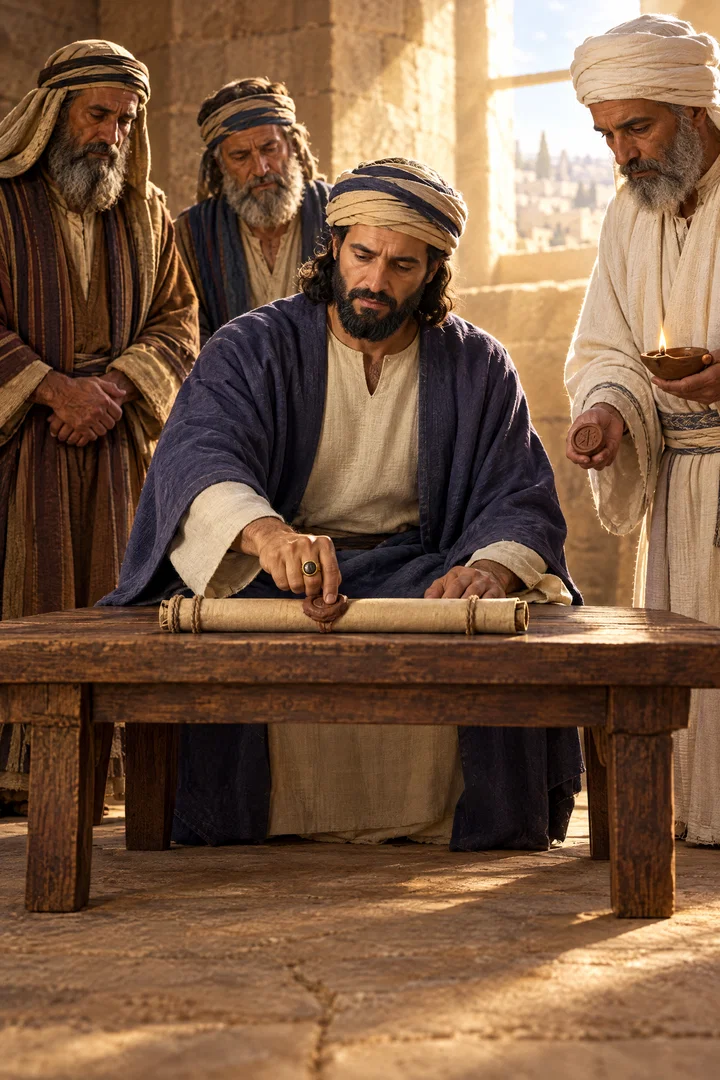
Now those that sealed were, Nehemiah, the Tirshatha, the son of Hachaliah, and Zidkijah,
Translations
American King James Version, King James Version, KJV Cambridge Paragraph Bible, Webster Bible
Now those that sealed were, Nehemiah, the Tirshatha, the son of Hachaliah, and Zidkijah,
Now those that sealed were, Nehemiah the Tirshatha, the son of Hacaliah, and Zedekiah;
Now those that sealed were: Nehemiah the governor, the son of Hacaliah, and Zedekiah,
And over those sealed [are] Nehemiah the Tirshatha, son of Hachaliah, and Zidkijah,
And at the head of those that sealed were Nehemiah the Tirshatha, the son of Hachaliah, and Zedekiah.
Now, upon the sealed writings, were,—Nehemiah the governor, son of Hacaliah, and Zedekiah;
Berean Standard Bible, Majority Standard Bible
Now these were the ones who sealed the document:
Nehemiah the governor, son of Hacaliah,
and also Zedekiah,Now those who sealed were: Nehemiah the governor, the son of Hacaliah, and Zedekiah,
Now those who put down their names were Nehemiah the Tirshatha, the son of Hacaliah, and Zedekiah,
Now they that sealed were Nehemiah the Tirshatha the sonne of Hachaliah, and Zidkiiah,
Douay-Rheims (Challoner revision)
And the subscribers were Nehemias, Athersatha the son of Hachelai, and Sedecias,
Pictures
Cross-references
- Nehemiah 9:38
And because of all this we make a sure covenant, and write it; and our princes, Levites, and priests, seal unto it.
The people make a binding covenant, which their leaders seal.
- Nehemiah 10:28-29
And the rest of the people, the priests, the Levites, the porters, the singers, the Nethinims, and all they that had separated themselves from the people of the lands unto the law of God, their wives, their sons, and their daughters, every one having knowledge, and having understanding;
The people join the covenant and pledge to keep God’s law.
- Nehemiah 8:1-10
And all the people gathered themselves together as one man into the street that was before the water gate; and they spake unto Ezra the scribe to bring the book of the law of Moses, which the LORD had commanded to Israel.
The people hear and respond to the law before making the covenant.
Commentary
Each commentary is drawn from primary sources: the writings of Ellen G. White and Adventist pioneers and periodicals. Each commentary is separate. Its own words are not a quotation; follow the references to read the source passages.
Pioneers and periodicals
7 sources
Nehemiah 10:1 belongs to the account of Babylonian life and of the Jewish reformation after the return from Babylonian captivity in the days of Ezra and Nehemiah, covering about 446-408, the last reform on his return to Jerusalem.ST Aug 23, 1910ST May 28, 1912ST Mar 10, 1909 The book stands as written by Nehemiah, a governor appointed of the Lord and given the burden of restoring Jerusalem.ST Jun 2, 1909 The verse names Nehemiah, the Tirshatha, the son of Hachaliah, and Zidkijah among those who sealed the covenant made by the returned remnant in Jerusalem to keep the law of Moses.ST Sep 26, 1895RH Nov 13, 1856 That covenant recorded in Nehemiah 8-10 marks the establishment of the Pentateuch as the Jews' authoritative canonical book.ST Sep 26, 1895
The reformation centered on bringing the people back to strict observance of the law and the Sabbath, closing with a reform for the better observance of the Sabbath.ST Jun 2, 1909ST May 28, 1912 Nehemiah's work was done always with the highest good of Jerusalem in mind, for he was there for God, the city was the Lord's city, and the people were the Lord's people.ST Aug 23, 1910 He was impatient toward the people because of their slackness in doing the work of God, and indignant toward those sinning against God in uniting with the heathen peoples, even bringing them into the very temple itself; the zealous reformer's manner is not always one to copy, yet with all the circumstances surrounding him he is not to be condemned.ST Aug 23, 1910 The story of ups and downs, battles and conflicts, defeats and victories of the Jews at Jerusalem under the last reformation is typical of God's work in other ages, especially in the last days, in which adversaries put forth every effort to hinder the work but God carries it to glorious success.ST Jun 2, 1909 The verse is part of the lists of names in Ezra and Nehemiah of leading ones who went up from the captivity, and it is simply names of persons, not an expressed precious promise to God's people, proving that not every verse in the Bible is a promise and that verses of names must be subtracted from the total count of verses when counting promises.RH May 1, 1900
Sources