Nehemiah 8:15
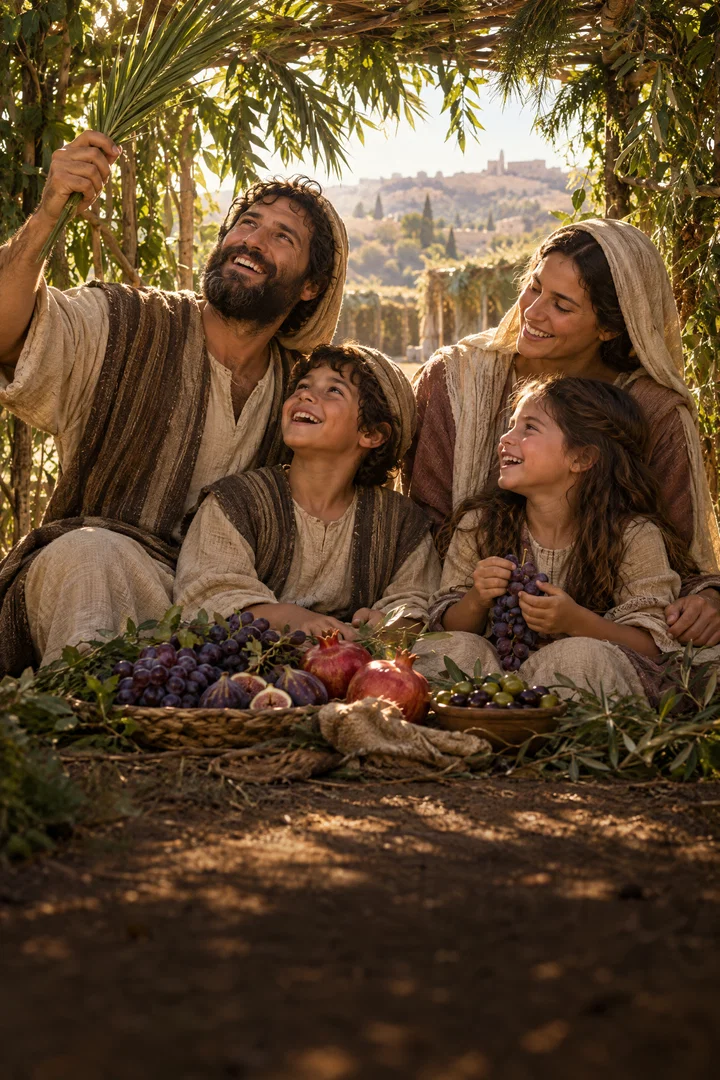
And that they should publish and proclaim in all their cities, and in Jerusalem, saying, Go forth unto the mount, and fetch olive branches, and pine branches, and myrtle branches, and palm branches, and branches of thick trees, to make booths, as it is written.
Translations
American King James Version, Webster Bible
And that they should publish and proclaim in all their cities, and in Jerusalem, saying, Go forth to the mount, and fetch olive branches, and pine branches, and myrtle branches, and palm branches, and branches of thick trees, to make booths, as it is written.
And that they should publish and proclaim in all their cities, and in Jerusalem, saying, Go forth unto the mount, and fetch olive branches, and pine branches, and myrtle branches, and palm branches, and branches of thick trees, to make booths, as it is written.
and that they should publish and proclaim in all their cities, and in Jerusalem, saying, Go forth unto the mount, and fetch olive branches, and pine branches, and myrtle branches, and palm branches, and branches of thick trees, to make booths, as it is written.
Revised Version, American Standard Version
and that they should publish and proclaim in all their cities, and in Jerusalem, saying, Go forth unto the mount, and fetch olive branches, and branches of wild olive, and myrtle branches, and palm branches, and branches of thick trees, to make booths, as it is written.
and that they proclaim and cause to pass over all their cities, (and in Jerusalem,) saying, 'Go ye out to the mount, and bring leaves of the olive, and leaves of the oil tree, and leaves of the myrtle, and leaves of the palms, and leaves of thick trees, to make booths as it is written.'
and that they should publish and proclaim through all their cities, and at Jerusalem, saying, Go forth to the mount, and fetch olive-branches, and wild olive-branches, and myrtle-branches, and palm-branches, and branches of thick trees, to make booths, as it is written.
and that they should publish and send along a proclamation throughout all their cities and throughout Jerusalem, saying, Forth to the mountain, and bring in branches of olive, and branches of oleaster, and branches of myrtle, and branches of palms, and branches of thick trees,—to make booths, as it is written.
So they proclaimed this message and spread it throughout their towns and in Jerusalem, saying, “ Go out to the hill country and bring back branches of olive, wild olive, myrtle, palm, and other leafy trees, to make booths, as it is written.”
and that they should proclaim this message and spread it throughout their towns and in Jerusalem, saying, “ Go out to the hill country and bring back branches of olive, wild olive, myrtle, palm, and other leafy trees, to make booths, as it is written.”
and that they should publish and proclaim in all their cities and in Jerusalem, saying, “ Go out to the mountain, and get olive branches, branches of wild olive, myrtle branches, palm branches, and branches of thick trees, to make temporary shelters, as it is written.”
And that they were to give out an order, and make it public in all their towns and in Jerusalem, saying, Go out to the mountain and get olive branches and branches of field olives and of myrtle, and palm branches and branches of thick trees, to make tents, as it says in the book.
And that they shoulde cause it to bee declared and proclaimed in all their cities, and in Ierusalem, saying, Go forth vnto the mount, and bring oliue branches, and pine branches, and branches of myrtus, and palme branches, and branches of thicke trees, to make boothes, as it is written.
Douay-Rheims (Challoner revision)
And that they should proclaim and publish the word in all their cities, and in Jerusalem, saying: Go forth to the mount, and fetch branches of olive, and branches of beautiful wood, branches of myrtle, and branches of palm, and branches of thick trees, to make tabernacles, as it is written.
Pictures
Cross-references
- Leviticus 23:40-43
And ye shall take you on the first day the boughs of goodly trees, branches of palm trees, and the boughs of thick trees, and willows of the brook; and ye shall rejoice before the LORD your God seven days.
Gives the branch-gathering and booth-making instructions and their wilderness memorial.
- Deuteronomy 16:13-15
Thou shalt observe the feast of tabernacles seven days, after that thou hast gathered in thy corn and thy wine:
Commands the Feast of Tabernacles as a time of rejoicing after the harvest.
- John 7:2
Now the Jews’ feast of tabernacles was at hand.
Both texts concern the Feast of Tabernacles.
- John 7:37
In the last day, that great day of the feast, Jesus stood and cried, saying, If any man thirst, let him come unto me, and drink.
Describes Jesus at the Feast of Tabernacles.
- Ezra 3:4
They kept also the feast of tabernacles, as it is written, and offered the daily burnt offerings by number, according to the custom, as the duty of every day required;
Both describe keeping the Feast of Tabernacles.
Commentary
Each commentary is drawn from primary sources: the writings of Ellen G. White and Adventist pioneers and periodicals. Each commentary is separate. Its own words are not a quotation; follow the references to read the source passages.
Ellen G. White
8 sources
The verse belongs to the gathering at Jerusalem during the Feast of Trumpets, when God's law was publicly read and explained to the assembled people in Ezra's time.PK 661.1–2DA 215.3–216.1 It records the public proclamation ordered in all their cities and in Jerusalem to go to the mount and fetch olive branches, pine branches, myrtle branches, palm branches, and branches of thick trees to make booths, as written in the law.MH 282.1DA 215.3–216.1MH 283.4–284.2PK 665.2 The people and their rulers obeyed the call and kept the Feast of Tabernacles, or Booths, again from the fifteenth to the twenty-second day of the seventh month according to the written instruction.MH 282.1MH 283.4–284.2PK 665.2
The booths were made of green branches and were set up by each household on rooftops, in courtyards, in the courts of the house of God, in streets, and outside the city in valleys and on hillsides.MH 282.1PK 665.21RED 89.3LC1 89.2 The feast recalled the years when the Hebrews lived in tents during their wilderness journey.1RED 89.3LC1 89.2 The feast was kept with very great gladness, with reading from the book of the law of God day by day from the first day to the last.PK 665.2 The chapter shows the influence of reading God's requirements upon the people, as part of a renewal expected to bring deep repentance and a return to the Lord.Ms 121, 1898, par. 7–8DA 215.3–216.1
Sources
Pioneers and periodicals
18 sources
After the return from Babylonian captivity the returned people gathered at Jerusalem to seek God and to hear the law read and explained until they understood it.RH Apr 7, 1904ST Aug 19, 1897 They were commanded to publish and proclaim in all their cities and in Jerusalem to go to the mount and fetch olive, pine, myrtle, palm, and other leafy branches to make booths as written.ST Feb 12, 1885RH Oct 31, 1854ST Mar 8, 1899 The booths were fragile temporary shelters set up on rooftops, in courtyards and courts of the house of God, and in streets and open places, and the Feast of Tabernacles was kept seven days with the law read day by day.ST Mar 8, 1899RH Jul 2, 1908 The feast commemorated dwelling in booths and tents in the wilderness journey and gave thanks for the completed harvest, and it had not been kept in this way since the days of Joshua.RH Oct 31, 1912RH Jan 14, 1862ST Oct 7, 1930RH Dec 10, 1861ST Nov 17, 1881 Having found the duty clearly revealed, the people promptly obeyed as the law prescribed though their fathers had not done so, and their hearing and understanding brought overwhelming joy with the joy of the Lord as strength.RH Apr 7, 1904ST Feb 25, 1886ST Feb 12, 1885RH Oct 31, 1854ST Aug 12, 1897 That reformation was accomplished by the Spirit of God rather than by human might, and the celebration is a type of the day of eternal deliverance.ST May 21, 1896ST Aug 19, 1897RH Jul 2, 1908
Historical Setting and Command
The verse belongs to the revival under Ezra and Nehemiah after the return from Babylonian captivity.ST Aug 19, 1897 The returned people gathered in Jerusalem to seek God and to study His Word, hearing the law read and explained until they understood it.ST Aug 19, 1897RH May 18, 1905 That hearing brought great light and reformation.RH Apr 7, 1904ST Aug 19, 1897
They were to publish and proclaim in all their cities and in Jerusalem that they should go forth unto the mount and fetch branches to make booths, as it is written.ST Feb 12, 1885ST Mar 8, 1899ST May 28, 1902 The branches named were olive branches and pine or fir branches, myrtle branches and palm branches, and branches of thick trees.ST Feb 12, 1885RH Oct 31, 1854ST Mar 8, 1899 The proclamation called them to gather the specified branches and build the booths for the Feast of Tabernacles as the law required and prescribed.RH Oct 31, 1854ST Mar 8, 1899ST May 28, 1902
The booths were fragile, temporary shelters made from living twigs and branches for use during the seven-day feast.ST Mar 8, 1899ST Nov 17, 1881 They were set up on rooftops and in courtyards, including the courts of the house of God, and in streets and open places of the city.ST Nov 17, 1881 The Feast of Tabernacles was kept for seven days, with the law read day by day.ST Mar 8, 1899RH Jul 2, 1908
The Feast of Tabernacles or Booths commemorated Israel dwelling in booths and tents during the journey through the wilderness.RH Oct 31, 1912RH Jan 14, 1862ST Nov 17, 1881 It reminded them of living in temporary shelters in the desert wanderings.RH Oct 31, 1912ST Nov 17, 1881 It also gave thanks for the completed harvest.ST Nov 17, 1881
This observance had not been kept in this way since the days of Joshua.ST May 28, 1902 Israel's festivals, including those in the seventh month, were sometimes neglected for long periods.ST Oct 7, 1930RH Dec 10, 1861 When the command was read the people promptly obeyed and made booths, and their obedience was marked by great gladness.ST May 28, 1902
Obedience and Revival
The command to go out to the hills and bring in olive and pine or fir and myrtle and palm and leafy branches to build shelters was obeyed exactly as written in the law.RH Sep 21, 1916RH Oct 31, 1854RH Dec 10, 1861 The people gave close, attentive hearing to the reading of God's law, and the public proclamation to make booths was an act of obedience to what the law required and prescribed.RH Sep 21, 1916RH Oct 31, 1854RH Dec 10, 1861 This public keeping of the Feast of Booths stands as one recorded instance of observing a festival in the seventh month.RH Dec 10, 1861
When the returned exiles discovered the Feast of Booths commanded in the law, the instruction was published and proclaimed through all their cities and in Jerusalem that they should gather branches and make booths.ST Feb 25, 1886ST Feb 12, 1885 They acted at once on the clearly revealed duty written in the book, even though their fathers had not kept it in this manner.ST Feb 25, 1886ST Feb 12, 1885 That observance had not been carried out in this way since the days of Joshua, yet a plainly shown duty was to be obeyed regardless of whether earlier generations had practiced it.ST Feb 25, 1886ST Feb 12, 1885 Turning in this way from inherited practice to conform to God's word brings the joy of the Lord as strength.ST Feb 25, 1886
Hearing and understanding the word brought great light and a thorough reformation, and access to Scripture thus read and explained brought overwhelming joy.RH Apr 7, 1904ST Feb 25, 1886ST Aug 12, 1897 In that time copies of the sacred books were so rare that the people depended on hearing passages read aloud and expounded.ST Aug 12, 1897 The work that followed the hearing and understanding of God's Word after the Babylonian captivity was accomplished by the Spirit of God, not by human might or military power.ST Aug 19, 1897 The people entered upon the Feast of Tabernacles after hearing the law read, keeping it seven days with the law read day by day, and the larger gathering for the feast was followed by heart reformation.RH Apr 7, 1904ST Aug 19, 1897RH Jul 2, 1908
Prophetic and Canonical Significance
The command to gather branches to make booths belongs to the keeping of the Feast of Tabernacles in Nehemiah 8.ST May 21, 1896 That celebration foreshadows the day of eternal deliverance.ST May 21, 1896 The verse stands within the record of Nehemiah 8-10 in which Ezra fully succeeded in leading the people back to practicing the laws and forms of worship enjoined by the writings of Moses.ST Sep 26, 1895 After Ezra brought the law from Babylon to Jerusalem, the people entered into a solemn covenant to keep the law of Moses.ST Sep 26, 1895 That covenant established the Pentateuch as the canonical and authoritative book of the Jews, and it has remained so ever since, with never any question about this portion.ST Sep 26, 1895
Sources