Nehemiah 8:16
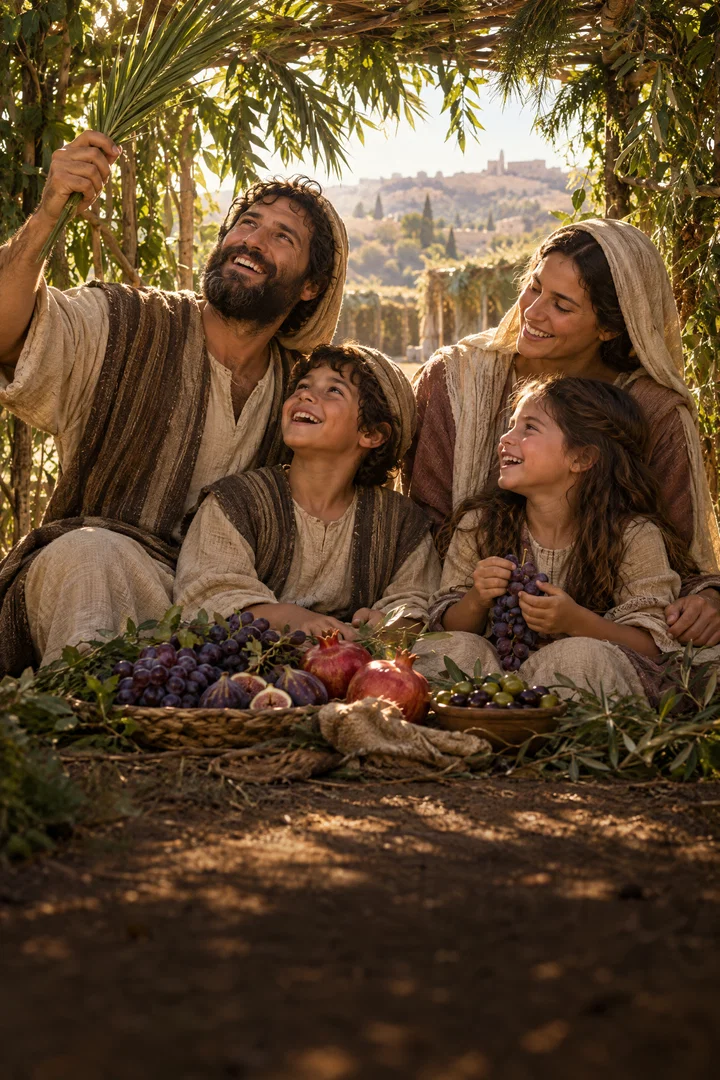
So the people went forth, and brought them, and made themselves booths, every one upon the roof of his house, and in their courts, and in the courts of the house of God, and in the street of the water gate, and in the street of the gate of Ephraim.
Translations
So the people went forth, and brought them, and made themselves booths, every one on the roof of his house, and in their courts, and in the courts of the house of God, and in the street of the water gate, and in the street of the gate of Ephraim.
King James Version, KJV Cambridge Paragraph Bible
So the people went forth, and brought them, and made themselves booths, every one upon the roof of his house, and in their courts, and in the courts of the house of God, and in the street of the water gate, and in the street of the gate of Ephraim.
So the people went forth, and brought them, and made themselves booths, every one upon the roof of his house, and in their courts, and in the courts of the house of God, and in the street of the water-gate, and in the street of the gate of Ephraim.
Revised Version, American Standard Version
So the people went forth, and brought them, and made themselves booths, every one upon the roof of his house, and in their courts, and in the courts of the house of God, and in the broad place of the water gate, and in the broad place of the gate of Ephraim.
And the people go out, and bring in, and make for themselves booths, each on his roof, and in their courts, and in the courts of the house of God, and in the broad place of the water-gate, and in the broad place of the gate of Ephraim.
And the people went forth and brought [ them], and made themselves booths, everyone upon the roof of his house, and in their courts, and in the courts of the house of God, and in the open space of the water-gate, and in the open space of the gate of Ephraim.
So the people went forth, and brought in, and made themselves booths, every one upon his roof, and in their courts, and in the courts of the house of God, and in the broad place of the water-gate, and in the broad place of the gate of Ephraim.
And the people went out, brought back branches, and made booths on their own rooftops, in their courtyards, in the court of the house of God, and in the squares by the Water Gate and by the Gate of Ephraim.
And the people went out, brought back branches, and made booths on their own rooftops, in their courtyards, in the courts of the house of God, and in the squares by the Water Gate and by the Gate of Ephraim.
So the people went out and brought them, and made themselves temporary shelters, everyone on the roof of his house, in their courts, in the courts of God’s house, in the wide place of the water gate, and in the wide place of Ephraim’s gate.
And the people went out and got them and made themselves tents, every one on the roof of his house, and in the open spaces and in the open squares of the house of God, and in the wide place of the water-doorway, and the wide place of the doorway of Ephraim.
So the people went foorth and brought them, and made them boothes, euerie one vpon the roofe of his house, and in their courtes, and in the courtes of the house of God, and in the streete by the watergate, and in the streete of the gate of Ephraim.
Douay-Rheims (Challoner revision)
And the people went forth, and brought. And they made themselves tabernacles every man on the top of his house, and in their courts, and in the courts of the house of God, and in the street of the water gate, and in the street of the gate of Ephraim.
Pictures
Cross-references
- Leviticus 23:42-43
Ye shall dwell in booths seven days; all that are Israelites born shall dwell in booths:
The feast command to dwell in booths prompted the people’s response.
- Deuteronomy 16:13-15
Thou shalt observe the feast of tabernacles seven days, after that thou hast gathered in thy corn and thy wine:
The Feast of Tabernacles is observed after harvest as a time of rejoicing before God.
- John 7:2
Now the Jews’ feast of tabernacles was at hand.
Identifies the Feast of Tabernacles observed in Jerusalem.
- Nehemiah 8:2-12
And Ezra the priest brought the law before the congregation both of men and women, and all that could hear with understanding, upon the first day of the seventh month.
The people hear the law read during the festival gathering before making booths.
- John 7:37
In the last day, that great day of the feast, Jesus stood and cried, saying, If any man thirst, let him come unto me, and drink.
Places Jesus at Jerusalem during the Feast of Tabernacles.
- 2 Chronicles 7:8-9
Also at the same time Solomon kept the feast seven days, and all Israel with him, a very great congregation, from the entering in of Hamath unto the river of Egypt.
Records the feast and closing assembly after the temple dedication.
- Ezra 3:1-6
And when the seventh month was come, and the children of Israel were in the cities, the people gathered themselves together as one man to Jerusalem.
Records the people keeping the seventh-month festival.
- 1 Kings 8:65
And at that time Solomon held a feast, and all Israel with him, a great congregation, from the entering in of Hamath unto the river of Egypt, before the LORD our God, seven days and seven days, even fourteen days.
Records a seven-day feast gathering before the LORD.
- Nehemiah 8:9-12
And Nehemiah, which is the Tirshatha, and Ezra the priest the scribe, and the Levites that taught the people, said unto all the people, This day is holy unto the LORD your God; mourn not, nor weep. For all the people wept, when they heard the words of the law.
The people rejoice and feast during the festival observance.
- Luke 9:33
And it came to pass, as they departed from him, Peter said unto Jesus, Master, it is good for us to be here: and let us make three tabernacles; one for thee, and one for Moses, and one for Elias: not knowing what he said.
Peter proposes tabernacles like the feast’s shelters.
- 1 Kings 8:2
And all the men of Israel assembled themselves unto king Solomon at the feast in the month Ethanim, which is the seventh month.
The temple dedication assembly took place during the seventh-month feast.
Commentary
Each commentary is drawn from primary sources: the writings of Ellen G. White and Adventist pioneers and periodicals. Each commentary is separate. Its own words are not a quotation; follow the references to read the source passages.
Ellen G. White
7 sources
The wall of Jerusalem had been rebuilt and the gates set up, while a large part of the city was still in ruins.PK 661.1–2 The children of the covenant had assembled at Jerusalem from all the surrounding country and stood as a sea of heads before a platform of wood erected in one of the broadest streets amid the sad reminders of departed glory.PK 661.1–2 There Ezra, now an aged man, stood with his fellow Levites at his right and left, blessed the Lord the great God, and all the people answered Amen and bowed with their faces to the ground to worship.PK 661.1–2
After hearing the law read, the people together with their rulers communally obeyed the written proclamation to fetch branches and make booths.MH 282.1MH 283.4–284.2DA 215.3–216.1PK 665.2 That response was an act of repentance and returning to the Lord.DA 215.3–216.1 In obedience, every one and each household built a booth upon the roof of his house and in their courts and courtyards.MH 282.1MH 283.1–3MH 283.4–284.2PK 665.2 Booths were also set up in the courts of the house of God and in the streets and other public places, including in the street of the Water Gate and in the street of the Gate of Ephraim.MH 282.1MH 283.1–3MH 283.4–284.2LC1 89.2 The leafy booths recalled the time when the Hebrews lived in tents during their wilderness sojourn.LC1 89.2
The people and rulers thus kept the Feast of Tabernacles once more from the fifteenth to the twenty-second day of the seventh month.PK 665.2 The book of the law of God was read day by day from the first day unto the last day.PK 665.2 The people made and occupied the booths and the returned congregation sat in them.MH 282.1MH 283.1–3 The celebration was marked by great and very great gladness.MH 282.1MH 283.1–3PK 665.2 Their action is an example of obedience to God's instruction, and living according to that instruction would have brought Israel health and prosperity.MH 283.4–284.2
Sources
Pioneers and periodicals
17 sources
After hearing the law read, the people gathered branches and built temporary shelters for themselves on the roofs of their houses, in their own courts, in the courts of the house of God, and in the streets by the Water Gate and the Gate of Ephraim, carrying out the commanded observance together throughout Jerusalem.ST Feb 25, 1886ST May 21, 1896 This building of booths was the keeping of the Feast of Tabernacles commanded for the seventh month, celebrated for seven days in shelters made from branches to commemorate dwelling in temporary shelters during the wilderness sojourn.ST May 21, 1896ST Feb 12, 1885RH Oct 31, 1912RH Jan 14, 1862 The book of the law of God had been read distinctly from morning till midday to an attentive people until they understood it, and when they found the command they promptly recognized it as duty and obeyed without making obedience depend on whether earlier generations had kept it.ST Feb 25, 1886ST May 21, 1896ST Feb 12, 1885ST Aug 19, 1897ST May 28, 1902 Their obedience was accompanied by great gladness and belonged to a national reformation reaching the heart and not merely outward forms, wrought not by might nor by army but by the Spirit of God.ST Aug 19, 1897ST May 28, 1902RH Jul 2, 1908 The booths became places where they gathered to seek God and study His Word, and the law they obeyed was the whole body of law given through Moses, which Ezra had brought from Babylon and established as the canonical and authoritative book.RH Oct 8, 1857RH Jul 9, 1908ST Sep 26, 1895RH May 18, 1905
The Booths Erected
After hearing the law, the people went forth and gathered branches and materials and made booths for themselves.ST Feb 25, 1886ST May 21, 1896ST Feb 12, 1885ST May 28, 1902 Each one made his booth upon the roof of his house, and in his own court or courtyard, and in the courts of the house of God, and in the street of the Water Gate and in the street of the Gate of Ephraim.RH Oct 31, 1912RH Jan 14, 1862ST May 28, 1902 In this way they carried out the commanded observance together throughout Jerusalem, in both private and public places.ST May 21, 1896RH Oct 31, 1912
This making of booths was the keeping of the Feast of Tabernacles or Booths commanded for the seventh month.ST May 21, 1896ST Feb 12, 1885RH Oct 31, 1912RH Jan 14, 1862 It was celebrated for seven days in temporary shelters made from branches, built as the law directed.RH Oct 31, 1912ST Mar 8, 1899 Dwelling in booths during the feast commemorated Israel's wanderings in the desert and dwelling in temporary shelters during the wilderness sojourn.RH Oct 31, 1912RH Jan 14, 1862
The observance was kept by the returned exiles after the return from Babylonian captivity.ST May 28, 1902 It belongs to Nehemiah 8-10, part of the book covering about 446-408.ST Aug 23, 1910 That portion is the last reform on Nehemiah's return to Jerusalem, with Nehemiah working always with the highest good of Jerusalem in mind.ST Aug 23, 1910
Obedience in Revival
The law of God was read from morning until midday to a people who listened with close attention.ST Aug 19, 1897 It was read distinctly, with the sense given, so that those who heard it understood the reading.ST Aug 19, 1897 After hearing and understanding, they acted on what they had learned by gathering branches and making booths on rooftops, in courtyards, in the courts of the house of God, and in the streets.ST Feb 25, 1886ST May 21, 1896ST Aug 19, 1897
Once the command was found in the written word, it was promptly recognized as duty and obeyed by gathering branches.ST Feb 25, 1886ST Feb 12, 1885ST May 28, 1902 That obedience was not made to depend on whether earlier generations had kept the command.ST Feb 12, 1885 It included what ancestors had not done in this way, for the people turned from customary ways in order to obey God's word.ST Feb 25, 1886ST Feb 12, 1885
Their obedience to the written command was accompanied by great gladness.ST May 28, 1902 It formed part of a national reformation that reached the heart and not merely outward forms.ST Aug 19, 1897RH Jul 2, 1908 In that reformation sins when revealed were put away, and the work was wrought not by might nor by army but by the Spirit of God.ST Aug 19, 1897
The booths were places where the people gathered to seek God and study His Word.RH May 18, 1905 The good meetings held after studying God's Word led them to recognize their duty to support the worship of the house of God.RH Jul 9, 1908
Scripture Proof and Canon
In Ezra's time copies of the sacred books were so scarce that the gathered people depended on hearing Scripture read and explained, and this scarcity made the opportunity to hear it a source of overwhelming joy.ST Aug 12, 1897
The record in Nehemiah 8-10 is the account of Ezra's success after coming up from Babylon to Jerusalem with the law that had fallen into disuse.ST Sep 26, 1895 It is the account of leading the people to return to the practice of the laws and forms of worship enjoined by the writings of Moses.ST Sep 26, 1895 The people entered into a solemn covenant to keep the law of Moses that Ezra had brought home with him, and that covenant established the Pentateuch as the canonical and authoritative book of the Jews, which it has remained without question to the present time.ST Sep 26, 1895
The book of the law in Nehemiah 8:14-18 contained the whole body of law given through Moses, not merely the moral or ceremonial laws, and the making of booths for the Feast of Tabernacles was part of the material in that book.RH Oct 8, 1857 The making of booths in several public and private places is a recorded account of Israel observing the festivals of the seventh month.RH Dec 10, 1861RH Oct 31, 1854 The absence of any recorded instance of the Day of Atonement stands in contrast to this recorded observance, yet the absence of such a record does not prove that it was not observed.RH Dec 10, 1861RH Oct 31, 1854
Sources