Numbers 14:34
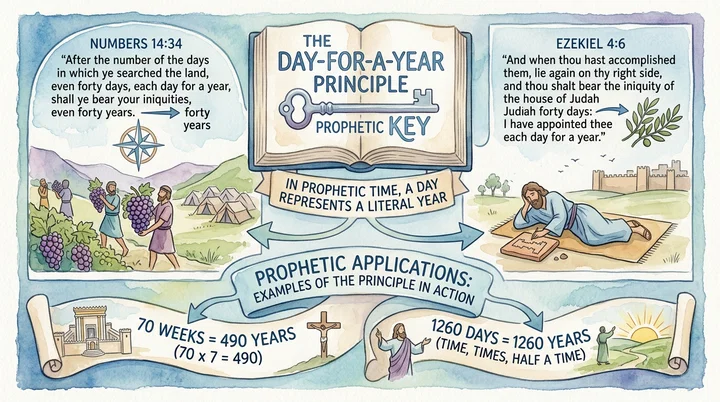
After the number of the days in which ye searched the land, even forty days, each day for a year, shall ye bear your iniquities, even forty years, and ye shall know my breach of promise.
Translations
After the number of the days in which you searched the land, even forty days, each day for a year, shall you bear your iniquities, even forty years, and you shall know my breach of promise.
King James Version, KJV Cambridge Paragraph Bible
After the number of the days in which ye searched the land, even forty days, each day for a year, shall ye bear your iniquities, even forty years, and ye shall know my breach of promise.
After the number of the days in which ye searched the land, even forty days (each day for a year) shall ye bear your iniquities, even forty years, and ye shall know my breach of promise.
Revised Version, American Standard Version
After the number of the days in which ye spied out the land, even forty days, for every day a year, shall ye bear your iniquities, even forty years, and ye shall know my alienation.
by the number of the days [in] which ye spied the land, forty days, — a day for a year, a day for a year — ye do bear your iniquities, forty years, and ye have known my breaking off;
After the number of the days in which ye have searched out the land, forty days, each day for a year shall ye bear your iniquities forty years, and ye shall know mine estrangement [ from you].
By the number of the days wherein ye spied out the land—forty days, each day for a year, shall they bear your iniquities—forty years,—so shall ye know my opposition.
Berean Standard Bible, Majority Standard Bible
In keeping with the forty days you spied out the land, you shall bear your guilt forty years— a year for each day— and you will experience My alienation.
After the number of the days in which you spied out the land, even forty days, for every day a year, you will bear your iniquities, even forty years, and you will know my alienation.’
And as you went through the land viewing it for forty days, so for forty years, a year for every day, you will undergo punishment for your wrongdoing, and you will see that I am against you.
After the number of the dayes, in the which ye searched out the lande, euen fourtie dayes, euery day for a yeere, shall ye beare your iniquity, for fourtie yeeres, and ye shall feele my breach of promise.
Douay-Rheims (Challoner revision)
According to the number of the forty days, wherein you viewed the land: year shall be counted for a day. And forty years you shall receive your iniquities, and shall know my revenge:
Pictures
Cross-references 20 of 54
- Ezekiel 4:6
And when thou hast accomplished them, lie again on thy right side, and thou shalt bear the iniquity of the house of Judah forty days: I have appointed thee each day for a year.
Both assign a year to each symbolic prophetic day.
- Hebrews 3:19
So we see that they could not enter in because of unbelief.
Israel’s unbelief kept that generation from entering the promised land.
- Numbers 13:33
And there we saw the giants, the sons of Anak, which come of the giants: and we were in our own sight as grasshoppers, and so we were in their sight.
giant report that discouraged Israel
- Numbers 14:6-9
And Joshua the son of Nun, and Caleb the son of Jephunneh, which were of them that searched the land, rent their clothes:
Joshua and Caleb urge Israel to trust God and enter the land, but the people reject them.
- 1 Corinthians 10:11
Now all these things happened unto them for ensamples: and they are written for our admonition, upon whom the ends of the world are come.
Israel’s wilderness failures are recorded as examples and warnings for later believers.
- Numbers 14:30
Doubtless ye shall not come into the land, concerning which I sware to make you dwell therein, save Caleb the son of Jephunneh, and Joshua the son of Nun.
God declares that the murmuring generation will not enter the land.
- Numbers 14:1-4
And all the congregation lifted up their voice, and cried; and the people wept that night.
The people rebelled, wishing to die in the wilderness; their wish became the wilderness sentence.
- Numbers 14:40-45
And they rose up early in the morning, and gat them up into the top of the mountain, saying, Lo, we be here, and will go up unto the place which the LORD hath promised: for we have sinned.
Israel’s presumptuous attempt to enter without God’s command ended in defeat.
- Daniel 9:24
Seventy weeks are determined upon thy people and upon thy holy city, to finish the transgression, and to make an end of sins, and to make reconciliation for iniquity, and to bring in everlasting righteousness, and to seal up the vision and prophecy, and to anoint the most Holy.
The seventy weeks are interpreted as 490 years using the day-for-a-year rule.
- Deuteronomy 1:26-36
Notwithstanding ye would not go up, but rebelled against the commandment of the LORD your God:
Explains why the adults who left Egypt were refused entry.
- Numbers 13:30-31
And Caleb stilled the people before Moses, and said, Let us go up at once, and possess it; for we are well able to overcome it.
Caleb’s call to enter in faith contrasts with the spies’ fear and Israel’s punishment.
- Numbers 14:24
But my servant Caleb, because he had another spirit with him, and hath followed me fully, him will I bring into the land whereinto he went; and his seed shall possess it.
Caleb alone is promised entry into the land because he followed God fully.
- Numbers 14:11-12
And the LORD said unto Moses, How long will this people provoke me? and how long will it be ere they believe me, for all the signs which I have shewed among them?
God answers Israel’s rebellion and unbelief with judgment.
- Numbers 13:25
And they returned from searching of the land after forty days.
The forty days spent searching the land become forty years of punishment.
- Numbers 26:64-65
But among these there was not a man of them whom Moses and Aaron the priest numbered, when they numbered the children of Israel in the wilderness of Sinai.
The later census confirms the rebellious generation died in the wilderness, except Caleb and Joshua.
- Numbers 14:4
And they said one to another, Let us make a captain, and let us return into Egypt.
The people’s plan to return to Egypt brought judgment.
- Numbers 13:1-2
And the LORD spake unto Moses, saying,
The spies’ examination of Canaan began the forty-day period.
- Numbers 14:28-29
Say unto them, As truly as I live, saith the LORD, as ye have spoken in mine ears, so will I do to you:
The people’s words and wilderness sentence are stated, with the oath behind the forty-year sentence.
- Hebrews 3:7-11
Wherefore ( as the Holy Ghost saith, To day if ye will hear his voice,
Israel’s wilderness rebellion warns against hardening the heart and refusing God’s rest.
- Hebrews 4:1-3
Let us therefore fear, lest, a promise being left us of entering into his rest, any of you should seem to come short of it.
The wilderness rebels’ exclusion warns believers not to fall short of entering God’s rest through unbelief.
Commentary
Each commentary is drawn from primary sources: the writings of Ellen G. White and Adventist pioneers and periodicals. Each commentary is separate. Its own words are not a quotation; follow the references to read the source passages.
Ellen G. White
49 sources
After the twelve spies searched the promised land for forty days and the people believed the faithless report instead of trusting God to bring them in, He sentenced them to bear their iniquities in the wilderness forty years, a year for each day.CNA 124.4Ms 10, 1903, par. 20–22Lt 106, 1897, par. 10–2015MR 292.3PP 387.1 To know His breach of promise is to learn by experience that His pledged help to bring them in was conditional on obedience and trust, and their rebellion released Him from the promise and forfeited their claim to His favor and protection.15MR 292.315MR 292.1–2Lt 19, 1897, par. 11–14 The sentence establishes the prophetic rule that a day represents a year for reckoning stated prophetic periods.LS 44.2PK 698.14SP 493.1 By that rule Daniel's seventy weeks are four hundred and ninety years with sixty-nine weeks to the Messiah as four hundred and eighty-three years, and the twenty-three hundred days are twenty-three hundred years ending in 1844.PK 698.14SP 493.1GC88 324.2DA 232.5–233.2GC88 328.3 As unbelief kept Israel from soon entering Canaan so that only Caleb and Joshua of the adults who left Egypt entered, unbelief and refusal to do the appointed work has delayed Christ's coming and may keep His people in this world many more years.4T 154.3–155.2FE 505.14SP 291.1–292.1GC88 457.1–458.1
Setting and Terms
The verse belongs to the mission of the twelve spies sent to survey the promised land, one ruler chosen from each tribe to examine the land itself, its people, and its produce.PP 387.1 The sentence was pronounced after the people chose to believe the discouraging, lying report of the unfaithful spies rather than the testimony of Joshua and Caleb that God would bring them in.Lt 106, 1897, par. 10–2015MR 289.1–290.3RH May 20, 19024T 152.3 In doing so they murmured against Moses, Aaron, Joshua and Caleb and turned against faithful leaders and the divine guidance given through them.Lt 106, 1897, par. 10–2015MR 289.1–290.34T 152.3Ms 144, 1903, par. 10–13
The search had arisen from the people's own proposal, which Moses laid before the Lord and obtained consent to grant, and its disastrous result was to teach that only the way God marks out is safe.ST Sep 2, 1880 Had they waited for the Lord to say go forward and followed the divine Leader, they would have seen the majesty and glory of God as truly as they saw it forty years afterward.ST Sep 2, 1880 Instead they were turned backward to be enclosed in the wilderness for forty years, to see neither city nor town until all continually murmuring above twenty years of age should die.ST Sep 2, 1880 That turning back was merciful to shield them from enemies, for they were in no fit state to appreciate what God would do for them, and a display of His power against their enemies would only have filled them with pride and self-importance.ST Sep 2, 1880
Christ Himself, enshrouded in the pillar of fire, was Israel's leader and General who commanded them to go up and gave them instruction through Moses.Ms 110, 1899, par. 15Lt 102, 1906, par. 11–13 That wilderness experience is to be studied together with deliverance from Egyptian bondage, the spoiling of Egypt by the plagues sent because Pharaoh refused to let Israel go, the death of the firstborn, and the making of a path through the Red Sea where the waters stood as a wall.Lt 102, 1906, par. 11–13
The phrase about knowing God's breach of promise means the people would learn by experience what it was for God to change His purpose toward them and withhold the promised land from that generation because of unbelief.15MR 292.315MR 292.1–2PP 387.2–31SP 293.2–294.1SG4 25.3–26.1 His promises to bring them in were conditional on obedience and trust, sure when they were faithful, but their disobedience meant the adult generation would not enter.15MR 292.315MR 292.1–2Lt 19, 1897, par. 11–14 Their idolatry, rebellious murmuring, and working at cross-purposes with Him released Him from their violated promise and forfeited their claim to His favor, protection, and pledged help.1SP 293.2–294.1SG4 25.3–26.14T 152.3 Thus the forty days spent searching the land corresponded to forty years of bearing iniquity, until the rebellious parents who had rebelled died, with the years reckoned from the departure from Egypt.Lt 19, 1897, par. 11–14PP 387.2–31SP 293.2–294.1SG4 25.3–26.1
Forty-Year Wilderness Judgment
Each of the forty days spent searching the land was counted for a year, so for forty years the people would bear their iniquities and whoredoms in the wilderness as merited punishment for unbelief, rebellion and bitter murmuring.CNA 124.4Ms 10, 1903, par. 20–22Lt 106, 1897, par. 10–2015MR 292.315MR 292.1–2 That forty years is a predicted period fulfilled in history in accordance with the prophecy, with each day representing a year.GC 323.2–324.2GC88 323.2 The years were reckoned from the departure from Egypt, until all numbered from twenty years old and upward who murmured would die with their carcasses falling and wasted in the wilderness.Lt 106, 1897, par. 10–201SP 293.2–294.1PP 391.2–3RH May 20, 1902SG4 25.3–26.1 The ten unfaithful spies were destroyed before the people as a sign of that coming destruction of all in their ranks above twenty.ST Sep 2, 1880 Only Caleb, who followed God fully, and Joshua would enter, while the little ones said to be a prey would be brought in to know the land that was despised.Lt 106, 1897, par. 10–20PP 391.2–3RH May 20, 1902
After the judgment was declared the favorable time had passed, yet the people presumptuously tried to enter anyway.CNA 124.4 Though distinctly warned that the Lord and his General would not be with them and that the ark would not go, they went up to battle contrary to direction and were overcome and slaughtered by their enemies.CNA 124.4Ms 110, 1899, par. 15Lt 39, 1899, par. 19–22 The sentence was God's word requiring belief and submission, not an imposture or scheme of Moses to keep himself as prince, enrich himself with their possessions, and lead them blindly between Canaan, the Red Sea and Egypt.3T 351.13T 347.2–348.1SG4 29.2–30.1 Dathan and Abiram denied God had spoken it and charged Moses with inventing it after bringing them out of a land of milk and honey to kill them, defended Korah's company as good men, and refused the authority of Moses and Aaron.3T 351.13T 347.2–348.1SG4 33.1 But once convinced the Lord had spoken the people acknowledged Moses and Aaron were right and confessed they had sinned by rebelling, seeing their rebellion in its true light and that Korah and those who perished with him were sinners who had justly suffered wrath.1SP 306.1
The long delay need not have happened and claims that it was unnecessary wrongly blame God and Moses, for Israel's own cowardly rebellion brought it about.ST Oct 21, 1880Ms 135, 1899, par. 17 God had purposed at the exodus to give Canaan including Jericho to magnify his name, and heaven's army under the generalship of Christ stood ready to take them in long before.4T 162.1Ms 135, 1899, par. 17 The later leveling of Jericho's walls without human power showed the fathers might have possessed it forty years before had they trusted God as their children did.4T 162.1Ms 135, 1899, par. 17ST Apr 14, 1881 Sorrow over the consequences did not amount to repentance or undo the judgment.PP 391.4–392.1 The broken ranks and diminished numbers remained visible signs of it, yet the people failed to learn, and the same spirit of unbelief appearing in their children put their reception of the promise in danger.PP 391.4–392.1PP 396.1PP 417.4
Day for Year Principle
The verse establishes the symbolic rule for prophetic time that a day represents a year.LS 44.24SP 493.1GC 324.3–325.1GC88 324.2GC 688.4–5 In symbolic prophecy each prophetic day stands for a literal year.LS 44.2PK 698.14SP 493.1GC88 324.2GC 688.4–5 The forty days spent searching the land corresponding to forty years of bearing the consequences of sin provides the precedent for reading days in symbolic prophecy as years.LS 44.2GC 324.3–325.1GC 688.4–5 This principle supports studying the stated periods of prophecy and determining when they begin and end.GC 688.4–5
By that rule Daniel's seventy weeks, or four hundred and ninety days, represent four hundred and ninety years.PK 698.1DA 232.5–233.2 The sixty-nine weeks to the Messiah represent four hundred and eighty-three years reckoned from the commandment to restore and build Jerusalem.PK 698.1DA 232.5–233.2 The last week of the seventy is seven years.DA 232.5–233.2
By the same rule the 2,300 days of Daniel 8:14 represent 2,300 literal years.4SP 493.1GC88 324.2GC88 328.3 The period begins in 457 B.C. and ends in 1844.GC88 328.3 Recognizing that it ended in autumn rather than spring corrects the timing without changing the year or the event marked by its end.GC88 328.3
Israel's forty years in the wilderness is a predicted period fulfilled in history in accordance with the prophecy.GC 323.2–324.2GC88 323.2 The forty years of bearing iniquity in the wilderness corresponded to the forty days spent searching the land, with each day representing a year.GC 323.2–324.2GC88 323.2GC 324.3–325.1
Warning for Today
God's dealing with Israel after the report of the twelve spies has an application to his people today.4T 154.3–155.2 The same cowardly complaining and drawing back from action when risks are to be encountered, and the same unwillingness to heed faithful reports and true counsel as in the days of Caleb and Joshua, are re-enacted now.4T 154.3–155.2 Ancient Israel was repeatedly tested and found wanting and few received the faithful warnings given them, and darkness and unbelief do not decrease as the time of the second advent of Christ nears.4T 154.3–155.2 Truth is less palatable to the carnally minded, hearts are slow to believe and tardy to repent, and long has the Lord borne with his people, forgiving their wanderings and waiting for them to give him room in their hearts.4T 154.3–155.2 False ideas, jealousy, and distrust crowd him out, and few dare like Caleb to come boldly forward and stand firmly for God and the right.4T 154.3–155.2
The chapter belongs to the account of rebellion after the spies returned from searching Canaan, when the people believed the discouraging report rather than the testimony of Joshua and Caleb that God would bring them into the land, and turned against their faithful leaders.15MR 289.1–290.3 It warns that unbelief can spread, lead a whole community into rebellion, and bring serious consequences.15MR 289.1–290.3 Israel's disobedience and rebellion kept the people from entering Canaan soon, so that they journeyed in the wilderness for forty years.FE 505.14SP 291.1–292.1GC88 457.1–458.1 Only two of the adults who left Egypt entered the promised land, for God had wanted to lead the people directly into Canaan, but that generation perished in the desert through unbelief, backsliding and apostasy while others entered.FE 505.14SP 291.1–292.1GC88 457.1–458.1
Their failure to trust God and do the work he appointed is applied to the Advent movement, in that unbelief and refusal to proclaim the appointed message delayed Christ's coming, while others were raised up to proclaim it.GC88 457.1–458.1 The forty years of wandering followed forty days of searching the land, and followed insubordination and disobedience as the consequence of their own wrong course for forty years.Lt 162, 1908, par. 9Lt 184, 1901, par. 16–1920MR 312.7–313.110MR 277.2–278.2 Likewise God's people may remain in this world many more years because of insubordination and disobedience.Lt 184, 1901, par. 16–1920MR 312.7–313.1 They must not blame God for consequences brought on by their own wrong course, for the delay was not a failure of God, and their experience warns against adding to wrongdoing by blaming him for delays caused by their own choices.Lt 184, 1901, par. 16–1920MR 312.7–313.110MR 277.2–278.2 The delay gives sinners more opportunity to hear the warning and find shelter in Christ.GC88 457.1–458.1
Those who turn back from principles of reform repeat Israel's pattern, in which forty years of wandering followed forty days of searching the land.Lt 162, 1908, par. 9 By continuing in their own course they will reap what they have sown.Lt 162, 1908, par. 9
Sources
Pioneers and periodicals
95 sources
After searching the land for forty days, Israel was sentenced to bear iniquity and wander in the wilderness forty years, a year for each day, until the murmuring generation numbered from twenty years old and upward died without entering Canaan except Caleb and Joshua, while their children were trained and brought in.ST May 31, 1899ST May 13, 1889ST Jul 14, 1887RH Dec 27, 1906ST Sep 12, 1900 To know the breach of promise is to learn by withheld favor and exclusion from the land that God changed His purpose toward that rebellious generation, not that His unconditional word failed.ST Aug 24, 1888RH Jul 17, 1860ST Mar 13, 1879 The verse establishes the rule for reckoning symbolic prophetic time that a day used as a symbol stands for a literal year.RH Jun 27, 1865RH Mar 31, 1868ST Jan 27, 1890RH Jan 29, 1857RH Apr 28, 1853 By that rule the three and a half times are 1260 days for 1260 years of papal supremacy from 538 to 1798, and the 2300 days are 2300 years with seventy weeks cut off as 490 years from 457 B.C. to A.D. 34 reaching to 1844 for cleansing the sanctuary and beginning judgment.ST Mar 18, 1880ST Jun 13, 1900ST Sep 2, 1913RH Sep 20, 1870 The delay was not God's pleasure but the people's own unbelief, murmuring, fear of giants and desire to return to Egypt, warning those now on the border of the heavenly Canaan not to repeat discouragement and presumption and delay entrance by distrust.ST Oct 21, 1880RH Jan 12, 1869RH Jun 26, 1860ST Jul 31, 1901ST Sep 30, 1886
Rebellion at Kadesh
At the border of Canaan twelve men brought proof of a land flowing with milk and honey, but ten fixed on giants, walled cities and numerous inhabitants and said possession was impossible, while Caleb and Joshua said they were able to take it with the Lord with them.ST May 31, 1899ST Sep 12, 1900ST Dec 2, 1886 The people endorsed the majority, proposed making a captain to return to Egypt, and took up stones against Caleb and Joshua.ST May 31, 1899ST Sep 12, 1900RH Apr 8, 1858 God answered that all numbered from twenty years old and upward who murmured would have their carcasses fall in the wilderness and would not enter the land sworn to them, except Caleb the son of Jephunneh and Joshua the son of Nun.RH May 20, 1902ST May 31, 1899RH Apr 8, 1858 The ten discouragers were struck with plague for discouraging the people, even when difficulties reported were real, while their little ones, who they said should be a prey, would be brought in to know the land they had despised.RH May 20, 1902RH Apr 17, 1879 Trusting God's promise and relying on His aid leads to possessing what He promised, whereas rejecting Him brings the consequence of that choice, and Israel's disobedience was followed by withdrawal of protecting care.RH Apr 17, 1879ST Dec 2, 1886
After staying nearly a year at Sinai receiving the law, building the tabernacle and organizing the camp, Israel followed the pillar of cloud in the second year on an eleven days' journey by way of Mount Seir to Kadesh-barnea close to the promised land.ST Jul 14, 1881 There the spies' report exposed evil hearts of unbelief and unfitness, when the people almost as one man broke out in rebellion and put circumstances before the Lord.ST Sep 12, 1900ST Jul 14, 1881 The journey that should have taken days or weeks and a few months to enter Canaan was turned into decades, for sin blinds and unbelief can turn a journey of days into many years.RH Mar 13, 1866RH Jun 12, 1913 About thirty-eight to thirty-nine years were spent after the sentence on what was only eleven days' march from Horeb to the promised land, and had Israel obeyed and encouraged Moses as they afterward encouraged Joshua a few months might have sufficed.RH Mar 13, 1866 Every man and woman of that host knew they should die before the period expired, with almost the smallest possible exception, and so they did, as the second numbering attests.
The verse sentences Israel to wander in the wilderness forty years for the forty days spent searching the land, each day for a year, bearing iniquity until the rebellious generation died without entering the promised land.ST May 13, 1889ST Jul 14, 1887RH Dec 27, 1906ST Jul 18, 1911ST Apr 10, 1893 Only Caleb and Joshua of that generation survived and entered with the children, who were trained during the delay and carried the burdens.ST Jul 14, 1887RH Dec 27, 1906 The forty years also freed Israel from Egypt's influence and marked a life of punishment in Arabia toward the land promised to Abraham, Isaac and Jacob, through which the people would learn that God opposed their rebellion.ST May 13, 1889 Sabbath violations were among the sins for which that generation was excluded.RH Jan 7, 1862
The rebellion at the border in Numbers 14 is distinct from and preceding the uprising of Korah, Dathan and Abiram.RH Jul 25, 1907 The section from Numbers 10 to 16 covers marching, murmuring, the seventy elders, quails, the spies, rebellion, offerings for sins of ignorance with meal and drink offerings, and Korah's punishment.ST Feb 17, 1909 During the forty years the movable tabernacle of boards, linen and skins served as God's habitation and center of worship, fashioned to be taken down, transported and erected at each stage of journeying.ST Dec 8, 1881 Korah's party denied the sentence came from God, blamed Moses' arbitrary rule and mismanagement for exclusion from Canaan, and claimed willingness afterward to go up proved Moses' stubbornness.RH Nov 12, 1903RH Nov 12, 1903RH Nov 19, 1903 The doom was pronounced through Moses but came from God Himself under divine guidance with the Angel of the covenant and Christ veiled by the cloudy pillar, yet in bitterness of disappointment the people blamed Moses as if he and not God were leading and dooming them, and did not take to heart the lesson already before them in broken ranks and missing numbers.RH Nov 12, 1903RH Nov 12, 1903
Sentence and Wording
The verse sets forty days spent searching the land against forty years of bearing iniquity and wandering in the wilderness, appointing each day for a year.ST Dec 21, 1882RH Apr 18, 1854RH Feb 18, 1873ST Oct 21, 1880RH Jun 3, 1873 The days themselves supply the counterpart and function as symbols of years, not as days to be multiplied into a still larger period.ST Dec 21, 1882 The forty years were foretold before they occurred, as an example of a predicted period fulfilled over the corresponding number of years and of God revealing an important event to His people before it came to pass.RH Apr 18, 1854RH Feb 18, 1873ST Oct 21, 1880RH Jun 3, 1873 It stands among many biblical chronological periods reaching to a predicted event, showing that events God predicts to occur within a given time occur within that time, giving reason to trust chronological periods extending to the coming of the Saviour.RH Mar 31, 1868 The verse also declares that Israel would know breach of promise.ST Dec 21, 1882RH Apr 18, 1854
To know that breach of promise is to realize through consequences that rebellion led God to change His purpose concerning that generation and to withhold the promised land from them.ST Aug 24, 1888ST Mar 13, 1879 It means an altering of God's purpose in response to continued conduct, with withdrawal of favor, not a failure to keep an unconditional word.ST Aug 24, 1888RH Jul 17, 1860ST Mar 13, 1879 Breaking words spoken to God brings that displeasure, so holy promises of obedience made in prayer in distress must not be left slack, for answers to prayer often delay until promises are performed.RH Jul 17, 1860
By solemn oath God excluded the rebellious Israelites from Canaan, that they should fall in the wilderness and not come into the land He swore to make them dwell in.RH Jul 20, 1869ST Jun 23, 1881RH Jan 7, 1862 The land denied is the same thing Psalm 95 calls God's rest, proving the rest Joshua later gave Israel was only a type and not the final rest contemplated in the promise, which points also to Paradise, the new earth and future rest.RH Jul 20, 1869ST Jun 23, 1881 That rest was something those who fell in the wilderness did not receive, though they all received the seventh-day Sabbath; it was something Joshua gave, though Joshua did not give the Sabbath; and it was something God swore the rebels would not receive, though God never swore they should not keep the Sabbath but had Sabbath-breakers put to death, while He did swear they should not enter Canaan.ST Jun 23, 1881 Whether exclusion from Canaan also barred opportunity to repent and gain that future rest is left open, with Canaan treated as a type of Paradise.RH Jul 20, 1869 Their exclusion followed idolatry, Sabbath-breaking and other sins, for unbelief is sin with moral bearing on character and destiny, provoking God to anger through lack of confidence in His ability and willingness to lead safely into Canaan and through trust in returning to Egypt under a chosen captain.RH Jan 7, 1862ST Nov 24, 1887 That rebellion brought defeat in battle with the Amalekites and Canaanites, thirty-eight more years of wandering, and exclusion of the whole unbelieving generation from entering the land of promise.ST Nov 24, 1887ST Sep 30, 1886 The forty long years were not God's pleasure or purpose but the consequence of unbelief, for He intended Israel to enter at once and possess the inheritance when the twelve were sent, believing fully in the Saviour tenderly guiding them; when the ten gave their false report and the people took it up with murmuring, God was grieved and turned them back into the wilderness, subject to Satan's temptations, until all whose carcasses fell should perish, for they could not enter in because of unbelief.ST Sep 30, 1886 To claim the delay was unnecessary and that Canaan could have been taken sooner ignores that their own cowardly rebellion brought it about, so blaming God and Moses for the delay was wrong.ST Oct 21, 1880 Their unbelief and murmurings warn God's people now on earth to fear lest, with the promise of entering His rest, any should seem to come short of it through the same failure to endure small trials of faith.ST Sep 30, 1886
Day Year Principle
After the number of the days spent searching the land, forty days, each day appointed for a year, Israel was to bear iniquity forty years, and this exchange establishes the Bible rule for reckoning prophetic symbolic time that when a day is used as a symbol it stands for a literal year.RH Mar 31, 1868ST Jan 27, 1890ST Dec 19, 1892RH Jan 31, 1856ST In symbolic prophecy days therefore signify years, just as beasts and horns are symbols, and just as a short day stands for a longer year as ram and goat stand for long empires.RH Mar 31, 1868RH Jul 21, 1863ST Dec 19, 1892 It is one of two biblical cases giving this principle for figurative or prophetic use of time, applied to prophetic days and especially to those occurring in symbolic prophecy.RH Mar 31, 1868ST Jan 27, 1890RH Jan 31, 1856 So applied, Babylon's plagues coming in one day show the day is symbolic and mean one literal year, proving the time of trouble and wrath lasts one year, a period in which famine can occur.RH Jun 27, 1865
The rule holds where day is a symbol connected with other symbols in prophecy, not for every use of the word day in the Bible nor for every type.RH Apr 28, 1853ST Nov 8, 1883RH Nov 1, 1864 Days given in connection with a symbolic prophecy covering so long a period as paganism and papacy must be symbolic, and the rule concerns the fulfillment of that type without making every prophetic period or every type measured by a day for a year.RH Apr 28, 1853RH Nov 1, 1864 Applied once, it turns symbolic time into years, and it does not permit those years to be converted again into further prophetic time, since repeated applications would make prophetic periods indefinite and destroy their force.RH Jan 29, 1857 Evening-morning is the equivalent of day, so the 2300 evening-mornings are 2300 days and each day is a year.RH Nov 1, 1864 A prophetic time means a prophetic year, so time and times and the dividing of time mean three years and a half of prophetic time, reckoned by twelve months to the year and thirty days to the month to give three hundred and sixty prophetic days equal to three hundred and sixty literal years, while the years of a prophetic period, such as the twelve hundred and sixty years and the twenty-three hundred years, are then counted not as years of three hundred and sixty days each but as actual solar years.RH Jul 16, 1901
Fulfillment on the year-day scale confirms the rule, especially the seventy weeks fulfilled in 490 years and other periods fulfilled as years.RH Jul 21, 1863RH Apr 30, 1901ST Mar 2, 1882ST Oct 11, 1905 The days in Daniel are symbols just as the beasts and horns are symbols, because 2300 literal days of little over six years could not cover even one of the powers in the prophecy, and therefore the 2300 days denote 2300 years and the seventy weeks or 490 days denote 490 years.RH Jul 21, 1863RH May 14, 1867 The seventy weeks are the first 490 days of the 2300 days, so by this rule they are 490 literal years and 2300 literal years, commencing in 457 B.C. and ending in autumn A.D. 1844 where 2300 is the correct reading.ST Mar 2, 1882 Their first 490 years are cut off upon Daniel's people from B.C. 457 to A.D. 34, leaving 1810 years to bring the period to the cleansing of the sanctuary in the autumn of A.D. 1844.RH May 14, 1867 Sixty-nine weeks are 483 years from the command to rebuild Jerusalem in B.C. 457 to the baptism in A.D. 27, and the middle of the final week gives three and a half years of ministry ending with the crucifixion in the spring of A.D. 31, exactly fulfilled to the letter and proving prophecy may be understood before fulfillment.ST Oct 11, 1905 Because events predicted within a given time occur within that time, chronological periods reaching to the coming of the Saviour give reason for trust, the prophetic times are not literal days but measure the great desolation now mainly in the past, and the method has not failed though the 2300 days ended without revealing Christ's coming.RH Apr 30, 1901
Prophetic Periods Fulfilled
The time and times and dividing of time are three and a half years, or forty-two months reckoned at thirty days to a month and three hundred sixty days to a Jewish year, which is three hundred sixty days plus seven hundred twenty days plus one hundred eighty days, making twelve hundred sixty symbolic days and therefore twelve hundred sixty literal years.ST Mar 18, 1880ST Jun 13, 1900ST Those years are the dominion of the little horn over the saints and over times and laws, understood as papal supremacy and persecution.ST They are dated from 538, when the decree of Justinian for the bishop of Rome as head of all churches could take effect after the Arians, Heruli, Vandals and Ostrogoths were subdued, to 1798, when Berthier entered Rome, proclaimed a republic and took the pope prisoner.ST
By the same reckoning the twenty-three hundred days are twenty-three hundred years, and the seventy weeks cut off from them are seventy weeks of years, or four hundred ninety years.ST Sep 2, 1913RH Sep 20, 1870RH Dec 23, 1852RH Nov 21, 1854 Sixty-nine weeks, or four hundred eighty-three years, run from the command to restore Jerusalem in 457 B.C. to Messiah at Christ's baptism in autumn A.D. 27, Christ is cut off in the midst of the week in spring A.D. 31 after three and a half years, and the weeks end in autumn A.D. 34.ST Sep 2, 1913ST Jul 9, 1894 The twenty-three hundred years then reach to autumn 1844 for cleansing the heavenly sanctuary and beginning judgment, marked off upon the Jewish people for filling up iniquity and for Christ to make reconciliation for iniquity and bring in everlasting righteousness, and their fulfillment makes sure the vision and prophecy.ST Sep 2, 1913 A short twenty-three hundred literal days of little over six years could not cover the empires in the vision, just as a short day stands for a longer year as ram and goat stand for long empires, proving the time is prophetic and the sanctuary is not the earthly one.ST Sep 2, 1913ST Jul 9, 1894RH Nov 21, 1854
The same reckoning makes Babylon's plagues coming in one day mean one literal year of trouble and famine, and supports understanding the period of the seven last plagues as one year rather than one literal day.ST Jul 29, 1889 It turns the fifth trumpet's five prophetic months into one hundred fifty years, fulfilled from July 27, 1299 to July 27, 1449 in the Turkish torment of the Eastern Empire after the founding of the Ottoman Empire, and turns an hour and a day and a month and a year into three hundred ninety-one years and fifteen days, dated from July 27, 1449 to August 11, 1840, when European powers withdrew support from Turkey and for the Turkish killing of that power at Constantinople by storming the city with firearms and battering its walls with ponderous cannon.ST Jul 12, 1905ST Oct 11, 1905RH Jul 23, 1914GSAM 128.3–129.1 It makes the ten days of tribulation promised to Smyrna represent ten years, identified with the persecution under Diocletian from 302 to 312, makes three and a half days three and a half years of proscription of Scripture, makes one hour one twenty-fourth of a prophetic year or fifteen days, makes seven times twenty-five hundred twenty years of dispersion, and makes the seventh angel's days years including events before the Second Advent.ST Jul 12, 1905ST Oct 11, 1905ST Nov 19, 1902
Types and Doctrines
The Canaan withheld by the sentence was the same rest later given under Joshua only as a type, pointing beyond itself to the final rest, Paradise and the new earth.ST Jun 23, 1914 The forty years in the wilderness were the time when the promise to make Israel a holy nation appeared to suffer breach while the unbelieving murmurers were sifted out, yet the purpose to develop Israel into a holy nation of free subjects was not abandoned despite apostasy, but was fulfilled after the sifting was complete.ST Jun 23, 1914 Entry into the inheritance came under Caleb and Joshua, men of triumphant faith, and those who entered were children of faith, with the forty years preceding the establishment of the kingdom with Israel in the promised land.ST Jun 23, 1914
The forty-year sojourn was written as a type for instruction of those living at the end of the world, a pattern of an appointed period of chastisement afterward followed by recovery of the remnant.RH Jul 30, 1867 Its typical bearing on the recovery of the remnant belongs before 1844 and not in a further forty years after 1844, so the rise of the second-advent proclamation is not a starting point for extending that period.RH Jul 30, 1867RH Jul 30, 1867 The antitype must come in the same order as the type, with the plagues of Egypt typifying the seven last plagues and the deliverance from Egypt typifying the final deliverance from the earth after the seven last plagues are poured out, so while those plagues are still future the present is not the antitypical forty years in the wilderness.RH Feb 3, 1859 The forty years therefore do not fix forty years between the tenth day of the seventh month in 1844 and the coming of the Lord, and the wilderness sojourn cannot be placed before the deliverance.
Fleshly descent from Abraham does not make one the true Israel entitled to the promises, for the millions of literal descendants of Jacob who fell in the wilderness under judgment were lost and will not be saved, and if lineage decided even the greatest sinners among them would have to be saved, so character decides who receives the promises.RH Jan 16, 1872 The forty years were also a long schooling in learning the mind and will of God and turning from wickedness and idolatry.RH Aug 3, 1869 During those years the people often assembled before the Lord to worship, implore assistance and mitigate wrath, and such assembling was public prayer.RH Aug 2, 1864 The leading of millions through the uninhabited waste of Arabia for forty years was a miracle none but the Almighty could do, standing with the liberation of an enslaved nation, the opening of the Red Sea, the staying of the Jordan, the fall of Jericho's walls, the shutting of lions' mouths and the quenching of the fiery furnace, proving power, love, beneficence and fatherly care undiminished today and worthy of trust for time and eternity.AUST Jun 21, 1920
Israel after the Exodus expected to enter Canaan about three weeks afterward but instead remained forty years in the wilderness to be tempted, bringing great disappointment while the Lord was still leading them.RH Aug 18, 1874 That delay proves disappointment does not make the message false or the leading false, and the same holds for those disappointed in 1844.RH Aug 18, 1874
Warning Against Unbelief
Unbelief is sin with moral bearing on character and destiny, provoking God to anger and incurring His displeasure.RH Jun 26, 1860RH Jun 13, 1854ST Nov 24, 1887 Israel's lack of confidence in God's ability and willingness to lead safely into Canaan, shown in peevishness, fretfulness, murmuring, complaining, fault-finding, discouragement, fear of giants and high walled cities and numerous inhabitants, and trust in returning to Egypt under a chosen captain, was rebellion that brought defeat in battle with the Amalekites and Canaanites, turning back from the border to wander forty years until that whole multitude died, with the whole unbelieving generation from twenty years upward excluded from the land of promise.RH Jan 12, 1869RH Jun 26, 1860ST Jul 31, 1901ST Feb 19, 1880ST Nov 24, 1887 Though the spies saw a land flowing with milk and honey and brought proof of its fruitfulness, ten fixed on men in whose sight they were as grasshoppers and concluded conquest was impossible, and the people believed their discouraging report rather than the faith of the other two.RH Jun 13, 1854ST Feb 19, 1880 Talking discouragement is sin even when the difficulties reported are real, and God struck the ten with plague before the congregation chiefly for discouraging the people, laying forty years of weary wandering on the multitude for that act as an example for those upon whom the ends of the world are come.ST Feb 19, 1880ST Nov 24, 1887 After Moses interceded they learned the consequences, but their repentance came too late to enter the land.RH Jan 12, 1869RH Jun 13, 1854
The forty long years were not God's pleasure, purpose or fault but the consequence of the people's own course of disobedience, pride, distrust, unfitness and rebellion, and to blame God and Moses for the delay was wrong.ST Oct 21, 1880ST Sep 30, 1886 God intended Israel should enter at once and possess the inheritance when the twelve were sent, believing fully in the Saviour tenderly guiding them, and had they waited for God to say go forward and followed Him and encouraged Moses as they afterward encouraged Joshua, they would have seen His majesty as forty years later at Jericho, and a few months might have sufficed to pass the desert and enter Canaan.ST Sep 30, 1886RH Mar 13, 1866 Sin blinds, turns a journey of days into many years, and makes worthless experience that never reaches the promise, because it is service of self and Satan with the back toward Canaan and the face toward Egypt, where even marching right for a time is canceled by an equal or greater going back toward Egypt so no progress is made toward the kingdom.ST Sep 30, 1886ST Jul 14, 1881 Failure to take the land when first called made taking it later harder, and even the faithful shared the ordeal while Moses was led into the transgression that barred him from entering.RH Jul 20, 1869RH Oct 19, 1905RH Mar 13, 1866 Eleven days of true acquaintance with Christ, always advancing and gaining ground day by day, is worth more than forty years of that kind, and those not gaining ground in five or ten or twenty or forty years on the road will never enter, so not one day can be lost.ST Jul 14, 1881
After Israel rebelled at the report of the ten spies and escaped immediate death only by the intercession of Moses, God pardoned yet sentenced them by divine decision and judgment to die in the wilderness without seeing the promised land.RH Nov 5, 1903RH Aug 7, 1866RH Aug 16, 1870 Moses pleaded on the ground of the honor of the Lord's name, pointing to deliverance from Egypt with a mighty hand and the renown gained thereby, urging God not to abandon them to perish lest His name be reproached and blasphemed among the heathen.RH Aug 16, 1870ST Oct 11, 1877ST Feb 9, 1882 God is not moved by ambition and vainglory, but He accepts prayer that is jealous for the honor of His name and asks Him to work for His own glory and not for personal benefit.RH Aug 16, 1870ST Oct 11, 1877ST Feb 9, 1882 The command to retire from their enemies and go back into the wilderness tested apparent submission and proved it not real, for Moses and Aaron and Caleb and Joshua accepted it without murmur while those who had complained and talked of returning to Egypt wept and mourned greatly when blessings despised were taken away.RH Nov 5, 1903 Their sorrow was not true repentance and could not secure reversal, because they sorrowed for the result and were terrified at a fearful mistake with disastrous consequences rather than mourning sin, ingratitude and disobedience with unchanged hearts, and had they mourned when faithfully reproved the sentence would not have been pronounced.RH Nov 5, 1903 Their attempt to reverse the sentence by going up to the place promised was not faith but presumption, built against direct prohibition and with no warrant from God as only a new phase of the same unbelief, ending in defeat because God was not with them.RH Nov 5, 1903RH Aug 7, 1866
The account warns against letting fear grow by talk of obstacles, against blaming God and Moses for delay, against resisting authority like Korah, and against delaying missionary work and Christ's coming by backsliding and apostasy.ST Oct 21, 1880RH Mar 24, 1859RH Jun 12, 1913 Israel came to the border the first time with great power but murmuring, complaining and fault-finding turned them back to bear iniquity until the grumblers were destroyed, and they came a second time with a remnant of complainers destroyed in sight of the land before the people rose as one man and neither Jordan nor Moabites nor Jericho's walls were barriers because God led with a strong arm.RH Oct 8, 1908 God's people now on Canaan's border must refuse human reckoning, stand with the faithful spies, bring a good report, and go forward in courage rather than turn back into a wilderness of sin, for courage would have brought eternal victory while a murmur now brings the same result.RH Oct 8, 1908RH Jun 12, 1913 They are in sight of the land again with murmurers rapidly falling out, called to rise and scatter literature by thousands till the earth is lighted with glory and they are at home in the kingdom, with no delay longer.RH Oct 8, 1908RH Mar 24, 1859 This generation cannot afford to wander thirty-eight years, because if it meets Christ there is no time left to spend wandering.RH Jan 20, 1916RH Jun 12, 1913ST May 27, 1908
Sources