Translations
American King James Version, Webster Bible
And the LORD spoke to Moses, saying,
King James Version, Revised Version
And the LORD spake unto Moses, saying,
And the Lord spake unto Moses, saying,
And Jehovah spake unto Moses, saying,
And Jehovah speaketh unto Moses, saying,
And Jehovah spoke to Moses, saying,
And Yahweh spake unto Moses saying:
Later, the LORD said to Moses,
And the LORD said to Moses,
The LORD spoke to Moses, saying,
And the Lord said to Moses,
And the Lord spake vnto Moses, saying,
Douay-Rheims (Challoner revision)
The Lord also said to Moses:
Pictures
Cross-references
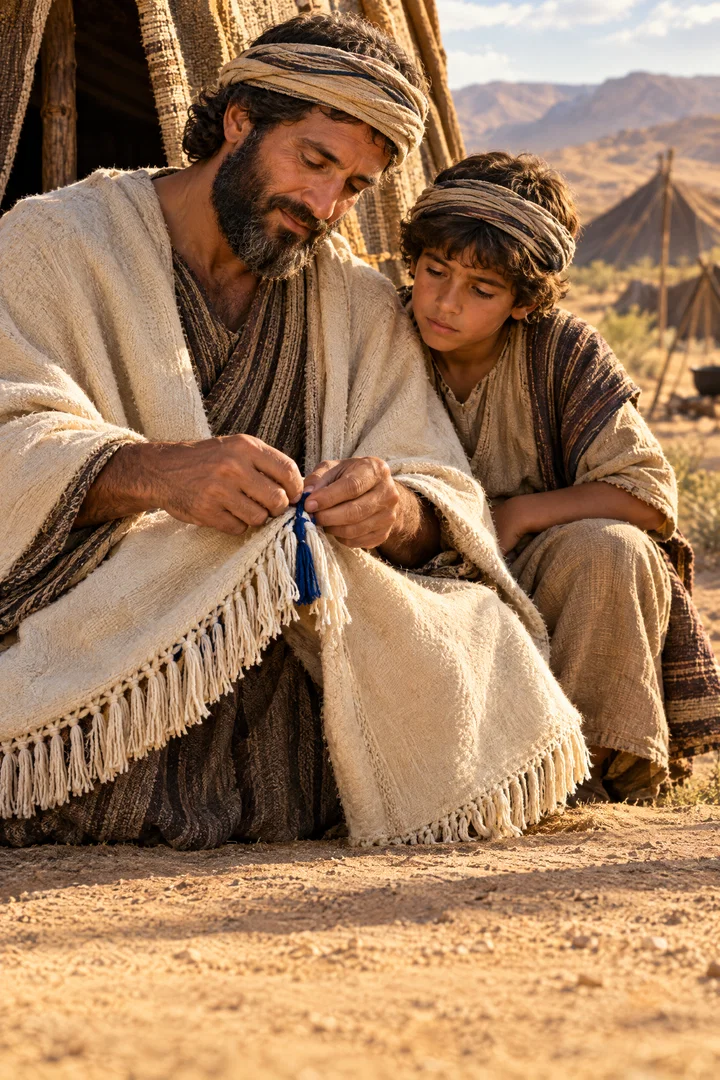
- Deuteronomy 22:12
Thou shalt make thee fringes upon the four quarters of thy vesture, wherewith thou coverest thyself.
Commands fringes on the four corners of a garment.
- Exodus 20:8-11
Remember the sabbath day, to keep it holy.
The passage identifies the stick-gathering as a violation of the Sabbath commandment.
Commentary
Each commentary is drawn from primary sources: the writings of Ellen G. White and Adventist pioneers and periodicals. Each commentary is separate. Its own words are not a quotation; follow the references to read the source passages.
Pioneers and periodicals
10 sources
The verse stands at the boundary of the account of the man found gathering sticks on the Sabbath in the wilderness, introducing that account and also closing it and belonging to it as the record of one who was stoned to death on the Sabbath day in a chapter that includes that Sabbath-breaking incident.RH Nov 25, 1852RH May 2, 1854RH Jan 12, 1860RH Apr 23, 1857ST Feb 21, 1911 The account does not tell for what purpose he gathered the sticks, whether for a fire or for a fence.RH Nov 25, 1852RH May 2, 1854 He probably gathered them to kindle a fire, since in the wilderness fires were needed only to wash clothes and to cook manna, and food for the seventh day was commanded to be cooked on the sixth day.RH May 2, 1854RH Jan 12, 1860RH Apr 23, 1857
Israel in the wilderness had no need to kindle fires for warmth because they were in a mild climate, their food was rained from heaven, their clothes were miraculously preserved, and there was not one feeble person among their tribes.RH May 2, 1854RH Jan 12, 1860RH Apr 23, 1857 Under those wilderness conditions gathering sticks for a fire was an open violation of the Sabbath law contained in the fourth commandment, and gathering them for a fence would also plainly violate the fourth commandment.RH Nov 25, 1852RH May 2, 1854RH Jan 12, 1860RH Apr 23, 1857 The great universal Sabbath law of the fourth commandment itself says nothing about gathering sticks or kindling fires, which distinguishes that specific incident from the universal law.RH Nov 25, 1852RH May 2, 1854
The Sabbath-breaking incident is described as presumptuous sin, and as held by some a special and flagrant case of defiance showing a sanitary or police regulation adapted to that people, time, and wilderness environment, not the eternal constitution of God's government epitomized in the Ten Commandments but one of the subsidiary laws given through Moses that is easily distinguishable from the Decalogue.ST Feb 21, 1911ST Feb 1, 1905 The verse introduces the Lord's command to Moses to tell Israel to wear fringes on their garments, with a blue cord on the fringe as specified in the accompanying instruction.ST Jul 1, 1897ST Jul 1, 1897 The fringes were to be looked upon as a sacred reminder of the Lord's commandments so the people would obey them, resist following their own desires, and be holy to God.ST Jul 1, 1897ST Jul 1, 1897ST Jul 1, 1897
The fringed garment was worn as a shawl, with the custom applying to males from age thirteen and being used at synagogue services.ST Jul 1, 1897 The fringe command carried the lesson that no holiness or righteousness could be obtained outside the Messiah, in whom the seed of Israel is justified and whose name is Jehovah our righteousness, teaching that the only garment that could give holiness was the garment worn by Messiah which enabled Him to be holy and keep the Lord's commandments.ST Jul 1, 1897 The verse belongs to the law of one ordinance forever for the congregation and for the stranger that sojourns, that as Israel is so the stranger shall be before the Lord, so that foreign servants bought with money and circumcised became part of the household during service and naturalized citizens of the state, members of the congregation and partakers of all the rites and privileges common to the people, the stranger dwelling among Israel being as one born among them and to be loved as oneself, alike with Hebrew servants amenable to and protected by the laws of the state.RH Oct 1, 1861
The same Sabbath law forbids doing on the seventh day what can be done on the sixth and what is not really mercy and necessity, but because the law is holy and just and good it does not oblige suffering cold or hunger.RH May 2, 1854RH Jan 12, 1860 Kindling a fire on the Sabbath in the cold season today when the race is feeble is a lawful act of mercy and necessity like watering an ox or horse or lifting a sheep from a pit, as taught by the Lord of the Sabbath, and sickness is guided by those lessons of mercy and necessity.RH May 2, 1854RH Jan 12, 1860 Neglecting necessary preparation that can be made on the sixth day remains a violation of the Sabbath, and kindling fires summer or winter expressly to cook food on the Sabbath to have it warm and indulge appetite is no less sin than cooking manna on the Sabbath in the wilderness, so plain food cooked on the sixth day is sufficient on the Sabbath for all in health and unnecessary Sabbath cooking must be put away as sin.RH May 2, 1854RH Jan 12, 1860
Sources