Translations
American King James Version, King James Version, KJV Cambridge Paragraph Bible, Revised Version, American Standard Version
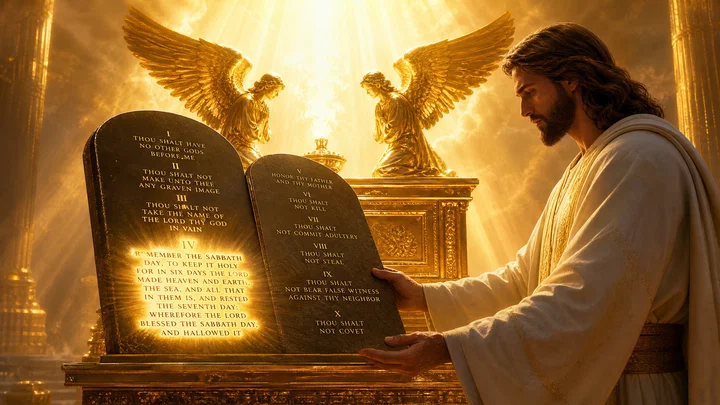
Remember the sabbath day, to keep it holy.
Remember the sabbath-day to keep it holy.
'Remember the Sabbath-day to sanctify it;
Remember the sabbath day to hallow it.
Remember the sabbath day, to hallow it:
Berean Standard Bible, Majority Standard Bible
Remember the Sabbath day by keeping it holy.
“ Remember the Sabbath day, to keep it holy.
Keep in memory the Sabbath and let it be a holy day.
Remember the Sabbath day, to keepe it holy.
Douay-Rheims (Challoner revision)
Remember that thou keep holy the sabbath day.
Pictures
Cross-references 20 of 205
- Genesis 2:2-3
And on the seventh day God ended his work which he had made; and he rested on the seventh day from all his work which he had made.
seventh-day rest taught as basis for command
- Mark 2:27
And he said unto them, The sabbath was made for man, and not man for the sabbath:
Christ's teaching of the Sabbath command
- Isaiah 58:13
If thou turn away thy foot from the sabbath, from doing thy pleasure on my holy day; and call the sabbath a delight, the holy of the LORD, honourable; and shalt honour him, not doing thine own ways, nor finding thine own pleasure, nor speaking thine own words:
Calls the Sabbath the Lord’s holy day and describes honoring it.
- Exodus 16:22-30
And it came to pass, that on the sixth day they gathered twice as much bread, two omers for one man: and all the rulers of the congregation came and told Moses.
Israel gathered manna for six days and rested on the seventh.
- Matthew 5:17
Think not that I am come to destroy the law, or the prophets: I am not come to destroy, but to fulfil.
Jesus says he came not to destroy the law, but to fulfill it.
- Revelation 14:12
Here is the patience of the saints: here are they that keep the commandments of God, and the faith of Jesus.
The saints keep God’s commandments and have faith in Jesus.
- Exodus 31:13
Speak thou also unto the children of Israel, saying, Verily my sabbaths ye shall keep: for it is a sign between me and you throughout your generations; that ye may know that I am the LORD that doth sanctify you.
The Sabbath is a sign by which Israel knows the Lord sanctifies them.
- Luke 23:56
And they returned, and prepared spices and ointments; and rested the sabbath day according to the commandment.
The women rested on the Sabbath according to the commandment.
- Ezekiel 20:12
Moreover also I gave them my sabbaths, to be a sign between me and them, that they might know that I am the LORD that sanctify them.
The Sabbath is given as a sign between God and his people.
- Ezekiel 20:20
And hallow my sabbaths; and they shall be a sign between me and you, that ye may know that I am the LORD your God.
The Sabbath is a sign between God and his people, by which they know him.
- Colossians 2:16-17
Let no man therefore judge you in meat, or in drink, or in respect of an holyday, or of the new moon, or of the sabbath days:
Observances including sabbaths are described as shadows, with Christ as their substance.
- Isaiah 66:23
And it shall come to pass, that from one new moon to another, and from one sabbath to another, shall all flesh come to worship before me, saith the LORD.
All flesh worships before God from Sabbath to Sabbath in the new earth.
- Luke 4:16
And he came to Nazareth, where he had been brought up: and, as his custom was, he went into the synagogue on the sabbath day, and stood up for to read.
Jesus customarily attended the synagogue and kept the Sabbath.
- Exodus 31:17
It is a sign between me and the children of Israel for ever: for in six days the LORD made heaven and earth, and on the seventh day he rested, and was refreshed.
The Sabbath is a sign between the Lord and Israel, grounded in his creation and rest.
- Mark 2:28
Therefore the Son of man is Lord also of the sabbath.
Jesus is identified as Lord of the Sabbath.
- Deuteronomy 5:15
And remember that thou wast a servant in the land of Egypt, and that the LORD thy God brought thee out thence through a mighty hand and by a stretched out arm: therefore the LORD thy God commanded thee to keep the sabbath day.
Israel’s deliverance from Egypt is given as a reason to keep the Sabbath.
- Matthew 28:1
In the end of the sabbath, as it began to dawn toward the first day of the week, came Mary Magdalene and the other Mary to see the sepulchre.
Places the first day of the week immediately after the Sabbath.
- Exodus 16:4-5
Then said the LORD unto Moses, Behold, I will rain bread from heaven for you; and the people shall go out and gather a certain rate every day, that I may prove them, whether they will walk in my law, or no.
Manna’s daily gathering and sixth-day double portion marked the Sabbath and tested obedience.
- Matthew 12:12
How much then is a man better than a sheep? Wherefore it is lawful to do well on the sabbath days.
Jesus teaches that doing good is lawful on the Sabbath.
- Genesis 1:5
And God called the light Day, and the darkness he called Night. And the evening and the morning were the first day.
Defines the creation day as evening and morning, clarifying the Sabbath day’s reckoning.
Commentary part 1 of 15
Each commentary is drawn from primary sources: the writings of Ellen G. White and Adventist pioneers and periodicals. Each commentary is separate. Its own words are not a quotation; follow the references to read the source passages.
Ellen G. White
624 sources
Remember the Sabbath day to keep it holy is the fourth commandment requiring the seventh day, Saturday, to be remembered and kept holy with no work for anyone within the gates because in six days the Lord made heaven and earth and rested the seventh.ST May 6, 1880ST Nov 12, 1894Lt 123, 1894, par. 3–5Lt 163, 1904, par. 4–721MR 88.2 It recalls what was instituted in Eden as the memorial of creation in six literal days followed by God's rest, blessing and hallowing of the seventh day.CE 190.1–29T 212.1ST Jan 31, 19111SP 85.1–86.1SG3 90.1–2 Spoken by God's own voice amid Sinai's glory and written by His finger on stone, it alone names the Lawgiver as Maker of heaven and earth and stands as His seal, sign and test of loyalty.Ms 93, 1908, par. 11–15Ms 2, 1904, par. 6–19ST Mar 12, 1896ST Jan 23, 1912ST Mar 7, 1878 It belongs to the enduring moral law that was not abolished at the cross nor changed to the first day, for Sunday is a man-made spurious sabbath of papal origin without divine sanctity or blessing.4SP 273.3–274.1Ms 82, 1893, par. 1517MR 346.1–3ST Mar 12, 1896EW 180.1–3 Keeping it holy means ceasing labor, business and pleasure to worship, do works of mercy and delight in God, bringing blessing and strength now and standing as the special point of final controversy over worship.Ms 17, 1906, par. 29–40Ms 23, 1885, par. 13–14Ms 3, 1879, par. 122SP 193.2ST Feb 22, 1910
Words and Day Specified
The command is to remember the Sabbath day to keep it holy, laboring six days while doing no work on the seventh, whether sons, daughters, servants, cattle or strangers within the gates, because in six days the Lord made heaven and earth, the sea and all in them, then rested the seventh, blessed it and hallowed it.ST May 6, 1880ST Nov 12, 1894GC88 434.2ST Jun 11, 1894ST Jul 29, 1897 The seventh day is the Sabbath, set apart by God after creating heaven, earth, the sea and all that is in them and resting on that day, with no work to be done by anyone in the household or community.ST May 6, 1880ST Nov 12, 1894GC88 434.2ST Jul 29, 18971SP 235.2–236.8 The command identifies the seventh day as the Lord's Sabbath, sets it apart from the six days given for work, and binds all people in every age and country with special significance within the Ten Commandments.ST Nov 12, 1894GC88 434.2ST Jun 11, 1894ST Jul 29, 18971SP 235.2–236.8
It is the fourth commandment, requiring the seventh day to be remembered and kept holy.Lt 123, 1894, par. 3–5Lt 163, 1904, par. 4–7Ms 87, 1893, par. 31–34Ms 100, 1893, par. 23–25Lt 26, 1899, par. 2–3 The seventh day is Saturday, not Sunday or the first day or any common day or merely any seventh part of time, for God sanctified that day of rest after making heaven and earth in six days, not the first day.Lt 163, 1904, par. 4–721MR 88.2Ms 87, 1893, par. 31–34Ms 100, 1893, par. 23–25Lt 26, 1899, par. 2–3 Replacing it with a day that has no divine sanctity usurps God's authority, and where human laws or customs oppose God's command loyalty requires obedience to His Word above human authority.Lt 123, 1894, par. 3–5Lt 163, 1904, par. 4–721MR 88.2Ms 100, 1893, par. 23–25Lt 26, 1899, par. 2–3
Sunday and the first day have no sanctity, blessing or divine promise as the Sabbath has, being no more holy than a common working day, and the command gives no support for Sunday-keeping but calls for positive testimony against it.Ms 82, 1893, par. 1517MR 346.1–3Lt 94, 1910, par. 6–10Ms 90, 1897, par. 10Ms 88, 1897, par. 21–23 God made the seventh day holy and blessed it as a memorial of creating the world in six days and resting on the seventh, and substituting another day by human authority does not preserve its sacredness.Ms 82, 1893, par. 1517MR 346.1–3Lt 94, 1910, par. 6–10Ms 90, 1897, par. 1019MR 183.3–184.1 The directions to keep it holy by resting from all work on the seventh day have been disregarded and forgotten through acceptance of a common working day presented by Catholic authority in place of God's holy Sabbath, and the Sunday cherished and exalted by the Protestant world is a spurious sabbath without a vestige of sacredness.17MR 346.1–3Lt 94, 1910, par. 6–10Ms 90, 1897, par. 10Ms 88, 1897, par. 21–2319MR 183.3–184.1 The Sabbath is the sign between God and His people and the seal of the living God, and putting the first day in its place dishonors the Creator and disregards His command.Ms 82, 1893, par. 1517MR 346.1–3Lt 94, 1910, par. 6–10Ms 90, 1897, par. 10Ms 88, 1897, par. 21–23
The command is plain, definite and explicit on God's own authority, specifying one particular seventh day, not any day in seven, and age, majority, custom or learned error does not turn opposing error into truth.Ms 146, 1906, par. 3–9Ms 141, 1906, par. 10–13RH Mar 26, 1908ST Jul 9, 1912Lt 274, 1908, par. 7–8 Remembering the Sabbath to keep it holy is particularly enjoined on everyone, meaning keeping the very day God specified while six days are given for labor and all work.Ms 146, 1906, par. 3–9Ms 141, 1906, par. 10–13RH Mar 26, 1908Ms 19, 1894, par. 10–12ST Jul 9, 1912 It is a plain command from God and sacred truth resting on a plain Thus saith the Lord that speaks for itself, making the Sabbath a test of loyalty where turning aside means rejecting His word and defying God.Ms 146, 1906, par. 3–9Ms 141, 1906, par. 10–13RH Mar 26, 1908ST Jul 9, 1912Lt 274, 1908, par. 7–8 It is God's holy memorial of creation set apart at creation, confirmed by the manna and placed within the Ten Commandments at Sinai, while the first day has been exalted in its place as a false sabbath.Ms 146, 1906, par. 3–9RH Mar 26, 1908Ms 19, 1894, par. 10–12ST Jul 9, 1912Lt 274, 1908, par. 7–8
The word Remember opens the command because God knew that amid the multitude of cares and perplexities people would be tempted to excuse themselves from meeting its full requirement or would forget its sacred importance.6T 353.34T 249.1ST Jul 29, 1897ST Sep 1, 1881ST May 11, 1876 It means the Sabbath is to be kept in mind all through the week and not allowed to pass out of mind, with preparation made and its spiritual bearing understood in all transactions of life, not as a merely legal matter.6T 353.3ST Jul 29, 1897ST Sep 1, 1881ST May 11, 1876ST Feb 14, 1911 The six days for labor mean the usual business of life for worldly profit or pleasure, stated so explicitly that there can be no mistake, while the seventh day claimed by God is set apart and sanctified for rest from labor and for worship and improvement of the spiritual condition.4T 249.1ST Jul 29, 1897ST Sep 1, 1881ST May 11, 1876ST Feb 14, 1911 Using that day for secular business even occasionally violates the command and cannot be treated as a matter of convenience or divided with worldly interests, for to take it for selfish purposes is to steal Jehovah's day.6T 353.34T 249.1ST Sep 1, 1881ST May 11, 1876ST Feb 14, 1911
The verse belongs to Exodus 20:1-17 and Exodus 20:8-11, direct communication from heaven recording sacred principles of morality, justice, reverence for God and respect for man.Lt 44, 1893, par. 1–21SP 89.24SP 288.2–289.21T 360.3–361.2 It identifies the Sabbath commandment as the fourth precept of God's law defining the living God as Maker of heaven and earth, whose plain teaching is defended by Scripture and not overturned by church tradition or human authority.Lt 44, 1893, par. 1–21SP 89.24SP 288.2–289.2ExVEGW 57.2 Its wording provides a Bible foundation for Sabbath keeping and an argument in favor of those who keep the Sabbath, a position opponents cannot refute from Scripture.Lt 44, 1893, par. 1–21SP 89.24SP 288.2–289.2ExVEGW 57.2 That higher law spoken with audible voice from Sinai and engraved on stone is supreme over laws of the land, to be put into the mind and written in the heart, so that when rulers require what conflicts with it the duty is to obey God rather than men.Lt 44, 1893, par. 1–21SP 89.24SP 288.2–289.21T 360.3–361.2
Compromise with God to secure petty temporal interests is gross presumption, for the command requires no partial obedience and no divided interest.ST Sep 16, 1913 From Sinai God thundered that He is a jealous God who visits the iniquities of the fathers upon the children unto the third and fourth generation of them that hate Him and shows mercy unto thousands of generations of them that love Him and keep His commandments, while giving man six days for work and claiming the blessed and sanctified day for rest and worship of the Maker.ST Sep 16, 1913
Creation Eden Memorial
The Sabbath was established at creation and instituted in Eden as a memorial of creative work, not introduced as new at Sinai but recalled as already known, confirmed by the manna and placed in the Ten Commandments at Sinai.9T 212.1ST Jan 31, 1911Lt 258, 1907, par. 22–25PP 307.1–3ST Mar 12, 1894 After working six days God rested on the seventh and blessed and sanctified it, setting it apart as a day of rest and worship for mankind, and the command to remember preserves that sacred status.ST Jan 31, 1911Lt 258, 1907, par. 22–25PP 307.1–3ST Mar 12, 1894Ms 65, 1897, par. 7–9 Remembering means resting from labor and doing no work in it, so that in looking on earth beneath and heavens above thoughts are directed to Him who made all wonderful and beautiful things and the heart is filled with love and reverence in beholding tangible proofs of infinite wisdom and goodness.ST Jan 31, 1911Lt 258, 1907, par. 22–25PP 307.1–3 Keeping it signifies worship of the only true God and allegiance to Him, and human beings have no permission to nullify this command or exalt a man-made day above it or replace it with a different day.Lt 258, 1907, par. 22–25ST Mar 12, 1894Ms 65, 1897, par. 7–9
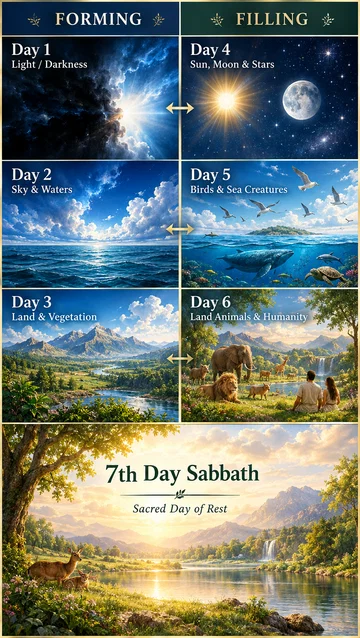
God made heaven and earth, the sea and all in them in six literal ordinary twenty-four-hour days, ended His work, rested and was refreshed on the seventh day, and blessed, sanctified, hallowed and set it apart.CE 190.1–21SP 85.1–86.1SG3 90.1–2PP 111.2Lt 31, 1898, par. 22–25 The weekly cycle of six days of work and one day of rest began with the first week of creation and continues as its pattern, with six days given for human labor and the seventh to refrain from labor in commemoration of the Creator's rest.CE 190.1–21SP 85.1–86.1SG3 90.1–2PP 111.2Ms 87, 1893, par. 31–34 The command therefore specifies one particular day, not any day in seven, and not the first day.Lt 31, 1898, par. 22–25Ms 87, 1893, par. 31–34 The reason given for the command is the creation week of six literal days followed by God's rest, so the Sabbath commemorates that rest.ST Mar 20, 1879SG3 91.1–21SP 86.2CE 190.31SP 87.1 Treating creation days and God's rest as indefinite ages or vast periods obscures the commandment, contradicts its seven-day pattern of six days for work and the seventh for rest, makes it senseless and inconsistent with the events it commemorates, and weakens its claim upon people.ST Mar 20, 1879SG3 91.1–21SP 86.2CE 190.31SP 87.1
The Sabbath was made for humanity, not Jews only and not people for the Sabbath, given to Adam and Eve in Eden for all posterity before sin and before Jews existed, since Jews are no more closely related to Adam than other nations.ST Jan 31, 1911ST Jul 29, 1897ST Mar 7, 1878ST Sep 14, 1882 It was suited to holy beings, is obligatory upon all men to the end of time and into eternity, did not lose force with time, and will be kept by the redeemed and angels in the new earth from one Sabbath to another in honor of the Creator.ST Jul 29, 1897ST Mar 7, 1878ST Sep 14, 1882EW 181.3 It began before sin, was observed in Eden, stands in moral power for its original design of keeping the living God the Creator in remembrance, and temporal affairs and business arrangements must come under divine restrictions rather than molding the Sabbath to meet men's business.ST Jan 31, 1911ST Jul 29, 1897EW 181.3 The Sabbath was kept from Eden onward by Adam and Eve before and after the fall when the morning stars sang together and all the sons of God shouted for joy, and by patriarchs from Abel to Noah to Abraham to Jacob.Lt 8, 1888, par. 5–6ST Oct 1, 1894ST Feb 6, 1879ST Jun 14, 1910ST Dec 1, 1887 Violating the fourth commandment repeats Adam's transgression over a seemingly slight prohibition, enters into confederacy with Satan to war against God by trampling the Sabbath institution, and chooses Satan for god and sovereign.ST Jun 18, 1894
People before the Flood failed to honor the Sabbath and commemorate creation, choosing their own ways instead, and so failed to recognize their duty to their Creator and to learn God's power from His works and Word.Ms 63, 1897, par. 11–12 The descendants of Cain disregarded the day God rested, choosing their own times for work and rest instead of obeying God's special command, marking a distinction between those who rebel against God's law and those who obey His commandments and revere the Sabbath.SG3 53.21SP 60.1PP 80.3 In contrast the children of Adam who remained loyal to God honored it, with Adam keeping it in holy Eden in innocence and fallen yet repentant after expulsion.ST Jun 14, 1910PP 80.3 God placed His holiness on the seventh day alone after resting, gave it for a thousand generations which have not ended, and set apart the seventh day on which He rested after creation as holy for worship.Lt 258, 1908, par. 5–65MR 86.1Ms 173, 1897, par. 16–17Ms 93, 1908, par. 54–56Ms 140, 1906, par. 25 Its sanctity rests on God's declaration in His Word, it is a definite day not so uncertain that people cannot know when it comes, and keeping the very weekday on which He rested preserves the true memorial as observing the fourth of July commemorates independence because it is the very day it was gained.Lt 258, 1908, par. 5–6Ms 173, 1897, par. 16–17Ms 6, 1868, par. 3–5Ms 93, 1908, par. 54–56Ms 140, 1906, par. 25
Where the ordinary cycle of sunrise and sunset exists the Sabbath is observed when the seventh day arrives there, while where the sun does not rise or set for months its time is determined by records, in a way consistent with the circumstances of the created world, for the Sabbath was made for the whole round world in honor of His creation of heavens and earth in six literal days.3MR 253.1–2 The marriage institution made in Eden from creation as a divine ordinance constituted by God stands as firm as the Sabbath instituted when the foundations of the world were laid when the morning stars sang together.Lt 8, 1888, par. 5–61MR 160.3 The Lord's day is the seventh day, the Sabbath of creation, the day God sanctified and blessed, which John observed even when banished alone on Patmos, and Christ chose that holy day to give him by His angel the things that must come to pass before the close of history.Ms 16, 1890, par. 69–726T 128.2
Sinai Voice Tablets
The command was spoken by God Himself at Sinai after bringing Israel out of Egypt, proclaimed so that all could understand its requirements, spoken in majesty and glory and written on stone and engraved by His finger so it would not be forgotten or corrupted.Ms 93, 1908, par. 11–15Ms 2, 1904, par. 6–19ST Jul 9, 1912Lt 21, 1905, par. 6–9Ms 176, 1903, par. 3 It commands active remembrance of the Sabbath day by keeping it holy, giving six days for labor and all work while setting apart the seventh day as the Sabbath of the Lord in which no work is to be done by anyone in the household, including sons, daughters, servants, cattle, and strangers within the gates.Ms 93, 1908, par. 11–15Ms 2, 1904, par. 6–19Lt 160, 1906, par. 3–9 The reason given is creation, that in six days the Lord made heaven and earth, the sea and all in them, and rested the seventh day, and therefore blessed the Sabbath day and hallowed it, a blessing never removed that still stands and is to be taught by parents to children that they may honor God and serve Him.Ms 93, 1908, par. 11–15Ms 2, 1904, par. 6–19ST Jul 9, 1912 The Sabbath thus instituted in Eden as a memorial of creative power was given to humanity as a sign of allegiance, belonging to laws guiding how people deal with one another, where law and gospel are united so that those who pray to the God of heaven and earth do not reject this command or accept a substitute.Lt 160, 1906, par. 3–9ST Jul 9, 1912Lt 21, 1905, par. 6–9Ms 176, 1903, par. 3
The verse belongs to the law God spoke in solemn authority and awful grandeur from Sinai, from the highest and grandest court, with His own voice amid trumpet tones, thunder, lightning, cloud, tempest, thick darkness and devouring glory, with rocks as sanctuary and hills as temple, later recapitulated to all the people.Lt 308, 1903, par. 4–6Lt 164, 1910, par. 5–7Ms 125, 1909, par. 22–25ST Jun 10, 1880GC 433 It is the voice of God Himself and the highest education that can be given to man, giving positive instruction whose vindication and magnification is part of God's work, with the statements that follow the remembrance command giving its reason.Lt 308, 1903, par. 4–6Lt 164, 1910, par. 5–7Ms 125, 1909, par. 22–25 The law was engraved by God's own finger on stone as His unchangeable standard of right-doing serving as the standard in judgment, inscribed in Hebrew on the two stone tablets sacred and radiant with glory, so His requirements would not be mixed with human tradition or confused with human practices.Ms 131, 1907, par. 13–14ST Jun 10, 1880GC 433 The Sabbath set apart at creation as a lasting memorial of God's work as Creator remains binding, and obedience to all the commandments there is the higher education learned from God by truly sanctified souls who live the Word, not from unsanctified teachers who refuse it.Lt 164, 1910, par. 5–7Ms 131, 1907, par. 13–14
The law already existed before Sinai, having been given in Eden, and was spoken aloud at Sinai rather than as a new law.STB 639.3–4CH 388.18T 197.4–198.1STB 7.1–2 The Hebrews were entrusted to preserve and pass it on, and it was given to Israel after deliverance from Egypt in spite of Pharaoh's opposition so they might keep it and serve and obey Him, to make its principles, which reveal God's character and government and express His character as transcript, known to later generations and to every nation, kindred, tongue and people.HSFM 231.4STB 7.1–2SW 52.1 God proclaimed the commandments to Israel with His own voice in awful grandeur, power and glory to demonstrate their importance, to make known His majesty and authority as Ruler of the world, and to impress the people with the sacredness of His law and the importance of obeying it.STB 7.1–2 The same holy law proclaimed from Sinai and engraved on tables of stone was given to Adam after his fall, preserved in the ark by Noah, and observed by Abraham, and Sabbath keeping was made a sign between God and His people forever with promise to take them as His chosen people if they kept it, while failure brought sorrow and shame.HSFM 231.4 If this law had been kept there would have been no need for circumcision, no going into idolatry and Egypt, and no need to proclaim the law from Sinai or guard it by judgments and statutes.
The commandments were written by the finger of God on two tables of stone kept in the ark beneath the mercy-seat and in the heavenly temple, preserved from mixture with human tradition, signifying unchangeable character.Lt 308, 1903, par. 4–6Lt 164, 1910, par. 5–7Ms 131, 1907, par. 13–14ST Jun 10, 1880GC 433 Israel prepared by washing clothes and was exalted to be its depositary, wanting all to understand what He was telling them in commanding the Sabbath day be held in memory by holy observance.Lt 308, 1903, par. 4–6Lt 164, 1910, par. 5–7Ms 125, 1909, par. 22–25 The law gives positive instruction, and attention to it is part of vindicating and magnifying God's law as the voice of God Himself and the highest education.Lt 308, 1903, par. 4–6Lt 164, 1910, par. 5–7
Christ the Redeemer spoke the commandment from Sinai, knew the meaning and full reach of every precept, and in His teaching revealed its far-reaching claims, correcting the distorted view that reduced it to a cold code of commands and human traditions.STB 7.1–2FE 237.1SCE 7.1 Exodus 20:1-17 records the law Christ spoke at Mount Sinai, holy, just, and good, the standard of righteousness and foundation of God's throne, remaining in force as long as heaven and earth endure and which Christ will not revoke or alter.FE 237.1ST Nov 14, 1895SCE 7.1 It was given amid thunderings and lightnings and the noise of the trumpet with the mountain smoking, so the people were afraid, removed and stood afar off, and asked Moses to speak with them lest they die, not understanding that Christ was their appointed mediator without whom they would have been consumed.RH Apr 22, 1902RH Aug 16, 1906 Moses told them to fear not, for God had come to prove them and put His fear before them so they would not sin, while the people stood afar off and Moses drew near the thick darkness where God was.RH Apr 22, 1902 The law proclaimed there was connected with the glorious ceremonial system that gave significance to a sin-pardoning Saviour, while the moral law remains glorious after Christ died on the cross as sin offering when type met antitype and the ceremonial law could have no force.RH Apr 22, 1902
Israel did not fully appreciate the far-reaching principles because slavery had blinded and debased minds, so additional precepts illustrating and applying them were given privately to Moses to communicate, that their obligations could be better understood and enforced.RH Aug 16, 1906PP 364.1–2Ms 65, 1906, par. 16 Detailed judgments and statutes written by Moses from the mouth of God while in the mount guard their sacredness, giving the principles of the Ten Commandments simplified in definite directions about duty to one another and to the stranger so they need not err, to lead man prone to transgress into strict obedience and to prevent confusing God's requirements with human customs or heathen traditions.PP 364.1–2Ms 65, 1906, par. 16 The ten precepts express far-reaching principles whose sacredness, importance, and permanence were displayed when God proclaimed the law with power and glory, with additional precepts to explain and apply their obligations as a transcript of God's character, unchangeable and given to be obeyed.RH Aug 16, 1906SW 52.1 During forty years in the wilderness Israel became lax and disregarded the Sabbath, and the commandments written on stone cannot by themselves change readers but their truth must enter the heart and enlighten the mind, since sin and guilt begin in the heart and disobedience to any command is disregard for God's requirements.Ms 57, 1909, par. 4–5Ms 193, 1897, par. 1
The proclamation was intended to make Israel an example of true righteousness and a model of God's church, setting Israel apart as a protective boundary, framed by God not by human beings or Moses and proclaimed in awe-inspiring surroundings.Ms 4, 1904, par. 19SG4 106.11SP 403.2 Obedience to God's law brings prosperity and would have been their life, while transgression brings adversity, and violating the holy rest day removed God's favor, leaving them vulnerable to enemies and scattered.ST Apr 8, 1886SG4 106.11SP 403.2ST Oct 2, 1893 Disregarding the commandments brought loss of protection allowing enemies to afflict and scatter them, for God's holy commandments have not been amended and His covenant and spoken words remain unchanged.ST Oct 2, 1893 Making void the law is the crime that will fill the nation's measure of iniquity, with guilt proportioned to light rejected, and Sabbath-keepers dishonor the day when they join business partnerships whose work continues on the Sabbath, since stopping their own labor or attending worship does not make them guiltless while partners carry on that work.ST Apr 8, 1886ST Jul 4, 1899
The verse belongs to the law God spoke audibly to Israel at Mount Sinai three months after their journey from Egypt, revealing its importance for all ages, and God still requires obedience.Ms 64, 1903, par. 8–9ST Feb 21, 1878MOPP 3.3–4.2RH Apr 20, 1905RH Aug 27, 1901 Its truth and authority every person must acknowledge and obey, its obedience is to be urged as part of present truth, and it cannot be set aside in favor of a self-made standard of righteousness.MOPP 3.3–4.2RH Apr 20, 1905RH Aug 27, 1901 The Jews heard it as God's chosen people at Sinai.ST Feb 21, 1878
Because Israel was so prone to forget God, ceremonies and ordinances were added so that in performing them God would be kept in remembrance and minds stirred to realize obligation upon them to obey and honor their Creator.5T 666.3–667.1 Had they been obedient and loved to keep God's commandments, the multitude of ceremonies and ordinances would not have been required.5T 666.3–667.1 The same principle holds now: if those who profess to be God's peculiar treasure obeyed His requirements as specified in His word, special testimonies to awaken them to duty and impress upon them their sinfulness and fearful danger in neglecting His word would not be needed, for neglect comes when conscience is blunted by setting aside, neglecting, and despising light.5T 666.3–667.1
The verse belongs to holy Eden and Sinai law defended as the foundation of faith, given in Eden after creation and proclaimed by Jesus at Mount Sinai.Ms 23, 1885, par. 6Ms 39, 1893, par. 13–14Lt 51, 1901, par. 8–9 Exodus 20:8-11 establishes the seventh-day Sabbath as God's command and the foundation of religious faith, not to be replaced by Sunday through human or papal authority, and as part of God's enduring commandments it has not been changed and continues to claim obedience from all people.Ms 39, 1893, par. 13–14Lt 51, 1901, par. 8–9
The verse is Sinai-voiced law to be sensibly represented, proclaimed at Mount Sinai with His own voice so people would recognize its importance.Ms 55, 1907, par. 5–6 Those who stand for that law are to represent it and its work sensibly, not in a cheap or faulty manner.Ms 55, 1907, par. 5–6
The verse is part of the law recorded by Moses as historian of creation and law after twenty-five hundred years with no written revelation handed from father to son, when those taught of God communicated knowledge to others through successive generations.GC v.2 Inspired writing began with Moses when inspired revelations were embodied in an inspired book, and continued sixteen hundred years to John, recorder of the most sublime truths of the gospel.GC v.2
The verse is part of the law proclaimed at Mount Sinai which Christ's voice recalled when He rebuked the temple's desecration.Lt 113, 1903, par. 15–18
Creator Seal Sign Test
The Sabbath is God's memorial of creation, established not as a new institution but to be remembered as pointing to Him as Creator and Sovereign.PP 307.1–3Lt 7, 1900, par. 8–11ST Mar 12, 1894 The fourth commandment alone points to God as Maker of heaven and earth, the sea and all in them, declaring definitely who God is to the whole universe, to unfallen worlds and to the fallen world.Lt 7, 1900, par. 8–11ST Mar 18, 1897Ms 28, 1900, par. 21–23 By naming Him who worked six days and rested, blessed and hallowed the seventh, it distinguishes the true and living God from idols of wood and stone and from gods that did not make the heavens and the earth and shall perish.ST Mar 18, 1897Ms 28, 1900, par. 21–23ST Jan 23, 1912 Sun, moon and stars as works of His hands declare the glory of their Maker and show His superiority, directing minds through nature to contemplate His mighty power, infinite wisdom, goodness and love.ST Mar 18, 1897Ms 51, 1899, par. 10–13ST Jan 23, 1912 In this it leaves no standing room for skepticism and answers materialism and intellectual skepticism that cannot explain the science of life, while Satan works to obliterate this memorial.Lt 7, 1900, par. 8–11Ms 51, 1899, par. 10–13
The commandment uniquely identifies the living God as Maker of heaven and earth, containing His proof of authority and rightful claim to reverence and worship.ST Jan 23, 1912ST Mar 7, 18784SP 281.1EW 180.1–3CET 85.4–86.1 It bears the signet or seal of the Creator because in six days the Lord made heaven and earth and rested the seventh, pointing back to creation and Eden to define who the living God is.ST Mar 7, 1878EW 180.1–3CET 85.4–86.1 God's creative power is proof of His superiority over heathen deities and of His right as Creator and source of life over the beings He has made.Ms 51, 1899, par. 10–13ST Jan 23, 19124SP 281.1 Keeping the seventh day He sanctified, blessed and set apart signifies worship and allegiance to Jehovah, while the claim that Christ's resurrection moved it to the first day is deception.PP 307.1–3ST Mar 12, 1894EW 180.1–3
The Sabbath stands in the Decalogue as the seal of the living God, pointing out the Lawgiver and making known His right to rule.ST Jan 31, 1911Lt 258, 1907, par. 22–25PP 307.1–3Ms 82, 1893, par. 15 It is the only precept giving the Lawgiver's name and title, identifying whose authority gives the law and serving as the seal of its authenticity and binding force.ST Jan 31, 1911Lt 258, 1907, par. 22–25PP 307.1–3 As such it is a sign of allegiance that shows whom people serve and worship, so those who worship the Creator will not replace it with a different day lacking divine authority.Lt 258, 1907, par. 22–25Ms 78, 1901, par. 12–13ST Mar 12, 1894 God gives six days for human labor and calls people on the seventh to set aside their own interests, pleasures, business and words for worship, with acts of necessity and mercy permitted but unnecessary labor avoided.ST Jan 31, 1911Lt 258, 1907, par. 22–25PP 307.1–3 Attacking its sacredness and substituting another day serves an effort to displace God's authority.Ms 82, 1893, par. 15Ms 78, 1901, par. 12–13
The Sabbath is a sign between God and His people showing that He sanctifies them, a continual visible token of connection with God and separation from others.ST Jan 31, 1911DA 283.3ST Mar 12, 1896 It holds a central place as the golden link uniting finite man to the Infinite God, and keeping it holy marks Israel and all keepers as worshipers of the true God distinct from surrounding nations and idolatry.ST Jan 31, 1911DA 283.3ST Mar 7, 1878 To keep it thus holy people must themselves be holy, becoming through faith partakers of Christ's righteousness, so that observance truly distinguishes them as God's sanctified peculiar people and witnesses.ST Jan 31, 1911DA 283.3ST Mar 12, 1896 Looking on earth beneath and heavens above, thoughts are directed to Him who made all wonderful and beautiful things, and the heart is filled with love and reverence to the Maker.ST Jan 31, 1911ST Jan 23, 1912
The Sabbath is God's test and separating line between those who serve God and those who do not, distinguishing the loyal and true from the disloyal and transgressing.Ms 63, 1897, par. 11–12Ms 34, 1897, par. 34–35HSFM 215.2 It draws the separating wall between the true Israel of God and unbelievers, and it will be the point of final conflict and the great uniting question for God's waiting saints.14MR 60.3HSFM 215.2EW 26.1–2 Its claims are not to be lessened for business or convenience, and it is the seal of the living God with an important place under the third angel's message.14MR 60.3Ms 34, 1897, par. 34–35Ms 68, 1910, par. 4–5 The people before the Flood failed to honor it and commemorate creation, choosing their own ways and failing to recognize duty to their Creator.Ms 63, 1897, par. 11–12Ms 34, 1897, par. 34–35 Treating it as unimportant and failing to tell neighbors its importance leaves them disregarding it to their loss, so its truths are to be kept before the people without forced mystical interpretations or human tests.14MR 60.3Ms 68, 1910, par. 4–5
Had the blessed sanctified day always been kept there would never have been an idolater, an atheist or an infidel.Ms 51, 1899, par. 10–13ST Jan 23, 19124SP 281.1 Faithful keeping would have preserved the world from idolatry and unbelief by leading thoughts and affections to God and keeping the living Creator in remembrance.ST Jan 31, 1911Ms 51, 1899, par. 10–134SP 281.1CET 85.4–86.1 Its sacred observance leads minds to their Creator, with everything in nature bringing Him to remembrance and bearing witness to His power and love.ST Jan 31, 1911Lt 258, 1907, par. 22–25Ms 51, 1899, par. 10–13 In contrast stands the spurious sabbath accepted in place of the true.Ms 51, 1899, par. 10–13ST Mar 7, 1878
The fourth commandment holds highest place in honor of God's holy name, standing at the center and in the very bosom of the Decalogue with surpassing brightness and a halo of glory because it alone points out the living God.ST Jul 29, 1897GC 434.2–3ST Sep 16, 1913EW 26.1–2 It shines above the others and holds specially significant place among duties to God and to fellow men, joining Sabbath observance to God's creation of heaven and earth in six days, His rest on the seventh, and His blessing and sanctifying of that day.ST Nov 12, 1894ST Jul 29, 1897ST Nov 19, 1912ST Sep 16, 1913 That blessing was never removed, the command was never abolished, and the Sabbath was never changed to the first day.4SP 273.3–274.1ST Nov 19, 1912GC 434.2–3 Disregarding the seventh day transgresses this precept, while keeping it holy expresses loyalty to God and binds all people in every age and country.4SP 273.3–274.1ST Jul 29, 1897GC 434.2–3
Law Endures Unchanged
The command stands at the center and in the very bosom of the Ten Commandments as part of God's enduring, immutable moral law that reflects His character and binds people of every age and country.4SP 273.3–274.1ST Nov 12, 1894ST Jul 29, 1897ST Nov 19, 1912ST Sep 16, 1913 It calls for remembering the seventh day to keep it holy, giving six days for labor and all work while reserving the seventh as the Sabbath of the Lord in which no work is to be done by self, son, daughter, manservant, maidservant, cattle, or stranger within the gates.ST Jul 29, 1897GC 434.2–3ST Sep 16, 1913 Its reason is creation, that in six days the Lord made heaven and earth, the sea and all in them, rested the seventh day, and blessed the Sabbath day and hallowed it.ST Nov 19, 1912GC 434.2–3ST Sep 16, 1913 That blessing was never removed, the commandment was never abolished, and the Sabbath was never changed to the first day of the week, with Scripture giving no evidence for such change.4SP 273.3–274.1GC 434.2–3 Disregarding the seventh day transgresses this precept, while keeping it holy expresses loyalty to God.4SP 273.3–274.1GC 434.2–3
The Sabbath is for all mankind, not for Jews only, obligatory to the end of time and into eternity, and it cannot be revoked or changed while human life and moral responsibility continue.ST Jul 29, 1897ST Mar 7, 1878 It was given to Adam and Eve in Eden for all their posterity, since Jews are no more closely related to Adam than other nations, instituted at creation before the Jewish people existed and made for humanity.ST Jul 29, 1897 Because men pressed with cares, perplexities and worldly business would forget its sacred importance or excuse themselves from its full requirements, it begins with Remember, commanding the seventh day God blessed and set apart, not the first day or any common day.ST Jul 29, 1897 When the typical sacrifices ceased at Christ's death the law engraved on stone stood immutable with claims upon men in all ages, to be more fully understood and in the Christian age more especially defined and simply expressed, and it is preserved with the law in the heavenly ark.ST Jul 29, 1897 Though God highly honored the Hebrews by making them its keepers for future generations, it was not given to them alone, and trampling it shows contempt for God's authority and despises the Lawgiver.PP 305.3–4ST Jan 24, 1911
It was not nailed to the cross, for if it were the other nine would also be nailed there and people would be free to break them all.EW 26.1–2RH Jul 21, 1851 The claim that Jesus' resurrection on the first day moved the Sabbath from the seventh to the first is a deception, and treating another day as the Sabbath instead of the day God sanctified is transgression.EW 180.1–3EW 26.1–2SG1 164.1 Christ's death magnified and honored the law rather than destroying it, and the change from the seventh to the first day is attributed to the power that exalts itself above God and seeks to change times and laws.1T 75.4–76.1EW 26.1–2RH Jul 21, 1851 Changing the fourth commandment to favor Sunday dishonors the Sabbath and undermines the authority of the whole law, which remains binding and unchanged.ST Mar 12, 1896 Faithful believers keep all of God's commandments, and before the day of God a warning calls people back to obedience including the Sabbath, with many responding by keeping the Lord's Sabbath and calling attention to the breach.EW 180.1–31T 75.4–76.1
The law of which it is part is unchangeable and moral, Heaven's great standard of right with which lives and characters are to be compared.ST Jan 24, 1911 It is perfect, expressing God's character and clearly revealing His will and requirements for people of every nation and tongue.Lt 161, 1910, par. 1–3 It points out sin, declares guilt and shows man's condition, and that exposure calls not for trampling it or turning away but for repentance toward God and faith toward the Lord Jesus Christ.ST Jan 24, 1911 At the judgment the stone tablets will be presented before the world as the standard of righteousness, and obedience to God's perfect law will determine whether people receive life or death.Ms 117, 1908, par. 17–18 Changing God's law concerning the Sabbath is an act of defiance against God.Ms 141, 1906, par. 10–13
The commandments are joined like links of a chain, so obedience to nine without this one is not enough, and breaking it alone makes a person a commandment-breaker guilty of all.ST Mar 7, 1878 Keeping the Sabbath is a requirement of God's law, not an optional duty that can be set aside to conform to the world or for convenience.ST Dec 15, 1887 A single departure from God's requirements leaves a person accountable, just as Adam and Eve's disobedience was not excused by prior obedience.ST Dec 15, 1887 Keeping that command does not excuse breaking another, as shown when a man professing to keep the Sabbath while committing adultery brought reproach on conscientious seventh-day keepers.5T 138.1–3 Trampling the Sabbath is transgression calling professed Christians to forsake sin and choose righteousness, and professed keepers violate the Ten Commandments when they yield to worldly conformity rather than follow known duty.ST Jul 8, 18753T 51.2
Disregarding the law weakens respect for the other commandments and leads to disobedience and social harm.4SP 401.2ST Jul 4, 1905ST Jul 17, 1907 Setting aside the fourth helps undermine respect for the restraints the law places on conduct and encourages disobedience to its other commandments.ST Jul 4, 1905ST Jul 17, 1907GC 585.1 Rejection of the fourth is linked to disregard for the fifth, and abandoning the law would lead to violence and loss of respect for parents and human life.GC 585.1 Rejecting the fourth thus helps set aside the fifth, bringing lawlessness and harm to family and society.ST Jul 4, 1899 Disregarding the plain precepts given at Sinai for the people's good was sin and weakened their efforts and claim to heaven's blessing.RH Feb 20, 1908
Christ magnified, honored and perfectly obeyed the law, and His sermon on the mount shows its requirements reach beyond outward acts to thoughts and intents of the heart.SLP 323.2–324.1 He obeyed every commandment including the Sabbath, showing perfect obedience is possible and vindicating God's right to require it, and those who accept Him as Saviour and share the divine nature are enabled to follow His example.FE 135.2ST May 14, 1902 Obeyed, it leads to denying ungodliness and worldly lusts and living soberly, righteously and godly in this present world.SLP 323.2–324.1 In His humiliation and death He vindicated His right to pardon transgression, and faith in Him is the only valuable science, with His perfection covering the repentant obedient soul.FE 135.2RH Aug 26, 1909 Human traditions must not be allowed to set aside God's commandments.ST May 14, 1902
The verse belongs to the first table and first four precepts defining duty to God and supreme love for God, while the last six define duty to neighbor, and loyal observance toward God leads to faithfulness toward others.Ms 103, 1908, par. 27ST Mar 7, 1878 Remembering and keeping the Sabbath holy is a duty to the Creator and the original supreme purpose of the command, honoring Him as Creator, learning His power from His works and Word, and standing as a test of obedience.Ms 63, 1897, par. 11–12ST Mar 31, 1898 Replacing God's holy Sabbath with a day lacking His authority opposes His law and substitutes the common for the sacred.Ms 63, 1897, par. 11–12ST Mar 31, 1898 Violating the laws governing physical life is likewise sin, for breaking a commandment is breaking God's law.HL 21.2 The law gives positive instruction, and attention to it is part of vindicating and magnifying God's law.Lt 308, 1903, par. 4–6
The commandment reveals the wisdom and holiness of God's truth, and God's law is the transcript of His character displaying His beauty, majesty, justice and goodness.ST Oct 1, 1894 The Ten Commandments give all people the principles of God's character and rules for conduct, wise, just and good, to guide practical life and all dealings including in institutions, applying equally to those in authority and those subject to them.Ms 140, 1901, par. 65–69 Obeying every expression of that character helps people become one with God in character and form characters like His, spiritualizing every faculty.Ms 126, 1905, par. 18–19 God wills that men set apart to minister conduct sacred services, speak His words, and set its principles plainly before all to enlighten understanding, with fear and love leading to cheerful hearty obedience promoting His glory and their highest good.Lt 178, 1903, par. 23 In the ten moral precepts God's character is revealed, as also in Christ's life.ST Aug 29, 1895
The commandment joins the Mosaic and Christian dispensations, identifying the seventh day not the first day — which is a common working day — as the Sabbath, and observing the day God sanctified gives Him special honor.4MR 402.3 The lawyer had not kept the first four commandments to which the verse belongs.HMW 30.5 Keeping it means loving God with all heart, soul and mind with no supreme love of riches in His place, as the young man failed because love of riches swallowed his heart and shut his eyes to fellow men.SG2 240.2–241.1 Disregard of principle in physical habits can make people slow to obey this divine law spoken from Sinai.CH 38.2–39.1 Turning from light on simple eating and dressing to avoid reproach blunts conscience and leads to shunning duty and violating the commandments from unwillingness to endure the cross.CTBH 159.3
The commandments are to be seen not chiefly as prohibitions but as expressions of mercy protecting happiness, which when received in Christ contribute to pure character and lasting joy and shield from harm of transgression.1MR 130.3 The law of the Lord is perfect, converting the soul, changeless and eternal as Jehovah's throne, to be set forth clearly just as given, with its repeated public proclamation impressing many, awakening duty and making sinners tremble.17MR 319.2–4 Its words are holy, just, good and perfect and of greatest importance to be read and understood, hung in prominent places and printed on cards on house walls to arrest attention and impress hearts.21MR 408.3–4 Given in love to shield from results of transgression and bring joy through obedience, applied by the Holy Spirit it convicts of sin, shows need of a Saviour, and brings people to Christ to be justified by faith. Those laying aside prejudice and searching the Bible to receive light will see the Sabbath commanded, and receiving it makes them lights amid moral darkness.Ms 33, 1900, par. 17
The Sabbath commandment is the fourth commandment, a golden link joining people to one another and connecting earth to heaven and humanity to God, an enduring bond and everlasting covenant that cannot be annulled.Ms 5, 1862, par. 3–5Ms 67, 1893, par. 6–8 Despising it is part of trampling God's law and breaking the everlasting covenant, and those trampling it and accepting a spurious rest day transgress and will not have property protected from judgment.Ms 5, 1862, par. 3–55MR 15.1–2 Keeping it witnesses against the claim that human authority can change the Sabbath, for it is to be observed as the only true genuine Sabbath throughout generations forever.Ms 67, 1893, par. 6–8 Setting it aside changes the ordinance and breaks the everlasting covenant, bringing pride, unbelief and infidelity.ST Feb 7, 1911
Giving up the Sabbath to obtain a wife and accepting a false sabbath breaks God's law of government, which He does not revise and which controls subjects in this world and heaven.Lt 18, 1896, par. 1–3 It breaks down every barrier, sells allegiance and love for the heavenly Father and principles of truth, dishonors God, tramples truth, and manifests an unchristian home life.Lt 18, 1896, par. 1–3 Love that sacrifices God for a wife is base, earthly, not of divine origin, and will never bear trial, and the breaker reaps what he sows.Lt 18, 1896, par. 1–3 Giving it up to gain a wife's consent is disloyalty, yielding truth, choosing a wife over God, selling the birthright and imperiling the soul, while repentance means keeping it again, breaking the promise to abandon it, and regaining confidence by faithfulness in small and large duties while meekly bearing opposition.Lt 17, 1896, par. 6–710MR 190.1–194.1 Obedience demands putting truth above pride of honor, as taking an advance step for highest position in Freemasonry gives up truth for pride and ruins the soul, requiring cutting loose and standing with God's people.Lt 186, 1906, par. 3–9
Respect for God as ruler of the universe requires obeying His mandates including the Sabbath, for as obedience to a father's laws brings order and happiness to a family, so obedience to God's law brings order while disobedience brings confusion.3MR 99.2–3 Obeying it with the rest is how a person knows whether doctrine is of God, for the Ten Commandments express His will and the laws controlling His kingdom.3MR 99.2–3 Obedience to the ten holy precepts containing heavenly governing principles given as transcript of His character requires standing on It is written without turning to right or left, for the Word is the only safe guide, foundation, rule and judgment standard.Lt 107, 1903, par. 3–5 Any doctrine without them as foundation is unsafe, and not making them life's foundation is working on the enemy's side, requiring anointed eyes to discern pure heavenly principles from earthborn worldly policy.Lt 107, 1903, par. 3–5
God will not degrade His law to meet men's standard nor accept a substitute for convenience, profit, ambition or covetousness, for He is jealous and does not alter His precepts, and His Thus saith the Lord settles controversy and calls faithful reformers to arouse people to see transgression and return.ST Feb 7, 1911 His command concerning the seventh day is a Thus saith the Lord that human wisdom cannot set aside or improve, requiring distinguishing sacred from common rather than rejecting it by trusting ideas or traditions.4MR 148.3–150.1 Human traditions cannot cancel or replace it, and rabbinical maxims and customs must not be made all-essential or given more force than the Ten Commandments.Ms 48, 1893, par. 9Ms 41b, 1896, par. 1–4 Christ taught its great principles in full reach, correcting technical interpretations that obscured it.Ms 10, 1894, par. 9–10 Its authority is greater than human customs, so it must not be displaced by teachings of men.8MR 150.3
It expresses God's universal kingdom will and laws, known by obedience as a test of doctrine.3MR 99.2–3 It is part of God's holy law whose requirements are obscured when the Decalogue is treated as a dead letter.GC88 558.1–2 Deliberately damaging a fellow worker's influence by attacking character is as truly a breach of that law as openly disregarding the Sabbath commandment.STGC 84.3 Disregard for unity and love among believers is real transgression comparable to breaking the fourth commandment, which calls for obedience to God and for living in unity and love.RH May 12, 1903Ms 56, 1898, par. 21–22 Violating its principles in Exodus 20:1-17 includes treating God's messengers with hatred and contempt and acting unjustly toward fellow believers, contrary to supreme love for God and love for others as self.Lt 31a, 1894, par. 11–14
Breaking it with the others greatly dishonors God, with disobedience in the church proving defilement in every corner of the heart, so keeping it holy requires purification through thorough heart searching, self-examination, righting wrongs, and restitution in deed not word only, putting away dishonest dealing and sharp scheming worldly-policy plans.Lt 22, 1901, par. 13 Its Sinai-spoken principles must be held firm as a rock, together with allowing those who love and serve God to follow conviction on diet such as eating butter without forcing uniformity or letting differences cause disturbance.Lt 331, 1904, par. 11 It is part of the Ten Commandments to be practiced in every line of work including by those in responsibility, so conduct does not dishonor God or become a stumbling block, with benefits gained by oppression unacceptable to Him.Ms 52, 1896, par. 3–4Lt 16, 1895, par. 18–19 The ten precepts express God's holy law and righteousness where obedience is the fruit of faith not a way to earn salvation, described as promises assured to obedient lovers of God and condition of eternal life.SC 61.1Ms 41, 1897, par. 25–27
It belongs to the moral Ten Commandments which, together with the ceremonial law, serves as a schoolmaster to bring people to Christ.Ms 87, 1900, par. 1 It belongs to God's ten holy requirements whose principles are clear to sincere seekers, providing a plain sufficient standard for discerning truth from error that no human message may replace or lower.14MR 197.4–198.2 The fourth commandment beginning here is to be vindicated by those who know Scripture, but defending it does not excuse disobedience elsewhere, for a defender giving thought and body to unholy practices is charged with transgressing the seventh commandment, gives Satan occasion to taunt angels, and makes Jesus ashamed to call them brethren.21MR 385.5–386.3 The two tables including it are broken by unholy zeal in uncontrolled passion and unwise speech and actions, while keeping it is duty under God's prepared yoke, with the fashion of the age not the standard.3MR 70.4Lt 18, 1895, par. 2 Keeping Saturday rests on plain divine authority not fanaticism, and outsiders hearing Bible reasons in large meetings find keepers scriptural and are convicted so the Bible becomes new to them, with opposition then coming by subtle misinterpretation.Ms 52, 1900, par. 28–29
It is part of God's commandments plainly stating what must and must not be done in Thou shalt and Thou shalt not, binding every soul, to be obeyed from principle not merely under compulsion, with keepers through Christ's merits coming into harmony with heaven.Ms 100, 1901, par. 15–16Ms 105, 1894, par. 12 The command to remember the Sabbath in Exodus 20:1-17 gives the standard for all dealings, guarding every person from least injustice to brother and neighbor and requiring fair open frank dealing as brethren.Lt 25, 1887, par. 1–4 Its far-reaching principles are not appreciated when the mind is fixed on earthly matters, requiring obedience and conformity of heart, mind and soul to God's expressed will.Lt 70, 1893, par. 14–16 Failure to keep its precepts shows love of God does not dwell in those claiming to love Him, for the ten define duty.Ms 41, 1886, par. 1–2
Sources