Numbers 15:41
I am the LORD your God, which brought you out of the land of Egypt, to be your God: I am the LORD your God.
Translations
American King James Version, King James Version, Revised Version
I am the LORD your God, which brought you out of the land of Egypt, to be your God: I am the LORD your God.
I am the Lord your God, which brought you out of the land of Egypt, to be your God: I am the Lord your God.
I am the LORD your God, who brought you out of the land of Egypt, to be your God: I am the LORD your God.
I am Jehovah your God, who brought you out of the land of Egypt, to be your God: I am Jehovah your God.
I [am] Jehovah your God, who hath brought you out from the land of Egypt to become your God; I, Jehovah, [am] your God.'
I am Jehovah your God, who brought you out of the land of Egypt to be your God: I am Jehovah your God.
I—Yahweh, am your God—who brought you forth out of the land of Egypt, to become your God,—I,—Yahweh, am your God.
Berean Standard Bible, Majority Standard Bible
I am the LORD your God who brought you out of the land of Egypt to be your God. I am the LORD your God.”
I am the LORD your God, who brought you out of the land of Egypt, to be your God: I am the LORD your God.”
I am the Lord your God, who took you out of the land of Egypt, so that I might be your God: I am the Lord your God.
I am the Lord your God, which brought you out of the lande of Egypt, to bee your God: I am the Lord your God.
Douay-Rheims (Challoner revision)
I am the Lord your God, who brought you out of the land of Egypt, that I might be your God.
Pictures
Cross-references
- Leviticus 22:32-33
Neither shall ye profane my holy name; but I will be hallowed among the children of Israel: I am the LORD which hallow you,
Both affirm that the LORD is Israel’s God and brought them out of Egypt.
- Psalms 105:43-45
And he brought forth his people with joy, and his chosen with gladness:
Both connect deliverance from Egypt with the purpose of keeping God’s statutes.
- Exodus 20:2
I am the LORD thy God, which have brought thee out of the land of Egypt, out of the house of bondage.
God identifies himself as Israel’s deliverer from Egypt and their God.
- Exodus 19:3-8
And Moses went up unto God, and the LORD called unto him out of the mountain, saying, Thus shalt thou say to the house of Jacob, and tell the children of Israel;
formal espousal of people and God
- Psalms 147:19-20
He sheweth his word unto Jacob, his statutes and his judgments unto Israel.
Israel honored to receive law
Commentary
Each commentary is drawn from primary sources: the writings of Ellen G. White and Adventist pioneers and periodicals. Each commentary is separate. Its own words are not a quotation; follow the references to read the source passages.
Ellen G. White
1 source
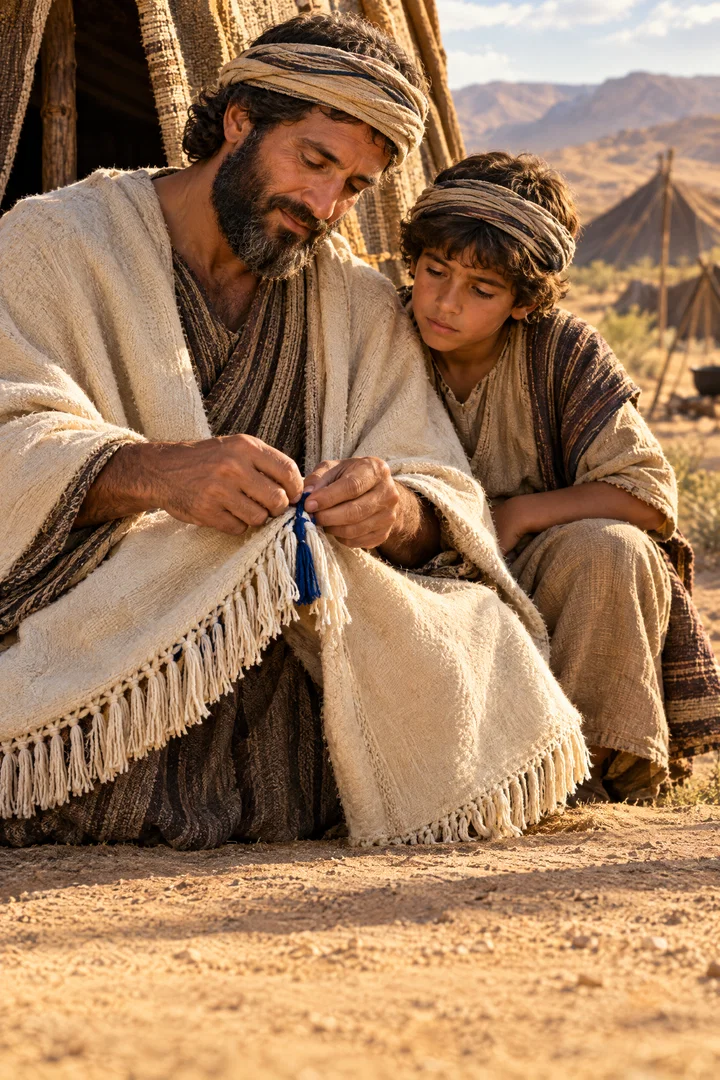
The declaration that the Lord is God who brought His people out of the land of Egypt to be their God means He delivered Israel from Egyptian bondage in a miraculous manner to make them a holy, commandment-keeping people who keep the law of the ten commandments.1T 524.1–2 To mark that identity He gave them a very simple peculiarity of dress with a ribbon of blue.1T 524.1–2 By it they were to be distinguished from the idolatrous nations around them and to be known as soon as seen as the people God brought out of Egypt.1T 524.1–2 Looking upon that distinction was to keep them remembering the high claims of Jehovah and doing all His commandments.1T 524.1–2 It was to keep them from serving their own desires and from following their own unsanctified hearts and eyes into whoring after the world.1T 524.1–2
That remembrance also meant not imitating idolatrous practices and not mingling with other nations in drunken feasts and in eating swine's flesh and luxurious food detrimental to health.1T 524.1–2 The dress command in itself had no direct effect on health except as God would bless obedience to it.1T 524.1–2 The same requirement stands now for God's peculiar people to come out from the world, forsake idolatrous practices, and remain a distinct and separate people.1T 524.1–2 This is to be done by a simple, healthful reform in dress, which is essential to physical and mental health.1T 524.1–2
Sources
Pioneers and periodicals
9 sources
The fifteenth chapter of Numbers stands after the blowing of the trumpets and the marching of the hosts of Israel and the murmuring for flesh, the speaking against Moses, and the searching of the land and the reports of the spies, and before Korah's rebellion and God's choice of the house of Aaron.ST Feb 20, 1912 It belongs to temporary sanitary and police regulations adapted to Israel in the wilderness, distinct from the eternal constitution of God's government in the Ten Commandments, and it includes judgment on a special flagrant case of presumptuous sin, the stoning of the man who in defiance gathered sticks on the Sabbath.ST Feb 1, 1905 It shows that Sabbath breaking is a sin abhorrent to God, in a book that shows what sins are abhorrent to God and what an acceptable offering is.RH Feb 24, 1916
Together with Exodus 16, the chapter is evidence that God's definite Sabbath requirement could be observed during Israel's wilderness years.ST Nov 3, 1881 Its closing words identify the Lord as Israel's God and recall that he brought them out of the land of Egypt to be their God.ST Nov 3, 1881ST Jul 1, 1897 The verse is part of the command in Numbers 15:37-41 about fringes with a blue band on garments, requiring Israel to wear the garment and look on it as a reminder to keep God's commandments and be holy to him.ST Jul 1, 1897ST Jul 1, 1897
The garment points to the Messiah, through whom alone Israel can receive holiness and righteousness and whose righteousness enables obedience to God's commandments; the garment itself does not give righteousness or merit admission to God's kingdom.ST Jul 1, 1897 The verse shows God brought Israel out of Egypt to be their God by giving himself to them together with his Sabbath and his law in a formal public espousal and transaction.RH Dec 17, 1861RH Mar 3, 1863 This giving of himself does not mean that he, his Sabbath, or his law began then or were unknown before, for the Sabbath was set apart to holy use before the fall, Abraham kept God's commandments and statutes and laws, and Israel already knew the true God and his law and Sabbath before Sinai.RH Dec 17, 1861
Though by this act he became the God of Israel, neither he nor his Sabbath nor his law became Jewish and exclusive to the Hebrews; the Sabbath remained the Sabbath of the Lord and the law remained the law of the Most High.RH Dec 17, 1861 The title God of Israel does not make the Creator Jewish, just as entrusting Israel with the Sabbath and the law does not make the Sabbath and the law Jewish; the Hebrews were honored by being entrusted with them.RH Dec 24, 1861 Becoming the God of Israel in this way did not make him exclusive to Israel, for he is the God of the Gentiles also, and in the same way the Sabbath did not become Jewish but continues as the Sabbath of the Lord and the law continues as the statutes of the Most High for all.RH Mar 3, 1863
Sources