Numbers 27:21
And he shall stand before Eleazar the priest, who shall ask counsel for him after the judgment of Urim before the LORD: at his word shall they go out, and at his word they shall come in, both he, and all the children of Israel with him, even all the congregation.
Translations
American King James Version, King James Version, Webster Bible
And he shall stand before Eleazar the priest, who shall ask counsel for him after the judgment of Urim before the LORD: at his word shall they go out, and at his word they shall come in, both he, and all the children of Israel with him, even all the congregation.
And he shall stand before Eleazar the priest, who shall ask counsel for him after the judgment of Urim before the Lord: at his word shall they go out, and at his word they shall come in, both he, and all the children of Israel with him, even all the congregation.
And he shall stand before Eleazar the priest, who shall inquire for him by the judgment of the Urim before the LORD: at his word shall they go out, and at his word they shall come in, both he, and all the children of Israel with him, even all the congregation.
And he shall stand before Eleazar the priest, who shall inquire for him by the judgment of the Urim before Jehovah: at his word shall they go out, and at his word they shall come in, both he, and all the children of Israel with him, even all the congregation.
'And before Eleazar the priest he standeth, and he hath asked for him by the judgment of the Lights before Jehovah; at His word they go out, and at His word they come in; he, and all the sons of Israel with him, even all the company.'
And he shall stand before Eleazar the priest, who shall inquire for him, by the judgment of the Urim before Jehovah: at his word shall they go out, and at his word they shall come in, he, and all the children of Israel with him, even the whole assembly.
And, before Eleazar the priest, shall he stand, and shall ask by him for the decision of the Lights, before Yahweh,—at the bidding thereof, shall they go out, and at the bidding thereof, shall they come in—he, and all the sons of Israel with him, even all the assembly.
Berean Standard Bible, Majority Standard Bible
He shall stand before Eleazar the priest, who will seek counsel for him before the LORD by the judgment of the Urim. At his command, he and all the Israelites with him— the entire congregation— will go out and come in.”
He shall stand before Eleazar the priest, who shall inquire for him by the judgment of the Urim before the LORD. At his word they shall go out, and at his word they shall come in, both he and all the children of Israel with him, even all the congregation.”
He will take his place before Eleazar the priest, so that he may get directions from the Lord for him, with the Urim: at his word they will go out, and at his word they will come in, he and all the children of Israel.
And he shall stande before Eleazar the Priest, who shall aske counsell for him by the iudgement of Vrim before the Lord: at his worde they shall goe out, and at his worde they shall come in, both he, and all the children of Israel with him and all the Congregation.
Douay-Rheims (Challoner revision)
If any thing be to be done, Eleazar the priest shall consult the Lord for him. He and all the children of Israel with him, and the rest of the multitude shall go out and go in at his word.
Pictures
Cross-references
- Exodus 28:30
And thou shalt put in the breastplate of judgment the Urim and the Thummim; and they shall be upon Aaron’s heart, when he goeth in before the LORD: and Aaron shall bear the judgment of the children of Israel upon his heart before the LORD continually.
The Urim and Thummim in the breastplate were used to seek the Lord’s counsel.
- 1 Samuel 23:9-12
And David knew that Saul secretly practised mischief against him; and he said to Abiathar the priest, Bring hither the ephod.
David calls for the ephod and inquires of God about Keilah and Saul.
- Ezra 2:63
And the Tirshatha said unto them, that they should not eat of the most holy things, till there stood up a priest with Urim and with Thummim.
Both describe seeking divine decisions through the Urim and Thummim.
- 1 Samuel 28:6
And when Saul enquired of the LORD, the LORD answered him not, neither by dreams, nor by Urim, nor by prophets.
Names the Urim among ways Saul sought God’s answer.
- Joshua 1:1-2
Now after the death of Moses the servant of the LORD it came to pass, that the LORD spake unto Joshua the son of Nun, Moses’ minister, saying,
Joshua takes leadership of Israel after Moses dies.
- Deuteronomy 34:9
And Joshua the son of Nun was full of the spirit of wisdom; for Moses had laid his hands upon him: and the children of Israel hearkened unto him, and did as the LORD commanded Moses.
Joshua succeeds Moses and is commissioned to lead Israel.
- Numbers 13:16
These are the names of the men which Moses sent to spy out the land. And Moses called Oshea the son of Nun Jehoshua.
Identifies Joshua’s original name as Oshea and says Moses changed it.
- Numbers 14:6-9
And Joshua the son of Nun, and Caleb the son of Jephunneh, which were of them that searched the land, rent their clothes:
Joshua’s faithful report foreshadows his appointment to succeed Moses.
Commentary
Each commentary is drawn from primary sources: the writings of Ellen G. White and Adventist pioneers and periodicals. Each commentary is separate. Its own words are not a quotation; follow the references to read the source passages.
Ellen G. White
9 sources
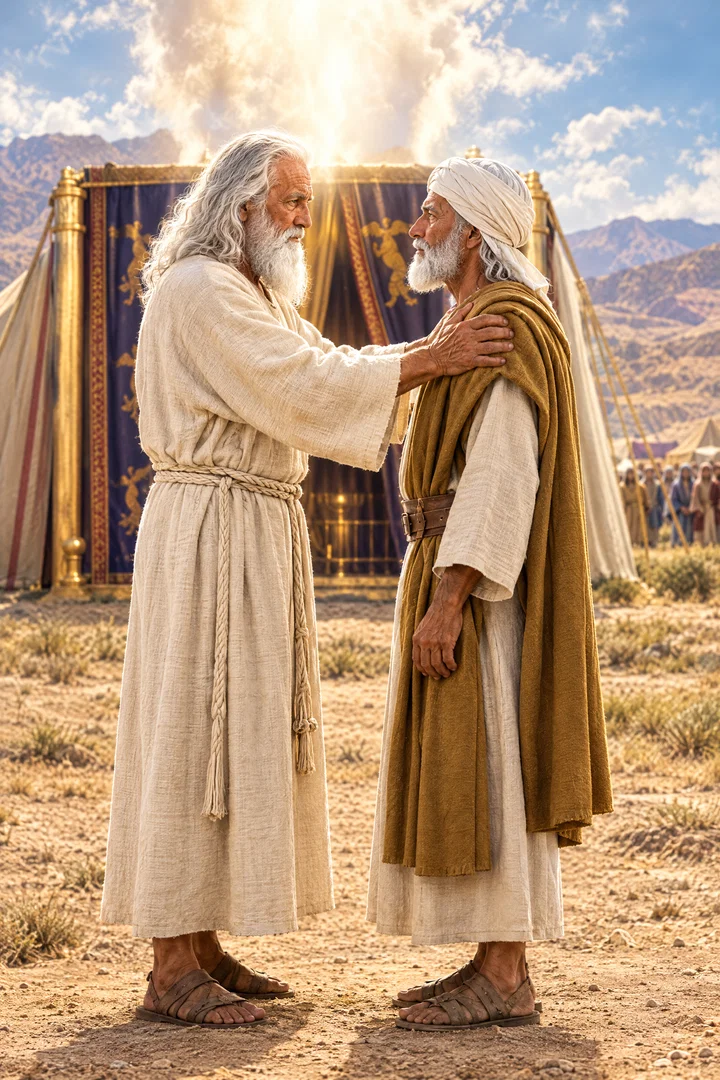
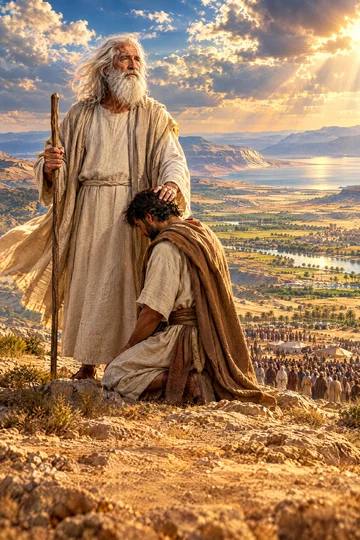
The verse belongs to the appointment in which Joshua was divinely chosen to succeed Moses after his death and lead Israel into the promised land.4T 156.2PP 481.4Lt 77, 1893, par. 36–39Ms 30, 1901, par. 1–3Lt 124, 1906, par. 6 Joshua had proved fit for the office by serving under Moses, knowing the people, giving a faithful report as one of the spies, and showing faithful service and courage.4T 156.2PP 481.4 Joshua was given a share in governing Israel, and the congregation was to follow him, going out and coming in at his word and looking to his leadership.ST Jan 13, 1881PP 462.1–463.1Lt 124, 1906, par. 6
His authority was to be exercised under God's direction: he was to stand before Eleazar the priest, who would seek counsel for him by the judgment of the Urim before the Lord, so that the going out and coming in of Israel depended on God's answer and direction.ST Jan 13, 1881PP 462.1–463.11SP 398.2–399.1SG4 102.1Lt 77, 1893, par. 36–39 The people's movements were to be directed through the priest's counsel by Urim, and Israel was to go out and come in at the Lord's direction.Lt 77, 1893, par. 36–39Ms 30, 1901, par. 1–3 The Urim answered on the stones of the priest's breastplate, with light on the stone at the right signifying God's approval, favor, permission and success, including permission to go to battle, and a cloud on the stone at the left signifying refusal, failure, and warning that they would not prosper.1SP 398.2–399.1SG4 102.1
When the high priest inquired before the ark, God could also answer audibly or indicate approval or refusal by light or cloud upon the cherubim.1SP 398.2–399.1 This arrangement differed from Moses' role, since Moses had been permitted to seek counsel directly from God, while Joshua and later rulers could approach the Lord only through the high priest.ST Jan 13, 1881 A claimed appointment to lead God's people requires divine instruction about that appointment.Ms 30, 1901, par. 1–3
The Moses-and-Joshua relationship is a model for experienced workers guiding younger workers in God's work, and those who refuse that guiding role may hinder the work instead of blessing it.Lt 77, 1893, par. 36–39 The passage is also used to reject men's claims that they are appointed to assist in the work.Lt 124, 1906, par. 6
Sources
Pioneers and periodicals
13 sources
The verse is the Lord's direction for setting Joshua apart to succeed Moses in leading Israel and guiding its journeyings.ST Sep 24, 1902ST Jun 16, 1914RH Mar 9, 1916RH Mar 10, 1904RH Sep 13, 1906 Joshua was chosen because the Spirit was in him, and his faithfulness as one of the two true spies was rewarded with greater service as leader.ST Jun 16, 1914 He was to stand before Eleazar the priest, who would seek the decision of the Urim before the Lord, and at that word Joshua with all Israel and the whole congregation would go out and come in.ST Jan 13, 1881ST Feb 25, 1913 Unlike Moses, who had sought counsel directly from God, Joshua was to exercise authority under God's direction through the priest.ST Jan 13, 1881 The Urim and Thummim in the breastplate of judgment gave clear and certain guidance by supernatural illumination in great and difficult matters concerning all Israel, rather than ambiguous answers like heathen oracles.RH Jul 16, 1872ST Oct 10, 1895RH Sep 18, 1856 Approval was made known by light or a halo making the right way plain, and disapproval by a cloud, and as God then made the way plain, Christians in prayer may trust Him to lead and show whether He approves.ST Nov 12, 1894ST Apr 11, 1906
Joshua Appointed to Lead
Numbers 27:21 belongs to the Lord's instruction to Moses to set Joshua apart for the work of leading Israel and directing its journeyings.ST Sep 24, 1902ST Jun 16, 1914RH Mar 9, 1916RH Mar 10, 1904 It is part of the account of Joshua's divine appointment to succeed Moses as Israel's leader, placing his leadership within God's direction of the people.ST Sep 24, 1902ST Jun 16, 1914RH Mar 9, 1916ST Sep 10, 1902RH Sep 13, 1906 Joshua was chosen because the spirit was in him, and as one of the two faithful spies with Caleb who brought back the correct report from the land, God rewarded his right spirit and faithfulness with still greater and more useful service, seen in his successful career as leader.ST Jun 16, 1914 He is identified as a faithful Israelite chosen to succeed Moses whose name was originally Hoshea, changed by Moses to Jehoshea, meaning Jehovah is my salvation, and later shortened to Joshua.
God directed Moses to associate Joshua with his work and responsibilities and to present him before Eleazar and the congregation, so that after Moses died the Lord selected Joshua to lead the people into the promised land.RH Mar 10, 1904RH Sep 13, 1906 Moses willingly set Joshua apart for the office, with humble submission and no resentment over his own dismissal, while his concern for Israel and confidence in the triumph of redemption continued.ST Sep 10, 1902 The appointment shows that God corrected Moses when he erred without taking away his prophetic gift, and used Moses to identify the leader who would continue guiding Israel after his death.RH Sep 13, 1906
Seeking Counsel by Urim
The promise to Joshua as he took the lead of Israel's journeyings was that he should stand before Eleazar the priest, who would always stand ready to ask counsel for him after the judgment of Urim before the Lord.ST Jan 13, 1881ST Feb 25, 1913 At that word given through the priest, Joshua and all the children of Israel with him, even all the congregation, were to go out and to come in, following the counsel in their movements and affairs.ST Jan 13, 1881ST Feb 25, 1913RH Jul 16, 1872ST Oct 10, 1895 Joshua's authority as leader was thus to be exercised under God's direction sought through Eleazar by the Urim, and the people were to follow Joshua as he followed that direction.ST Jan 13, 1881ST Oct 10, 1895 This differed from Moses, who had been permitted to seek counsel directly from God, whereas Joshua and later rulers could approach the Lord only through the high priest.ST Jan 13, 1881
The jeweled Urim and Thummim were carried in the high priest's ephod breastplate of judgment, a sacred vestment bearing the names of Israel's twelve tribes.RH Jul 16, 1872 The high priest bore the names and the judgment before the Lord in his sanctuary work, the judgment meaning the whole course of conduct and its results for the tribes. Seeking God through the Urim was one of the means by which God as Israel's ruler revealed His will.ST Oct 10, 1895 It was consulted for prophetic purposes in great emergencies and perplexities, in difficult and important matters concerning all Israel, and its decisions were given by supernatural illumination.RH Jul 16, 1872RH Sep 18, 1856 The Urim and Thummim were the divine power given to the breastplate for this purpose.RH Sep 18, 1856
The answers so given were clear and manifest, complete and certain in truth, rather than ambiguous like heathen oracles.RH Sep 18, 1856 The answer was made known by light: a light or halo around the Urim or around the stone on the right signified approval and pleasure and made the right way plain.ST Nov 12, 1894ST Apr 11, 1906 A cloud over the stone on the left or at the Thummim signified disapproval and displeasure.ST Nov 12, 1894ST Apr 11, 1906
Trusting God's Guidance Today
The Urim and Thummim were means by which the Lord gave counsel to Israel.ST Apr 11, 1906 A halo of light around the Urim showed that He was pleased with a request and made the right way plain, while a cloud at the Thummim showed His displeasure.ST Apr 11, 1906 In prayer Christians may trust that the Lord leads them and may know whether He approves their request or indicates otherwise.ST Apr 11, 1906
The Lord called Joshua to take Moses' place when Moses laid down his work. Joshua's amiable, quiet, unostentatious faithfulness in obeying Moses as leader proved him able to take the leadership when it was left vacant. God approves the character seen in these two men, and the same respect for elders and faithful obedience in these days brings the approval of the great Leader of Israel.
Sources