Numbers 27:22
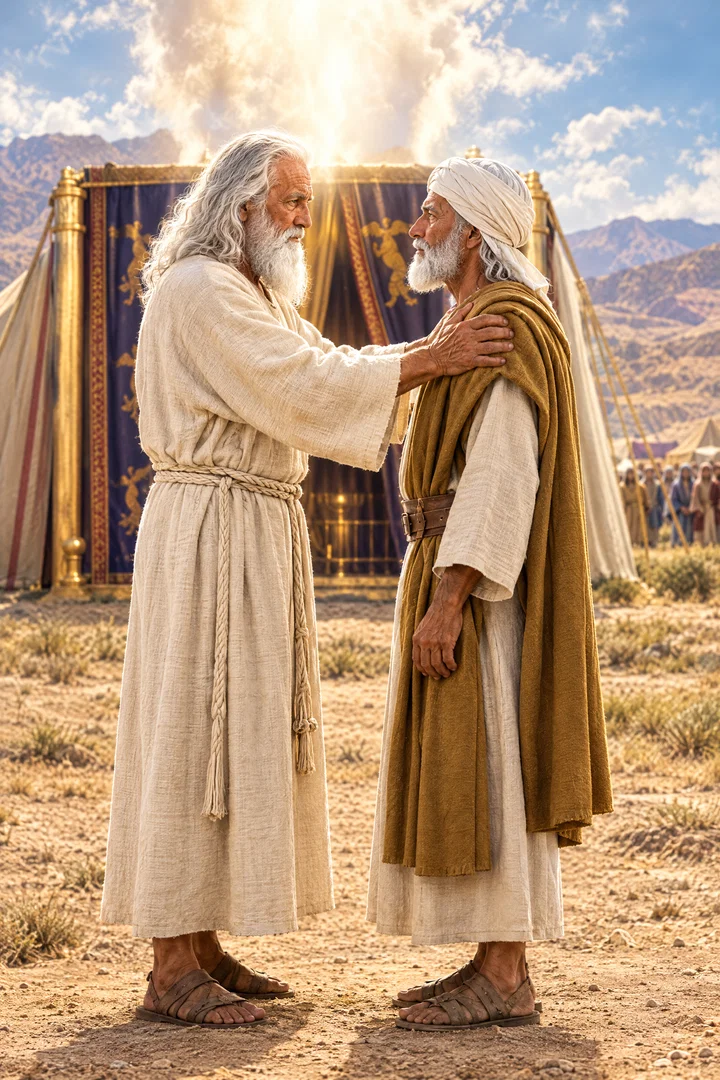
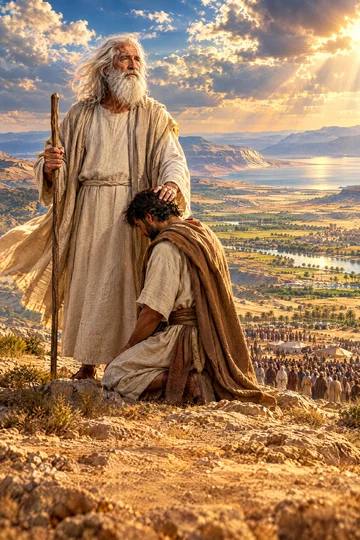
And Moses did as the LORD commanded him: and he took Joshua, and set him before Eleazar the priest, and before all the congregation:
Translations
American King James Version, King James Version, Webster Bible, Revised Version
And Moses did as the LORD commanded him: and he took Joshua, and set him before Eleazar the priest, and before all the congregation:
And Moses did as the Lord commanded him: and he took Joshua, and set him before Eleazar the priest, and before all the congregation:
And Moses did as Jehovah commanded him; and he took Joshua, and set him before Eleazar the priest, and before all the congregation:
And Moses doth as Jehovah hath commanded him, and taketh Joshua, and causeth him to stand before Eleazar the priest, and before all the company,
And Moses did as Jehovah had commanded him; and he took Joshua and set him before Eleazar the priest, and before the whole assembly.
And Moses did as Yahweh commanded him,—and took Joshua, and caused him to stand before Eleazar the priest, and before all the assembly;
Berean Standard Bible, Majority Standard Bible
Moses did as the LORD had commanded him. He took Joshua, had him stand before Eleazar the priest and the whole congregation,
Moses did as the LORD commanded him. He took Joshua, and set him before Eleazar the priest and before all the congregation.
So Moses did as the Lord said: he took Joshua and put him before Eleazar the priest and the meeting of the people:
So Moses did as the Lord had commanded him, and he tooke Ioshua, and set him before Eleazar the Priest, and before all the Congregation.
Douay-Rheims (Challoner revision)
Moses did as the Lord had commanded. And when he had taken Josue, he set him before Eleazar the priest, and all the assembly of the people,
Pictures
Cross-references
- Deuteronomy 31:7
And Moses called unto Joshua, and said unto him in the sight of all Israel, Be strong and of a good courage: for thou must go with this people unto the land which the LORD hath sworn unto their fathers to give them; and thou shalt cause them to inherit it.
Moses publicly charges Joshua as he assumes leadership of Israel.
- Numbers 14:8-9
If the LORD delight in us, then he will bring us into this land, and give it us; a land which floweth with milk and honey.
Joshua trusted God to bring Israel into the promised land.
- Numbers 27:18
And the LORD said unto Moses, Take thee Joshua the son of Nun, a man in whom is the spirit, and lay thine hand upon him;
gives reason for setting Joshua apart
- Joshua 1:1-2
Now after the death of Moses the servant of the LORD it came to pass, that the LORD spake unto Joshua the son of Nun, Moses’ minister, saying,
After Moses’ death, Joshua leads Israel into the promised land.
- Numbers 13:16
These are the names of the men which Moses sent to spy out the land. And Moses called Oshea the son of Nun Jehoshua.
Identifies Moses’ change of Joshua’s original name.
- Joshua 1:7
Only be thou strong and very courageous, that thou mayest observe to do according to all the law, which Moses my servant commanded thee: turn not from it to the right hand or to the left, that thou mayest prosper whithersoever thou goest.
Joshua is charged to obey the law Moses commanded.
- Nehemiah 8:17
And all the congregation of them that were come again out of the captivity made booths, and sat under the booths: for since the days of Jeshua the son of Nun unto that day had not the children of Israel done so. And there was very great gladness.
Records the shorter form, Jeshua, of Joshua’s name.
- Exodus 14:21-22
And Moses stretched out his hand over the sea; and the LORD caused the sea to go back by a strong east wind all that night, and made the sea dry land, and the waters were divided.
Joshua witnessed Israel pass through the divided sea.
Commentary
Each commentary is drawn from primary sources: the writings of Ellen G. White and Adventist pioneers and periodicals. Each commentary is separate. Its own words are not a quotation; follow the references to read the source passages.
Ellen G. White
5 sources
Moses obeyed what the Lord commanded him by taking Joshua and setting him before Eleazar the priest and before all the congregation.PP 462.1–463.1PP 481.4Ms 30, 1901, par. 1–3 That public presenting made Joshua Israel's acknowledged successor and leader after Moses.PP 462.1–463.14T 156.2PP 481.4 He was chosen and qualified to lead the people into the promised land.4T 156.2PP 481.4 His fitness for that charge had been shown in his faith when he urged Israel to go up and possess the land in the strength of God.4T 156.2
That appointment of Joshua gives no warrant for any later person to claim the place of Joshua in connection with God's people, since such a placing would require God's own direction.Ms 30, 1901, par. 1–3 Moses stood to Joshua as a guide and support to prepare him to lead afterward, which is the relation intended between experienced workers and younger workers.Lt 77, 1893, par. 36–39 Older laborers are therefore to unite with those raised up by God, to counsel them and help forward the work, and if instead they stand apart from them or hinder them they fail to do the work intended for them.Lt 77, 1893, par. 36–39
Sources
Pioneers and periodicals
6 sources
Moses did as the Lord commanded him by taking Joshua and setting him before Eleazar the priest and before all the congregation, willingly and obediently setting him apart for his work.ST Sep 24, 1902RH Mar 10, 1904ST Sep 10, 1902RH Sep 13, 1906 This public presentation before Eleazar and all Israel associated Joshua with Moses' work and responsibilities and marked him as the man chosen by the Lord to succeed Moses and through whom God would continue to lead Israel after Moses' death.ST Jun 16, 1914RH Mar 9, 1916RH Mar 10, 1904RH Sep 13, 1906 Moses' obedient submission showed he accepted the Lord's judgment on him without resentment, and his dismissal from office did not lessen his concern for Israel or his confidence that the cause of redemption would triumph.ST Sep 10, 1902 He remained a prophet even though God had corrected him for his error at the waters of strife.RH Sep 13, 1906
Joshua was chosen because of the spirit that was in him, and God rewarded his right spirit and faithfulness with still greater and more useful service.ST Jun 16, 1914 He was peculiarly fitted for the work, born a slave in the brick-fields of Egypt and about forty years old at the exodus, coming out with Israel and remaining faithful.RH Mar 9, 1916 He served for forty years as Moses' close friend and principal assistant, led Israel's army in battle, and showed courage in war and wise counsel in peace, loyalty and faithfulness in stress and trial, and implicit confidence in God and obedience to His commands.ST Sep 24, 1902ST Jun 16, 1914RH Mar 9, 1916 With Caleb he was one of the two faithful of the twelve spies who brought back the correct report and urged Israel to take the land.ST Sep 24, 1902ST Jun 16, 1914RH Mar 9, 1916
His name was originally Hoshea meaning salvation, changed to Jehoshea or Jehoshua meaning God's salvation or Jehovah is my salvation, later shortened to Joshua.RH Mar 9, 1916 In the Septuagint and the New Testament the name appears as Jesus, in later years also taking the form Jason and more frequently Jesus.RH Mar 9, 1916 Joshua is a type of Christ, the Jesus of the Old Testament bringing ancient Israel into the typical Land of Promise as Jesus of the New Testament will bring His people into the real Land of Promise, the eternal rest in the kingdom of God.RH Mar 9, 1916
After Moses appointed him, the Lord spoke to Joshua directly.ST Sep 24, 1902 Though Moses died when Israel seemed most to need him, the real Leader ever lives, and it was His power, not the mantle of the human Moses, that came upon the quiet, loyal, brave-hearted Joshua.RH Mar 9, 1916 That power enabled his successful career leading Israel into Canaan and leaving that land in their possession when his work was ended.ST Jun 16, 1914RH Mar 9, 1916 His faithful life in leadership had mighty influence, holding Israel to serve the Lord.RH Mar 9, 1916 Joshua's quiet, unostentatious, faithful loyalty in following Moses proved his fitness to lead when the place was vacant; God approves this pattern of honoring elders and faithful succession, and the same character today brings the approval of God.
Sources