Numbers 27:23
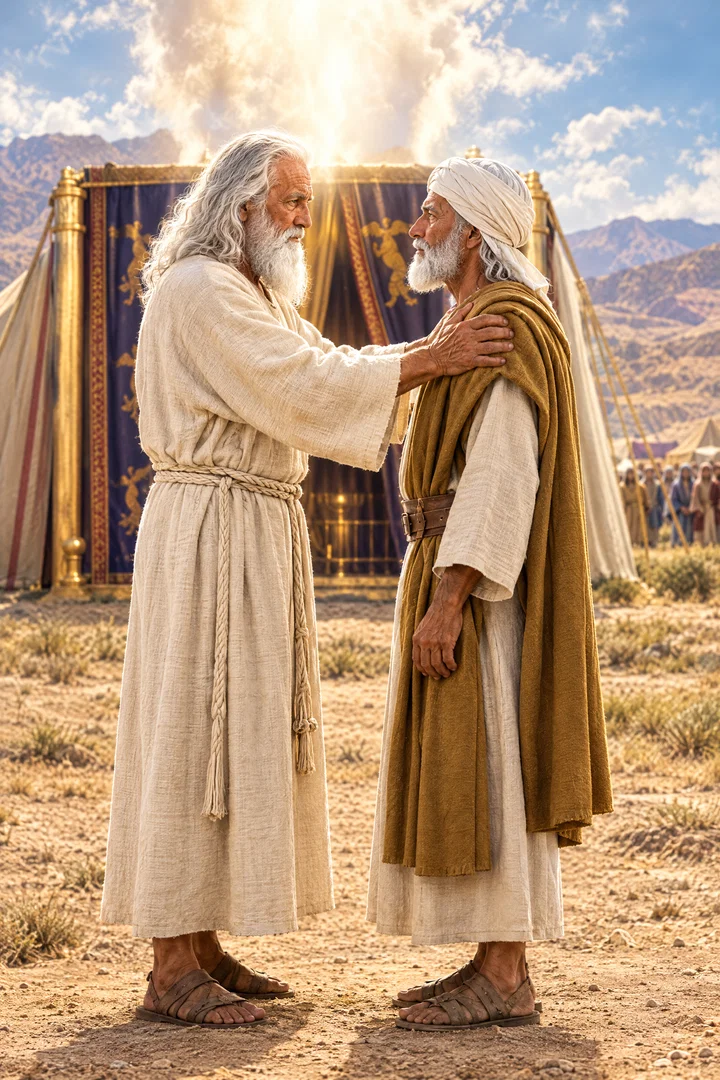
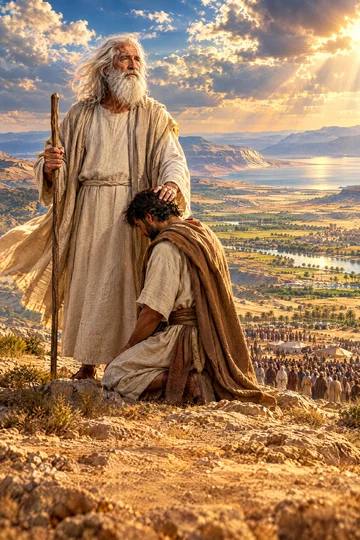
And he laid his hands upon him, and gave him a charge, as the LORD commanded by the hand of Moses.
Translations
And he laid his hands on him, and gave him a charge, as the LORD commanded by the hand of Moses.
King James Version, Webster Bible
And he laid his hands upon him, and gave him a charge, as the LORD commanded by the hand of Moses.
and he laid his hands upon him, and gave him a charge, as the Lord commanded by the hand of Moses.
and he laid his hands upon him, and gave him a charge, as the LORD spake by the hand of Moses.
and he laid his hands upon him, and gave him a charge, as Jehovah spake by Moses.
and layeth his hands upon him, and chargeth him, as Jehovah hath spoken by the hand of Moses.
And he laid his hands upon him, and gave him commandment, as Jehovah had said through Moses.
and leaned his hands upon him and charged him,—As Yahweh spake by the hand of Moses.
Berean Standard Bible, Majority Standard Bible
and laid his hands on him and commissioned him, as the LORD had instructed through Moses.
He laid his hands on him and commissioned him, as the LORD spoke by Moses.
And he put his hands on him and gave him his orders, as the Lord had said by Moses.
Then he put his handes vpon him, and gaue him a charge, as the Lord had spoken by the hand of Moses.
Douay-Rheims (Challoner revision)
And laying his hands on his head, he repeated all things that the Lord had commanded.
Pictures
Cross-references
- Joshua 1:1-2
Now after the death of Moses the servant of the LORD it came to pass, that the LORD spake unto Joshua the son of Nun, Moses’ minister, saying,
God commissions Joshua to lead Israel after Moses’ death.
- Deuteronomy 34:9
And Joshua the son of Nun was full of the spirit of wisdom; for Moses had laid his hands upon him: and the children of Israel hearkened unto him, and did as the LORD commanded Moses.
Joshua receives authority after Moses lays hands on him.
- Deuteronomy 31:7
And Moses called unto Joshua, and said unto him in the sight of all Israel, Be strong and of a good courage: for thou must go with this people unto the land which the LORD hath sworn unto their fathers to give them; and thou shalt cause them to inherit it.
Moses commissions Joshua to lead Israel.
- Numbers 13:16
These are the names of the men which Moses sent to spy out the land. And Moses called Oshea the son of Nun Jehoshua.
Identifies Joshua’s original name and its change by Moses.
- Deuteronomy 3:24-27
O Lord GOD, thou hast begun to shew thy servant thy greatness, and thy mighty hand: for what God is there in heaven or in earth, that can do according to thy works, and according to thy might?
Moses’ denied plea to enter the land sets the scene for Joshua’s appointment.
- Numbers 14:6-9
And Joshua the son of Nun, and Caleb the son of Jephunneh, which were of them that searched the land, rent their clothes:
Joshua joins Caleb in urging Israel to trust God and enter Canaan.
Commentary
Each commentary is drawn from primary sources: the writings of Ellen G. White and Adventist pioneers and periodicals. Each commentary is separate. Its own words are not a quotation; follow the references to read the source passages.
Ellen G. White
5 sources
Moses laid his hands upon Joshua and gave him a charge exactly as the Lord had commanded, and by that act formally commissioned him as leader.PP 462.1–463.14T 156.2PP 481.4Lt 77, 1893, par. 36–39Ms 30, 1901, par. 1–3 The commissioning was public and solemn, setting Joshua apart before all Israel as Moses's successor.PP 462.1–463.14T 156.2PP 481.4Ms 30, 1901, par. 1–3 In that setting apart the leadership of the people was entrusted to him.PP 462.1–463.14T 156.2PP 481.4 Joshua was divinely chosen to bring Israel into the promised land after he had proved faithful and fit for the work.4T 156.2PP 481.4 His fitness came through serving alongside Moses, gaining a knowledge of Israel, and standing with the two spies who faithfully urged the people to enter the land trusting in God.4T 156.2
Moses in guiding and commissioning Joshua provides the pattern by which experienced workers are to support and help younger workers so that God's work may advance.Lt 77, 1893, par. 36–39 That Moses-and-Joshua pattern also settles the claim that God had appointed a particular speaker to act as Moses with H. T. Nelson as Joshua.Ms 30, 1901, par. 1–3 No such appointment had been made known by God, and without that divine making-known the claim is to be rejected.Ms 30, 1901, par. 1–3
Sources
Pioneers and periodicals
7 sources
Moses laid his hands upon Joshua and gave him a charge as the Lord had commanded, thereby setting him apart for his work and formally commissioning him to succeed Moses in leading Israel.ST Sep 24, 1902ST Jun 16, 1914RH Feb 18, 1873RH Mar 9, 1916 The appointment was made publicly before the congregation, with Moses laying his hand upon Joshua and appointing him as the future leader so the work of leading Israel could continue after Moses' death in keeping with God's purpose.RH Feb 18, 1873RH Mar 10, 1904 Moses acted willingly in submission to the Lord's judgment, and his submission did not lessen his concern for Israel or his confidence that the work of redemption would triumph.ST Sep 10, 1902
Through Moses, God Himself chose Joshua at the Lord's call and direction to continue leading Israel and God's work after Moses' death.ST Jun 16, 1914RH Feb 18, 1873RH Mar 9, 1916RH Sep 13, 1906 Joshua's divine appointment carried with it the power that enabled him to lead Israel, and after Moses charged him the Lord spoke to Joshua directly.ST Sep 24, 1902RH Mar 9, 1916 He was chosen for this work because of the spirit that was in him.ST Jun 16, 1914
With Caleb, Joshua was one of the two faithful spies who brought back the correct report from spying out the land, and God rewarded his right spirit and faithfulness with still greater and more useful service, seen in his successful career.ST Jun 16, 1914 His amiable, quiet, unostentatious fidelity in obeying Moses as leader was the surest evidence of his ability to take the leadership when it was vacated. His selection prepared him to lead Israel into the promised land after Moses' death, and his faithful life had such mighty influence that Israel served the Lord all his days.RH Mar 10, 1904
Joshua, whose name was originally Hoshea and was changed by Moses to Jehoshea meaning Jehovah is my salvation, is a type of Jesus. God approves such faithful character in both leaders and followers, and the same characteristics shown today bring the approval of the great Leader of Israel. Respect for elders is the most valuable virtue a young man can show and reflects the most glory upon his own character, while lack of this development explains why there are no great, overshadowing leaders now.
Sources