Translations
American King James Version, King James Version, Webster Bible, Revised Version
And the priest shall bring her near, and set her before the LORD:
And the priest shall bring her near, and set her before the Lord:
And the priest shall bring her near, and set her before Jehovah:
'And the priest hath brought her near, and hath caused her to stand before Jehovah,
And the priest shall bring her near, and set her before Jehovah.
Then shall the priest bring her near,—and cause her to stand before Yahweh;
Berean Standard Bible, Majority Standard Bible
The priest is to bring the wife forward and have her stand before the LORD.
The priest shall bring her near, and set her before the LORD.
And the priest will make her come near and put her before the Lord;
And the Priest shall bring her, and set her before the Lord.
Douay-Rheims (Challoner revision)
The priest therefore shall offer it, and set it before the Lord.
Pictures
Commentary
Each commentary is drawn from primary sources: the writings of Ellen G. White and Adventist pioneers and periodicals. Each commentary is separate. Its own words are not a quotation; follow the references to read the source passages.
Pioneers and periodicals
2 sources
The book holding the verse is named Numbers because of the two numberings of Israel, one in the early part of the book and the other near its close.ST Feb 17, 1909 It stands in the opening chapters, which follow the first four chapters on the numbering of the people, the numbering of the tribe of Levi, and the office of the various families of Levi.ST Feb 17, 1909 Those first five chapters set forth the numbering of Israel, the order of their encampment, the princes of the tribes, the division of duties among the Levites and the priests, the redemption of the firstborn, and other ceremonies connected with the institution of worship.ST Feb 17, 1909ST Feb 20, 1912 Chapters 5 and 6 contain among other instructions the laws concerning jealousy and the Nazirites, closing with the blessing which the priests were instructed to place upon the children of Israel.ST Feb 17, 1909
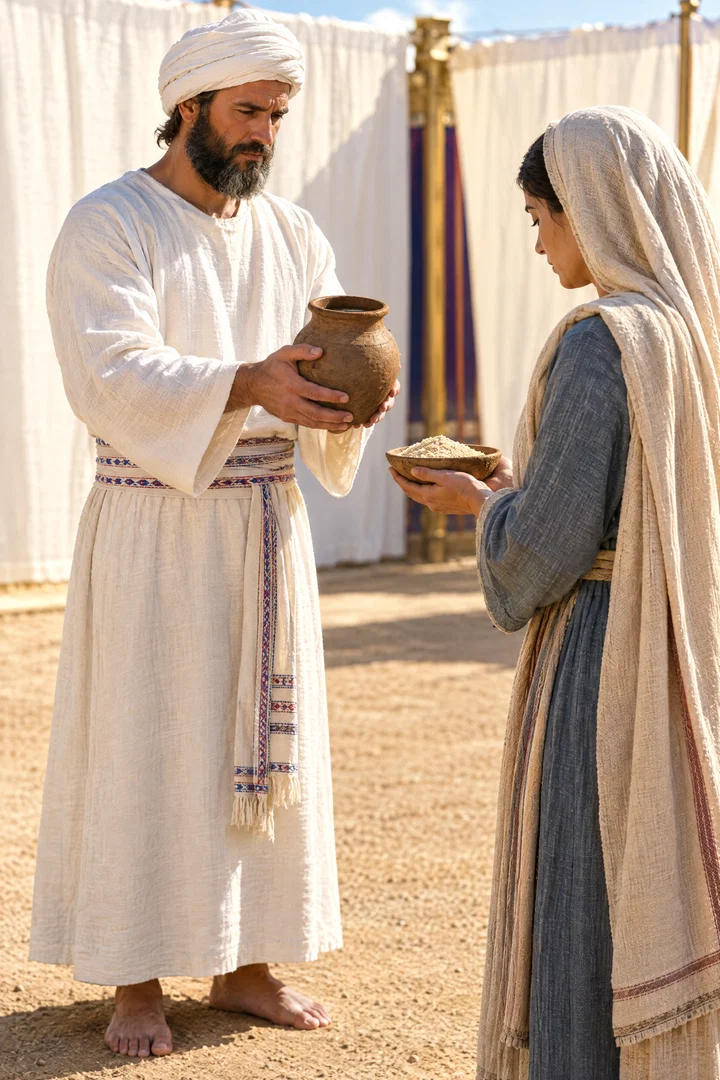
The verse brings a wife suspected of adultery, where her husband has no direct evidence, before the priest as part of the jealousy offering and bitter-water test. The jealousy offering was a memorial bringing iniquity to remembrance, and the bitter-water test was intended to distinguish innocence from guilt. The innocent woman suffered no harm, while guilt brought a dreadful, speedy death, and this rite served to remove suspicion of impurity from Israel.
Sources