Translations
American King James Version, Webster Bible
And the LORD spoke to Moses, saying,
King James Version, Revised Version
And the LORD spake unto Moses, saying,
And the Lord spake unto Moses, saying,
And Jehovah spake unto Moses, saying,
And Jehovah speaketh unto Moses, saying,
And Jehovah spoke to Moses, saying,
And Yahweh spake unto Moses, saying:
Berean Standard Bible, Majority Standard Bible
Then the LORD said to Moses,
The LORD spoke to Moses, saying,
And the Lord said to Moses,
And the Lord spake vnto Moses, saying,
Douay-Rheims (Challoner revision)
And the Lord spoke to Moses, saying:
Pictures
Cross-references
- Acts 21:26
Then Paul took the men, and the next day purifying himself with them entered into the temple, to signify the accomplishment of the days of purification, until that an offering should be offered for every one of them.
Paul joins men completing their purification vows and shares the expense.
Commentary
Each commentary is drawn from primary sources: the writings of Ellen G. White and Adventist pioneers and periodicals. Each commentary is separate. Its own words are not a quotation; follow the references to read the source passages.
Ellen G. White
2 sources
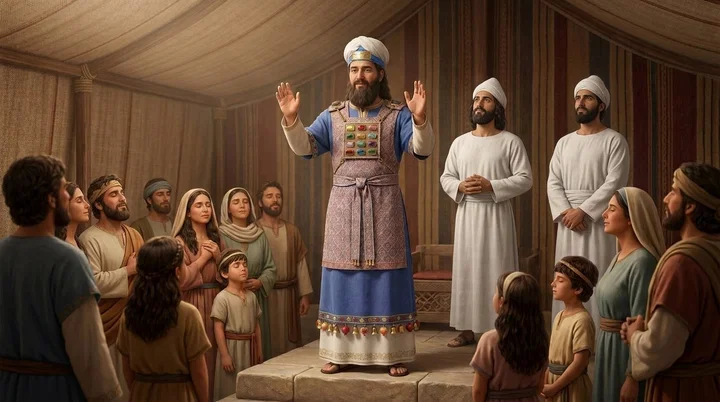
The verse opens the Lord's instruction to Moses that Aaron and his sons were to pronounce a blessing upon Israel.6T 350.3 That appointed blessing put God's name upon the people and brought to them His blessing and care.6T 350.3 Those who obey the Sabbath commandment take His name and share in the blessings connected with it.6T 350.3
The chapter in which the verse stands sets forth the Nazarite vow.SLP 214.2 That vow could include a period of purification that ended in sacrifices, and its completion could call for costly offerings.SLP 214.2 Paul aided four poor Christian Nazarites by helping pay those expenses and joined with them in the temple ceremonies through seven days of purification.SLP 214.2
Sources
Pioneers and periodicals
7 sources
The Lord speaking to Moses here introduces the blessing He gave through Moses for the priests to pronounce and place upon Israel, upon the children of Israel, upon His people.ST Feb 20, 1912ST Jan 17, 1900ST Feb 17, 1909ST Feb 14, 1911RH Jan 12, 1911 It stands at the close of the instructions in Numbers 5 and 6 about jealousy and the Nazarites, and together with the Nazarite vows it makes Numbers 6 worth retaining and reading.ST Feb 20, 1912ST Feb 17, 1909 The blessing to be pronounced upon His people shows that He is no respecter of persons.ST Feb 14, 1911 In its sanctuary setting it pictures the High Priest coming forth from the sanctuary after the work of atonement to pronounce the everlasting blessing upon God's waiting people.ST Jan 17, 1900
As ceremonial law it begins the Lord's instruction to Moses giving the vow ceremonies prescribed in Jewish law for the Nazarite vow, by which men set themselves apart for God for a certain time.ST Jan 3, 1911RH Aug 19, 1873 During that time they taste neither wine nor grapes and do not shave the hair or beard until the time expires.RH Aug 19, 1873 At the end of the time certain offerings involving heavy expense must be made, after which the head is shaved to signify the vow is fulfilled.RH Aug 19, 1873 Paul's public association with four men at Jerusalem in the last seven days of their vow, giving public notice that in seven days he would appear with them, sharing the charges of their offerings and participating in the conclusion of their vow without making the vow himself, was action under this ceremonial command to show regard for the faith of the fathers, and was honest and right rather than falsehood or dissimulation.ST Jan 3, 1911RH Aug 19, 1873
The priestly blessing and related rites continue in modified form in Jewish synagogues, where a rabbi blesses the people and an attendant pours water on his hands in the Levitical manner.RH Jan 12, 1911 These practices are mechanical and have failed to point to the better, heavenly way.RH Jan 12, 1911
Sources