Numbers 6:23
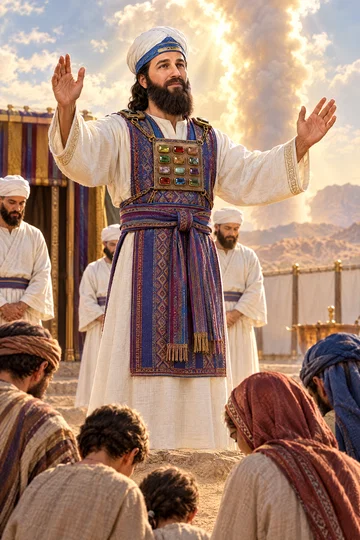
Speak unto Aaron and unto his sons, saying, On this wise ye shall bless the children of Israel, saying unto them,
Translations
Speak to Aaron and to his sons, saying, On this wise you shall bless the children of Israel, saying to them,
King James Version, KJV Cambridge Paragraph Bible
Speak unto Aaron and unto his sons, saying, On this wise ye shall bless the children of Israel, saying unto them,
Speak to Aaron and to his sons, saying, On this wise ye shall bless the children of Israel, saying to them,
Speak unto Aaron and unto his sons, saying, On this wise ye shall bless the children of Israel; ye shall say unto them,
Speak unto Aaron and unto his sons, saying, On this wise ye shall bless the children of Israel: ye shall say unto them,
'Speak unto Aaron, and unto his sons, saying, Thus ye do bless the sons of Israel, saying to them,
Speak unto Aaron and unto his sons, saying, On this wise ye shall bless the children of Israel: saying unto them,
Speak unto Aaron, and unto his sons saying Thus, shall ye bless the sons of Israel,—saying unto them:
Berean Standard Bible, Majority Standard Bible
“ Tell Aaron and his sons: This is how you are to bless the Israelites. Say to them:
“ Speak to Aaron and to his sons, saying, ‘ This is how you shall bless the children of Israel.’ You shall tell them,
Say to Aaron and his sons, These are the words of blessing which are to be used by you in blessing the children of Israel; say to them,
Speake vnto Aaron and to his sonnes, saying, Thus shall ye blesse the childre of Israel, and say vnto them,
Douay-Rheims (Challoner revision)
Say to Aaron and his sons: Thus shall you bless the children of Israel, and you shall say to them:
Pictures

Cross-references
- Leviticus 9:22
And Aaron lifted up his hand toward the people, and blessed them, and came down from offering of the sin offering, and the burnt offering, and peace offerings.
both show priests blessing the people
- Acts 3:26
Unto you first God, having raised up his Son Jesus, sent him to bless you, in turning away every one of you from his iniquities.
Christ blesses by turning people away from their sins.
- Deuteronomy 21:5
And the priests the sons of Levi shall come near; for them the LORD thy God hath chosen to minister unto him, and to bless in the name of the LORD; and by their word shall every controversy and every stroke be tried:
both show priests blessing the people
Commentary
Each commentary is drawn from primary sources: the writings of Ellen G. White and Adventist pioneers and periodicals. Each commentary is separate. Its own words are not a quotation; follow the references to read the source passages.
Ellen G. White
3 sources
The verse is a direct instruction to Aaron and to his sons that they are to bless the children of Israel in this prescribed manner.MH 285.1–26T 350.3Lt 162, 1900, par. 14–15 It gives them the set form by which the blessing is to be spoken over the people.MH 285.1–26T 350.3Lt 162, 1900, par. 14–15 That blessing puts God's name upon Israel and declares that God will bless them.MH 285.1–26T 350.3Lt 162, 1900, par. 14–15 It places the Lord's name on the people and conveys His blessing to them.MH 285.1–26T 350.3Lt 162, 1900, par. 14–15
Those who obey the fourth commandment and keep holy the day God has set apart take His name and have this blessing pronounced upon them.6T 350.3Lt 162, 1900, par. 14–15 The blessing of God is pronounced upon those who keep holy the day He has set apart.6T 350.3Lt 162, 1900, par. 14–15 Those who keep the seventh day thereby show that they bear God's sign as loyal subjects of His kingdom who acknowledge Him as Creator of the heavens and the earth.Lt 162, 1900, par. 14–15 This draws a plain line between him that serves God and him that serves Him not.Lt 162, 1900, par. 14–15 They bear a public sign that they honor Him by keeping His commandments, with holiness to the Lord as their badge, and they are cheerful and happy in the assurance that they receive His blessing of protection, favor and peace with His name put upon them.Lt 162, 1900, par. 14–15
Sources
Pioneers and periodicals
8 sources
Numbers 6:23 commands Aaron and his sons to bless the children of Israel in the prescribed form, thereby placing upon Israel the blessing God Himself provided.ST Feb 20, 1912ST Feb 17, 1909ST Feb 14, 1911ST Jun 26, 1901RH Jan 12, 1911 Together with the Nazarite vows it forms the important matter of Numbers 6, closing the instructions of Numbers 5 and 6 concerning jealousy and the Nazarites.ST Feb 20, 1912ST Feb 17, 1909 That chapter stands within the larger section of chapters 4-10 concerning the Levites, priests, offerings and vows, offerings of the tribes, care of the tabernacle, and marching.
The priests pronounced this blessing when they presented the offerings for the people.ST Jun 26, 1901 It was instruction to pronounce God's blessing upon the people of Israel, and as such it is for God's people, without respect of persons.ST Feb 14, 1911
The related law of the Nazarite vow is in substance the setting of oneself apart for God for a certain time by tasting neither wine nor grapes and by not shaving the hair or beard until the time expires.RH Aug 19, 1873 At the end of the time offerings are required that involve heavy expense, after which the head is shaved to signify the vow is fulfilled.RH Aug 19, 1873 Paul and those with him carried out the prescribed ceremonies of Numbers 6 in Acts 21 to show that he kept the law and still regarded the faith of his fathers, following Jewish observances to win the Jews, though the result did not work out as expected.ST Jan 3, 1911 In the case connected with Paul, four men had one week left on their vow, and Paul did not make the vow himself but gave public notice on the next day that in seven days he would appear with them and share the expense of their concluding offerings.RH Aug 19, 1873
The priestly blessing is the type of the purpose and work of Christ as High Priest in the heavenly sanctuary, which is to bless His people by taking away sin.ST Jun 26, 1901 Numbers 6:22-27 presents the blessing pronounced upon Israel, and at the close of the sanctuary work the High Priest comes forth to pronounce its everlasting blessing upon His waiting people, after their sins have been borne away and they are free from Satan's power.ST Jan 17, 1900 The priestly duty continues in modified form in Jewish synagogues, where a rabbi priest blesses the people, but these services had become mechanical after they failed to point forward to the better heavenly way.RH Jan 12, 1911
Sources