Translations
And put a knife to your throat, if you be a man given to appetite.
King James Version, Revised Version
And put a knife to thy throat, if thou be a man given to appetite.
KJV Cambridge Paragraph Bible, American Standard Version
And put a knife to thy throat,
If thou be a man given to appetite.And put a knife to thy throat, if thou art a man given to appetite.
And thou hast put a knife to thy throat, If thou [art] a man of appetite.
and put a knife to thy throat, if thou be a man given to appetite.
And shalt put a knife to thy throat, if, of great appetite, thou art:
Berean Standard Bible, Majority Standard Bible
and put a knife to your throat
if you possess a great appetite.put a knife to your throat
if you are a man given to appetite.And put a knife to your throat, if you have a strong desire for food.
And put the knife to thy throte, if thou be a man giuen to the appetite.
Douay-Rheims (Challoner revision)
And put a knife to thy throat, if it be so that thou have thy soul in thy own power.
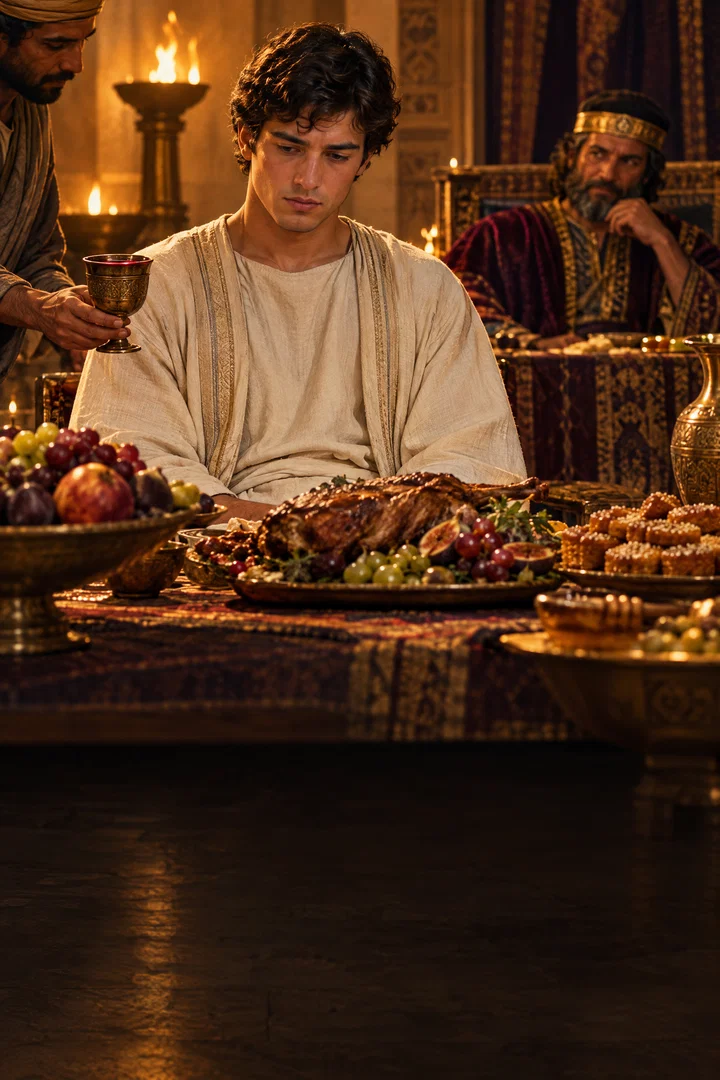
Pictures
Cross-references
- Proverbs 23:20-21
Be not among winebibbers; among riotous eaters of flesh:
Warns against drunkenness and gluttony, which lead to poverty.
- Proverbs 23:31-32
Look not thou upon the wine when it is red, when it giveth his colour in the cup, when it moveth itself aright.
Warns that wine is deceitful and harmful.
- Ecclesiastes 6:7
All the labour of man is for his mouth, and yet the appetite is not filled.
both translate nephesh as appetite
- Ecclesiastes 10:17
Blessed art thou, O land, when thy king is the son of nobles, and thy princes eat in due season, for strength, and not for drunkenness!
Both teach eating for strength rather than excess.
- Daniel 1:8-16
But Daniel purposed in his heart that he would not defile himself with the portion of the king’s meat, nor with the wine which he drank: therefore he requested of the prince of the eunuchs that he might not defile himself.
Both teach restraint in eating through a simple, temperate diet.
- Luke 21:34
And take heed to yourselves, lest at any time your hearts be overcharged with surfeiting, and drunkenness, and cares of this life, and so that day come upon you unawares.
Warns that surfeiting can burden the heart.
- 1 Corinthians 9:27
But I keep under my body, and bring it into subjection: lest that by any means, when I have preached to others, I myself should be a castaway.
Paul’s discipline of his body illustrates resisting appetite.
Commentary
Each commentary is drawn from primary sources: the writings of Ellen G. White and Adventist pioneers and periodicals. Each commentary is separate. Its own words are not a quotation; follow the references to read the source passages.
Ellen G. White
2 sources
The placing of a blade against one's own neck is a figure for grave peril to life.Ms 19b, 1890, par. 44–48 One who is ruled by craving for food is therefore to hold appetite under strict restraint in eating, with special care when dining in the presence of a ruler.Lt 175, 1896, par. 1–6 Rich dishes may please the taste, yet yielding to them to the injury of health perverts the entire being, and appetite is never to be indulged at the cost of health.Lt 175, 1896, par. 1–6 The same figure meets a minister whose violent way of speaking is breaking down his health, for by that course he is as certainly bringing death upon himself as by turning a blade upon his own throat.Ms 19b, 1890, par. 44–48
Sources
Pioneers and periodicals
25 sources
Sitting to eat at a ruler's table, one is to consider carefully what is before him and hold himself back if he is ruled by appetite.ST Sep 27, 1899ST Dec 18, 1907RH Jun 12, 1900 To put a knife to the throat is a figure of grave danger, showing how seriously and decisively appetite must be controlled, as a matter of life and death.RH Aug 23, 1864ST Feb 13, 1907ST Sep 27, 1899 The ruler's dainties are deceitful meat, rich, luxurious and highly seasoned food and drink that tempt and deceive, and are unwholesome and harmful to body, mind and soul, and are not to be craved.ST Feb 13, 1907ST Sep 27, 1899ST Dec 5, 1911 Sharp, severe restraint of perverted appetite is commanded, for one driven by appetite who eats to excess or for drunkenness is as guilty as if he cut his own throat, destroying himself by misuse of the digestive organs.RH Aug 23, 1864ST Feb 15, 1899ST Jan 6, 1881ST Oct 20, 1887 What is eaten and how and when it is eaten matters more for happiness and health than any other single physical habit, so God commands strict self-control and temperate, regular eating of simple wholesome food, as Daniel and his companions refused the luxurious food and wine of Babylon's court to keep strong bodies and clear minds for His service.ST Feb 13, 1907ST Dec 5, 1911ST Dec 18, 1907ST Feb 13, 1896ST Sep 18, 1901
Words and Setting
The word rendered appetite is the Hebrew nephesh, elsewhere rendered soul, and this is one of two places where it is so rendered.STST Jun 6, 1878RH Sep 1, 1859 It is rendered forty-three different ways and never as spirit.ST Jun 6, 1878 It carries senses including breath, the vital principle of life manifested in breath through which the body lives, life, person, mind, heart, body, will, thing, lust, what sustains life by food and drink, the rational soul or mind as seat of feelings, affections and emotions, and concretely a living creature in which is life.STST Jun 6, 1878 Its use here to mean appetite does not by itself establish that it means an immortal part of a person.RH May 14, 1872
The setting is sitting to eat with a ruler, where what is set before must be considered carefully and desire restrained if ruled by appetite.ST Sep 27, 1899RH Jun 12, 1900ST Feb 13, 1896RH May 6, 1873ST Jul 16, 1885 The restraint is sharp and severe, especially at a ruler's table.ST Feb 13, 1896RH May 6, 1873ST Jul 16, 1885 The ruler's dainties are deceitful meat, not wholesome nourishment, namely rich, luxurious, tempting and highly seasoned food and drink that deceive and should not be craved or desired.ST Feb 13, 1907ST Sep 27, 1899ST Dec 5, 1911ST Oct 20, 1887ST Dec 18, 1907 They are unwholesome and harmful to body, mind and soul, and indulgence injures health.ST Feb 13, 1907ST Dec 5, 1911ST Feb 13, 1896 The contrast is with simple food such as bread, grains and fruit, and the warning is applied to overeating and elaborate rich meals.RH Jun 12, 1900
The command to put a knife to the throat is a figure of grave danger from excess, stressing how seriously desire must be controlled.RH Aug 23, 1864ST Sep 27, 1899RH May 6, 1873 A person whose appetite rules him and who indulges to excess is as guilty as if he cut his own throat, since excess brings harmful effects sooner or later and is likened to self-murder and self-destruction.RH Aug 23, 1864RH May 6, 1873 Control of appetite is thus a matter of life and death, and one ruled by craving desire endangers himself as one putting a knife to his throat.ST Dec 1, 1881RH Jun 12, 1900 The restraint must be decisive when facing rich food, and the verb is to be read as puttest.ST Feb 13, 1907 The chapter to which the verse belongs is especially concerned with temperance, linking the verse to restraint of appetite.RH May 18, 1916 Its warnings against intemperance apply in every age, and temperance is an important part of practical moral and religious duty.RH May 18, 1916
Temperance Duty and Application
The verse commands sharp and severe restraint of perverted appetite and craving desire, refusing to lust after what is wrong even when eating with a ruler and even at great cost and even in times of gathering and rejoicing before God.ST Jan 6, 1881ST Oct 20, 1887ST Dec 1, 1881RH Aug 26, 1862 Its control is to be treated as a matter of life and death, with the image of putting a knife to the throat emphasizing the danger of gluttony and the need to stop before eating beyond temperance.ST Dec 1, 1881RH Aug 26, 1862ST Sep 10, 1894 The ruler's dainties are deceitful food that should not be desired, and yielding to appetite in that matter is worse than self-denial.ST Oct 20, 1887ST Sep 10, 1894
A person whose appetite rules him and who indulges to excess is as guilty as if he literally cut his own throat, for excess brings harmful effects sooner or later.RH Aug 23, 1864RH May 6, 1873 Eating for drunkenness or merely filling the stomach without regard for whether the food is wholesome, and misuse of the digestive organs, is self-destruction and a form of suicide whose bodily result is sure whether it is believed or not.ST Feb 15, 1899RH Jun 12, 1900 Being ruled by craving desire endangers a person like one putting a knife to his throat, because taste is not a dependable guide when appetite has become perverted.RH Jun 12, 1900RH Jun 12, 1900
What is eaten and how and when it is eaten matters more for human happiness and health than any other single physical habit, and the verse means to restrain appetite decisively when facing rich food, especially a ruler's deceitful dainties.ST Feb 13, 1907 God desires the physical health of His people and therefore commands strict self-control over appetite, especially when eating with a ruler.ST Feb 13, 1896 Service to God demands strong, healthful bodies and clear minds.ST Feb 13, 1907ST Sep 18, 1901
Unrestrained appetite produces wrong habits of eating that bring dyspepsia and disease and cause more suffering and misery than almost all other physical transgressions combined, harming body and soul.ST Feb 13, 1907ST Dec 5, 1911 Uncontrolled appetite is a destructive sin classed together with drunkenness, and indulgence injures health because rich dainties are deceitful.ST Dec 5, 1911ST Feb 13, 1896 Eating to excess brings harmful effects and is likened to self-murder.ST Feb 15, 1899RH May 6, 1873
The warning supports the warning against drunkenness and applies to refusing indulgence in intoxicating drink and other fleshly appetites.ST Oct 20, 1887 Israel knew no distilled liquor and God forbade drunkenness. Since the strong drink of ancient times is not to be compared with the poisonous preparations used at the present time, the restraint on appetite holds with still greater force now.
The restraint applies not only to liquor and tobacco but to other substances that hold power over a great part of mankind and injure and often kill those who use them, including tea as commonly prepared with filthy and poisonous matter.ST Jan 6, 1881 It applies also to harmful foods and stimulants that create cravings and enslave people.RH Jun 12, 1900 Indulgence in such poisons makes people filthy and disgusting, while temperance in all wholesome food and drink is valuable and intemperance brings destructive consequences.ST Jan 6, 1881
The verse means eating temperately, regularly and in due season, choosing simple food and refusing to crave rich dainties, in contrast with overeating and elaborate, rich meals.RH Jun 12, 1900ST Feb 13, 1896 A simple diet centered on bread, grains, and fruit is set against deceptive rich delicacies that must be considered carefully.RH Jun 12, 1900 Those standing in the light rejoice without going to unseemly excess, and indulgent high living and gluttony are to be refused.RH Aug 26, 1862ST Jul 16, 1885
Daniel and his companions exemplify the verse by refusing the luxurious food and wine of Babylon's court so they could keep strong bodies and clear minds for service to God.ST Dec 18, 1907ST Sep 18, 1901 That royal food was deceitful meat, not wholesome nourishment, unwholesome and defiling and connected with Babylonian religious feasts.ST Dec 5, 1911ST Dec 18, 1907ST Sep 18, 1901 Yielding to appetite in that matter would have been worse than self-denial.ST Sep 10, 1894
Appetite can become dangerous through gradual indulgence and must be restrained decisively and guarded before it takes hold.RH Nov 5, 1861 Even ordinary, seemingly harmless cravings can grow into gluttony or lead step by step to intoxication and ruin.RH Nov 5, 1861 Christians must stay alert and restrain their physical tendencies, since taste is not dependable when appetite is perverted.RH Jun 12, 1900
Severe restraint at table builds true grit, which is spiritual and keeps the soul on top instead of being subject to the body, while indulgent high living unfits a person for it.ST Jul 16, 1885 A plain, self-denying, Spartan way of eating builds Spartan courage and supports a higher, unflinching purpose, as when leaders are content with bread and milk or common soldiers' rations.ST Jul 16, 1885
Being ruled by appetite also applies to mental fare that excites desire while displacing what truly nourishes the mind and soul.RH Jun 12, 1900 By contrast, wholesome food and the word of God nourish and strengthen rather than foster enslaving cravings.RH Jun 12, 1900
The warning against the very beginnings of sin in appetite and indulgence shows the increase of drunkenness, misery, crime and licentiousness to be a merciful sign that the last days are like former cities and nations held up as examples and that the end of all earthly things and the second coming of Jesus Christ is near.ST Jul 16, 1896 It lays duty on every individual Christian man and woman to heed the warning, to live as they preach, and to save all they can by every means that glorifies God without compromising truth and righteousness.ST Jul 16, 1896 Warnings against intemperance apply in every age, and temperance is an important part of practical moral and religious duty.RH May 18, 1916
Sources