Translations
American King James Version, King James Version
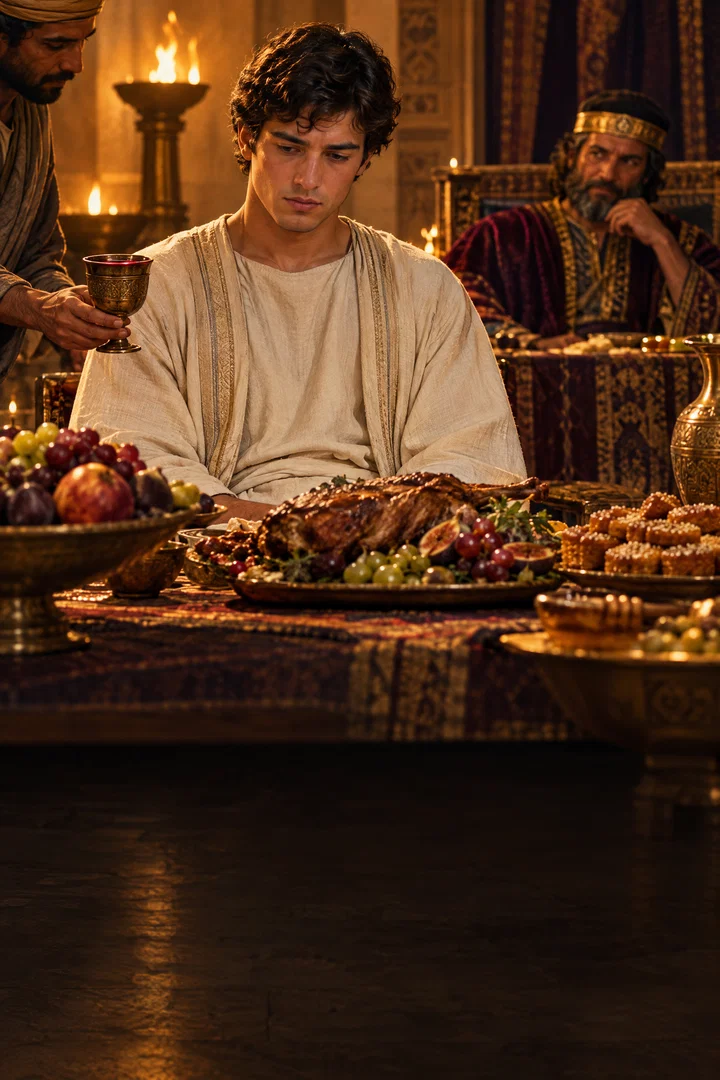
Be not desirous of his dainties: for they are deceitful meat.
Be not desirous of his dainties:
For they are deceitful meat.Be not desirous of his dainties: for they are deceitful food.
Be not desirous of his dainties; seeing they are deceitful meat.
Be not desirous of his dainties;
Seeing they are deceitful food.Have no desire to his dainties, seeing it [is] lying food.
Be not desirous of his dainties; for they are deceitful food.
Do not crave his dainties, for, the same, are deceitful food.
Berean Standard Bible, Majority Standard Bible
Do not crave his delicacies,
for that food is deceptive.Don’t be desirous of his dainties,
since they are deceitful food.Have no desire for his delicate food, for it is the bread of deceit.
Be not desirous of his deintie meates: for it is a deceiuable meate.
Douay-Rheims (Challoner revision)
Be not desirous of his meats, in which is the bread of deceit.
Pictures
Cross-references
- Proverbs 23:20-21
Be not among winebibbers; among riotous eaters of flesh:
Warns against excess in eating and drinking and its destructive consequences.
- Daniel 1:8
But Daniel purposed in his heart that he would not defile himself with the portion of the king’s meat, nor with the wine which he drank: therefore he requested of the prince of the eunuchs that he might not defile himself.
Daniel refuses the king’s food and wine rather than defile himself.
- Proverbs 23:29-35
Who hath woe? who hath sorrow? who hath contentions? who hath babbling? who hath wounds without cause? who hath redness of eyes?
Warns that wine leads to drunkenness and its harmful consequences.
- Hebrews 12:16
Lest there be any fornicator, or profane person, as Esau, who for one morsel of meat sold his birthright.
Esau’s exchange of his birthright for food warns against gratifying appetite at great cost.
Commentary
Each commentary is drawn from primary sources: the writings of Ellen G. White and Adventist pioneers and periodicals. Each commentary is separate. Its own words are not a quotation; follow the references to read the source passages.
Ellen G. White
1 source
The delicacies in view belong to a ruler's table, rich foods set before a guest in a position of honor.Lt 175, 1896, par. 1–6 They are called deceptive food because their appeal lies in immediate gratification of appetite while their effect can injure and corrupt the entire person.Lt 175, 1896, par. 1–6 What pleases the taste therefore cannot be trusted as a guide to what builds up body and character.Lt 175, 1896, par. 1–6
For this reason the command is to exercise restraint at the table rather than yielding to desire for such foods.Lt 175, 1896, par. 1–6 Appetite must be carefully watched and held under control as a central part of temperance.Lt 175, 1896, par. 1–6 Guarding what is eaten becomes a moral duty, protecting the whole person from harm through indulgence.Lt 175, 1896, par. 1–6
Sources
Pioneers and periodicals
15 sources
When seated before a ruler one must consider what is set before him and hold back craving as sharply as with a knife at the throat, especially if given to appetite, for letting appetite rule destroys oneself as surely as cutting one's own throat.ST Feb 13, 1907ST Sep 27, 1899RH Aug 23, 1864 His rich dishes are not to be craved because they are misleading food, appearing to be better and nourishing fare while giving no true benefit and doing harm rather than good.ST Feb 13, 1907ST Sep 10, 1894ST Sep 10, 1894 They undermine health, weakening the body and clouding the mind and unfitting the strong bodies and clear minds needed for the service of God, and stimulating seasoning shows the fraud by disguising lack of nourishment and dulling taste for natural flavors until eating must be ruled by careful choice and not by relish for savor.ST Dec 5, 1911ST Dec 18, 1907ST Feb 13, 1896ST Feb 15, 1899 Daniel had learned this counsel and acted on firm principle when he refused the king's luxurious meat and wine with its rich seasoned dishes and idolatrous feasting, choosing simple food to avoid indulgence and defilement and to keep health, clearness of mind, and loyalty to God.ST Sep 10, 1894ST Dec 5, 1911ST Sep 18, 1901ST Mar 5, 1894ST Sep 10, 1894 Eating and drinking therefore require temperance and control of appetite in what and how and when one eats, with simple food at regular proper times, since wrong habits bring disease and more suffering than almost all other physical wrongs combined, and the same warning guards the beginnings of sin in appetite that lead to drunkenness and misery, and those who held it extended it also to corrupting literature that starves mind and soul as unwholesome food starves the body.ST Feb 13, 1907RH Jun 12, 1900ST Sep 27, 1899ST Feb 13, 1896ST Jul 16, 1896
Words and Royal Setting
When dining with a ruler careful attention must be given to what is set before one, and craving must be held back as sharply as a knife put to the throat, especially by one given to appetite.ST Feb 13, 1907ST Sep 27, 1899RH Aug 23, 1864 To let appetite rule in that setting is like cutting one's own throat, for the harm of excess comes sooner or later.ST Feb 13, 1907RH Aug 23, 1864 The ruler's dainties are not to be desired because they are deceitful food, seeming to be better and more nourishing than they truly are, offering no real benefit and doing harm rather than good.ST Feb 13, 1907ST Sep 10, 1894ST Sep 10, 1894
They are unhealthy and give no sound basis for health, weakening the body and clouding the mind and undermining the strong bodies and clear minds needed for service to God.ST Dec 5, 1911ST Dec 18, 1907ST Feb 13, 1896ST Sep 18, 1901 The deceit is seen in rich, highly seasoned food, whose stimulating flavor can hide that such seasonings give no nourishment.ST Sep 10, 1894ST Feb 15, 1899 That stimulation can dull taste until natural flavors are no longer appreciated, so eating must be governed by careful choice rather than by craving for savory taste.ST Feb 15, 1899
Eating and drinking matter to God and require temperance and control of appetite, which stand first among the conditions of health and happiness in what is eaten and how and when.ST Feb 13, 1907ST Sep 27, 1899 This means temperate eating of simple food at regular, proper times.ST Feb 13, 1907ST Feb 13, 1896 Wrong habits of eating bring dyspepsia and disease and cause more suffering and misery than almost all other physical transgressions combined.ST Feb 13, 1907
Daniel's Example and Application
Daniel had learned and remembered the counsel not to crave the ruler's rich foods, and refused the king's meat and wine, choosing simple food rather than yielding to appetite.ST Sep 10, 1894ST Dec 5, 1911ST Dec 18, 1907ST Mar 5, 1894ST Sep 10, 1894 His stand shows that temperance rests on firm principle, not on yielding to appetite for what appears to be better or nourishing food.ST Sep 10, 1894ST Sep 10, 1894 The king's lavish fare offered to him included rich, highly seasoned dishes and imported wine tied to Babylonian luxury, feasting, and idolatry.ST Sep 18, 1901ST Sep 10, 1894 Refusing it avoided indulgence, intemperance, and defilement and kept the Judean youths loyal to God.ST Dec 5, 1911ST Sep 18, 1901ST Mar 5, 1894
Refusing the deceptive food preserved health and the clear minds needed for service to God, since such dainties are unwholesome, weakening the body and clouding the mind.ST Dec 5, 1911ST Dec 18, 1907ST Sep 18, 1901 Resisting indulgence helped form the noble character Daniel displayed throughout his life.ST Sep 10, 1894 The same warning governs God's permission to obtain and enjoy food and drink for rejoicing together, for those standing in the light will not lust after what is wrong or go to unseemly excess. Anything that feeds harmful appetite is to be refused, including intoxicating liquor brought into the home under the guise of ordinary provisions.ST Oct 20, 1887 Elaborate meals of excessive variety are a departure from the simple diet of Bible times, calling for considering what is set before one.RH Jun 12, 1900 Proverbs 23 shows that God forbade drunkenness.
The verse also applies to cheap, harmful literature, which like unwholesome food may appeal to a corrupted appetite but starves the mind and soul.RH Jun 12, 1900 God's word by contrast is wholesome nourishment, filled with principles of life, light, and health.RH Jun 12, 1900 The warning is a merciful guard against the very beginnings of sin in appetite, against desiring deceitful dainties that lead to drunkenness, misery, crime, and licentiousness.ST Jul 16, 1896 The increase of these evils is a sign in the social world that the last days are here and that the end of all earthly things and the second coming of Jesus Christ is near.ST Jul 16, 1896 Christians must therefore heed the warning, live as they preach, and save all they can by every means that will not compromise truth and righteousness and that will glorify God.ST Jul 16, 1896
Sources